
Lady Fern (Athyrium filix-femina)
Athyrium filix-femina, commonly known as Lady Fern, is one of the most graceful and widely distributed ferns in the Northern Hemisphere, bringing delicate beauty to shaded gardens and woodland landscapes across North America. This deciduous member of the Athyriaceae family is beloved by gardeners for its lacy, finely divided fronds that create an ethereal, almost gossamer-like texture in the shade garden — earning it the poetic common name that has endured for centuries.
Lady Fern typically grows 2 to 3 feet tall, though exceptional specimens in ideal conditions can reach 5 feet or more. The plant forms elegant, vase-shaped clumps of light green fronds that emerge directly from underground rhizomes each spring, unfurling in the classic fiddlehead fashion characteristic of ferns. The fronds are twice-pinnate (bipinnate), meaning they are divided into leaflets that are themselves deeply divided, creating the intricate, lace-like appearance that makes this fern so distinctive and garden-worthy.
What sets Lady Fern apart from many other native ferns is its remarkable adaptability to diverse growing conditions. While most ferns are quite particular about their environmental requirements, Lady Fern thrives in everything from deep woodland shade to surprisingly sunny locations, and from consistently moist soils to relatively dry conditions once established. This flexibility, combined with its graceful appearance and reliable performance, has made it one of the most popular and successful ferns for shade gardening throughout its extensive range.
Identification
Lady Fern is distinguished by its delicate, finely divided fronds and graceful, arching growth habit that creates a fountain-like effect in the landscape. The plant typically forms clumps 2 to 4 feet wide, with individual fronds reaching 1 to 4 feet in length depending on growing conditions.
Fronds
The fronds are the plant’s most distinctive feature — they are broadly lance-shaped in overall outline but twice-pinnate, meaning they are divided into pinnae (primary leaflets) that are themselves deeply divided into pinnules (secondary leaflets). This creates an extremely delicate, lacy texture that appears almost translucent when backlit. The fronds are light to medium green in color, often with a slightly yellowish cast, and have a soft, papery texture. Individual pinnules are oblong to lance-shaped with serrated margins, and the overall frond tapers gradually both toward the tip and toward the base.
Sori & Spores
Like all ferns, Lady Fern reproduces by spores rather than seeds. The spore-bearing structures (sori) are located on the undersides of fertile fronds and appear as small, elongated clusters that are initially covered by kidney-shaped protective covers (indusia). The sori are arranged along the veins of the pinnules and become visible in mid to late summer. When mature, the indusia curl back to release the spores, which appear as brown dust that can be seen on surfaces beneath the plant.
Rhizomes & Root System
Lady Fern grows from short, thick rhizomes that gradually spread to form colonies over time. The rhizomes are typically shallow, remaining within the top few inches of soil, and give rise to new crowns of fronds each spring. This rhizomatous growth habit allows the plant to form substantial colonies in favorable conditions, though the spread is generally slow and non-aggressive in most garden situations.
Quick Facts
| Scientific Name | Athyrium filix-femina |
| Family | Athyriaceae (Lady Fern) |
| Plant Type | Deciduous Fern |
| Mature Height | 2–3 ft |
| Sun Exposure | Full Sun to Full Shade |
| Water Needs | High to Low |
| Soil Type | Moist, well-drained; adaptable to various conditions |
| Spore Season | Mid to Late Summer |
| Foliage Color | Light to Medium Green |
| USDA Hardiness Zones | 2–9 |
Native Range
Lady Fern has one of the most extensive distributions of any fern species, occurring throughout much of the Northern Hemisphere including North America, Europe, and Asia. In North America, it ranges from Alaska and northern Canada south to the mountains of Mexico, and from coast to coast across the continent. This remarkable distribution reflects the species’ exceptional adaptability to diverse climate conditions and habitat types.
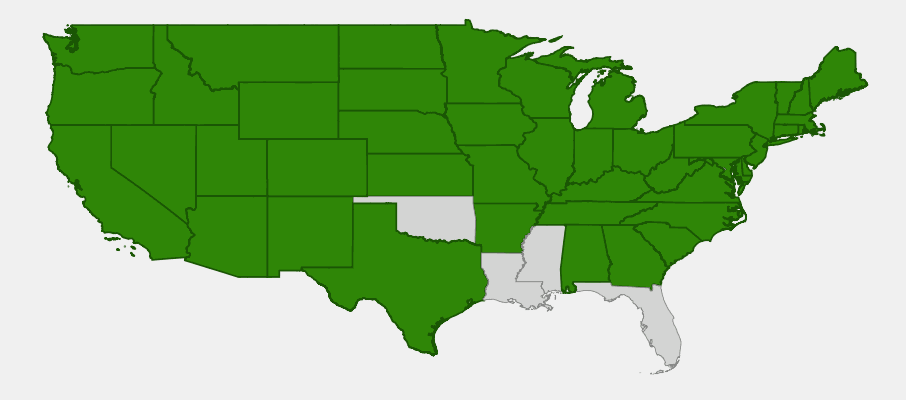
The species occurs in all 50 U.S. states and most Canadian provinces, though it’s more common in northern regions and mountainous areas where cooler, moister conditions prevail. In the northern parts of its range, Lady Fern grows from sea level to moderate elevations, while in southern regions it’s typically found at higher elevations where temperatures are cooler and moisture more reliable. The plant inhabits a wide variety of habitats, from moist woodlands and stream banks to open meadows and even relatively dry slopes in some regions.
Lady Fern’s broad ecological tolerance has allowed it to persist across diverse ecosystems, from the boreal forests of Canada and Alaska to the deciduous forests of the eastern United States, the coniferous forests of the Pacific Northwest, and the montane forests of the Rocky Mountains and other western ranges. This adaptability has made it an important component of forest understories across much of North America and a valuable species for restoration and landscaping projects throughout its range.
📋 Regional plant lists featuring Lady Fern: North Dakota, South Dakota & Western Minnesota
Growing & Care Guide
Lady Fern is one of the most adaptable and forgiving ferns for home landscapes, tolerating a wider range of growing conditions than most other fern species. Its combination of graceful beauty and tough constitution makes it an excellent choice for beginning fern gardeners as well as experienced landscapers looking for reliable performance in challenging sites.
Light
One of Lady Fern’s greatest strengths is its remarkable tolerance for various light conditions. While it thrives in partial to full shade like most ferns, it can surprisingly tolerate considerable sun, especially in northern climates or where adequate moisture is available. In full sun locations, the fronds may be smaller and lighter in color, but the plant typically remains healthy and attractive. In deep shade, the fronds become larger and more luxuriant but may have a more open, less dense appearance.
Soil & Water
Lady Fern prefers moist, well-drained, slightly acidic soils rich in organic matter, but it’s remarkably tolerant of various soil conditions. It will grow in clay, loam, or sandy soils as long as extreme drought or waterlogging is avoided. The plant performs best with consistent moisture throughout the growing season but can tolerate periods of drought once established, especially in shadier locations. Adding organic matter like compost or leaf mold will improve performance in any soil type.
Planting Tips
Plant Lady Fern in spring or early fall, spacing plants 2-3 feet apart to allow for their mature spread. When planting, set the crown (where fronds emerge) at soil level — neither too deep nor too shallow. Mulch around plants with 2-3 inches of organic matter to retain moisture and suppress weeds. The plant establishes readily and will often produce new fronds throughout the growing season once settled in.
Pruning & Maintenance
Lady Fern requires minimal maintenance once established. Remove old, damaged, or brown fronds as needed throughout the growing season to maintain appearance. In fall, the deciduous fronds will naturally turn brown and can be cut back to ground level, though leaving them until spring provides some winter protection for the crowns. Avoid walking on or disturbing the soil around ferns, as their shallow root systems can be easily damaged.
Landscape Uses
Lady Fern’s adaptability and graceful appearance make it valuable in numerous garden applications:
- Woodland and shade gardens — creates beautiful textural contrast with hostas, heucheras, and other shade perennials
- Stream and pond edges — thrives in consistently moist conditions near water features
- Naturalized areas — excellent for large-scale plantings in woodlands or along forest edges
- Rock gardens — suitable for shaded rock gardens and crevice plantings
- Erosion control — rhizomes help stabilize slopes and banks
- Foundation plantings — works well in shaded areas around buildings
- Container gardens — suitable for large containers in shaded locations
Wildlife & Ecological Value
While ferns don’t produce flowers or seeds, Lady Fern provides important ecological values in woodland and forest ecosystems. Its role in the ecosystem is primarily structural and habitat-related, contributing to the complex layering of forest understories that supports diverse wildlife communities.
For Birds
Lady Fern’s dense clumps provide excellent cover and nesting habitat for ground-dwelling and low-nesting bird species. Species such as Wood Thrush, Ovenbird, and various warbler species often nest in or near fern colonies, using the fronds for concealment and protection. The deciduous fronds that drop in fall contribute to the leaf litter layer that supports the invertebrate communities many ground-feeding birds depend on for food.
For Mammals
Small mammals including shrews, mice, and voles use Lady Fern colonies for cover and foraging areas. The dense growth provides protection from predators while the rich soil beneath fern clumps supports earthworms and other invertebrates that mammals feed on. Larger mammals may occasionally browse the young fiddleheads in spring, though the fronds are not a preferred food source for most species.
For Amphibians & Reptiles
The moist, shaded conditions created by Lady Fern colonies provide ideal habitat for many amphibian and small reptile species. Salamanders, frogs, and small snakes often shelter under the fronds and in the rich soil beneath. The humid microclimate created by fern colonies is particularly important for amphibians that require moist conditions for survival.
Ecosystem Role
Lady Fern plays important roles in forest ecosystem function. Its fronds contribute to the organic matter of the forest floor when they decompose, enriching soils and supporting mycorrhizal networks. The plant helps maintain stable soil moisture levels through shading and organic matter contribution, creating favorable conditions for other woodland plants. In some ecosystems, fern colonies serve as indicator species for healthy forest understory conditions.
Cultural & Historical Uses
Lady Fern has a rich history of use across many cultures throughout its extensive range, valued both for practical applications and its graceful beauty. The species name “filix-femina” literally means “female fern,” reflecting historical beliefs about the plant’s feminine characteristics — its delicate, lacy fronds were thought to contrast with the more robust, masculine appearance of Male Fern (Dryopteris filix-mas), though the two species are not closely related.
Indigenous peoples across North America used Lady Fern for various medicinal and practical purposes. Many Pacific Northwest tribes used the rhizomes as food, either raw or roasted, though proper preparation was important as some parts of the plant can be mildly toxic. Various tribes used frond preparations for treating wounds, burns, and skin conditions, while some employed it in respiratory treatments. The flexible fronds were sometimes used in basketry and as temporary bedding or ground covering.
European folk medicine traditions associated Lady Fern with women’s health and used preparations of the plant to treat various ailments, though many historical uses are not supported by modern research and some may be unsafe. The plant was also valued for its supposed protective properties — fern fronds were often hung in homes or carried as protective charms against evil spirits and lightning strikes.
In modern times, Lady Fern has become one of the most popular ferns for shade gardening and landscape use worldwide. Its combination of hardiness, adaptability, and graceful appearance has made it a staple in temperate gardens across multiple continents. The species has also gained importance in ecological restoration projects, where its ability to quickly establish and create habitat structure makes it valuable for rebuilding forest understory communities in disturbed areas.
Contemporary research has focused on Lady Fern’s potential for phytoremediation — the use of plants to clean up contaminated soils. Some studies suggest the plant may be useful for removing certain heavy metals and other contaminants from soil, though this application is still being investigated. The species has also become important in sustainable landscaping practices, valued for its low maintenance requirements and ability to thrive without irrigation in many climates.
Frequently Asked Questions
Is Lady Fern truly native to North America?
Yes, Lady Fern is native to North America as well as Europe and Asia. It’s considered a circumboreal species, meaning it occurs naturally throughout the northern regions of the Northern Hemisphere. In North America, it’s found from Alaska to Mexico and coast to coast, making it one of the most widespread native ferns on the continent.
Can Lady Fern grow in full sun?
Surprisingly, yes! Unlike many ferns, Lady Fern can tolerate considerable sun, especially in northern climates or where adequate moisture is available. In full sun, the fronds may be smaller and lighter in color, but the plant typically remains healthy. However, it performs best in partial shade with consistent moisture.
Will Lady Fern spread and take over my garden?
Lady Fern does spread gradually through rhizomes, but it’s not considered aggressive in most garden situations. The spread is typically slow to moderate, allowing it to form attractive colonies over time without overwhelming other plants. Unwanted spread can be easily controlled by removing excess crowns in spring.
Why do my Lady Fern fronds turn brown in summer?
Brown fronds in summer usually indicate drought stress, too much direct sun, or poor air circulation. Lady Fern prefers consistent moisture and may go dormant during extended dry periods. Adequate watering, mulching, and some protection from intense afternoon sun usually prevent this problem.
Can I grow Lady Fern indoors as a houseplant?
While Lady Fern can be grown in containers, it’s generally not successful as a long-term houseplant. It requires cool temperatures and high humidity that are difficult to maintain indoors, plus it goes dormant in winter. It’s better suited for outdoor container gardening in shaded locations or as a seasonal indoor plant.

Looking for a nursery that carries Lady Fern?
Browse our native plant nursery directory: North Dakota · South Dakota · Minnesota