
How to Grow Hyacinth in Water: A Step-by-Step Guide
Last updated: September 14, 2026
Want to watch a flower grow from bulb to bloom without getting your hands dirty? Growing hyacinths in water is one of the most satisfying indoor gardening projects you can try — you get to see the roots develop in real time through a glass vase, and within 8-12 weeks, you’ll have fragrant blooms that fill an entire room with scent. It’s also ridiculously simple. Here’s everything you need to get started.
- Hyacinths can be grown in water using special hyacinth vases or any glass vessel that supports the bulb above water
- Keep the water level just below the base of the bulb — roots grow into the water, not the bulb
- Store in a cool, dark place (35–50°F) for 8–12 weeks to simulate winter dormancy before bringing into light
- Move to bright indirect light once shoots are 2–3 inches tall
- After blooming, you can plant outdoor bulbs in the garden — they often bloom again next year
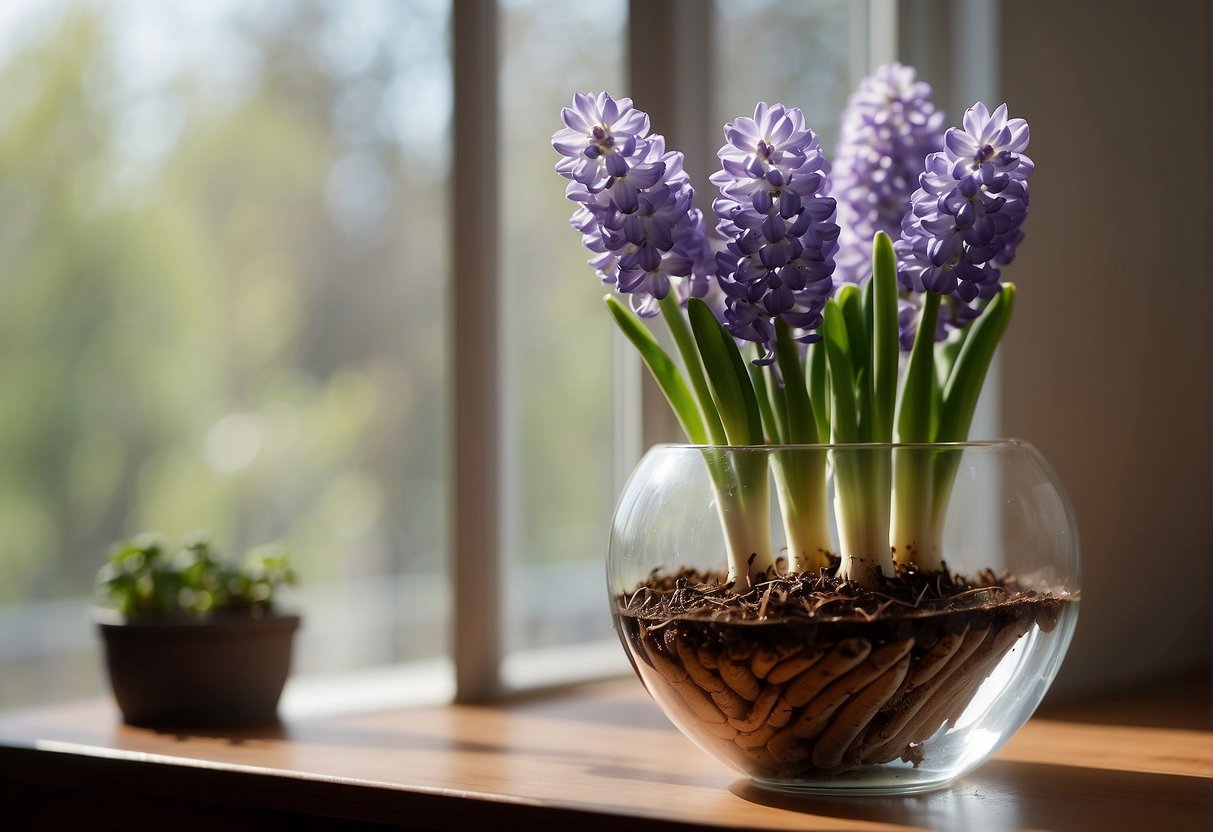
What You’ll Need
The supply list is short — that’s part of what makes this project so appealing:
- Hyacinth bulbs — Look for large, firm bulbs labeled “for forcing.” Bigger bulbs = bigger blooms. Avoid any that feel soft, have mold, or show signs of damage. Popular varieties like ‘Blue Jacket,’ ‘Pink Pearl,’ and ‘Carnegie’ (white) all force beautifully.
- A forcing vase or jar — Classic hyacinth forcing vases have a narrow waist that cradles the bulb above the water. You can also use any glass jar or vase with a narrow neck — or even a regular jar with pebbles piled up to support the bulb.
- Water — Plain tap water works fine. Some growers add a tiny pinch of charcoal to keep it fresh longer.
- Gloves — Hyacinth bulbs contain oxalic acid, which can irritate your skin. Wear gloves when handling them, especially if you have sensitive skin.
Step 1: Choose and Prep Your Bulbs
Not all hyacinth bulbs are created equal. For water growing, you want bulbs that are specifically sold for “forcing” — they’ve been pre-chilled by the supplier, which means they’re ready to bloom without a long cold period. If you’re buying regular garden bulbs, you’ll need to chill them yourself (more on that in Step 2).
Pick the fattest, firmest bulbs you can find. The size of the bulb directly determines the size of your bloom — a small bulb will give you a small, sparse flower spike, while a jumbo bulb produces those full, show-stopping clusters you see on Instagram.
Step 2: The Cold Period (Don’t Skip This!)
Hyacinths need 10-14 weeks of cold temperatures (35-48°F / 2-9°C) before they’ll bloom. Pre-chilled bulbs from a nursery have already been through this, so you can skip straight to Step 3. But if you’re using regular bulbs, you have two options:
- Refrigerator method: Place bulbs in a paper bag in the back of your fridge (away from fruit — ethylene gas from apples and bananas can kill the flower bud). Leave them for 10-14 weeks.
- Unheated garage or porch: If temperatures stay consistently between 35-48°F, you can store them in a box in an unheated space.
This cold period simulates winter and tells the bulb it’s time to start growing when warmth returns. It’s the most important step — skip it, and you’ll get leaves but no flowers.
Step 3: Set Up Your Vase
Fill your forcing vase with water so the level sits just below where the bulb will rest. The bottom of the bulb should be almost touching the water — about 1/4 inch above the surface. This is critical: if the bulb sits in water, it will rot. If the water is too far below, the roots won’t reach it.
Place the bulb pointed-end up on the vase. It should sit snugly without falling through. If you’re using a jar with pebbles, fill it about two-thirds with clean pebbles or decorative stones, nestle the bulb on top, and add water to just below the bulb’s base.
Step 4: The Dark Phase (Root Development)
Place your vase in a cool (50-60°F), dark location — a closet, basement, or cupboard works well. This mimics the underground conditions where roots normally develop.
Over the next 4-8 weeks, you’ll see white roots growing down into the water and a green shoot emerging from the top of the bulb. Check the water level weekly and top up as needed — the roots should always be submerged, but the bulb itself should stay dry.
Pro tip: Change the water completely every 2 weeks to prevent bacterial buildup. If the water gets cloudy or smells bad, change it immediately.
Step 5: Move to Light and Watch It Bloom
Once the green shoot is about 2 inches tall and you can see the flower bud inside, it’s time to bring your hyacinth into the light. Move it to a cool, bright spot — a north-facing windowsill is ideal. Avoid direct sunlight, which can heat the water and encourage algae growth.
Within 2-3 weeks, the stem will elongate and the flowers will open. The fragrance is incredible — a single hyacinth can perfume an entire room. To make the blooms last longer, keep them in a cool spot (65°F or below) and out of direct sun.
After Blooming: What to Do With the Bulb
Once the flowers fade, you have a choice:
- Compost it: Forcing takes a lot of energy from the bulb. Most water-grown hyacinths won’t bloom well again, so composting is the most practical option.
- Plant it outdoors: Cut off the spent flower stalk, let the leaves die back naturally, then plant the bulb in your garden in spring. It may take 1-2 years to recover and bloom again, but some do come back.
- Try to re-force: Possible but rarely successful. The bulb usually doesn’t have enough stored energy for a second round of water forcing.
Troubleshooting Common Problems
Bulb is rotting: The water level is too high — the bulb base should hover just above the water, not sit in it. Also make sure you’re changing the water regularly.
Lots of leaves but no flower: The cold period wasn’t long enough. You need a full 10-14 weeks at 35-48°F for the flower bud to develop properly.
Stem is flopping over: The room is too warm or the light is insufficient, causing the stem to stretch. Move to a cooler, brighter spot. You can also support the stem with a small stake.
Cloudy or smelly water: Bacterial growth. Change the water immediately and rinse the roots gently. Adding a small piece of activated charcoal to the water can prevent this.
Roots are growing out of the vase: Totally normal! Hyacinth roots are vigorous growers. Just make sure they’re submerged in water.
Best Varieties for Water Growing
Not all hyacinths force equally well in water. These varieties are reliable performers:
- ‘Blue Jacket’ — Deep blue-purple, strong fragrance, sturdy stem
- ‘Delft Blue’ — Soft blue, classic choice for forcing, widely available
- ‘Jan Bos’ — Vivid red-pink, compact bloom, great for smaller vases
- ‘Carnegie’ — Pure white, elegant, pairs beautifully with colored varieties
- ‘Pink Pearl’ — Bright pink, vigorous grower, one of the most popular forcing varieties
Ready to Try It?
Growing hyacinths in water is one of those rare gardening projects that’s both easy and genuinely impressive. Start your bulbs in October or November for blooms by mid-winter — exactly when you need a burst of color and fragrance the most. Line up three or four vases on a windowsill with different colored varieties, and you’ll have a display that beats any store-bought bouquet.
If you enjoy indoor growing, you might also like our guides on choosing the right soil for indoor plants and feeding flowering plants for bigger, longer-lasting blooms.
Frequently Asked Questions
Why is my hyacinth not blooming in water?
The most common reason is insufficient chilling time. Hyacinth bulbs need 8–12 weeks of cold temperatures (35–50°F) before they’ll bloom. If you skipped the chilling period or it was too short, the bulb will sprout leaves but may not produce flowers. Other causes include water touching the base of the bulb (causes rot) or placing the bulb in warm, bright conditions too early.
Can I reuse hyacinth bulbs grown in water?
Yes, but with reduced expectations. After water forcing, the bulb has expended a lot of energy. Let the leaves die back naturally after blooming, then plant the bulb outdoors in a sunny garden bed. Give it a light application of bulb fertilizer. It may bloom again the following spring, though often with smaller flowers than the first year. Most gardeners treat forced bulbs as “one and done” and buy fresh bulbs each year.
How often should I change the water for hyacinth bulbs?
Change the water every 1–2 weeks, or whenever it becomes cloudy or discolored. Always use room-temperature water — cold tap water can shock the developing roots. Adding a few drops of liquid seaweed fertilizer to the fresh water provides gentle nutrition that can produce slightly larger blooms.
 Looking for a nursery that carries native plants?
Browse our native plant nursery directory

watching roots grow through a glass vase sounds like a good starter project. 8 to 12 weeks for fragrant blooms isn’t bad.
Thank you for reading, Julie! Happy planting! -Plant Native Team