
Compostable Plant Labels: Do They Hold Up in Garden Conditions?
We independently select all products and services. If you click through links we provide, Plant Native may earn a commission with no extra cost to you.
Last updated: August 15, 2026
Compostable plant labels offer an eco-friendly solution for gardeners and plant enthusiasts. These biodegradable alternatives to plastic markers help reduce waste in gardens and greenhouses.
Made from materials like bamboo, wood, or plant-based plastics, compostable labels aim to break down naturally over time, leaving no lasting impact on the environment.
We’ve seen a growing trend towards sustainable gardening practices in recent years. Compostable plant labels align with this shift, allowing gardeners to organize their plants without contributing to long-term plastic pollution.
These labels come in various forms, including stick-in tags, wrap-around markers, and hanging labels, catering to different plant types and gardening setups.
When choosing compostable plant labels, durability is a key factor to consider. The labels need to withstand outdoor conditions long enough to serve their purpose before breaking down.
We also look at how well they hold up to watering, sunlight exposure, and soil contact. The ability to write on the labels clearly and have the text remain legible over time is another crucial aspect.
We tested multiple compostable plant label options to determine which ones strike the best balance between eco-friendliness and practical functionality in the garden.
Best Compostable Plant Labels
We’ve researched and tested numerous compostable plant labels to find the top options available. Our list includes durable, eco-friendly choices that effectively identify plants while breaking down naturally over time. These labels provide a sustainable alternative to plastic markers for gardeners and plant enthusiasts.
Our top pick

- Ample writing space
- Sturdy and weather-resistant
- Versatile for various plants
Cons
- May bend in extreme heat
- Permanent marker can fade over time
- Larger size than some may expect
We recently put these KINGLAKE plastic plant labels to the test in our garden, and we’re impressed with their performance. We appreciated the versatility of these labels. For most people, this is the one to get.
Best organic choice

- Biodegradable and environmentally friendly
- Ample writing space for detailed information
- Versatile for various labeling needs
Cons
- May degrade faster in wet conditions
- Limited color options
- Potentially less durable than plastic alternatives
We’ve been using these EssenZiell+ Bamboo Plant Labels in our garden, and they’ve quickly become a favorite. The natural bamboo material gives our plant beds a rustic, organic look that plastic markers simply can’t match. If sustainability matters to you, this is the guilt-free choice.
Best metal option

- Natural bamboo material is eco-friendly
- Durable and weather-resistant
- Includes a marking pen for easy labeling
Cons
- May darken over time, affecting readability
- Can break if inserted into hard soil
- Limited writing space for detailed information
The included permanent marker writes smoothly on the varnished surface, and we were pleased to see that the ink didn’t wash off in the rain. We appreciated the extra space to note additional details like planting dates or care instructions. We recommend writing clearly and boldly to counteract this effect.
Best heavy-duty option
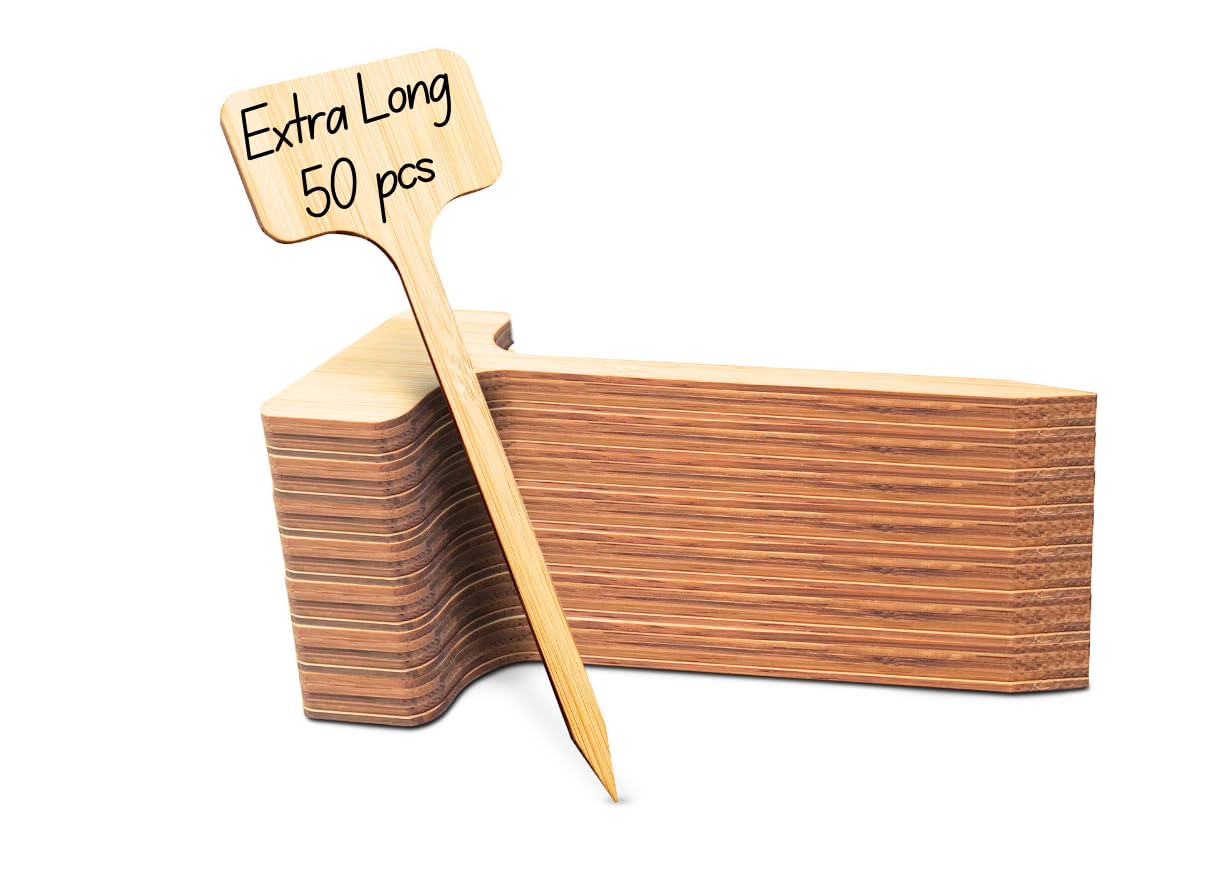
- Tall 7-inch design for easy visibility
- Natural wood-look appearance
- Made from sustainable bamboo
Cons
- May fade in wet conditions
- More expensive than plastic alternatives
- Limited color options
We found these bamboo plant labels to be a significant upgrade from standard plastic options. We appreciated the eco-friendly aspect of using bamboo instead of petroleum-based plastics. For best results, we recommend reapplying labels periodically or using a weather-resistant marker.
Best for lawns

- Made from 100% natural, durable bamboo
- Smooth surface for easy writing
- Ample space for plant information
Cons
- May degrade over time in outdoor conditions
- Some labels can arrive split or break easily
- Included marker pen tip may widen with use
We’ve found these OBTANIM bamboo plant labels to be a great alternative to plastic options. Their 3.9 x 2.4 inch size is perfect for most garden applications, from seedlings to potted herbs and vegetables. When selecting compostable plant labels, we recommend considering several key factors:
Buying Guide
When selecting compostable plant labels, we recommend considering several key factors:
Material
Look for labels made from biodegradable materials like:
- Wood
- Bamboo
- Cornstarch
- Recycled paper
These break down naturally without leaving harmful residues.
Durability
Choose labels that can withstand outdoor conditions for at least one growing season. Water-resistant coatings help labels last longer.
Writing Surface
Ensure the label surface accepts permanent markers or pencil clearly. Some materials may be too smooth for legible writing.
Size and Shape
Select sizes appropriate for your plants. Stake-style labels work well for pots and garden beds. Hangtag styles suit trees and larger shrubs.
Eco-Certification
Look for third-party certifications verifying the label’s compostability claims:
| Certification | Description |
|---|---|
| BPI | Biodegradable Products Institute |
| OK Compost | European certification standard |
| ASTM D6400 | American testing standard |
Price
Compare costs across brands. Eco-friendly options may cost more initially, but they provide long-term environmental benefits.
We suggest trying a small quantity first to test performance before buying in bulk. This allows you to assess how well the labels hold up in your specific garden conditions.
Does anyone know if this works well in zone 9? I’m in Iowa and our winters are pretty harsh.