
Are Modular Gardening Kits Worth the Price? A Cost-Benefit Analysis for Home Gardeners
We independently select all products and services. If you click through links we provide, Plant Native may earn a commission with no extra cost to you. As an Amazon Associate I earn from qualifying purchases.
Last updated: August 30, 2026
Modular gardening kits have gained popularity among urban dwellers and those with limited outdoor space. These compact systems allow people to grow herbs, vegetables, and flowers in small areas like balconies, patios, or even indoors.
By providing a structured approach to container gardening, modular kits aim to simplify the process for beginners and experienced gardeners alike.
The appeal of modular gardening kits lies in their versatility and ease of use. They typically include stackable containers, a water reservoir system, and sometimes soil and seeds to get started. These kits are designed to maximize vertical space, making them ideal for apartments or homes with minimal yard area.
Many also feature self-watering mechanisms, which can reduce the time and effort required for plant maintenance.
When considering a modular gardening kit, it’s important to evaluate factors such as durability, size, and compatibility with your space. The materials used in construction can affect longevity and plant health. Additionally, the kit’s dimensions should fit your available area while providing enough room for plant growth.
We tested various modular gardening kits to determine which ones offer the best combination of functionality, ease of use, and value for money.
Best Modular Gardening Kits
We’ve researched and tested numerous modular gardening kits to bring you this curated selection of top performers. Our list includes options for various garden sizes and budgets, ensuring you’ll find the perfect kit to start or expand your home garden.
Our top pick

- Extensive selection of 75 plant varieties
- High-quality, non-GMO seeds with good germination rates
- Attractive wooden storage box included
Cons
- Some seed quantities may be limited
- Indoor-only usage may restrict some gardening plans
- Requires additional supplies for planting
We appreciated the thoughtful inclusion of gardening gloves with claws and a detailed e-book with growing instructions. Upon testing, we noticed the seeds had excellent germination rates. It’s the total package, plain and simple.
Best for beginners

- Complete kit with everything needed to start
- High-quality, non-GMO seeds with good germination rates
- Detailed instructions and growing guide included
Cons
- Some pots may arrive cracked due to shipping
- Plant markers can be fragile
- Not all seeds may sprout for everyone
The seeds provided are non-GMO and sourced in the USA, which we appreciated. Overall, we found this kit to be a convenient way to start an indoor herb garden. It’s approachable enough for beginners without feeling like a compromise.
Best value set
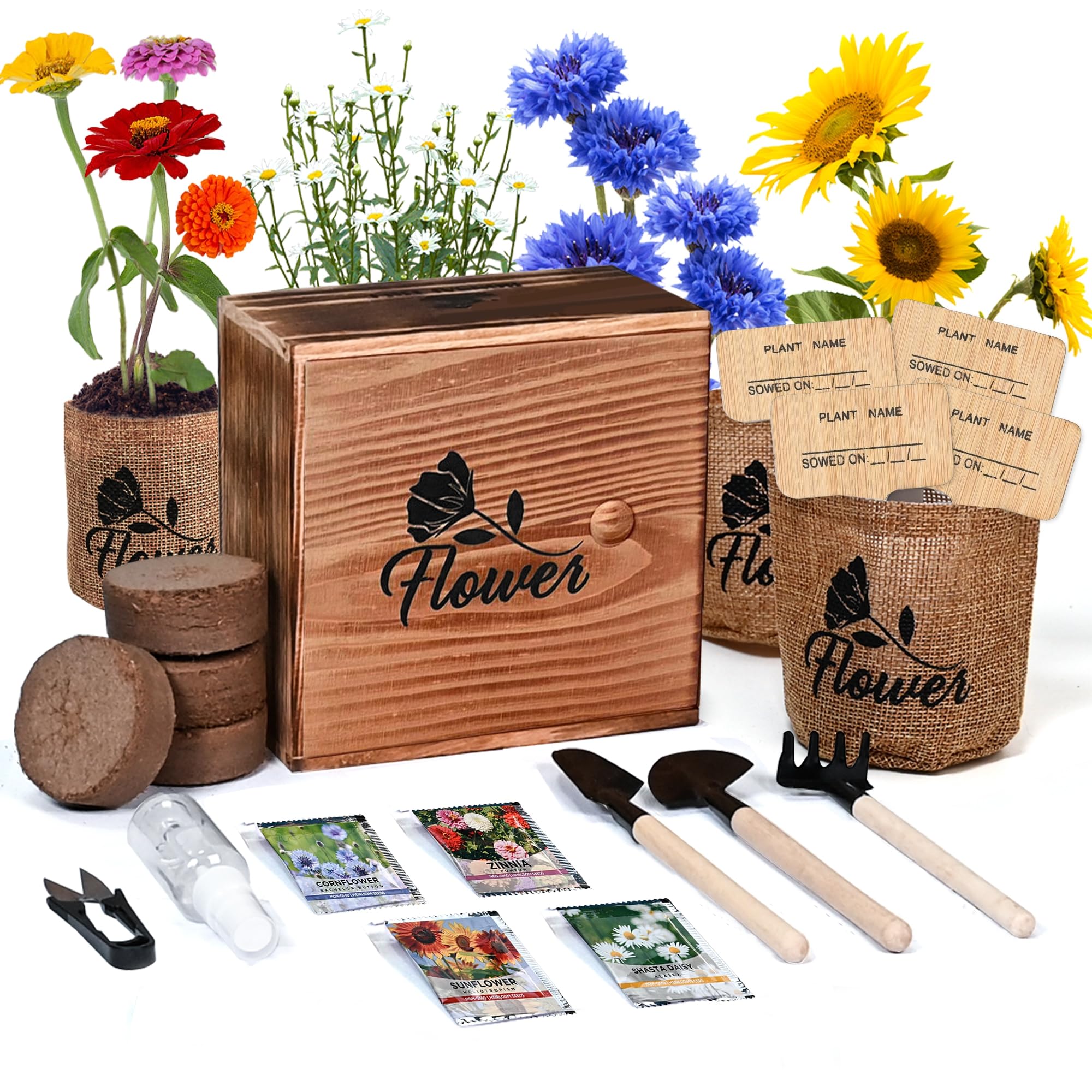
- All-in-one kit with tools and soil included
- Non-GMO seeds for edible flowers
- Attractive wooden planter box
Cons
- Limited plant variety options
- Small soil discs require soaking
- Lack of detailed instructions
We appreciated that these are non-GMO and edible, making them suitable for use in drinks and cooking. Once expanded, they provide a good growing medium, but we found ourselves wishing for more detailed care instructions. If you’re looking to save without sacrificing quality, this delivers.
Best for lawns

- High-quality aluminum alloy construction
- Ergonomic handles for comfort
- Included storage tote for organization
Cons
- May be overkill for casual gardeners
- Some tools might be too lightweight for heavy-duty tasks
- Limited color options
We found them to be rust-resistant and sturdy enough for most gardening tasks. In its niche, nothing else we tested came this close to getting everything right. The ergonomic handles are a standout feature, providing a comfortable grip that reduces hand fatigue during extended use.
Also great

- Durable stainless steel construction
- Ergonomic rubber handles
- Spacious tote bag with pockets
Cons
- Bag durability concerns
- Limited specialized tools
- May be overkill for casual gardeners
In practice, stainless steel construction to be robust, resisting rust and maintaining sharpness even after repeated use. We appreciated the included garden tote, which offered ample space for all the tools and additional supplies. When selecting a modular gardening kit, we recommend considering several key factors:
Buying Guide
When selecting a modular gardening kit, we recommend considering several key factors:
Size and Expandability
Look for kits that offer flexibility in size and configuration. The ability to add or remove modules allows you to adjust your garden as needed.
Materials
Choose durable materials like UV-resistant plastics or treated wood. These will withstand outdoor conditions and last longer.
Soil Capacity
Ensure the modules have sufficient depth for root growth. At least 6 inches is ideal for most plants.
Drainage
Proper drainage is crucial. Check for built-in drainage holes or the option to add them.
Ease of Assembly
Look for kits with clear instructions and minimal tools required. This makes setup and reconfiguration simpler.
Included Components
| Essential Components | Nice-to-Have Extras |
|---|---|
| Growing modules | Trellis systems |
| Connectors | Irrigation setups |
| Support structures | Seed starting trays |
Versatility
We suggest choosing kits that accommodate various plants. This allows for diverse gardening experiences.
Water Management
Consider systems with water reservoirs or self-watering features. These can help maintain consistent moisture levels.
Cost-Effectiveness
Compare the price to the quality and features offered. A higher initial investment may provide better long-term value.
By evaluating these aspects, we can select a modular gardening kit that best suits our needs and space.

modular kits with stackable containers and a water reservoir sound handy for a balcony.
Thanks Kevin! Let us know how it goes. -Plant Native Team
Interesting. My experience has been a little different but every garden is unique I guess.
Fair point, joyce2. Every garden is different and results can definitely vary by region. Thanks for sharing your experience! -Plant Native Team