
Top 5 Premium Livestock Waterer Buyer’s Guide to Consider for Efficient Big Acreage Management
We independently select all products and services. If you click through links we provide, Plant Native may earn a commission with no extra cost to you.
Last updated: November 7, 2026
Livestock waterers are essential tools for keeping animals healthy, especially on big plots of land. They give animals steady access to fresh water, so you don’t have to refill buckets all day and everyone stays hydrated.
If you’ve got a lot of acreage, picking the right waterer means finding the sweet spot between durability, capacity, and easy maintenance. You want something that won’t fall apart after a season or waste water.
Premium livestock waterers can handle tough outdoor conditions and help cut down on wasted water. Many have insulation or heating to stop freezing in winter, plus sturdy materials like heavy-duty steel or BPA-free plastic for a longer life.
It’s also important to match the size and flow rate to your herd. Too small, and you’re refilling constantly; too big, and it’s just overkill.
When you’re shopping around, think about capacity, material quality, frost protection, and how easy it is to clean. These details really affect how well a waterer works and how long it lasts.
We researched a bunch of premium livestock waterers for large acreage to help you pick out reliable options that actually fit your land and your animals.
Top 5 Premium Livestock Waterers for Big Acreage
We tested and compared several premium livestock waterers built for large properties. Our picks focus on durability, capacity, and ease of use so you can find what works best for your setup.
Our top pick

- Durable plastic lets you check water levels easily
- Handle makes refilling and moving simple
- Fits multiple gallon sizes for flexibility
Cons
- Some units show up with cracks, which hurts the seal
- Rubber seal wears out and may leak
- Only fits specific Miller waterer models
Per the listing, this Miller replacement cap is made of dent-proof, heavy-duty translucent plastic, so you can see the water level without lifting it, and the jar snaps onto the base for easy filling. The rugged handle makes carrying a full waterer easier, and it fits the top of Miller’s 3, 5 and 7 gallon poultry fountains. It is a cheap fix when an old lid cracks, though some buyers report units arriving cracked, so check it on delivery.
Best plastic option
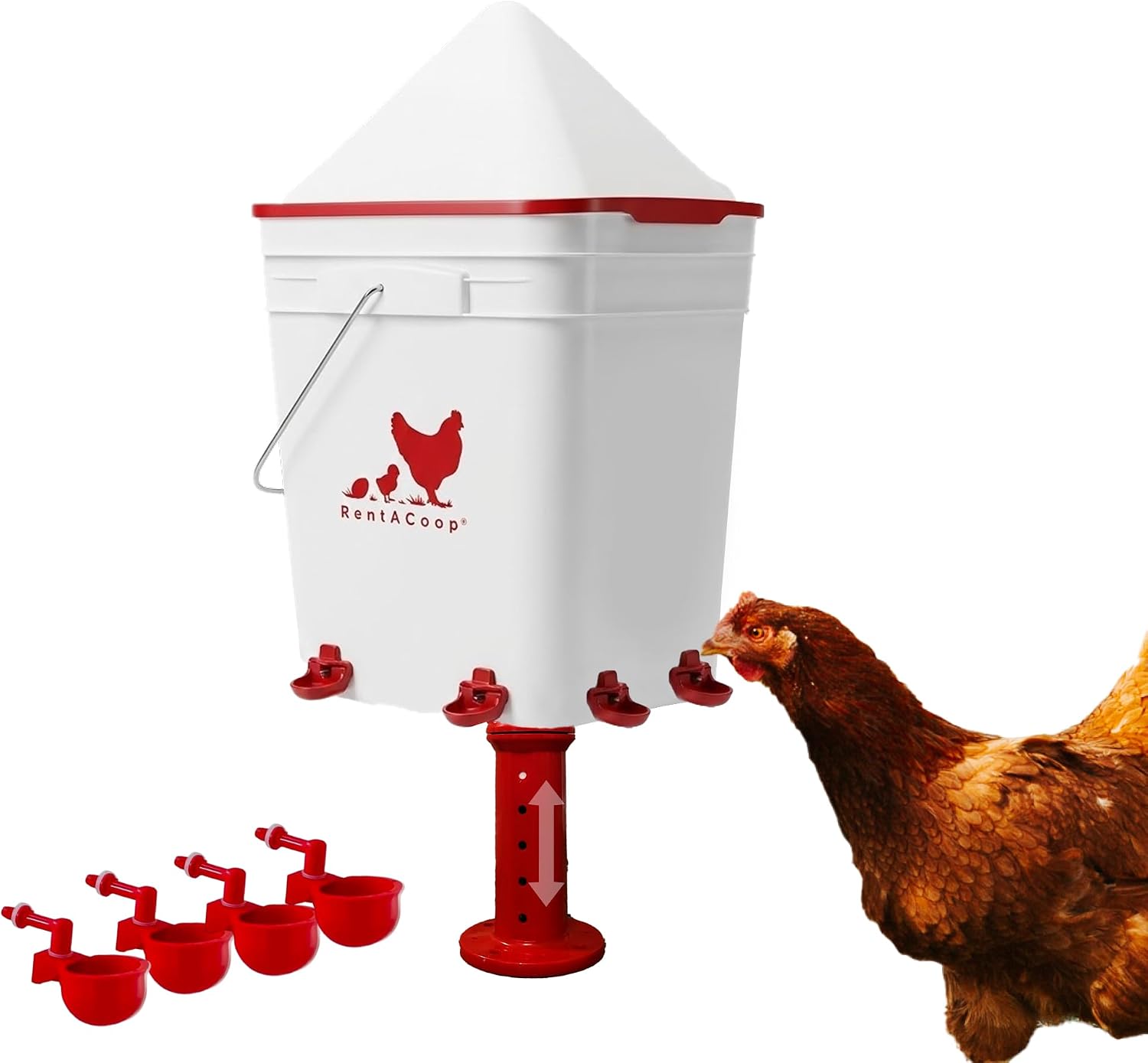
- 5-gallon capacity cuts down on refill trips
- Top-fill cap plug lets you refill with a hose
- Anti-roost cone helps keep water clean
Cons
- Designed for poultry, not larger livestock
- Stand needs screws or stakes to stay put
- Nipples need a heater belt for winter use
The RentACoop 5 Gallon Automatic Chicken Waterer pairs a food-grade, BPA-free bucket with four auto-fill cups and four horizontal nipples, so birds can drink either way. According to the listing, the cups stay about three-quarters full, and removable cup inserts make cleaning quick. A top-fill cap plug means you can refill with a hose without lifting the lid, and the adjustable stand can be screwed into a coop or staked outdoors.
Best stainless steel option

- Lightweight but tough PVC
- Stainless steel nipple with filter resists rust
- Mounting system fits most pens
Cons
- Nipple sometimes clogs with debris
- Bracket may need tweaks for some pens
- Pigs can move it if it’s not tightly secured
Per the listing, this made-in-USA kit is a 2-gallon vertical PVC pipe waterer that delivers a continuous supply through a rust-proof stainless steel nipple with a built-in filtering screen to catch debris and sediment. It is sturdy yet lightweight and mounts in a pen to keep water clean and off the floor. It has only about 40 ratings, averaging 3.7 stars, and it is expensive for its size, so weigh it against the other picks before buying.
Best for small spaces
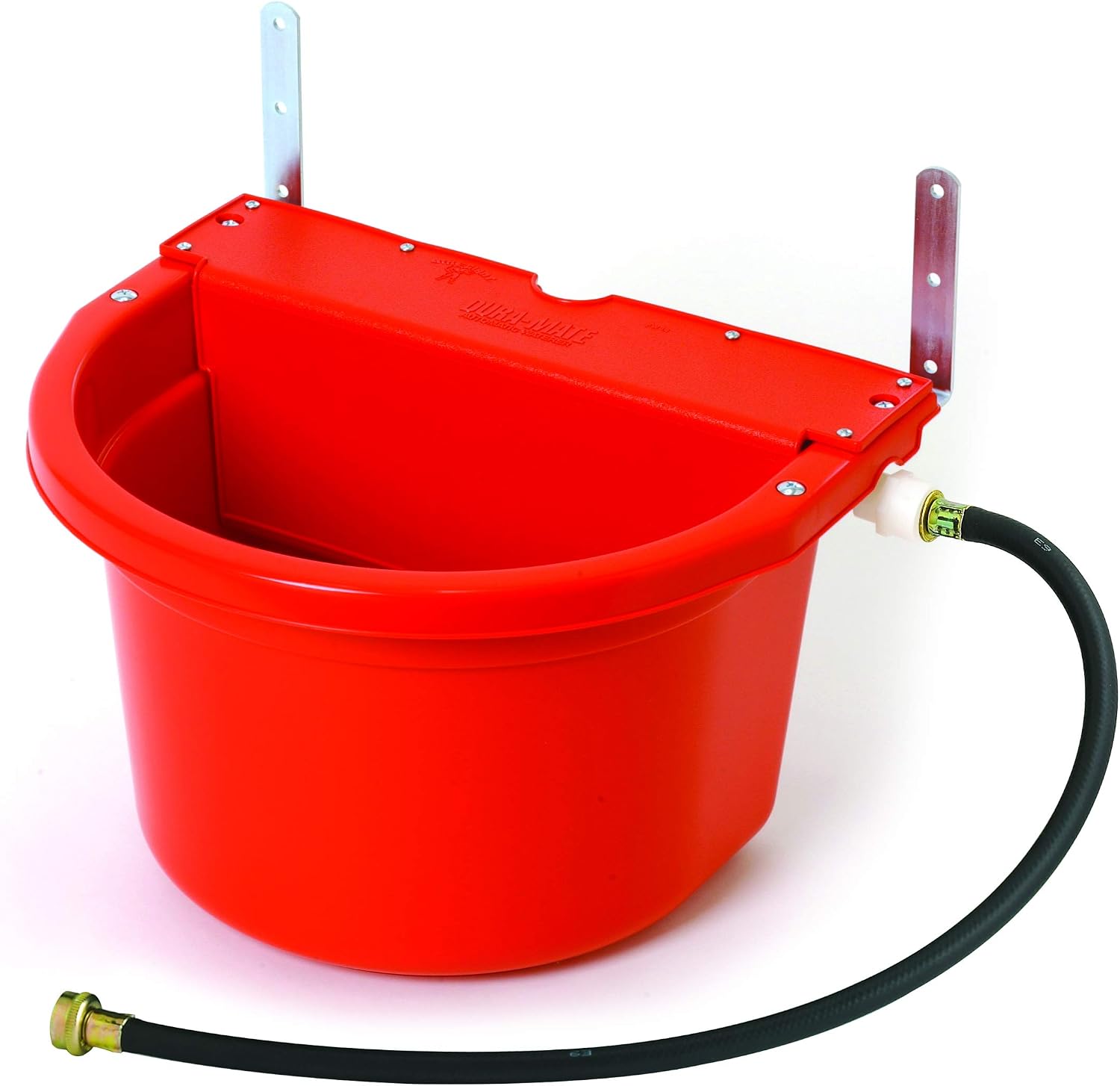
- Float valve refills the bowl automatically
- Mounts over a fence or on a wall
- Connects to a standard 3/4″ garden hose
Cons
- 4-gallon bowl is small for large herds
- Mounting hardware not included
- Needs a continuous hose connection
The Little Giant DuraMate is a 4-gallon automatic waterer that tops itself up through a float valve whenever the water level drops. It hooks to a standard 3/4-inch garden hose, and the listing notes that 30 inches of hose and metal brackets for over-the-fence or wall mounting are included (screws are not). Made in the USA from heavy-duty plastic, it suits pens and stalls where there is no room for a full stock tank.
Best cast iron option

- Cast iron with epoxy finish stands up to rust
- Stainless steel paddle is sturdy and simple for animals
- Automatic water flow keeps things fresh
Cons
- Some animals take time to figure it out
- Installation can be tricky
- Water flow isn’t perfect if paddle isn’t pushed all the way
Per the listing, the Little Giant No. 77 is heavy-duty cast iron with a nontoxic black epoxy finish for corrosion resistance, and it dispenses fresh water whenever an animal pushes its heavy-gauge stainless-steel paddle. A non-siphoning valve helps keep the supply line from freezing, and the continuous fresh supply helps reduce breeding of disease-carrying organisms. It suits horses, cattle and hogs; animals may need a little time to learn the paddle, and it must be plumbed to a water line.
Buying Guide
When you’re picking a premium livestock waterer for a big property, durability jumps to the top of the list. Go for heavy-duty plastic or galvanized steel—those options hold up better against rough weather and, animals that don’t exactly treat things gently.
Capacity matters too. Bigger waterers mean you won’t be running around refilling them all the time, which is a lifesaver on large acreage.
It’s smart to estimate how much water your animals actually need each day. Different livestock, different needs—so size it accordingly.
Cleaning shouldn’t be a hassle. Waterers with smooth surfaces or parts you can remove make it much easier to keep things clean and maintain good water quality.
Automated features like float valves or thermostats? Those are game changers. They keep water levels steady and temperatures just right, so you worry less and your animals stay hydrated.
If your waterer heats water, check how much energy it uses. Low-power or solar options can make a big difference, especially if you’re watching your energy bills.
| Feature | What to Look For | Why It Matters |
|---|---|---|
| Material | Heavy-duty plastic or galvanized steel | Longevity and weather resistance |
| Capacity | Size based on livestock water consumption | Reduces refills and labor |
| Cleaning | Removable parts, smooth interior | Maintains water hygiene |
| Automation | Float valves, thermostats | Consistent water supply |
| Energy Efficiency | Low-power, solar options | Reduces operational costs |
Don’t forget to think about how easy the waterer is to install. Also, will it work with your current water setup? Taking the time to weigh these details helps you find a waterer that actually fits your land and your animals—because nobody wants to do this twice.
We independently select all products and services. If you click through links we provide, Plant Native may earn a commission with no extra cost to you. As an Amazon Associate I earn from qualifying purchases.

Great question, Sandra! Four hours of direct sun counts as partial shade, and many plants can adapt to that. The key is choosing varieties suited for those conditions. Your local extension office can also recommend specific cultivars that thrive in partial shade in your area. Good luck with your garden!