Step by Step Echinacea Planting Guide for Thriving Herbal Gardens
Last updated: November 4, 2026
Echinacea, or coneflower if you prefer the common name, is a tough, eye-catching perennial that fits into almost any garden. If you want it to really thrive, pick a sunny spot and make sure the soil drains well.
A step by step echinacea planting guide shows that preparing the soil, planting seeds or seedlings at the right depth, and providing consistent watering are key to healthy growth.
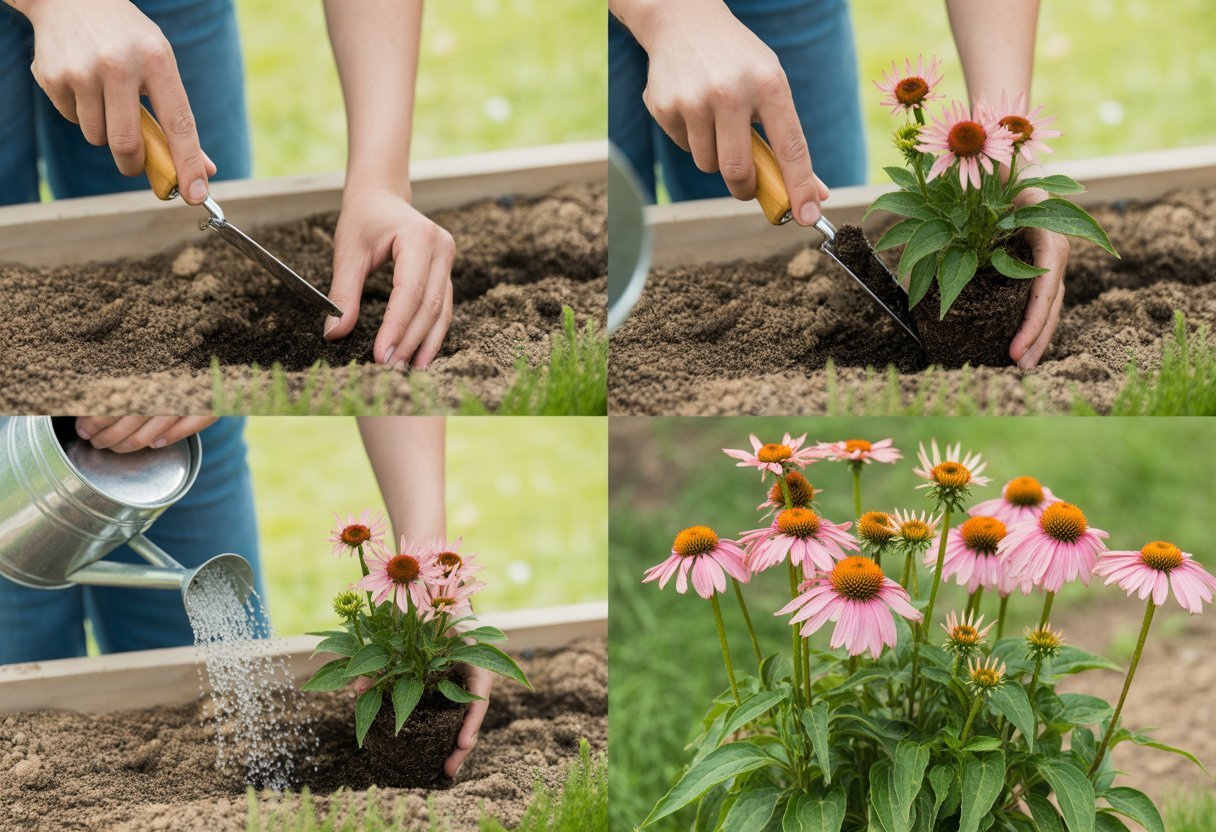
This guide breaks down each stage, so you’ll know exactly how to plant and care for coneflowers. Whether you’re starting from seed or moving young plants, these steps help you get vibrant blooms and strong roots.
The process is straightforward, honestly, which makes echinacea a practical choice for gardeners—newbies and veterans alike.
Choosing the Right Echinacea and Location
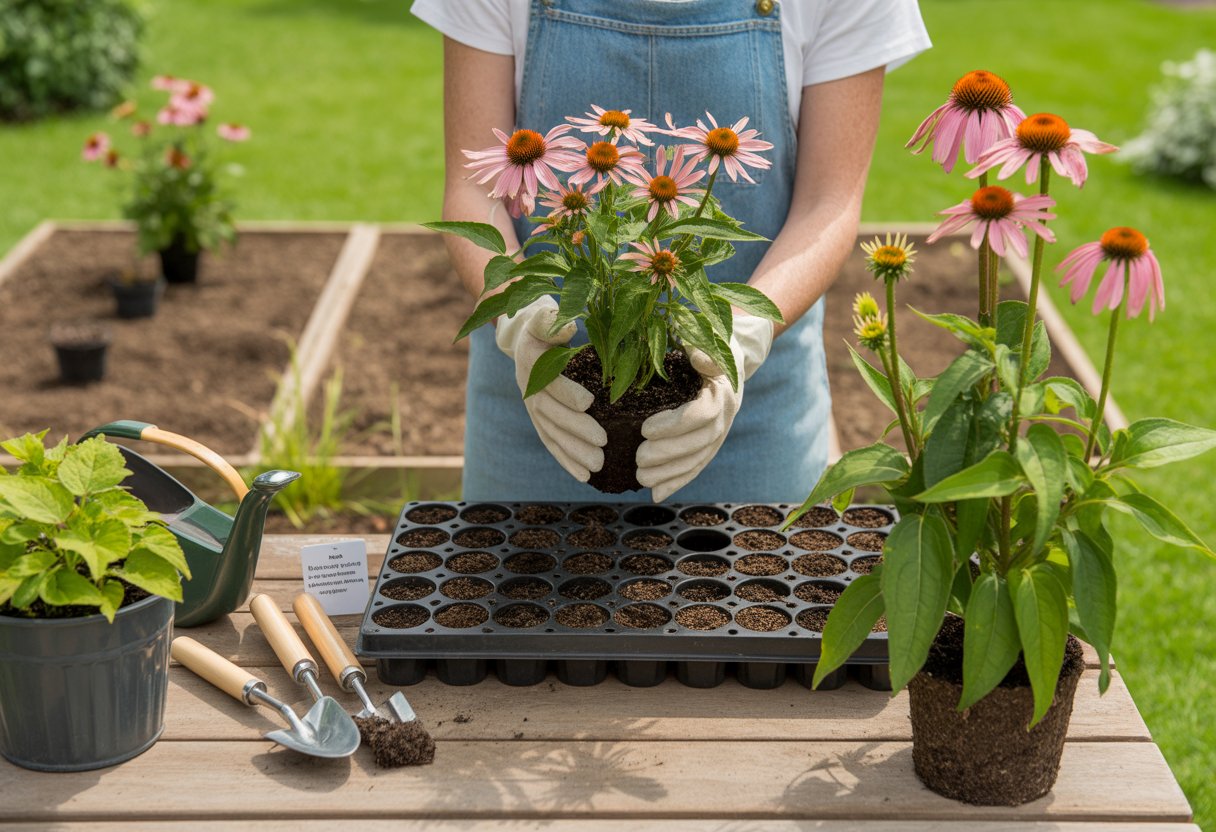
Picking the right coneflower variety and understanding what it needs from its environment are crucial for getting started. If you plan your garden well, your plants get the space and conditions they need to return strong each year.
Selecting Coneflower Varieties
Echinacea purpurea, or purple coneflower, is the most popular by far. It’s a hardy perennial from the Asteraceae family, famous for handling drought and blooming for ages.
Other types like Echinacea pallida and Echinacea paradoxa bring different flower shapes and colors to the table. When you’re picking varieties, think about bloom color, how tall the plant gets, and its growth style.
Most coneflowers reach 2 to 4 feet tall, give or take. Mixing varieties can stretch out the bloom season and keep your garden looking interesting.
Coneflowers are easygoing and don’t need a ton of maintenance. They work well as perennial flowers and will naturalize in garden beds with very little fuss.
Understanding Sunlight and Soil Needs
Echinacea loves sun—at least 6 hours a day if you want those big, bold blooms. A sunny spot helps them grow sturdy stems and richer flower colors.
If you grow them in partial shade, they’ll probably get leggy and bloom less. Well-draining soil is a must to avoid root rot.
Echinacea likes a pH between 6.0 and 7.0 and does best in loamy or sandy soils. If your soil’s heavy or drains poorly, mix in some organic matter to loosen it up.
Skip super-rich soils; too much fertility just means lots of leaves and fewer flowers. Mulch helps keep the soil moist and weeds down, but don’t let it get soggy.
Planning Your Garden Design
Space your plants 12 to 18 inches apart so air can move around. That helps keep diseases at bay and gives each plant room to grow.
Planting coneflowers in clusters or drifts gives a natural look and attracts pollinators. Pair them with black-eyed Susans, bee balm, or ornamental grasses for more texture.
Think about bloom times and plant heights to keep things interesting all season. Make sure you can reach them for deadheading or dividing later.
Don’t put them where they’ll shade out smaller plants. A little planning now pays off in healthier, better-looking plants later.
Step-by-Step Echinacea Planting Guide
Getting echinacea off to a good start means prepping the soil, spacing them right, and watering thoughtfully. If you’re starting from seed or using transplants, these details really matter for growth and blooms.
Planting from Seeds and Transplants
You can sow echinacea seeds outdoors in spring or fall. They usually germinate in 10 to 20 days, but rates bounce between 50% and 80%.
Give seeds light to moderate soil contact—don’t bury them deeper than ¼ inch. Starting seeds indoors about 8 to 10 weeks before your last frost works, too.
Transplant after frost danger passes. Seeds often self-sow in zones 3 to 9, but thin seedlings to 12 inches apart for best results.
Transplants give you a head start on blooms and help the plants settle in faster.
Preparing the Soil and Amendments
Echinacea does best in well-drained, loamy soil with a pH from 6.0 to 7.0. Test your soil and tweak the pH if you need to.
Mix in compost or a slow-release fertilizer for nutrients. Avoid heavy clay or soggy spots—they just cause root rot and sad plants.
Loosen the soil about 12 inches deep so roots can breathe. Organic matter helps hold moisture but lets extra water drain away.
Watering and Early Care
After planting, water deeply but not too often. That encourages roots to go deep.
Keep the soil consistently moist for the first 2 to 3 weeks, whether you’re starting seeds or transplants. Once echinacea settles in, it handles drought pretty well and only needs water during long dry spells.
Don’t overdo it—too much water cuts down on blooms and can bring on fungal diseases. Mulch around the base to hold in moisture and keep weeds at bay, but don’t pile it over the crown.
Optimal Plant Spacing and Arrangement
Plant echinacea 12 to 18 inches apart for good airflow and less disease. Crowded plants just struggle and don’t reach their full size.
Arrange them in rows or clusters, depending on your garden style. Groups of three or more boost pollination and draw in helpful bugs.
Spacing helps plants share water and nutrients without fighting for them. That means stronger stems and more flowers, which is the whole point, right?
Caring for Echinacea Throughout the Seasons
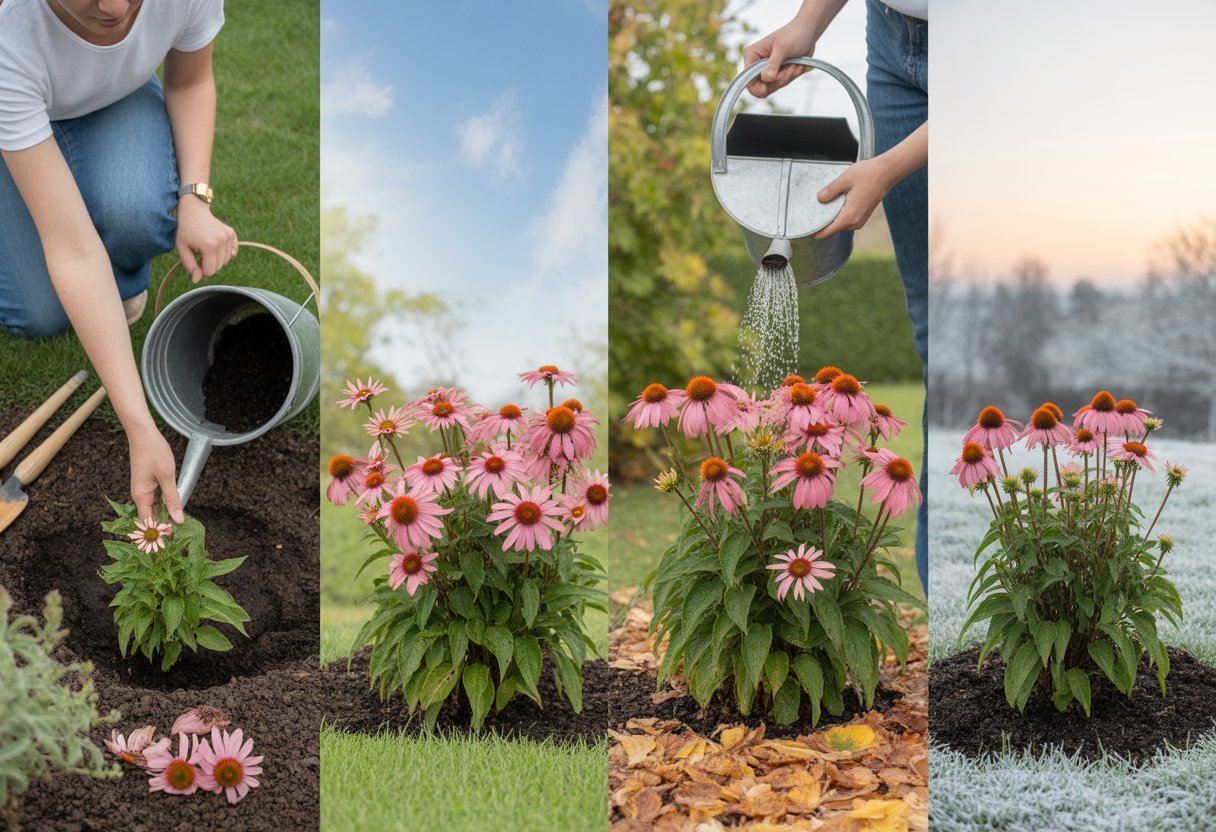
Echinacea rewards a little regular attention. Keeping up with blooms, soil nutrition, and watering can make a big difference.
Adjust what you do as the seasons change, and the plants will thank you with better growth and more flowers.
Maintaining Healthy Blooms
Deadheading spent flowers keeps echinacea blooming longer. Just pinch or snip off faded blooms above a set of leaves.
If you want cut flowers, snip them in the morning when they’re freshest. That encourages even more blooms and gives you something nice for a vase.
Keep an eye out for pests and diseases like powdery mildew during the season. Catching issues early is always easier.
Managing Fertilizer and Mulching
Echinacea isn’t picky about soil but appreciates a little help. Use a balanced, slow-release fertilizer once in early spring.
Too much fertilizer just makes the plant leggy with fewer blooms. A 2-3 inch layer of compost or mulch around the base helps hold moisture, keeps weeds down, and makes the soil better over time.
Refresh mulch each year to keep it working and avoid compacted soil.
Overcoming Drought and Water Stress
Echinacea handles drought but grows better with steady moisture during long dry spells. Water deeply once or twice a week, aiming for the roots, not the leaves.
Skip overwatering—it only leads to root rot. Mulch helps the soil hold onto water and means you don’t have to water as often.
Water in the early morning to cut down on evaporation and avoid fungus.
Protecting Echinacea and Enhancing Garden Benefits
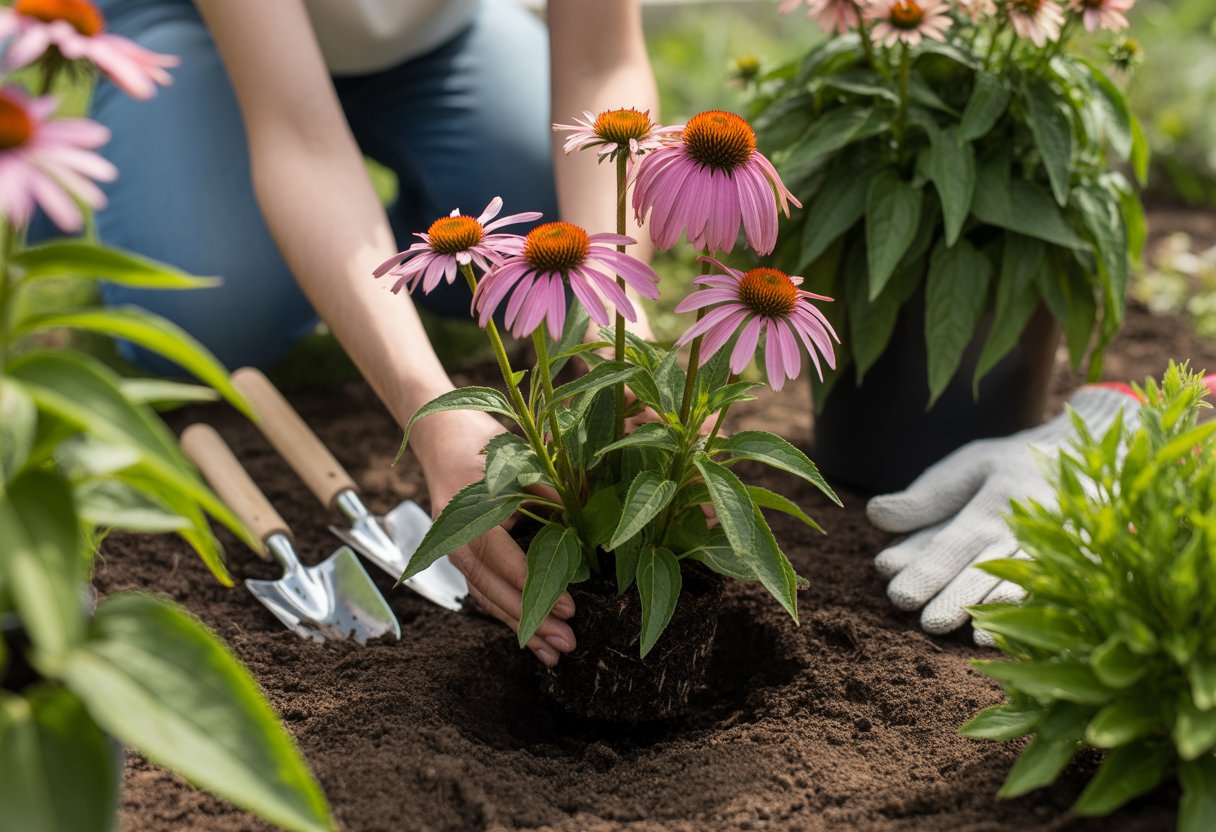
Echinacea needs a little protection from pests and disease, but it’s not high-maintenance. On top of that, it’s fantastic for pollinators and brings extra life to your garden.
Harvesting at the right time gives you the most benefits for both health and looks.
Preventing Diseases and Pests
Deer usually leave echinacea alone, but rabbits and Japanese beetles can be a pain. Use repellents or physical barriers like fencing if you’ve got a lot of critters.
Powdery mildew shows up as a white dust on leaves—plant in full sun with good airflow and avoid overhead watering to keep it at bay. Aster yellows, a bacterial disease, causes weird growth and yellow leaves; pull out infected plants quickly to stop it spreading.
Check your plants regularly for pests or disease. Insecticidal soap knocks down pests without hurting good bugs.
Healthy, well-watered plants are less likely to get sick or stressed.
Encouraging Pollinators and Wildlife
Echinacea is a butterfly magnet and brings in bees—both honeybees and native ones. The flowers offer nectar and pollen all season.
Planting echinacea in clusters makes it easier for pollinators to find and use them. Ladybugs and other helpful insects show up for pest control, and birds like goldfinches love the seed heads.
Leaving seed heads on through winter gives birds food and shelter. Mixing echinacea with other native wildflowers supports a more diverse garden.
Skip insecticides during bloom to protect pollinators and keep your garden buzzing.
Harvesting and Uses of Echinacea
Pick echinacea flowers when their petals are fully open, but before they start to wilt. I usually cut them in the morning, after the dew dries—seems to help keep their color and those lovely essential oils intact.
Wait until the seed heads turn brown and dry if you want to harvest them for propagation or as bird food. It’s surprisingly satisfying to see birds enjoy them in winter.
People often dry echinacea roots and flowers for teas or supplements. Some folks believe these can help with cold, flu, sore throats, and coughs, though opinions on that vary.
If you’re drying echinacea, make sure you store it right so it doesn’t lose its medicinal kick. No one wants weak tea, right?
Fresh echinacea flowers really brighten up a garden, with colors that swing from deep purple to pink. Picking them regularly encourages more blooms, and honestly, it helps keep unwanted seeds from scattering everywhere.