Native Sage for Minnesota: Ideal Varieties and Growing Tips for Local Gardens
Last updated: September 16, 2026
Native sage in Minnesota mostly means species like Salvia lyrata and other closely related plants that are really built for this climate. These sages handle Minnesota’s wild weather and help out pollinators and the local ecosystem in ways that are honestly pretty impressive.
People sometimes mix up these native sages with the culinary kind, but they’re different. Knowing which sage species actually do well here makes it way easier for gardeners and conservationists to boost native plant growth.
Native Sage Species in Minnesota
Minnesota’s native sages come from the Artemisia genus, which is part of the sunflower family. These perennial forbs have some cool tricks for surviving local weather and soil, and you’ll often spot them in prairies or open woods.
They’ve got a long history here, too, both ecologically and culturally.
Artemisia ludoviciana in Minnesota
Artemisia ludoviciana—most folks call it white sage or prairie sage—grows all over Minnesota. It tops out around 1 to 3 feet and has these aromatic, silver-gray leaves that help it hang onto water.
You’ll see it blooming in late summer, with clusters of small, pale yellow flowers. Native Americans have used this plant for medicine and ceremonies for generations.
It’s tough against drought, and its roots help keep prairie soil in place.
Artemisia frigida and Its Habitat
Artemisia frigida, or fringed sagebrush, likes rocky or sandy soils, so you’ll find it more in the northern and western parts of the state. Its finely cut, fringed leaves have a silvery look, and it usually stays under 2 feet tall.
It puts out little yellow or cream flowers from mid to late summer. This plant’s a real survivor—great for prairie restoration because it doesn’t mind tough conditions.
Wildlife often shelters in it or browses it, especially when things get dry.
Silver Sage and Other Artemisia Species
Silver sage usually means Artemisia ludoviciana, but sometimes people lump in other Artemisia species from Minnesota. They all have drought resistance, silvery leaves, and they’re part of the sunflower family.
A few less common Artemisia species pop up here and there, each finding its own little niche. These native sages help stop erosion, keep pollinators coming back, and keep prairies diverse.
If you spot them, it’s a good sign the ecosystem’s in decent shape.
Ecology and Growth Requirements
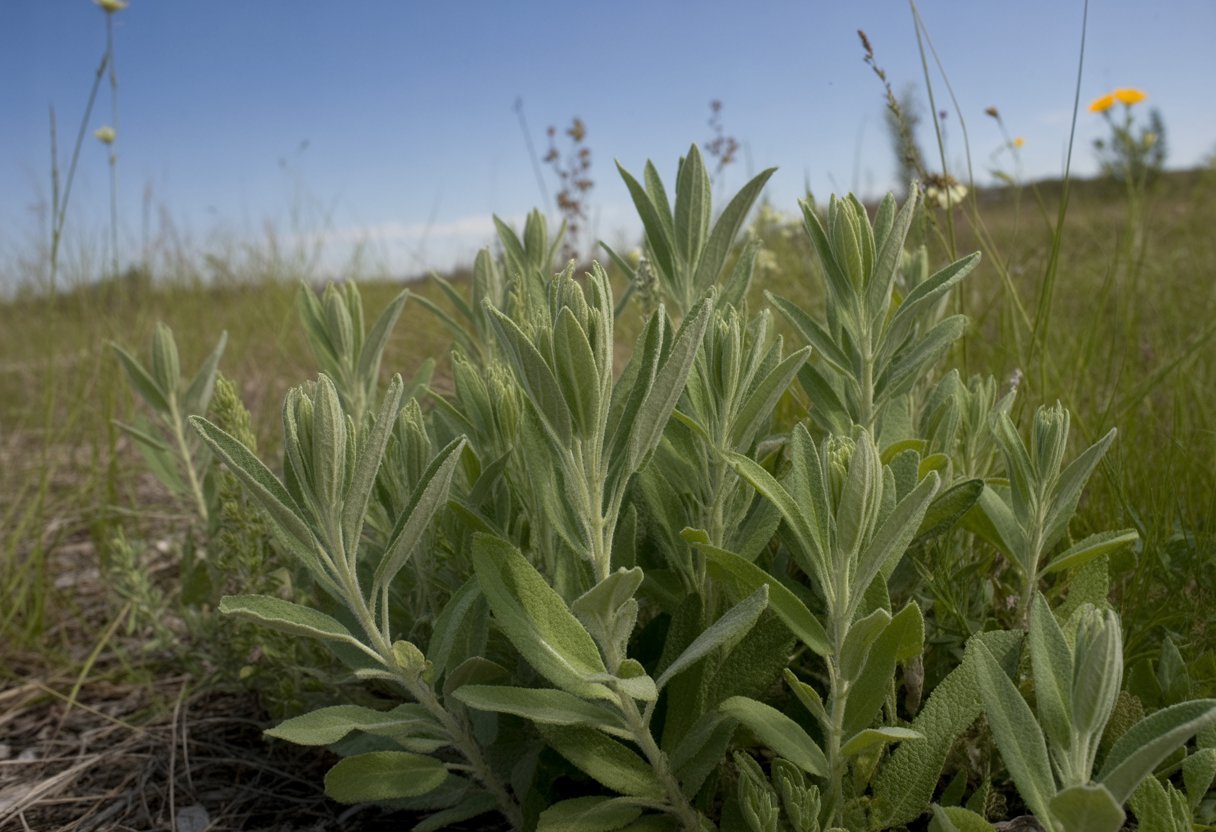
Native sage in Minnesota really needs the right environment to thrive. If you want to spot it or grow it, you’ll want to pay attention to sunlight, soil, and a few other quirks.
Preferred Sunlight and Soil Conditions
Native sage is a perennial forb that honestly just loves full sun. It’s happiest in well-drained soils—sandy or loamy works best—since soggy roots are a no-go.
It can handle a bit of drought, but if the ground stays wet, it’s not going to last. You’ll usually see it in prairies or open woods where it can soak up sun all day.
Soil pH? It does fine from slightly acidic to neutral, around 6.0 to 7.0. Weirdly, it actually likes soil that’s not too rich, since it struggles to compete where aggressive plants take over.
Flower Heads and Inflorescence Characteristics
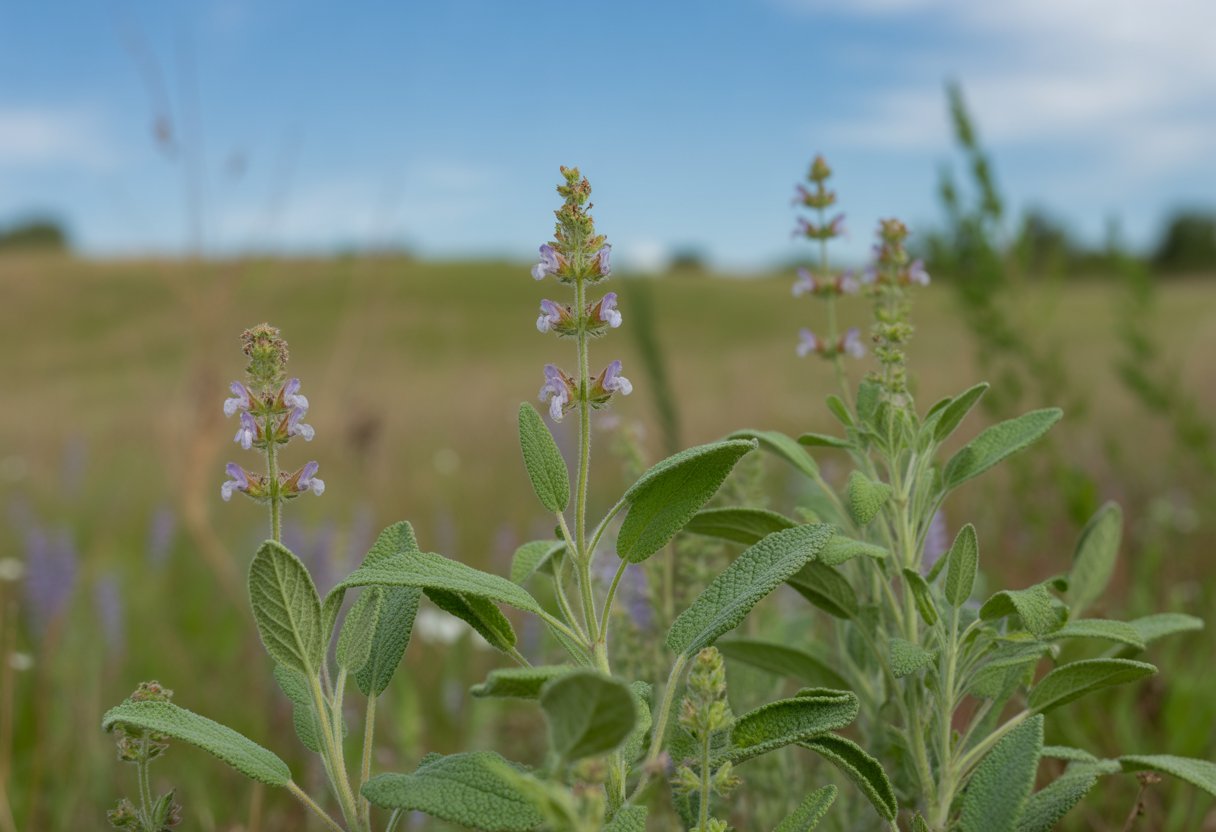
Flower heads on Minnesota’s native sage come in tight clusters—perfect for drawing in pollinators and making seeds. Each cluster holds a bunch of tiny flowers, packed together.
These inflorescences rise on tall, straight stems, putting the blooms above the leaves so bees and butterflies can find them. The flowers themselves aren’t flashy—usually silvery or pale—but that fits right in with plants from dry places.
You’ll catch them flowering from mid to late summer, and then the seeds follow.
Woolly Hairs: Adaptations and Identification
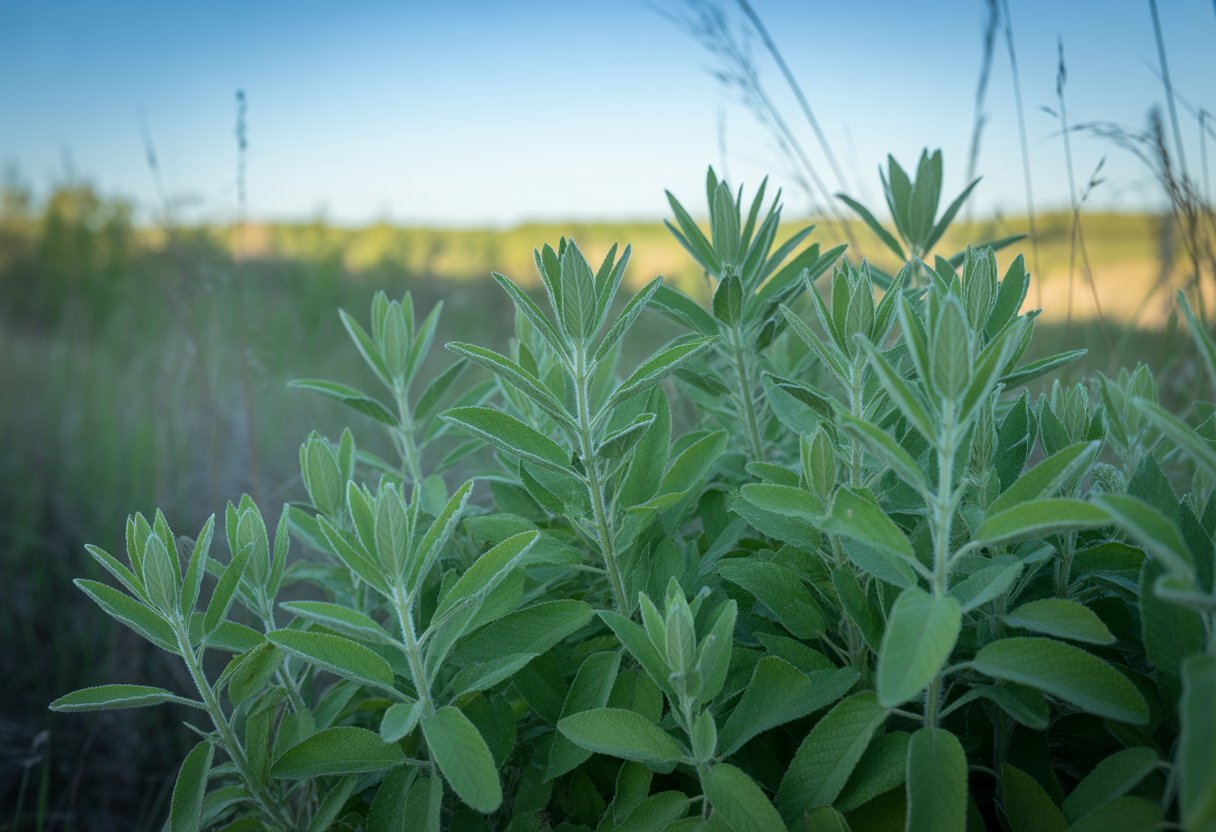
One thing that makes native sage easy to spot is the woolly hairs covering its stems and leaves. These hairs actually do a lot.
They hold in moisture by trapping a thin layer of air, which cuts down on water loss. The woolly look also bounces sunlight away, so the plant doesn’t overheat.
Plus, the texture is kind of rough, which keeps hungry critters from munching on it. If you see soft, silvery-gray leaves, you’re probably looking at native sage.
Ecological Relationships and Cultural Significance
Native sage in Minnesota isn’t just another plant—it matters to the ecosystem and to local cultures. It’s got ties to certain wildlife and plays a big role in Native American traditions.
Sage in Native American Traditions
Native sage holds a special place for a lot of Native American communities in Minnesota. People see it as cleansing and protective, especially during ceremonies.
The Apache and others use sage for smudging, burning it to clear out bad vibes and bring in good energy. It’s one of those traditions that’s stuck around for good reason.
Sage also shows up in healing. Folks have brewed it as a medicinal plant to treat minor stuff, or used it for its antiseptic properties.
For many, it’s about more than just the plant—it’s a connection to ancestors and the land.
Companion Plants: Little Bluestem
Little bluestem (Schizachyrium scoparium) often grows right alongside native sage in Minnesota’s prairies and open woods. They just seem to work well together.
Little bluestem has deep roots that hold soil and help with water, making life a bit easier for sage. Its tall stems also break the wind, so sage doesn’t get battered.
Together, they help keep prairies healthy and diverse, which is huge for soil and erosion control.
Wildlife and Pollinators
Native sage draws in plenty of wildlife. Bees, butterflies, and moths come for the nectar and pollen, which the plants need for reproduction.
Some birds snack on sage seeds, spreading them around. Small mammals also use sage patches for hiding and foraging.
By pulling in pollinators, sage helps keep the whole prairie ecosystem ticking. It’s a bit of a team player.
Distribution, Conservation, and Uses
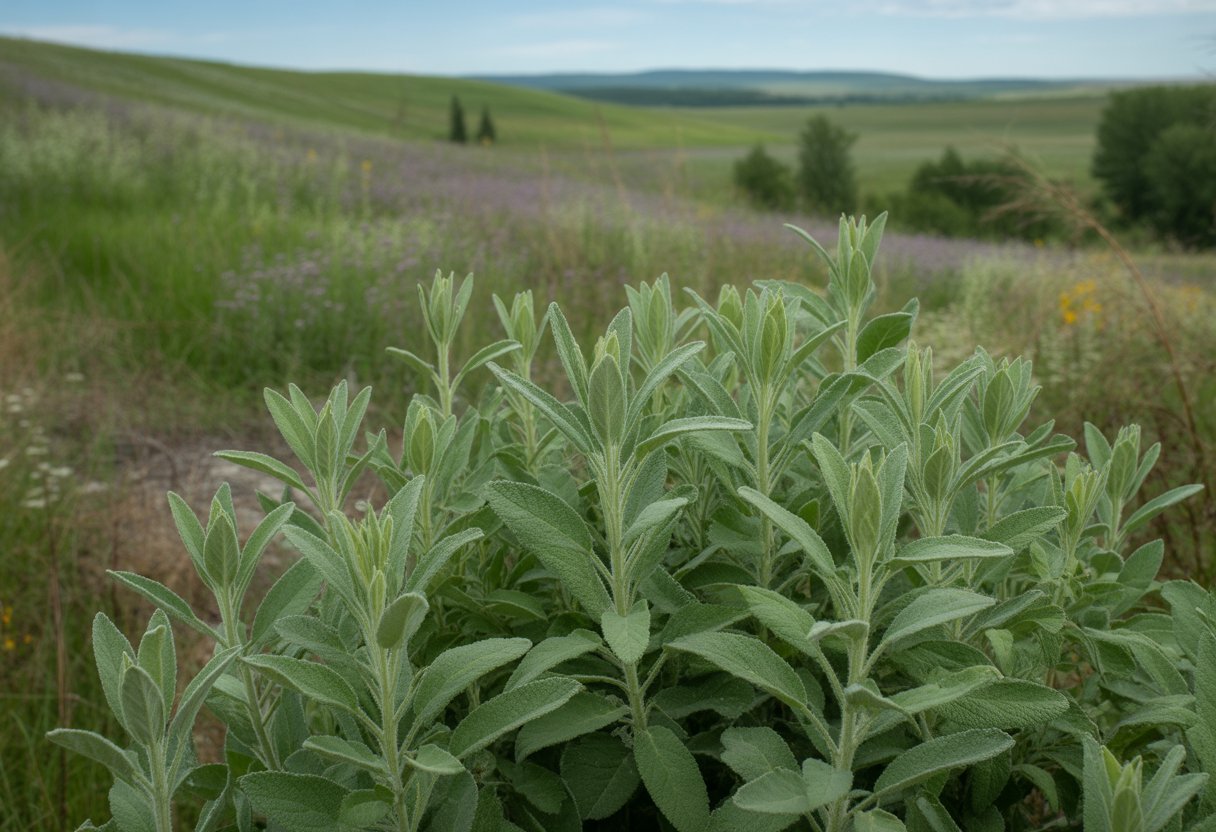
You’ll find native sage in certain parts of Minnesota, and there’s a push to keep it around for the long haul. People use it for all sorts of things, from traditional practices to newer purposes.
Distribution by Minnesota Region and Zip Code
Native sage mostly pops up in southern and central Minnesota, especially in prairie leftovers and open woods. Places like Olmsted (55901), Dakota (55044), and Rice (55013) counties see a lot of it.
It likes spots with good drainage and full sun. If you check distribution maps, you’ll notice it’s thickest in zip codes 56201, 56001, and 55044.
It’s less common up north, where it’s colder and the forests are denser.
Conservation and Sustainable Harvesting
Habitat loss and overharvesting threaten sage populations. Conservation programs in Minnesota encourage people to protect natural prairie habitats and avoid picking too much at once.
Botanical gardens and state parks help by collecting seeds and propagating plants, which keeps populations stable and diverse. Some folks are even growing white sage on purpose to take pressure off wild patches.
Modern and Traditional Uses
White sage shows up in Minnesota ceremonies, especially for smudging by Native American groups. Folks have turned to it for herbal remedies, hoping to ease respiratory issues or soothe minor skin irritations.
Lately, white sage bundles and oils pop up in local markets more often. Still, I wonder about sustainable sourcing—nobody wants to see these plants disappear.
Researchers keep poking around in sage compounds, looking for real health benefits. The science isn’t settled yet, but curiosity definitely isn’t in short supply.