Common Problems with Sumac and Solutions for Healthy Growth and Maintenance
Last updated: August 30, 2026
Sumac can be a tough plant, but it’s not immune to trouble. Fungal diseases, pest infestations, and environmental stress can all take a toll on its health and looks.
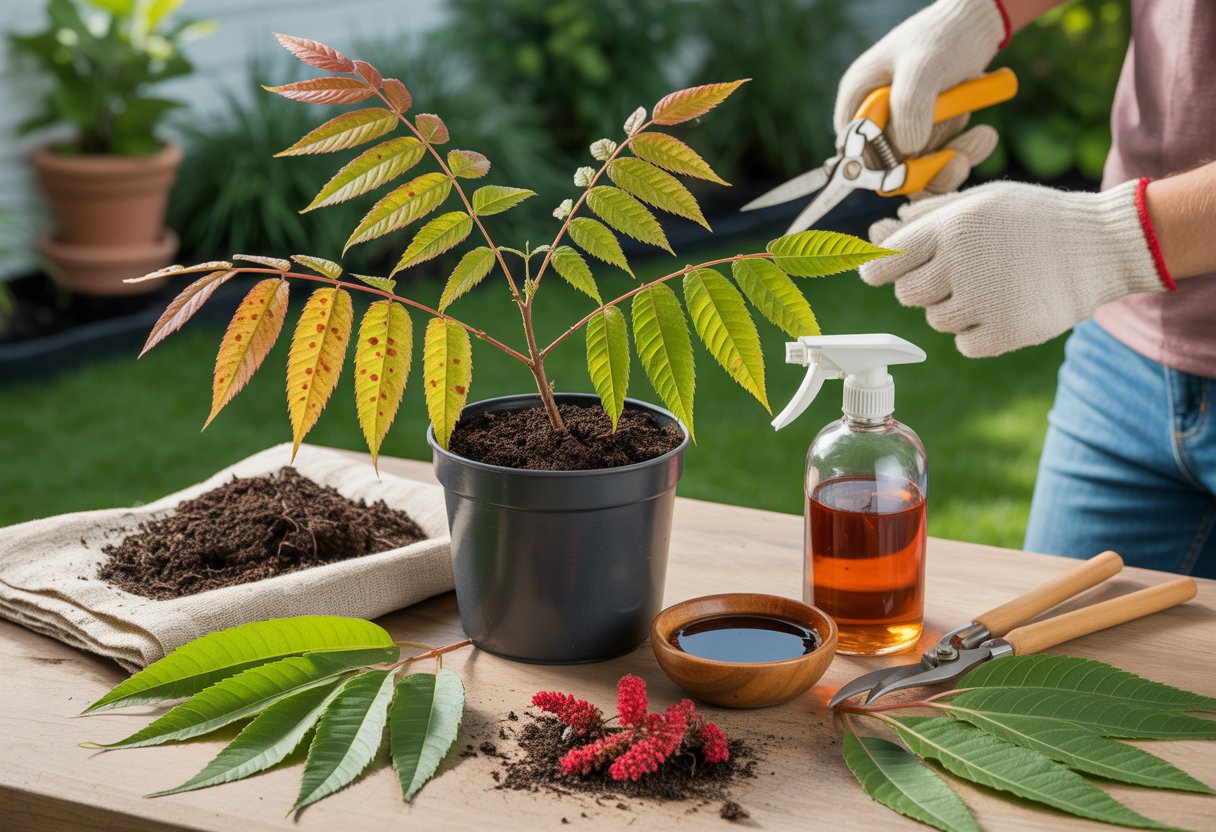
Fungal diseases like powdery mildew and leaf spot pop up pretty often. Aphids and scale insects love to snack on sumac’s sap, weakening the plant.
Environmental factors—think drought or poor soil—can stress sumac out even more. That makes it easier for pests and diseases to move in.
Identifying Common Types of Sumac and Their Risks
Sumac comes in quite a few varieties. Some are totally safe, while others can cause serious skin reactions.
Knowing the difference between toxic and non-toxic types is pretty important if you want to avoid trouble. You can usually tell them apart by looking at their leaves, berries, and where they grow.
Toxic Varieties: Poison Sumac and Lookalikes
Poison sumac (Toxicodendron vernix) is the one you want to steer clear of. You’ll mostly find it in wet, swampy woods.
Its leaves grow in pairs with a single leaflet at the tip—usually 7 to 13 per stem. They’re smooth-edged and turn bright red in the fall.
Touching poison sumac almost always leads to skin irritation or even a full-blown allergic reaction, much like poison ivy. It grows as a tall shrub or a small tree and sports clusters of white or grayish berries.
It’s in the same family as cashew and poison ivy, which is kind of wild when you think about it. Some other Toxicodendron species look similar but have different levels of toxicity.
Getting the oil on your skin or breathing in smoke from burning poison sumac can cause nasty rashes or even breathing problems.
Non-Toxic Varieties: Staghorn Sumac and Safe Species
Staghorn sumac (Rhus typhina) is probably the most recognized non-toxic kind. You’ll spot it by its fuzzy stems and those dense, upright clusters of red berries.
It’s happiest in full sun and well-drained soil, where it often forms big colonies. The leaves are made up of 11 to 31 sharply toothed leaflets.
Unlike its toxic cousin, staghorn sumac is totally safe to touch. People plant it for its stunning fall colors and dramatic shape.
Other safe types of sumac might have smooth or hairy stems, but none of them have the urushiol oil that causes allergic reactions. You’ll find these plants in parks, gardens, and along roadsides, where they help stabilize soil and support local wildlife.
How to Recognize Sumac Plants in the Wild
Most sumacs stand out because of their pinnately compound leaves and tight berry clusters. Depending on the species, they grow as shrubs or small trees.
Poison sumac prefers swampy spots and has smooth-edged leaves, while non-toxic types like staghorn sumac stick to dry, sunny areas. That “leaves of three” rule for poison ivy doesn’t work here—sumac usually has way more leaflets.
Staghorn sumac’s stems are fuzzy, which is a dead giveaway, while poison sumac’s stems are smooth and lighter in color. If you’re not sure what you’re looking at, it’s best not to touch or burn it.
Health Problems Caused by Sumac Exposure
Some sumac plants, especially those in the Toxicodendron group, contain urushiol oil. This stuff can really mess with your skin.
The severity of a reaction depends on your immune system and how much oil you get on you.
Allergic Reactions Triggered by Urushiol Oil
Urushiol oil is a strong allergen. When it touches your skin, it binds to proteins and your immune system freaks out, treating it like a threat.
Usually, you’ll see a reaction within 12 to 48 hours after contact. Even a tiny amount of urushiol can set things off.
Some people don’t react the first time but become sensitized after that. The more you touch it, the worse your reactions can get.
Symptoms: Rash, Itching, and Blisters
A sumac rash usually starts as an itchy, red patch. Small bumps or spots pop up in a day or two, and then blisters may form.
The itching can get pretty intense. If you scratch, you risk getting a secondary infection.
The rash often shows up in streaks or patches, following where the oil touched your skin—or where you spread it by accident.
Severity: Swelling and Complications
Sometimes, swelling develops around the rash or even in your face and limbs. That’s your body’s immune response kicking into overdrive.
If you scratch open blisters or don’t keep the area clean, infections can set in. Inhaling smoke from burning sumac is way worse—it can cause breathing problems that need a doctor’s attention.
Long-term Effects and Immune Response
Once your body reacts to urushiol, it remembers. The next exposure can bring on a rash even faster.
Most rashes clear up in a week or two, leaving no lasting damage. Still, some folks get repeat bouts if they keep getting exposed.
People who react to sumac often react to poison ivy or lacquer trees too, since they all contain similar oils.
Effective Solutions for Preventing and Treating Sumac Reactions

If you run into sumac, acting fast can really help. Washing up, using the right creams, and protecting your skin go a long way.
Immediate First Aid After Contact
Wash your skin right away with cold water and mild soap. The sooner you get the urushiol off, the better.
Skip the hot water—it opens your pores and can make things worse. Rubbing alcohol can help dissolve the oil if you use it quickly.
Try not to scratch, even though it’s tempting. Scratching just spreads the oil or causes infection.
Don’t forget to wash any clothes or tools that touched the plant. That stuff can stick around and cause a rash later.
Medical Treatments and Over-the-Counter Remedies
Calamine lotion is a classic for soothing itch and drying blisters. Antihistamines help with allergic reactions and can make it easier to sleep if the itching is bad.
For tougher cases, a doctor might suggest topical corticosteroids. Over-the-counter hydrocortisone cream works for milder symptoms.
If your rash is really bad or covers a lot of skin, see a doctor for stronger meds or wound care.
Preventive Measures and Barrier Protection
Barrier creams can keep urushiol from reaching your skin. Put them on before you head into sumac territory.
Long sleeves, gloves, and pants are your friends. After you’re done outside, wash up and toss your clothes in the laundry.
Don’t touch the rash or anything that’s contaminated, or you’ll just spread it around. Using barrier cream and protective clothing is honestly the best way to avoid problems.
Other Environmental and Plant Care Challenges

Sumac can be a bit of a handful in the garden. It spreads fast and needs some attention to stay healthy.
Managing Sumac in Gardens and Landscapes
Sumac spreads aggressively through roots and seeds. If you plant it too close to buildings or other plants, it’ll crowd them out.
Root pruning helps keep it in check. Physical barriers underground can also stop roots from wandering.
Give sumac at least 8 to 10 feet of space from other plants or structures. It likes well-drained soil and lots of sun—shade just makes it look sad.
Prune away dead or damaged branches to boost air flow and sunlight.
Addressing Fungal Infections and Pests
Fungal issues like powdery mildew or rust can hit sumac, causing leaf spots and early leaf drop. Good spacing, regular pruning, and watering at the base (not overhead) help keep fungus away.
Aphids and scale bugs suck sap and weaken the plant. You can control them with insecticidal soap or neem oil—just spray it right on the bugs.
Keep an eye on your plants for early signs of trouble. Remove fallen, infected leaves to cut down on fungal spores nearby.
Soil and Nutrient Issues Affecting Sumac
Iron deficiency often shows up as chlorosis. The leaves turn yellow, but the veins stubbornly stay green.
You’ll see this more in alkaline or poorly drained soils. Sometimes, applying chelated iron or trying to acidify the soil brings the green back.
Sumac likes soils with moderate fertility. Too much nitrogen? That just makes the plant grow tall and spindly, which isn’t great for its health.
A soil test can help you spot nutrient problems. Then you know what fertilizer to use—no guessing.
If you want to avoid root rot, make sure you’ve got proper drainage. Waterlogged soil is a recipe for trouble.
Mixing in organic matter can really help the soil. It boosts structure and nutrients, making it easier for sumac to thrive.
 Looking for a nursery that carries native plants?
Browse our native plant nursery directory