
Lawn Alternatives for Shady Yards: Effective Solutions for Low-Light Areas
Last updated: September 4, 2026
Shady yards can be tough for traditional grass lawns. Most grass needs plenty of sunlight, so you’ll want to look at other ground covers if you want your outdoor space to stay healthy and attractive.
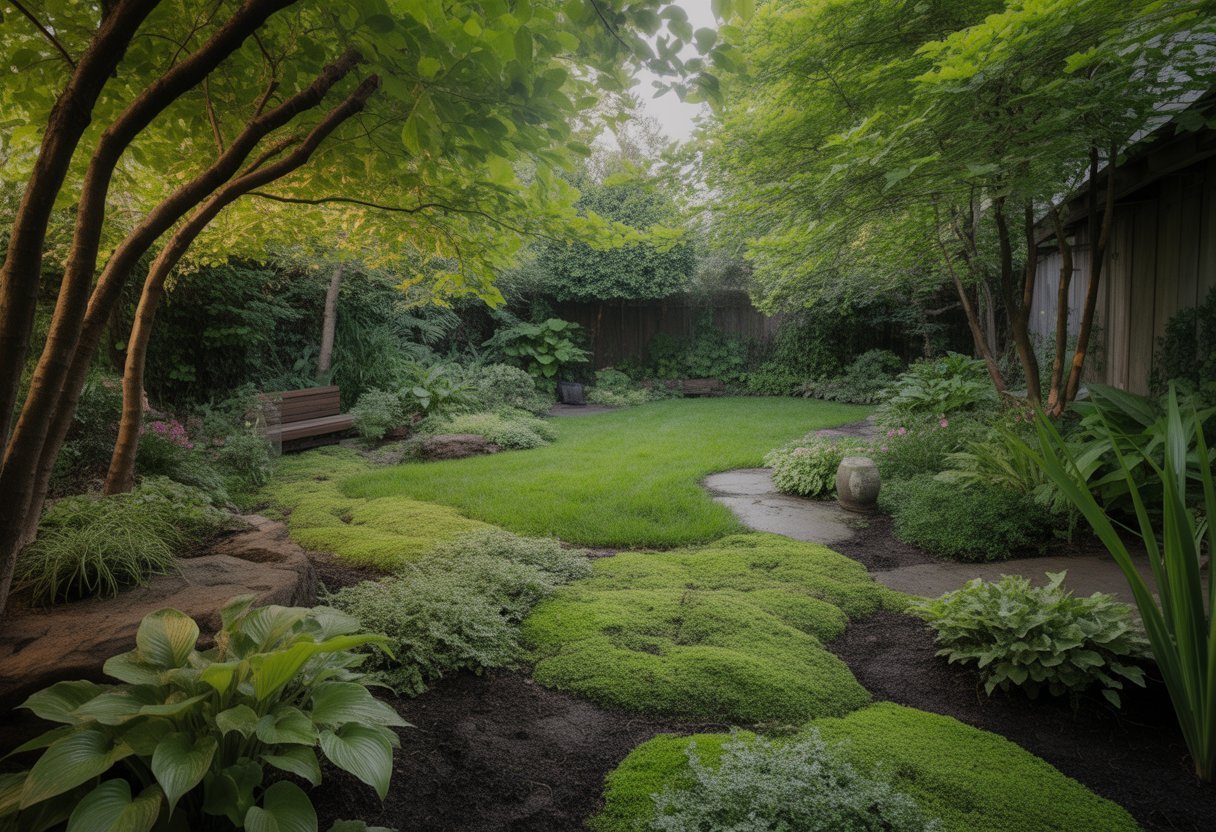
Some of the best lawn alternatives for shady yards are shade-tolerant plants like moss, ferns, hostas, or pachysandra. These plants don’t need as much sunlight and can fill in where grass just gives up.
Picking the right plant depends on your soil, how much moisture you’ve got, and how much work you want to put in. If you get it right, even a tricky shady spot can turn into something lush and easy to care for.
Why Choose Lawn Alternatives for Shady Yards
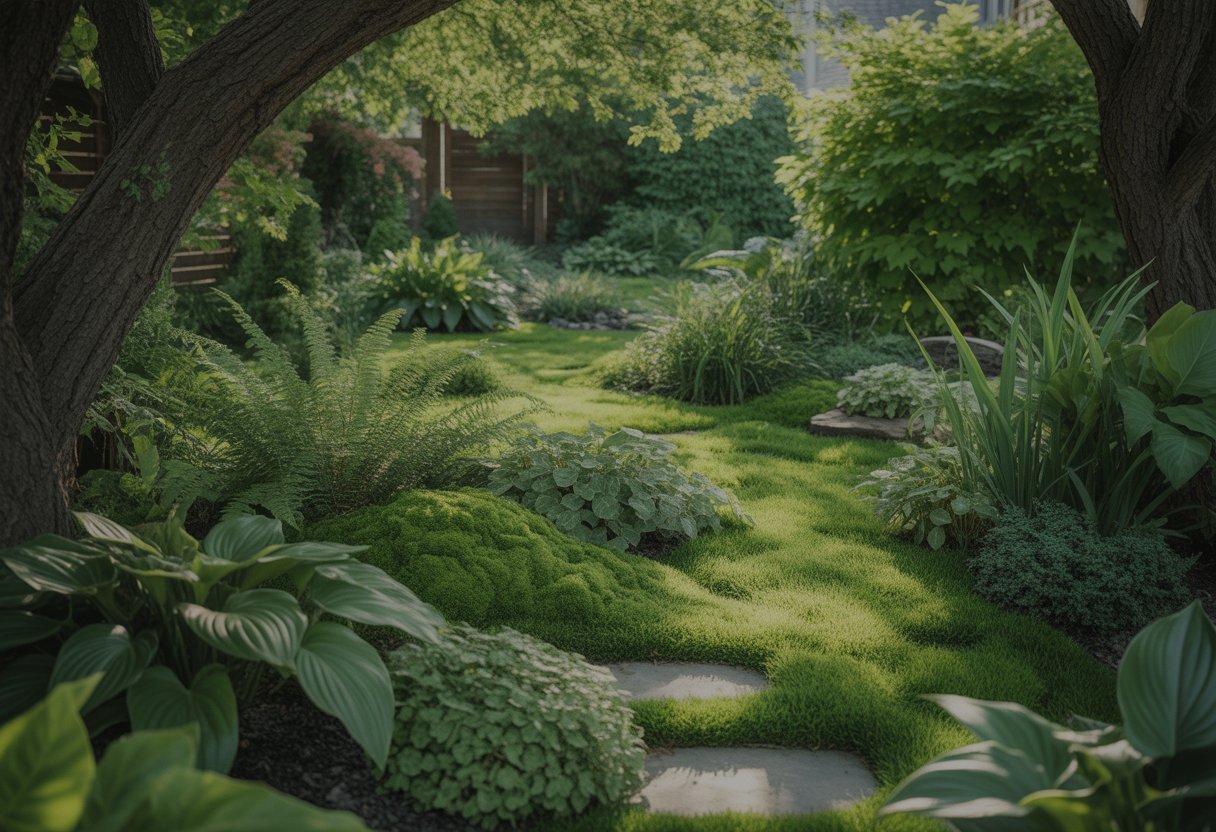
Shady yards make life hard for traditional grass. You often end up with sad patches and thin growth.
Lawn alternatives can make your yard look better, cut down on maintenance, and help the environment in ways that fit low-light spaces.
Limitations of Traditional Grass Lawns
Most classic grasses—Kentucky bluegrass, fescue—want at least 4-6 hours of direct sun. Without it, they just get thin, patchy, and sometimes moldy or fungus-prone.
You’ll find yourself watering and fertilizing a lot just to keep them alive, which means more work and money.
Grass in shade gets beat up by pests and foot traffic, too. That leads to constant reseeding and patch jobs, and honestly, it never quite looks right.
Benefits of Grass Alternatives
Plants like moss, creeping thyme, and special fescue blends actually do well with less light. They need less water and fertilizer, which is easier on your wallet and the planet.
Some of these options handle drought and foot traffic better, so your yard stays green and covered.
Ground covers like clover even help the soil by fixing nitrogen and attracting pollinators. You’ll probably mow less, too.
| Lawn Type | Sunlight Need | Maintenance | Water Use | Traffic Tolerance |
|---|---|---|---|---|
| Kentucky Bluegrass | 6+ hours | High | High | Moderate |
| Moss | Low | Low | Low | Low |
| Creeping Thyme | Low to Moderate | Low | Low | Moderate |
| Clover | Low to Moderate | Moderate | Moderate | Moderate |
Environmental Impact
Switching from grass to alternatives can save a lot of water, which matters if you’re somewhere dry or under water restrictions. These plants usually need fewer chemicals, so there’s less runoff and cleaner soil.
Shady ground covers often support more wildlife than a plain grass lawn. Their roots hold soil together, helping with erosion and making the whole yard healthier.
If you care about sustainability, these options cut down on resource use and all those emissions from mowing and fertilizing. That’s a win for shady yards.
Best Ground Cover Options for Shade
You’ll want ground covers that don’t need much sun, stay low-maintenance, and do a good job covering bare soil. Some can even handle a bit of foot traffic and keep your yard looking interesting.
Moss
Moss is a champ in damp, shady places where grass just fizzles. It likes acidic soil and poor drainage, so don’t worry if your yard isn’t perfect.
It won’t handle a lot of walking, but it’s super low-maintenance and can even grow over rocks or compacted spots.
Moss spreads by spores and rhizoids, making thick mats that help prevent erosion. You won’t need to mow, and a little water during dry spells keeps it soft.
Sheet moss or cushion moss both work, depending on how wet your yard stays and what kind of look you want.
Clover Lawn
Clover lawns bring durability and naturally boost your soil’s nitrogen. They handle part to full shade and can take a bit of foot traffic.
White clover is the classic pick. It stays low, fills in thick, and those little white flowers are great for pollinators.
Clover stays green longer than grass if things get dry. It also helps crowd out weeds, and you’ll only need to mow now and then.
Blue Star Creeper
Blue star creeper (Isotoma fluviatilis) is a low, spreading plant that does well in shade with some moisture. It puts out tiny blue flowers in spring and summer, which really livens up a shady patch.
It handles more walking than moss but still likes well-drained soil. It’s happiest in USDA zones 5-9, and once it’s in, you don’t need to fuss over it much.
Just give it a drink if things get really dry, and it’ll stay dense and healthy.
Stonecrop
Stonecrop, or Sedum, is a succulent that can handle shade, though it prefers a bit of filtered sun. It’s tough, needs very little water, and works well in sunny borders or partly shaded spots.
Its thick leaves store water, so poor soil isn’t a problem. Stonecrop blooms with star-shaped flowers that pollinators love.
It spreads by creeping stems, filling in gaps and helping keep weeds down.
Creative and Functional Lawn Replacement Ideas
If you want to ditch the traditional lawn, you’ve got options that love the shade and make your yard work better for you. Think about what helps your soil, cuts down on chores, or just looks good.
Wildflower Meadow
A wildflower meadow brings in native, shade-loving flowers that support pollinators and boost biodiversity. Woodland phlox, bluebells, and columbine are all winners in low light.
You’ll need to clear out grass and prep the soil before seeding. Once wildflowers are up, mow now and then to keep woody plants in check and flowers blooming.
This approach is eco-friendly and gives your yard a laid-back, natural vibe.
Hardscape and Gravel
Hardscape—think flagstone paths, patios, or gravel beds—can totally replace grass in shady spots. Gravel works well because it lets water through and keeps weeds down, even with no sun.
Using permeable materials helps with drainage and keeps soil from getting packed down. You can add shade-loving potted plants for a little color and life.
Hardscape is great for sitting areas or walkways and doesn’t need the constant care that turf demands.
Ornamental Grasses and Sedges
Ornamental grasses and sedges bring texture and movement to shady corners where grass just won’t grow. Carex (sedges) and Hakonechloa (Japanese forest grass) both handle low light and dampness, and they look good year-round.
Once they’re settled in, you won’t need to water much. They help control erosion on slopes or rough ground.
Their clumping habit makes them easy to use as borders or in big sweeps, and they fit right in with a woodland garden feel.
Enhancing Shady Yards With Plant Diversity
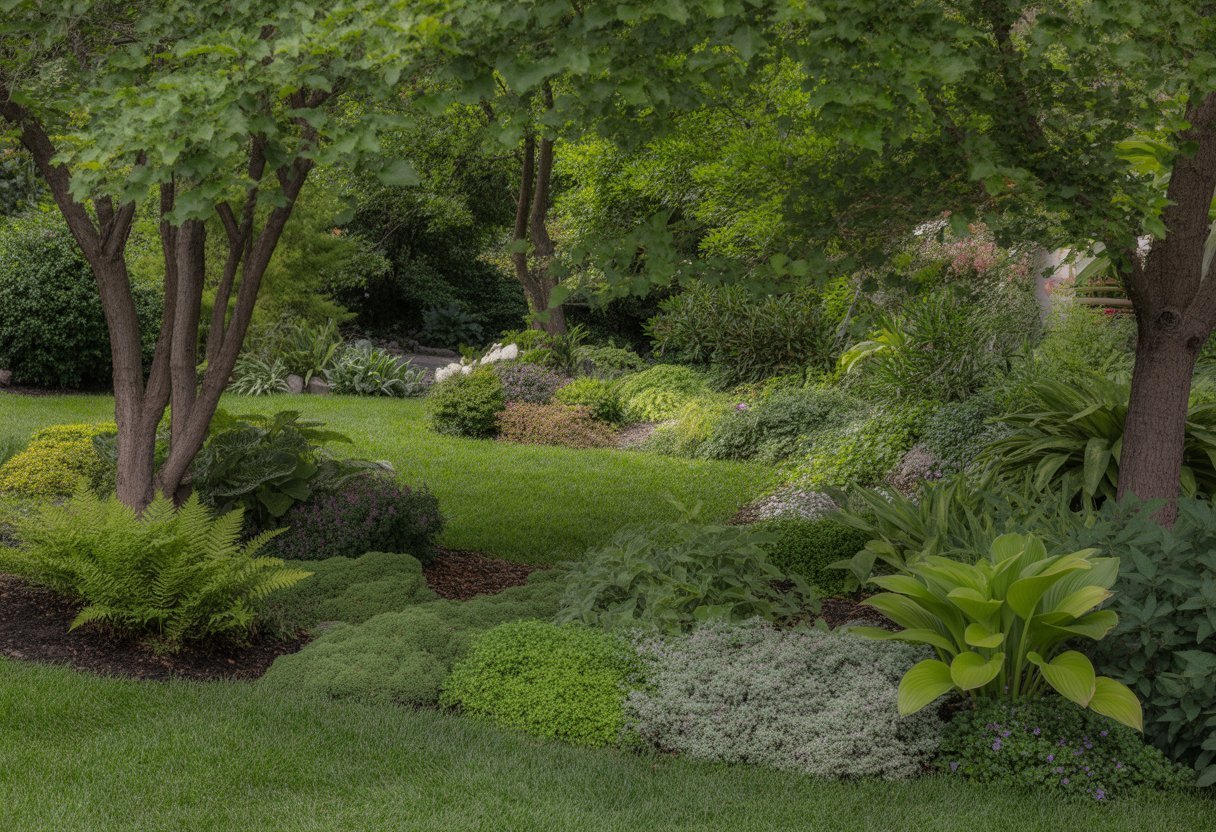
Mixing it up with different plants makes shady yards look better and stay healthier. Go for species that like low light, help local wildlife, or just smell nice.
Perennials and Native Plants
Shade-loving perennials like hostas, astilbes, and ferns give you reliable ground cover and some color, all without much work. Native plants are especially handy—they’re built for your local soil and light, so they’re tough and don’t need much watering or fertilizer.
Adding natives like wild ginger or foamflower can cut down on pest issues and help balance the ecosystem. Their roots hold soil together and make it healthier over time.
Incorporating Trees and Shade Plants
Understory trees and shade-friendly shrubs give your yard layers and structure. Dogwood, redbud, and serviceberry all manage well in shade and add flowers or berries.
Shrubs like azaleas or rhododendrons bring even more color and fill in under big trees.
Planting small shade plants around tree bases fills in bare spots and keeps things looking natural. It’s a smart way to get that woodland vibe and make sure your plants get enough filtered light.
Supporting Pollinators
You can help pollinators in shady gardens by picking plants that bloom in low light. Native perennials like jewelweed or coral bells attract bees, butterflies, and even hummingbirds.
If you mix up bloom times, you’ll keep food available all season. Skip the pesticides—pollinators will thank you.
A small water feature or leaving some natural debris around can offer shelter and a drink, making your shady yard a true haven.
Fragrant Options: Creeping Thyme and Corsican Mint
Creeping thyme and Corsican mint make great fragrant ground covers for shady areas with a bit of sun. They both spread out thickly, choke out weeds, and can handle some foot traffic.
Creeping thyme shows off tiny purple flowers that pull in pollinators and give off a lovely scent when you walk across them. Corsican mint, on the other hand, has bright green, delicate leaves and a bold minty aroma that might even keep some pests away.
These plants bring a little sensory magic to spots where grass just refuses to cooperate.

I’ve seen conflicting advice on this topic. This seems reasonable though.