Solomon’s Plume (Smilacina racemosa)
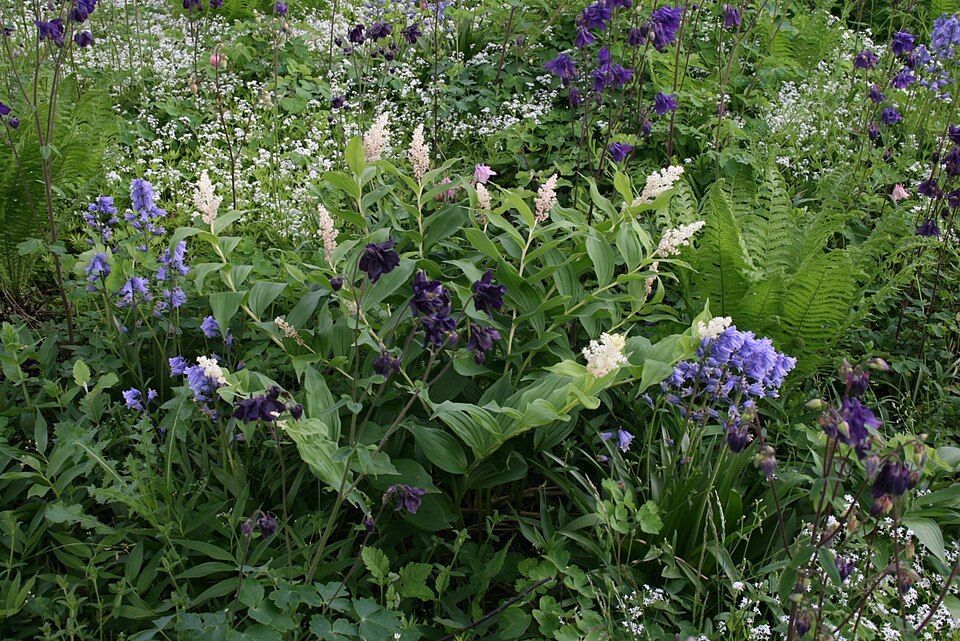
Smilacina racemosa (syn. Maianthemum racemosum), commonly known as Solomon’s Plume, False Solomon’s Seal, or Feathery False Lily of the Valley, is one of the most graceful and adaptable native wildflowers of the woodland understory. Unlike its close relative True Solomon’s Seal (Polygonatum), which produces flowers dangling beneath the leaves, Solomon’s Plume bears a beautiful, frothy plume of tiny starry white flowers at the tip of each arching stem in May — the source of both its common names and its extraordinary charm in the spring garden. This broadly native perennial occurs naturally in woodland habitats from the Atlantic to the Pacific and from Alaska to Mexico, making it one of the most geographically widespread native wildflowers in all of North America.
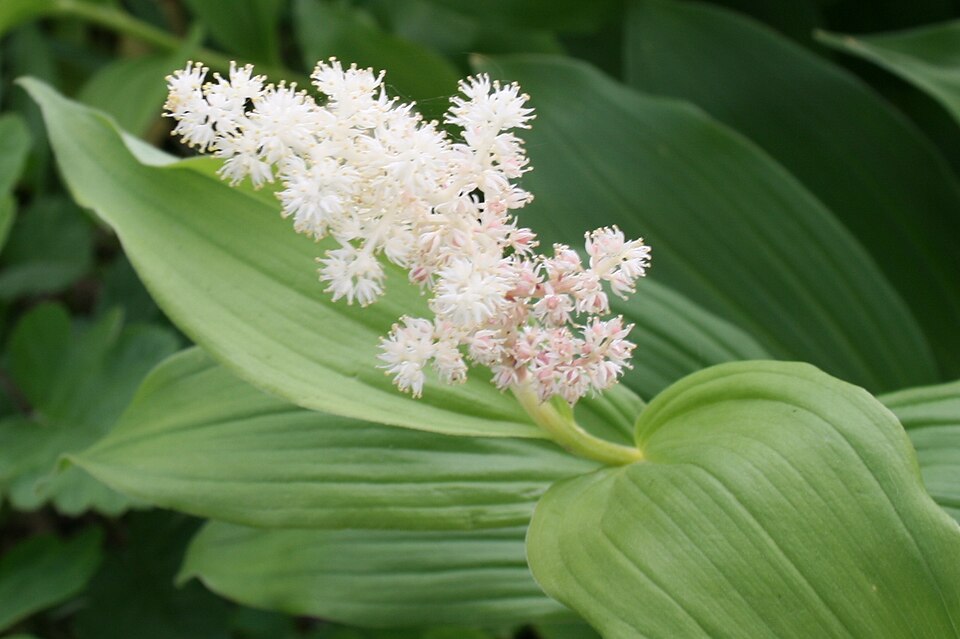
The plant grows from a slowly spreading rhizome into graceful, arching clumps of stems 1 to 3 feet tall, each terminating in a feathery white plume of dozens of tiny starry flowers in May. By late summer, the flowers are replaced by clusters of small berries that ripen from green-speckled white to ruby red — providing an entirely different season of ornamental interest and an important wildlife food source. The broad, ribbed, alternately arranged leaves create a layered, horizontal canopy effect that is visually striking through the entire growing season.
For gardeners seeking shade-loving natives that combine spring bloom, attractive summer foliage, and fall fruit, Solomon’s Plume is nearly unmatched. It is exceptionally adaptable — tolerating everything from moderate shade to quite deep shade, from average soil to humus-rich forest loam. Once established, it spreads slowly by rhizomes to form expanding colonies that naturalize beautifully beneath trees and along woodland paths, requiring essentially no maintenance once sited appropriately.
Identification
Solomon’s Plume grows from a stout, fleshy rhizome that branches slowly over time to form multi-stemmed clumps. Individual stems are unbranched, slightly zigzagging in character, and arch gracefully in an arc from a vertical base. Mature plants in good conditions may produce 10–20 stems per clump, creating a dense, layered mound of foliage.
Leaves
The leaves are among the most attractive features of the plant — large, broadly oval, 3 to 6 inches (7–15 cm) long, with deeply impressed parallel veins that give a distinctly ribbed, corrugated texture, and surfaces that are smooth on top and sometimes finely hairy beneath. They are arranged alternately along the stem in two flat rows, creating the characteristic “Solomon’s Seal” pattern of horizontal layering. The leaves are a rich medium to deep green throughout the growing season, turning attractive shades of yellow and bronze in autumn before dropping.
Flowers
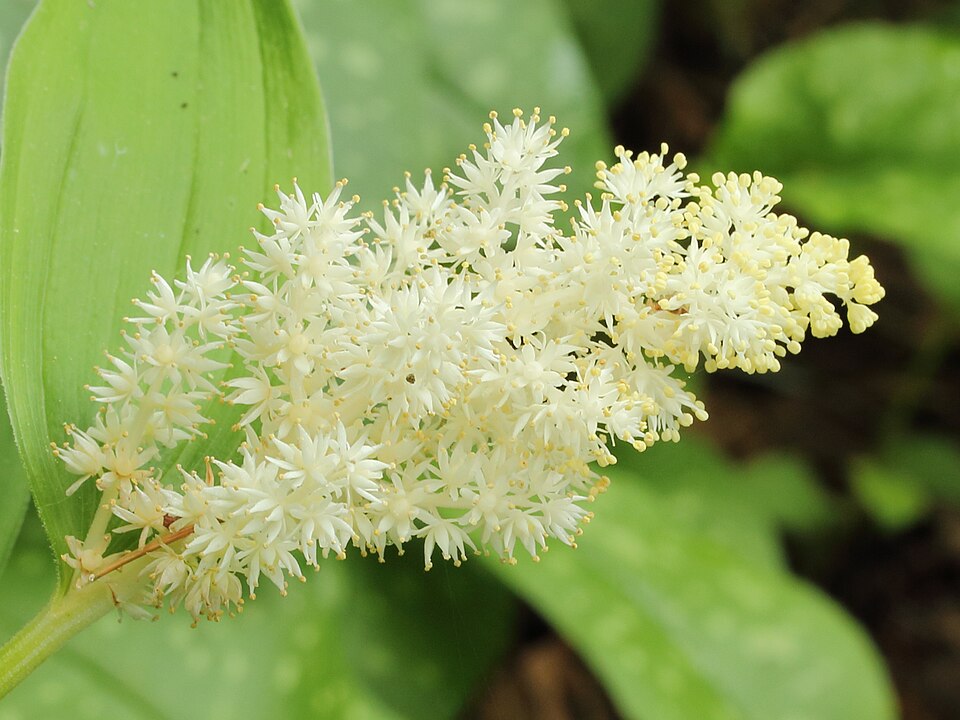
The flowers appear in May in a terminal, branched cluster (panicle) at the tip of each stem — a compound arrangement of dozens to over a hundred tiny individual flowers, each just ⅛ inch (3 mm) across with 6 white to cream tepals and 6 prominent stamens. The entire cluster is typically 2 to 5 inches (5–12 cm) long, with a frothy, plume-like appearance that is responsible for the common name. Individual flowers are slightly fragrant. The flower cluster is distinctly terminal — at the very tip of the stem — which distinguishes this species immediately from True Solomon’s Seal (Polygonatum), which has flowers dangling from the leaf axils along the stem.
Berries & Fruit
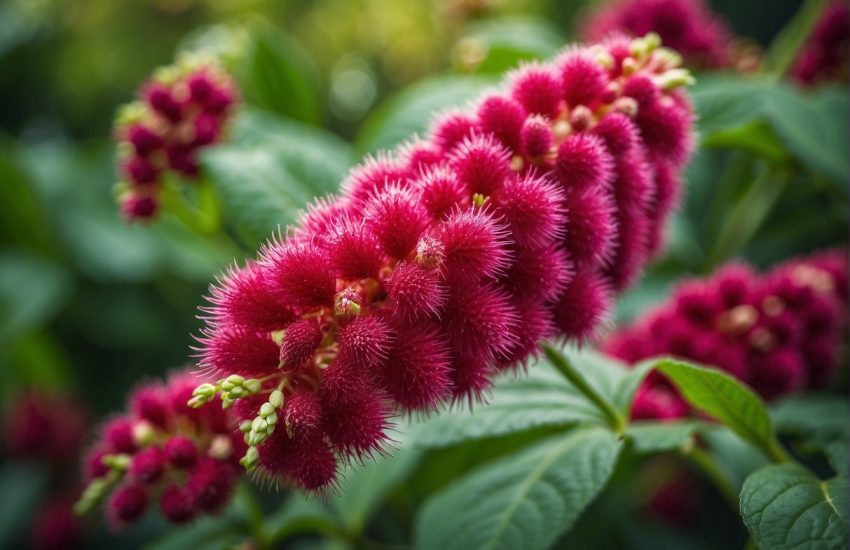
Following pollination, the flower cluster develops into a compact bunch of rounded berries, each about ¼ inch (6 mm) in diameter. The berries ripen through an attractive sequence: first green with reddish speckles, then translucent whitish-pink, and finally deep ruby red to red-purple at full maturity in late summer (August–September). They are eagerly consumed by birds and small mammals. The berries have a slightly bitter, pungent taste that makes them unpalatable to most humans in quantity, though they were eaten historically by some Indigenous peoples after preparation.
Quick Facts
| Scientific Name | Smilacina racemosa (syn. Maianthemum racemosum) |
| Family | Asparagaceae (Asparagus) |
| Plant Type | Herbaceous Perennial (rhizomatous) |
| Mature Height | 1–3 ft |
| Sun Exposure | Part Shade to Full Shade |
| Water Needs | Moderate |
| Bloom Time | May |
| Flower Color | White to cream |
| Fall Fruit | Ruby red berries (August–September) |
| Spreads By | Slowly spreading rhizomes |
| USDA Hardiness Zones | 3–8 |
Native Range
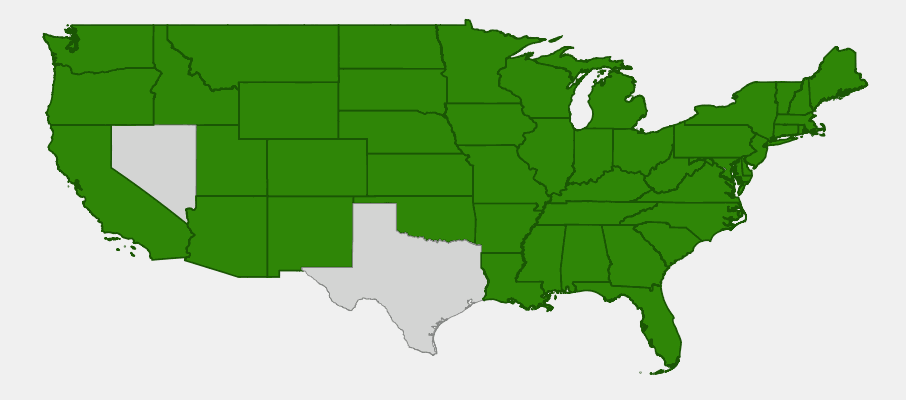
Solomon’s Plume has one of the most extensive native ranges of any North American woodland wildflower, spanning virtually the entire continent. In the east, it occurs from Newfoundland and Nova Scotia south through the Appalachians to Georgia and Alabama, and west across the entire Great Lakes region, upper Midwest, and central plains states. In the west, it occurs throughout the Rocky Mountain states, the Pacific Northwest from California to Alaska, and extends into the Sierra Nevada and into Mexico. This exceptional range breadth reflects the plant’s remarkable adaptability to diverse climate and soil conditions.
In the Great Lakes region — Michigan, Wisconsin, and Minnesota — Solomon’s Plume is a common and characteristic species of moist to mesic deciduous woodlands, floodplain forests, and shaded ravine slopes. It grows in association with Sugar Maple (Acer saccharum), Yellow Birch (Betula alleghaniensis), Trilliums, Wild Ginger (Asarum canadense), Jack-in-the-Pulpit (Arisaema triphyllum), and other classic woodland wildflowers. It is one of the most abundant woodland wildflowers in the region, often forming large, dense colonies where conditions suit it.
The plant shows a preference for moist, humus-rich, slightly acidic woodland soils, growing best in the partial to deep shade of deciduous forest understories. It is tolerant of considerable variation in soil moisture — from well-drained mesic forest floor to moist stream bank conditions — but does not thrive in consistently waterlogged or very dry soils. Regional genetic variation across its vast range means that locally sourced plants will be best adapted to local conditions.
📋 Regional plant lists featuring Solomon’s Plume: Michigan, Minnesota & Wisconsin
Growing & Care Guide
Solomon’s Plume is one of the easiest native shade perennials to establish and care for — once it is happy in its location, it requires virtually no maintenance and will slowly expand into a beautiful, long-lived colony. The key to success is giving it the right shade and soil moisture conditions from the start.
Light
Solomon’s Plume grows best in part shade to full shade — the dappled to deeper shade of a deciduous forest understory is ideal. It tolerates a range of shade conditions from bright indirect light to quite deep shade, though in very deep shade, flowering may be reduced. It does not do well in full sun, particularly in hot, dry climates — full sun exposure causes leaf scorch, wilting, and poor performance. Morning sun with afternoon shade is the maximum sunlight appropriate.
Soil & Water
This species prefers moist to moderately moist, humus-rich, well-drained soil with a slightly acidic pH (5.0–6.5) — conditions that mimic the deep leaf-litter-rich floor of a deciduous woodland. Amend planting areas with compost or leaf mold if your soil is compacted or sandy. The plant is tolerant of a range of moisture conditions — from consistently moist (near streams) to moderately dry (shaded slopes) — but performs best with consistent moisture during the growing season. Established plants have moderate drought tolerance in shaded conditions.
Planting Tips
Plant in spring or fall. Space plants 18–24 inches apart — they will slowly expand to fill the space over several seasons via rhizomes. Plant at the same depth as in the pot, with the rhizome just below the soil surface. Apply 2–3 inches of leaf mulch over the planting area to mimic natural woodland conditions and conserve moisture. Under deciduous trees is an ideal location — the plant will thrive in the summer shade and benefit from the leaf litter that builds up over time. Water regularly in the first growing season to establish roots.
Pruning & Maintenance
Solomon’s Plume is a true low-maintenance plant — essentially no pruning or deadheading is required. The entire plant, including the spent flower plumes and ripening berry clusters, remains ornamental throughout the season. The stems die back naturally with frost and can be cleaned up in late autumn or left to break down naturally as mulch over winter. Dividing established clumps every 4–5 years can rejuvenate congested plantings and produce new plants for expanding the garden.
Landscape Uses
- Woodland gardens — quintessential native woodland wildflower
- Shade gardens — one of the most rewarding shade-tolerant natives
- Naturalistic groundcover — forms attractive colonies beneath trees
- Stream and pond banks — tolerates moist conditions near water
- Under-tree planting — grows beautifully beneath oaks, maples, and other deciduous trees
- Shaded borders — bold foliage provides textural contrast
- Wildlife gardens — berries attract numerous bird species
Wildlife & Ecological Value
Solomon’s Plume is a valuable plant for woodland wildlife, offering spring flowers for pollinators and late-summer berries for birds and small mammals.
For Birds
The ruby red berries of Solomon’s Plume ripen in August–September and are consumed by a variety of woodland birds including American Robins, Hermit Thrushes, Swainson’s Thrushes, Veeries, Cedar Waxwings, and various woodland warblers during fall migration. The berries have high moisture and sugar content, making them excellent fuel for migrating birds. In areas where Solomon’s Plume forms large colonies, it can provide a significant local food resource during the critical fall migration period. Ruffed Grouse also consume the berries where their ranges overlap.
For Mammals
White-tailed Deer may browse the foliage, particularly tender new growth in spring. Small mammals including chipmunks and mice consume the berries and seeds. Black Bears have been observed consuming both the berries and the rhizomes. In areas with significant deer pressure, the plant may need protection when young plants are getting established.
For Pollinators
The white flowers attract a variety of small native bees, including sweat bees (Halictidae) and mason bees (Osmia spp.), as well as hoverflies and other beneficial insects. The compound flower cluster provides numerous individual florets that open sequentially over 2–3 weeks, extending the availability of nectar and pollen. In shaded woodland environments where many flowering plants are absent in May, Solomon’s Plume can be an important early-season pollinator resource.
Ecosystem Role
As a dominant herbaceous plant in many deciduous woodland understories, Solomon’s Plume contributes significantly to the structural and biodiversity richness of woodland floor communities. Its broad, layered canopy of leaves provides essential ground-level moisture retention in forest understories, and its slowly expanding colonies create stable habitat for woodland invertebrates. The plant’s extensive native range and high adaptability make it a particularly resilient component of forest ecosystems across a changing climate.
Cultural & Historical Uses
Solomon’s Plume has a rich history of Indigenous use across its wide range. Many nations ate the young spring shoots, which emerge in early spring and resemble asparagus — they were cooked like a vegetable. The Ojibwe, Menominee, and other Great Lakes peoples used the plant medicinally — preparations made from the root were used to treat headaches, sore throats, and as a general tonic. The roots were also used externally as a poultice for skin irritations, wounds, and sores. Among some nations, the plant was used in ritual and ceremonial contexts as a smudge or fumigant to purify spaces or individuals.
The mature berries, while mildly purgative when eaten in quantity, were consumed by some peoples after preparation — boiling or drying was used to reduce their laxative properties. A tea made from the rhizomes was reportedly used by some nations as a contraceptive, though the efficacy and safety of such uses are not supported by modern pharmacological evidence. The plant was an important early-season food resource in the forested northeast, where other plant foods were scarce in late spring.
In European herbal tradition, the closely related European Solomon’s Seal (Polygonatum species) has a long medicinal history, and some of these traditions were transferred by settlers to the native American species. Today, Solomon’s Plume is primarily valued as an ornamental plant and ecological component of woodland gardens. Its graceful form and outstanding adaptability to shade have made it one of the most popular native woodland wildflowers in the horticultural trade. It is widely available from native plant nurseries throughout its range and is frequently used in woodland restoration and native plant garden installations.
Frequently Asked Questions
What is the difference between Solomon’s Plume and True Solomon’s Seal?
The key difference is flower placement. Solomon’s Plume (Smilacina racemosa) bears its flowers in a showy, frothy plume at the tip of each stem. True Solomon’s Seal (Polygonatum spp.) bears small, hanging, bell-shaped flowers in pairs from the leaf axils along the stem, with no terminal flower cluster. Both have similar arching stems and alternately arranged leaves, so this is the most reliable identification feature. The berries also differ — Solomon’s Plume berries are red and appear in a compact cluster, while Solomon’s Seal berries are blue-black and hang in pairs from the stem.
Are Solomon’s Plume berries edible?
The berries are technically edible but have a bitter, pungent taste and mild laxative effect when eaten in quantity. They were consumed historically by some Indigenous peoples after preparation, but most foragers today find them unpalatable raw. They are best left for the birds and wildlife that eat them readily. The young spring shoots, however, were commonly cooked and eaten as a vegetable by many native peoples.
Does Solomon’s Plume spread aggressively?
Solomon’s Plume spreads slowly and steadily via rhizomes, forming expanding colonies over many years. It is not considered aggressive or invasive — the spreading rate is gradual (the colony expands only a few inches per year at the edges), and it is easy to contain by simply removing unwanted rhizomes at the colony margin. In a woodland garden setting, this naturalizing habit is generally desirable.
Can Solomon’s Plume grow in deep shade?
Yes — this is one of its great virtues. Solomon’s Plume is shade-tolerant enough to grow beneath dense deciduous tree canopies where many other plants struggle. In very deep shade, flowering may be reduced, but the foliage remains attractive. It is one of the few native flowering perennials that performs reliably in the deep shade beneath mature trees.
When does Solomon’s Plume bloom?
In Michigan, Wisconsin, and Minnesota, bloom typically occurs in May, with the plumes at their best from mid- to late May. The bloom period lasts about 2–3 weeks. In warmer climates (Zones 6–7), bloom may begin in mid-April. The ornamental interest continues through summer as berries develop and ripen, transitioning from green to red by August–September.