Wild Blue Lupine (Lupinus perennis)
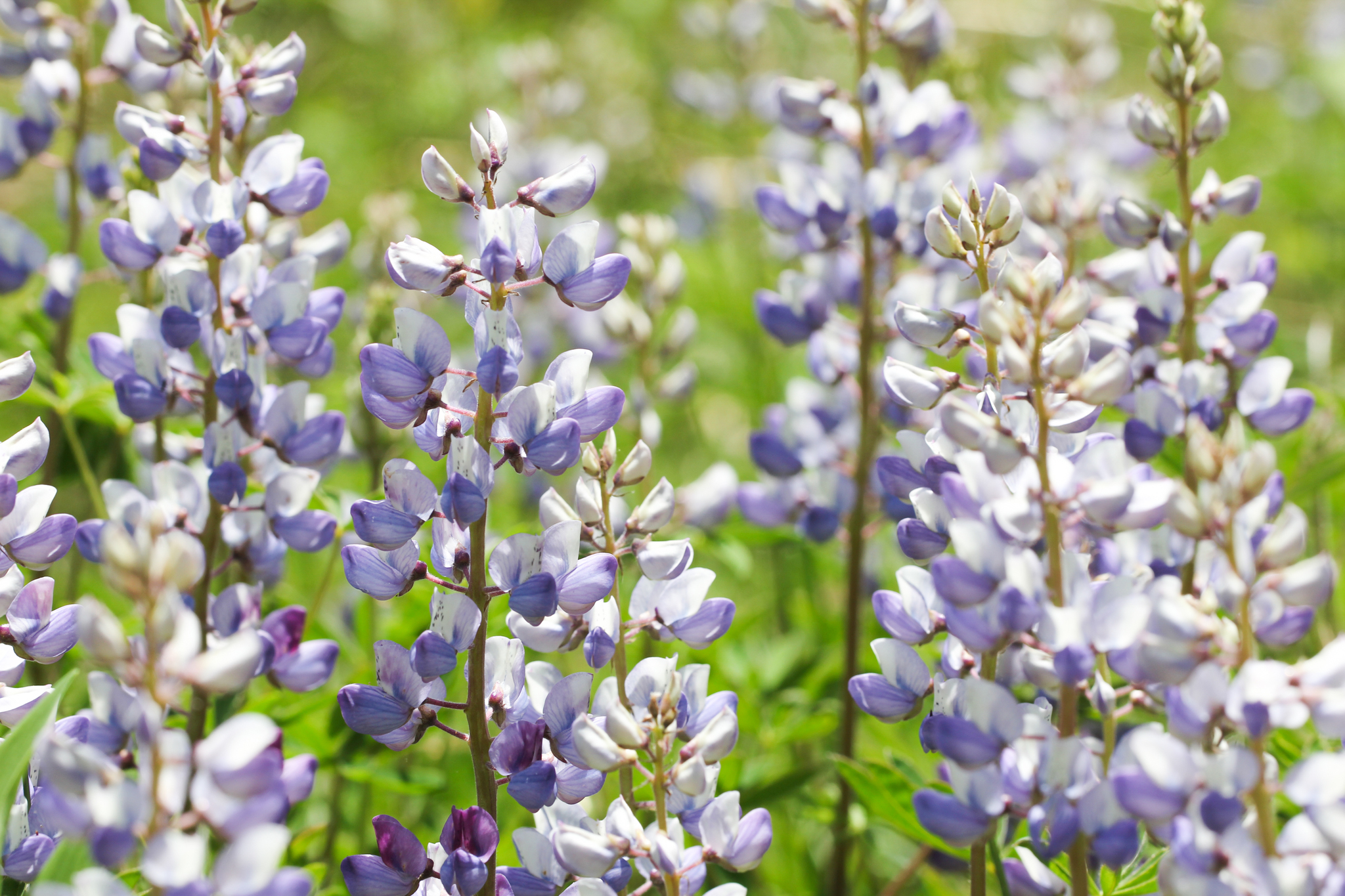
Lupinus perennis, commonly known as Wild Blue Lupine or Sundial Lupine, is one of the most iconic and ecologically important native wildflowers of the Great Lakes region. This striking perennial of open sandy woodlands and prairies produces breathtaking spikes of blue-violet pea-like flowers in May and June — a display that transforms sandy pine barrens and oak savannas into a sea of blue that rivals any cultivated garden spectacle. More than merely beautiful, Wild Blue Lupine is an ecological keystone: it is the only native larval host plant of the federally endangered Karner Blue Butterfly (Lycaeides melissa samuelis), creating a conservation urgency around this plant that elevates it to a different category of significance.
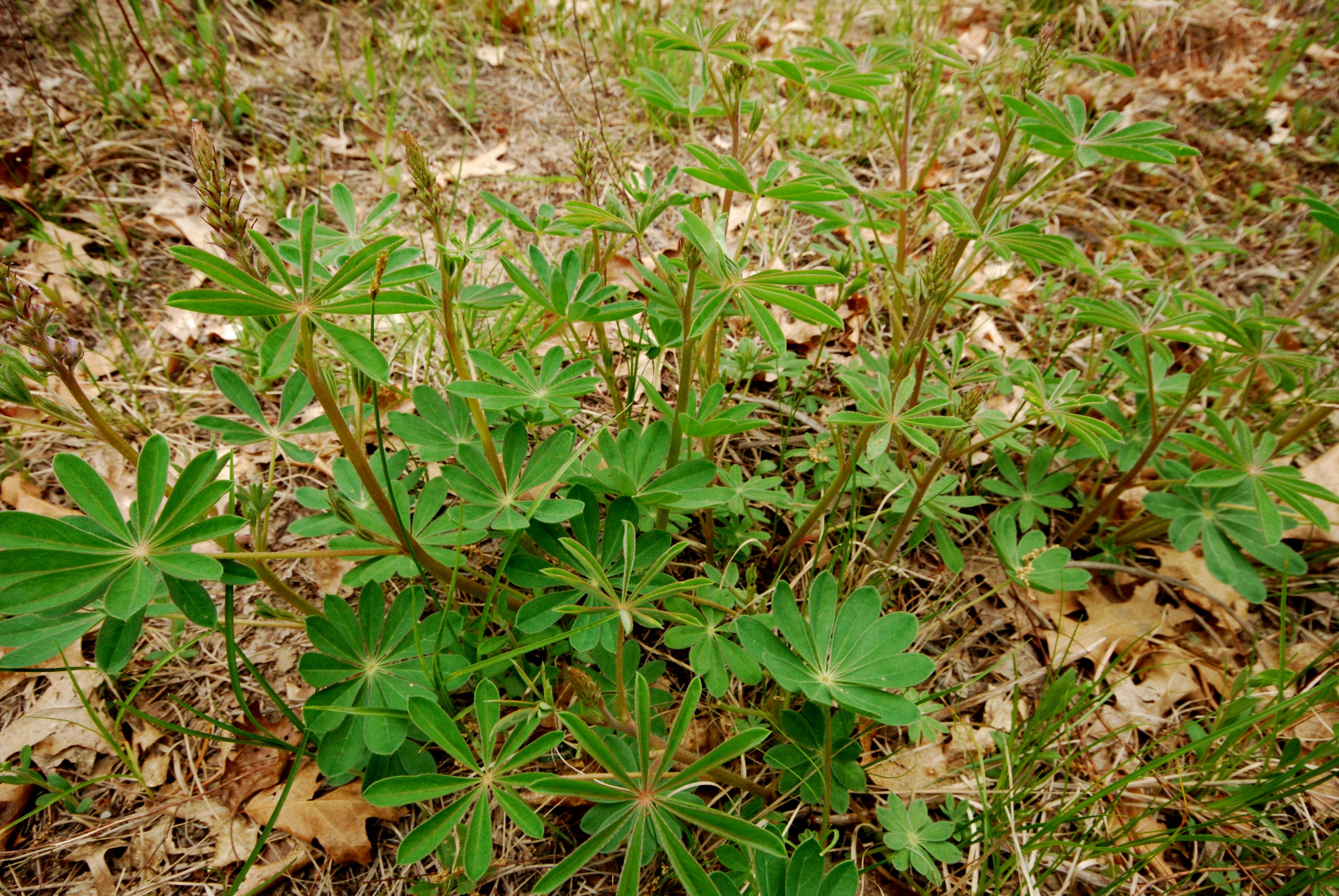
Growing 1–2 feet tall from a deep taproot, Wild Blue Lupine forms attractive clumps of distinctive palmate leaves — each divided into 7–11 narrow leaflets radiating from a central point like fingers on a hand. The leaves are equally ornamental: grayish-green, softly hairy, and with a remarkable ability to hold and display water droplets like liquid mercury after a rain. The combination of striking spring flowers, attractive foliage, and critical wildlife function makes Wild Blue Lupine one of the most essential native plants for Michigan, Minnesota, and Wisconsin ecosystems.
As a nitrogen-fixing legume, Wild Blue Lupine improves the sandy, nutrient-poor soils it prefers — a natural soil engineer that prepares habitat for other native plants. Its deep taproot breaks up compacted soils and draws up nutrients from lower horizons. Growing Wild Blue Lupine is not just gardening — it is conservation in action, supporting one of the most imperiled butterfly species in North America and the ecosystems that sustain it.
Identification
Wild Blue Lupine is a distinctive herbaceous perennial immediately recognizable by its combination of palmate leaves and upright blue flower spikes. Mature plants grow 1–2 feet tall (occasionally to 2½ feet in ideal conditions) and form expanding clumps over time from a deep central taproot and spreading rhizomes.
Leaves
The leaves are palmate — divided into 7–11 narrow, lance-shaped leaflets radiating from a central point, each leaflet 1–2 inches long and ¼ to ½ inch wide. The overall leaf diameter is 2–4 inches. Leaf color is grayish-green to blue-green, and the surface is covered with fine, silky hairs that give it a soft texture and a slight grayish sheen. A distinctive feature: the leaves are oriented to follow the sun (heliotropic), rotating on their petioles to maximize light capture — one source of the common name “Sundial Lupine.” After rain, the hydrophobic leaf surface beads water into perfect spherical droplets that roll and glitter across the leaf surface — a remarkably beautiful sight.
Flowers
The flowers are pea-like (legume family), deep blue to blue-violet with a white or yellowish spot on the upper petal (standard), borne in dense, upright racemes 4–10 inches long. Each individual flower is about ½ inch long. Flowers open from the bottom of the spike upward over a 2–3 week period in May and June. Multiple spikes may be produced on a single plant, creating a dense column of blue-violet that stands out dramatically in the sparse vegetation of sandy pine barrens and oak savannas. The flowers are fragrant.
Fruit & Seeds
The fruit is a hairy pod 1–2 inches long, containing 3–7 hard, mottled seeds. The pods dry and twist explosively when ripe in late summer, flinging seeds up to several feet from the parent plant — a characteristic seed dispersal mechanism of the legume family. The seeds are hard-coated and often require scarification (scratching the seed coat) or extended stratification before they will germinate reliably.
Quick Facts
| Scientific Name | Lupinus perennis |
| Family | Fabaceae (Legume / Bean) |
| Plant Type | Herbaceous Perennial Wildflower |
| Mature Height | 1–2 ft |
| Sun Exposure | Full Sun to Part Shade |
| Water Needs | Low to Moderate (prefers well-drained, sandy soils) |
| Bloom Time | May – June |
| Flower Color | Blue-violet (occasionally white or pink) |
| Soil Preference | Sandy, well-drained, infertile; poor to average |
| Nitrogen Fixer | Yes (legume; fixes atmospheric nitrogen) |
| USDA Hardiness Zones | 3–9 |
Native Range
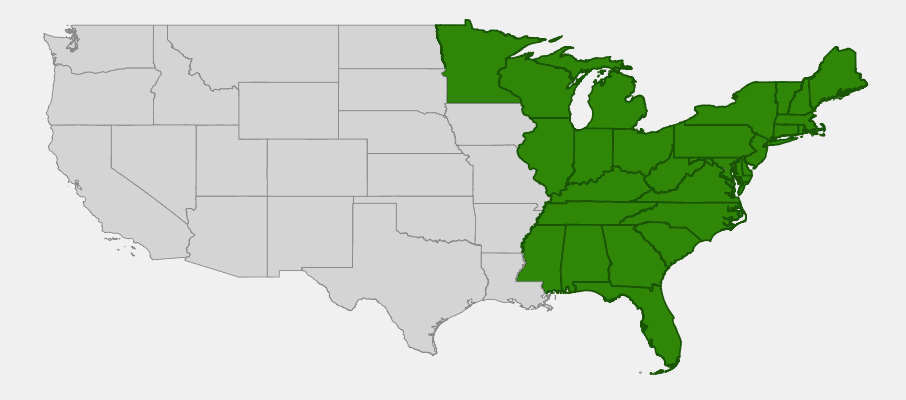
Wild Blue Lupine is native to eastern North America, ranging from Maine and the maritime provinces south to Florida, and west through the Great Lakes states — Michigan, Minnesota, and Wisconsin — to the edge of the Great Plains. Within this range, it is characteristically a plant of sandy, well-drained, nutrient-poor soils in open habitats: pine barrens, oak savannas, dry prairies, and open sandy roadsides. Its distribution is closely tied to the occurrence of sandy soils, and the plant is often found in sandy glacial outwash deposits throughout the Great Lakes region.
In Michigan, Wild Blue Lupine reaches its greatest abundance and ecological significance. Michigan’s extensive pine barrens and sandy glacial outwash plains — particularly in the northern Lower Peninsula — support the largest remaining populations of both Wild Blue Lupine and the Karner Blue Butterfly that depends on it. The famous Sleeping Bear Dunes National Lakeshore and surrounding areas support extensive lupine populations. In Wisconsin, it occurs in the central sand plains region. In Minnesota, it is found in sandy areas of the southeast and central regions.
Wild Blue Lupine populations have declined significantly throughout their range due to habitat loss — primarily conversion of pine barrens and oak savannas to other land uses, fire suppression (which allows shrubs and trees to shade out the open-sun, open-ground conditions lupine requires), and direct destruction of sandy habitat for development and agriculture. Conservation efforts focused on the Karner Blue Butterfly have, as a side effect, also focused attention on protecting and restoring Wild Blue Lupine populations — making it one of the few native plants with a robust, federally-coordinated conservation program.
📋 Regional plant lists featuring Wild Blue Lupine: Michigan, Minnesota & Wisconsin
Growing & Care Guide
Wild Blue Lupine has a reputation for being finicky — but the secret to success is simple: give it sandy, well-drained, relatively infertile soil in full sun and it will thrive. The most common mistake is planting it in rich, moist garden soil, where it declines and fails. Treat it like the sand-plain wildflower it is, and it will reward you with decades of spectacular bloom.
Light
Full sun to very light part shade is ideal. Wild Blue Lupine is a plant of open sandy barrens and savannas — it has evolved in bright light and performs best with 6–8 hours of direct sun. In more than light shade, bloom production drops significantly and the plant becomes more susceptible to root diseases in moist soils. Avoid planting beneath dense tree canopies.
Soil & Water
Sandy, well-drained, low-fertility soil is the cardinal requirement. Wild Blue Lupine is adapted to nutrient-poor, sandy soils where nitrogen is scarce — it compensates by fixing its own atmospheric nitrogen through root nodule bacteria (Rhizobium). In rich garden soils, plants grow lush and leafy but bloom poorly and are more prone to diseases and short life. Avoid clay soils, which hold too much moisture and cause root rot. No fertilization is needed or desired. Once established, Wild Blue Lupine is quite drought tolerant — the deep taproot accesses soil moisture well below the surface.
Planting Tips
Plant container-grown plants in spring, spacing 18–24 inches apart. The deep taproot makes Wild Blue Lupine difficult to transplant once established — choose its permanent location carefully. For large-scale restoration, direct seeding in fall (after scarification) is effective. Scarify seeds by rubbing with sandpaper or soaking in hot water for 24 hours before fall sowing. Do not cover seeds with more than ¼ inch of soil — they need light to germinate. Inoculating seeds or soil with Rhizobium leguminosarum inoculant before planting in lupine-naive soils can significantly improve establishment.
Pruning & Maintenance
After bloom, cut back the spent flower stalks to encourage a second flush of foliage. If Karner Blue Butterfly conservation is a priority, leave some flower stalks to set seed for bird food and self-sowing. The foliage remains attractive through summer and fall. Wild Blue Lupine is essentially pest-free in appropriate conditions, though plants in rich or wet soils may develop root rot or aphid infestations. No pruning of the crown is recommended — the plant resents disturbance once established.
Landscape Uses
Wild Blue Lupine shines in:
- Sandy pine barren restoration — keystone species for habitat restoration
- Dry prairie and savanna gardens — spectacular spring display
- Sandy native plant borders — pairs beautifully with Bearberry, Wild Strawberry, and Little Bluestem
- Karner Blue Butterfly habitat gardens — the only larval food plant for this endangered species
- Pollinator gardens — exceptional bumblebee and native bee resource
- Naturalistic cottage gardens — bold spring color in low-maintenance settings
Wildlife & Ecological Value
Wild Blue Lupine has an ecological importance that far exceeds its modest size. It is a foundation species of pine barren ecosystems — remove it, and the entire food web built around it collapses.
For Birds
Various finches, sparrows, and doves eat the seeds from dried lupine pods. Indigo Buntings, which frequent sandy pine barren edges, are notable seed consumers. The dry, open habitat created by Wild Blue Lupine communities also supports ground-nesting birds including Whip-poor-will and various sparrows that nest in the sparse grass layer associated with pine barrens.
For Mammals
Eastern Cottontail rabbits eat the foliage and seedpods of Wild Blue Lupine. White-tailed deer browse the plant, and the seeds are eaten by small mammals including chipmunks and white-footed mice. As a legume, Wild Blue Lupine fixes atmospheric nitrogen in root nodules, providing soil fertility improvements that benefit the entire plant community — including the other native species that deer, rabbits, and small mammals depend on.
For Pollinators
Wild Blue Lupine is a bumble bee magnet — the large, nectar-rich flowers are almost exclusively visited by bumblebees (Bombus spp.) in the Great Lakes region, which are among the few pollinators strong enough to force open the tightly closed keel petals to access the pollen. Several native bee species are lupine specialists. Most critically, Wild Blue Lupine is the only larval host plant of the federally endangered Karner Blue Butterfly — the caterpillars eat only lupine leaves and would become extinct without this plant. Restoring Wild Blue Lupine directly supports recovery of this legally protected species under the Endangered Species Act.
Ecosystem Role
Wild Blue Lupine is a nitrogen-fixing legume — its root nodules harbor bacteria (Bradyrhizobium spp.) that convert atmospheric nitrogen into a plant-available form, enriching sandy soils that are otherwise extremely nitrogen-poor. This nitrogen fixation supports soil fertility and enables other native plants to grow in the harsh conditions of pine barrens. Wild Blue Lupine is also a fire-adapted species — it resprouts vigorously from its deep taproot after fire, and in fact requires periodic fire (or management that mimics fire) to maintain the open, sunny conditions it needs. Without disturbance, taller shrubs and trees shade out lupine populations over time.
Cultural & Historical Uses
Wild Blue Lupine was an important plant for Indigenous peoples throughout its range. Multiple Great Lakes and eastern woodland nations ate the seeds after extensive preparation to remove bitter, toxic alkaloids — the seeds must be soaked repeatedly in water to remove the compounds before being eaten. Despite this labor-intensive preparation, roasted lupine seeds were a valuable food source, providing protein and calories in the lean spring season when other food plants were not yet available. The Ojibwe and other Great Lakes nations also used lupine root preparations medicinally for various ailments.
The discovery that Lupinus perennis is the sole larval host plant of the Karner Blue Butterfly — first described by novelist Vladimir Nabokov, who was also a renowned lepidopterist — gave this plant a new scientific and conservation significance in the late 20th century. The Karner Blue was federally listed as endangered in 1992, and subsequent recovery efforts have mobilized significant conservation resources to protect and restore Wild Blue Lupine populations across Michigan, Wisconsin, and New York. This has made Wild Blue Lupine one of the most studied and actively conserved native plants in the Great Lakes region.
Today, Wild Blue Lupine is widely cultivated in native plant gardens across the Great Lakes region and eastern states. It has been the subject of numerous restoration seed-production programs, and certified locally-sourced seed is available from several Great Lakes native plant suppliers. Planting Wild Blue Lupine in suitable sandy habitats is one of the most direct conservation actions a Great Lakes gardener can take to support both native plant diversity and the federally endangered Karner Blue Butterfly.
Frequently Asked Questions
Is Wild Blue Lupine the host plant for the Karner Blue Butterfly?
Yes — Wild Blue Lupine (Lupinus perennis) is the only larval host plant of the Karner Blue Butterfly (Lycaeides melissa samuelis), a federally endangered species found in Michigan, Wisconsin, Minnesota, and New York. The caterpillars eat only lupine leaves, and the butterfly cannot complete its life cycle without this plant. Planting Wild Blue Lupine in suitable sandy habitats directly supports recovery of this legally protected species.
Why won’t Wild Blue Lupine grow in my garden soil?
Wild Blue Lupine is adapted to sandy, infertile soils and declines in rich, moist garden conditions. The most common failure is planting it in amended, fertile beds. For success, provide sandy, well-drained, low-fertility soil — a sandy loam amended with additional coarse sand, or an unmended sandy site, is ideal. Avoid clay, heavy compost amendments, and consistently moist conditions. The plant thrives on neglect in the right sandy conditions.
Are lupine seeds poisonous?
Yes — Wild Blue Lupine seeds contain bitter alkaloids (lupinine and related compounds) that are toxic if consumed raw in quantity, particularly to livestock. The seeds were rendered edible by Indigenous peoples through extensive leaching in water, but this is a labor-intensive process. Keep children and pets from eating the seeds. The flowers and foliage pose less risk but contain lower concentrations of the same compounds.
How do I establish Wild Blue Lupine from seed?
Direct-sow scarified seeds in fall — lightly scarify the hard seed coat by rubbing with sandpaper or soaking in hot (not boiling) water for 24 hours before sowing on the soil surface. Cold stratification over winter naturally breaks dormancy. Alternatively, purchase container-grown plants and transplant carefully in spring, disturbing the taproot as little as possible. Plant in the permanently intended location — lupine resents transplanting once established.
Does Wild Blue Lupine come back every year?
Yes — Wild Blue Lupine is a true perennial that returns reliably each spring from its deep taproot. Individual plants can live 10–15 years or more in appropriate conditions. It also self-sows moderately in sandy soils, gradually expanding into a small colony. In very sandy soils with minimal competition, it may naturalize into an impressive stand over time.