Swamp Dogwood (Cornus obliqua)
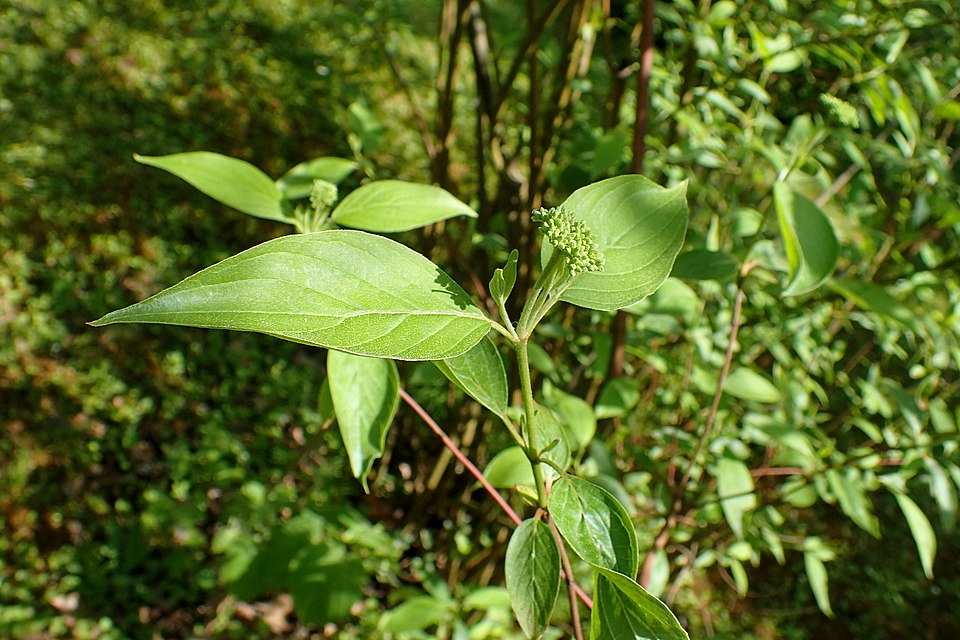
Cornus obliqua (syn. Cornus amomum ssp. obliqua), commonly known as Swamp Dogwood or Pale Dogwood, is a medium-sized native shrub of the Cornaceae family, prized for its multi-season ornamental appeal, exceptional wildlife value, and outstanding adaptability to wet, poorly drained conditions. Growing 8 to 10 feet tall with multiple arching stems that eventually form a broad, mounded thicket, Swamp Dogwood provides structure and interest across the entire growing season: clusters of small white flowers in late spring, multi-colored berries that change from green to blue and white in a single cluster through summer, wine-red fall foliage, and bold, dark red to burgundy stems that add color to the winter landscape.
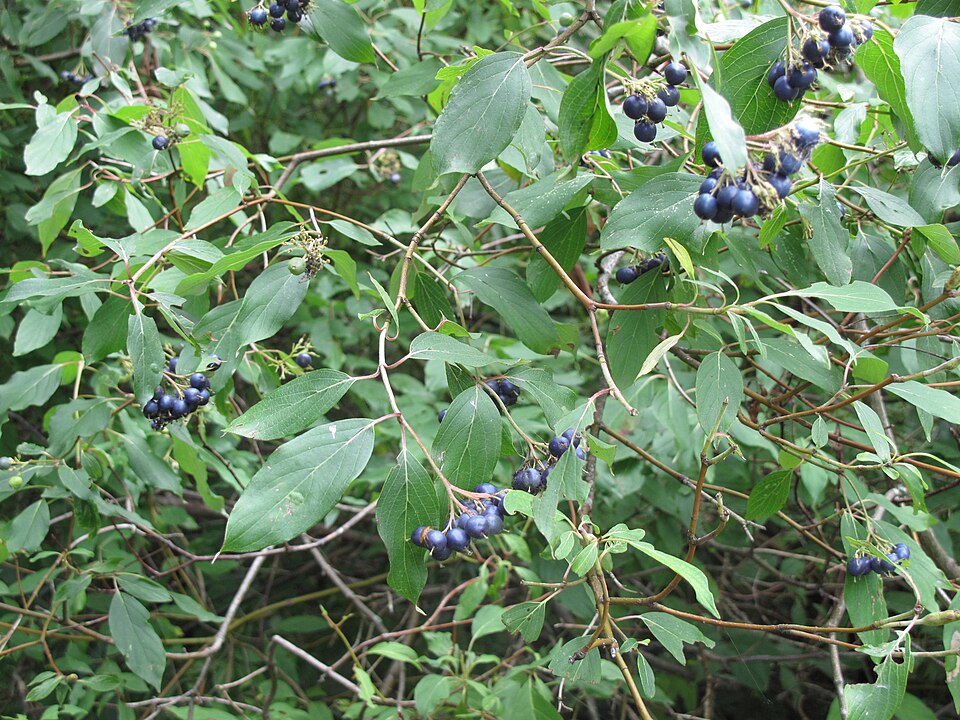
One of the most distinctive features of Swamp Dogwood — referenced in the batch notes as “fruits different colors at different stages for pleasing effect” — is the remarkable variability of berry color within a single fruit cluster. As the berries ripen, they transition through multiple colors simultaneously within the same cluster: some remain green, others turn white or cream, while the most mature turn pale blue to dark blue-gray. This mix of colors within a single infructescence is highly attractive and persists through much of summer before the fully ripened berries are consumed by birds. The pithy stems have a brownish pith inside (unlike the white pith of Red-osier Dogwood), a useful diagnostic characteristic for identification.
In the landscape, Swamp Dogwood excels wherever conventional plants struggle: wet soils, seasonally flooded areas, stream banks, and pond edges. It is equally effective as a screening shrub, a naturalistic hedge, a streamside stabilizer, or a wildlife habitat plant. Its adaptability to both saturated and merely moist conditions, combined with its ornamental beauty across multiple seasons, makes it one of the most versatile and functional native shrubs available for wet-site plantings in the Great Plains and Midwest.
Identification
Swamp Dogwood is a multi-stemmed deciduous shrub that grows 8 to 10 feet tall and eventually spreads 8 to 12 feet wide through stoloniferous shoots that root where they touch the ground. Older shrubs form dense, impenetrable thickets. The overall form is rounded to vase-shaped, with arching outer stems and upright central growth.
Stems & Bark
Young stems are covered in appressed, two-forked (dolabriform) silky hairs — a characteristic that helps identify this species from Red-osier Dogwood (C. sericea). Older stems develop smooth, brownish to gray bark. The pith of cut stems is brownish (not white as in Red-osier Dogwood) — the key diagnostic feature. In winter, the first-year twigs are reddish-brown to dark burgundy, providing ornamental interest similar to Red-osier Dogwood, though typically less vivid. The common name “Pale Dogwood” refers to the pale underside of the leaves and the overall slightly grayer appearance compared to its relatives.
Leaves
The leaves are opposite, simple, oval to broadly lanceolate, 2 to 4 inches long and 1 to 2 inches wide. The upper surface is medium to dark green; the underside is distinctly pale grayish-green with appressed hairs. The leaf margin is entire (no teeth). The veins curve gracefully and converge at the leaf tip — a pattern characteristic of the dogwood genus. In autumn, leaves turn wine-red to purplish-red before falling, providing excellent fall color in moist-site plantings where fall color is often otherwise limited.
Flowers & Fruit
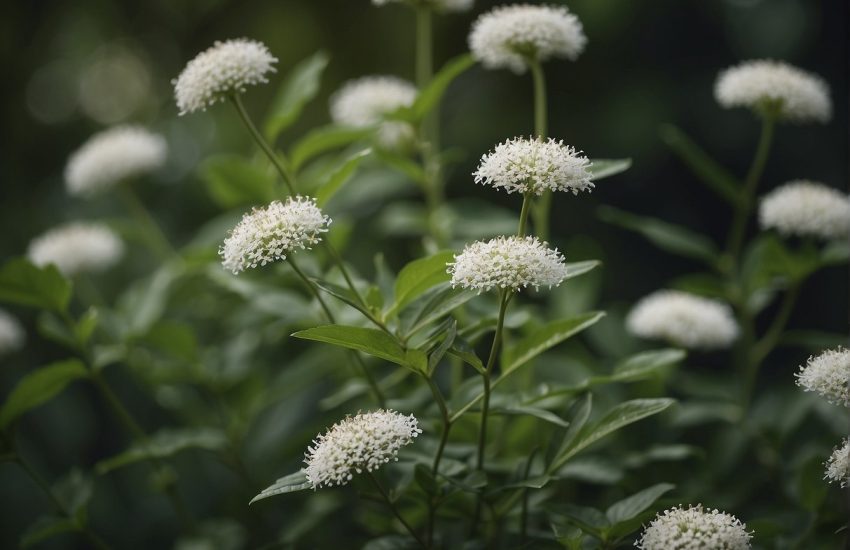
The flowers are small, white, four-petaled, and produced in flat-topped clusters (cymes) 1½ to 2½ inches across, appearing in late May through June on branch tips. The flower clusters have a pleasant mild fragrance and attract numerous pollinators. After flowering, the plant develops distinctive fruit clusters: small drupes ⅓ inch in diameter that turn from pale green through white and cream to pale blue to dark blue-gray as they ripen, with multiple ripening stages often present simultaneously within the same cluster — creating a beautiful mixed-color effect with blue, white, and green fruits all showing at once. This multi-colored fruit display is one of the plant’s most distinctive ornamental features.
Quick Facts
| Scientific Name | Cornus obliqua (syn. Cornus amomum ssp. obliqua) |
| Family | Cornaceae (Dogwood) |
| Plant Type | Deciduous Shrub |
| Mature Height | 8–10 ft |
| Sun Exposure | Full Sun to Part Shade |
| Water Needs | Moderate to High |
| Bloom Time | May – June |
| Flower Color | White |
| Fall Color | Wine-red to purple-red |
| USDA Hardiness Zones | 3–8 |
Native Range
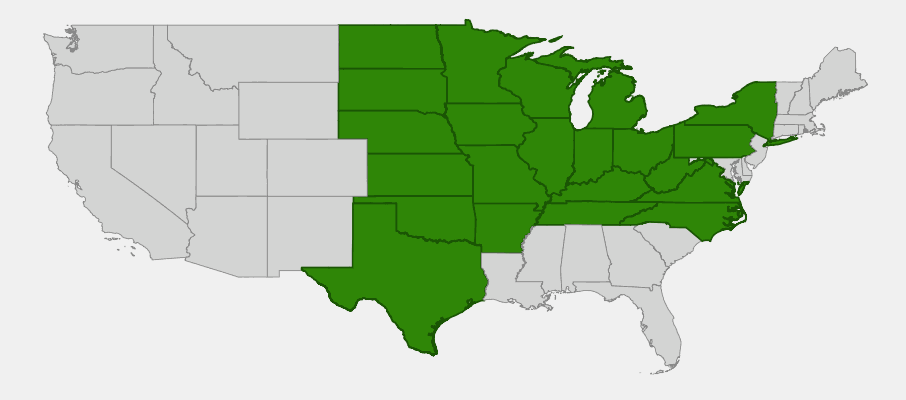
Swamp Dogwood is native to the central and eastern United States, with its range centered in the upper Midwest, Great Plains, and Appalachian corridor. It is most common in Nebraska, Kansas, Iowa, Missouri, Illinois, Indiana, Ohio, Michigan, Wisconsin, and Minnesota, extending north into North and South Dakota and east into Pennsylvania, New York, West Virginia, and Virginia. Southern populations occur in Kentucky, Tennessee, North Carolina, Arkansas, Oklahoma, and Texas.
Throughout its range, Swamp Dogwood is almost exclusively associated with wet, moist, or seasonally flooded habitats: stream banks, floodplain shrub thickets, swamp margins, wet meadow edges, and shorelines of lakes and ponds. It tolerates prolonged flooding better than most native shrubs and is one of the go-to species for restoring riparian corridors and streamside vegetation. Unlike Red-osier Dogwood (C. sericea), which extends to drier and more upland sites in the western part of its range, Swamp Dogwood remains closely associated with wet lowland habitats throughout its entire range.
In Nebraska and Kansas, Swamp Dogwood is primarily found along stream corridors, oxbow lake margins, and the shrubby edges of riparian woodland — the moist, sheltered bottomlands that contrast with the dry upland prairies characteristic of the Great Plains. These riparian corridors are critically important wildlife habitats in an otherwise agricultural landscape, and Swamp Dogwood is one of the anchor shrub species that defines and structures these habitats.
📋 Regional plant lists featuring Swamp Dogwood: Nebraska & Kansas
Growing & Care Guide
Swamp Dogwood is one of the best native shrubs for wet, difficult-to-plant sites. Its tolerance of flooding, drought (once established), and variable light conditions makes it exceptionally versatile. For rain gardens, bioswales, stream banks, or any area prone to periodic flooding, Swamp Dogwood is often the best native shrub available.
Light
Full sun to part shade. Swamp Dogwood adapts remarkably well across a wide light gradient. In full sun with adequate moisture, it produces the most abundant flowers and berries and the most vivid fall color and winter stem color. In part shade, it grows more open and produces fewer berries but remains healthy and attractive. Deep shade is not suitable — the plant becomes sparse and fails to thrive without at least 4 hours of direct sun.
Soil & Water
Moist to wet soil is preferred, and Swamp Dogwood tolerates periods of complete inundation better than almost any other native shrub in its range. It thrives in clay, loam, or sandy soils as long as consistent moisture is available. It performs best in consistently moist to wet conditions but can tolerate summer drought once well-established, drawing on deep roots. Organic-rich soils support the best growth; mulching with 2 to 3 inches of wood chips helps maintain soil moisture and moderate soil temperature.
Planting Tips
Plant in spring or fall as container-grown plants or bare-root stock. Space plants 4 to 6 feet apart for a mass planting or wildlife hedge; 6 to 8 feet for specimen plantings. Swamp Dogwood spreads by stolons and suckers to form thickets over time — site it where this spreading habit is an asset rather than a problem. For bank stabilization, close spacing (3 to 4 feet) speeds thicket formation and erosion control. It transplants easily when young and tolerates quite aggressive pruning for training or renovation.
Pruning & Maintenance
Prune in late winter or early spring before growth begins. To maintain vigorous young stem growth (which has the best winter color), use the “one-third” method: remove the oldest, largest stems each year to ground level, encouraging vigorous new shoots. Alternatively, cut the entire shrub to within 6 inches of the ground every 3 to 4 years for renewal — it will regrow quickly. Regular rejuvenation pruning maintains the most vivid stem color and most abundant fruiting. Swamp Dogwood is generally pest and disease-free, though it may show some leaf spot in very humid conditions.
Landscape Uses
- Stream bank stabilization — spreads by stolons to bind and protect streambanks
- Rain gardens and bioswales — among the most flooding-tolerant native shrubs
- Wildlife habitat hedgerows — dense thickets provide nesting cover and bird food
- Pond and lake margins — transitions gracefully from water to upland
- Wetland restoration — anchor species for riparian restoration projects
- Four-season garden interest — flowers, colorful fruit, fall foliage, and winter stems
Wildlife & Ecological Value
Swamp Dogwood is one of the most wildlife-valuable native shrubs in the central United States, with extraordinary ecological relationships that span birds, mammals, pollinators, and aquatic organisms.
For Birds
The berries of Swamp Dogwood are consumed eagerly by at least 40 species of birds, including American Robins, Cedar Waxwings, Northern Cardinals, Eastern Bluebirds, Wood Thrushes, Swainson’s Thrushes, Yellow-rumped Warblers, and many woodpeckers, flickers, and vireos. The timing of berry ripening — late summer through early fall — coincides with peak fall migration, making Swamp Dogwood an essential fueling station for migrating birds. The dense thicket structure provides important nesting habitat for Yellow Warblers, Common Yellowthroats, Willow Flycatchers, and other shrub-nesting species. Black-billed Cuckoos use dogwood thickets heavily during migration stopovers.
For Mammals
White-tailed deer browse the stems and leaves — Swamp Dogwood is preferred deer forage and may require protection in areas with high deer density until plants are well established. Raccoons, skunks, opossums, and foxes eat the berries. Beaver use the woody stems as construction material and food. The dense thicket structure provides critical escape cover and thermal protection for rabbits, white-footed mice, and other small mammals year-round.
For Pollinators
The flat-topped flower clusters of Swamp Dogwood provide easily accessible nectar and pollen for a wide variety of pollinators, including native bees, bumblebees, syrphid flies, beetles, and butterflies. Native bees including bumblebees, mason bees, sweat bees, and mining bees are all regular visitors. The flowers appear in late May through June — a key period for pollinators — and their open, unspecialized structure means they are accessible to virtually every flower-visiting insect.
Ecosystem Role
In riparian and wetland-edge systems, Swamp Dogwood plays a structural role of outsized importance. Its spreading, thicket-forming habit builds stable vegetative structure along streambanks that slows erosion, filters agricultural runoff, shades stream channels (reducing water temperature and improving aquatic habitat), and provides organic matter input to the stream through leaf fall. The thickets serve as important refugia for wildlife in agricultural landscapes where natural habitat has been reduced to narrow riparian corridors. As a component of streamside vegetation, Swamp Dogwood contributes to water quality improvement at the landscape scale.
Cultural & Historical Uses
Dogwood species have a rich history of human use in North America, and several native nations used Swamp Dogwood and its close relatives extensively. The Ojibwe used the bark of Silky Dogwood (Cornus amomum, which is closely related to and often confused with C. obliqua) in a smoking mixture called kinnikinnick — a blend of native plants smoked ceremonially and in the sacred pipe. The inner bark was dried and mixed with other plants including bearberry and other dogwood barks for this purpose. The word “kinnikinnick” is an Algonquian word meaning something mixed or blended.
The bark of various dogwood species was used medicinally across many Indigenous nations. Infusions and decoctions of the bark were employed to treat fevers, as a substitute for quinine-containing bark in treating malaria-like fevers, as an analgesic for pain, and as a tonic for general weakness and debility. The Iroquois used dogwood bark as a laxative and emetic. The Potawatomi used preparations of dogwood bark to treat skin conditions and eye infections. The utility of dogwood bark in folk medicine persisted among European-American settlers well into the 19th century.
Beyond medicinal uses, Swamp Dogwood was practically employed for basket making by several nations, who used the flexible young shoots to weave baskets and other containers. The very straight, even-grained wood was also used for small tools, arrow shafts, and wooden implements. Contemporary applications of Swamp Dogwood center almost entirely on its horticultural and ecological value: it is widely used in stream bank restoration, wetland mitigation, wildlife habitat improvement, and native plant landscaping across the Midwest and eastern United States. Its multi-season ornamental interest has also made it a popular choice for residential and commercial native plant gardens.
Frequently Asked Questions
What is the difference between Swamp Dogwood and Red-osier Dogwood?
Both are wetland-adapted native dogwood shrubs with white flowers and berry clusters. The key differences: Red-osier Dogwood (Cornus sericea) has vivid, fire-engine red young stems and white pith; Swamp Dogwood has less intensely red (more brownish-burgundy) stems and brown pith. Red-osier extends to drier and more upland sites; Swamp Dogwood remains more closely tied to wet bottomlands. The two often grow side by side in moist habitats and can be challenging to distinguish.
Will Swamp Dogwood grow in standing water?
It tolerates temporary flooding — periods of standing water during spring flooding or rain events — quite well. However, it does not grow well with permanent, year-round inundation. Seasonally flooded sites, rain gardens that drain between storms, and streambanks that flood periodically are all excellent sites. For permanently waterlogged conditions, consider Buttonbush or Swamp Rose instead.
How fast does Swamp Dogwood grow?
Swamp Dogwood has a moderately fast growth rate — typically 1 to 2 feet per year under good conditions. In rich, moist soil with adequate sun, it can grow even faster. The spreading, suckering habit means that a single plant will expand to form a thicket of several feet in diameter within 5 to 7 years.
Is Swamp Dogwood fragrant?
The flowers have a mild, pleasant fragrance that is attractive to pollinators. The fragrance is not as strong as some flowering shrubs but is noticeable when standing close to a plant in bloom. The foliage is not fragrant when crushed.
Can I use Swamp Dogwood as a privacy screen?
Yes, it works well for this purpose in moist to wet sites. Its multi-stemmed, spreading habit creates a dense, impenetrable thicket over several years. For faster screening, plant closely (4 feet apart) and allow suckers to fill in. The combination of summer foliage, fall color, and winter structure means the screen retains visual interest year-round, though it is deciduous and will not block views in winter.