Dwarf Hawthorn (Crataegus uniflora)
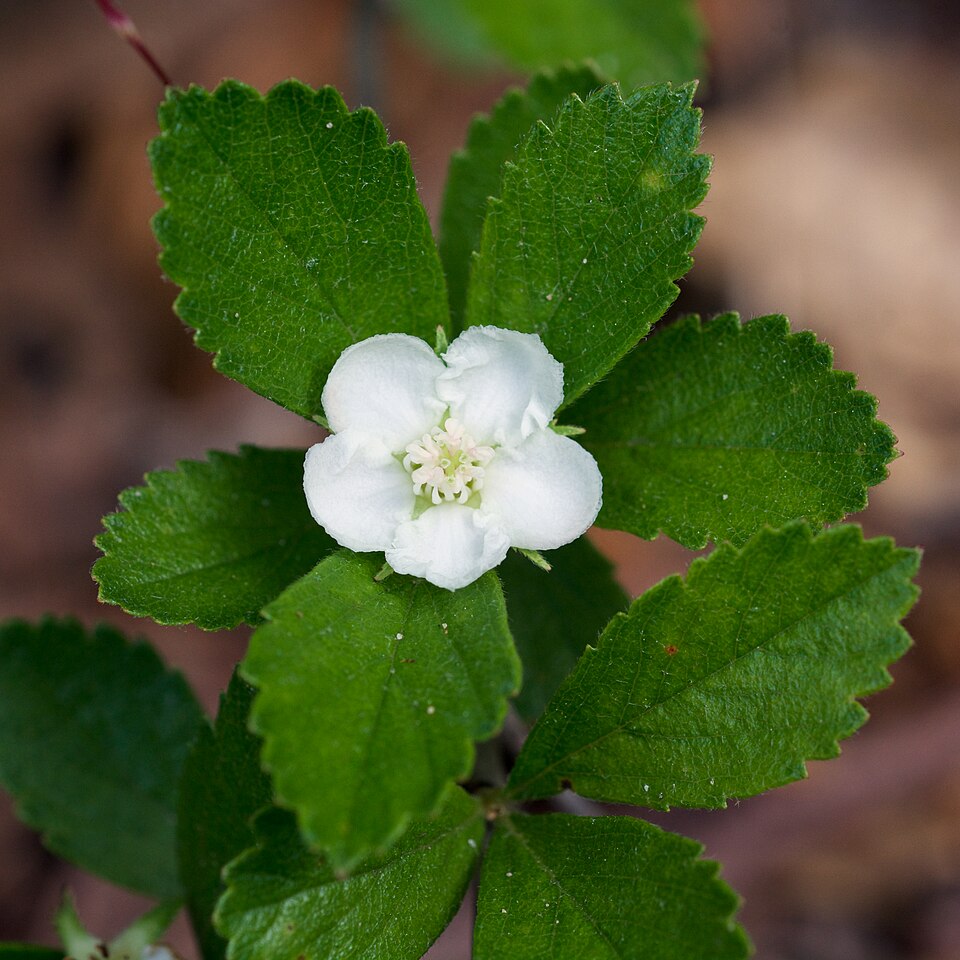
Crataegus uniflora, commonly known as Dwarf Hawthorn or One-Flowered Hawthorn, is a diminutive native shrub or small tree of the rose family (Rosaceae) found in dry, open woods and rocky thickets throughout the eastern United States. As one of the smallest members of the hawthorn genus, Dwarf Hawthorn rarely exceeds 12 feet in height, typically forming a dense, thorny, multi-stemmed shrub with strongly zigzagging branches. Its name “uniflora” refers to the characteristic that flowers are often borne singly or in small clusters of 1–3, unlike many other hawthorn species that produce larger flower corymbs.
In spring — April through May — Dwarf Hawthorn produces white, five-petaled flowers typical of the rose family, followed by small, dull red to yellow-green berries (haws) that ripen in October. The berries are an important wildlife food source, particularly for birds migrating through the coastal plain region in fall. The dense, thorny branching habit provides exceptional nesting cover for songbirds, and the thickets created by this species shelter small mammals and reptiles in edge habitats.
Dwarf Hawthorn occupies a distinctive ecological niche in dry, sandy, or rocky open woods and woodland edges — habitats that are common along the Atlantic coastal plain of Delaware, New Jersey, and New York. Its adaptability to poor, dry soils, tolerance of drought, and naturally compact size make it an excellent native substitute for exotic shrubs in informal hedge plantings, wildlife gardens, and naturalistic landscapes where low maintenance and ecological value are priorities.
Identification
Dwarf Hawthorn is a small, thorny, deciduous shrub or small tree typically reaching 6–12 feet in height, with a dense, intricately branched form. Its small size, single or paired flowers, and occurrence in dry, sandy habitats distinguish it from most other hawthorn species in the eastern United States.
Bark & Thorns
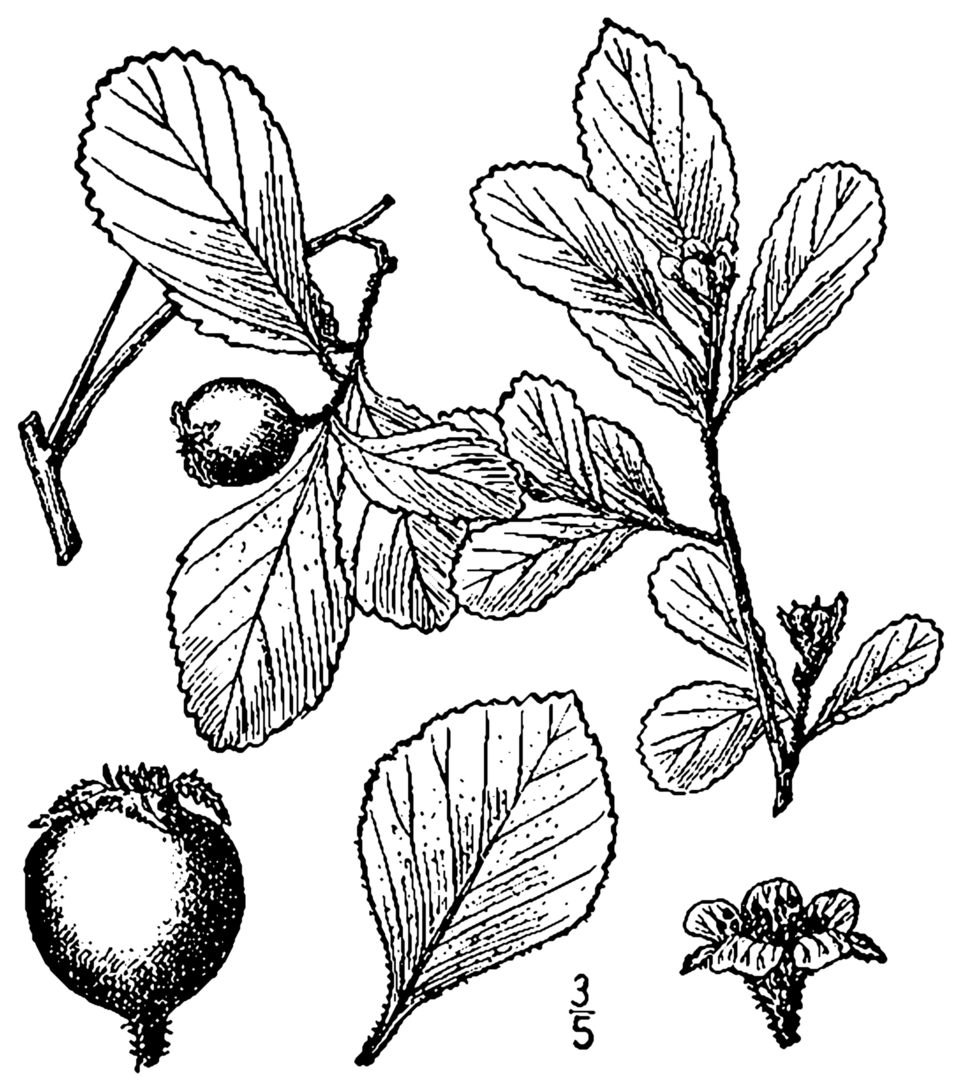
The bark is grayish-brown, rough, and scaly on older stems. Branches are strongly zigzagging and armed with stout thorns up to 1.5 inches long. The thorns are true woody spines (modified branch tips) rather than prickles, and are characteristic of the genus. Young twigs are greenish-brown and covered with woolly hairs.
Leaves
The leaves are small — only ½ to 1½ inches long — obovate to spatula-shaped, with rounded or blunt tips and shallow, rounded teeth toward the tip. The upper surface is dark green and somewhat shiny; the lower surface is paler and may be slightly hairy. Leaves are clustered on short, spur-like lateral shoots. Fall color varies from yellow to dull red-orange, though the tree is not noted for spectacular fall foliage.
Flowers & Fruit
Flowers appear from April to May, borne singly or in clusters of 2–3 at the tips of short spur shoots. Each flower is white, 5-petaled, about ½ inch across, with numerous pink-tipped stamens typical of the rose family. The fragrance is mild. The fruit is a small, rounded pome (haw) about ½ inch in diameter, dull red to yellow-green at maturity in October, with dry, mealy flesh and 3–5 bony seeds. The haws persist on the branches well into winter, providing important food for wildlife.
Quick Facts
| Scientific Name | Crataegus uniflora |
| Family | Rosaceae (Rose) |
| Plant Type | Deciduous Shrub / Small Tree |
| Mature Height | 12 ft |
| Sun Exposure | Full Sun to Part Shade |
| Water Needs | Moderate |
| Bloom Time | April – May |
| Flower Color | White |
| USDA Hardiness Zones | 4–9 |
Native Range
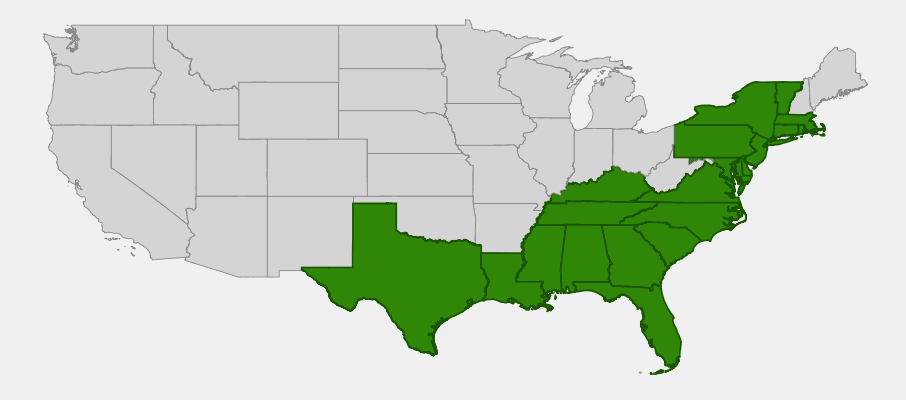
Dwarf Hawthorn is native to the eastern United States, primarily in the coastal plain and piedmont from Massachusetts south to Florida and west to Texas, with additional occurrences inland in Tennessee, Kentucky, and the Appalachian foothills. It is most common in the mid-Atlantic and southeastern coastal plain, where dry, sandy, or rocky soils and open woodland habitats are widespread.
In Delaware, New Jersey, and New York, Dwarf Hawthorn is characteristic of the Atlantic coastal plain — particularly the sandy pine barrens of New Jersey and the coastal plain of Delaware. It grows at the edges of dry oak-pine forests, in rocky thickets, and along roadsides and rights-of-way where its drought tolerance gives it a competitive advantage over less adaptable species.
The species has a relatively restricted habitat tolerance compared to many other hawthorns, showing a strong preference for well-drained, acidic, nutrient-poor soils. This ecological specialization makes it a faithful indicator of certain coastal plain habitat types and an important component of pine barren plant communities.
📋 Regional plant lists featuring Dwarf Hawthorn: Delaware, New Jersey & New York
Growing & Care Guide
Dwarf Hawthorn is a tough, adaptable shrub that thrives in conditions that challenge most plants — dry, poor soils, exposed sites, and dry woodland margins.
Light
Dwarf Hawthorn grows in full sun to part shade. It flowers and fruits most abundantly in full sun, where it develops its densest, most compact form. In part shade, it remains attractive but may produce fewer flowers and fruit. Avoid deep shade, which leads to sparse, open growth.
Soil & Water
Dwarf Hawthorn is highly adaptable to poor, dry soils — sandy, rocky, or clay — and is more drought-tolerant than most hawthorns once established. It tolerates a wide pH range and actually performs better in low-fertility soils than in rich, amended garden soils, which can cause excessive, rank growth. Avoid wet or poorly drained sites.
Planting Tips
Plant in fall or early spring. Handle with care due to the thorns. Dwarf Hawthorn is an excellent choice for informal wildlife hedges, thicket plantings, and naturalistic edges where its thorny habit and wildlife value are assets. Space plants 6–8 feet apart for hedgerow effect. It transplants best as container-grown plants; bare-root establishment can be challenging.
Pruning & Maintenance
Minimal pruning is needed. Remove dead or crossing branches in late winter. Hawthorns are susceptible to fire blight (a bacterial disease) — avoid heavy pruning in wet spring weather and sterilize pruning tools between cuts. The natural multi-stemmed, arching form is attractive and should not be heavily sheared.
Landscape Uses
- Wildlife hedge — thorny thickets provide excellent nesting cover and haws for birds
- Dry woodland edge — excellent for transitional zones between lawn and natural areas
- Butterfly garden — blooms support many spring pollinators
- Pine barren restoration — authentic component of coastal plain communities
- Security planting — impenetrable thorny thickets deter trespassers
Wildlife & Ecological Value
Hawthorns as a group are among the most ecologically valuable native shrubs in the eastern United States, and Dwarf Hawthorn is no exception. Its combination of dense thorny cover, spring flowers, and persistent fall fruit makes it a multi-season wildlife resource.
For Birds
The dense, thorny thickets of Dwarf Hawthorn provide preferred nesting sites for Brown Thrasher, Gray Catbird, Yellow Warbler, and many sparrow species. The haws (fruit) are eaten by American Robin, Cedar Waxwing, Northern Mockingbird, Eastern Bluebird, and Yellow-rumped Warbler in fall and winter. The insects attracted to hawthorn flowers and foliage — including caterpillars of hundreds of moth and butterfly species — provide critical food for breeding songbirds.
For Mammals
Foxes, raccoons, opossums, and white-tailed deer consume hawthorn haws. The dense thorny thickets provide escape cover and bedding sites for cottontail rabbits and other small mammals. In winter, the persistent fruit and dense branch structure provide both food and shelter for many species.
For Pollinators
The spring flowers of Dwarf Hawthorn attract native bees (including mining bees and bumble bees), honeybees, and numerous fly species. Hawthorns are also host plants for many moth and butterfly caterpillars, including various hairstreak butterflies, the Striped Hairstreak, and the Wild Cherry Sphinx moth.
Ecosystem Role
As a thorny thicket-forming shrub, Dwarf Hawthorn creates structurally complex habitat in woodland edges and open areas. Its thickets serve as nursery habitat where seedlings of other woodland species become established, protected from browsing by the thorns. This “nurse shrub” function makes hawthorns important facilitators of forest succession in disturbed habitats.
Cultural & Historical Uses
Hawthorns have an extraordinarily rich cultural history across the Northern Hemisphere, and American hawthorn species share in this tradition. Indigenous peoples of the eastern United States used hawthorn berries extensively as food — eaten fresh, dried for winter storage, or cooked into a thick paste or sauce similar to applesauce. The berries are rich in pectin and were used to make jellies and preserves. Many nations also used the hard, dense hawthorn wood for small tool handles, clubs, and other implements requiring strength and durability.
Medicinally, hawthorn preparations have been used for centuries in both Indigenous American and European herbal traditions. The berries, leaves, and flowers of various hawthorn species contain flavonoids and other compounds that modern research has shown to have genuine cardiovascular benefits — improving blood circulation, reducing blood pressure, and supporting heart muscle function. Hawthorn berry preparations are widely used in contemporary herbal medicine, and clinical trials have supported some of these traditional uses.
Dwarf Hawthorn specifically was used by some eastern nations as a medicinal plant, though the larger-fruited hawthorn species were more commonly used for food. The thorny branches were sometimes used as natural fencing material, and hawthorn thickets were deliberately maintained near settlements as defensive barriers and windbreaks in some Indigenous communities.
Frequently Asked Questions
How is Dwarf Hawthorn different from other hawthorns?
Dwarf Hawthorn is distinguished by its small size (rarely over 12 feet), small leaves, flowers borne singly or in clusters of just 1–3 (hence “uniflora”), and preference for dry, sandy, coastal plain habitats. Most other eastern hawthorns are larger, have larger leaves, and produce more numerous flowers per cluster.
Are hawthorn berries edible?
Yes — hawthorn berries (haws) are edible and have been used by Indigenous and European peoples for centuries. The flesh is mealy and mildly sweet, suitable for jellies, syrups, and dried fruit. However, the seeds contain cyanogenic compounds and should not be eaten in large quantities. The haws of Dwarf Hawthorn are smaller and less palatable than those of some larger hawthorn species.
Is Dwarf Hawthorn invasive?
No — Dwarf Hawthorn is a native species with no invasive tendency. Unlike the introduced Common Hawthorn (Crataegus monogyna) and English Hawthorn (C. laevigata), which can be invasive in some regions, Dwarf Hawthorn is a beneficial native species.
Does Dwarf Hawthorn have serious pest or disease problems?
Like other hawthorns, it can be affected by fire blight, cedar-hawthorn rust, and aphids, though these are rarely severe in naturalistic plantings. Providing good air circulation and avoiding excessive fertilization reduces disease pressure.
How long do hawthorn berries persist on the plant?
Haws typically ripen in September–October and persist on the branches into winter, often through January or February if not consumed by wildlife. This persistent fruit makes hawthorns particularly valuable winter wildlife food sources.

Looking for a nursery that carries Dwarf Hawthorn?
Browse our native plant nursery directory: Delaware · New Jersey