
Top 5 Best Bulb Vases and Propagation Vessels for Plant Lovers in 2026
We independently select all products and services. If you click through links we provide, Plant Native may earn a commission with no extra cost to you.
Last updated: August 23, 2026
Whether you’re propagating pothos cuttings, growing hyacinth bulbs in water, or simply want a stunning desktop centerpiece, a glass bulb vase transforms the way you interact with your plants. These elegant hydroponic vessels let you watch roots develop in real time — turning plant care into living art.
After researching dozens of glass propagation vessels and desktop planters, we narrowed the field to five standout options that balance aesthetics, build quality, and practicality. From single-bulb statement pieces to multi-tube wall-mounted stations, there’s something here for every plant lover and every space.
All of our picks feature borosilicate or soda-lime glass, solid wood or metal stands, and designs that work equally well with water-rooted cuttings, air plants, and forced bulbs. Here are the best bulb vases and propagation vessels you can buy in 2026.
Our top pick

- Three independent bulb vases let you propagate multiple cuttings simultaneously
- Metal swivel holders rotate 360° for easy watering and plant arrangement
- Solid wood base with vintage finish complements any décor style
Cons
- Bulbs are hand-blown and vary slightly in size — not perfectly uniform
- Wood stand can leave marks on delicate surfaces without a felt pad
The XXXFLOWER 3-Bulb Plant Terrarium is our top pick because it strikes the ideal balance between form and function. The retro wooden stand gives it a mid-century modern feel, while the three glass bulbs — each mounted on a swiveling metal arm — provide flexibility that single-vase designs simply can’t match. You can propagate pothos, philodendron, and tradescantia cuttings side by side, or use one bulb for a cutting and the others for dried flowers or air plants.
The glass is lightweight but surprisingly sturdy for everyday handling. Water changes are easy: just lift the bulb off its holder, rinse, and replace. The openings are wide enough for most stem cuttings but narrow enough to support the plant upright without additional props. If you only buy one propagation vessel, this is the one to get.
Best single-bulb vase
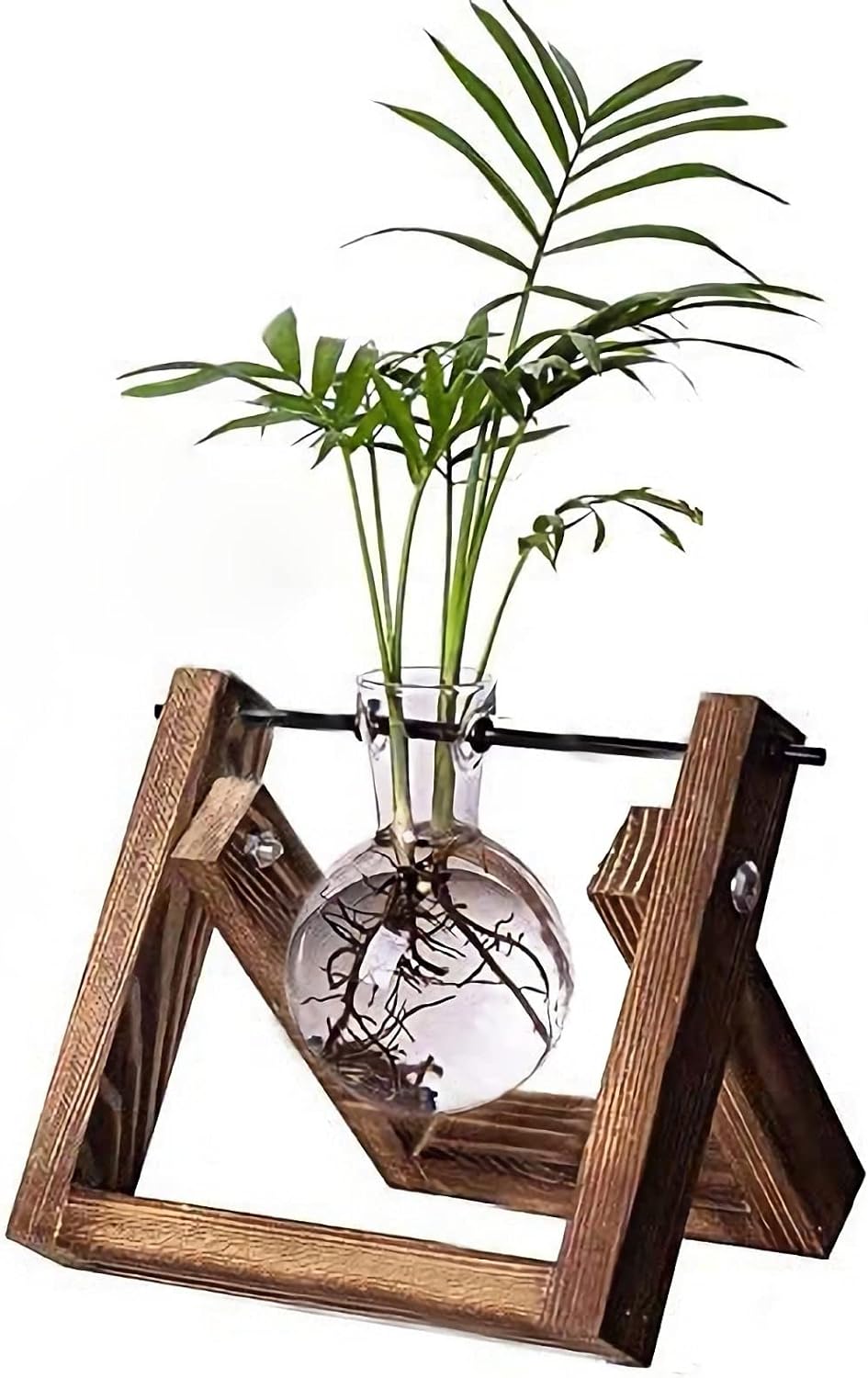
- Compact footprint fits on nightstands, desks, and narrow shelves
- Thick borosilicate glass resists thermal shock during water changes
- Swivel metal holder makes repositioning and refilling effortless
Cons
- Only one bulb — you’ll need multiples for a bigger display
- Wooden base is lighter than it looks and can tip if bumped
If you want the clean aesthetic of a bulb vase without committing to a multi-vessel station, the Ivolador single-bulb planter is the way to go. Its retro wooden stand and polished metal arm give it a boutique-shop quality that belies its affordable price point. The glass bulb itself is slightly larger than many competitors, which means more water volume and less frequent topping off.
We found it especially well-suited for propagating single stem cuttings like monstera nodes or golden pothos. The wide mouth accommodates thicker stems, and the glass clarity makes root growth visible from every angle. It also works beautifully as a bud vase for a single fresh-cut flower.
Best wall-mounted station
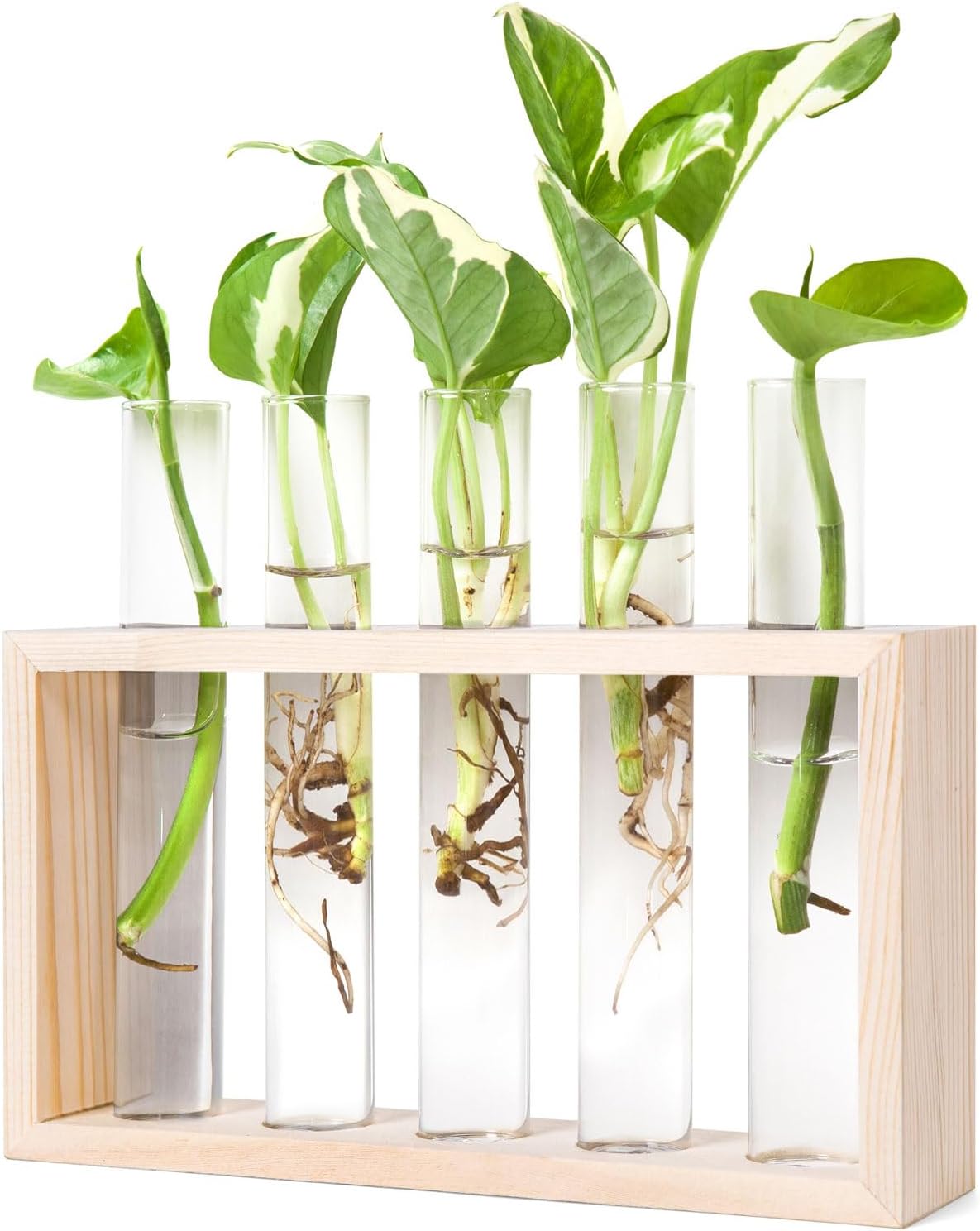
- Five test-tube vases let you root multiple cuttings in a compact vertical layout
- Wall-mounted design frees up desk and shelf space completely
- Beige wooden frame with rope hanger blends with boho and farmhouse décor
Cons
- Test tubes have small openings — thick stems like monstera won’t fit
- Requires a wall nail or hook; not freestanding out of the box
- Water evaporates faster in narrow tubes, needing top-offs every 3–4 days
The Mkono Wall Hanging Propagation Station is the best option for plant lovers who are running out of horizontal surfaces. Its five glass test tubes sit in a clean wooden rack that mounts to any wall with a single nail. The result is a vertical garden effect that doubles as wall art — especially striking when each tube holds a different trailing vine cutting.
The tubes are best suited for slender-stemmed plants like pothos, ivy, string of hearts, or herb cuttings. Each tube holds about 30ml of water, which is enough to sustain roots but does require more frequent refills than bulb-style vases. The included jute rope hanger adds a natural touch, though you can swap it for any hook or adhesive strip.
Best double-layer design

- Double-layer design holds two bulb vases vertically, doubling capacity without extra footprint
- Retro wooden stand with rope hanger works on walls or tabletops
- Larger bulb openings accommodate thick-stemmed cuttings like fiddle leaf fig
Cons
- Top bulb can be tricky to water without spilling on the lower one
- Heavier than single-tier stations — needs a sturdy wall hook
Mkono’s Double Layer Propagation Station takes the wall-hanging concept and elevates it — literally. Two glass flower bulbs sit on separate tiers of a retro wooden frame, creating a stacked display that’s equal parts plant nursery and art installation. It ships with a rope hanger for wall mounting but also stands upright on a desk or shelf.
The bulb openings are noticeably wider than the tube-style stations, making this a better choice if you propagate thicker stems or want to grow forced bulbs like paperwhites or hyacinths. The glass bulbs lift out easily for cleaning. Our only gripe: watering the top bulb requires a narrow-spout watering can or a squeeze bottle to avoid dripping on the lower tier.
Best budget pick

- Lowest price point in our roundup while still including three glass bulbs
- Lightweight wooden stand is easy to move between rooms
- Wide bulb openings work well for both water propagation and small bouquets
Cons
- Wood finish is less refined than XXXFLOWER — some sanding marks visible
- Metal holders don’t swivel, so repositioning requires moving the whole unit
- Glass is thinner and more fragile than pricier options
The Ivolador 3-Bulb Propagation Station proves you don’t need to spend a lot to get into hydroponic propagation. At roughly half the price of our top pick, it delivers a similar three-bulb layout on a wooden stand — the trade-off being slightly thinner glass and a less polished wood finish. For a first-time propagator or someone buying multiple stations to fill a windowsill, the savings add up fast.
The fixed metal holders (non-swivel) are the main functional compromise. You can’t rotate individual bulbs, which makes watering and rearranging a bit less convenient. But the bulbs themselves are well-shaped with good clarity, and the station photographs beautifully for plant-shelf Instagram posts. It’s an excellent entry point for anyone curious about water propagation.
Buyer’s Guide: How to Choose the Right Bulb Vase or Propagation Vessel
Glass Type and Thickness
Most propagation vessels use either borosilicate glass (more durable, heat-resistant) or standard soda-lime glass (more affordable). Borosilicate is worth the premium if you plan to use hot water for cleaning or if the vase will be handled frequently. Thicker glass generally means fewer accidental breaks, but it also adds weight.
Single Bulb vs. Multi-Tube Stations
A single-bulb vase is ideal for minimalists or tight spaces — one cutting, one statement piece. Multi-tube or multi-bulb stations let you propagate several plants at once and create fuller displays. If you’re actively propagating to grow your plant collection, a 3- or 5-vessel station will save you time and shelf space compared to individual vases.
Desktop vs. Wall-Mounted
Desktop stations sit on any flat surface and are easy to move for watering and rearranging. Wall-mounted options free up counter space and create eye-catching vertical displays, but they require hardware installation and can be harder to refill. Consider your available space and how often you want to fuss with watering.
Opening Size Matters
Check the diameter of the vase opening before buying. Narrow tube-style openings (under 1 inch) work for slim stems like pothos and ivy but won’t accommodate monstera nodes or forced bulbs. Wider bulb-style openings (1.5–2 inches) are more versatile and support a broader range of plants.
Stand Material and Stability
Wooden stands offer warmth and a natural look, while metal frames feel more modern and industrial. Either way, check that the base is weighted or wide enough to prevent tipping — especially important if you have cats or small children. Felt pads on the bottom protect furniture surfaces from scratches.
What Plants Work Best in Bulb Vases?
The best candidates for glass propagation vessels are plants that root easily in water: pothos, philodendron, tradescantia, ivy, coleus, basil, and mint. For forced bulbs, look for hyacinth, paperwhite narcissus, and amaryllis — these grow dramatically in bulb-specific vases with a narrowed neck that suspends the bulb above the water line.
What’s the best time of year to start? I don’t want to miss the window.
Great question, Bonnie! For zone 7, you may want to check with your local extension office for the best timing. Generally the principles here still apply though. -Plant Native Team