
Hāpuʻu Pulu (Cibotium glaucum)
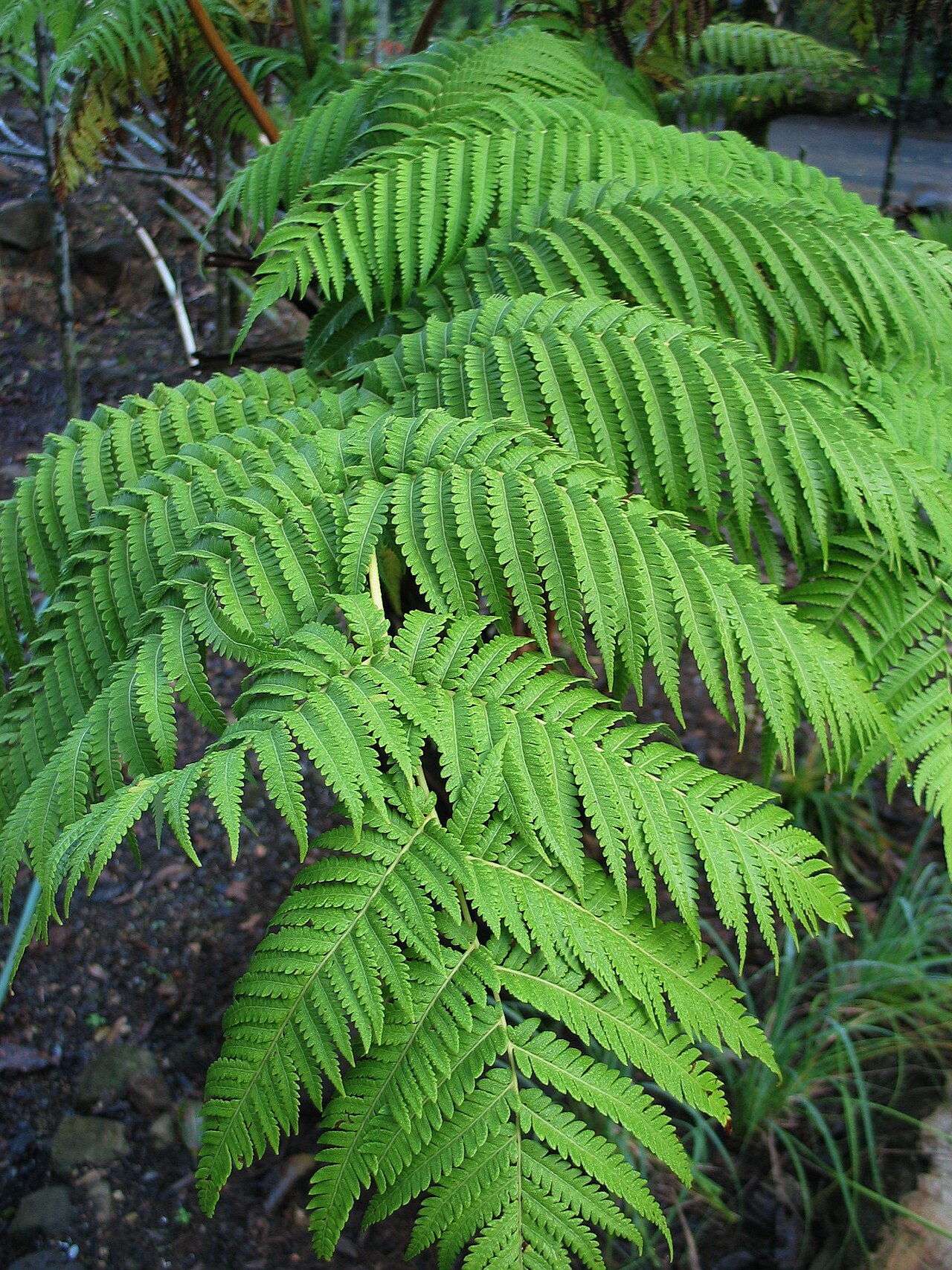
Hāpuʻu pulu (Cibotium glaucum) is a native Hawaiian tree fern whose arching fronds create the layered feeling of a moist forest. Soft golden to reddish-brown hairs around the young growth give it the name pulu, while a pale, glaucous cast beneath the fronds helps distinguish its foliage. It offers a very different kind of garden structure from a flowering tree: a spreading crown of divided fronds above a slowly developing trunk-like stem.
This species is endemic to Hawaiʻi and occurs across six main islands. It is often used in shaded or partly shaded landscapes, including some lower-elevation gardens, where reliable moisture can be maintained. It is not a quick-growing screen, and it is not a flowering plant. There are no blossoms or fruits to wait for; its reproductive cycle involves spores.
Choose nursery-propagated, correctly identified material and plan around the size of the fronds. Hāpuʻu grows slowly, and wild harvesting has had lasting effects on Hawaiian forests. A responsible purchase should not exchange a mature forest plant for a temporary garden effect.
Quick Facts
| Scientific Name | Cibotium glaucum |
| Family | Cibotiaceae |
| Plant Type | Native tree fern |
| Mature Height | About 10–20 ft overall in many settings; trunk growth very slow |
| Mature Spread | 8 to more than 20 ft across the fronds |
| Growth Rate | Very slow trunk growth |
| Sun Exposure | Partial sun to shade preferred; some sun tolerated with suitable moisture |
| Water Needs | Moist to wet; maintain reliable moisture |
| Soil Type | Moist organic or volcanic substrate; avoid a drying root zone |
| Soil pH | Assess local soil and nursery performance before amending |
| Bloom Time | Not applicable; fern reproduces by spores |
| Flower Color | None; this is a fern, not a flowering plant |
| Fall Color | Evergreen; seasonal new growth may contrast with older foliage |
| Fruit | None; reproduces by spores |
| Deer Resistant | Not a browse-proof planting; protect young trees where needed |
| USDA Hardiness Zones | Use Hawaiian island, elevation, and exposure guidance for site selection |
Recognizing Hāpuʻu Pulu
The fronds are large, divided, and arch outward from the crown. Their undersides have a distinctive pale gray-green or bluish cast, often with fine whitish hairs. The young growth and frond bases carry woolly hairs in golden, mustard, or reddish-brown tones. These details are more informative than the general appearance of a “tropical fern.”
The Hawaiian name hāpuʻu is used collectively for several native tree ferns, so a complete botanical label matters. The University of Hawaiʻi account distinguishes Cibotium glaucum from other hāpuʻu and notes that the informal terms “blond” or “female tree fern” do not mean plants are divided into separate male and female trees.
Fronds, Croziers, and Spores
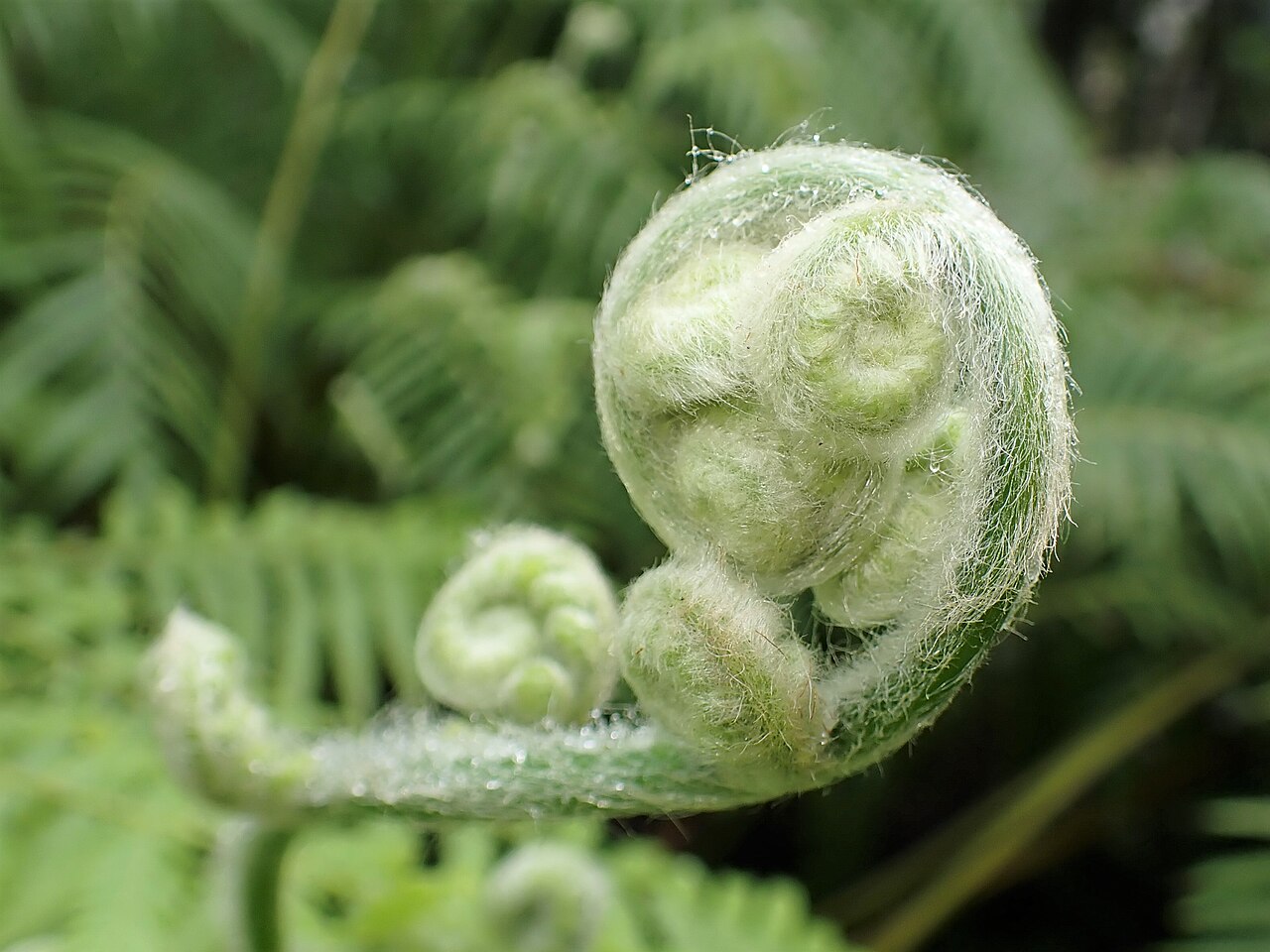
New fronds emerge as coiled croziers, often called fiddleheads. Protect these developing structures during maintenance. Removing or damaging them sacrifices future foliage. The established fronds provide the broad, layered canopy that makes a mature tree fern valuable in a garden.
As a fern, hāpuʻu does not make flowers, seed pods, or berries. Spores are produced in structures associated with the fronds. This distinction matters when reading a generic tree-care chart: bloom time and flower color are not missing information, but categories that do not apply to this plant.
Native Range and Forest Setting
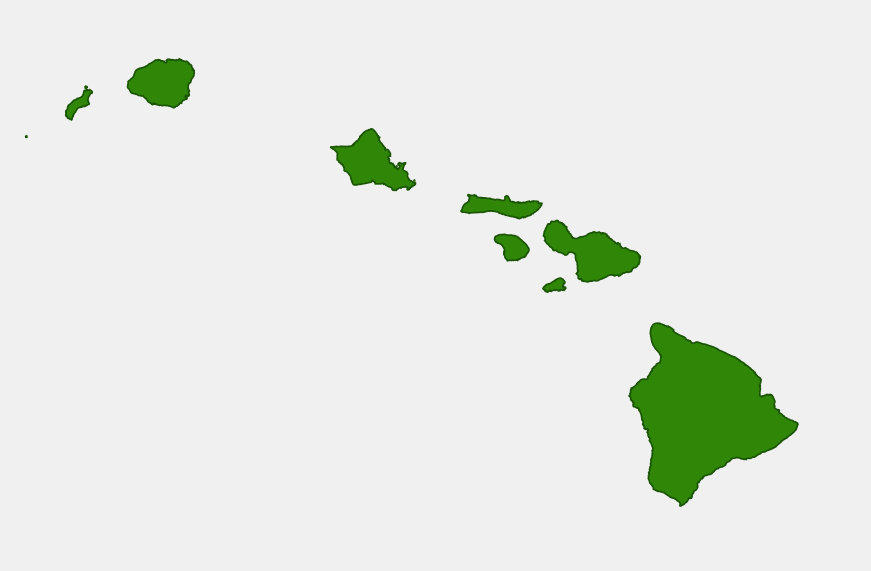
The University of Hawaiʻi profile lists Kauaʻi, Oʻahu, Molokaʻi, Lānaʻi, Maui, and Hawaiʻi. It describes mesic to wet forest habitat, usually from about 985 to more than 5,575 feet, with some occurrences lower down. The fern may grow terrestrially and sometimes in epiphytic situations.
Those forest conditions help explain its garden needs. The crown receives moderated light, the root zone has reliable moisture, and the surrounding vegetation reduces abrupt drying. A garden does not need to reproduce an entire forest, but it should supply the essential conditions rather than treating the fern as a drought-resistant accent.
Native Range
| U.S. States | Hawaii |
| Hawaiian Islands | Kauaʻi, Oʻahu, Molokaʻi, Lānaʻi, Maui, Hawaiʻi |
| Mexico / Canadian Provinces | Not included in the verified native range used here |
| Ecoregion | Hawaiian tropical forest and woodland |
| Elevation Range | Usually about 985–5,575 ft; sometimes lower |
| Habitat | Mesic to wet forest understory |
| Common Associates | Site-appropriate native forest canopy and understory |
USDA PLANTS profile (CIGL). Species identity verified; this link is not a guarantee of county-level distribution data.
The map is a state-level native-range overview. It does not show every forest population or establish suitability at every Hawaiian address. A plant can be native to the state and still be poorly matched to a hot, dry, exposed garden. Use the species’ habitat and local nursery experience together.
Choosing the Right Garden Position
Partial Shade as a Useful Starting Point
The University of Hawaiʻi account describes tolerance of several light levels but identifies partial shade as particularly suitable. In lower-elevation gardens, protection from intense exposure can be important. Filtered canopy light or a sheltered forest-edge setting is often a more plausible starting point than an open paved courtyard.
Shade should not mean a location so cramped that fronds collide with walls or neighboring plants. Allow room for the crown to spread. The published profile gives a spread from around eight to more than twenty feet, making mature frond clearance a major design consideration.
Observe the site through the day and through dry weather. A place shaded in the morning may receive hot afternoon sun, while a shaded wall can still reflect heat or channel drying wind. Choose the actual microclimate, not merely a spot labeled “shade” on a sketch.
Design for Slow Trunk Growth
Hāpuʻu is very slow to gain trunk height. The University of Hawaiʻi profile gives roughly an inch per year as a general indication of that pace. Do not buy a short plant expecting it to become a tall fern-tree canopy in a few seasons. Its current scale and expanding fronds should fit the design from the beginning.
Slow growth is not a reason to obtain wild-cut trunks. Ask how nursery material was propagated and raised. A garden can develop gradually around a younger plant, preserving both a responsible source and realistic expectations.
Moisture and Substrate
Reliable moisture is central to the published guidance. The species tolerates moist to wet conditions, and the profile also recommends a slightly acidic, moisture-retentive planting environment. Avoid allowing the root zone to dry repeatedly, especially during establishment or in a container.
The profile’s broad wet-site tolerance should be applied with judgment. A moist organic or volcanic substrate differs from a compacted construction pit with stagnant, poor-quality water. Assess the actual site, the nursery stock, and the way water moves through the planting area.
In a garden with seasonal dry periods, decide how moisture will be maintained before planting. A fern placed beyond the reach of practical irrigation may become a recurring problem. Conversely, do not assume the entire surrounding native garden needs the same watering as the hāpuʻu; group plants with compatible needs.
Planting and Establishment
Handle the plant carefully and protect both the root system and the crown. Prepare the site first so the fern is not left exposed while other work is completed. Set it at an appropriate level and avoid covering the growing crown with soil, mulch, or accumulated debris.
Water to establish contact with the surrounding substrate, then monitor moisture consistently. Check the nursery root ball and nearby soil separately if their textures differ. The surface can look damp while the original root ball is drying, or the reverse can occur.
Keep the surrounding area manageable and avoid digging repeatedly through the shallow root zone. The University of Hawaiʻi account specifically cautions against tilling fertilizer into the soil around these ferns. A stable surface treatment and careful hand maintenance are more suitable than frequent cultivation.
Watering and Container Care
Container-grown hāpuʻu needs close observation because a pot can dry faster than a moist garden bed. Pot size, root density, wind, and temperature influence the interval between watering. Inspect moisture rather than assuming a calendar used for another plant will suit the fern.
For an in-ground plant, widen the area receiving water as the root system develops. Avoid concentrating all irrigation against one small part of the stem. The objective is a consistently suitable root environment and a healthy crown, not simply a wet patch visible at the surface.
If fronds deteriorate, consider moisture, exposure, and recent disturbance before adding fertilizer. Drying wind or a neglected container root ball can affect a fern even where the surrounding garden looks green. Document changes and correct the underlying condition rather than responding with several amendments at once.
Pruning and Nutrition
Old fronds can be removed when needed for appearance or access, but protect emerging croziers. Do not cut healthy developing growth merely to make the crown look tidier. The fern’s form depends on successive fronds expanding and arching outward.
Use appropriate tools and avoid injuring the crown or the trunk-like stem. Leave enough space around the plant that maintenance does not require bending or breaking fronds to reach another feature. Good placement reduces the need for repeated corrective cutting.
The University of Hawaiʻi profile includes light feeding guidance for container plants, but nutrient additions should follow the plant’s condition and local advice. Poor color or a lack of new fronds can have causes other than nutrition. Avoid disturbing shallow roots by working granular material into the soil.
Wildlife, Forest Structure, and Conservation
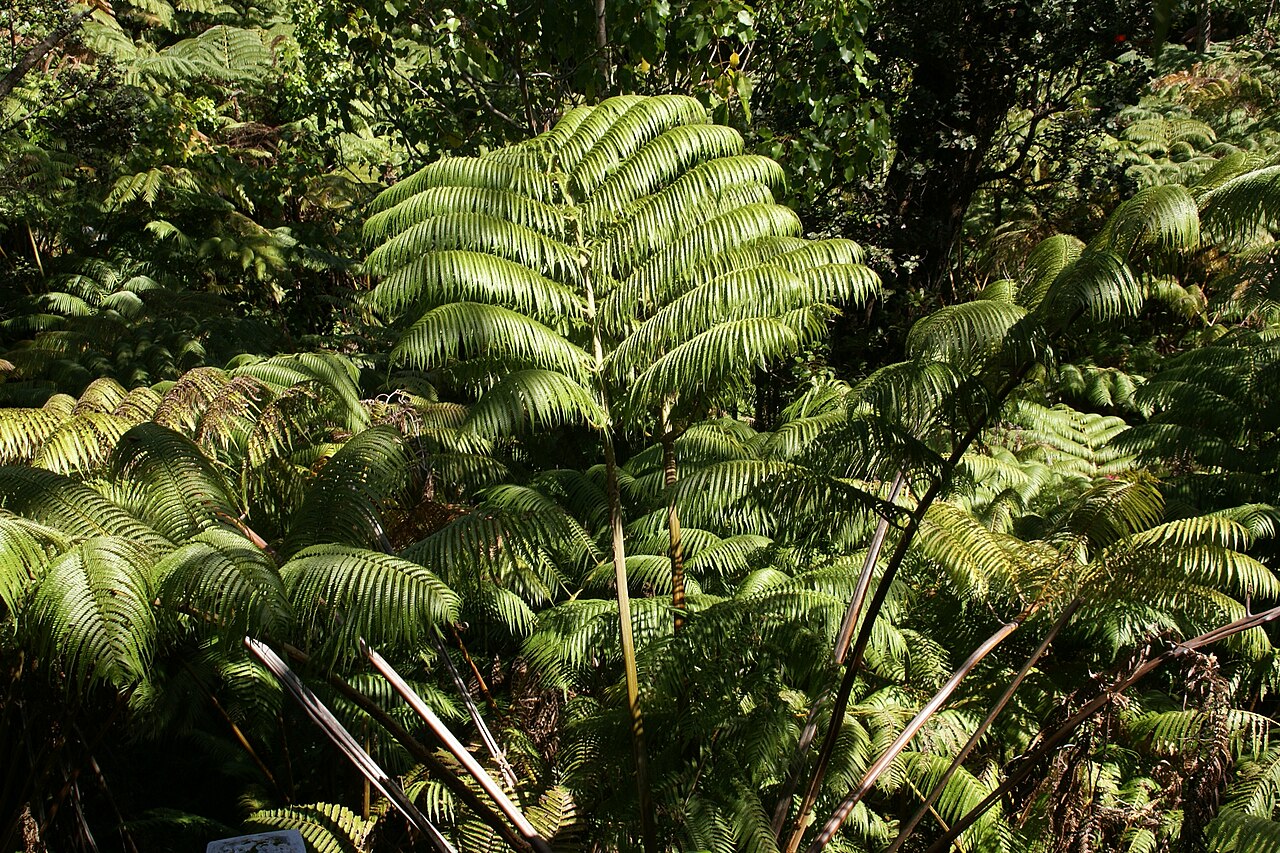
Hāpuʻu contributes a substantial understory layer in Hawaiian forest. Its fronds and fibrous surfaces create a different structure from the canopy trees above it. The University of Hawaiʻi account notes that pulu has been used by Hawaiian honeycreepers as nest lining, illustrating how apparently small plant features can participate in larger ecological relationships.
Feral pigs can damage or destroy hāpuʻu by feeding on the starchy interior. The effects extend beyond the individual fern when disturbance changes the forest floor and opens space for invasive plants. A garden specimen should be protected where browsing or rooting animals are present, while forest management requires coordinated action at a larger scale.
The native fern is also an alternative to invasive ornamental tree ferns. The University of Hawaiʻi profile specifically contrasts it with the Australian tree fern commonly known as Cyathea cooperi, which can escape cultivation and compete with native plants. Confirm identity when purchasing; a fast-growing “tree fern” is not necessarily a native hāpuʻu.
Pulu and Hawaiian History
Pulu, the woolly material associated with the fronds, has a documented history in Hawaiian practices and later commercial trade. The University of Hawaiʻi account describes nineteenth-century export for stuffing material and the destructive cutting of ferns to obtain it more easily. That history helps explain why responsible sourcing matters today.
Historical uses of hāpuʻu for food and other purposes should be understood in their cultural and environmental context. They do not make casual harvesting from a garden or forest appropriate. A plant that grows slowly can represent many years of development, and removing its crown or interior destroys far more than a replaceable seasonal shoot.
A living hāpuʻu can instead be a long-term feature for observation and education. Watching croziers expand, comparing the upper and lower frond surfaces, and learning its name provide a connection to Hawaiian forest without extracting material from it.
Buying and Moving Plants Carefully
Ask the nursery about propagation, identification, and plant health. The species profile discusses historical concerns about pest movement in transported tree-fern material. Do not treat an old account of nursery restrictions as a current rule; obtain current local guidance when moving plants between islands or bringing unfamiliar stock into a garden.
Inspect the plant and container before purchase, and avoid choosing solely by trunk height. A smaller, healthy, responsibly produced fern in suitable conditions can be a better long-term choice than a dramatic specimen with uncertain origin or poor roots.
Common Questions
When will it flower? It will not. Hāpuʻu is a fern and reproduces by spores, not flowers or seeds.
Will the trunk grow several feet quickly? No. Trunk growth is very slow. Design around the current plant and the spread of its fronds.
Can it grow in full sun? Some sun tolerance is documented, but partial shade with reliable moisture is a safer general starting point. Local exposure and nursery history matter.
Are “male” and “female” hāpuʻu separate tree sexes? Those informal names should not be interpreted that way. The University of Hawaiʻi account explicitly warns against that misunderstanding.
Can I substitute any tree fern? No. Confirm the species, especially where introduced invasive tree ferns are sold or planted.
A Slow-Growing Forest Presence
Hāpuʻu pulu is best grown with patience, moisture, and space. Choose responsibly propagated stock, protect the crown and shallow roots, and allow the fronds to make their broad natural canopy. In an appropriate setting, it can become a lasting native feature whose value increases through years of careful observation.
Sources & Further Reading
- University of Hawaiʻi, Native Plants Hawaiʻi species profile
- USDA Forest Service: identification and ecology
Botanical range, identification, and cultural information are based on these sources. Garden-management advice should be adapted to local soil, exposure, and nursery provenance.
Find Native Plants Near You
Look for correctly identified, nursery-propagated plants with documented Hawaiian provenance. Visit our Hawaii native plant nursery directory and ask about stock suited to your island, elevation, and rainfall. Compare other trees in our Hawaii native plant list.