
Toyon (Heteromeles arbutifolia)
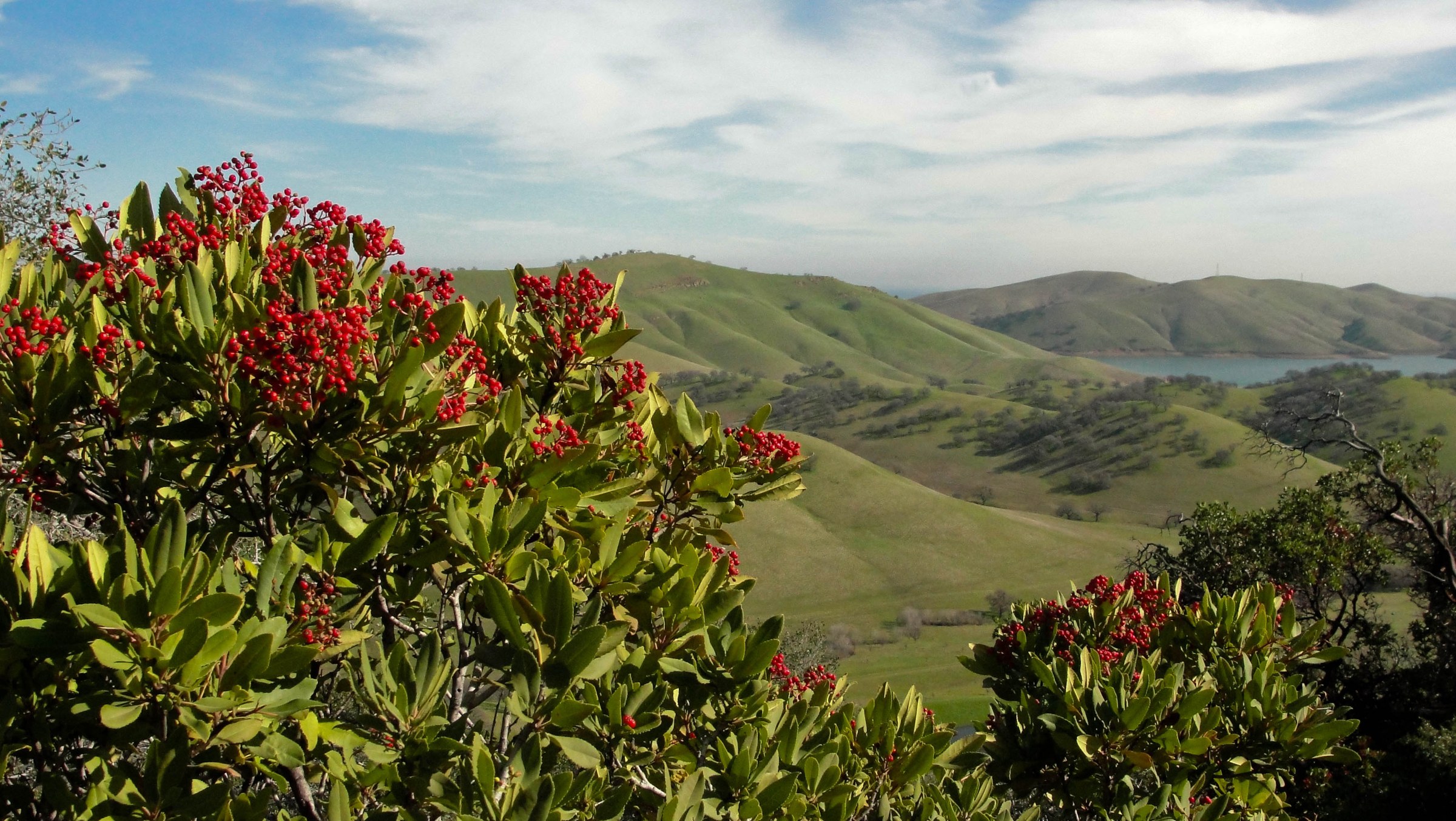
Heteromeles arbutifolia, commonly called Toyon, Christmas Berry, or California Holly, is a tough, broadleaf evergreen shrub found throughout the chaparral, oak woodlands, and coastal scrub of California. A member of the rose family (Rosaceae), Toyon is instantly recognizable in late fall and winter, when its branches are draped in heavy clusters of bright red berries that stand out against the dry, golden hills. Early Spanish and American settlers reportedly gave Hollywood its name after mistaking the shrub’s berries and leathery leaves for English holly growing wild in the canyons above Los Angeles.
Growing as a dense, rounded shrub or small tree from about 6 to 25 feet tall, Toyon is one of the most dependable and widely admired native shrubs in California gardens. Its glossy, toothed, leathery leaves stay green year-round, its clusters of small white flowers bring pollinators into the garden in early summer, and its berries feed a long list of birds and mammals from October through midwinter. Toyon asks for almost nothing once established, tolerating summer drought, poor soil, and the hot, dry winds that define its native chaparral home.
Toyon’s range is overwhelmingly a California story. It grows from the Sierra Nevada foothills and the Coast Ranges south through the Transverse and Peninsular Ranges to northern Baja California, Mexico, and a few populations reach just across the state line into the southwesternmost corner of Oregon. Outside that narrow natural range in the Pacific states, Toyon is strictly a garden and landscape plant, not a wild native, so gardeners east of the Sierra or outside the West Coast should treat it as an ornamental rather than a regional native.
Identification
Toyon grows as a multi-stemmed, rounded evergreen shrub, though older plants in favorable sites can develop a single trunk and take on a small tree form 15 to 25 feet tall. Most garden and wild specimens stay in the 6- to 15-foot range, with an equally wide spread, forming a dense, leafy mound that holds its shape with minimal pruning.
Leaves
The leaves are alternate, leathery, and glossy dark green above with a paler underside, typically 2 to 4 inches long and finely to coarsely toothed along the margins — the feature most responsible for its “California holly” nickname, even though Toyon is unrelated to true hollies (Ilex). New growth often emerges with a bronzy-red tint before maturing to deep green.
Flowers
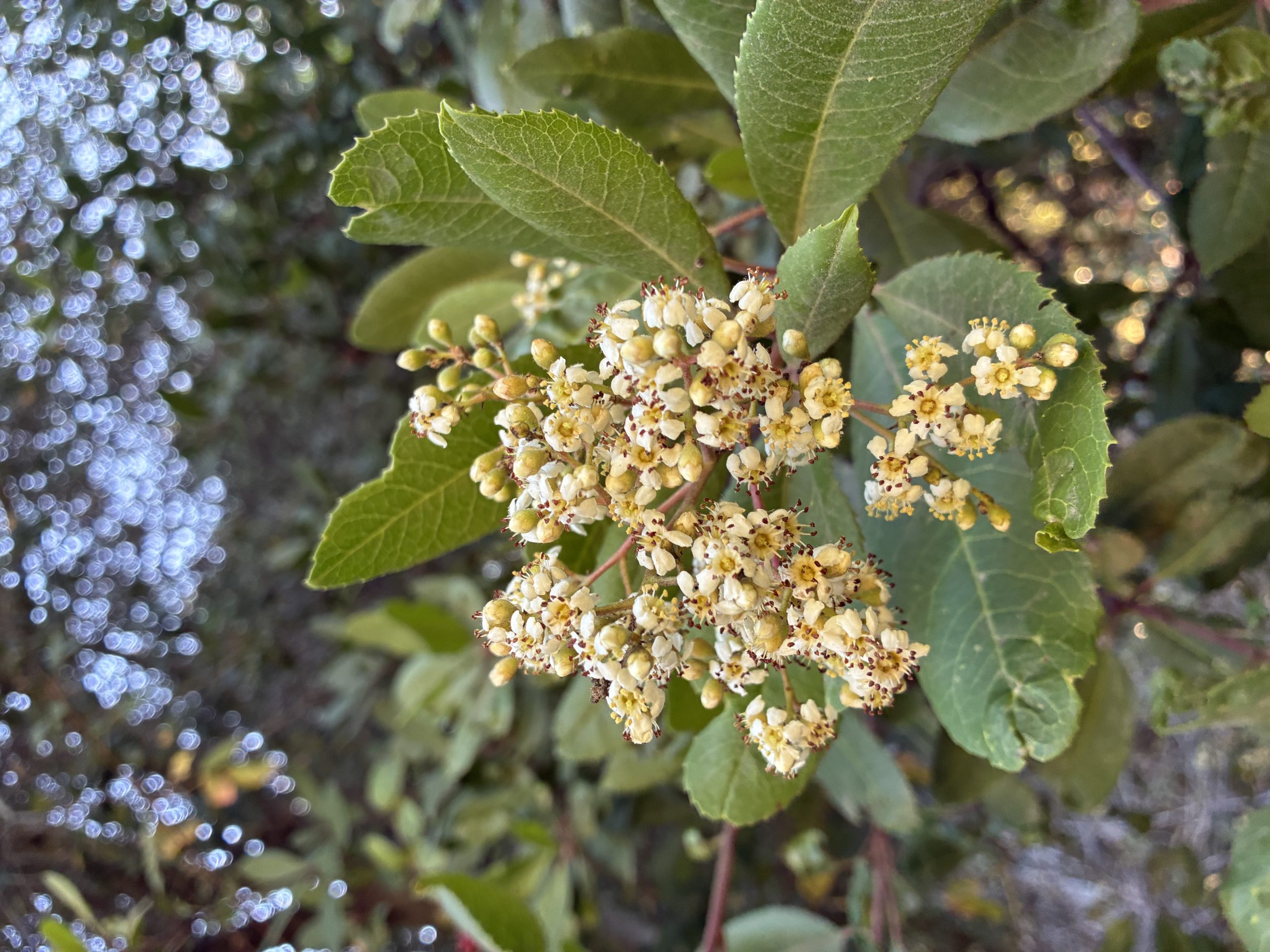
In late May through July, Toyon produces flat-topped clusters (corymbs) of small, five-petaled white flowers, each about a third of an inch across, held above the foliage at the branch tips. The blooms have a faint, slightly musky sweet scent and are visited heavily by native bees, flies, beetles, and other small pollinators.
Fruit
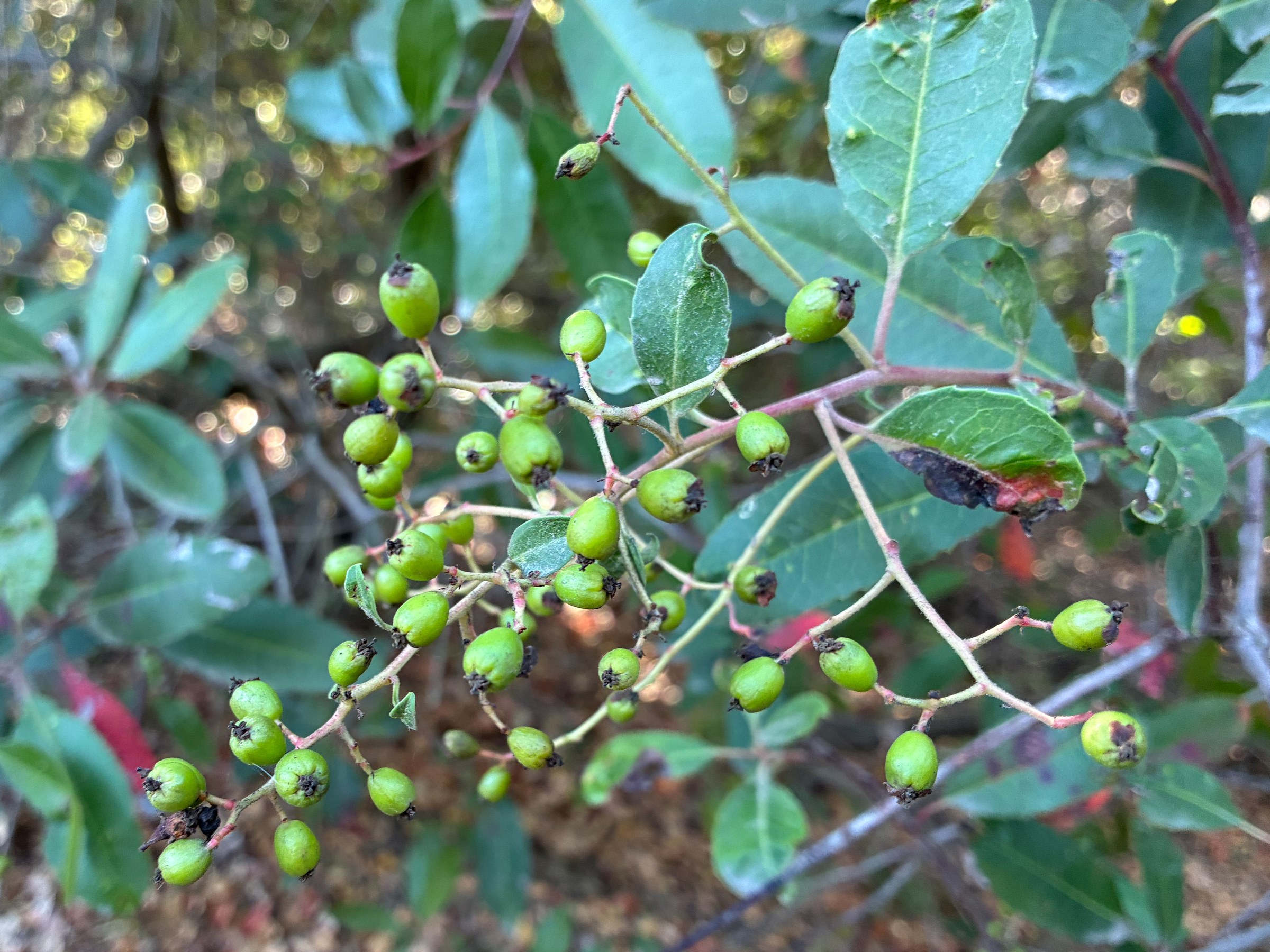
The fruit is a small pome, essentially a miniature apple-like berry about a quarter inch across, borne in large, showy clusters that ripen from green to bright red between October and December and often persist on the shrub well into winter. Birds strip the berries steadily through the cold months, so by late winter a heavily browsed shrub may show far fewer berries than it did at Christmastime.
Quick Facts
| Scientific Name | Heteromeles arbutifolia |
| Family | Rosaceae (Rose) |
| Plant Type | Evergreen Shrub / Small Tree |
| Mature Height | 6–15 ft (occasionally to 25 ft) |
| Mature Spread | 6–15 ft |
| Growth Rate | Moderate |
| Sun Exposure | Full Sun to Part Shade |
| Water Needs | Low once established; drought tolerant |
| Soil Type | Adaptable; well-drained clay, loam, or rocky soils |
| Soil pH | 6.0–7.5 (slightly acidic to neutral) |
| Bloom Time | Late May – July |
| Flower Color | White |
| Fall/Winter Interest | Bright red berry clusters, October–January |
| Fruit | Small red pomes (berries) in showy clusters |
| Deer Resistant | Yes, mostly (occasional light browsing) |
| USDA Hardiness Zones | 8–11 |
Native Range
Toyon’s native range is centered almost entirely on California. It grows from the northern Coast Ranges and the Sierra Nevada foothills south through the Central Coast, Transverse Ranges, and Peninsular Ranges to the Baja California border and beyond into northern Baja, Mexico. A small, outlying population crosses into the extreme southwestern corner of Oregon near the California line, but Toyon is not native anywhere else in Oregon or further north — plants sold or grown in the Willamette Valley or the Pacific Northwest generally are garden specimens well outside their wild range.
Within California, Toyon is one of the defining shrubs of chaparral and mixed evergreen woodland, and it is equally at home in coastal sage scrub, oak savanna, and the understory of open oak and conifer woodlands. It grows from near sea level to about 4,000 feet in the mountains, and shows up on dry slopes, canyon walls, and ridgelines where few other broadleaf evergreens can compete with the summer drought.
Because no California-focused regional plant list exists yet in this site’s directory, Toyon’s native range here is represented through the Western Oregon & Washington list, reflecting the small, genuine wild population at the northern edge of its range in southwestern Oregon. Gardeners throughout California should consider Toyon a core native regardless of this listing gap — it belongs in nearly any dry, sunny California garden.
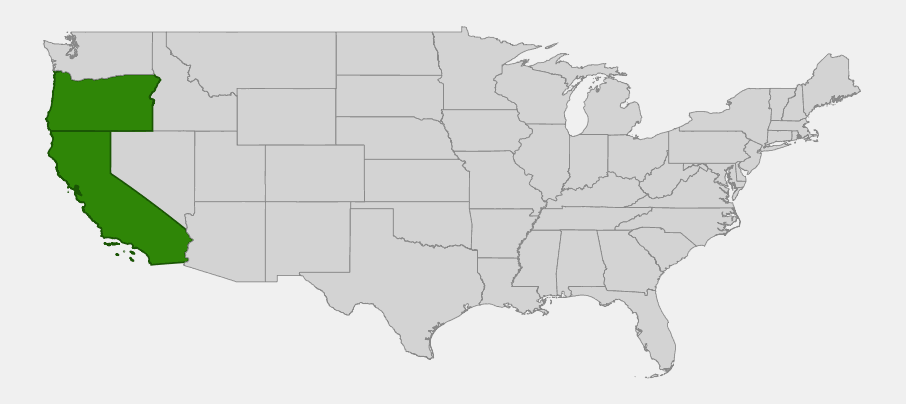
📋 Regional plant lists featuring Toyon: Western Oregon & Western Washington
Growing & Care Guide
Toyon is about as forgiving as native shrubs get, which is a big part of why it shows up in so many California gardens, freeway plantings, and restoration projects. Give it decent drainage and let it dry out between waterings and it will reward you with years of low-maintenance structure.
Light
Toyon performs best in full sun along the coast and in part shade in hot inland valleys, where some afternoon shade keeps the foliage from scorching during extended heat waves. In the shadier understory of oak woodlands it grows more openly, stretching toward available light, while full-sun plants form a denser, more rounded shrub.
Soil & Water
This shrub tolerates nearly any well-drained soil, from heavy clay to rocky, nutrient-poor slopes, and is notably tolerant of serpentine soils where many other natives struggle. Water deeply but infrequently during the first two years to establish a deep root system; after that, established plants need little to no supplemental water in most of California’s climate, though occasional deep summer watering will produce a lusher shrub with a heavier berry crop.
Planting Tips
Plant Toyon in fall or early winter so winter rains can help it establish before the dry season. Space plants 8 to 12 feet apart for a hedge or screen, or give a single specimen 15 feet of room to reach full size. Toyon tolerates urban conditions, including reflected heat and compacted soil, making it a popular choice for parking strips, slopes, and freeway corridors as well as home gardens.
Pruning & Maintenance
Toyon needs very little pruning to look good. Remove dead, crossing, or storm-damaged branches in late winter after the birds have finished eating the berries, and thin congested interior growth occasionally to improve air circulation and reduce fungal issues such as fire blight and entomosporium leaf spot, both of which can affect stressed or overwatered plants. Avoid shearing Toyon into a tight formal hedge, which sacrifices the flower and berry display that makes the shrub worthwhile.
Landscape Uses
Toyon’s versatility makes it a backbone plant in many California garden styles:
- Wildlife hedgerows and screens along property lines
- Slope stabilization on dry banks and cut slopes
- Winter interest as a focal shrub near entries and patios
- Chaparral and woodland restoration plantings
- Fire-wise landscaping when properly spaced and maintained
- Wildlife gardens for year-round bird activity
Fire Ecology
Toyon is well adapted to California’s fire-prone chaparral, resprouting vigorously from a woody root crown (lignotuber) after top growth is killed by fire. While the foliage itself is not especially flammable compared with some chaparral shrubs, Toyon should still be sited with defensible-space principles in mind — kept well-spaced from structures, pruned of dead wood, and not allowed to grow directly against other dense, continuous brush in high fire-hazard areas.
Wildlife & Ecological Value
Few California shrubs match Toyon’s value as a year-round wildlife resource, combining early-summer blooms for pollinators with a long season of winter fruit for birds and mammals.
For Birds
Toyon berries are a critical winter food source for American Robins, Cedar Waxwings, Hermit Thrushes, Northern Mockingbirds, California Thrashers, and many other species, especially during cold snaps when other food is scarce. Flocks of robins and waxwings will often strip a heavily fruiting shrub bare over the course of a few winter days. The dense evergreen branching also provides excellent year-round nesting cover and shelter from both weather and predators.
For Mammals
Coyotes, gray foxes, and black bears in some parts of the range browse Toyon berries, helping disperse the seeds across the landscape. Deer will occasionally browse the foliage and tender new growth, though Toyon is generally considered one of the more deer-resistant California natives thanks to its leathery, toothed leaves.
For Pollinators
The flat clusters of small white flowers in early summer are an important nectar and pollen source for native bees, syrphid flies, beetles, and other small pollinating insects at a time of year when many spring bloomers have already finished. Toyon’s bloom period helps bridge the gap between spring wildflowers and the late-summer bloom of chaparral shrubs like buckwheats and sages.
Ecosystem Role
As one of the most widespread evergreen shrubs in California chaparral and oak woodland, Toyon contributes significant structural diversity to plant communities that are otherwise dominated by smaller-leaved, drought-deciduous shrubs. Its dense canopy moderates soil temperature and moisture beneath it, and its fruit crop links the growing season’s pollinators directly to the winter food web that sustains resident and migratory birds.
Cultural & Historical Uses
Toyon holds a long history with the Indigenous peoples of California, including the Chumash, Tongva, and other groups throughout its range, who gathered the ripe berries in winter. The raw berries contain small amounts of cyanogenic compounds and have an astringent, bitter flavor when fresh, so they were traditionally cooked, dried, or roasted before eating, a preparation that breaks down the bitter compounds and makes the fruit palatable. Toyon wood, being dense and durable, was also used for small tools and implements.
The common name “Toyon” itself comes from a Native Californian word, while the shrub’s popular nickname “California Holly” or “Christmas Berry” dates to the Spanish Rancho era and the early American settlement of Southern California, when the hillsides covered in red-berried Toyon reminded newcomers of English holly at Christmastime. Local legend holds that the bright red hillsides of Toyon above Los Angeles’ Cahuenga Pass contributed to the naming of the Hollywood Hills, though the historical record on this point is mixed and partly disputed.
Because wild Toyon berries were so closely associated with the holiday season, large-scale cutting of flowering and fruiting branches for Christmas decoration became common in the early 1900s, significantly depleting wild populations along accessible roadsides and canyons near growing cities. This overharvesting led the California legislature to pass a law in 1925 making it illegal to collect Toyon branches, flowers, or berries from state and other public land without permission — one of the earliest wildflower protection laws in the state, and one that remains on the books today.
Frequently Asked Questions
Can you eat Toyon berries?
The berries are not considered good raw eating — they are bitter, astringent, and contain small amounts of cyanogenic compounds that can cause digestive upset. Indigenous Californians traditionally cooked or dried them before eating. Today, the berries are best left on the shrub for the many bird species that rely on them through winter.
Is it legal to pick Toyon berries or branches?
In California, a long-standing state law prohibits removing Toyon flowers, fruit, or branches from public land without a permit, a protection enacted in the 1920s after heavy cutting for Christmas decorating. Enjoy Toyon in place, or grow your own from nursery stock, rather than harvesting from the wild.
Is Toyon native outside of California?
Only barely. A small population reaches into the extreme southwestern corner of Oregon near the California border, and the species continues south into northern Baja California, Mexico. Everywhere else it is planted, including the rest of Oregon and further north and east, Toyon is a garden ornamental rather than a wild native.
How fast does Toyon grow, and how big does it get?
Toyon has a moderate growth rate and typically reaches 6 to 15 feet tall and wide within several years, occasionally forming a small tree to 25 feet in favorable, undisturbed sites. Give it room from the start, since it resents being crowded or sheared into an unnaturally small footprint.
Does Toyon need much water once established?
No. Established Toyon is quite drought tolerant and often needs little or no supplemental irrigation through a typical California dry season, especially near the coast. Occasional deep summer watering can improve its appearance and berry production in hotter inland gardens without causing root problems, as long as drainage is good.

Looking for a nursery that carries Toyon?
Browse our native plant nursery directory: California · Oregon