Woolly Blue Curls (Trichostema lanatum)
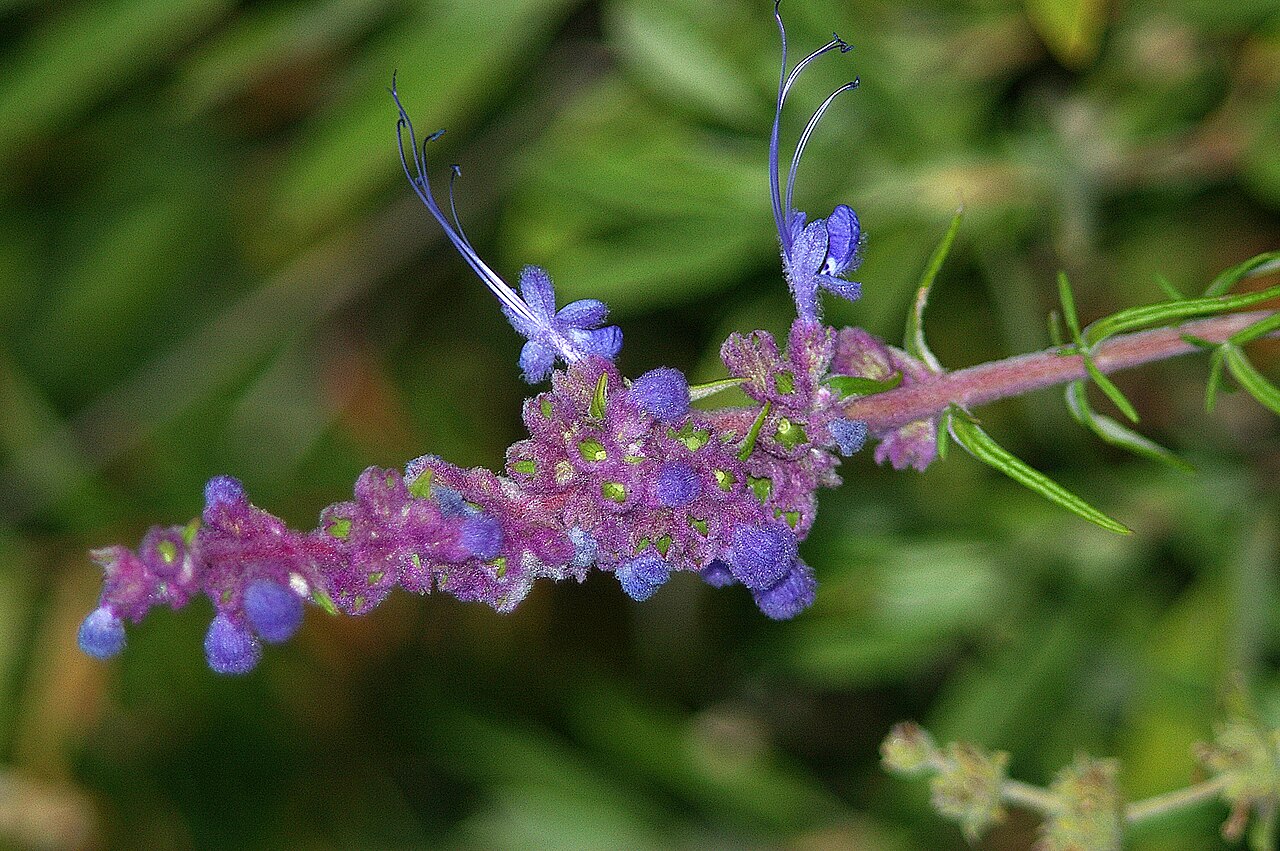
Trichostema lanatum, commonly called woolly blue curls or woolly bluecurls, is a striking evergreen shrub endemic to the chaparral and coastal scrub of California. It belongs to the mint family (Lamiaceae) and is one of the most recognizable native shrubs in bloom, producing dense spikes of fuzzy, deep violet to magenta calyxes from which long, thread-like blue stamens curl outward like tiny antennae. Few California natives put on a more theatrical floral display, and the plant has become a favorite of gardeners building drought-tolerant, pollinator-friendly landscapes.
Woolly blue curls grows as a rounded, resinously aromatic subshrub, typically 3 to 6 feet tall, with narrow, needle-like leaves that are dark green above and densely woolly-white beneath. Crush a leaf and it releases a strong, sage-like fragrance characteristic of many chaparral mints. The plant is restricted to dry, well-drained slopes below about 3,500 feet, where it is a conspicuous and beloved component of the coastal sage scrub and chaparral plant communities of the central and southern California coast ranges.
In the garden, woolly blue curls rewards gardeners who respect its need for sharp drainage and minimal summer water. It is a magnet for hummingbirds, native bees, and butterflies, and its long bloom season makes it one of the showiest additions to a California native or Mediterranean-style garden. It does not tolerate heavy clay soil or regular irrigation well, so it is best suited to naturalistic, low-water plantings rather than a conventional lawn-adjacent border.
Identification
Woolly blue curls is an upright to rounded evergreen shrub or subshrub, usually 3 to 6 feet tall and similar in width, though it can reach 8 feet in ideal conditions. The whole plant has a resinous, aromatic quality, and new growth is often tinged reddish before maturing to gray-green.
Stems & Leaves
Stems are slender, woody at the base, and covered in fine hairs when young. The leaves are simple, narrow and linear to lance-shaped, about 1 to 3 inches long, with margins that curl slightly under. The upper leaf surface is smooth, dark green, and somewhat sticky with resin, while the lower surface is covered in dense white wool, giving the shrub a two-toned look when the wind lifts the foliage.
Flowers
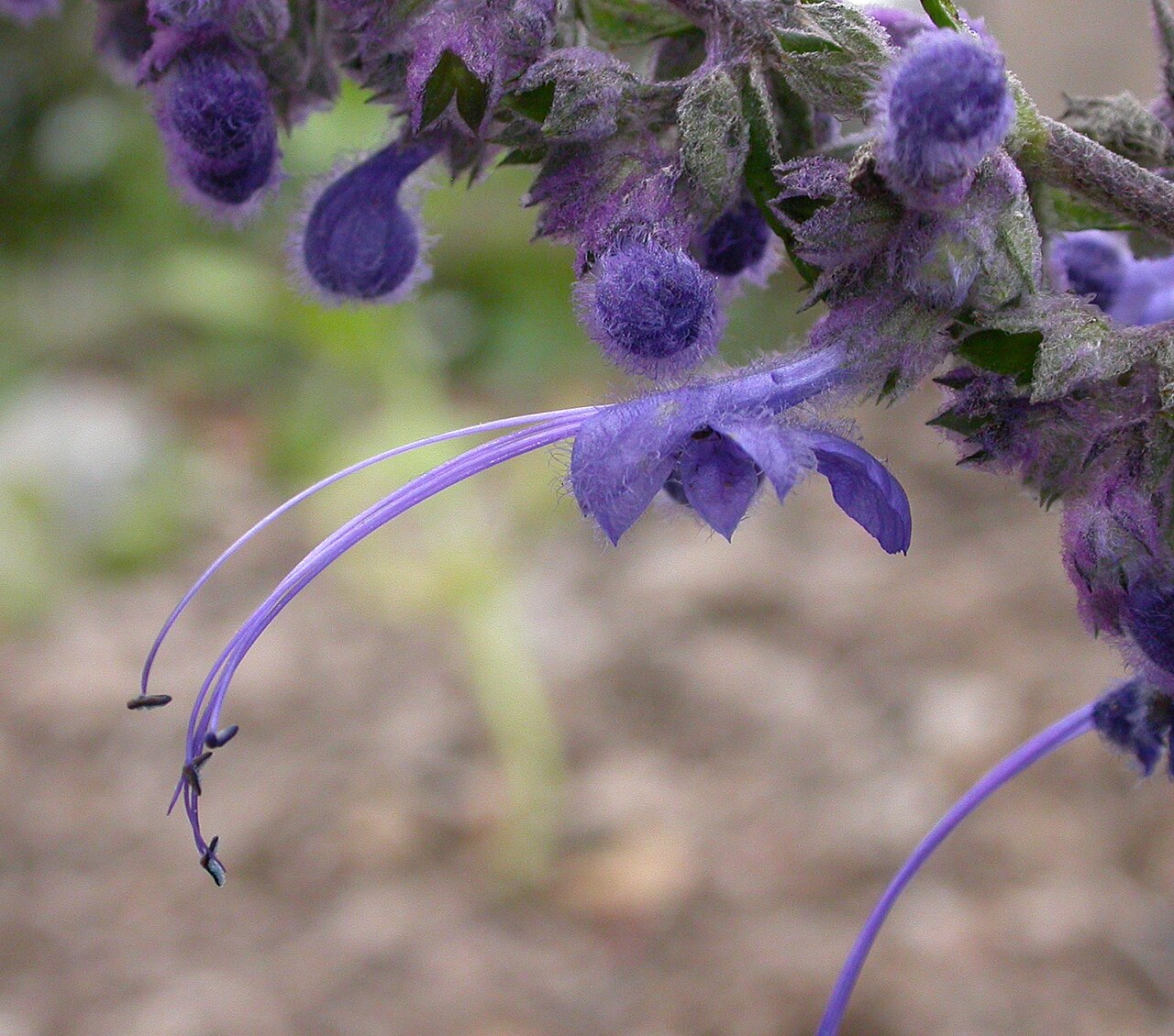
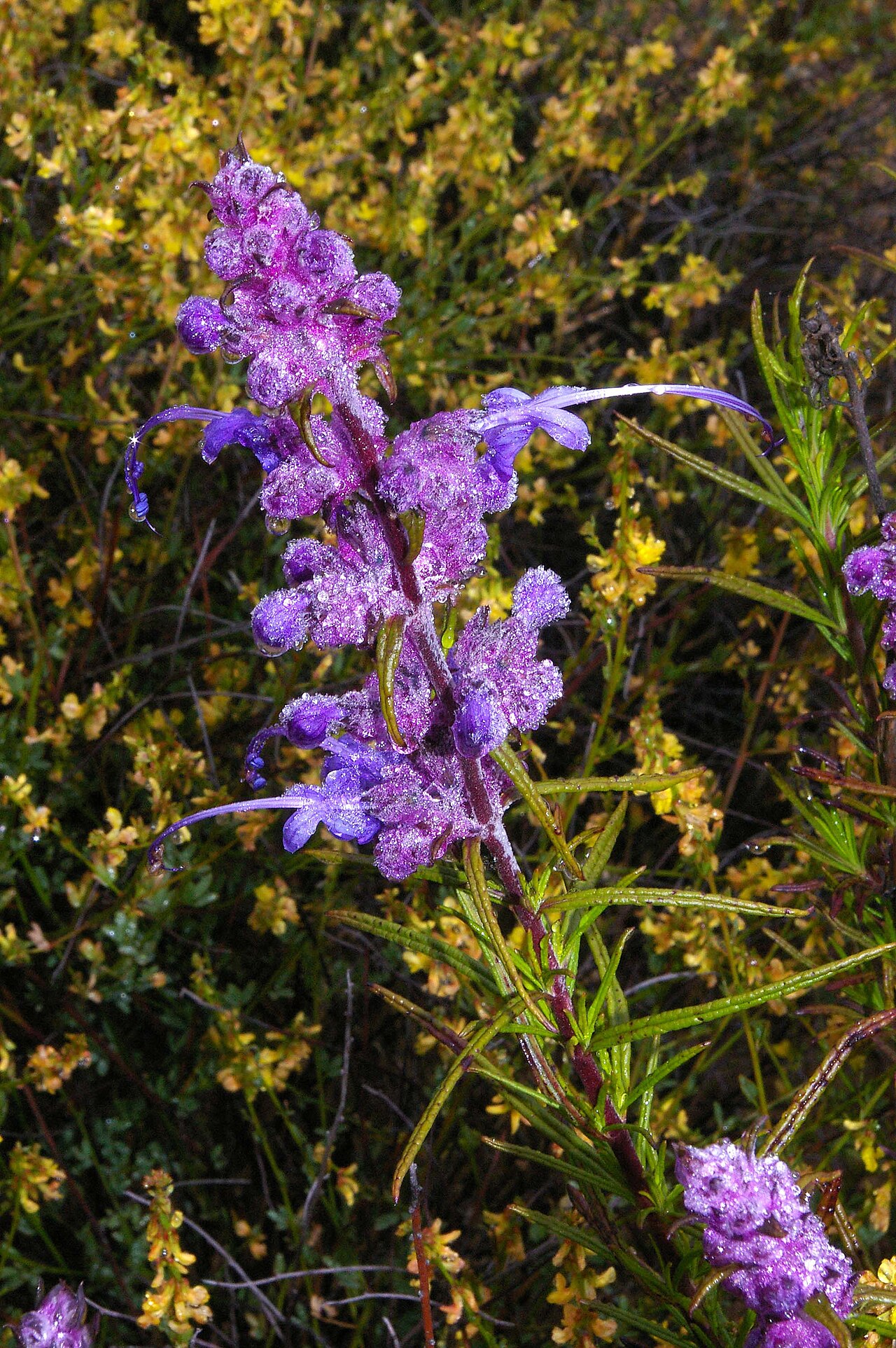
The flowers are the plant’s signature feature. They are borne in dense, one-sided spikes at the branch tips, each flower wrapped in a woolly, intensely colored calyx ranging from deep purple-pink to blue-violet. From each flower, slender blue stamens and a style extend 1 to 2 inches beyond the petals, curving and twisting in a way that gives the plant both its common name and much of its ornamental appeal. Bloom occurs over an unusually long season, generally from late spring through late summer, with scattered flowers appearing even longer in mild coastal gardens.
Fruit & Seeds
Like other mints, woolly blue curls produces its seed in four small nutlets held at the base of the persistent calyx after the petals fall. The dried flower spikes remain attractive and are often left in place through fall and winter, both for visual interest and because goldfinches and other small seed-eating birds will visit them.
Quick Facts
| Scientific Name | Trichostema lanatum |
| Family | Lamiaceae (Mint) |
| Plant Type | Evergreen Shrub / Subshrub |
| Mature Height | 3–6 ft (occasionally to 8 ft) |
| Mature Spread | 3–5 ft |
| Growth Rate | Moderate |
| Sun Exposure | Full Sun (light shade tolerated near the coast) |
| Water Needs | Low; little to no summer water once established |
| Soil Type | Fast-draining, sandy or rocky; poor soils tolerated |
| Soil pH | 6.0–7.5 (neutral to slightly acidic) |
| Bloom Time | Late spring – late summer |
| Flower Color | Deep purple-pink to blue-violet |
| Fall Color | None (evergreen) |
| Fruit | Four small nutlets in the dried calyx |
| Deer Resistant | Yes (aromatic, resinous foliage) |
| USDA Hardiness Zones | 8–10 |
Native Range
Woolly blue curls is endemic to California, found nowhere else in the United States. Its range runs along the Coast Ranges from Monterey and San Benito counties south through the Santa Lucia Mountains, the Transverse and Peninsular ranges, and the South Coast, continuing to Orange and San Diego counties before crossing into the northern tip of Baja California, Mexico. Within this range it is often locally abundant on favorable sites but absent from surrounding areas with unsuitable soil or moisture.
The species grows almost exclusively below about 3,500 feet in elevation, on dry, rocky or sandy slopes within chaparral and coastal sage scrub communities. It favors sites with excellent drainage, such as decomposed granite, sandstone outcrops, and serpentine-influenced soils, and is frequently seen along ridgelines and road cuts where competition from larger shrubs is reduced.
Woolly blue curls is not considered rare or threatened, but like much of California’s coastal chaparral, its habitat faces ongoing pressure from development and altered fire regimes. It is not native to Nevada or any state outside California, so gardeners east of the Sierra should treat it as a California specialty rather than a regional native.
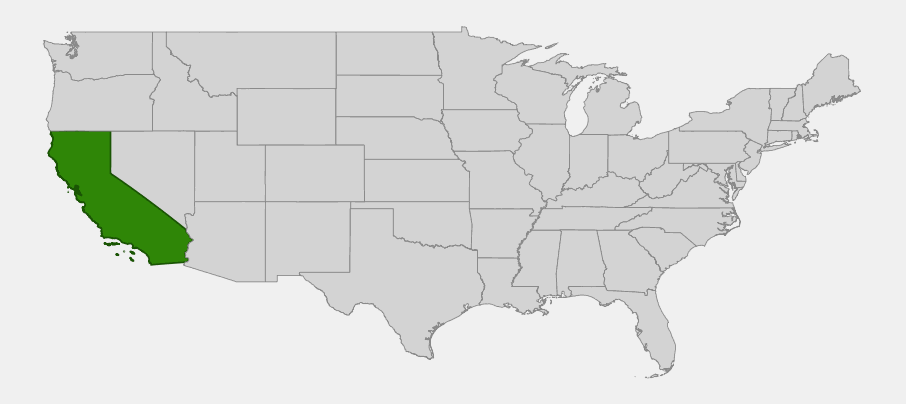
📋 Regional plant lists featuring Woolly Blue Curls: California and Nevada
Growing & Care Guide
Woolly blue curls is a rewarding but exacting garden plant. Success comes almost entirely down to drainage: give it the lean, fast-draining conditions of its native chaparral and it will reward you with months of hummingbird activity; plant it in heavy soil with regular water and it is likely to rot within a season or two.
Light
Give woolly blue curls full sun for the densest growth and heaviest bloom. In the hottest inland valleys, especially in soils that hold any moisture, a little afternoon shade can help the plant look its best through summer. Coastal gardens can give it sun all day without trouble.
Soil & Water
Fast drainage is non-negotiable. Decomposed granite, sandy loam, or rocky soils are ideal; amend heavy clay with coarse grit or build a raised mound before planting if that is all you have. Water regularly the first year to establish a deep root system, then taper off sharply. Established plants need little or no supplemental water in most California climates and often perform best when left alone through summer. Overwatering, especially in warm weather, is the most common cause of failure.
Planting Tips
Plant from small containers in fall, when cooling temperatures and winter rain give roots time to establish before the dry season. Avoid disturbing the roots, which resent transplanting once established. Space plants 3 to 5 feet apart to allow for their mature spread and good air circulation, which helps prevent fungal problems in humid years.
Pruning & Maintenance
Light shearing after the main bloom flush can encourage a second round of flowers and keep the shrub compact, but avoid cutting back hard into bare wood, which the plant may not resprout from reliably. Remove dead or winter-damaged growth in early spring. Established plants are otherwise low-maintenance and largely free of pests.
Landscape Uses
Woolly blue curls fits naturally into several planting styles:
- Hummingbird and pollinator gardens, where its long bloom season is especially valuable
- Dry slopes and banks that need low-water, erosion-resisting shrubs
- Chaparral and coastal sage scrub restoration plantings
- Mediterranean-style and xeriscape gardens paired with other drought-tolerant natives
- Rock gardens, where sharp drainage is easy to provide
- Deer-resistant borders, thanks to its aromatic, resinous foliage
Wildlife & Ecological Value
Few California chaparral shrubs rival woolly blue curls as a season-long wildlife magnet, thanks to its unusually long and reliable bloom period.
For Pollinators
The long, curved stamens and sticky, fragrant foliage attract a wide range of native bees, including carpenter bees and bumble bees, along with butterflies and day-flying moths. The flower structure, with stamens positioned to brush against a visiting pollinator’s back, is well suited to larger bees capable of working the tubular blooms.
For Birds
Hummingbirds, including Anna’s and Allen’s hummingbirds, are frequent visitors and are drawn to the nectar-rich, long-blooming flower spikes throughout spring and summer. After bloom, the dried seed heads attract goldfinches and other small seed-eating birds.
For Mammals
The resinous, strongly aromatic foliage is unpalatable to deer and most browsing mammals, which is part of why the species is often recommended for gardens where deer pressure is high. Small mammals use the dense branching structure near ground level for cover.
Ecosystem Role
As a long-blooming nectar source in a plant community where many species flower only briefly in spring, woolly blue curls helps support pollinators through the leaner months of summer. Its deep, drought-adapted root system also helps stabilize the loose, rocky slopes it favors.
Cultural & Historical Uses
Woolly blue curls has a much better-documented horticultural history than an ethnobotanical one. Like many strongly aromatic chaparral mints, its resinous foliage would have been a familiar scent to Indigenous peoples of the California coast ranges who lived among the shrub throughout its range, but detailed, well-sourced records of specific traditional uses for this particular species are limited, and none are reliable enough to repeat here as established practice.
The plant’s modern reputation rests on its garden value. Since the mid-twentieth century growth of interest in California native plant horticulture, woolly blue curls has become one of the signature “showy chaparral shrub” species promoted by native plant societies and specialty nurseries, prized for a flower display that rivals many exotic ornamentals while using a fraction of the water. Selections and cultivars have been developed for more compact habit and heavier bloom, and the species remains a staple of low-water demonstration gardens across coastal and southern California.
Because it is so recognizable in bloom, woolly blue curls is also a familiar sight to hikers on chaparral trails throughout its range, and it is frequently highlighted in wildflower guides and chaparral restoration literature as an indicator of healthy, undisturbed scrub habitat.
Frequently Asked Questions
Why is my woolly blue curls dying?
The most common cause is too much water, especially in summer or in soil that does not drain quickly. Check that the planting site drains well after rain and reduce or eliminate irrigation once the plant is established; a second common cause is heavy clay soil that stays wet around the roots.
Is woolly blue curls native to Nevada?
No. Despite being grouped with Nevada on some regional native plant lists because of shared growing conditions in parts of its range, woolly blue curls is a California endemic and is not native to Nevada.
How do I get more flowers on woolly blue curls?
Full sun, lean soil, and restrained watering produce the heaviest bloom. A light shearing right after the main flush of flowers can also encourage a second round later in the season.
Do hummingbirds really like woolly blue curls?
Yes, it is one of the more reliable hummingbird plants in California native gardens, valued especially because its bloom season is longer than many other native nectar sources.
Can woolly blue curls be grown outside California?
It can be grown in other Mediterranean or arid climates with the right drainage and winter rainfall pattern, such as similar microclimates in the Southwest, but it struggles wherever summers bring regular humidity or rainfall, and it is not reliably hardy in climates with hard freezes.

Looking for a nursery that carries Woolly Blue Curls?
Browse our native plant nursery directory: California