Santa Cruz Island Buckwheat (Eriogonum arborescens)
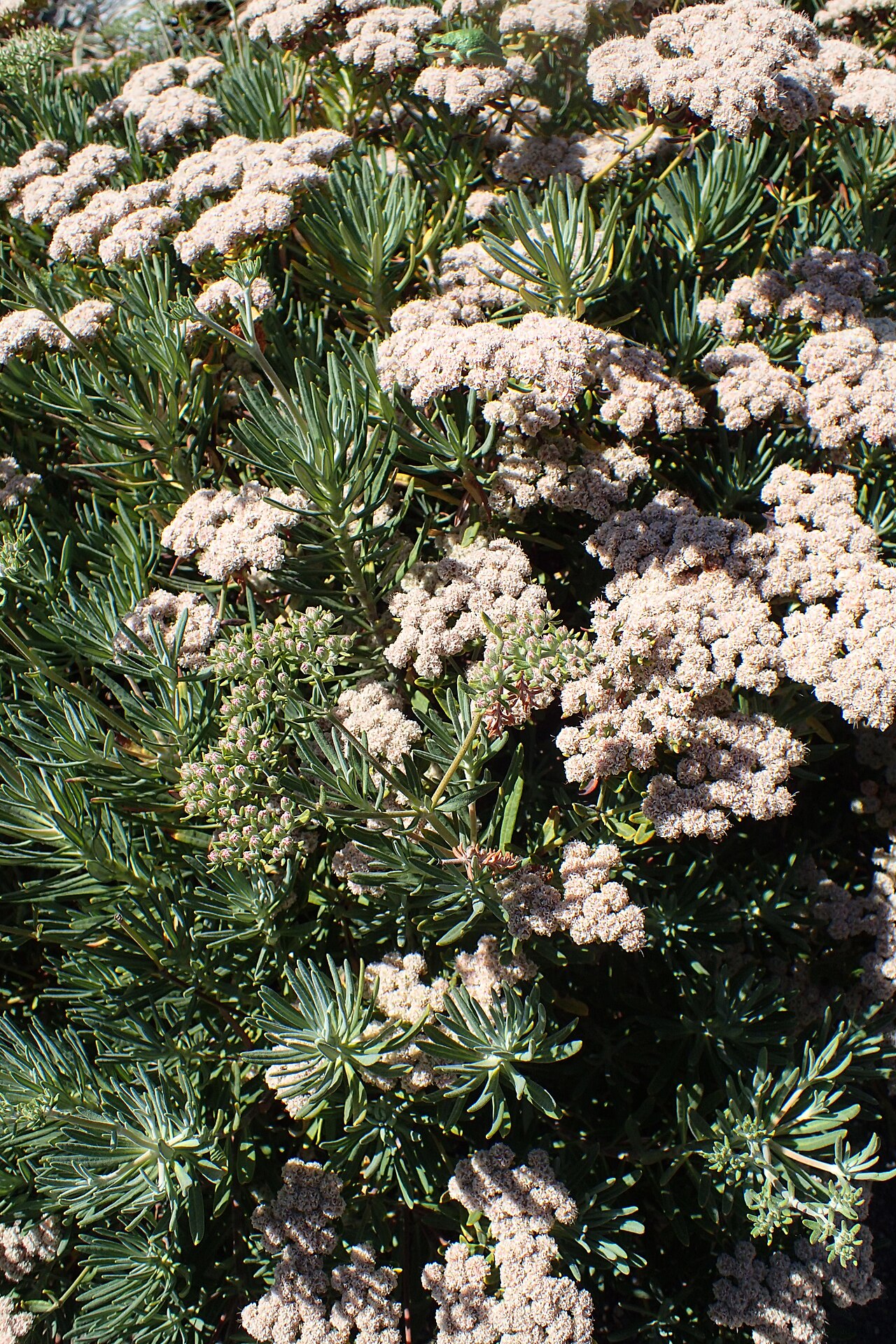
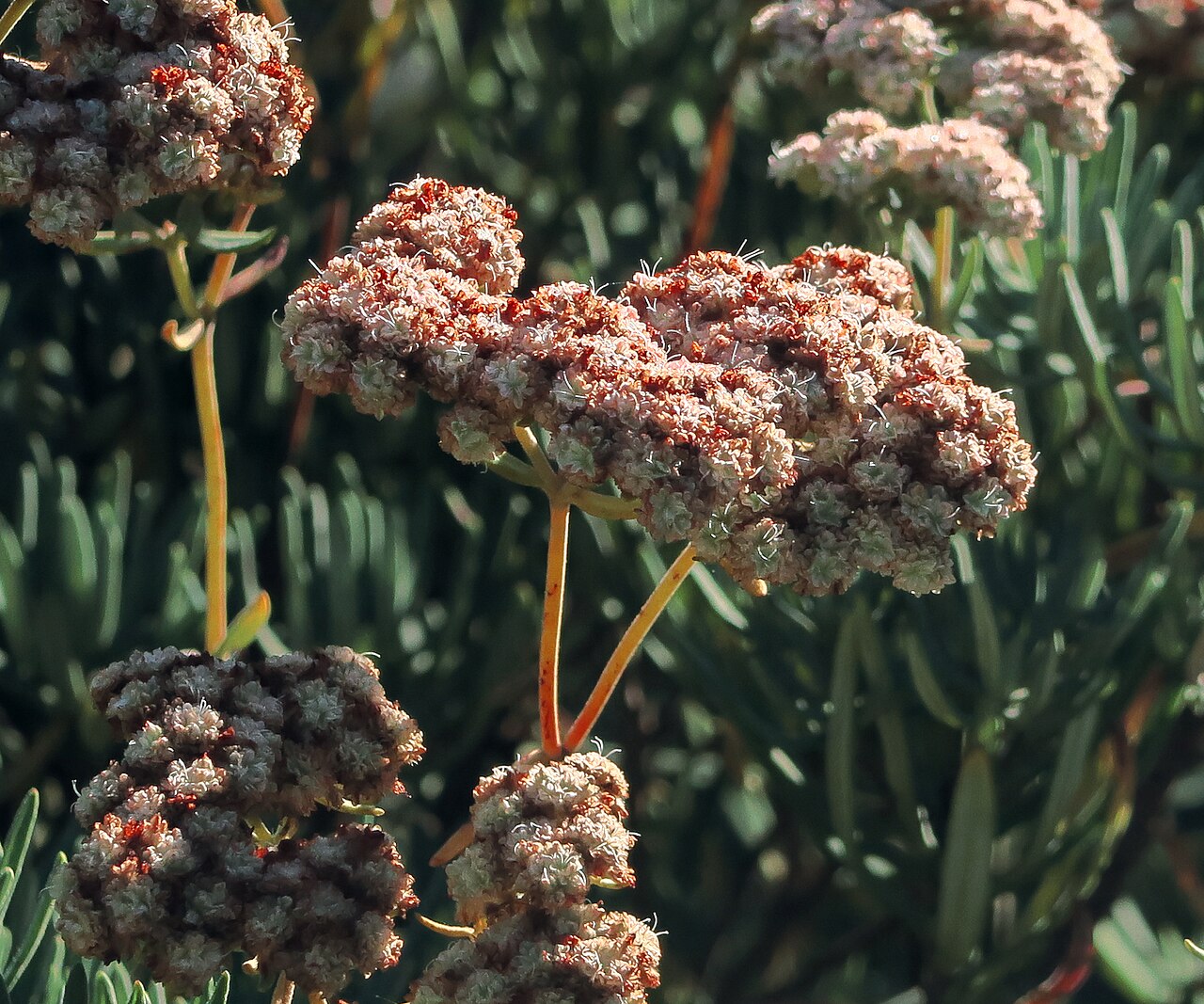
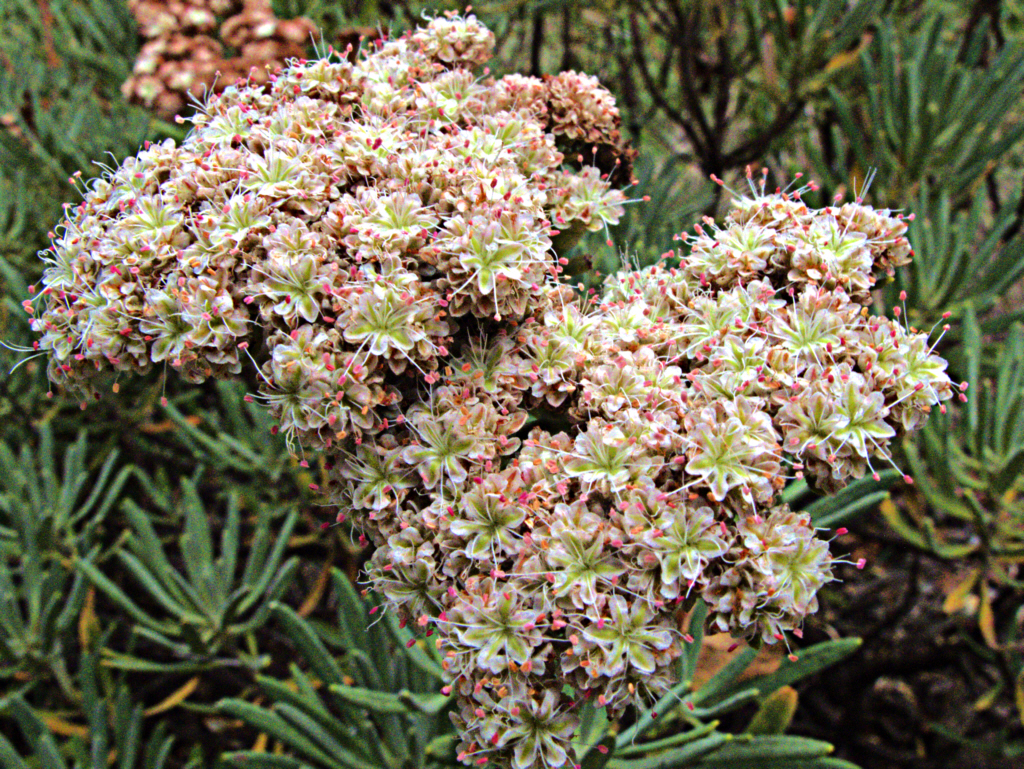
Eriogonum arborescens, the Santa Cruz Island Buckwheat, is a low, mounding evergreen shrub endemic to California’s northern Channel Islands. Unlike its taller island relative St. Catherine’s Lace, this buckwheat stays compact and shrubby, rarely more than 3 feet tall, with narrow, needle-like leaves that give it a soft, almost conifer-like texture. From late spring into fall it produces rounded clusters of small, pale pink to cream flowers on slender red-tinged stalks, aging to a warm rust color that persists attractively for weeks.
A member of the buckwheat family (Polygonaceae), Santa Cruz Island Buckwheat occurs naturally only on a handful of California’s Channel Islands, making it, like several of its island relatives, a true endemic with a very restricted wild distribution. It has nonetheless become a dependable garden plant on the mainland, prized for its fine-textured foliage, long bloom season, and remarkable tolerance of poor soil, salt air, and drought.
In the landscape, this buckwheat works beautifully as a small-scale foreground or rock-garden shrub, softening the base of taller natives and filling gaps on sunny, well-drained slopes where few other evergreens stay this tidy without regular care.
Identification
Santa Cruz Island Buckwheat grows as a low, rounded, densely branched evergreen shrub, typically 1 to 3 feet tall and somewhat wider, with a tidy, mounding habit that needs little shaping to look good.
Stems
Stems are slender, woody at the base, and often tinged reddish or orange toward the flowering tips, branching repeatedly to build the shrub’s dense, rounded form. Older wood develops gray-brown bark, while young growth stays flexible and pliant.
Leaves
The leaves are narrow and needle-like to linear, under an inch long, clustered densely along the stems and curling slightly at the tips. They are gray-green to green, with a fine woolly or felted texture on the underside typical of many island and desert buckwheats, an adaptation that reduces water loss. The overall effect is a fine, almost heather-like or conifer-like foliage texture quite different from the broader, felted leaves of other Eriogonum species.
Flowers & Fruit
Flowers are borne in rounded to flat-topped clusters (umbels) atop slender stalks that rise just above the foliage, blooming over a long season from late spring through fall. Individual flowers are small, pale pink to cream, often with reddish markings, and age gradually to a warm rust-brown that remains showy on the plant for weeks after the main bloom fades. The fruit is a small, three-angled achene typical of the genus, maturing within the dried flower heads.
Quick Facts
| Scientific Name | Eriogonum arborescens |
| Family | Polygonaceae (Buckwheat) |
| Plant Type | Evergreen shrub |
| Mature Height | 1–3 ft |
| Mature Spread | 2–4 ft |
| Growth Rate | Moderate |
| Sun Exposure | Full Sun to Part Shade |
| Water Needs | Very low once established |
| Soil Type | Well-drained; sandy, rocky or loamy |
| Soil pH | 6.0–7.5 |
| Bloom Time | May – October |
| Flower Color | Pale pink to cream, aging rust-brown |
| Fall Color | None (evergreen); dried flower heads persist |
| Fruit | Small three-angled achene |
| Deer Resistant | Yes |
| USDA Hardiness Zones | 8–11 |
Native Range
Santa Cruz Island Buckwheat is a true island endemic, native in the wild only to several of California’s northern Channel Islands, including Santa Cruz, Santa Rosa, and Anacapa Islands off the Santa Barbara and Ventura coast. It does not occur naturally on the California mainland; every mainland planting, including those in botanic gardens, is a cultivated introduction rather than a wild population.
On its native islands, this buckwheat grows on dry, rocky slopes, bluffs, and ridgelines, often in island chaparral and coastal scrub communities shaped by salt spray, wind, and a mild maritime climate. Its fine, needle-like leaves and felted undersides are adaptations to these exposed, moisture-limited conditions.
Because its wild range is limited to a small number of islands, Santa Cruz Island Buckwheat is a species of conservation interest, and some island populations have faced pressure historically from grazing by introduced animals, much of which has been reduced through island restoration programs in recent decades. Growing it in mainland gardens allows wider enjoyment of the species without affecting its native island habitat.
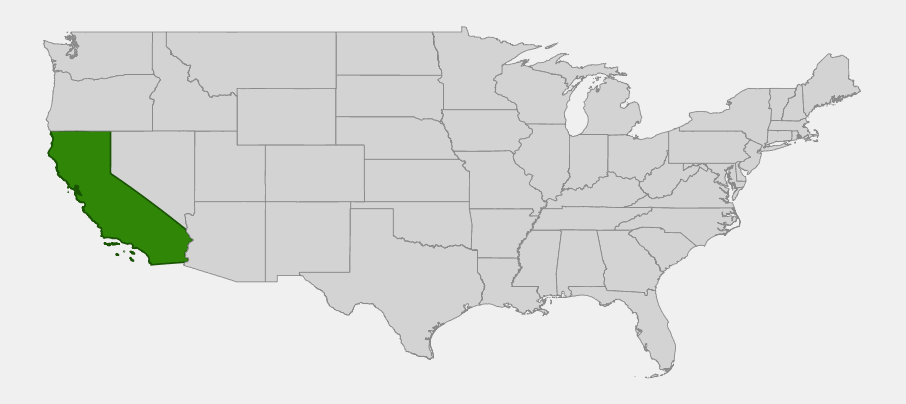
📋 Regional plant lists featuring Santa Cruz Island Buckwheat: California and Nevada
Growing & Care Guide
Santa Cruz Island Buckwheat is an easy, long-blooming shrub for sunny, well-drained sites, offering fine texture and months of pollinator-friendly flowers with very little upkeep once it’s settled in.
Light
Full sun brings out the tightest form and heaviest bloom. The shrub also tolerates light afternoon shade, particularly in hot inland gardens, though it stays more compact and floriferous with more direct sun.
Soil & Water
Good drainage matters most; sandy, rocky, or well-drained loamy soils all suit it well. Established plants need little to no supplemental water along the coast and only occasional deep watering inland during long dry spells. As with most California buckwheats, summer irrigation and poorly drained soil are the most common causes of decline.
Planting Tips
Plant from containers in fall or early winter so roots can establish with the help of winter rains. Because of its compact size, it works well in smaller garden spaces, rock gardens, or as a foreground planting in front of larger shrubs — space plants roughly 2 to 3 feet apart for a filled-in look within a couple of seasons.
Pruning & Maintenance
Light shearing or tip-pruning after the main bloom flush keeps the mound dense and tidy, though many gardeners simply leave the rust-colored seed heads for winter interest and bird forage. The shrub generally does not need heavy pruning and responds best to light, regular shaping rather than hard cutbacks.
Landscape Uses
- Rock gardens and dry borders, where its fine texture contrasts with broader-leaved natives
- Pollinator gardens, thanks to a long bloom season that spans late spring through fall
- Coastal and bluff gardens, tolerant of salt air and wind
- Low hedging or edging along paths and beds
- Erosion control on small dry slopes
- Container and small-space gardens, given its compact mature size
Wildlife & Ecological Value
Like most of California’s native buckwheats, Santa Cruz Island Buckwheat punches above its size as a pollinator resource.
For Pollinators
The long bloom season, stretching from late spring into fall, makes this shrub a valuable and reliable nectar source for native bees, honeybees, and butterflies during months when many other natives have finished flowering. Several specialist insects associated with the buckwheat genus visit and depend on Eriogonum flowers generally.
For Birds
Small seed-eating birds forage the dried flower heads for the tiny achenes they contain, particularly in fall and winter once the blooms have matured and dried on the plant.
For Mammals
The dense, low mounding form offers some ground-level cover for small wildlife, and like many California buckwheats, the shrub is generally left alone by deer, making it useful in gardens near wildland edges.
Ecosystem Role
On its native islands, this buckwheat is part of a fragile and distinctive island flora, helping stabilize dry, rocky slopes and supporting pollinator communities alongside other Channel Islands endemics. Its presence in mainland gardens helps raise awareness of the conservation value of California’s unique island ecosystems.
Cultural & Historical Uses
Santa Cruz Island Buckwheat does not have a well-documented history of traditional use, likely reflecting both its limited island distribution and the relatively small, specialized flora of the northern Channel Islands compared to the mainland. The islands themselves have a long human history, including the Chumash people who lived on and traveled among them for thousands of years, but specific ethnobotanical records for this particular buckwheat species are sparse in the available literature.
The plant’s modern significance is largely horticultural and conservation-related. As interest in California native-plant gardening grew through the late 20th century, growers recognized Santa Cruz Island Buckwheat’s compact form, fine texture, and long bloom period as garden assets, and it has since become a modestly popular choice in native and water-wise landscaping, grown well beyond the handful of islands where it occurs naturally.
Today the species also serves as a quiet reminder of the broader conservation story of the Channel Islands, where decades of restoration work — including the removal of grazing animals introduced during the ranching era — have helped native island plants like this buckwheat recover.
Frequently Asked Questions
Is Santa Cruz Island buckwheat native to the mainland?
No. In the wild it grows only on a few of California’s northern Channel Islands — Santa Cruz, Santa Rosa, and Anacapa. It is grown as a garden plant on the mainland, but those plantings are all cultivated rather than naturally occurring.
How is it different from St. Catherine’s Lace?
Both are California buckwheats endemic to the Channel Islands, but St. Catherine’s Lace (Eriogonum giganteum) grows much larger, to 8 feet, with broad felted leaves, while Santa Cruz Island Buckwheat stays under 3 feet with fine, needle-like foliage.
How long does Santa Cruz Island buckwheat bloom?
It has one of the longer bloom seasons among California native buckwheats, often flowering from May into October, which makes it a dependable, long-season food source for pollinators.
Does this plant need much water?
No. Once established, it is very drought tolerant and needs little to no supplemental irrigation in coastal gardens, with only occasional deep watering inland during extended dry periods.
Is Santa Cruz Island buckwheat endangered?
It is not federally listed, but because its wild population is limited to a small number of Channel Islands, it is considered a species of conservation interest, and island restoration programs have helped protect its native habitat from past grazing pressure.

Looking for a nursery that carries Santa Cruz Island Buckwheat?
Browse our native plant nursery directory: California