Grinnell’s Beardtongue (Penstemon grinnellii)
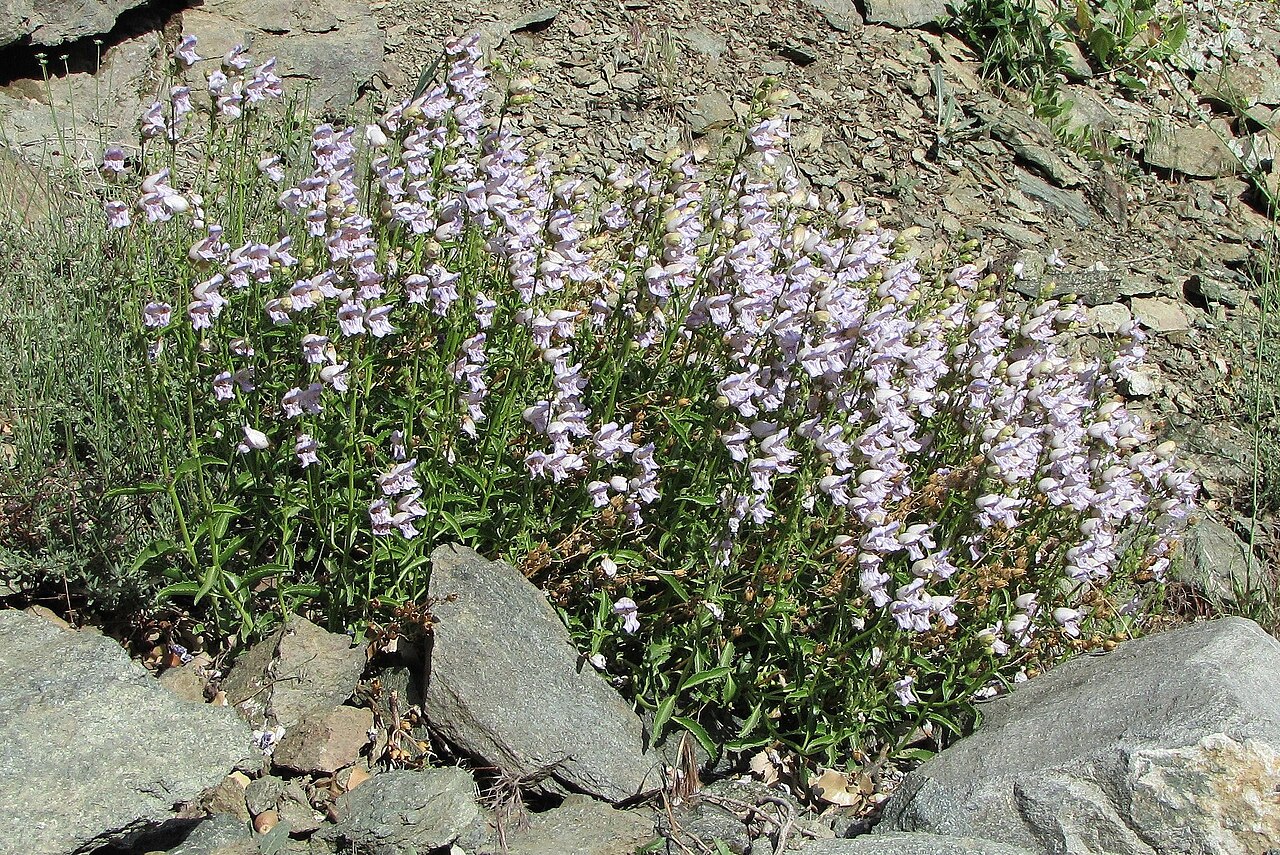
Penstemon grinnellii, commonly known as Grinnell’s Beardtongue, is a California endemic wildflower prized for its abundant, delicately veined lavender-to-white flowers and its ease in the garden compared to many other native penstemons. Named for American zoologist Joseph Grinnell, it belongs to the beardtongue genus (Plantaginaceae), so called for the dense tuft of fine hairs on the sterile fifth stamen, or staminode, that lines the throat of each flower.
Grinnell’s beardtongue is a perennial herb with upright, leafy flowering stems to about 2.5 feet tall, rising from a woody base. Its narrow, folded leaves and open, airy flower spikes give it a graceful, somewhat shrubby presence in the landscape, and a well-grown clump can produce dozens of blooms at once, each tubular flower streaked with fine purple lines that guide pollinators to nectar deep in the throat.
Found naturally on dry, rocky slopes and open woodland edges from the San Francisco Bay Area through the Sierra Nevada foothills to the Peninsular Ranges near the Mexican border, Grinnell’s beardtongue is well suited to California gardens that need a long-blooming, drought-tolerant perennial for full sun or light shade. Its relative tolerance of garden conditions, combined with strong appeal to bees and hummingbirds, has made it one of the more popular penstemons in California native plant nurseries.
Identification
Grinnell’s beardtongue is an upright perennial herb, typically reaching 1 to 2.5 feet (30–85 cm) tall, with multiple leafy flowering stems rising from a woody, perennial base.
Stems & Leaves
Stems are upright, slightly woody at the base, and often glandular-hairy toward the inflorescence. Leaves are oblong, up to about 3.5 inches (9 cm) long, folded lengthwise along the midrib and curved backward — a distinctive leaf posture that helps distinguish Grinnell’s beardtongue from other California penstemons even when not in bloom.
Flowers
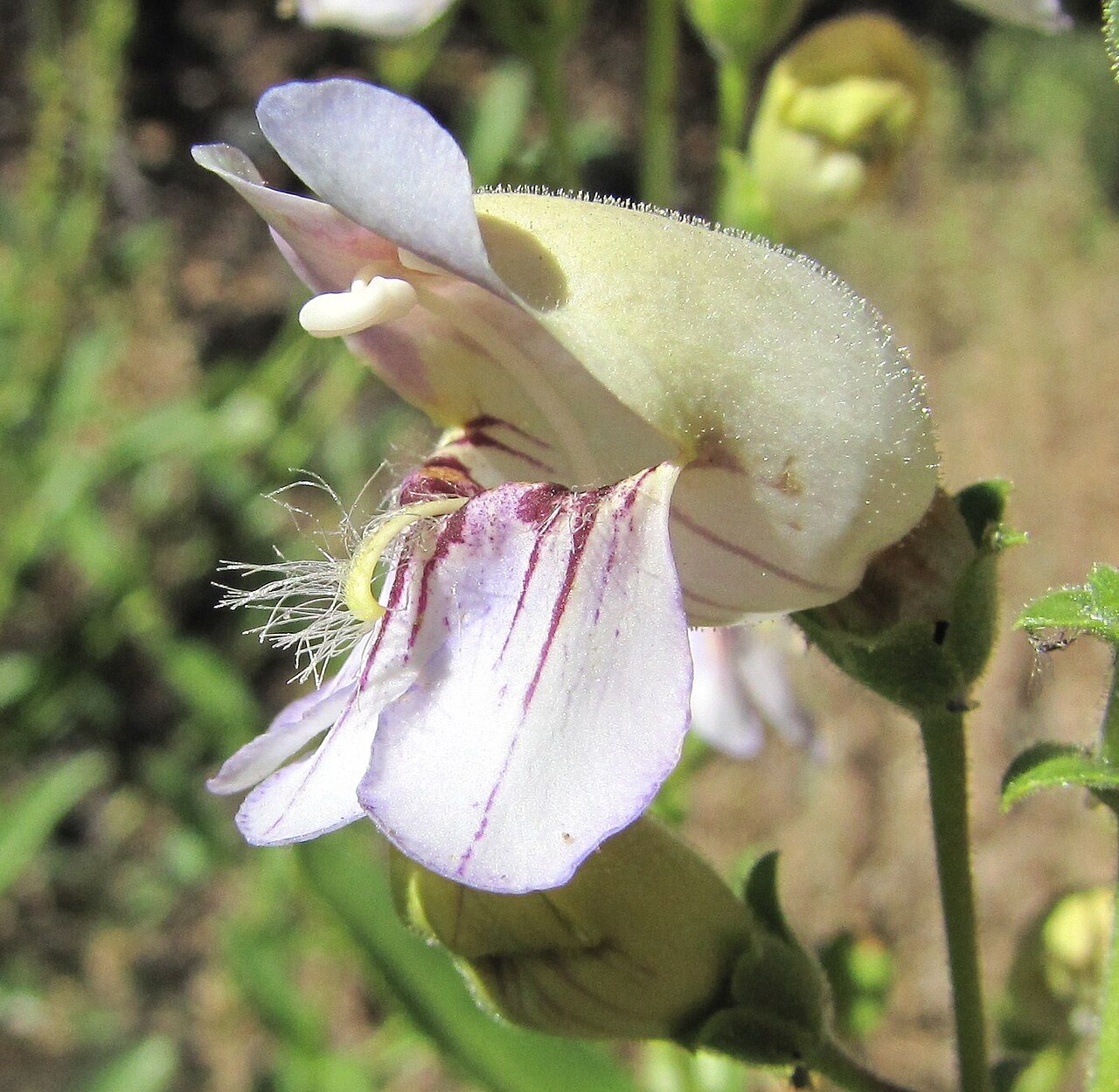
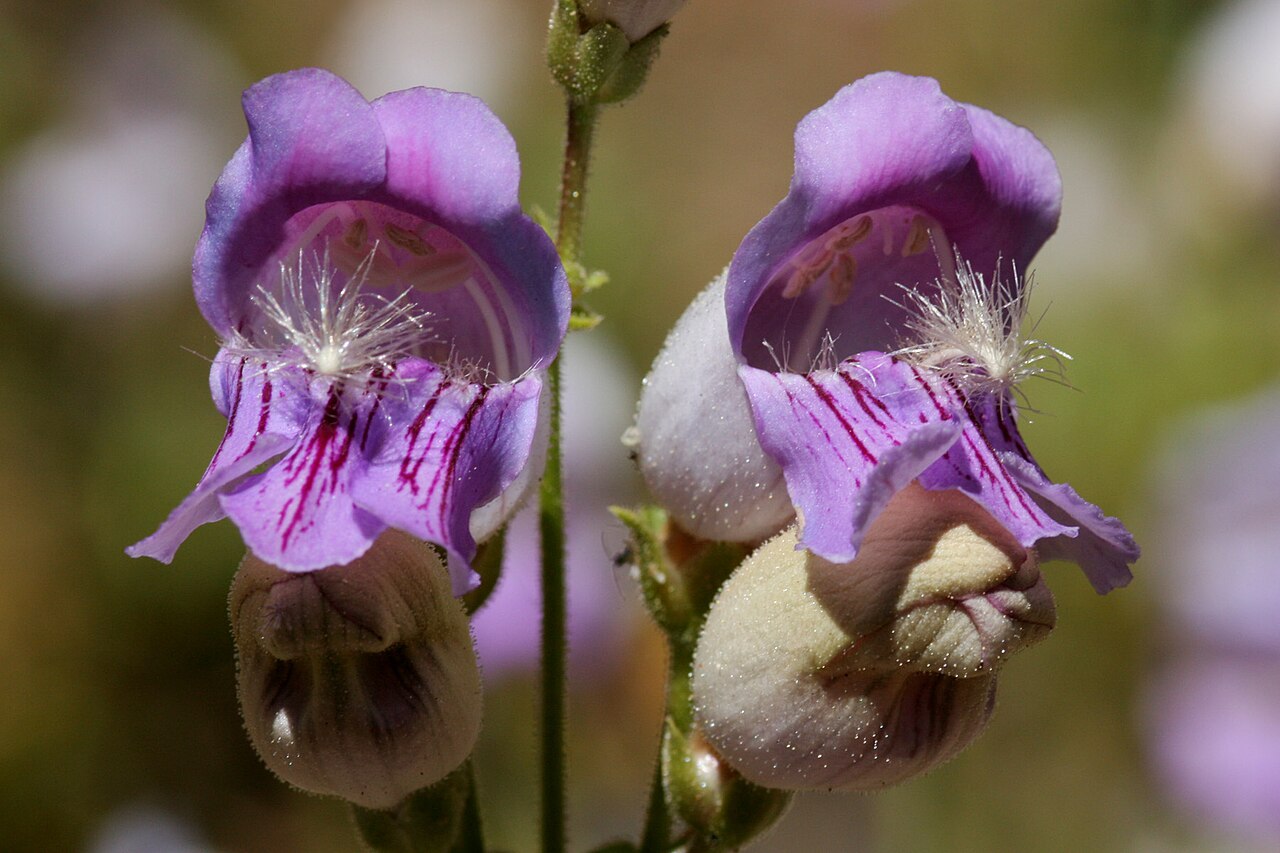
The glandular, somewhat open inflorescence bears several to many tubular, two-lipped flowers, each about 0.4 to 0.8 inch (1–2 cm) long, in shades from purple-tinged white to pale lavender or violet. The flower’s mouth has three lower lobes streaked with fine dark purple lines, a hairy throat, and a conspicuous, long-haired staminode (the “bearded tongue” that gives the genus its common name) protruding from the flower’s opening — a key field mark visible even from a short distance. Flowering runs mainly from late spring into summer, varying somewhat with elevation.
Fruit & Seeds
After flowering, each flower produces a small, dry capsule packed with numerous tiny seeds, which the plant readily sheds to self-sow in favorable rocky or disturbed sites within its native range.
Quick Facts
| Scientific Name | Penstemon grinnellii |
| Family | Plantaginaceae (Plantain) |
| Plant Type | Perennial Wildflower / Subshrub |
| Mature Height | 1–2.5 ft (30–85 cm) |
| Mature Spread | 1.5–2.5 ft |
| Growth Rate | Moderate |
| Sun Exposure | Full Sun to Light Shade |
| Water Needs | Low to Moderate |
| Soil Type | Rocky, gravelly or sandy loam; well-drained |
| Soil pH | 6.0–7.5 (slightly acidic to neutral) |
| Bloom Time | May – July |
| Flower Color | Purple-tinged white to pale lavender or violet |
| Fall Color | None notable; semi-evergreen base |
| Fruit | Small dry seed capsule |
| Deer Resistant | Moderate |
| USDA Hardiness Zones | 7–9 |
Native Range
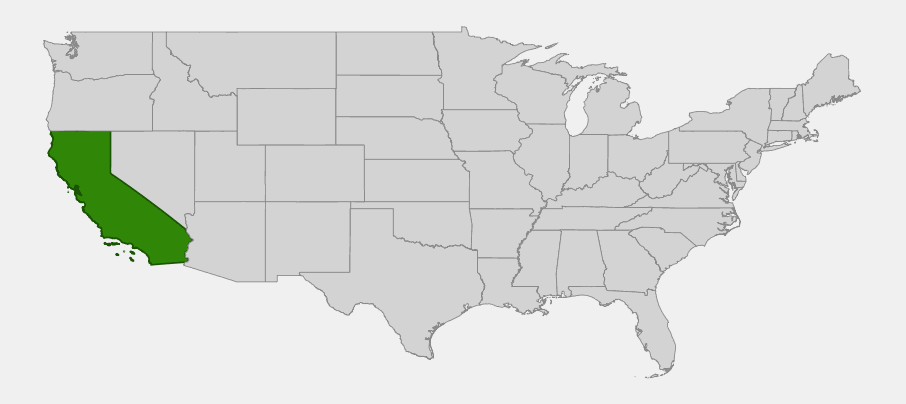
Grinnell’s beardtongue is endemic to California, found in scattered mountain ranges from around the San Francisco Bay Area, through the central and southern Sierra Nevada foothills, and south into the Transverse and Peninsular Ranges near the U.S.–Mexico border. It is not native to any other U.S. state.
Within California, this species favors dry, open, rocky slopes, chaparral edges, and foothill woodland openings, typically at low to moderate mountain elevations where good drainage and ample sun are available. It is considered globally vulnerable (NatureServe G3), reflecting its naturally scattered, disjunct distribution across separate mountain ranges rather than a single continuous population.
Because of its somewhat limited and fragmented native range, planting Grinnell’s beardtongue in California gardens — particularly within or near its historic range — can offer modest conservation value in addition to its ornamental appeal, supporting regional genetic diversity and pollinator habitat.
📋 Regional plant lists featuring Grinnell’s Beardtongue: California & Nevada
Growing & Care Guide
Grinnell’s beardtongue is one of the more forgiving California native penstemons, tolerating typical garden conditions better than many of its high-elevation or desert-adapted relatives.
Light
Plant in full sun for the best bloom, though it also performs well in light or part shade, especially in hot inland gardens where some afternoon relief reduces stress. It flowers most heavily with at least six hours of direct sun.
Soil & Water
Grinnell’s beardtongue prefers rocky, gravelly, or sandy loam with excellent drainage, reflecting its native habitat on open slopes. Established plants are drought tolerant and need only occasional deep watering through the dry season, though they appreciate a bit more regular moisture than many desert penstemons — avoid both prolonged drought stress and waterlogged soil, which can cause root rot.
Planting Tips
Plant from container stock in fall or early spring to allow roots to establish before summer heat. Space plants 18 to 24 inches apart to allow for mature spread and good air circulation, which helps prevent fungal problems in humid spells. Grinnell’s beardtongue is known to be somewhat more tolerant of regular garden watering and soils than many native penstemons, making it a good entry point for gardeners new to growing this challenging genus.
Pruning & Maintenance
Deadhead spent flower spikes to encourage additional bloom and prevent excessive self-seeding, or leave some seed heads in place to allow natural reseeding in naturalistic plantings. Cut back old, woody growth in late winter to keep plants compact and vigorous. Established clumps are relatively long-lived for a penstemon but may benefit from periodic replacement every several years as plants can decline with age.
Landscape Uses
Grinnell’s beardtongue works well in several California native garden styles:
- Pollinator gardens, where its tubular flowers draw bees and hummingbirds
- Rock gardens and dry slopes that mimic its native rocky habitat
- Chaparral and foothill woodland gardens alongside oaks and native shrubs
- Mixed perennial borders for a long season of lavender-white bloom
- Low-water meadow plantings combined with native grasses and wildflowers
Wildlife & Ecological Value
As a showy, nectar-rich native wildflower, Grinnell’s beardtongue plays a valuable role in supporting pollinators across its California mountain range habitat.
For Pollinators
The tubular flowers are well suited to native bees, which push past the hairy staminode to reach nectar at the base of the flower, picking up pollen in the process. The flower shape and coloring also attract hummingbirds, which use their long bills to access nectar that shorter-tongued insects cannot reach.
For Birds
Hummingbirds are regular visitors during the bloom period, and the seed capsules that follow provide a minor food source for small songbirds later in the season.
For Mammals
Browsing pressure from deer is moderate; while not a preferred forage plant, the foliage may be nibbled occasionally, particularly on young, tender growth.
Ecosystem Role
As a long-blooming perennial wildflower on dry, rocky slopes, Grinnell’s beardtongue extends the nectar season for pollinators in California’s chaparral and foothill woodland communities, and its scattered, disjunct populations across separate mountain ranges contribute to the genetic diversity that supports the species’ long-term resilience.
Cultural & Historical Uses
Grinnell’s beardtongue does not carry a well-documented history of use by Indigenous peoples or early settlers, likely owing to its relatively localized distribution across scattered mountain ranges rather than widespread accessibility. The species was formally described by botanist Alice Eastwood and named in honor of Joseph Grinnell, an influential American field zoologist and the first director of the Museum of Vertebrate Zoology at the University of California, Berkeley, reflecting the close ties between early California botanical exploration and the broader natural history community of the early 20th century.
In more recent decades, Grinnell’s beardtongue has become a valued plant in California native horticulture, appreciated for combining the ornamental appeal of penstemons with more forgiving garden behavior than many of its relatives, which has helped introduce more gardeners to growing native penstemons successfully.
Today, the species is grown primarily for its ornamental and pollinator value, with conservation-minded gardeners also valuing it as a regionally appropriate choice that supports a naturally uncommon California endemic.
Frequently Asked Questions
Why is it called a “beardtongue”?
The name refers to the staminode, a sterile fifth stamen found in all penstemons that is typically covered in fine hairs and protrudes from the flower’s throat like a small bearded tongue. In Grinnell’s beardtongue, this hairy staminode is especially prominent and easy to see up close.
Is Grinnell’s beardtongue easy to grow compared to other penstemons?
Yes, relatively speaking. While many California native penstemons are notoriously fussy about drainage and summer water, Grinnell’s beardtongue tolerates typical garden conditions somewhat better, making it a good choice for gardeners new to growing native penstemons.
How long does Grinnell’s beardtongue bloom?
It typically blooms from May into July, with the exact timing varying by elevation and local climate; deadheading spent flower spikes can help extend and encourage additional bloom.
Does Grinnell’s beardtongue attract hummingbirds?
Yes. Its tubular, nectar-rich flowers are visited regularly by hummingbirds as well as native bees, making it a valuable addition to pollinator gardens.
Is Grinnell’s beardtongue rare or endangered?
It is considered globally vulnerable (NatureServe G3) due to its naturally scattered, disjunct distribution across separate California mountain ranges, though it is not federally listed as threatened or endangered. Growing it in home gardens within its native range can offer modest conservation benefit.

Looking for a nursery that carries Grinnell’s Beardtongue?
Browse our native plant nursery directory: California