California Indian Pink (Silene californica)
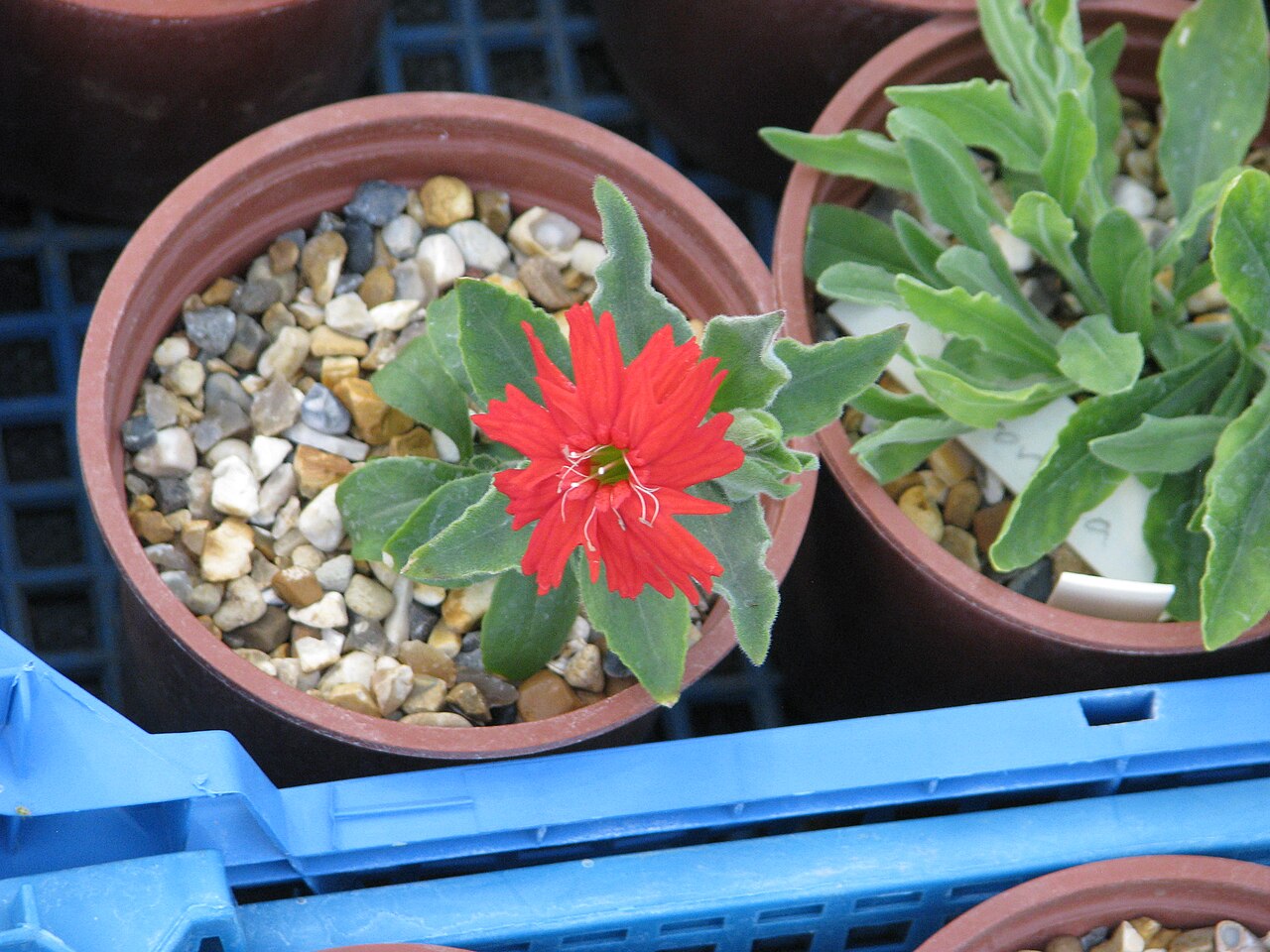
Silene californica, commonly known as California Indian Pink, is a low, sprawling native wildflower prized for its intensely scarlet, deeply fringed flowers — among the most eye-catching blooms of any California native perennial. A member of the carnation family (Caryophyllaceae), it is closely related to cardinal catchfly (Silene laciniata), and some botanical treatments classify it as Silene laciniata subsp. californica rather than as a fully separate species. Gardeners browsing carnation-like native wildflowers for sunny, well-drained beds often come across this plant for its vivid color alone.
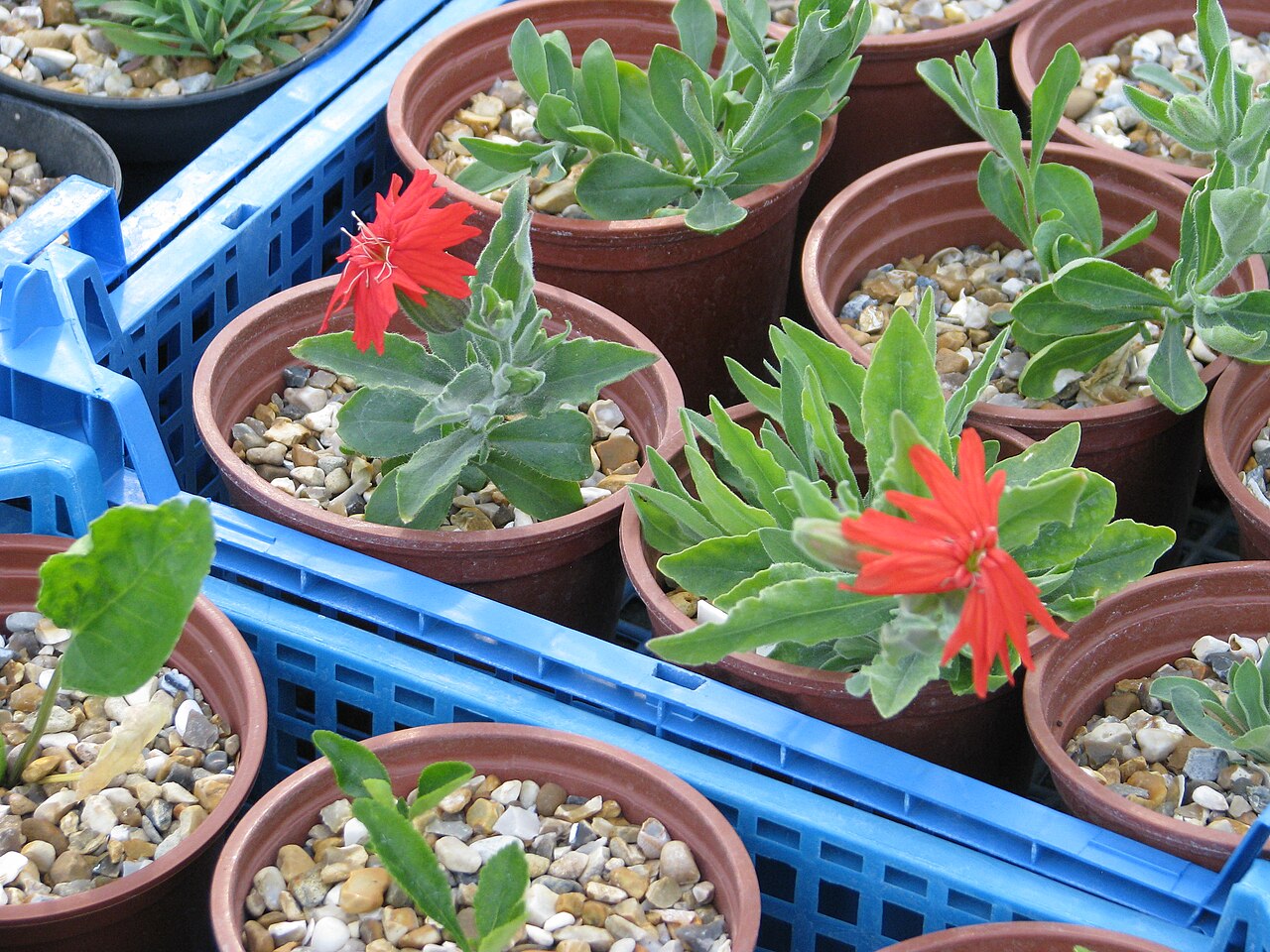
California Indian pink forms a loose, spreading mound of hairy, gray-green leaves 6 to 12 inches tall, studded through late spring and early summer with brilliant red flowers whose petals are cut into narrow, finger-like lobes. It grows naturally in the dappled shade of oak and conifer woodlands across northern and central California and into southwestern Oregon, often tucked at the base of rocks or shrubs where its roots stay cool and its flowers catch available light.
In cultivation, California Indian pink is a standout for a part-shade rock garden, native plant border, or woodland-edge planting, where its compact size and intense color make it a focal point without requiring much space or fuss. Gardeners who enjoy the carnation family’s frilled, spicy-scented flowers in other forms, such as garden Dianthus, will recognize the family resemblance in this native cousin.
Identification
California Indian pink is a low, loosely sprawling to semi-upright herbaceous perennial that grows from a stout taproot, often forming a small basal mound of foliage.
Stems & Leaves
Stems are slender, often somewhat sticky-hairy, and typically 6 to 18 inches long, sometimes sprawling rather than strictly upright. Leaves are opposite, oval to lance-shaped, 1 to 3 inches long, and covered in fine hairs that give the foliage a soft, grayish-green cast. Larger leaves cluster near the base of the plant, with smaller leaves along the flowering stems.
Flowers
The flowers are the plant’s defining feature: 5 brilliant scarlet-red petals, each deeply cut into narrow, finger-like lobes, forming a starburst roughly 1.5 inches across. Flowers are borne singly or in small loose clusters atop slender stalks and bloom primarily from April through July, depending on elevation and local conditions. The intense red color and open, flattened shape make the flowers highly visible from a distance — an adaptation that serves their primary pollinator well.
Fruit & Seeds
After flowering, each flower develops into a small capsule that splits open at the top to release numerous tiny seeds. As with its relatives, established taprooted plants can persist for years, with seedling recruitment adding new plants more sporadically.
Quick Facts
| Scientific Name | Silene californica (syn. Silene laciniata subsp. californica) |
| Family | Caryophyllaceae (Carnation/Pink) |
| Plant Type | Herbaceous perennial, taprooted |
| Mature Height | 6–18 in |
| Mature Spread | 12–18 in, loosely sprawling |
| Growth Rate | Slow to moderate |
| Sun Exposure | Part Shade (dappled woodland light preferred) |
| Water Needs | Low to moderate; drought tolerant once established |
| Soil Type | Well-drained, gravelly or loamy woodland soil |
| Soil pH | Neutral to slightly acidic |
| Bloom Time | April – July |
| Flower Color | Brilliant scarlet red |
| Fall Color | None; foliage dies back in dry season |
| Fruit | Small capsule with numerous tiny seeds |
| Deer Resistant | Generally yes |
| USDA Hardiness Zones | 7–9 |
Native Range
California Indian pink is native to northern and central California, where it is most common in the Coast Ranges and Sierra Nevada foothills, with scattered populations extending into southern California. Its range continues north into southwestern Oregon. It is a plant of oak woodlands and mixed conifer forest, generally staying west of the Cascade-Sierra crest rather than ranging into the drier interior.
Typical habitat is open to partly shaded woodland: oak savanna, mixed oak-conifer forest, and chaparral-woodland edges, usually on rocky or gravelly slopes with good drainage. It often grows tucked beneath shrubs or at the base of rock outcrops, where afternoon shade and cooler root conditions help it persist through California’s dry summers. It is distinct from, and not to be confused with, Indian pink (Spigelia marilandica), an unrelated eastern U.S. wildflower that shares only a common name.
This California Indian pink’s taxonomic relationship to cardinal catchfly (Silene laciniata) remains debated: some treatments keep it as the separate species Silene californica, as used by USDA PLANTS, while others classify it as Silene laciniata subsp. californica. Either way, it is a distinct, recognizable garden plant with its own regional range centered on California and southwestern Oregon.
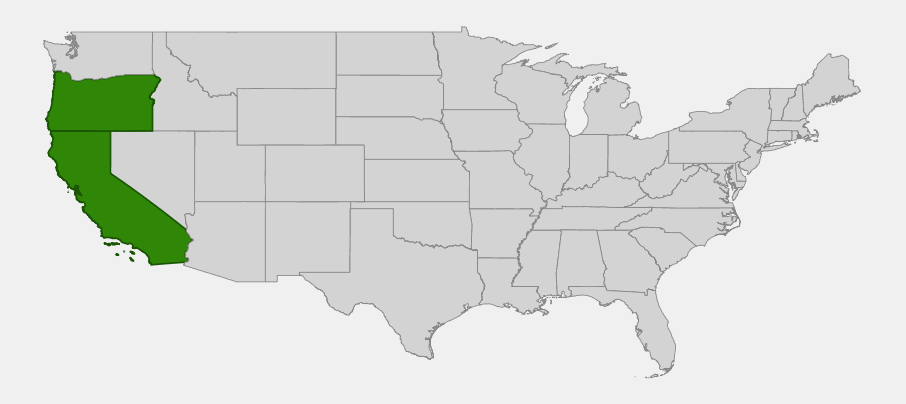
📋 Regional plant lists featuring California Indian Pink: California & Nevada · Western Oregon & Western Washington
Growing & Care Guide
California Indian pink is a rewarding, low-maintenance choice for the dappled shade of an oak-adjacent garden, where its scarlet flowers provide a bright accent against green foliage.
Light
This species prefers part shade, mimicking the dappled light of an oak or conifer woodland. Too much full, hot sun — especially in warmer inland gardens — can stress the plant and shorten its bloom period; too much deep shade reduces flowering. A spot with morning sun and afternoon shade, or light, high shade all day, suits it best.
Soil & Water
Plant in well-drained, gravelly or loamy soil. California Indian pink does not tolerate heavy, waterlogged clay. Water regularly through the first growing season to establish the taproot, then taper off; established plants handle California’s dry summers with only occasional deep watering, especially with the benefit of some shade.
Planting Tips
Set out nursery-grown plants in fall, taking advantage of winter and spring rains to establish the root system before the first dry summer. Choose a site with good drainage and some shade, such as beneath an oak canopy or on the north side of shrubs and rocks. Space plants about 12 inches apart.
Pruning & Maintenance
Deadhead spent flowers to tidy the plant and encourage additional bloom. Trim back dried foliage as the plant goes summer-dormant. Avoid overwatering during dormancy, which can rot the taproot.
Propagation
Seed is the primary method of propagation: sow in fall to take advantage of natural winter chilling, or cold-stratify seed for several weeks before spring sowing. Germination can be slow. The taprooted habit makes division impractical, so propagation relies on seed.
Landscape Uses
- Part-shade rock gardens tucked among boulders and other drought-tolerant perennials
- Oak woodland understory plantings that mimic its natural habitat
- Hummingbird gardens for a splash of intense red color
- Native alternative to garden pinks and carnations for shaded beds
- Container planting on a partly shaded porch or patio
Wildlife & Ecological Value
California Indian pink’s intense red, open-faced flowers are a textbook hummingbird adaptation, and the plant plays an outsized ecological role for its modest size.
For Pollinators
Hummingbirds are the primary pollinators, strongly attracted to the saturated red color and the nectar held at the base of the flower. Some native bees and butterflies will visit as well, though the flower’s color and structure are especially well suited to hummingbird feeding.
For Birds
Beyond nectar-feeding hummingbirds, small seed-eating birds take advantage of the tiny seeds once capsules mature and split in summer, though this is a minor food source relative to the plant’s pollinator value.
For Mammals
The hairy, slightly sticky foliage is not a preferred browse for deer, making California Indian pink a reasonably reliable choice in gardens with browse pressure from local wildlife.
Ecosystem Role
As a long-lived, taprooted perennial of woodland edges and rocky slopes, California Indian pink contributes floral diversity and nectar resources to oak woodland plant communities during the late spring and early summer bloom window, when it stands out as one of the few bright red flowers in dappled forest light.
Cultural & Historical Uses
Documented traditional uses of California Indian pink are limited; its significance has primarily been ornamental and ecological rather than practical. As a conspicuous, brightly colored wildflower of California’s oak woodlands, it would have been a familiar sight to Indigenous peoples throughout its range, though specific historical uses are not well recorded in the ethnobotanical literature.
In modern horticulture, California Indian pink has become a popular choice among native plant gardeners specifically for its intense, saturated flower color — a rare true scarlet among shade-tolerant perennials — and its compact size, which suits smaller garden spaces better than some of its larger Silene relatives. Like its distant carnation-family relatives, it is not considered a toxicity concern for people or pets; see our overview of carnation family toxicity for general context on the group.
Frequently Asked Questions
Is California Indian pink the same as the Indian pink grown in eastern gardens?
No. “Indian pink” is also a common name for Spigelia marilandica, an unrelated wildflower native to the eastern and central U.S. California Indian pink (Silene californica) is a different genus entirely, in the carnation family rather than the logania family.
Is California Indian pink the same plant as cardinal catchfly?
They are very closely related, and some botanists classify California Indian pink as a subspecies of cardinal catchfly (Silene laciniata subsp. californica) rather than a separate species. USDA PLANTS currently treats it as the distinct species Silene californica.
How much sun does California Indian pink need?
It prefers part shade, similar to its native oak woodland habitat. Full, hot sun in inland gardens can stress the plant, while too much deep shade reduces flowering — dappled or morning sun with afternoon shade works best.
Is California Indian pink good for hummingbirds?
Yes, it is an excellent hummingbird plant. Its brilliant scarlet, open-faced flowers are strongly attractive to hummingbirds feeding in shaded woodland gardens.
Why does California Indian pink die back in summer?
This is a normal dry-season dormancy response. In its native range, the plant typically slows down or dies back above ground during California’s hot, dry summer and resprouts from its taproot with fall and winter rains.

Looking for a nursery that carries California Indian Pink?
Browse our native plant nursery directory: California · Oregon