
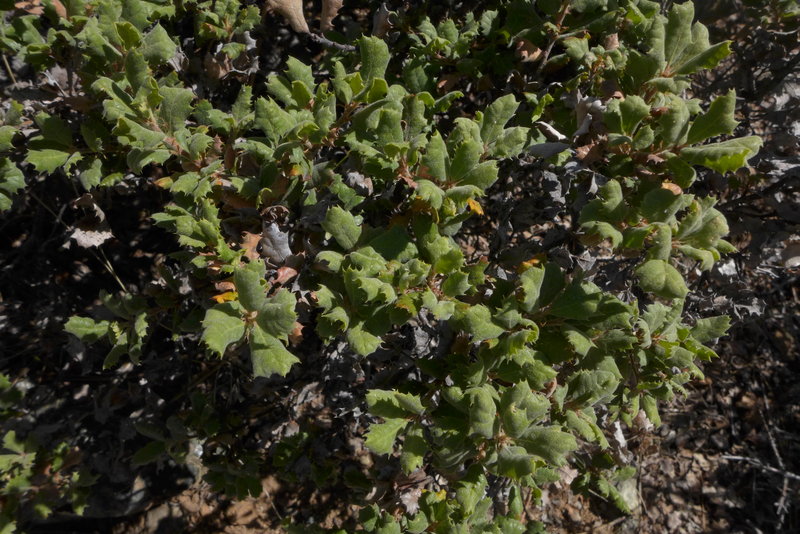
Leather oak forms a dense, low mound of thick, cupped leaves, here on the serpentine soils it favors in Trinity County, California. Photo: Wendy Boes,
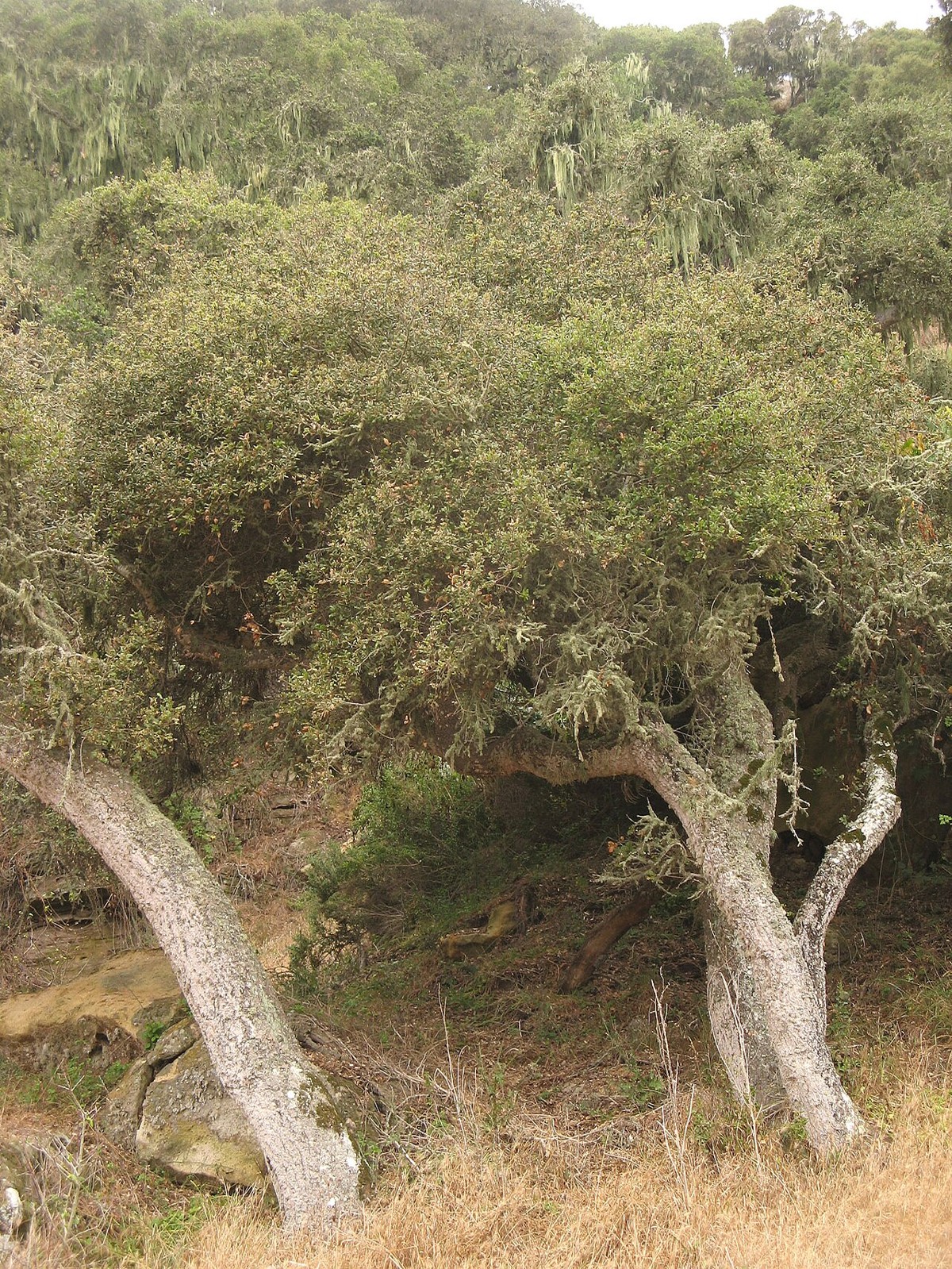
Island oak growing in its native habitat on Santa Rosa Island, part of Channel Islands National Park. Photo: Geographer, via Wikimedia Commons (CC BY 2.5)
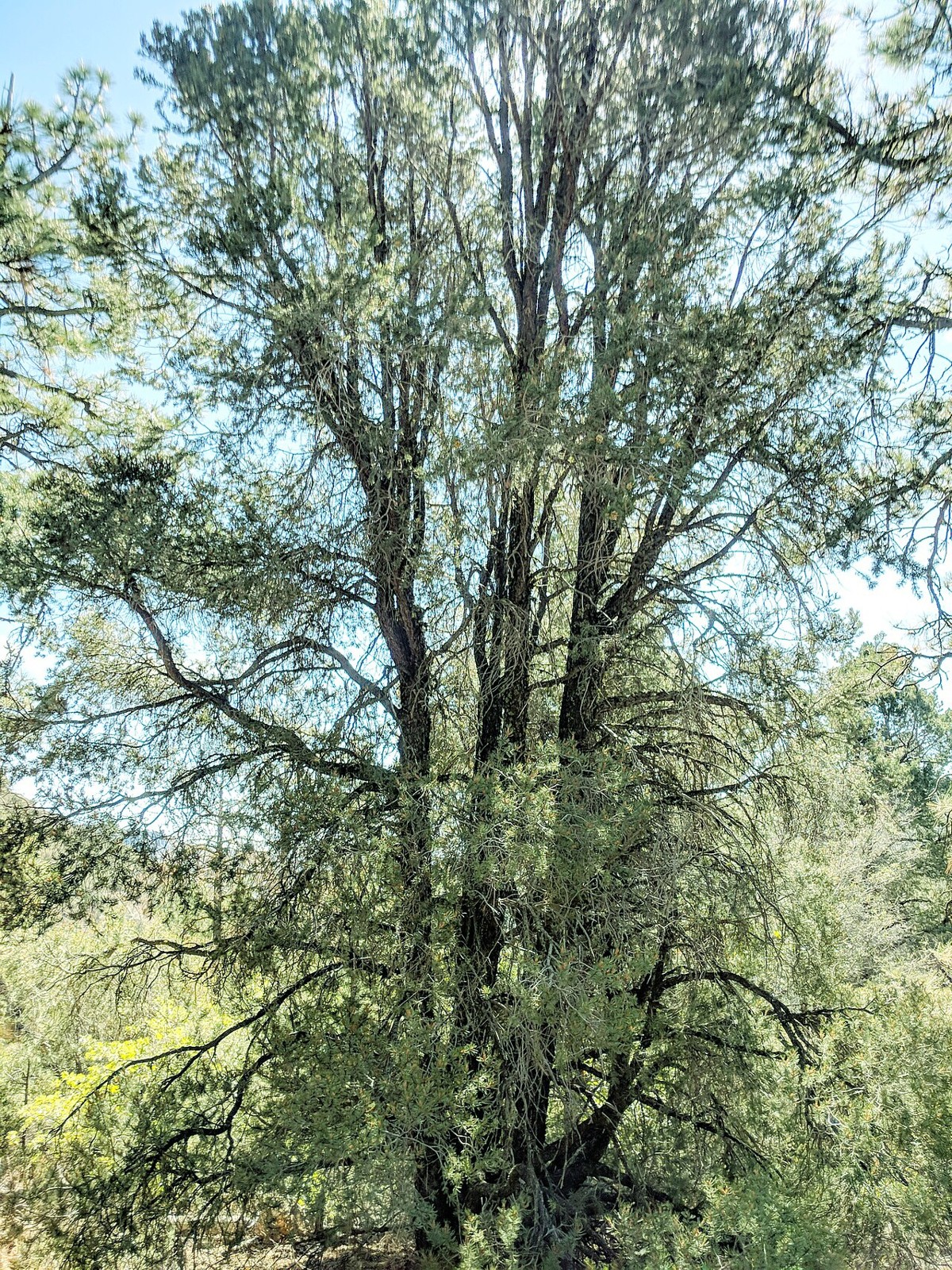
A mature four-leaf pinyon near Mount Laguna, San Diego County, with the rounded, multi-trunked crown typical of the species. Photo: andy71, via iNaturalist/Wikimedia Commons (CC
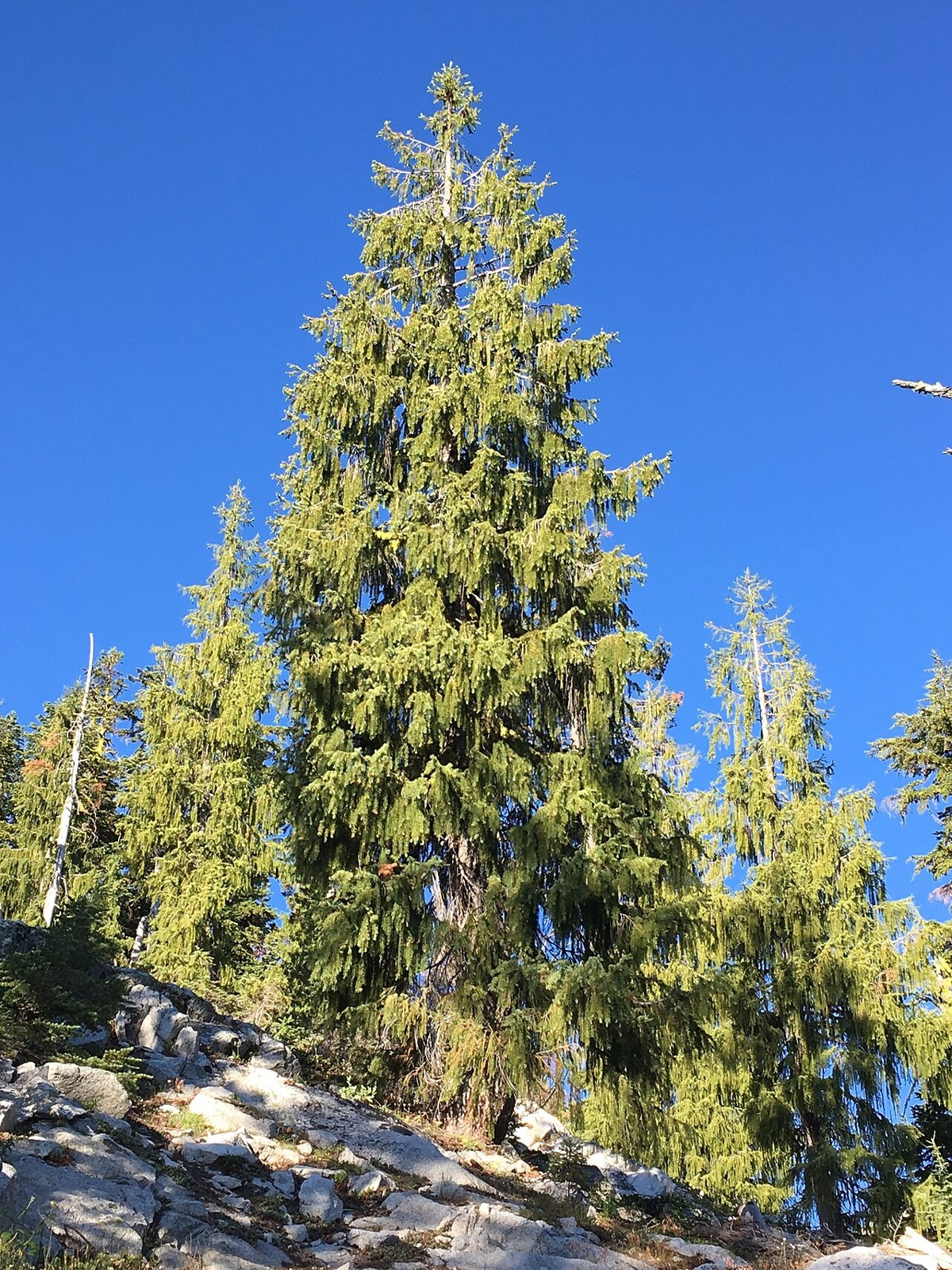
A mature Brewer spruce in the Siskiyou Mountains, its long pendulous branchlets hanging like curtains from the limbs. Photo: sheriff_woody_pct, via iNaturalist/Wikimedia Commons (CC BY
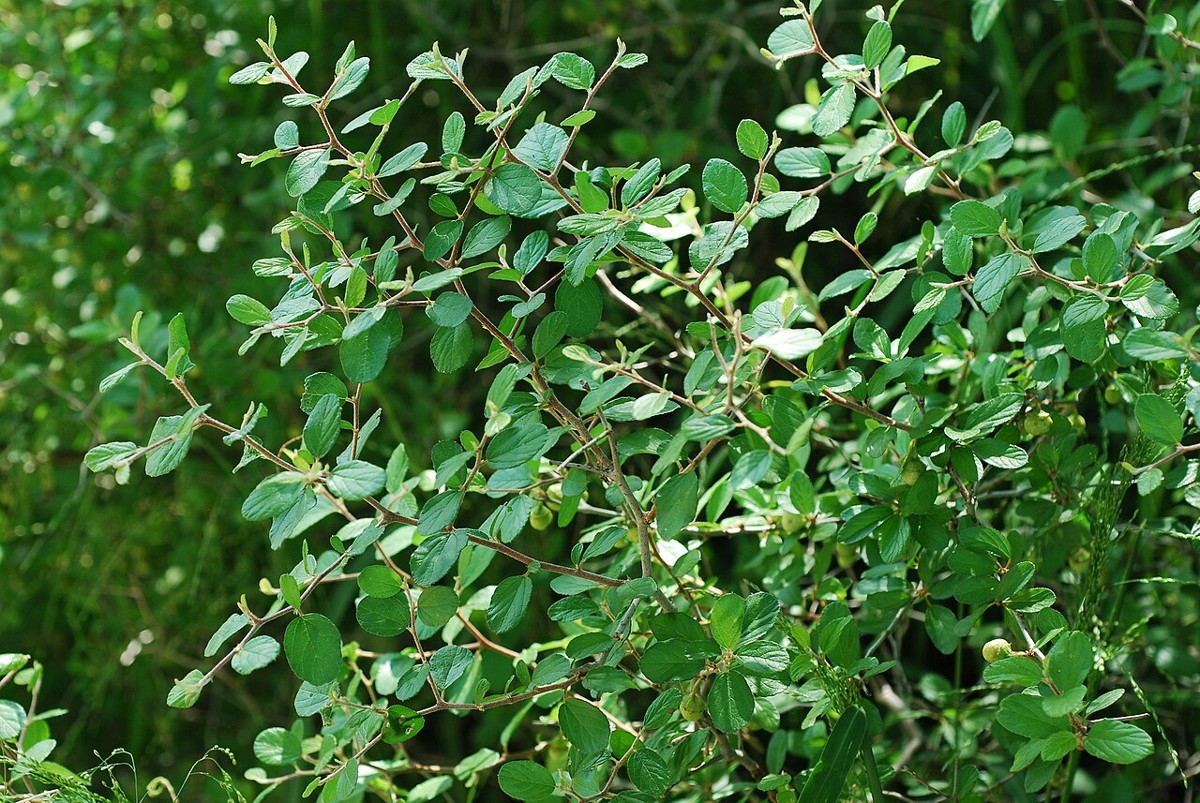
Texas Snakewood forms a dense, twiggy thicket of zig-zagging branches. Photo: DouglasGoldman, Wikimedia Commons (CC BY-SA 4.0) Colubrina texensis, commonly known as Texas Snakewood, Texas
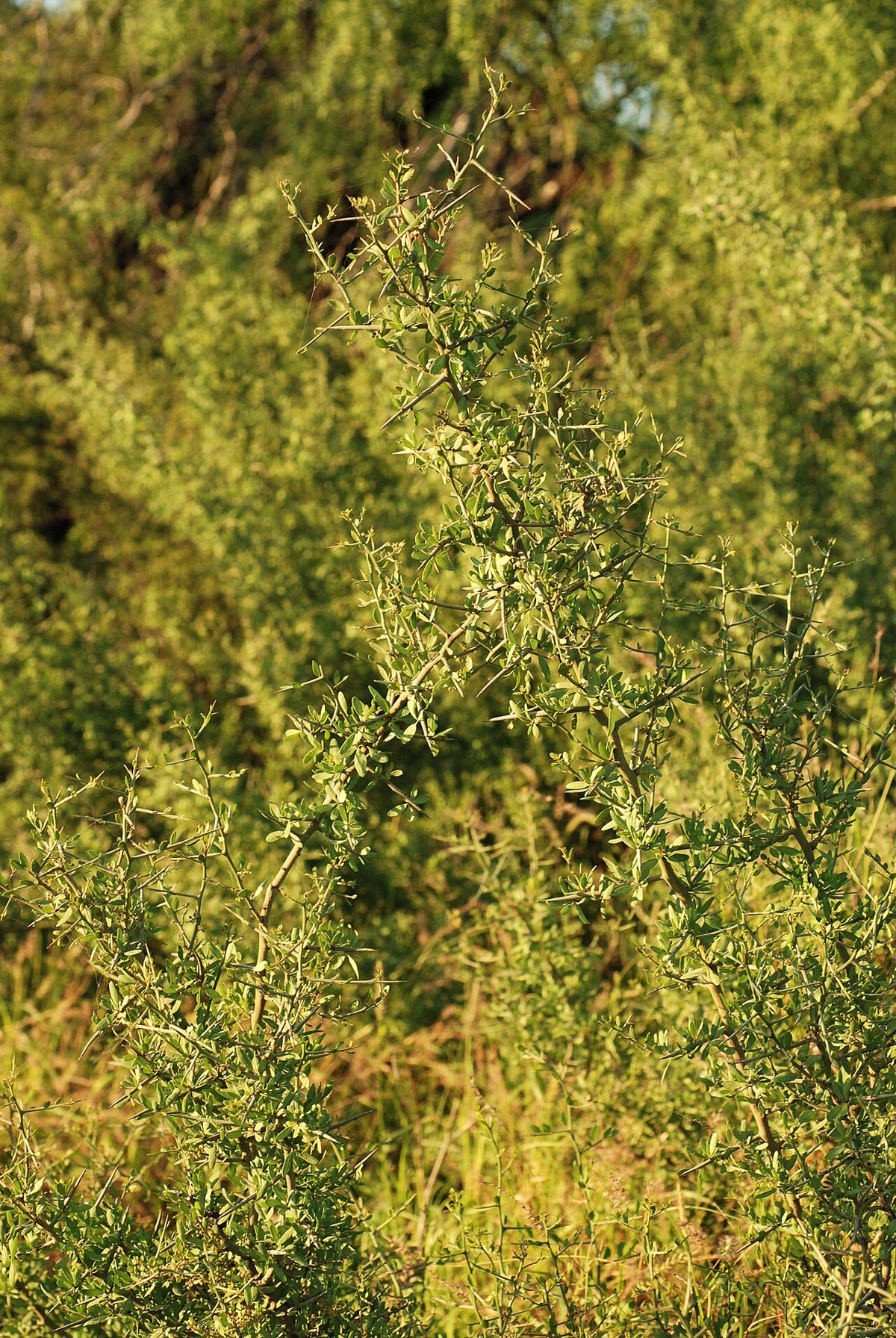
Lotebush forms a dense, spiny thicket with pale, zig-zagging branches. Photo: Douglas Goldman, Wikimedia Commons (CC BY-SA 4.0) Ziziphus obtusifolia, known across the Southwest as
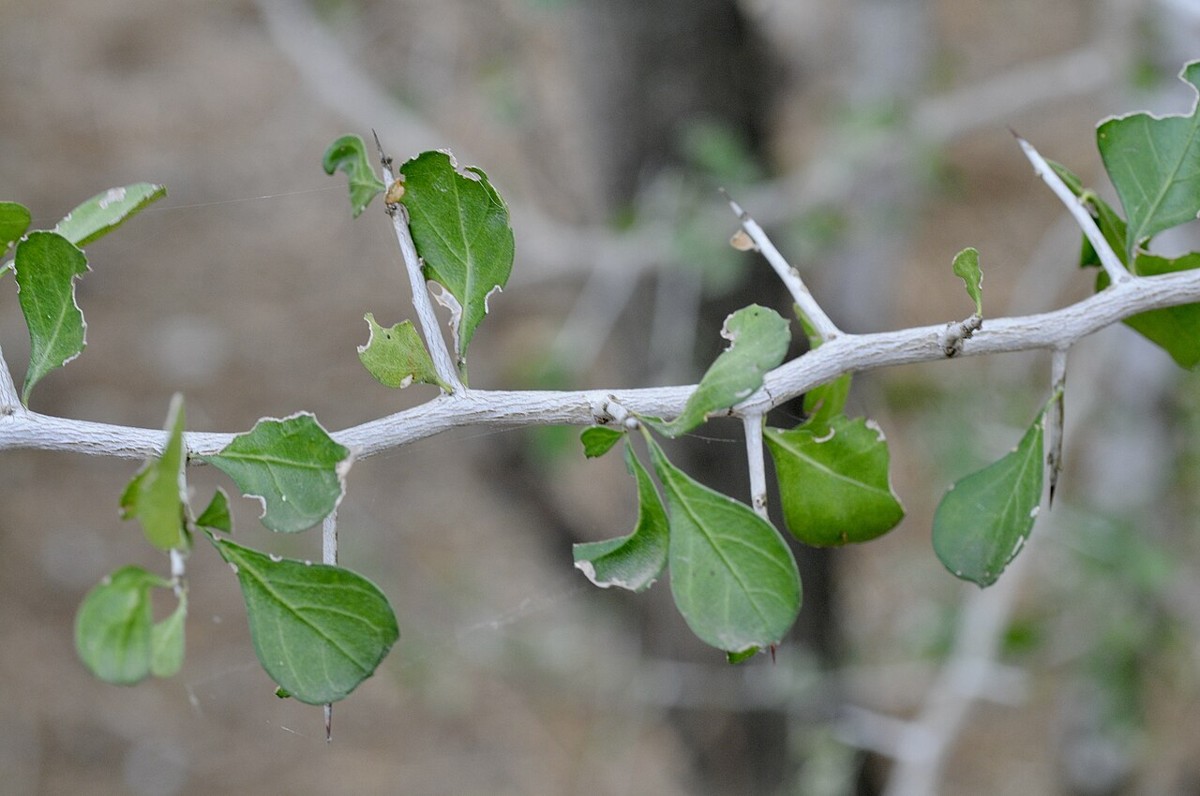
Brasil’s stiff, thorn-tipped branches and small leathery leaves. Photo: sonnia hill, Wikimedia Commons (CC BY 2.0) Condalia hookeri, known in South Texas as Brasil, Bluewood
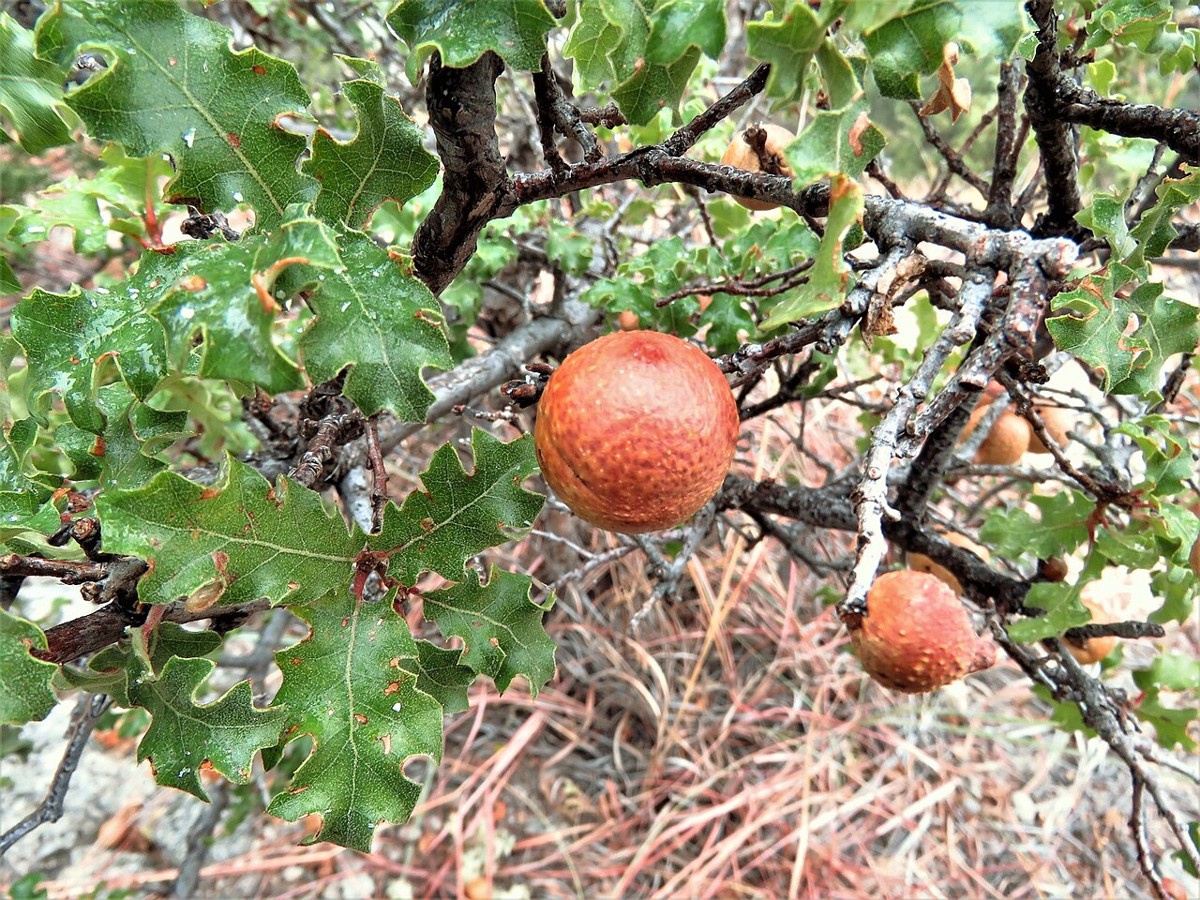
Sandpaper Oak foliage with wasp galls, Guadalupe Mountains National Park, Texas. Photo: Annika Lindqvist / Wikimedia Commons (CC BY 4.0) Quercus pungens, commonly known as
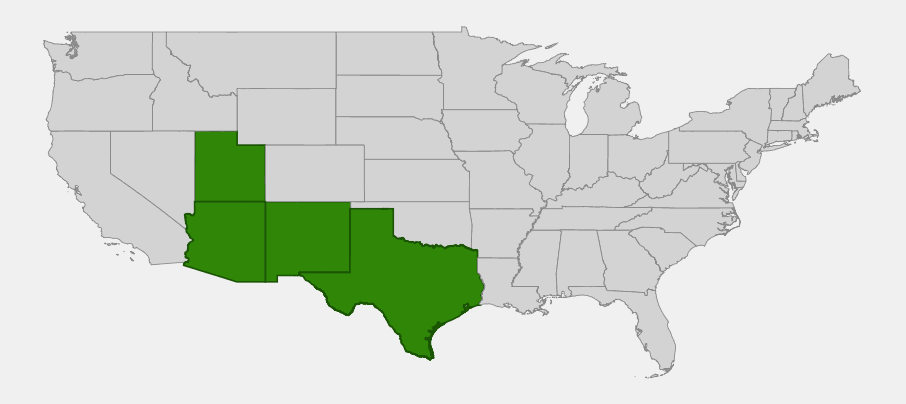
Populus deltoides subsp. wislizeni, commonly known as the Rio Grande Cottonwood, is a massive, fast-growing riparian tree and the signature native species of the Rio
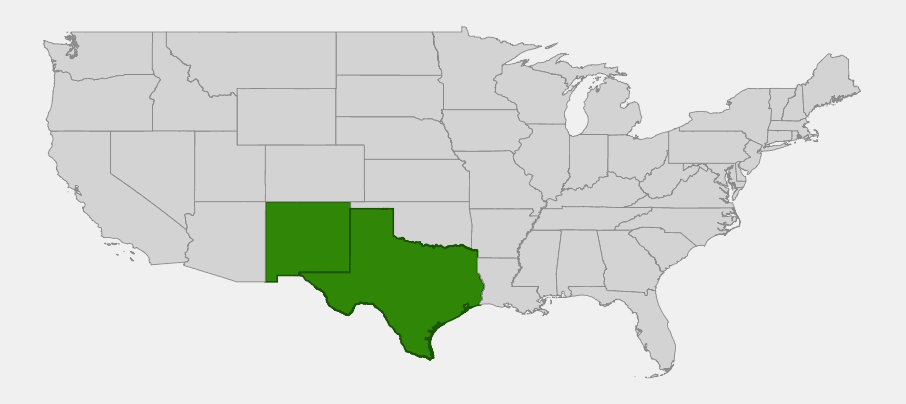
Quercus mohriana, commonly known as Mohr Oak (also called shin oak or scrub oak in parts of its range), is a tough, drought-hardy evergreen shrub
View More