
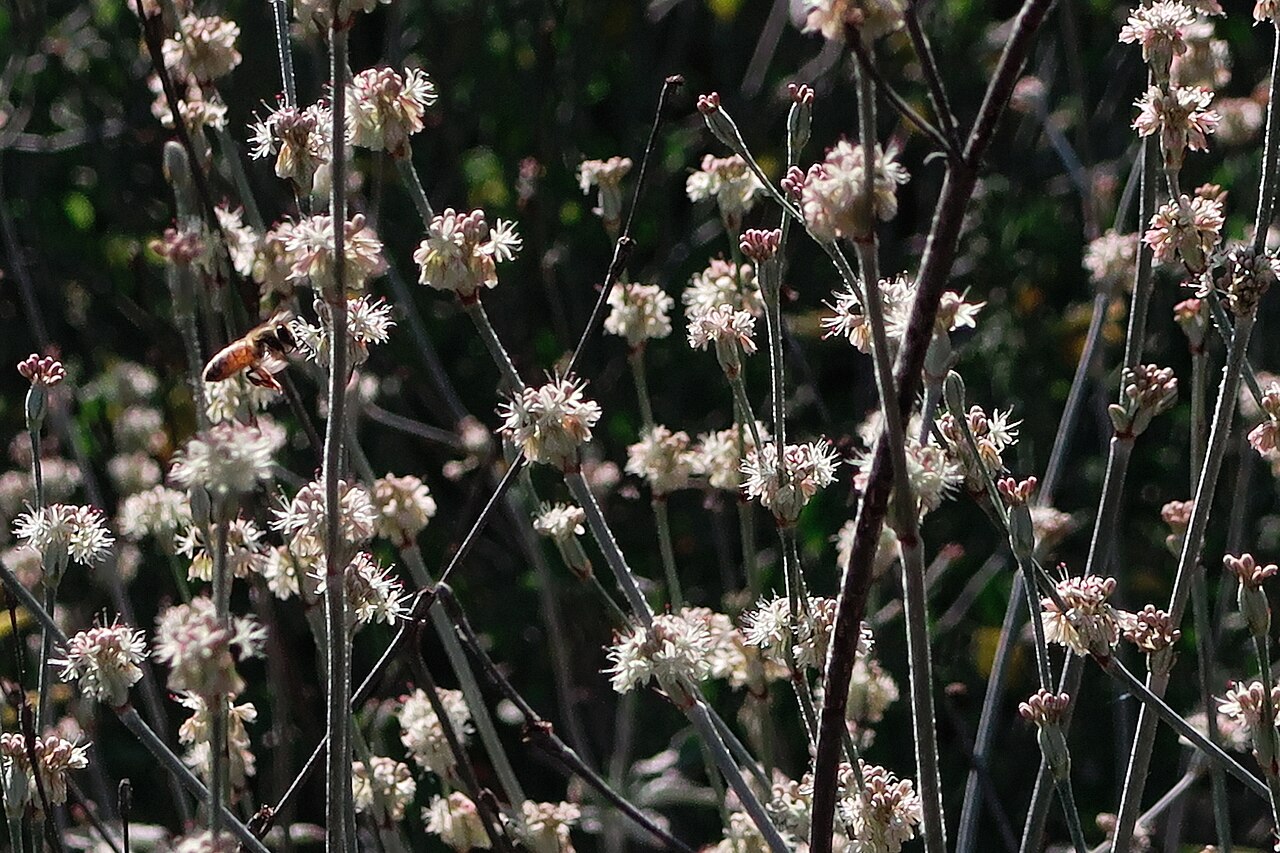
Long-stemmed buckwheat’s small cream-to-pink flower clusters are a magnet for honeybees and native pollinators in late summer. Photo: John Rusk, Wikimedia Commons (CC BY 2.0)
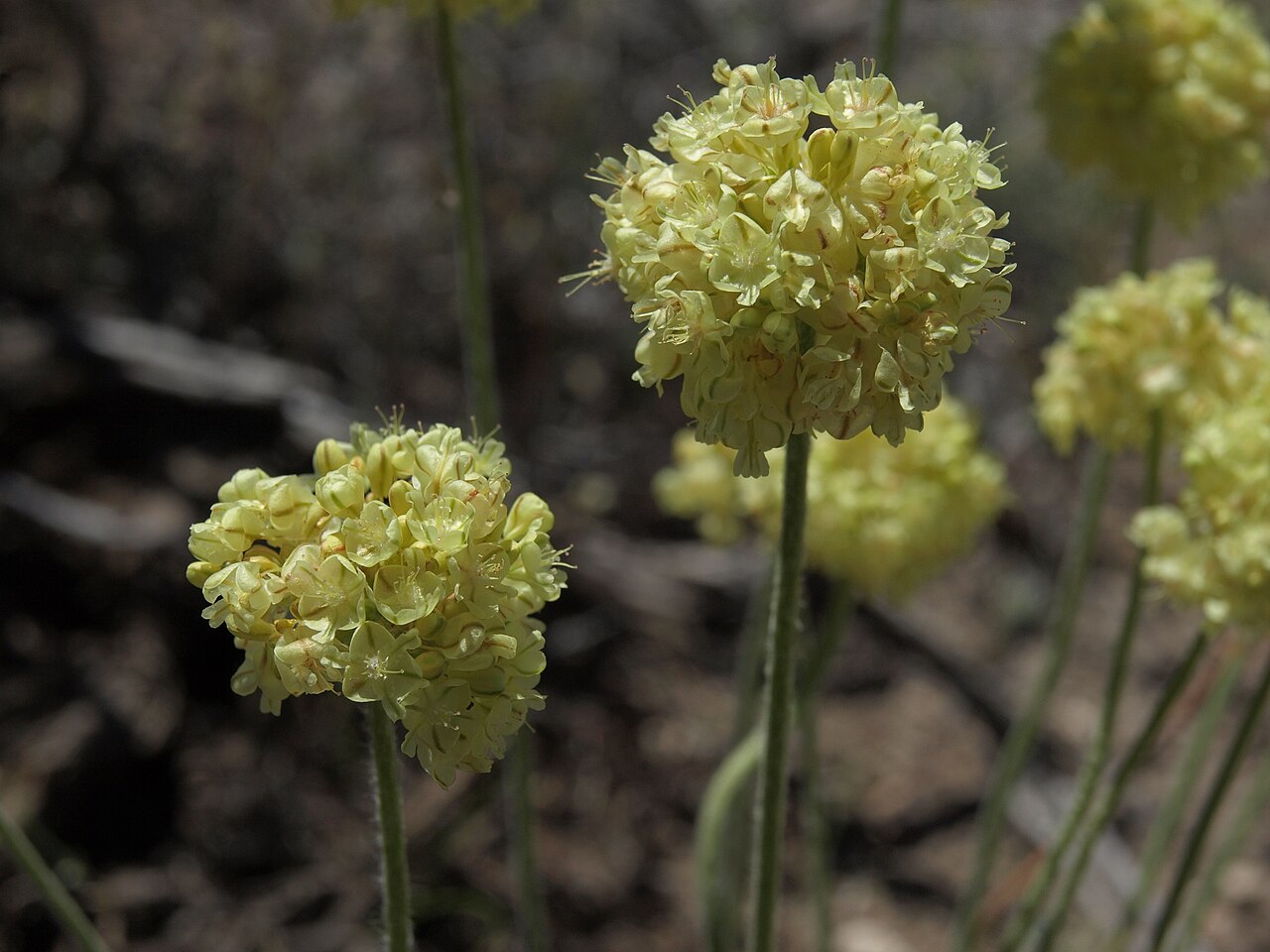
Cushion buckwheat’s dense, round flowerheads — nicknamed “butterballs” — rise on short, leafless stalks above the basal mat. Photo: Jim Morefield, Wikimedia Commons (CC BY-SA
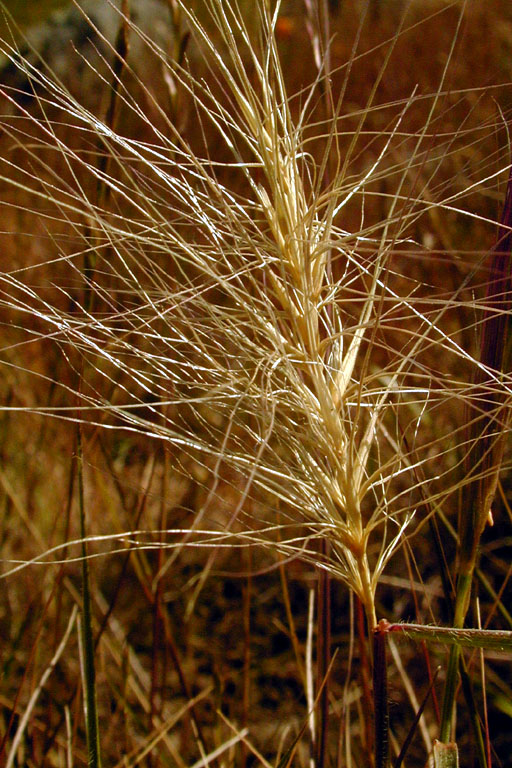
Mature big squirreltail seedhead — the long, flaring awns shatter and disperse widely at the slightest touch. Photo: Bart and Susan Eisenberg, Wikimedia Commons (CC
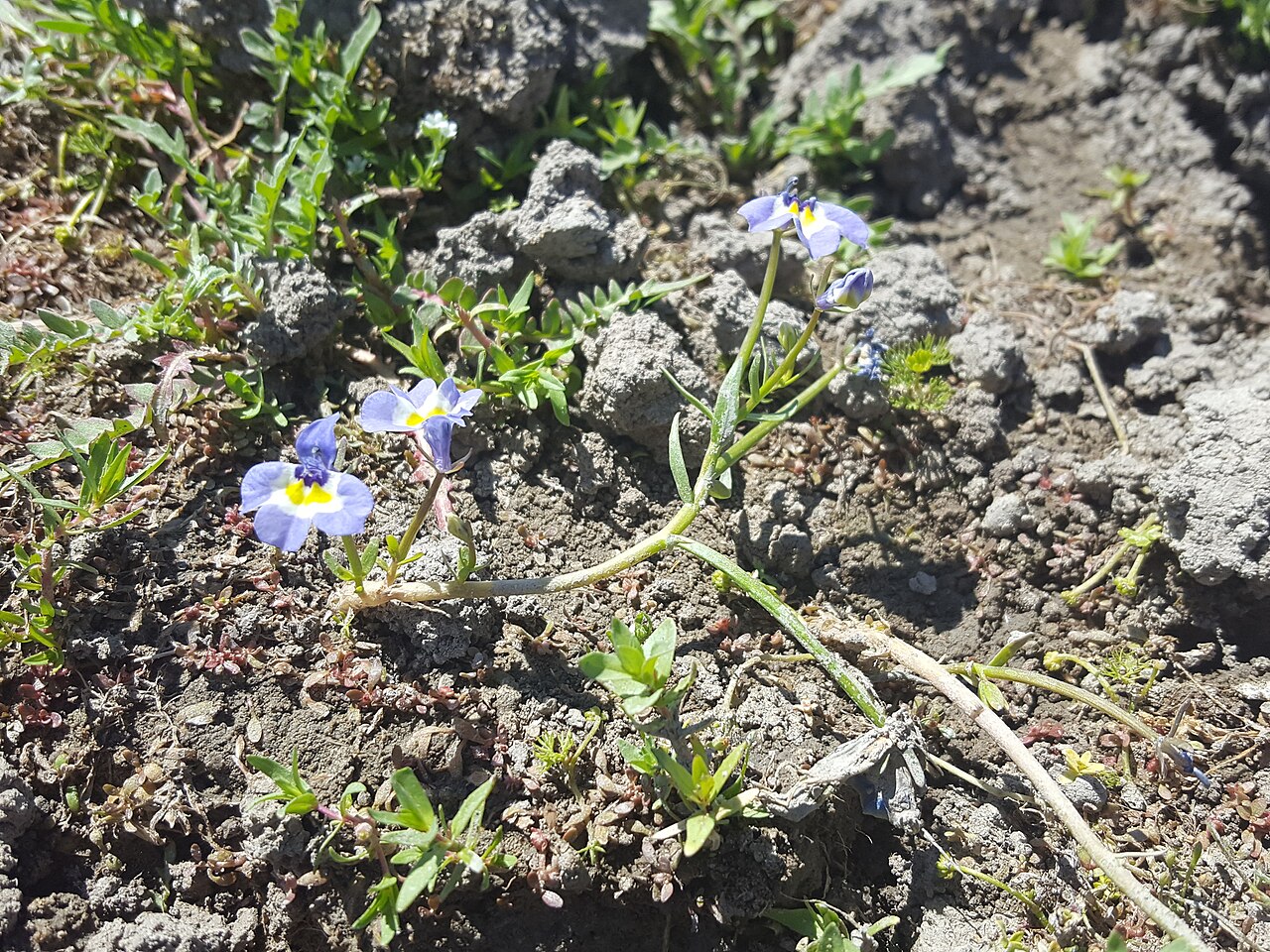
Two-horned calicoflower sprawling across drying vernal-pool mud, its usual nursery bed. Photo: Alex Abair / Wikimedia Commons (CC BY 4.0) Downingia bicornuta, commonly called two-horned
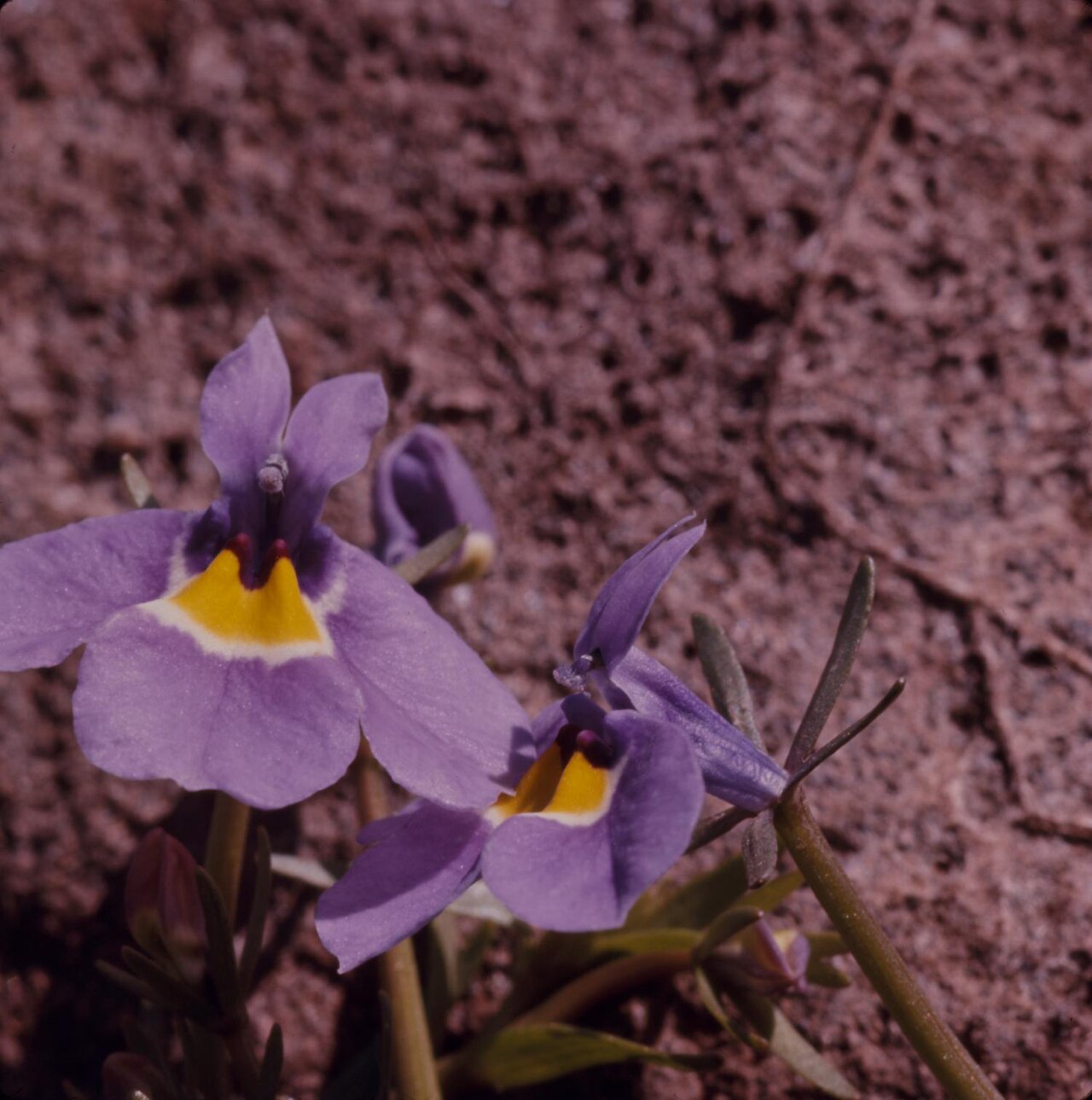
Toothed calicoflower blooming at the edge of a drying vernal pool. Photo: Sherwin Carlquist / Wikimedia Commons (CC BY 4.0) Downingia cuspidata, known as toothed
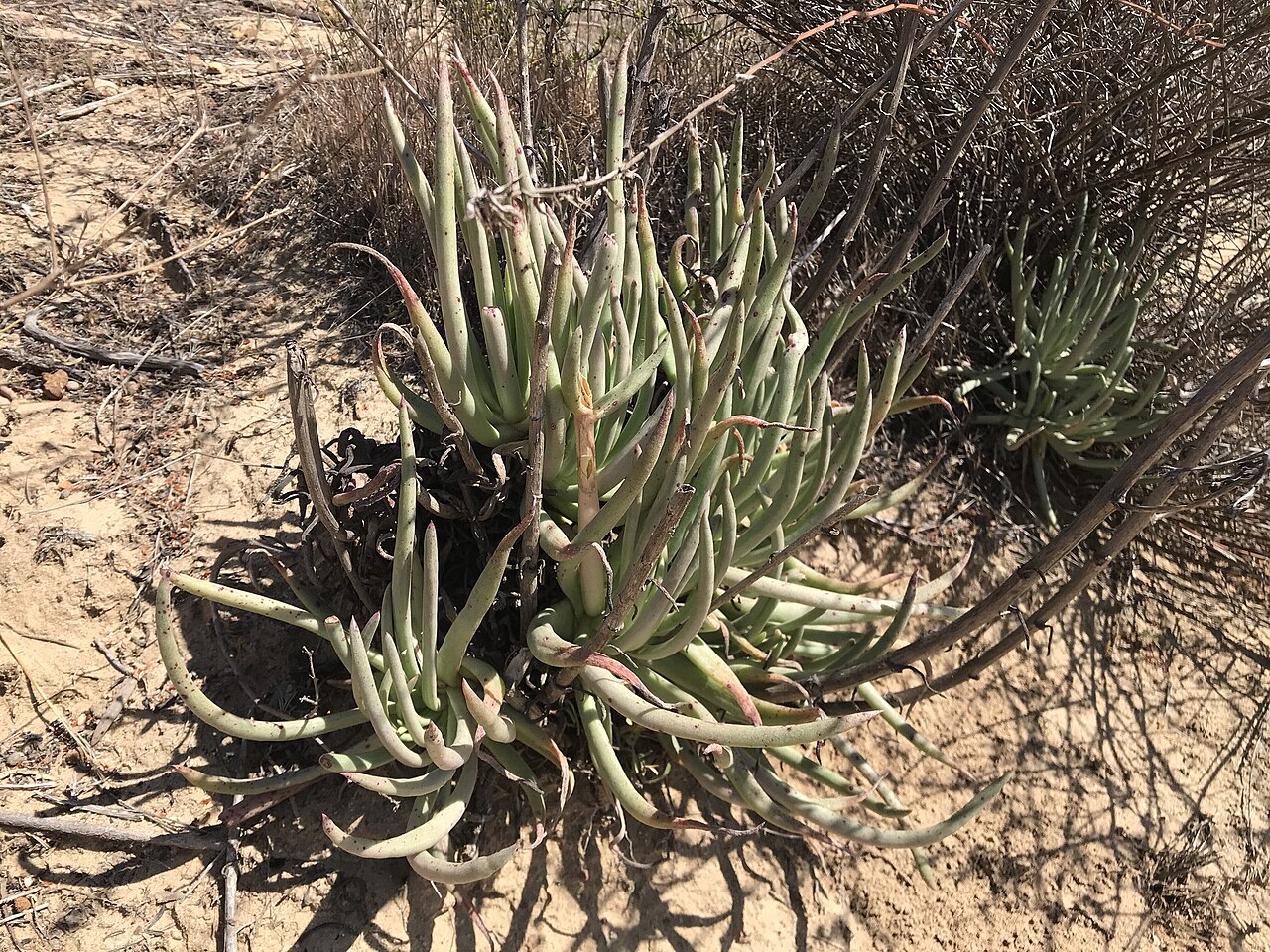
A wild clump of ladyfingers growing in its sandy, coastal San Diego County habitat at Torrey Pines. Photo: iNaturalist contributor / Wikimedia Commons (CC0) Dudleya
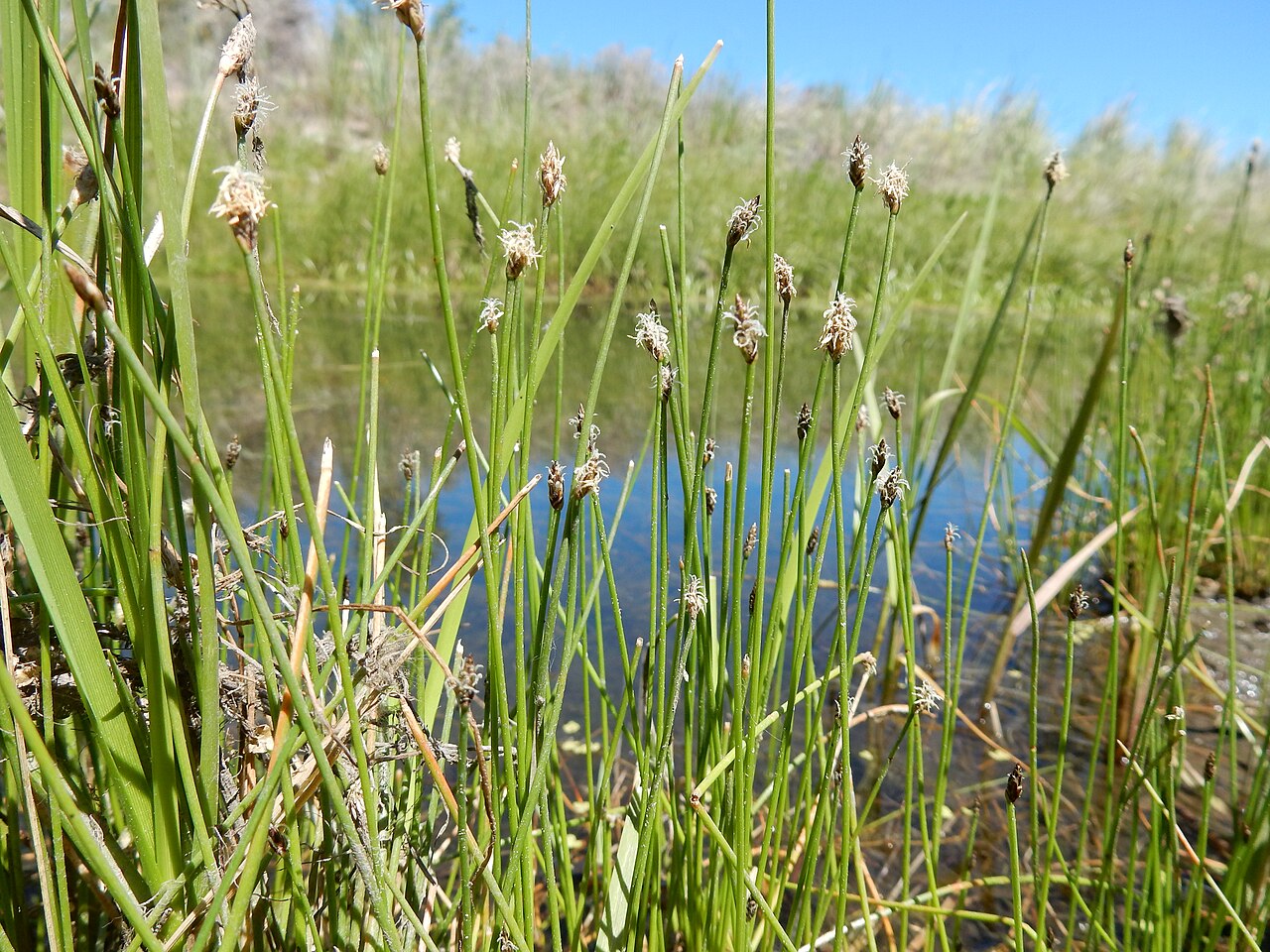
A dense stand of common spikerush colonizing a creek margin in Montana — its typical streamside habit. Photo: Matt Lavin / Wikimedia Commons (CC BY-SA
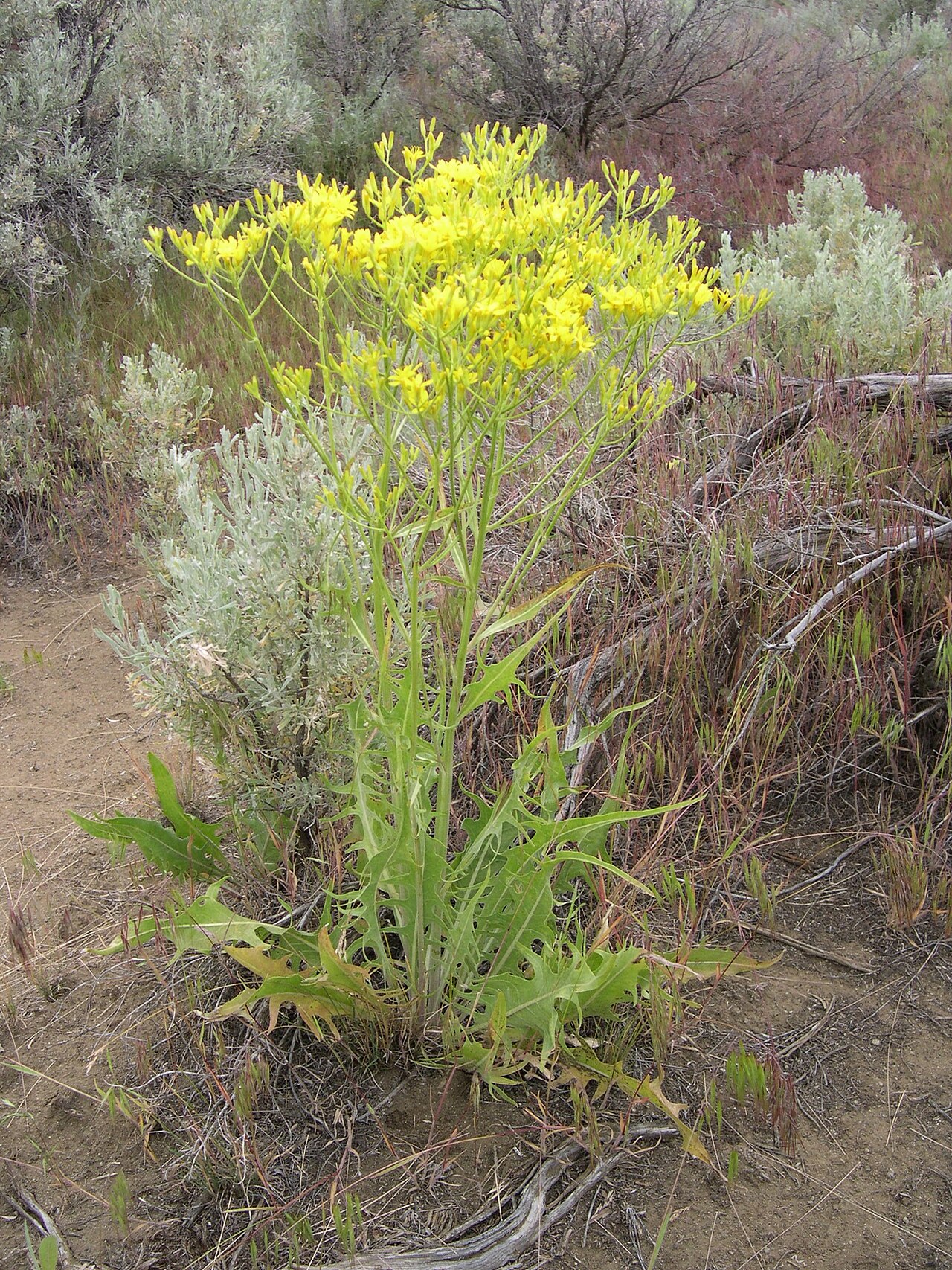
Tapertip hawksbeard growing among big sagebrush in southwest Idaho. Photo: Thayne Tuason, Wikimedia Commons (CC BY-SA 4.0) Crepis acuminata, known as tapertip hawksbeard or longleaf
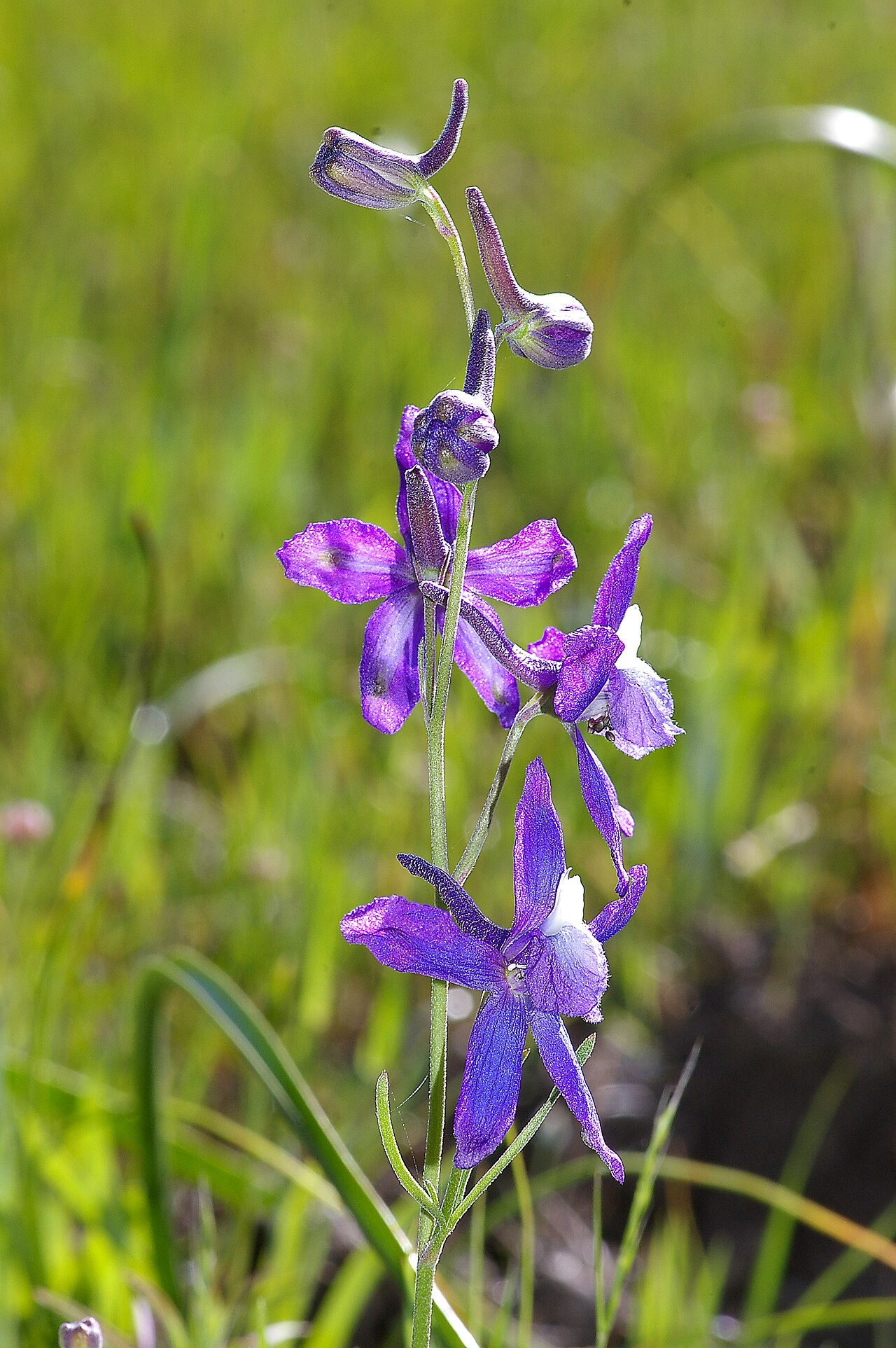
San Bernardino larkspur in bloom, San Luis Obispo County, California. Photo: Alan Schmierer, Wikimedia Commons (CC0) Delphinium parryi, commonly called San Bernardino larkspur or Parry’s
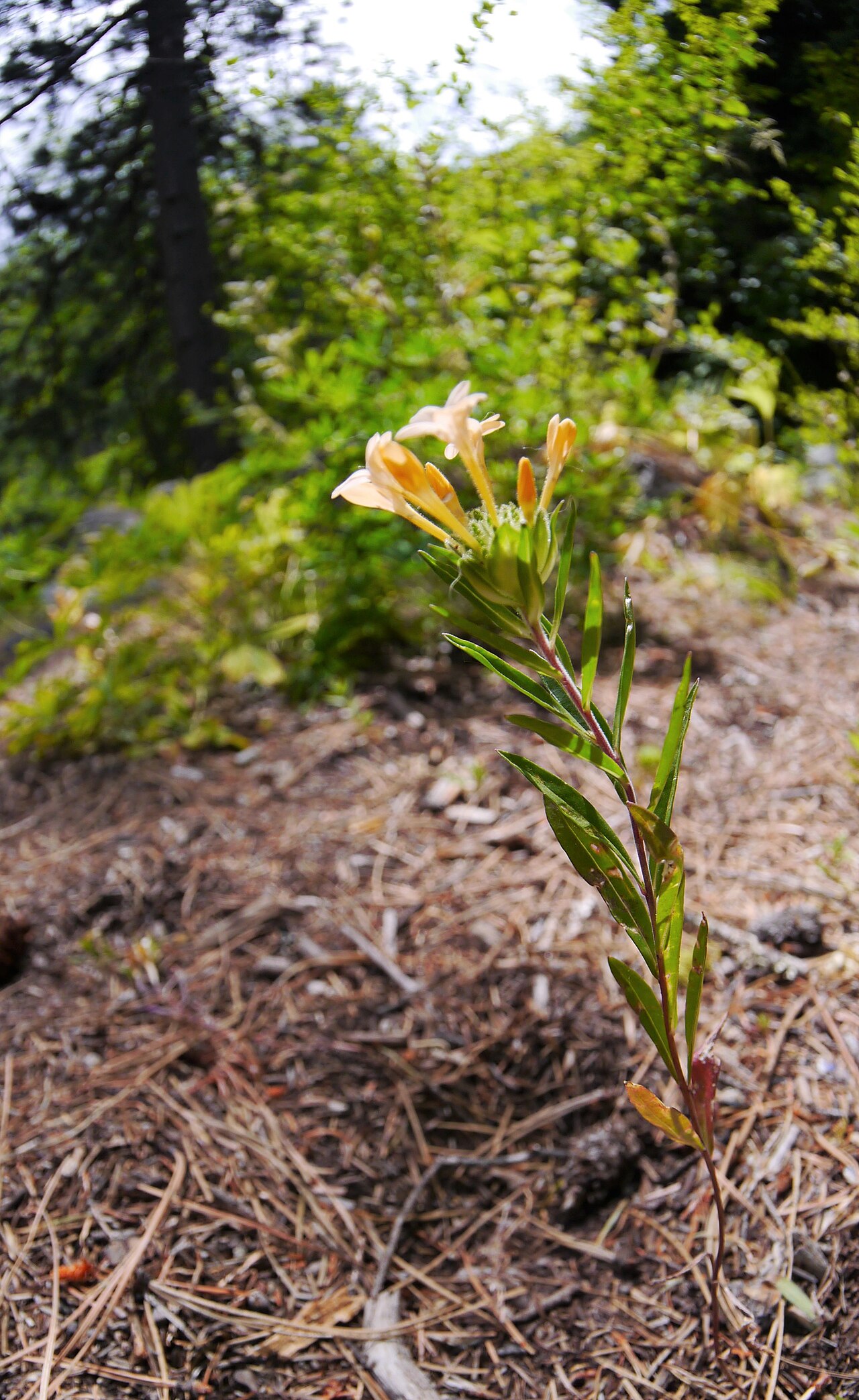
Grand collomia at Snow Lakes trailhead, Chelan County, Washington. Photo: Thayne Tuason, Wikimedia Commons (CC BY-SA 4.0) Collomia grandiflora, commonly called grand collomia or large-flowered
View More