
‘A’ali’i (Dodonaea viscosa)
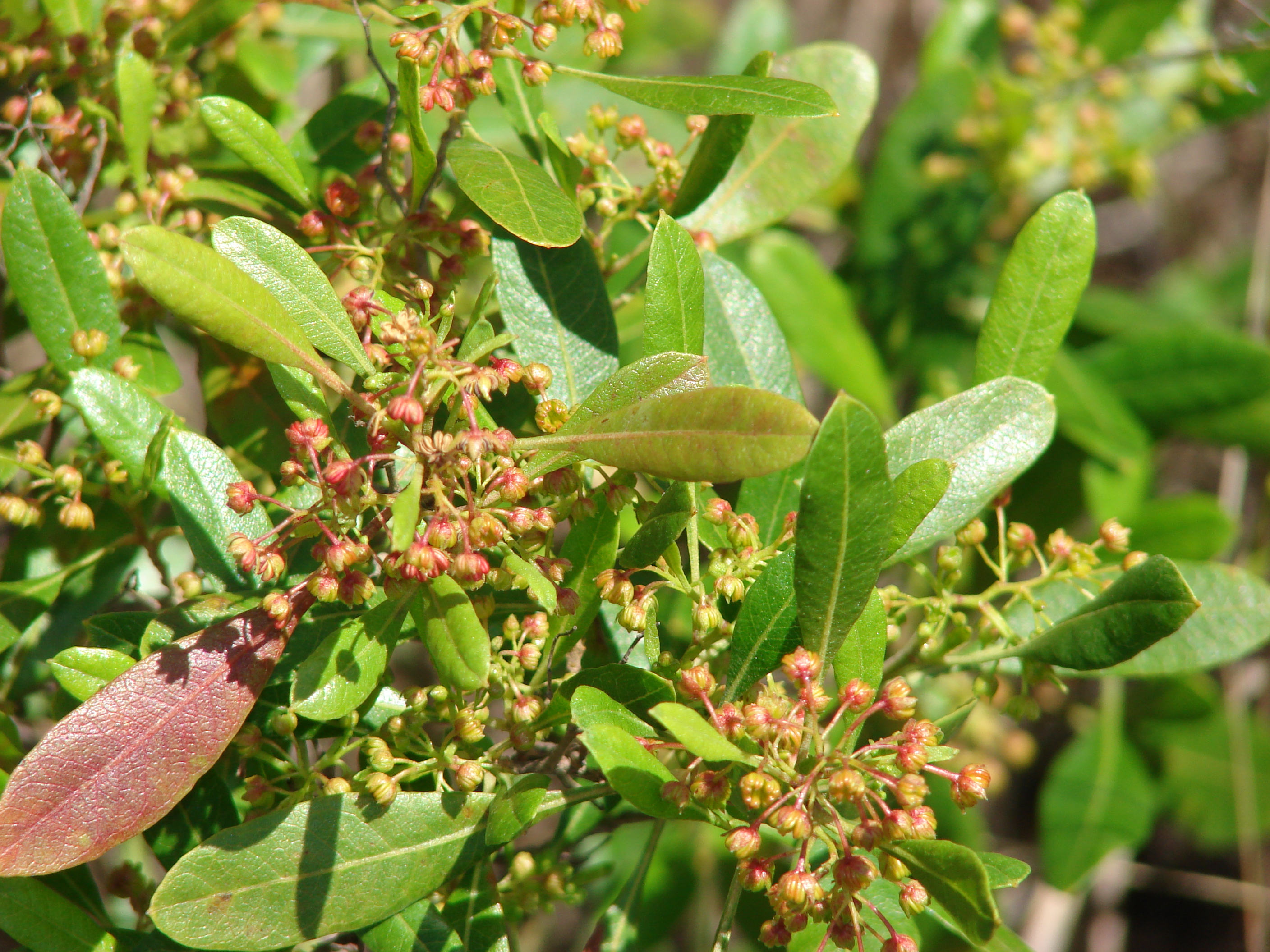
Dodonaea viscosa, known in Hawaiian as ‘A’ali’i, is one of the most iconic and ecologically significant native shrubs of the Hawaiian Islands. A member of the Sapindaceae (soapberry) family, ‘A’ali’i has thrived in Hawaiʻi for thousands of years, colonizing harsh, windswept lava fields and rocky slopes where few other plants can survive. Its remarkable resilience — tolerating drought, wind, salt spray, and poor soils — made it a pioneering species in Hawaiian forest succession and a beloved symbol of toughness and adaptability in Hawaiian culture.
The plant is perhaps best recognized by its brilliant, papery seed capsules, which flush bright red, pink, or orange in late summer and fall, creating stunning displays of color across otherwise austere volcanic landscapes. These three-winged capsules ripen from small clusters of inconspicuous flowers and remain on the plant through the dry season, providing food for native birds. ‘A’ali’i grows as an erect to spreading shrub or small tree, typically 3 to 10 feet tall in exposed sites and up to 20 feet in more sheltered forest understory, with narrow, lance-shaped leaves that are sticky and aromatic when bruised.
‘A’ali’i holds deep cultural significance in Hawaiian tradition. It is one of the plants used in hula and oli (chant), and its strong, flexible wood was prized for making tools, weapons, and house posts. A well-known Hawaiian proverb — “He ‘a’ali’i ku makani mai au; ‘a’ole lā e hina i ka pū o Kona” — translates to “I am the ‘a’ali’i that stands in the wind; I will not be brought down by the Kona storm,” celebrating the plant as a metaphor for inner strength and perseverance in the face of adversity. Today, ‘A’ali’i is widely used in native Hawaiian restoration projects and sustainable landscaping for its unmatched hardiness and year-round ornamental appeal.
Identification
‘A’ali’i is typically an erect, multi-stemmed shrub 3 to 10 feet (1–3 m) tall in exposed, dry settings, occasionally reaching 20 feet (6 m) as a small tree in sheltered sites. Its overall form is rounded to spreading, with dense, upright branching. The twigs are sticky and slightly glandular. The species is dioecious — male and female flowers occur on separate plants — making it interesting from a botanical standpoint.
Leaves
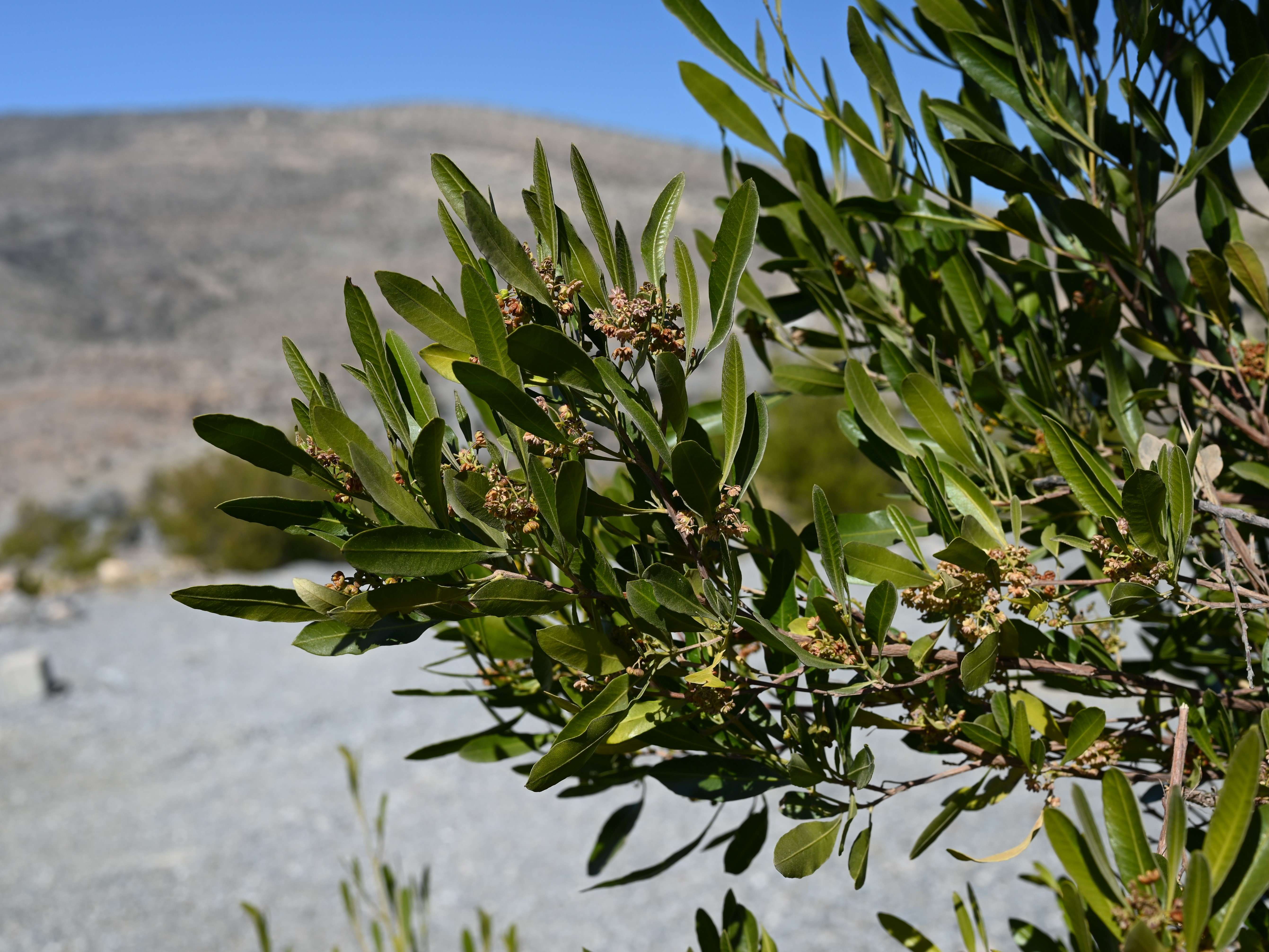
The leaves are simple, alternate, and narrowly lance-shaped to oblanceolate, 1½ to 4 inches (4–10 cm) long and less than ½ inch (1 cm) wide. The surface is shiny, viscid (sticky), and resinous — especially on young growth — giving the plant its species epithet viscosa. Leaves are medium to dark green on top and paler beneath, with entire (smooth) margins. The glands on leaves produce a pleasant aromatic scent when crushed.
Flowers
The flowers are small and inconspicuous, lacking petals, with 4–5 reddish-brown to yellowish sepals forming a tiny cup. They emerge in short terminal or axillary clusters (racemes) from spring through summer. Male flowers produce 8–10 stamens with orange anthers that are briefly showy when open; female flowers develop into the ornamental seed capsules. Individual plants bloom at different times, with males generally preceding females.
Fruit & Seeds
‘A’ali’i’s most striking feature is its papery, three-winged seed capsule, roughly ½ to ¾ inch (12–18 mm) across. The capsules start green, then flush to brilliant shades of red, pink, salmon, or orange-red — occasionally deep burgundy — making the plant spectacular in summer and fall. Each capsule contains 2–3 small, round, black seeds. The wings catch the wind, aiding in dispersal across open lava fields and slopes. The vibrant color of the seed capsules is one of the most recognizable features of Hawaiian native plant landscapes.
Quick Facts
| Scientific Name | Dodonaea viscosa |
| Family | Sapindaceae (Soapberry) |
| Plant Type | Evergreen Shrub to Small Tree |
| Mature Height | 3–20 ft (typically 3–10 ft) |
| Sun Exposure | Full Sun to Part Shade |
| Water Needs | Low to Moderate (Drought Tolerant) |
| Wind Tolerance | Excellent — wind-tolerant |
| Bloom Time | Spring – Summer (flowers); Summer – Fall (seed capsules) |
| Flower Color | Inconspicuous (reddish-brown); red/pink/orange seed capsules |
| USDA Hardiness Zones | 9–11 |
Native Range
‘A’ali’i (Dodonaea viscosa) has one of the widest natural distributions of any plant in the world — occurring across tropical and subtropical regions of Africa, Australia, Asia, the Americas, and the Pacific — but in the United States, it is principally known as a native plant of Hawaiʻi, where it is indigenous across all of the main Hawaiian Islands. In the Hawaiian Archipelago, it ranges from coastal sea level environments up to subalpine zones above 8,000 feet elevation on Maui and the Big Island, growing across an extraordinary range of ecological conditions.
In Hawaiʻi, ‘A’ali’i is especially prevalent in dry to mesic (moderately moist) native forests and shrublands, lava fields, and windswept ridges. It is among the first woody plants to colonize recent lava flows, making it a critical pioneer species that builds soil and provides shelter for other native plants to establish. On the leeward (dry) sides of the islands — particularly on the slopes of Mauna Kea, Mauna Loa, and Haleakalā — it often forms dense, wind-sculpted shrublands. The plant also occurs in mesic forest understories on the windward sides, where it can grow into a small tree beneath taller canopy species.
Outside Hawaiʻi, Dodonaea viscosa occurs in Florida and Texas in the continental United States (where it is also considered native), and throughout the Caribbean, Central and South America, Australia, and tropical Africa. The Hawaiian populations represent a long-established, indigenous component of the native flora and are distinct in their ecological role and cultural significance. Within Hawaiʻi, ‘A’ali’i is considered an endemic species in terms of its deep cultural integration, though botanically it is indigenous rather than strictly endemic.
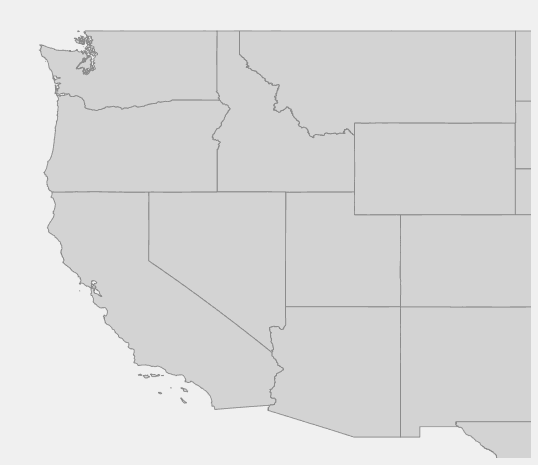
📋 Regional plant lists featuring A’ali’i: Hawaii
Growing & Care Guide
‘A’ali’i is an outstanding landscape plant for Hawaii and warm, dry climates. Once established, it requires virtually no supplemental care — living up to its cultural reputation as a plant that endures all challenges. It is particularly well-suited to areas where other plants struggle: exposed, windy sites, steep slopes, rocky or poor soils, and coastal environments.
Light
‘A’ali’i thrives in full sun, where it develops its most compact, dense form and produces the most vivid seed capsule coloration. It also tolerates part shade, growing somewhat taller and more open under a tree canopy. For maximum ornamental effect — especially for the brilliant red capsules — plant in a location receiving at least 6 hours of direct sun per day.
Soil & Water
One of ‘A’ali’i’s greatest strengths is its adaptability to poor, rocky, and well-drained soils. It grows naturally on raw lava and cinder, making it ideal for volcanic or gravelly garden soils. It is highly drought-tolerant once established and does not require supplemental irrigation in most Hawaiian settings. Avoid heavy clay soils with poor drainage, which can cause root rot. ‘A’ali’i does not need fertilizer and performs best in low-nutrient conditions.
Planting Tips
Plant ‘A’ali’i from container stock in late winter or early spring. Choose a well-drained, open site. Space plants 4–8 feet apart for a hedge or windbreak, or 6–12 feet for individual specimens. Water regularly for the first 6–12 months to help establishment, then reduce irrigation. ‘A’ali’i is available at Hawaiian native plant nurseries and restoration project suppliers. It can also be grown from fresh seed — collect the capsules just as they begin to dry and sow seeds immediately in a well-drained mix.
Pruning & Maintenance
‘A’ali’i requires very little maintenance once established. It can be lightly shaped to maintain a denser form, or allowed to grow naturally. Remove any dead or damaged branches after storms. The plant is resistant to most pests and diseases common in Hawaiian gardens. One important note: ‘A’ali’i is dioecious, meaning you need both male and female plants to produce the ornamental seed capsules. If purchasing plants for capsule display, try to obtain a mix of sexes or select female plants when blooming.
Landscape Uses
‘A’ali’i is a versatile and beautiful choice for many Hawaiian landscape applications:
- Windbreaks and hedgerows — extremely wind-tolerant, excellent for exposed sites
- Erosion control on slopes, roadsides, and lava fields
- Dry garden and xeriscape plantings where water is scarce
- Native plant restoration — pioneer species for lava revegetation
- Specimen or accent plant for the brilliant seasonal capsule color
- Wildlife garden — seeds attract native Hawaiian birds
- Coastal landscapes — tolerates salt spray and harsh coastal conditions
Wildlife & Ecological Value
‘A’ali’i plays a vital role in Hawaiian native ecosystems, particularly in dry and transitional forest zones where it is often the dominant woody plant. Its ecological contributions span food webs, habitat structure, and forest succession.
For Birds
The small, round black seeds of ‘A’ali’i are consumed by native Hawaiian birds, including the ‘Amakihi (Chlorodacnis virens), ‘Apapane (Himatione sanguinea), and various finch-like honeycreepers. The dense branching structure provides nesting habitat and thermal cover for small passerines. In degraded native forests, ‘A’ali’i thickets often represent the last refugia for native bird species, making their restoration and protection critically important.
For Insects & Pollinators
Though the flowers are small and lack petals, they attract native Hawaiian bees and other pollinating insects. The sticky, resinous leaves may also trap small insects. In Hawaiian dry forests, ‘A’ali’i flowers provide early-season nectar when few other native plants are flowering, making them important for native pollinators including the endangered Hawaiian yellow-faced bees (Hylaeus spp.).
For Mammals
Wild pigs and other feral ungulates will browse ‘A’ali’i, particularly in areas where native vegetation is under pressure. However, the plant’s tough, resinous leaves are generally less preferred than many other native species. Established ‘A’ali’i plants can recover from browsing pressure, though fencing is recommended for restoration plantings.
Ecosystem Role
‘A’ali’i is one of Hawaiʻi’s most important pioneer and keystone species. It colonizes bare lava flows and disturbed areas, gradually building soil organic matter and modifying microclimate conditions to allow other native species to establish. In dry forests, ‘A’ali’i stands provide shade, wind protection, and seed banks for native forest recovery. Its extensive root system reduces erosion on steep volcanic slopes. The plant’s adaptability across a wider elevation and moisture range than most other native Hawaiian woody plants makes it an irreplaceable tool in ecological restoration.
Cultural & Historical Uses
‘A’ali’i is one of the most culturally significant native plants in Hawaiʻi. In traditional Hawaiian society, the plant was valued for its extraordinary toughness — qualities that were celebrated in chants, proverbs, and hula. The famous ‘ōlelo no’eau (Hawaiian proverb) “He ‘a’ali’i kū makani mai au; ‘a’ole lā e hina i ka pū o Kona” directly invokes ‘A’ali’i as a symbol of resilience: “I am the ‘a’ali’i standing in the wind; I will not be knocked down by the Kona gusts.” This proverb is still widely known and cited in Hawaiian cultural contexts today.
The hard, dense wood of ‘A’ali’i was used by Hawaiians for making implements including weapons (spears and daggers), house posts, and carved tools. The wood is exceptionally dense and durable — in fact, the name ‘a’ali’i itself may relate to a word meaning “upright” or “standing tall,” reflecting both its physical form and cultural symbolism. The plant was also used in hula altar preparations (hālau hula), and its branches were incorporated in lei-making and cultural ceremonies.
In 19th and early 20th century Hawaiʻi, ‘A’ali’i thickets were also recognized as important cover for native birds by ornithologists and naturalists. The great naturalist Scott Barchard Wilson, writing in the 1890s, noted ‘A’ali’i as one of the characteristic plants of the intermediate zone between coastal scrub and montane forest. Today, ‘A’ali’i is a centerpiece of Hawaiian native plant restoration and has experienced something of a cultural renaissance — widely planted in school gardens, restoration sites, and lei-making programs as an embodiment of Hawaiian ecological and cultural heritage.
Frequently Asked Questions
What does ‘A’ali’i mean in Hawaiian?
The name ‘A’ali’i refers to this specific plant (Dodonaea viscosa) in the Hawaiian language. It may be related to a root meaning “upright” or “standing,” reflecting the plant’s erect, wind-resistant growth form. The plant is celebrated in Hawaiian proverbs and hula as a symbol of resilience and inner strength.
Why are the seed capsules different colors?
The papery seed capsules of ‘A’ali’i range from green (immature) to red, pink, orange, salmon, or deep burgundy (mature). The color intensity varies by individual plant, growing conditions, and season. Full sun, drought stress, and cooler temperatures tend to intensify the red coloration. This variability is one of the plant’s most appealing ornamental qualities.
Is ‘A’ali’i endemic to Hawaii?
‘A’ali’i (Dodonaea viscosa) is considered indigenous (naturally occurring) in Hawaiʻi, but it is not strictly endemic — the same species occurs widely across tropical regions worldwide, including Australia, Africa, Asia, and the Americas. The Hawaiian populations are indigenous and have been present in the islands for thousands of years, but they represent the same species as populations elsewhere. However, the plant has a deeply Hawaiian cultural identity regardless of its wider global distribution.
How fast does ‘A’ali’i grow?
‘A’ali’i has a moderate growth rate in suitable conditions — typically 1–2 feet per year in well-drained, sunny locations. Growth is fastest in the first few years after establishment. In harsh, exposed sites, growth may be slower and the plant more compact. It is long-lived under favorable conditions.
Can ‘A’ali’i be grown outside of Hawaii?
Yes — ‘A’ali’i is hardy in USDA Zones 9–11 and has been successfully grown in warm coastal California, Florida, and other subtropical regions. It is also cultivated in Australia (where related species are native) and in tropical gardens worldwide. Outside Hawaiʻi, it is typically grown as an ornamental for its unusual seed capsules. However, it performs best in dry, sunny, well-drained conditions similar to its native Hawaiian habitat.

Looking for a nursery that carries A’ali’i?
Browse our native plant nursery directory: Hawaii