Cockspur Hawthorn (Crataegus crus-galli)
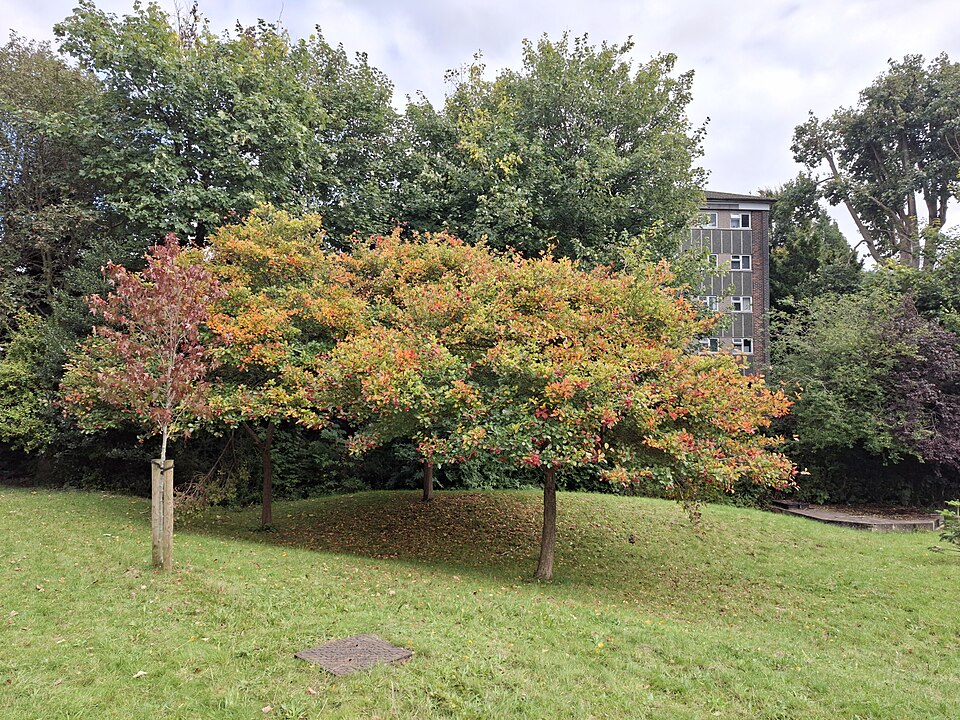
Crataegus crus-galli, commonly known as Cockspur Hawthorn, is a strikingly ornamental native tree prized for its extraordinary year-round visual interest. The species name crus-galli is Latin for “leg of a cock” — a reference to the long, curved thorns that arm the branches, resembling the sharp spurs on a rooster’s leg. This member of the Rosaceae (rose) family is native to the eastern and central United States, where it grows naturally along forest edges, old fields, and rocky hillsides throughout the region.
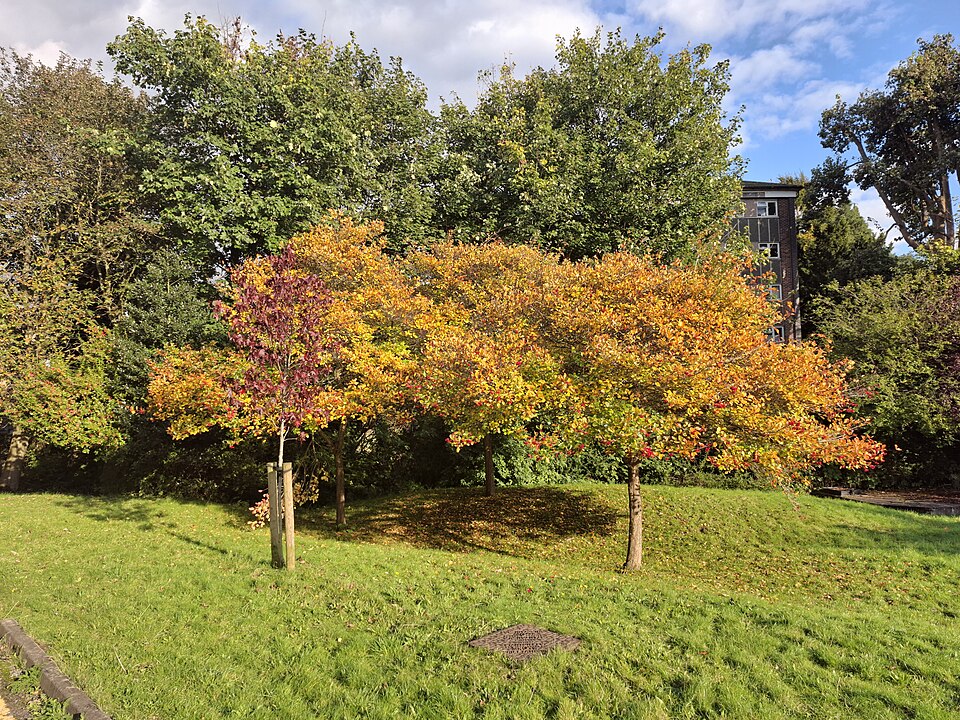
Cockspur Hawthorn earns its place in the native plant garden through four distinct seasons of ornamental appeal: clusters of fragrant white flowers in May, glossy dark green foliage through summer, brilliant orange-red fall color, and persistent bright red berries that cling to the branches well into winter, providing critical food for wildlife. It is a relatively small tree, typically reaching 20 to 30 feet in height with an equal or greater spread, developing a distinctive flat-topped or rounded crown with strongly horizontal branching that creates a beautiful architectural silhouette even in winter.
In the Delaware, New Jersey, and New York region, Cockspur Hawthorn is an excellent native alternative to non-native ornamental trees such as Bradford Pear or Japanese Flowering Cherry. It thrives in full sun and is notably tolerant of poor soils, drought, and urban conditions once established — making it a resilient and adaptable choice for a wide range of landscape settings, from residential properties to naturalized hedgerows and wildlife gardens.
Identification
Cockspur Hawthorn is a small deciduous tree or large shrub, typically 20 to 30 feet tall with an equal or greater spread. Its most distinctive features are the long, straight or slightly curved thorns (1 to 4 inches or more) that arm the branches, the distinctly flat-topped or horizontally spreading crown, and the exceptionally glossy dark green leaves that distinguish it from most other hawthorns in the region.
Bark & Thorns
The bark is gray-brown, becoming plated and somewhat scaly on older trees. The most dramatic feature is the thorns — long, sharp, straight to slightly curved spines arising directly from the branches, typically 1 to 3 inches long but sometimes exceeding 4 inches. These thorns are among the longest of any eastern hawthorn, making Cockspur an effective barrier plant when used in hedgerows. The thorns emerge green, harden to gray-brown, and persist for years on the bark.
Leaves
The leaves are perhaps the most reliable identification feature: they are simple, alternate, and exceptionally glossy on their upper surface — more so than virtually any other hawthorn in the eastern United States. Each leaf is obovate to spatula-shaped, 1 to 3 inches long, with sharply serrate (toothed) margins in the upper half. The leaves are dark green above and pale green below, turning an outstanding orange-red to scarlet in autumn — among the best fall color of any native shrub or small tree in the tri-state region.
Flowers & Fruit
Flowers appear in May in dense, many-flowered corymbs (flat-topped clusters). Each flower is about 1/2 inch across with five white petals, 10 to 20 stamens with pink or red anthers, and an unpleasant odor (characteristic of hawthorns, due to trimethylamine). Despite the scent, the flowers are highly attractive to pollinators. The fruit is a small, round to slightly pear-shaped pome (berry-like fruit), about 1/2 inch in diameter, ripening from green to dull red in September and persisting on the tree through winter and into early spring — providing an important food source for overwintering birds.
Quick Facts
| Scientific Name | Crataegus crus-galli |
| Family | Rosaceae (Rose) |
| Plant Type | Deciduous Tree / Large Shrub |
| Mature Height | 20–30 ft |
| Sun Exposure | Full Sun |
| Water Needs | Low to Moderate |
| Bloom Time | May |
| Flower Color | White |
| Fall Color | Orange-red to scarlet |
| Fruit | Red pomes (persistent into winter) |
| USDA Hardiness Zones | 3–7 |
Native Range
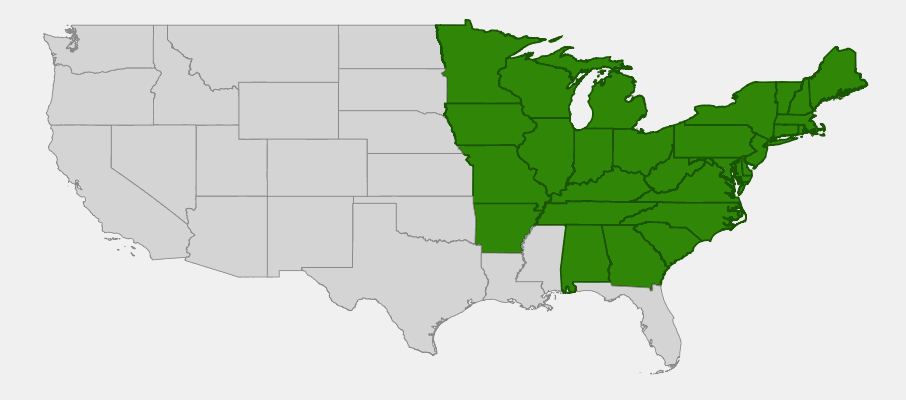
Cockspur Hawthorn is native to the eastern and central United States, ranging from Maine and southern Quebec west to Michigan and Wisconsin, and south to North Carolina and Tennessee, with outlying populations in Kansas and Nebraska. The species is particularly abundant in the mid-Atlantic and Great Lakes states, where it commonly occurs along forest edges, rocky hillsides, old pastures, and roadsides. It typically grows on well-drained, often rocky or gravelly soils.
In the Delaware, New Jersey, and New York region, Cockspur Hawthorn is found throughout, often as a component of successional old-field communities and forest edges. It is well adapted to the variable soils of the region, from the sandy soils of the coastal plain to the rocky upland soils of the Piedmont and Hudson Valley. The species is commonly encountered in disturbed and semi-open habitats where it colonizes alongside native shrubs like Viburnums, Elderberries, and Wild Plum.
The hawthorn genus Crataegus is notoriously difficult taxonomically, with hundreds of described species in North America, many of which hybridize freely. Cockspur Hawthorn is one of the more clearly defined and widely recognized species in the genus, identifiable by its combination of exceptional leaf gloss, long thorns, and persistent fruit.
📋 Regional plant lists featuring Cockspur Hawthorn: Delaware, New Jersey & New York
Growing & Care Guide
Cockspur Hawthorn is one of the most adaptable and drought-tolerant native trees for the mid-Atlantic region. Once established, it thrives with minimal care, making it an excellent choice for low-maintenance naturalistic gardens, wildlife landscapes, and challenging sites with poor soils.
Light
Cockspur Hawthorn requires full sun for best growth, flowering, fruiting, and fall color. Plants in partial shade produce fewer flowers and fruit, and the fall color is less vivid. Choose a site that receives at least 6 hours of direct sun daily. It performs excellently in open, exposed locations including roadsides and south-facing slopes.
Soil & Water
This hawthorn is remarkably tolerant of a wide range of soil types — clay, loam, sandy, or rocky soils are all acceptable as long as drainage is adequate. It prefers a pH range of 6.0 to 7.5. Once established (typically 2–3 years), Cockspur Hawthorn is quite drought-tolerant and requires little supplemental watering. During the establishment period, water deeply every 1–2 weeks. Avoid planting in poorly drained, constantly wet soils.
Planting Tips
Plant Cockspur Hawthorn in fall or early spring for best establishment. Dig a hole 2–3 times the width of the root ball but no deeper. Mulch with 2–3 inches of wood chips, keeping mulch away from the trunk. Allow adequate space for the tree’s wide-spreading habit — mature specimens can spread 25 to 35 feet. When planting near walkways or play areas, be mindful of the long thorns, which can be a safety hazard. Inermis (thornless) cultivars are available for high-traffic areas.
Pruning & Maintenance
Prune in late winter (February–March) before new growth begins. Remove dead, diseased, or crossing branches, and thin the interior for better air circulation, which helps prevent fungal diseases. Avoid heavy pruning, which stimulates excessive suckering. Hawthorns are susceptible to several diseases including Cedar-Apple Rust, fire blight, and hawthorn leaf blight — site selection with good air circulation reduces these problems significantly.
Landscape Uses
- Specimen tree for year-round ornamental interest
- Wildlife garden anchor providing berries, cover, and nesting sites
- Barrier hedge — the long thorns make an impenetrable hedgerow
- Urban and suburban planting — tolerates poor soils and air pollution
- Naturalizing old fields and forest edges
- Erosion control on slopes and disturbed areas
Wildlife & Ecological Value
Cockspur Hawthorn is one of the most wildlife-valuable native trees in the mid-Atlantic region, providing food, cover, and nesting sites for a remarkable diversity of birds and mammals across all four seasons.
For Birds
The persistent red fruits are a critical winter food source for over 30 bird species, including American Robin, Cedar Waxwing, Eastern Bluebird, Yellow-rumped Warbler, Hermit Thrush, and many sparrows. The dense, thorny branching creates almost impenetrable nesting habitat — American Robins, Gray Catbirds, Brown Thrashers, and Northern Cardinals are among the many species that nest in hawthorn thickets. The thorny branches also provide “larder” sites for Loggerhead Shrikes, which impale prey on the spines for later consumption.
For Mammals
White-tailed Deer browse the foliage and young shoots, while the fruit is consumed by Red Fox, Gray Fox, Raccoon, and Opossum. The dense, thorny growth provides excellent thermal cover and escape habitat for rabbits, particularly the Eastern Cottontail, which shelters in hawthorn thickets year-round. Black Bears occasionally consume the fruit in fall.
For Pollinators
The May flowers attract a wide diversity of native bees including mining bees (Andrena spp.) and sweat bees (Halictus spp.) that are important early-season pollinators. Butterflies including Eastern Tiger Swallowtail, Red-spotted Purple, and various skippers visit the flowers for nectar. Hawthorns are also larval hosts for several Lepidoptera species including the Striped Hairstreak and Cecropia Moth.
Ecosystem Role
Cockspur Hawthorn is a keystone species in old-field and forest-edge communities. Its impenetrable thorny thickets create refugia for nesting birds and small mammals that would otherwise be vulnerable to predation. As a facilitator species, it often protects the seedlings of shade-tolerant trees that ultimately replace it in succession — contributing to forest regeneration across the region. The persistent fruit ensures a winter food supply that carries wildlife through the most difficult season.
Cultural & Historical Uses
Hawthorns have deep cultural significance across many Indigenous cultures of eastern North America. Various Native American tribes, including the Cherokee, Iroquois, and Delaware, used hawthorn fruits, bark, and wood for food, medicine, and tools. The fruits of Cockspur Hawthorn and related species were consumed fresh or dried as a concentrated food source, often mashed with other ingredients into pemmican-like preparations for winter use. The wood — exceptionally hard and dense — was used for tool handles, mallets, and other implements requiring durability.
Medicinally, hawthorn bark and berries have been used by Indigenous peoples and later by European settlers to treat heart conditions, digestive ailments, and anxiety. Modern phytochemistry has confirmed that hawthorn species contain flavonoids and oligomeric proanthocyanidins that have cardioprotective effects, leading to hawthorn’s widespread use in contemporary herbal medicine for mild heart failure and hypertension. While related species (Crataegus monogyna, C. laevigata) are most commonly used medicinally in Europe, Cockspur Hawthorn shares many of these compounds.
In colonial America, hawthorns were planted extensively as “living fences” — the long thorns of Cockspur Hawthorn made it one of the preferred species for stock-proof hedgerows in the mid-Atlantic region. These hedgerows provided not only animal containment but also shelter for game birds and a sustainable source of fruit. Today, Cockspur Hawthorn is increasingly recognized as a superior native alternative to non-native ornamental trees, with numerous nursery-selected cultivars (including the thornless Crataegus crus-galli var. inermis) making it more accessible for residential gardens.
Frequently Asked Questions
Is Cockspur Hawthorn safe to plant near walkways?
The long thorns (up to 4+ inches) can be hazardous near high-traffic areas. For planting adjacent to paths, playgrounds, or driveways, consider the thornless cultivar Crataegus crus-galli var. inermis, which retains all the ornamental and wildlife value without the thorns. For barrier hedges and wildlife gardens, the thorned species is ideal.
When do the red berries appear, and how long do they last?
Berries ripen from green to dull red in September and persist on the tree through winter and often into early spring (February–March), depending on bird activity. This makes Cockspur Hawthorn one of the best native trees for providing winter bird food in the tri-state region.
Does Cockspur Hawthorn have any disease problems?
Like most hawthorns, it is susceptible to Cedar-Apple Rust (most serious in areas with nearby Eastern Redcedar), fire blight, and various leaf spots. Plant in full sun with good air circulation to minimize these issues. The thornless cultivar inermis tends to be somewhat more disease-resistant than the species.
How does Cockspur Hawthorn compare to other native hawthorns?
Cockspur stands out for its exceptionally glossy leaves, very long thorns, excellent fall color, and persistent fruit. Washington Hawthorn (Crataegus phaenopyrum) is another excellent choice with showier clusters of smaller fruit; Downy Hawthorn (C. mollis) is better for partial shade. Cockspur is the best choice for full-sun, dry-to-moderate soil conditions.
Can I grow Cockspur Hawthorn in a container?
Young plants can be grown in large containers for a few years, but Cockspur Hawthorn is a full-sized tree best suited for in-ground planting where it can develop its characteristic spreading crown. It is not practical as a permanent container plant.

Looking for a nursery that carries Cockspur Hawthorn?
Browse our native plant nursery directory: Delaware · New Jersey