Obedient Plant (Physostegia virginiana)
Physostegia virginiana, commonly known as Obedient Plant, False Dragonhead, or Lion’s Heart, is a striking native perennial wildflower of the mint family (Lamiaceae) that earns its curious common name from an unusual trait: the individual flowers, when pushed to one side, stay put — remaining in their new position as if obediently following instructions. This quirk of the hinged flower attachment has fascinated botanists and gardeners alike for centuries and makes the plant a memorable conversation piece in the garden.
Beyond this novelty, Obedient Plant is a genuinely outstanding native perennial with real landscape value. Growing 2 to 4 feet tall, it produces showy spikes of bright pink to lavender-pink tubular flowers from July through September — a blooming period that fills the critical late-summer gap when many other native perennials have finished for the season. The flowers closely resemble those of foxglove or snapdragon in their tubular, two-lipped form, and they attract hummingbirds, bumblebees, and long-tongued native bees with equal enthusiasm.
Native across a vast swath of eastern and central North America — from the Great Plains to the Atlantic coast — Obedient Plant is highly adaptable to a range of moisture conditions and thrives in moist meadows, stream margins, and prairie low spots. It spreads by both rhizomes and seed to form expanding colonies, which can be a feature or a challenge depending on the gardening context. In naturalistic prairie and meadow plantings, its spreading habit and bold late-summer color make it a cornerstone species that unifies diverse plantings into cohesive, dynamic communities.
Identification
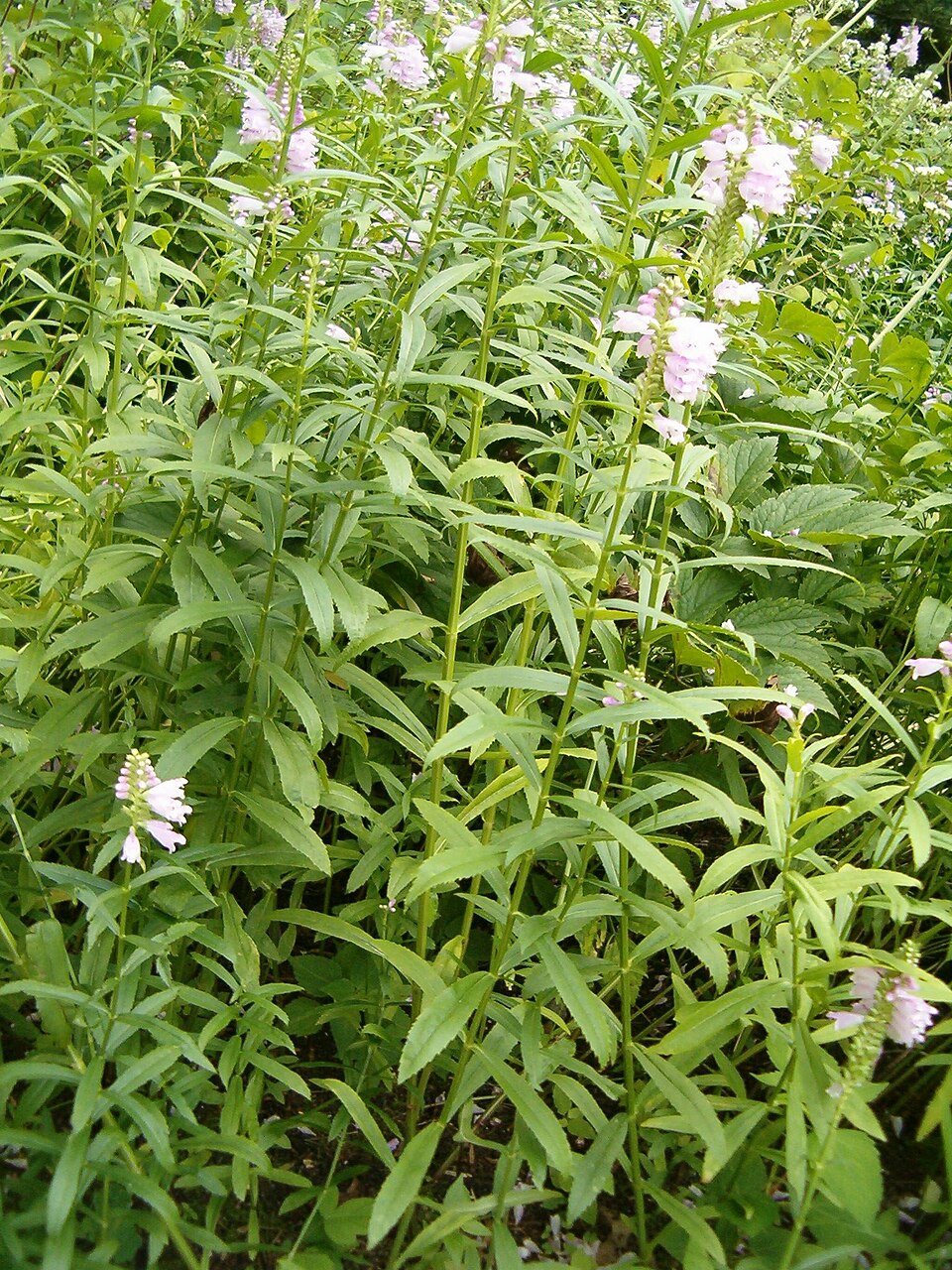
Obedient Plant is an upright, clump-forming herbaceous perennial, growing 2 to 4 feet (60–120 cm) tall on square (four-angled), unbranched stems characteristic of the mint family. The plant spreads by shallow, stoloniferous rhizomes to form colonies, and also self-seeds readily in suitable conditions. It has a strongly upright, architectural growth habit that adds vertical structure to mixed plantings.
Leaves
The leaves are simple, opposite, lance-shaped to oblong, and 2 to 5 inches long with sharply toothed margins. They are dark, glossy green on the upper surface and attached in pairs along the square stem at 90-degree intervals — a characteristic arrangement typical of the Lamiaceae. The leaves are slightly fragrant when crushed, though not as strongly aromatic as many other mint family members. Foliage remains attractive throughout the season, turning clear yellow in fall before dying back to the ground.
Flowers
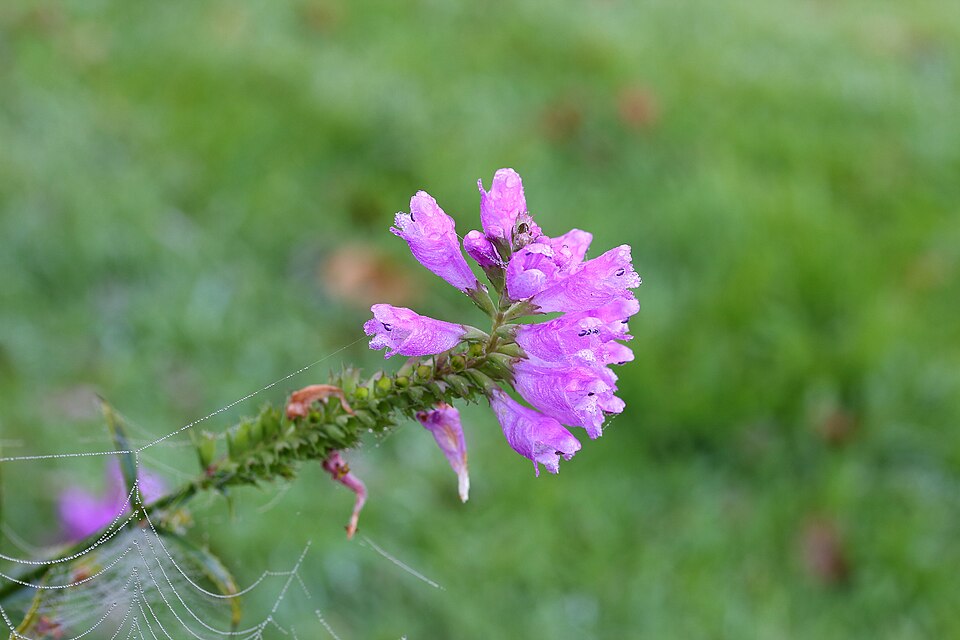
The flowers are the main attraction — borne in dense, four-ranked spikes (1 to 8 inches long) at the tops of the stems. Each individual flower is tubular, about ¾ to 1 inch long, with a two-lipped opening: the upper lip is concave and hood-like, while the lower lip is three-lobed and serves as a landing platform for pollinators. The flower color ranges from bright pink to pale pink-lavender to white. The distinctive “obedient” trait is due to the hinged attachment of each flower to the spike — push a flower sideways and the hinge holds it in place rather than snapping back, which is unusual among flowering plants.
Fruit & Seeds
After pollination, small, hard, smooth nutlets develop in groups of four within the persistent calyx — characteristic of the mint family. Seeds ripen in late summer to fall and are dispersed by wind and water. The plant self-seeds freely in moist, open conditions, which contributes to its tendency to spread in the garden.
Quick Facts
| Scientific Name | Physostegia virginiana |
| Family | Lamiaceae (Mint Family) |
| Plant Type | Herbaceous Perennial Wildflower |
| Mature Height | 2–4 ft |
| Sun Exposure | Full Sun to Part Shade |
| Water Needs | Moderate |
| Bloom Time | July – September |
| Flower Color | Bright pink to pale lavender-pink (white cultivars available) |
| Soil Type | Moist, well-drained to wet; adaptable to various soils |
| Deer Resistant | Moderate (foliage occasionally browsed) |
| USDA Hardiness Zones | 3–9 |
Native Range
Obedient Plant has one of the broadest natural ranges of any native prairie wildflower, occurring naturally from the eastern Great Plains east to the Atlantic coast and from southern Canada south to the Gulf of Mexico. Its range includes Nebraska, Kansas, Minnesota, Iowa, Illinois, Indiana, Ohio, Wisconsin, Missouri, and extending east through the mid-Atlantic states and south through the Appalachian region to the southeastern coastal plain.
In Nebraska and Kansas, Obedient Plant is found primarily in moist to wet habitats — stream margins, wet meadows, prairie sloughs, and the moist floodplain margins of rivers. It is a characteristic species of low-lying areas in tallgrass and mixed grass prairie landscapes where seasonal moisture accumulates. Unlike many prairie wildflowers, Obedient Plant is not drought-tolerant and requires consistently moist conditions to thrive.
The species is also native to portions of the southeastern United States, where it occurs in bottomland forests, woodland edges, and coastal plain wetlands. The broad geographic range has resulted in substantial genetic variation across the species, and plants from different regions may differ in flower color, blooming time, and overall size — a reminder that locally sourced native plants are best for restoration and regional gardening projects.
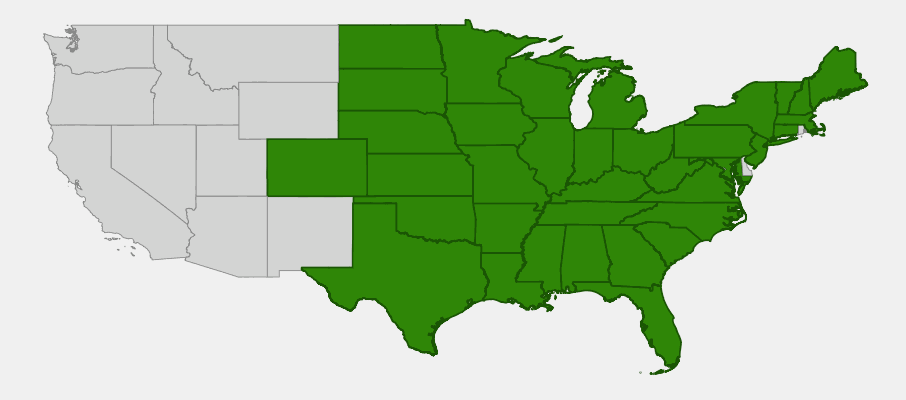
📋 Regional plant lists featuring Obedient Plant: Nebraska & Kansas
Growing & Care Guide
Obedient Plant is a vigorous, adaptable native perennial that rewards gardeners with a showy late-summer display. Its main maintenance consideration is controlling its spreading tendency — beyond that, it is a tough, reliable plant that performs well across a range of conditions.
Light
Obedient Plant grows well in full sun to part shade. In full sun with adequate moisture, it blooms most profusely and stays relatively compact. In part shade, it may grow somewhat taller and more open. Avoid deep shade, which results in weak, floppy growth and poor flowering. In Nebraska and Kansas, afternoon shade during the hottest summer months can be beneficial — it reduces heat stress and may extend the blooming period.
Soil & Water
Consistently moist soil is the key requirement. Obedient Plant thrives in moist, well-drained to moderately wet soils — it is excellent for rain gardens, streambanks, and wet meadows. It handles clay soil well and can grow in shallow standing water if necessary. While established plants can tolerate brief dry spells, prolonged drought causes the foliage to look stressed and reduces bloom. Regular watering during dry periods maintains the plant’s best appearance and performance.
Planting Tips
Plant in spring or fall, spacing plants 18 to 24 inches apart (the plant will fill in quickly between). In moist, rich soil, give individual plants a bit more space — 24 to 30 inches — as they spread vigorously. For a naturalistic planting, allow the plant to spread freely. For a more controlled garden setting, plant in containers sunk into the ground, or plan to divide the clumps every 2–3 years to manage spread.
Pruning & Maintenance
Cut back the spent flower stalks after bloom to encourage a second flush of flowering and prevent excessive self-seeding. Cut plants to the ground in fall or early spring. Divide crowded clumps every 2–3 years to maintain vigor and control spread — discard the older central portions and replant fresh outer divisions. Obedient Plant is generally pest- and disease-free, though powdery mildew can affect plants in crowded, poorly-ventilated conditions.
Landscape Uses
- Rain gardens — thrives in the moist zones where water collects
- Wet meadow and prairie plantings — a signature late-summer bloomer
- Streambank and pond margin plantings
- Hummingbird and pollinator gardens — outstanding nectar source
- Cut flower gardens — long-lasting in arrangements
- Cottage and naturalistic gardens — bold late-summer color
- Mixed border backgrounds — vertical structure and color
Wildlife & Ecological Value
Obedient Plant is one of the most important late-summer native wildflowers for pollinators and hummingbirds across its range, bridging the critical July–September period when many gardeners struggle to maintain wildlife activity.
For Pollinators
The long, tubular flowers are ideally shaped for bumblebees and other long-tongued native bees that can reach the nectar at the base of the tube. Hummingbird moths (Hemaris spp.) are frequent visitors. The extended bloom season — often 6–8 weeks from July through September — provides a sustained nectar resource through the late-summer period. Several moth species use Obedient Plant as a larval host.
For Hummingbirds
Ruby-throated Hummingbirds are among the most enthusiastic visitors to Obedient Plant. The bright pink tubular flowers are perfectly sized for hummingbird foraging, and a large planting in full bloom can attract multiple hummingbirds simultaneously. In Nebraska and Kansas, Obedient Plant’s bloom period coincides with hummingbird migration (August–September), making it an important fuel source for southward-migrating birds.
For Birds
The small nutlets are eaten by finches and sparrows in fall. Dense stands provide nesting habitat and foraging ground cover for ground-foraging sparrows and wrens. The plant’s insects — including the numerous bee and moth species it attracts — provide abundant insect food for nesting songbirds and their chicks.
Ecosystem Role
In wet prairie and streambank communities, Obedient Plant fills an important niche as a midsummer to late-summer bloomer, maintaining pollinator communities through the season and bridging the gap between early and late-season species. Its spreading, rhizomatous growth stabilizes moist soils and builds organic matter in wetland margins.
Cultural & Historical Uses
Obedient Plant was used medicinally by several Native American peoples across its range. The Cherokee used decoctions of the roots to treat fever and kidney problems, and prepared poultices from the leaves for skin ailments. The Iroquois used the plant in compound medicines. Several Great Plains nations recognized the plant as an indicator of nearby water — its preference for moist areas made it useful as a navigational marker in the grassland landscape.
European botanical explorers documented Obedient Plant early in North American exploration — the genus Physostegia derives from the Greek for “bladder” and “covering,” referring to the inflated calyx of the genus (though this characteristic is more pronounced in other species). The plant has been cultivated in European gardens since the 18th century, where it was valued as a late-summer flowering perennial. Today, it remains a popular garden perennial worldwide, with numerous cultivated varieties offering white, pale pink, and deep rose-pink flower colors and varying heights.
The “false dragonhead” common name refers to the flower’s resemblance to snapdragon (Antirrhinum) or monkshood (Aconitum) blooms, which were historically called dragonheads due to their two-lipped, gaping flower form. For American gardeners returning to native plant gardening, Obedient Plant offers a bridge between familiar ornamental plantings and ecologically functional native landscapes — its showy flowers and familiar form make it accessible to conventional gardeners while delivering genuine wildlife value.
Frequently Asked Questions
Why is it called “Obedient Plant”?
The name comes from the unusual behavior of the individual flowers. Because each flower is attached to the stem by a flexible, hinged base, you can push a flower to the side and it stays in that new position rather than snapping back. This “obedient” quality makes it a fun plant to interact with and is endlessly fascinating to children and curious adults alike.
Will Obedient Plant take over my garden?
Obedient Plant can spread vigorously — it spreads by both rhizomes and self-seeding — and may become invasive in small garden beds. To control it, divide clumps every 2–3 years, remove unwanted seedlings, or plant it in a naturally constrained area (like a rain garden with hard edges). In larger naturalistic or prairie plantings, its spreading tendency is usually desirable and helps it compete with aggressive grasses.
Can Obedient Plant grow in dry conditions?
Not ideally. This is a plant that prefers consistently moist to wet soils. While established plants can survive brief dry periods, they perform significantly better with regular moisture. For dry conditions, choose drought-tolerant native species like prairie blazingstar (Liatris spp.) or coneflowers (Echinacea spp.) instead.
When does Obedient Plant bloom in Nebraska and Kansas?
Typically July through September, with peak bloom in August. The exact timing depends on weather conditions and local climate — in warmer locations, it may begin blooming in late June; in cooler, shadier spots, peak bloom may extend into early October.
Is Obedient Plant good for cut flowers?
Yes, it’s an excellent cut flower. The spikes hold up well in arrangements for 7–10 days, and the individual flowers along the stem open progressively over time, extending the vase life. Cut stems when the lower flowers are just beginning to open for the best display.