
Polynesian Heliotrope (Heliotropium anomalum)
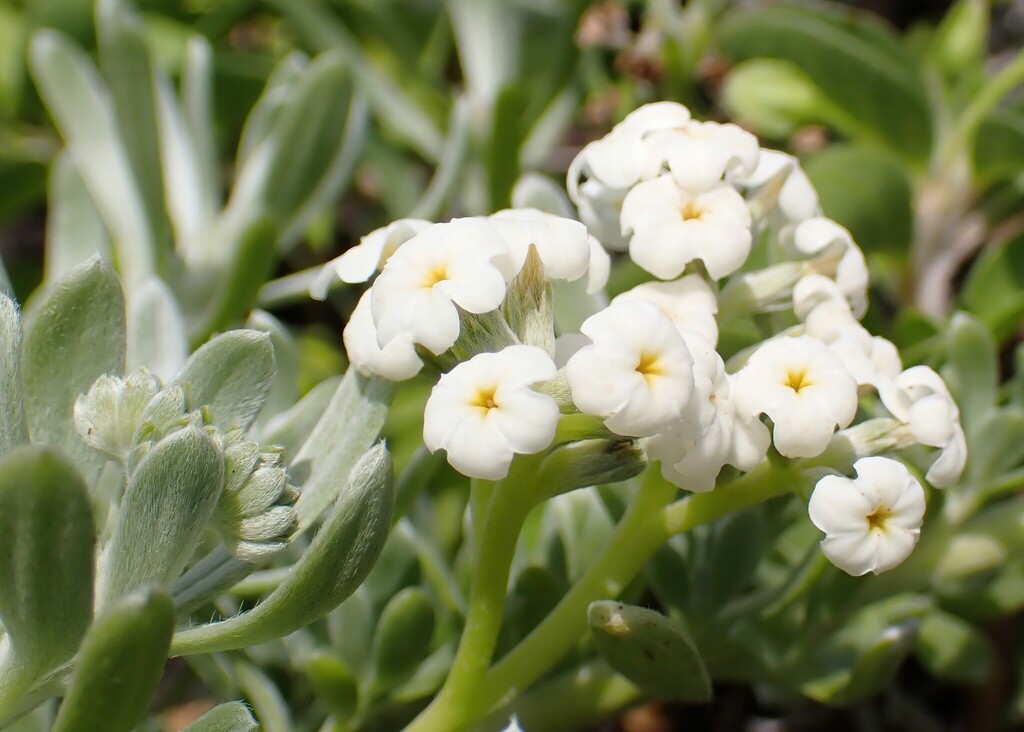
Heliotropium anomalum, known as Polynesian Heliotrope and in Hawaiian as hinahina kū kahakai or simply hinahina, is a low, mat-forming shrublet of sandy beaches and coastal rocks. Its rosettes of silky, silver-gray leaves and its clusters of small, fragrant white flowers make it one of the most attractive native plants of the Hawaiian shoreline.
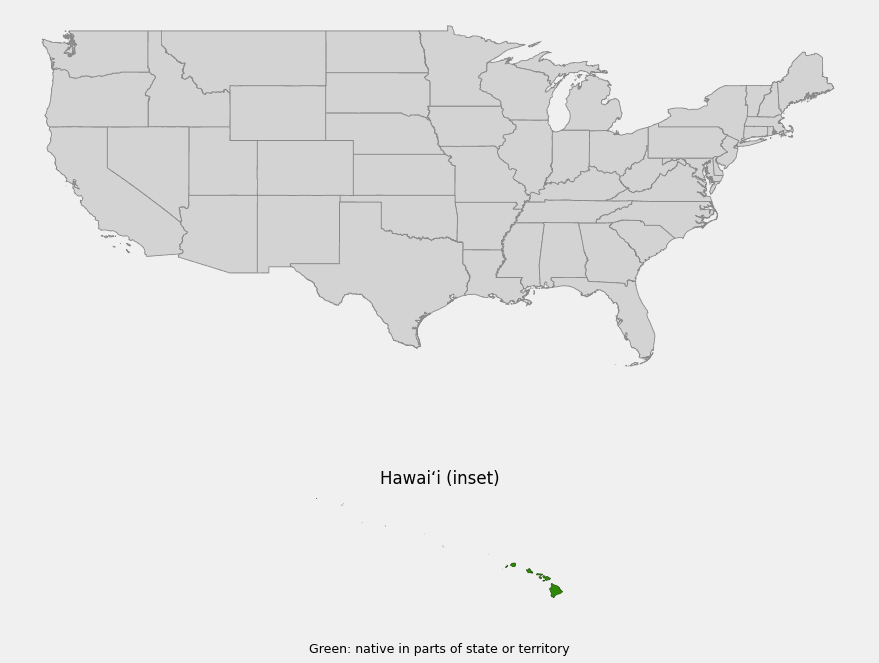
In the United States it grows only in Hawaiʻi, where the native plants belong to an endemic variety, var. argenteum, found on the main islands and the Northwestern Hawaiian Islands. The species also grows on other tropical Pacific islands. USDA also lists Guam and the U.S. minor outlying islands, which this site does not cover. Hinahina is the official flower of the island of Kahoʻolawe.
This page covers how to identify hinahina, where it grows, how to grow it as a groundcover in a coastal garden, its value to wildlife and its place in Hawaiian culture. Like other heliotropes, it contains pyrrolizidine alkaloids, so a safety note is included.
Identification
On a Hawaiian beach, look for low, silver mats with rosettes of soft, hairy leaves and small white flowers in curled clusters.
Size & Form
It is a perennial, woody-based subshrub that hugs the ground, usually 2 to 6 inches tall and spreading 1 to 3 feet or more. Its short, branching stems root where they touch sand, forming loose mats or cushions.
Leaves
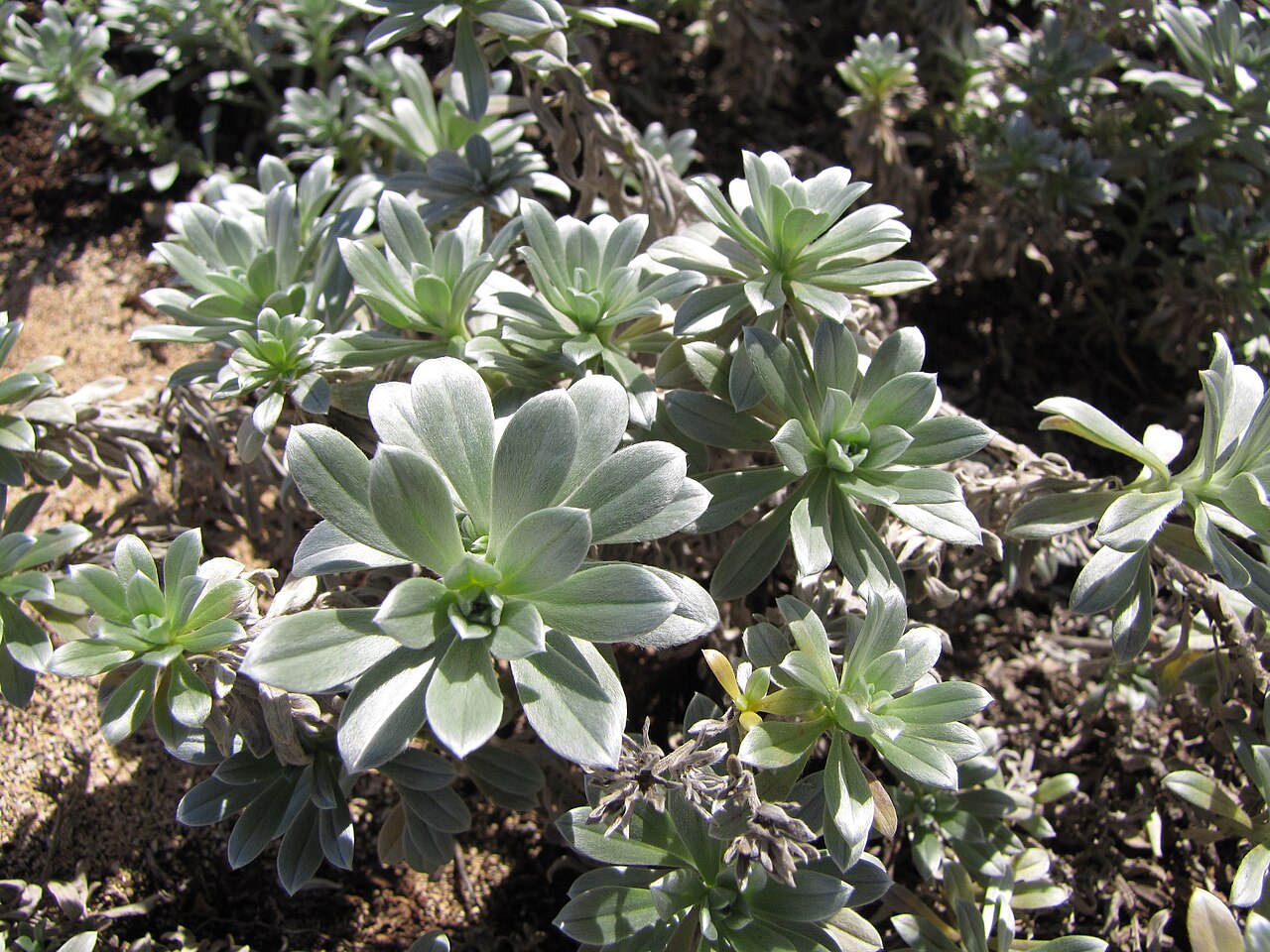
The leaves are crowded in rosettes at the stem tips, narrowly spoon-shaped, about 1/2 to 1 1/4 inches long, thick and soft. In the Hawaiian variety they are densely covered with silky, flattened hairs that give them a silver or gray-green sheen; plants in shade or with more water may look greener.
Flowers
The flowers are small, about 1/4 inch across, white with a yellow eye, tubular with five spreading lobes, and pleasantly fragrant. They are packed in short, curled clusters (scorpioid cymes), typical of the heliotrope and borage families, on stalks above the leaf rosettes. Plants can bloom at almost any time of year, most heavily in spring and summer.
Fruit
Each flower forms a small, dry fruit that splits into four tiny nutlets. Seeds are dispersed by wind, water and birds over short distances.
Similar Species
Seaside heliotrope (Heliotropium curassavicum), which is indigenous in Hawaiʻi too, has smooth, fleshy, blue-green leaves without silver hairs and grows in salty flats and pond edges. Pōhinahina (Vitex rotundifolia), another silvery beach plant, is a larger, woody shrub with rounded leaves and lavender-blue flowers. Tree heliotrope (Heliotropium foertherianum), an introduced beach tree, has large silvery leaves and grows many feet tall.
Quick Facts
| Scientific Name | Heliotropium anomalum Hook. & Arn. (Hawaiian plants var. argenteum A. Gray) |
| Family | Boraginaceae (borage family; Heliotropiaceae in some systems) |
| Plant Type | Low, mat-forming perennial subshrub |
| Mature Height | 2–6 in |
| Mature Spread | 1–3 ft or more |
| Growth Rate | Moderate |
| Sun Exposure | Full sun |
| Water Needs | Low; drought and salt tolerant |
| Soil Type | Sand, coral rubble or very well-drained gravelly soil |
| Soil pH | About 6.5–8.5 |
| Bloom Time | Year-round, mostly spring–summer |
| Flower Color | White with a yellow eye |
| Fall Color | None; evergreen silver foliage |
| Fruit | Small dry fruit splitting into four nutlets |
| Deer Resistant | Unknown; deer browse many coastal plants |
| USDA Hardiness Zones | 10–12 |
Native Range
USDA PLANTS lists Polynesian heliotrope as native in Hawaiʻi. The Hawaiian plants, var. argenteum, are endemic and grow on all of the main islands, including Niʻihau and Kahoʻolawe, and on many of the Northwestern Hawaiian Islands, from Nihoa to Kure Atoll.
The species as a whole is indigenous to many tropical Pacific islands, including parts of Polynesia and Micronesia; other varieties grow outside Hawaiʻi. USDA also lists Guam and the U.S. minor outlying islands, which this site does not include on its maps.
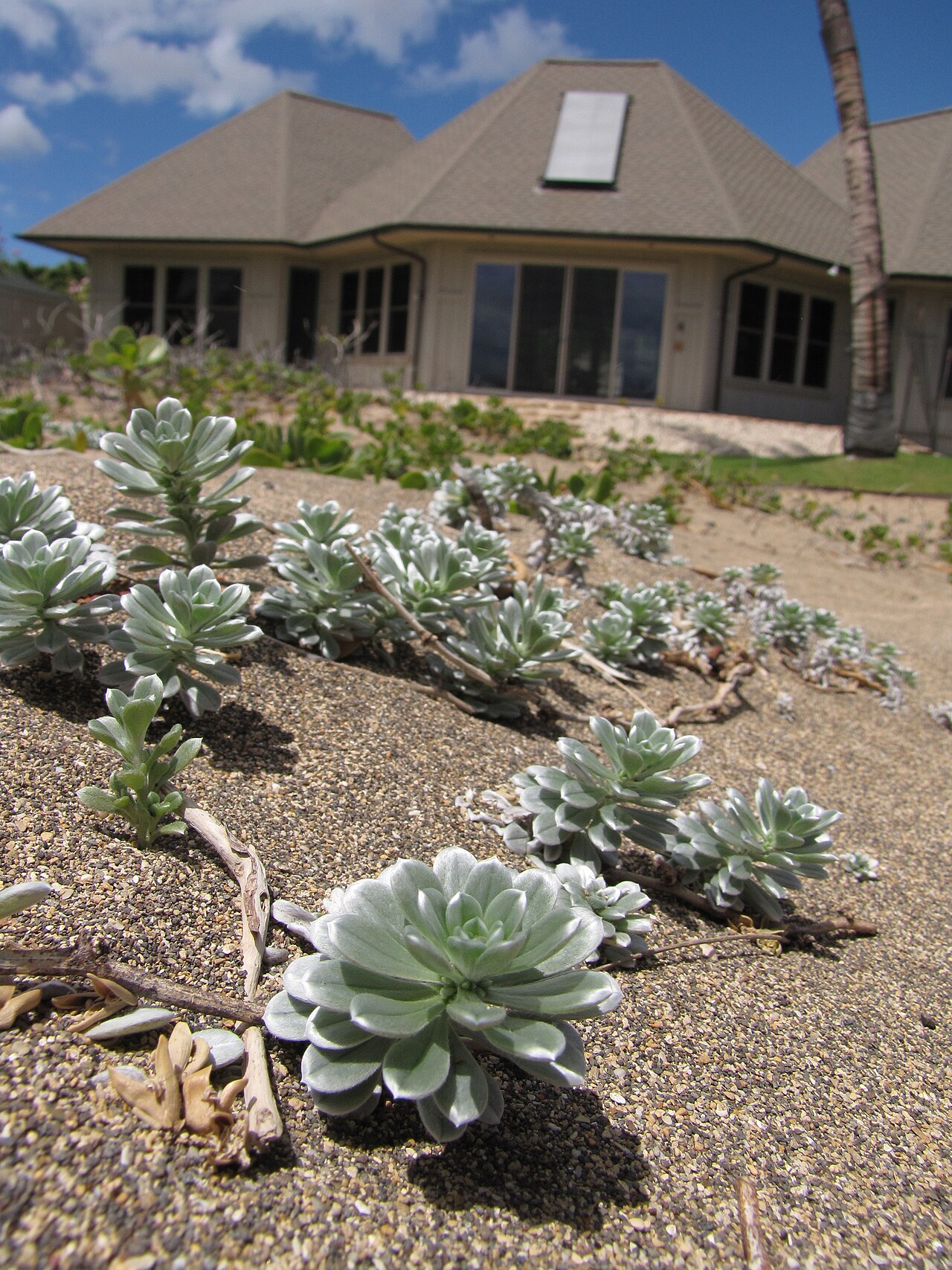
It is a strictly coastal plant, found in the spray zone from sea level to roughly 30 feet elevation: on sand dunes and beaches, on raised coral and limestone, and in cracks in coastal basalt. It is uncommon on heavily used beaches but recovers well where coastal vegetation is protected or restored.
📋 Regional plant lists featuring Polynesian Heliotrope: Hawaii
Growing & Care Guide
Hinahina is a popular native groundcover for coastal gardens in Hawaiʻi and is sold by native plant nurseries there. It thrives on neglect in hot, sunny, salty, sandy places, but it is short-lived and sulks in rich soil, shade or overwatering.
Light
Plant it in full sun. In shade it becomes leggy and greener and declines.
Soil & Water
It needs sand, cinder, coral rubble or another very fast-draining soil. Water regularly only until it is established, then sparingly; it tolerates drought, salt spray and wind. Too much water and fertilizer cause rot and weak, sprawling growth.
Planting Tips
Space plants about 1 to 2 feet apart for a groundcover. It suits beachfront yards, rock gardens, raised beds, containers and dry slopes. In inland gardens, plant it in a raised bed or pot of sandy mix. It is not frost tolerant and is suited to zones 10 to 12; elsewhere grow it in a container in a sunny, frost-free spot.
Pruning & Maintenance
Trim lightly after heavy flowering to keep it compact. Replace old, woody plants every few years with new cuttings. Watch for mealybugs, scale and aphids in sheltered sites.
Propagation
Take tip cuttings of 2 to 3 inches and root them in a very porous mix such as perlite or cinder, in bright shade. Rooted stems can also be separated from the mat. Seed is small and germinates irregularly; cuttings are faster and more reliable.
Landscape Uses
- Coastal gardens: a salt- and wind-tolerant silver groundcover for beachfront yards
- Dune and coastal restoration: stabilizes sand in the strand zone
- Rock gardens and containers: a compact, silvery accent in sandy, fast-draining mixes
- Lei making: the fragrant flowers and silver leaves are used in lei
- Pollinator plantings: small flowers feed native and introduced bees and other insects
Wildlife & Ecological Value
On Hawaiian shorelines, hinahina is part of a small, specialized community of native plants that tolerate salt spray, drought and shifting sand.
For Pollinators
Small bees, including native yellow-faced bees (Hylaeus) that live along Hawaiian coasts, along with flies, moths and other insects, visit the flowers.
For Birds
The low mats give cover around nesting seabirds in coastal areas and on the Northwestern Hawaiian Islands, where hinahina is part of the groundcover in seabird colonies.
For Mammals
Hawaiʻi has few native land mammals. Feral goats and deer can damage coastal plants, and fencing helps hinahina recover.
Ecosystem Role
Its creeping, rooting stems help hold beach sand and dune soil against wind and waves, and it is one of the first native plants to recover after storms or tsunamis disturb the shore.
Cultural & Historical Uses
In Hawaiian, hinahina means gray or silvery, and kū kahakai means “standing at the beach.” The silver leaves and fragrant flowers are strung in lei, and hinahina is the official lei flower of Kahoʻolawe, the island represented by this plant in the traditional set of island lei.
The species was described by William Jackson Hooker and George Arnott from plants collected on Captain Frederick Beechey’s Pacific voyage, and the silver Hawaiian variety, argenteum (“silvery”), was named by the American botanist Asa Gray. Hinahina is widely planted in coastal restoration projects in Hawaiʻi, including on Kahoʻolawe.
Safety note: like other Heliotropium species, Polynesian heliotrope contains pyrrolizidine alkaloids, which can damage the liver when eaten, especially over time. Do not eat the plant or use it as a tea or remedy, and keep grazing animals and pets from eating it. Handling it in the garden is not known to be harmful.
Frequently Asked Questions
What is hinahina kū kahakai?
It is the Hawaiian name for Polynesian heliotrope (Heliotropium anomalum var. argenteum), a low, silver-leaved native beach plant with fragrant white flowers. The name means “gray standing at the beach.”
Is Polynesian heliotrope native to Hawaii?
Yes. The species is indigenous to Hawaiʻi and other Pacific islands, and the Hawaiian plants belong to an endemic variety, var. argenteum, found only in the Hawaiian Islands.
How do I grow hinahina?
Plant it in full sun in sand or another very fast-draining soil, water only until it is established, and do not fertilize. It thrives in salt spray and wind but rots in wet, rich soil or shade.
Is Polynesian heliotrope poisonous?
It contains pyrrolizidine alkaloids, like other heliotropes, which can harm the liver if eaten. Do not eat it or use it as a tea, and keep livestock and pets from grazing it.
Why is hinahina the flower of Kahoʻolawe?
Each Hawaiian island is represented by a flower or plant in lei. Hinahina, which grows on the island’s dry, windswept coasts, was chosen for Kahoʻolawe.

Looking for a nursery that carries Polynesian Heliotrope?
Browse our native plant nursery directory: Hawaii

