
5 Best Outdoor Heaters for Extended Gardening Seasons: Top Picks for Year-Round Comfort
We independently select all products and services. If you click through links we provide, Plant Native may earn a commission with no extra cost to you.
Last updated: November 8, 2026
Outdoor heaters extend the gardening season by providing warmth during cooler months. These devices allow plant enthusiasts to continue nurturing their gardens well into autumn and even winter.
By creating a comfortable environment, outdoor heaters enable gardeners to spend more time tending to their plants and enjoying their outdoor spaces.
When choosing an outdoor heater for gardening, consider factors like heat output, fuel type, and safety features.
The size of the area you need to heat and the typical weather conditions in your region are crucial considerations. Energy efficiency and ease of use also play important roles in selecting the right heater for your garden.
We tested numerous outdoor heaters to find the best options for extended gardening seasons. Our rigorous evaluation process focused on performance, durability, and user-friendliness to identify heaters that truly enhance the gardening experience.
Best Outdoor Heaters for Extended Gardening Seasons
We’ve carefully selected the top outdoor heaters to help gardeners extend their growing season. These reliable heating options provide warmth and comfort, allowing you to enjoy your garden for longer periods throughout the year.
Our top pick
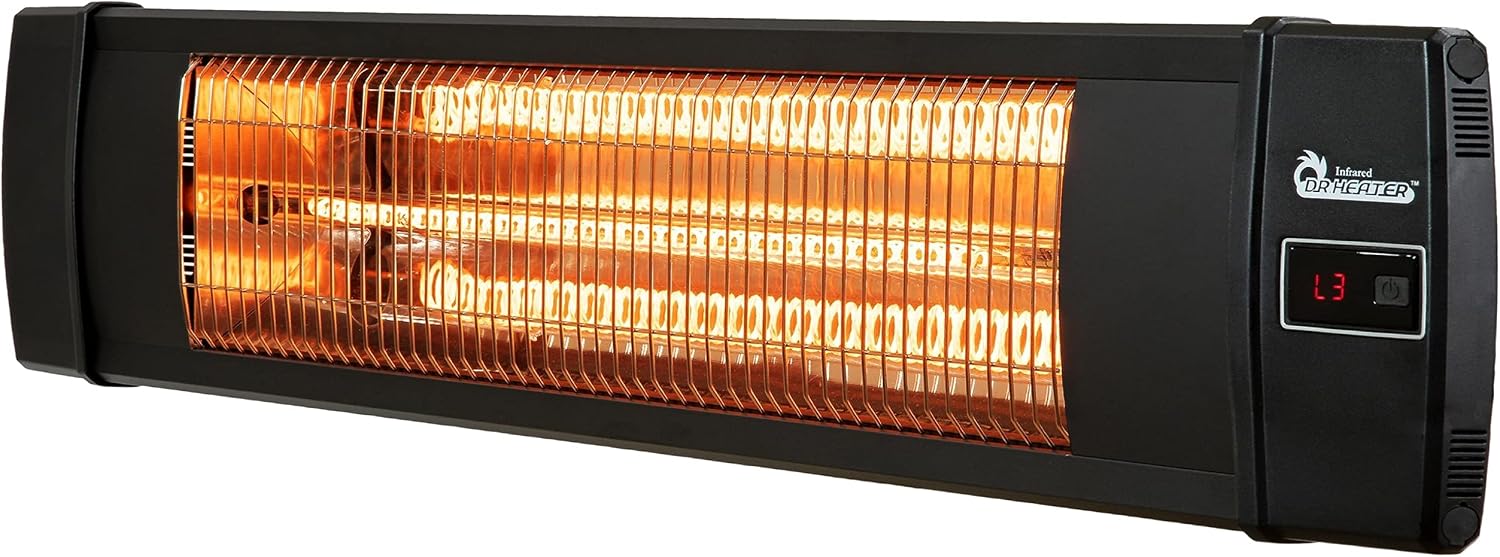
- Instant, odorless infrared heat with no fuel to refill
- IP55 weather rating for indoor and outdoor use
- Wall and ceiling brackets and a remote control included
Cons
- No thermostat on this version
- Effective heating range is limited to a few feet from the unit
- Needs a nearby 120V outlet
Plug-in infrared heat, three power levels and an included remote make this an easy way to warm a covered patio or potting area without handling fuel. All things considered, it’s the standout choice in this category.
Best for beginners
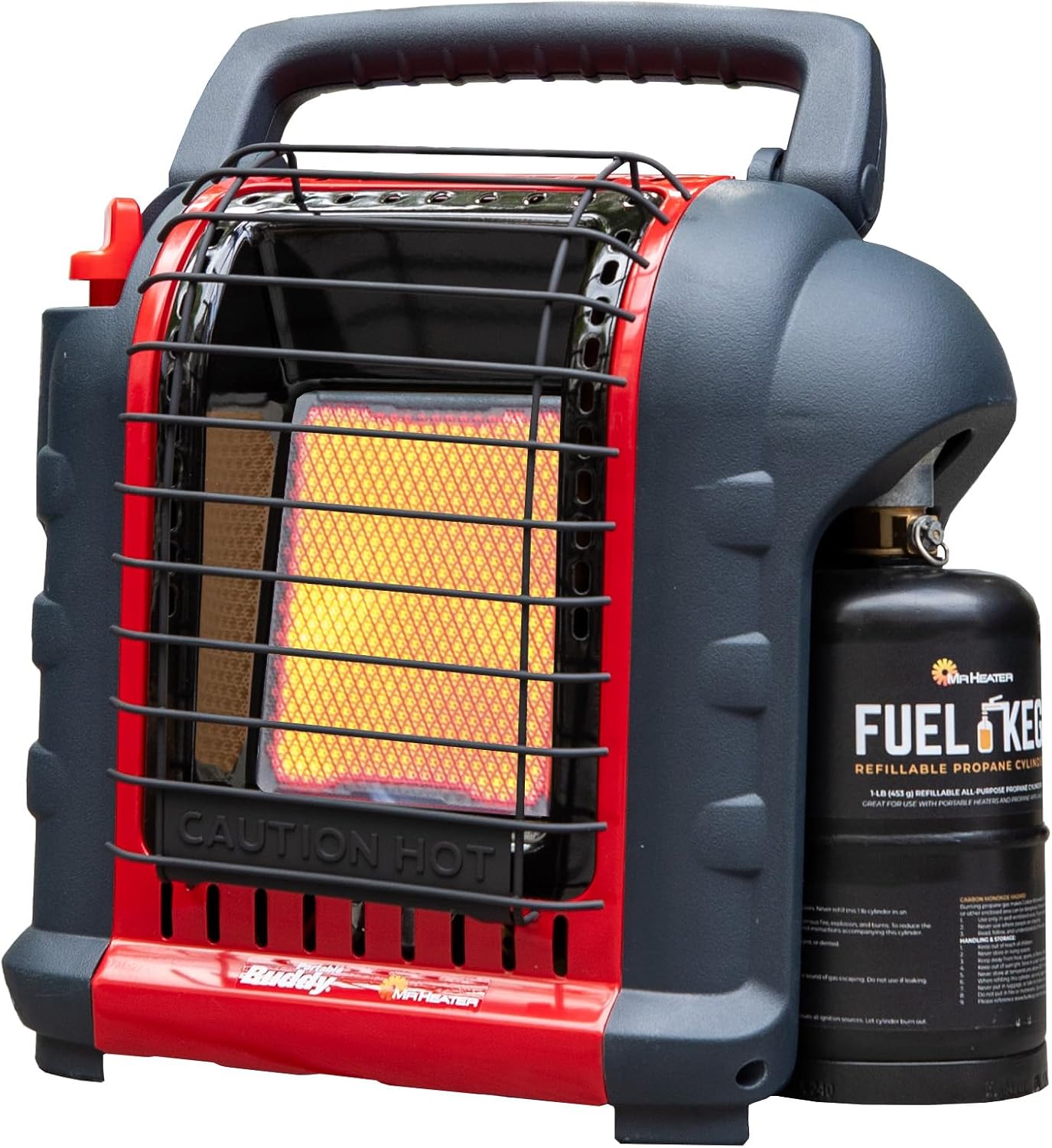
- Simple two-setting operation (low and high)
- Low-oxygen safety shutoff and self-extinguishing materials
- Carry handle makes it easy to move between garden spots
Cons
- Runs only 2.4 hours on high per 1 lb cylinder
- Propane models require regular tank refills and safe fuel storage
With just two heat settings and a one-pound cylinder, it’s a straightforward heater for a greenhouse corner, shed or patio. A 1 lb cylinder lasts about 5.4 hours on low and 2.4 hours on high.
Best lightweight option
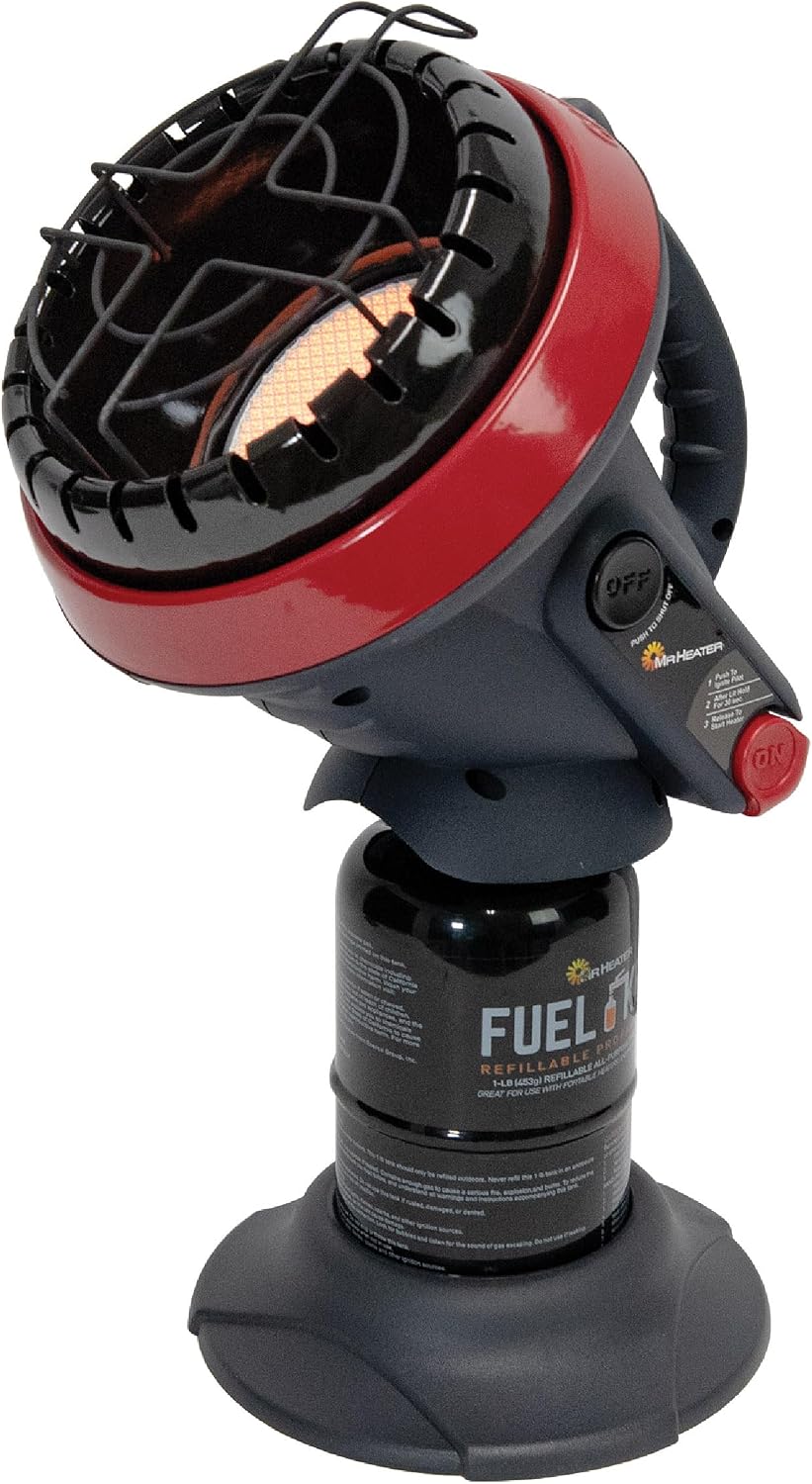
- Small 8-inch footprint is easy to carry and place
- Tip-over and low-oxygen automatic shutoffs
- One-button ignition
Cons
- 3,800 BTU covers only about 95 square feet
- Propane models require regular tank refills and safe fuel storage
Tip-over and low-oxygen shutoffs add peace of mind, and the small stand takes up little room in a shed or on a potting bench. If you need something you can move around without a hassle, this fits the bill.
Best for small spaces
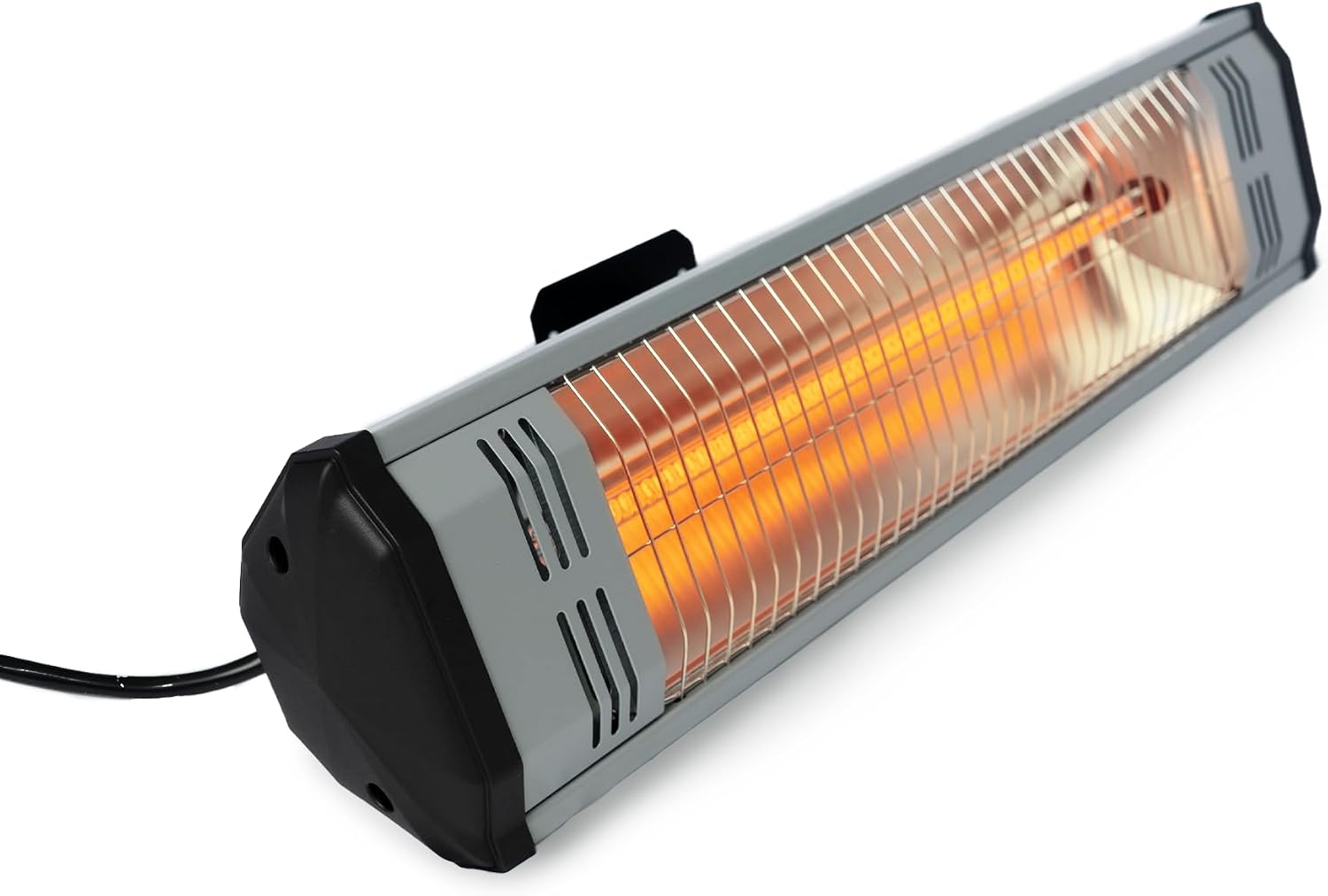
- Wall-mounted design keeps floor space clear
- Infrared heat warms people and surfaces directly without preheating
- Aluminum housing for indoor and outdoor use
Cons
- Needs a nearby outlet and a wall to mount on
- Effective heating range is limited to a few feet from the unit
The 1500W infrared element mounts on a wall, so it suits narrow patios and garden workspaces where floor space is tight. If you’re working with limited room, this is tailor-made for the job.
Best for large patios
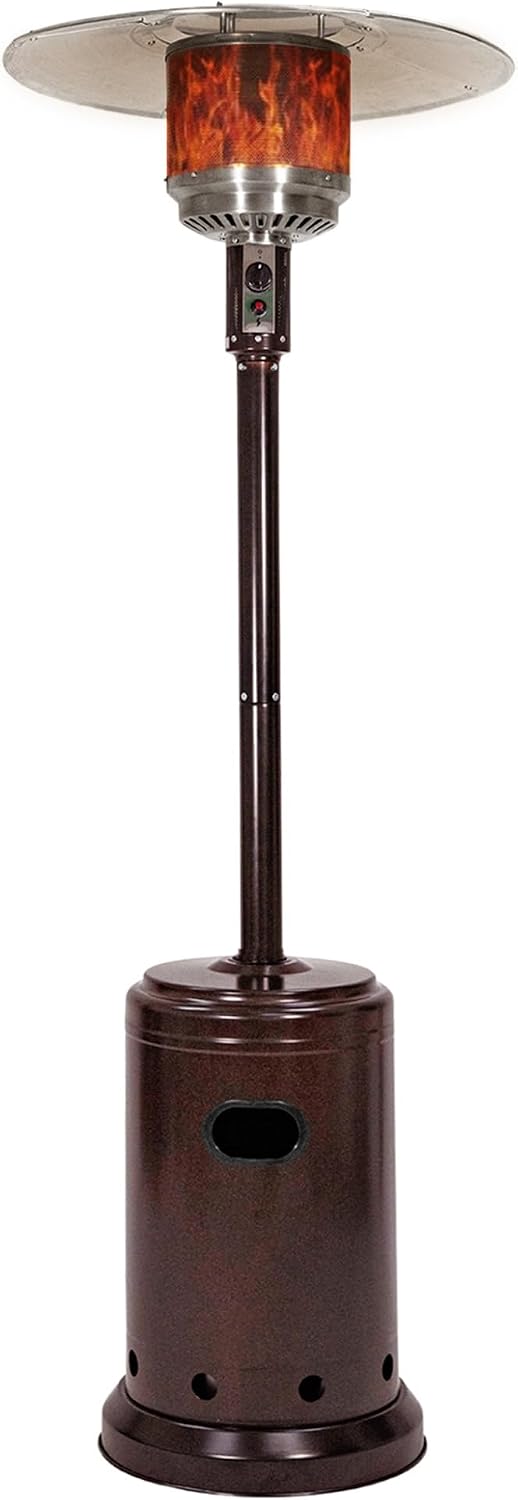
- Heats a large area, up to an 18-foot diameter
- Wheels and one-touch ignition make it easy to position and start
- Tilt safety auto-shutoff and weighted base
Cons
- Outdoor use only
- Requires a 20 lb propane tank, sold separately
At 46,000 BTUs it is the most powerful heater here, made for open patios and gathering areas rather than small corners. We recommend choosing a model that adequately covers your intended area.
Buying Guide
When selecting an outdoor heater for extended gardening seasons, we recommend considering several key factors:
Heat Output
Look for heaters rated in BTUs (British Thermal Units). Higher BTU ratings generally indicate greater heating capacity. For outdoor spaces, aim for at least 40,000 BTUs.
Fuel Type
Common fuel options include:
- Propane
- Natural gas
- Electric
Each has pros and cons in terms of cost, convenience, and environmental impact. We suggest choosing based on your specific needs and available utilities.
Safety Features
Prioritize heaters with:
- Tip-over protection
- Automatic shut-off
- Cool-touch exteriors
These features help prevent accidents and ensure safe operation in outdoor environments.
Weather Resistance
For year-round use, opt for models with:
- Rust-resistant materials
- Waterproof controls
- Sturdy construction
This ensures durability and longevity in various weather conditions.
Coverage Area
Consider the size of your outdoor space. Heaters typically list their effective range in square feet. We recommend choosing a model that adequately covers your intended area.
Portability
If you plan to move the heater, look for:
- Lightweight designs
- Wheels or handles
- Easy assembly/disassembly
This allows for flexible placement and storage when not in use.
By carefully evaluating these factors, we can select an outdoor heater that best suits our gardening needs and extends our enjoyment of outdoor spaces.
We independently select all products and services. If you click through links we provide, Plant Native may earn a commission with no extra cost to you. As an Amazon Associate I earn from qualifying purchases.

Does anyone know if this works well in zone 5? I’m in Tennessee and our winters are pretty harsh.