Best 5 Drip Irrigation Systems for Water Efficiency in 2026: Top Picks for Sustainable Gardening
We independently select all products and services. If you click through links we provide, Plant Native may earn a commission with no extra cost to you.
Last updated: November 8, 2026
⚡ Key Takeaways
- Best overall: Raindrip R560DP Automatic Drip Watering Kit — built-in timer, works for 1–20 plants
- Best value: VIVOSUN Auto-Drip — programmable up to 20 cycles, great for indoor/outdoor
- Emitter accessory: Rain Bird 5 GPH Drippers — for compatible drip setups, not a complete irrigation kit
- Drip irrigation saves 30–50% water vs traditional sprinklers
- Look for: adjustable emitters, filter screens, and UV-resistant tubing
Looking for the best drip irrigation system in 2026? We tested dozens of kits — from budget gravity-fed setups to smart WiFi-connected systems — and narrowed it down to the 5 that actually deliver on water efficiency, ease of setup, and long-term reliability. Whether you’re watering a native plant garden, raised beds, or a greenhouse, one of these systems will fit.
Drip irrigation delivers water directly to roots through a network of tubes and emitters — cutting water use by 30–50% compared to sprinklers. Less evaporation, less runoff, healthier plants.
When choosing a drip irrigation system, key factors to consider include durability, ease of installation, and compatibility with your garden layout. The quality of emitters and tubing is crucial for long-term performance and preventing clogs.
We tested numerous drip irrigation systems to find the best options for water efficiency in 2026.
Drip Irrigation Systems and Emitter Accessories
This list includes three irrigation-system options and two emitter accessories. Rain Bird and La Farah emitters are not standalone watering kits; they require a compatible setup and additional components.
We’ve researched and tested numerous drip irrigation systems to bring you the top 5 options for water-efficient gardening in 2026. These systems offer precise watering, reduce water waste, and can help your plants thrive while conserving resources. If you’re gardening in a dry climate, also check out our guide on waterwise gardening strategies.
Our top pick
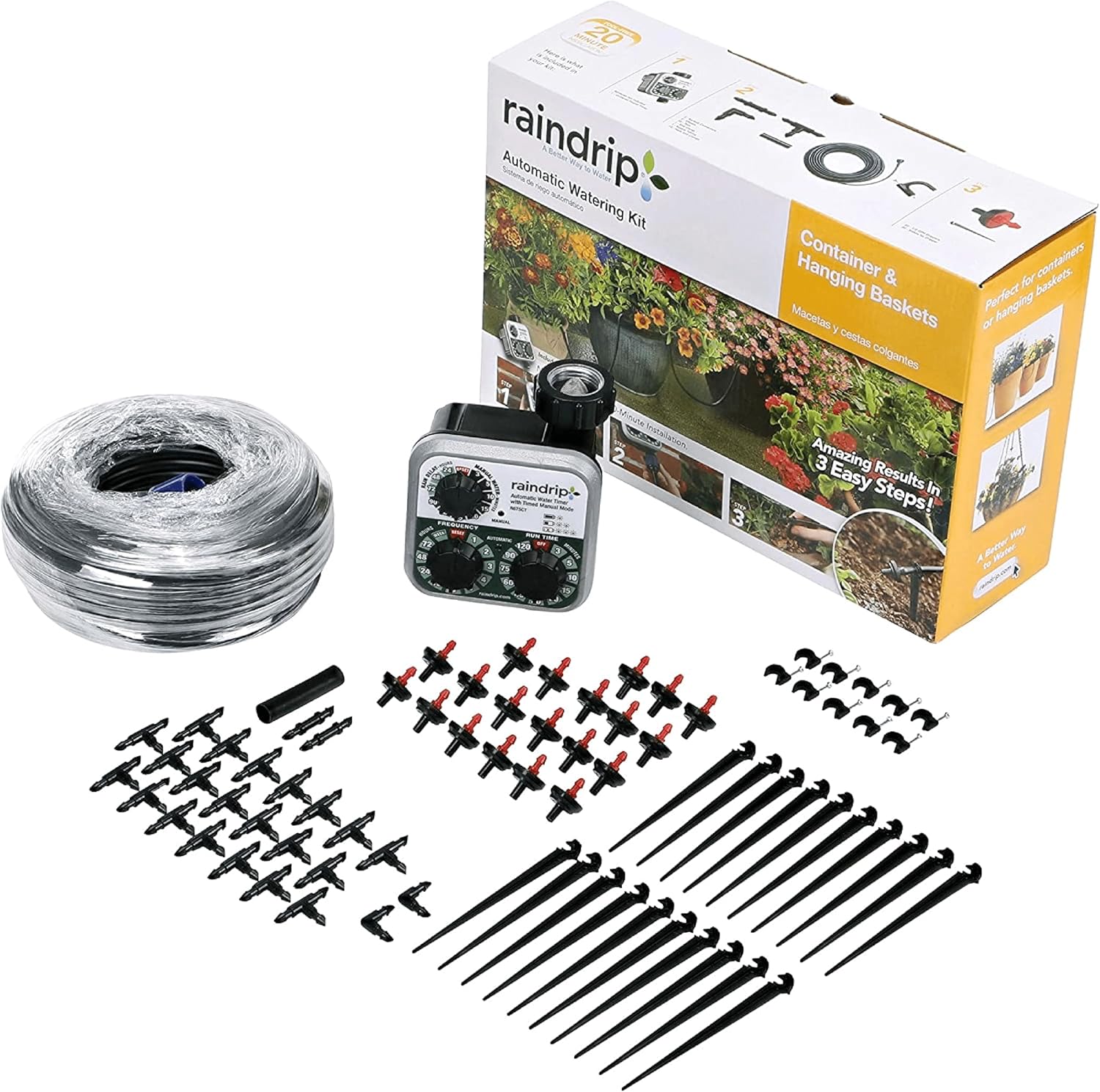
- Built-in water timer for hands-free scheduling
- Waters up to 20 pots, planters or hanging baskets
- Installs in 3 steps with push-in barbed fittings
Cons
- Needs a faucet or hose connection, not a reservoir
- Tubing can kink if not laid flat
- Expanding beyond 20 plants requires extra parts
The Raindrip kit includes everything needed to build a timer-controlled drip system for potted plants, from the timer to the drippers and fittings. If you want the best all-around option, look no further. It’s a solid choice for both novice and experienced gardeners.
Best value set
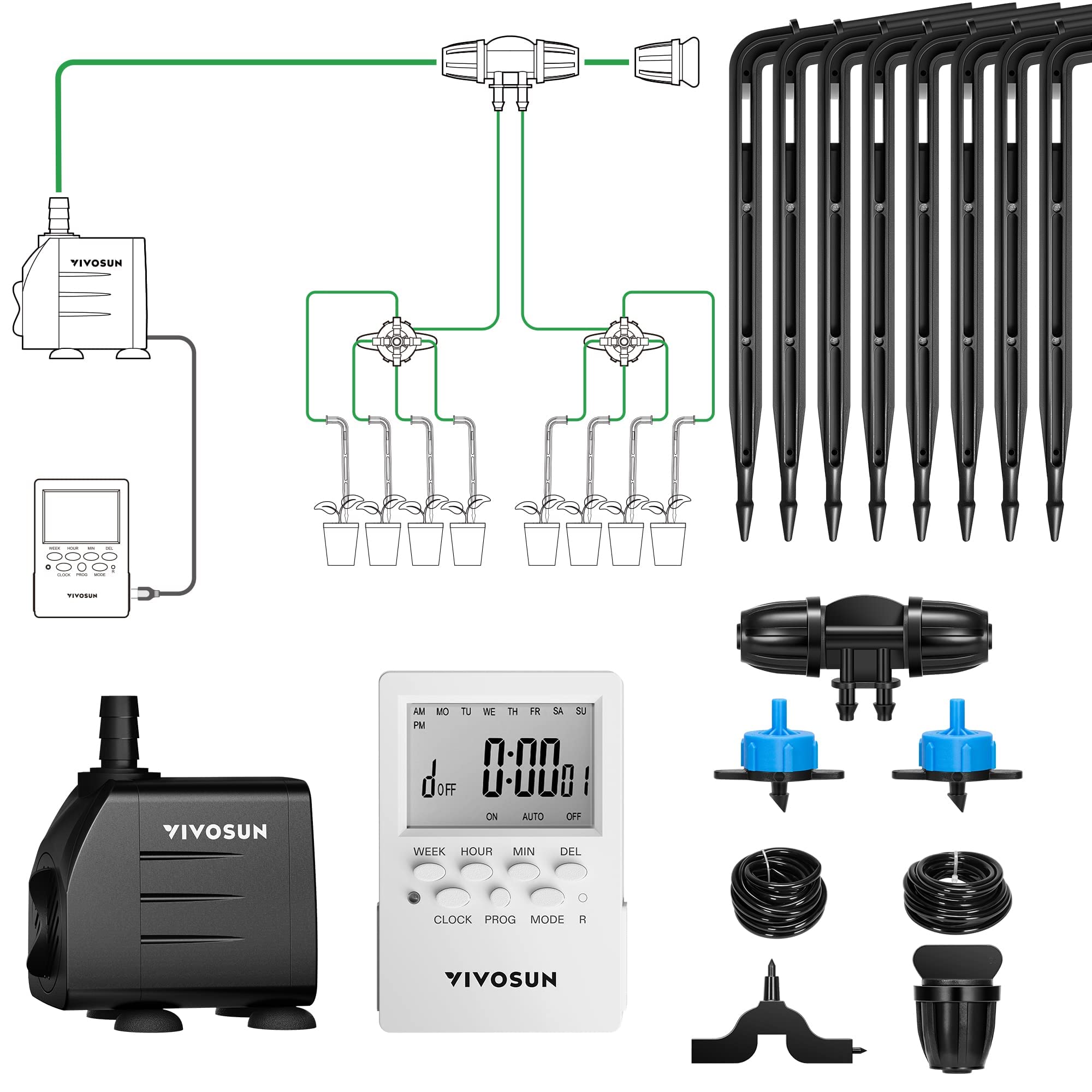
- Programs up to 20 watering cycles per day
- Very quiet operation — perfect for indoor plants
- Works with both indoor pots and outdoor beds
Cons
- Some quality control variation between units
- Hose connectors can loosen over time
- Timer interface has a slight learning curve
The timer programs up to 20 irrigation times, so you can tailor watering schedules to your plants’ specific needs, and the pump runs at a quiet 30–40 dB, which is ideal for indoor use. Because it draws from any bucket or container, it is easy to add fertilizer, making the VIVOSUN automatic drip system a solid choice for both indoor and outdoor plant watering.
Emitter accessory for an existing system
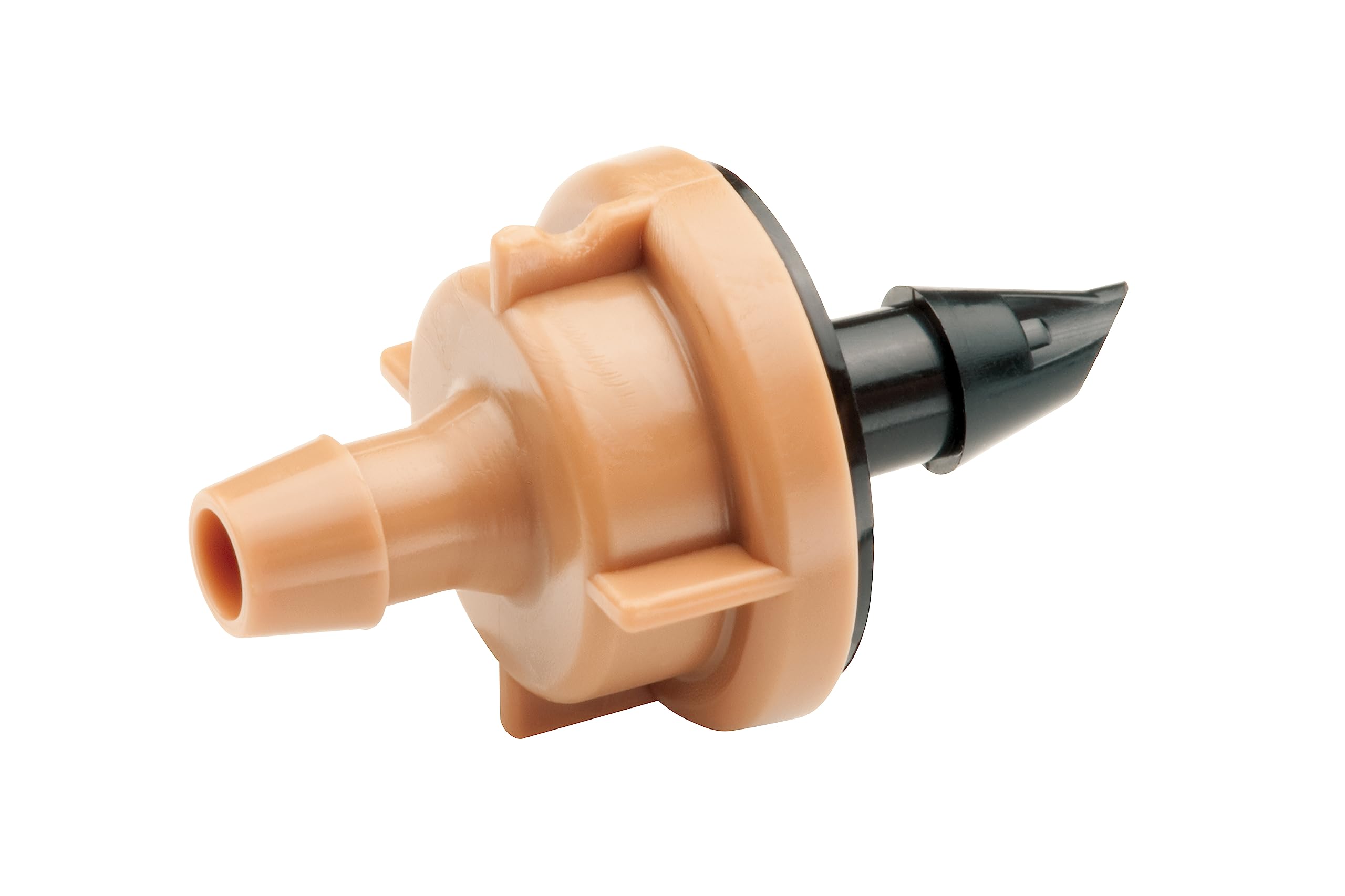
- Rain Bird is a trusted, professional-grade brand
- Pressure-compensating design ensures even flow
- Self-piercing barb fits 1/4-inch or larger drip tubing
Cons
- Designed for spot watering — not a complete kit
- Need to buy separate tubing and fittings
- Higher cost per emitter vs budget kits
These Rain Bird drippers are individual emitters, not a complete irrigation system. Before buying, check compatibility with your tubing and water supply, and account for the separate tubing and fittings needed for your layout.
Most versatile
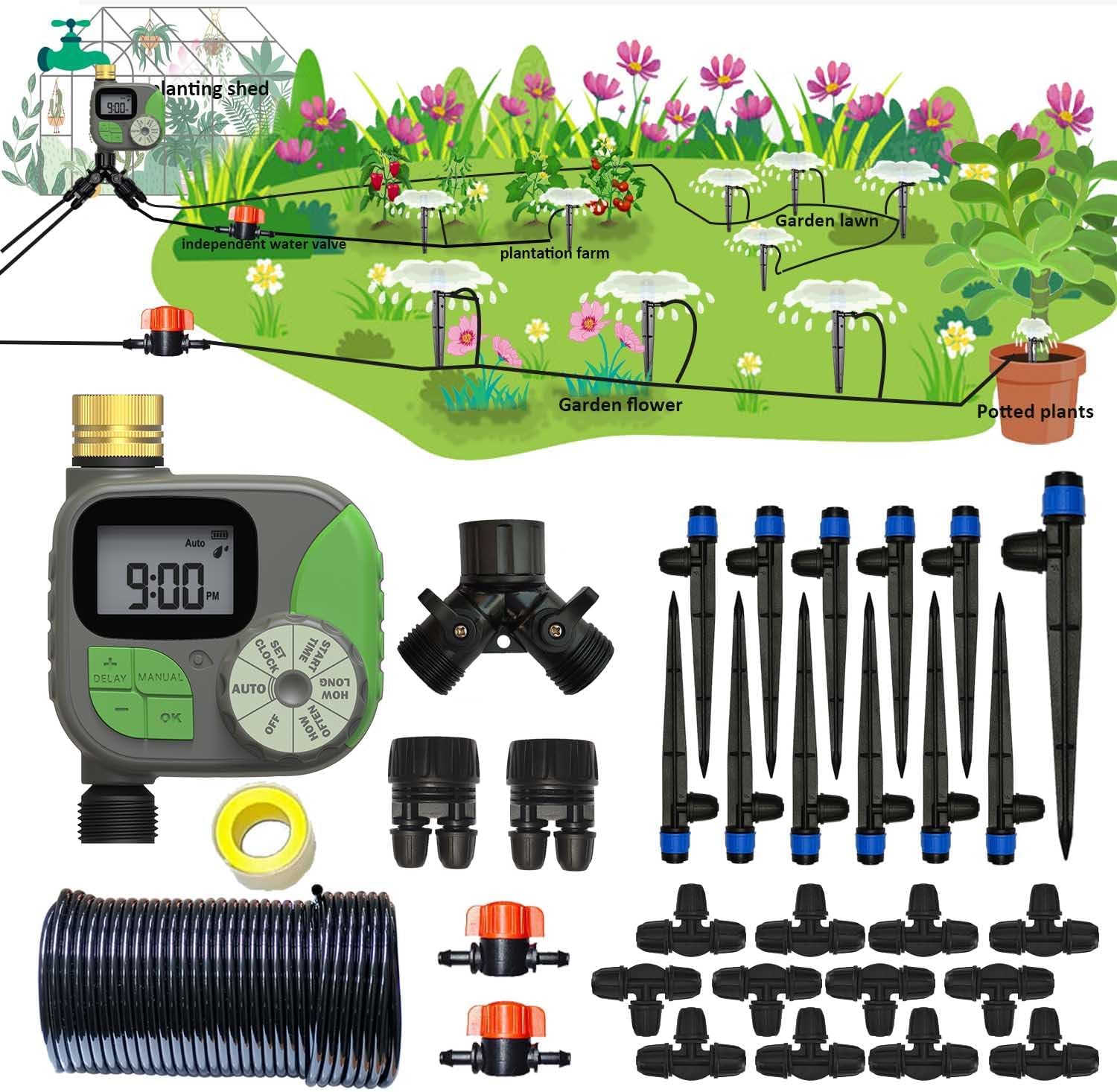
- Y-connector lets you keep a second faucet outlet free
- Complete kit with fittings, nozzles, and connectors included
- Programmable timer included for hands-free watering
Cons
- Setup can be time-consuming for first-time users
- Some plastic fittings need extra sealing tape
- Tubing is thinner than commercial-grade alternatives
The kit offers the flexibility to customize the layout for your garden’s specific needs, from potted arrangements to garden beds, with nozzles that adjust the water volume per plant. The programmable timer is a standout feature, allowing you to set watering schedules such as twice a day or every two days in four steps.
Adjustable emitter accessory
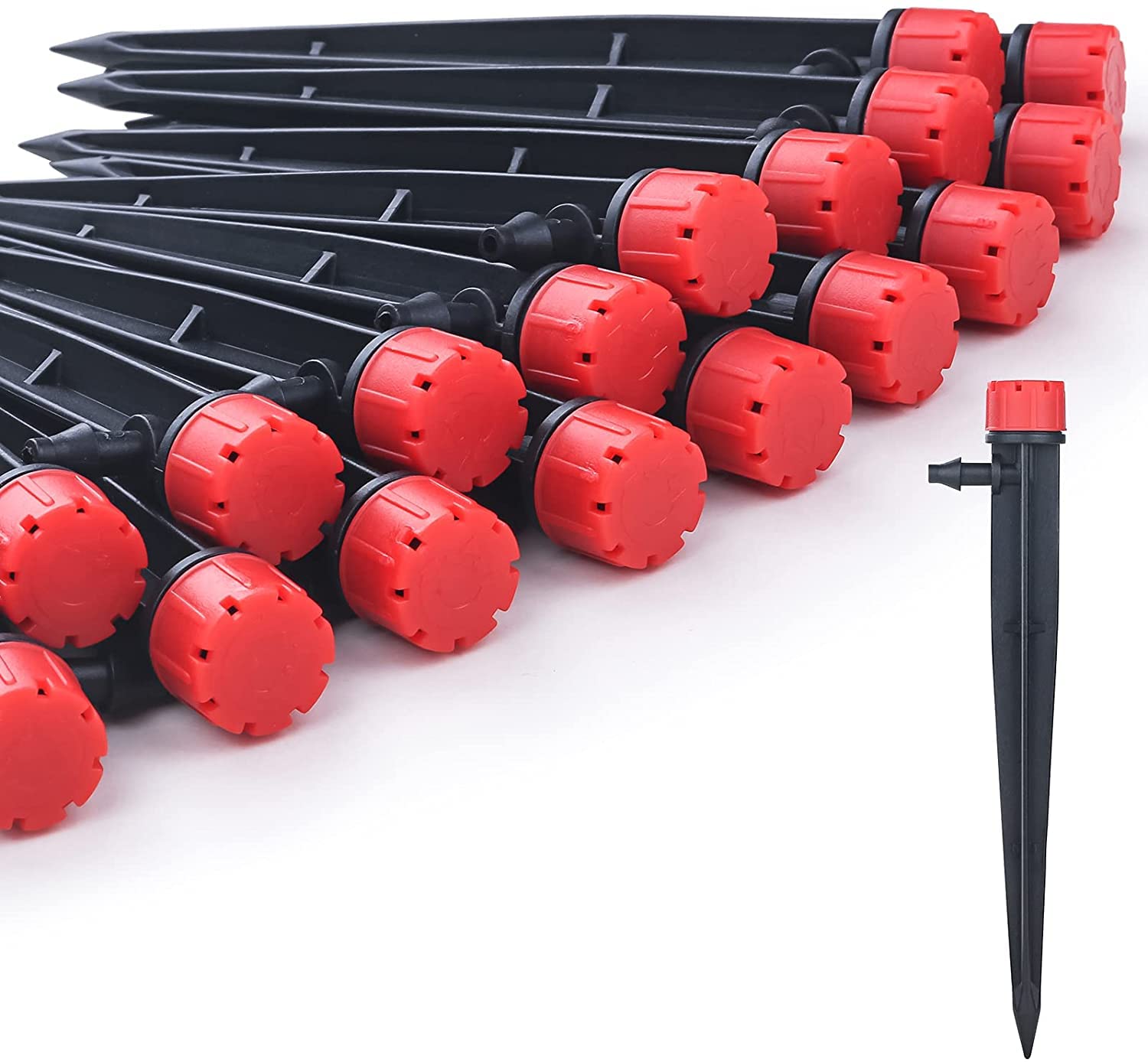
- Wide water passages improve clogging resistance
- Flow rate is adjustable per emitter
- Easy push-in installation in standard 1/4-inch tubing
Cons
- No timer or tubing included — emitters only
- Flow setting can drift if water pressure varies
- Only compatible with 1/4-inch drip tubing
In practice, La Farah Adjustable Drip Emitters are a solid choice for gardeners looking to upgrade their irrigation system. The 1/4-inch emitters feature a unique design with wide water passages for better clogging resistance, and the caps open for easy checking and cleaning. When selecting a drip irrigation system, we recommend considering several key factors to ensure optimal water efficiency and performance.
Drip Irrigation Buying Guide
Choosing the right drip irrigation system depends on the size of your garden, your water source, and how hands-on you want to be. Here’s what to evaluate before buying.
Coverage Area and Tubing Length
Measure your garden before buying. A small raised bed (4×8 ft) needs only 25–50 feet of tubing, while a full backyard native plant garden might need 100+ feet. Always buy slightly more tubing than you think you need — it’s easy to trim, hard to extend.
Emitter Flow Rate
Emitters are rated in gallons per hour (GPH). For most garden plants, 0.5–1 GPH emitters work well. Trees and shrubs need 2–5 GPH. Choosing the wrong flow rate is the #1 mistake beginners make — too fast and you get runoff, too slow and plants stress during heat waves.
Pressure Compensation
If your yard has slopes or uneven terrain, get pressure-compensating emitters. These maintain consistent flow regardless of water pressure differences across your system — crucial for hillside gardens or long tubing runs.
Filter Screens
All quality drip systems should include a filter at the hose connection. This single component prevents 80% of clogging issues. If your kit doesn’t include one, add a mesh filter between your spigot and the main line.
Timer Compatibility
For automated watering, ensure your system is compatible with a standard hose-end timer. Most kits work with any ¾-inch hose thread timer. Programmable timers are especially valuable for conserving water during drought conditions.
Installation Time
Most drip systems take 30–90 minutes to set up. Complete kits (tubing + emitters + fittings + timer) are easier for beginners. Separate component systems offer more flexibility but require planning your layout in advance.
Frequently Asked Questions
How much water does drip irrigation save compared to sprinklers?
Drip irrigation typically saves 30–50% more water than overhead sprinklers. Because water is delivered directly to the root zone with minimal evaporation, less is lost to wind or surface runoff. In hot climates with high evaporation rates, the savings can be even greater.
Can I connect a drip system to an existing garden hose?
Yes — most residential drip kits connect directly to a standard ¾-inch garden hose thread (same as your outdoor spigot). You’ll want a pressure regulator if your home water pressure exceeds 30 PSI, as high pressure can blow apart drip fittings.
How often should I run my drip irrigation system?
This depends on your climate, soil type, and plants. As a general rule, most vegetable gardens need 1–2 hours of drip watering 3–4 times per week in summer. Native plants once established may only need watering once a week or less. Always check soil moisture 2 inches down before watering again.
Do drip systems work for potted plants?
Absolutely — in fact, drip systems are excellent for container gardens. Kits like the Raindrip R560DP are designed specifically for containers and hanging baskets. For multiple containers on a patio, a gravity-fed reservoir system eliminates the need to run tubing from a spigot.
What causes drip emitters to clog and how can I prevent it?
Clogging is usually caused by mineral deposits (from hard water), algae growth, or debris in the line. Prevent it by: (1) installing a mesh filter at the water source, (2) flushing the system monthly by removing end caps and running water for 30 seconds, and (3) using emitters with larger internal openings like the La Farah model above.
We independently select all products and services. If you click through links we provide, Plant Native may earn a commission with no extra cost to you. As an Amazon Associate I earn from qualifying purchases.