
Top 5 Hydroponic Systems for Small-Scale Indoor Farming: Efficient Solutions for Urban Growers
We independently select all products and services. If you click through links we provide, Plant Native may earn a commission with no extra cost to you. As an Amazon Associate I earn from qualifying purchases.
Last updated: August 22, 2026
Hydroponic systems have revolutionized indoor farming, allowing people to grow fresh produce year-round in small spaces. These soilless growing methods use nutrient-rich water solutions to nourish plants, offering faster growth rates and higher yields than traditional soil-based gardening.
For those with limited outdoor space or challenging climates, hydroponic systems provide an ideal solution for cultivating herbs, leafy greens, and even small fruiting plants indoors.
Small-scale indoor hydroponic systems are particularly well-suited for urban dwellers, apartment residents, and hobbyist gardeners. These compact setups can fit on countertops, shelves, or in spare corners, making efficient use of limited space.
They also offer precise control over growing conditions, including light, nutrients, and water, resulting in healthier plants and consistent harvests.
When choosing a hydroponic system for small-scale indoor farming, consider factors such as size, ease of use, and maintenance requirements. The type of plants you want to grow, available space, and your level of experience with hydroponics should also guide your decision.
We researched and tested numerous hydroponic systems to identify the top five options for small-scale indoor farming.
Top 5 Hydroponic Systems for Small-Scale Indoor Farming
We’ve carefully evaluated and selected the best hydroponic systems for small-scale indoor farming. Our top picks offer efficient solutions for growing fresh produce in limited spaces, combining innovative design with user-friendly features. These systems cater to both beginners and experienced indoor gardeners looking to maximize their yield.
Our top pick
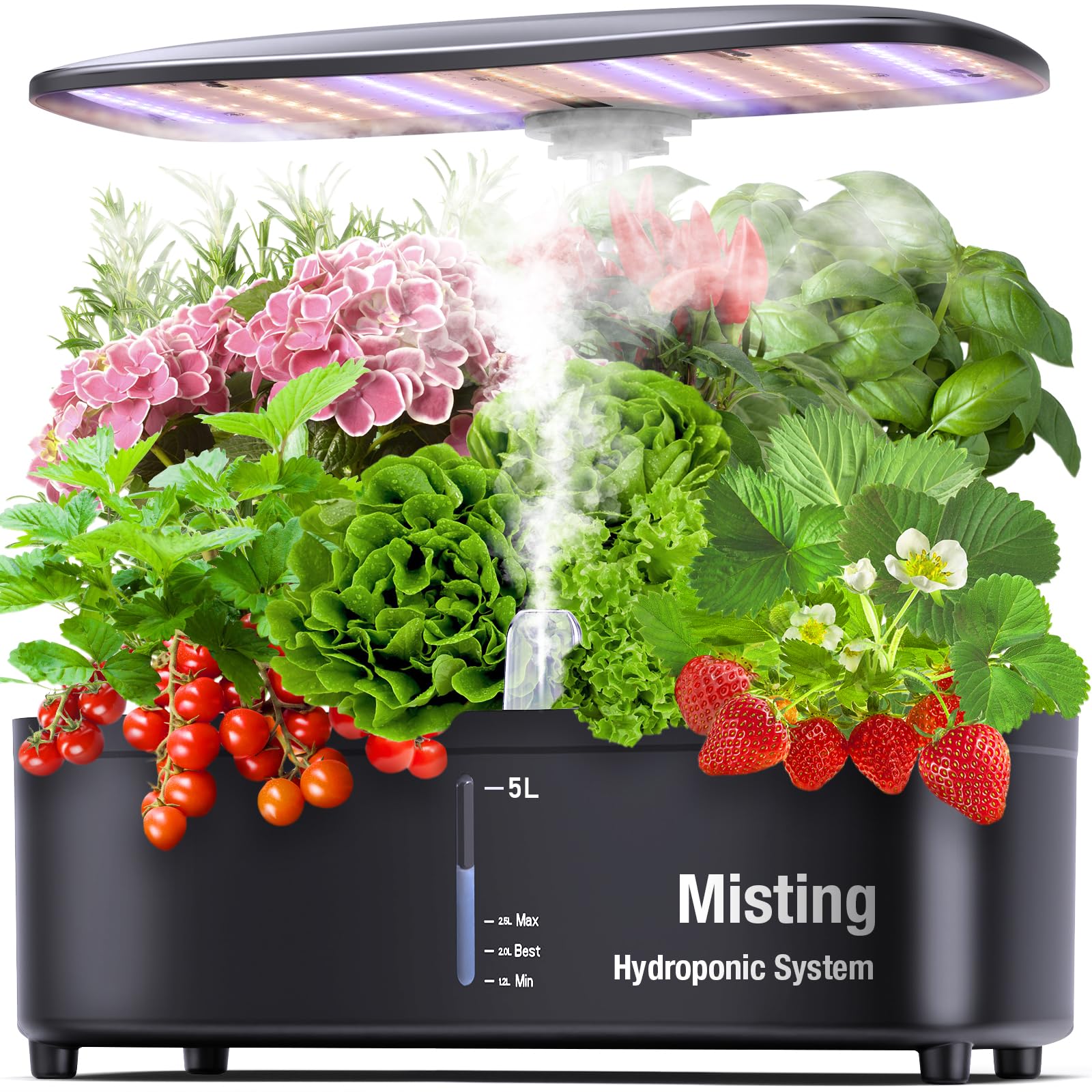
- 15 pods offer generous growing capacity for a countertop system
- Misting technology speeds up germination by up to 50%
- Near-silent pump is ideal for living rooms and offices
Cons
- Larger footprint than most countertop hydroponic gardens
- Misting nozzles may need occasional cleaning to prevent clogging
- Higher price point compared to basic pod systems
We noticed a significant boost in germination speed, with seeds sprouting up to 50% faster than traditional methods. The near-silent pump cycles between misting and resting periods, making it perfect for use in living spaces or offices. For most people, this is the one to get.
Best for beginners
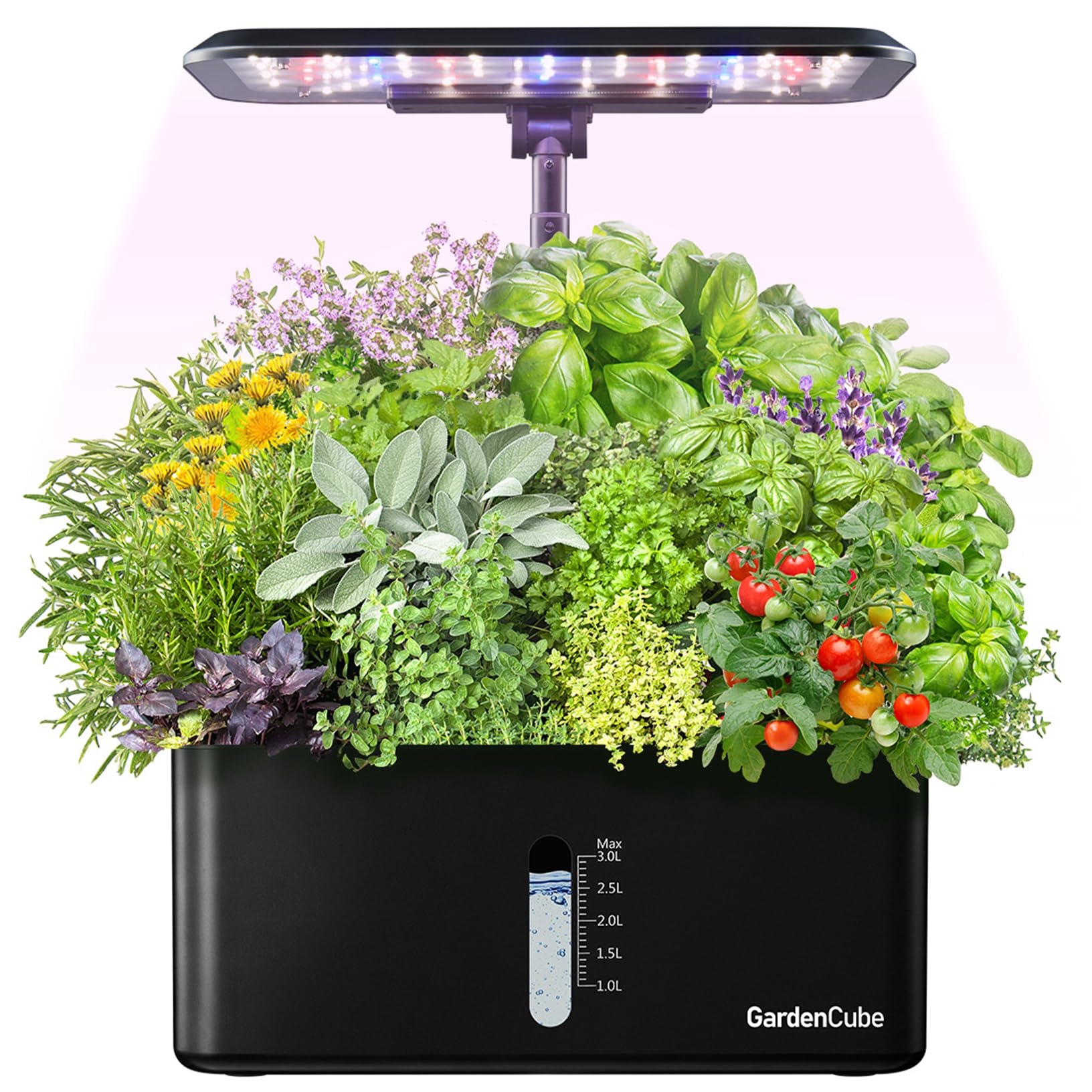
- Automatic light timer with selectable plant modes simplifies growing
- Adjustable LED grow light accommodates plants at different heights
- Beginner-friendly setup with clear instructions
Cons
- 8-pod capacity limits variety for more ambitious growers
- Reservoir is relatively small and needs frequent refilling
We appreciated the automatic light cycle control and the ability to select specific plant modes using the control panel. While the 8-pod capacity might be limiting for some, we found it sufficient for our small-scale indoor farming needs. The adjustable LED grow light is a standout feature, allowing us to maximize plant growth by providing optimal illumination.
Best for quick results
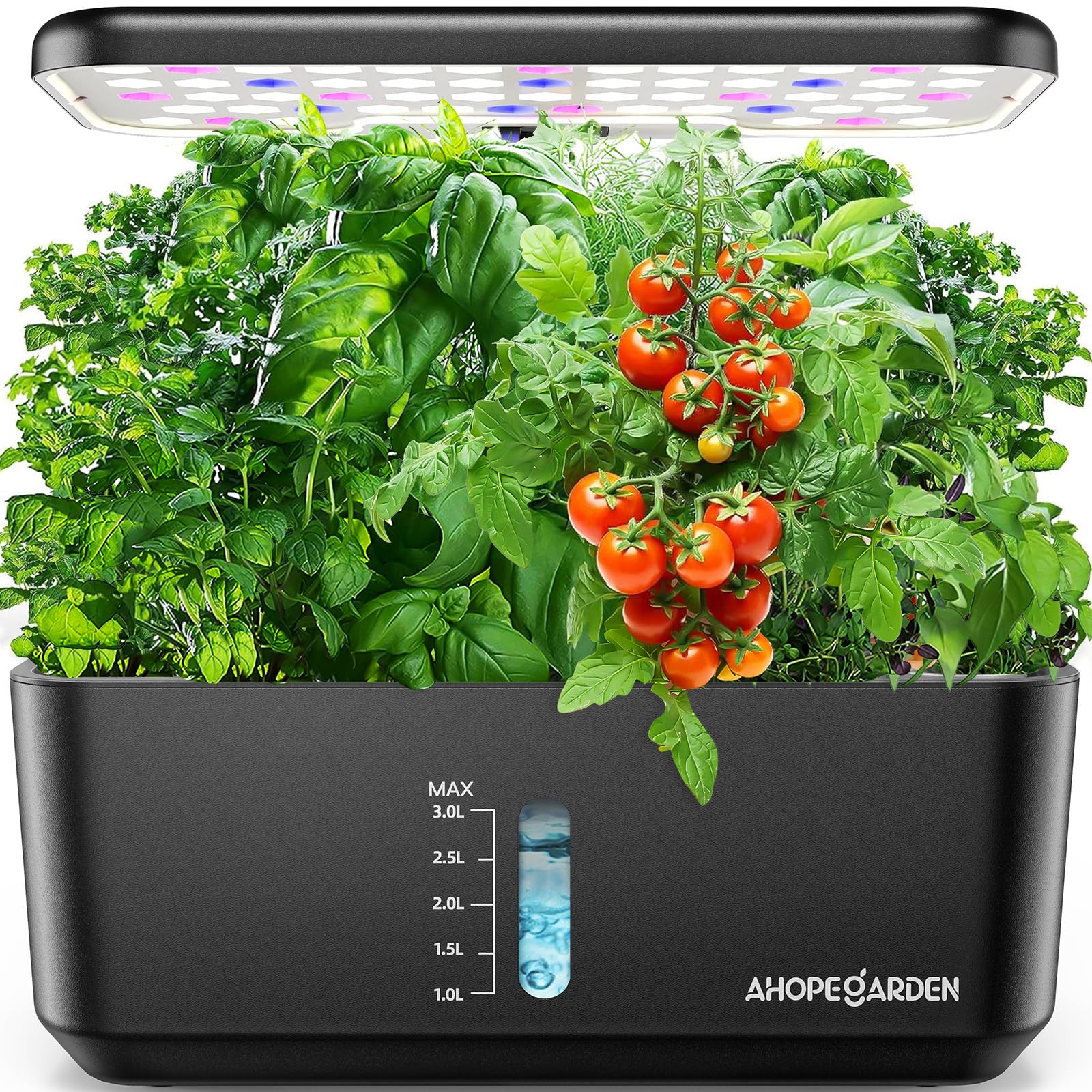
- Clear water level window makes reservoir monitoring effortless
- 10 pods strike a good balance between capacity and countertop size
- Adjustable LED light promotes fast, healthy plant growth
Cons
- Pump can be slightly audible in very quiet rooms
- Taller plants may outgrow the light height adjustment range
We found that our herbs and lettuce grew noticeably faster than in traditional soil gardens. The 10 growing pods provided ample space for a variety of plants, and we appreciated the clear water level window that made monitoring the reservoir a breeze. The adjustable LED grow light was a standout feature.
Most versatile
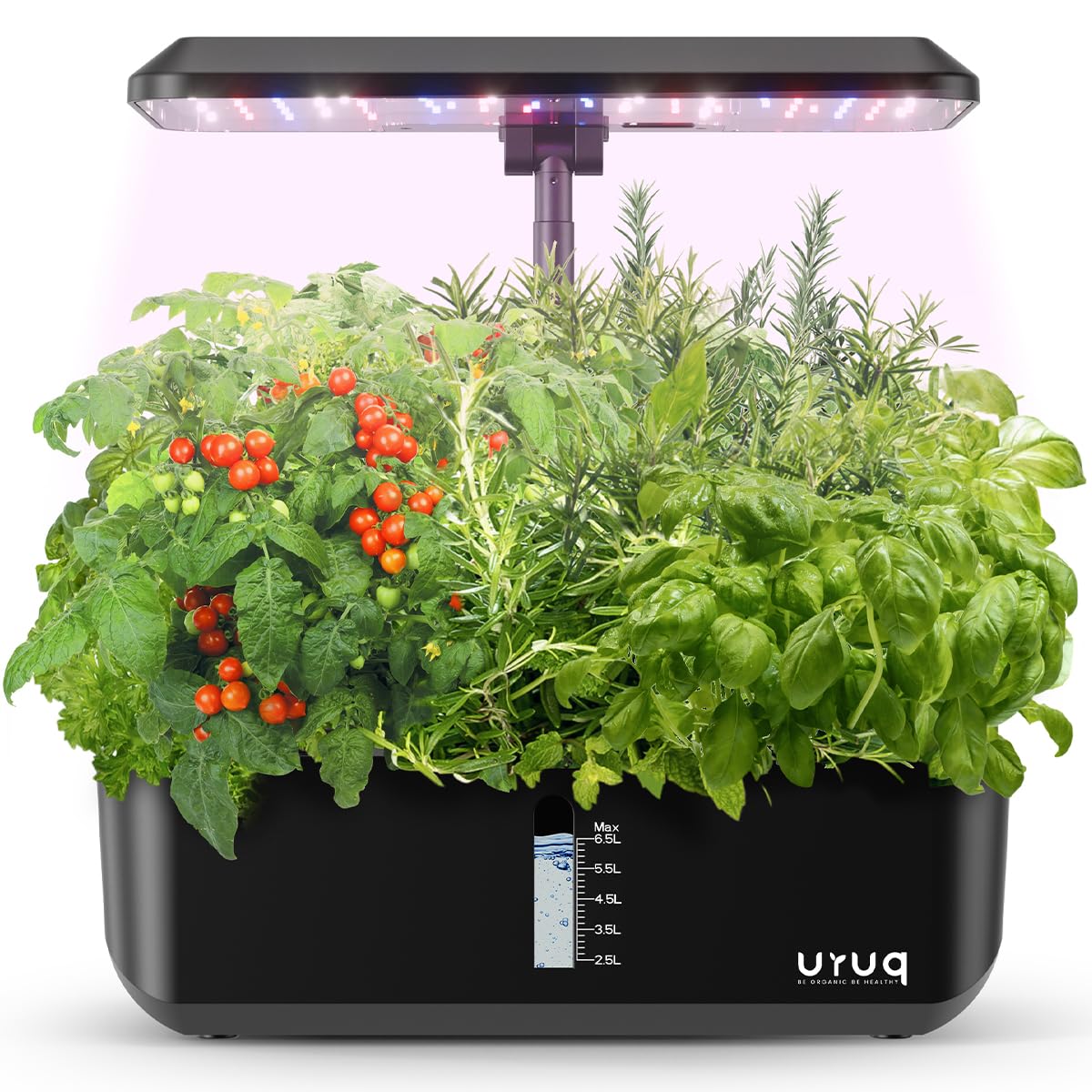
- Multiple growing modes adapt to herbs, vegetables, and flowers
- 12-pod capacity supports growing a wide variety simultaneously
- Height-adjustable light pole grows with your plants
Cons
- Power adapter cord is shorter than expected
- Nutrient solution not included — must be purchased separately
- Pods sit close together, which can crowd larger plants
We found that our herbs and vegetables grew noticeably faster than in traditional soil setups. We found this flexibility particularly useful when growing a variety of herbs and vegetables simultaneously. The flexibility here means it earns its keep in more ways than one.
Best for indoors
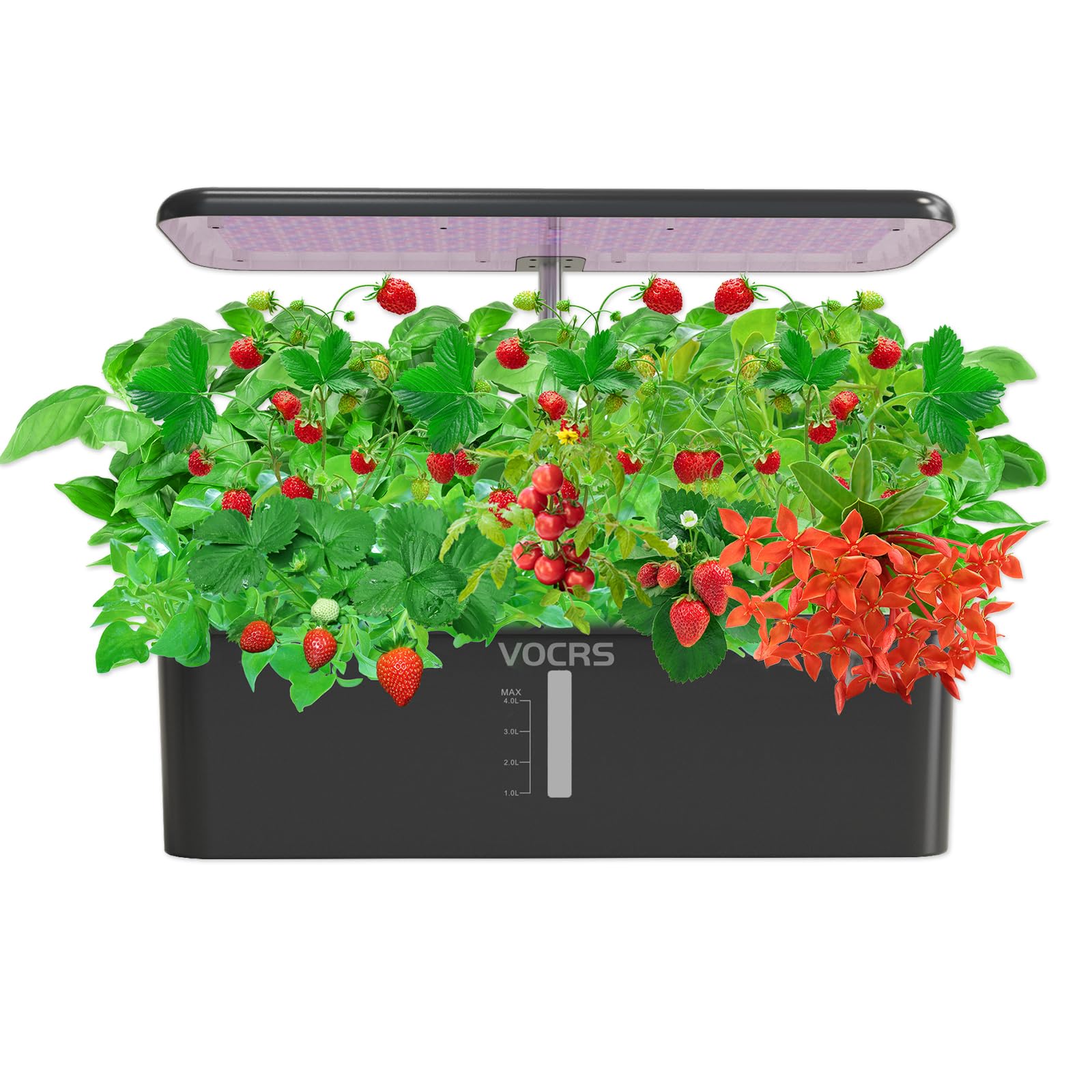
- Straightforward setup perfect for first-time hydroponic growers
- Automatic water circulation reduces daily maintenance
- Compact 12-pod design fits easily on most countertops
Cons
- LED light may not be strong enough for fruiting plants
- Plastic construction feels less premium than pricier models
- Limited height adjustment for taller crops like tomatoes
We appreciate how this reduces the daily maintenance required, making it ideal for busy individuals or those new to hydroponics. While setting up the system, we found the instructions clear and straightforward. We recommend prioritizing systems that match your available space and gardening experience level.
Buying Guide
When selecting a hydroponic system for small-scale indoor farming, several key factors should be considered. We’ve compiled a list of important features to evaluate:
Size and Space Requirements
- Footprint dimensions
- Vertical space needed
- Plant capacity
Ease of Use
- Assembly difficulty
- Maintenance requirements
- User-friendly controls
Growing Medium
- Type of medium supported
- Reusability
- Nutrient retention capacity
Lighting
- Built-in or separate
- Light spectrum
- Energy efficiency
Nutrient Delivery
- Pump quality
- Reservoir size
- Nutrient distribution method
Climate Control
- Temperature regulation
- Humidity management
- Air circulation
Monitoring and Automation
- pH and EC sensors
- Automated nutrient dosing
- Mobile app integration
We recommend prioritizing systems that match your available space and gardening experience level.
Beginners may prefer all-in-one kits with clear instructions and minimal setup.
For those with more experience, modular systems offer greater customization options.
When making your choice, consider future expansion possibilities.
Durability and warranty are crucial factors to ensure long-term value.
Look for systems made from high-quality, food-safe materials that can withstand constant moisture exposure.
Ultimately, the best hydroponic system balances your budget, space constraints, and desired crop types.
By carefully evaluating these features, you’ll be well-equipped to choose a system that meets your indoor farming needs.
This is useful, thanks.
Thank you for reading, Carl! Happy planting! -Plant Native Team