
5 Standout Professional Seedling Tray for Eco-Conscious Growers to Maximize Sustainability and Growth Efficiency
We independently select all products and services. If you click through links we provide, Plant Native may earn a commission with no extra cost to you. As an Amazon Associate I earn from qualifying purchases.
Last updated: September 16, 2026
Seedling trays are essential tools for starting plants from seeds. They give young plants an organized, controlled place to develop before transplanting.
Trays help keep seedlings healthy by offering proper drainage, aeration, and spacing. If you care about your environmental impact, choosing seedling trays made from sustainable or biodegradable materials matters more than ever.
Professional seedling trays for eco-conscious growers focus on durability and environmental friendliness. You’ll find options made from recycled plastic, biodegradable fibers, and compostable blends—each helping to cut down on waste and pollution.
These trays support both home gardeners and commercial growers who want to stay true to sustainable principles. It’s not just about growing plants; it’s about growing responsibly.
When picking a professional seedling tray, you’ll want to consider the material, cell size, drainage, and how easy it is to reuse or compost. The tray’s durability affects how many seasons you’ll get out of it, while the materials shape its environmental footprint.
We researched several seedling trays and tested them ourselves. Here are five that really stand out for eco-conscious growers.
Best Professional Seedling Trays for Eco-conscious Growers
We picked five seedling trays that balance durability, functionality, and environmental responsibility. Each one supports sustainable growing practices and meets the needs of serious gardeners.
Our list points out practical options that help reduce waste and promote healthy plant starts. There’s something here for every setup.
Our top pick
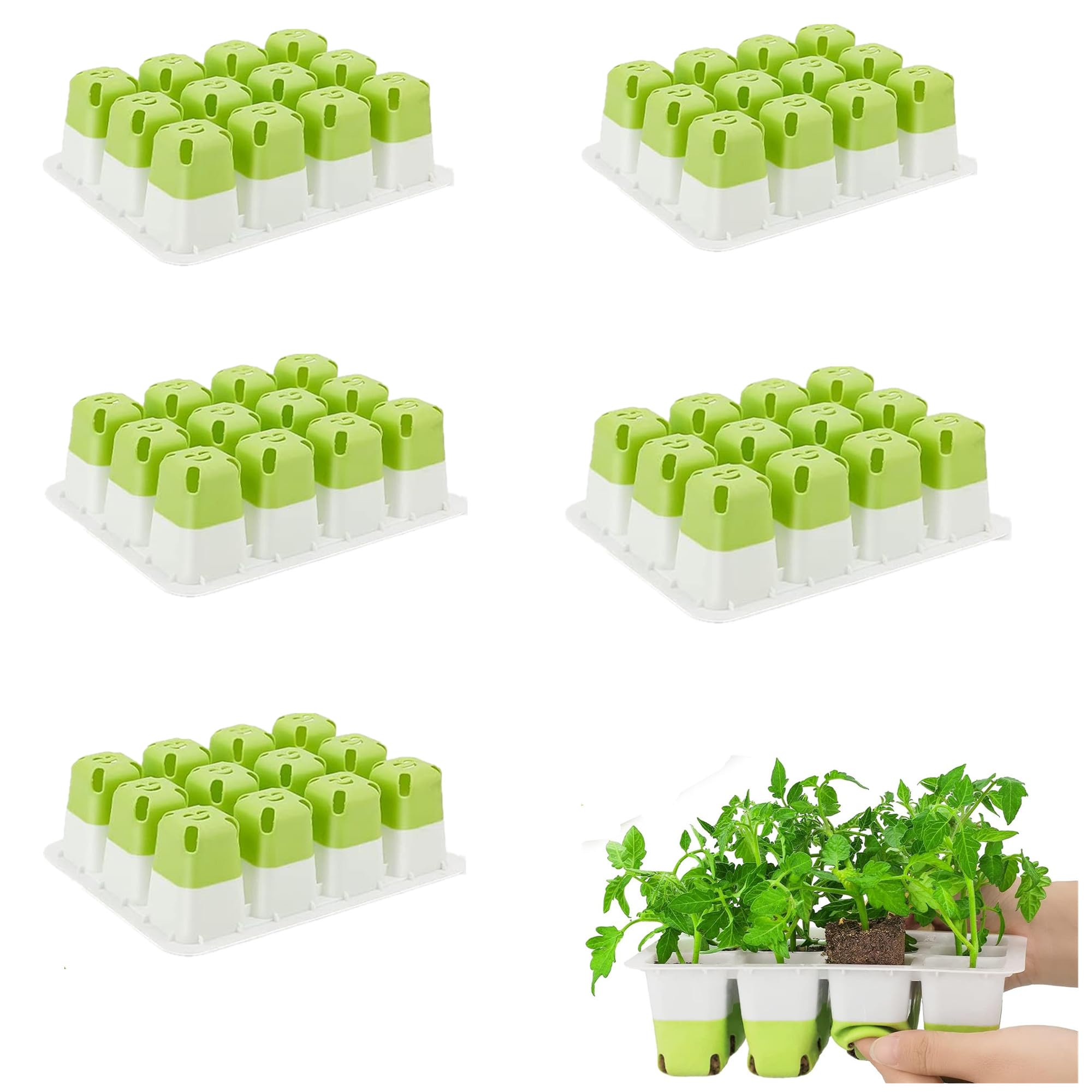
- Flexible silicone cells make popping seedlings out simple
- Reusable and easy to clean for repeated use
- Small drainage holes enhance airflow and prevent root rot
Cons
- No included cover to protect seedlings
- Cells are smaller than some alternatives
- Plastic frame feels less sturdy than all-silicone designs
The silicone cells really stand out. We liked how gently seedlings come out—no root damage—so transplanting is less stressful for the plants.
Drainage is well designed, with small holes that let water escape and oxygen in. Our germination rates seemed to improve.
The plastic frame does feel a bit flimsy if you’re rough with it, but overall, the quality is solid. Cleaning up is just a rinse and dry, so reuse is easy.
For gardeners who want affordable, flexible trays that keep seedlings healthy and make removal simple, these do the job. We’d go for these in any indoor seed starting setup.
Best runner-up

- Tall, clear domes protect seedlings and let you keep an eye on them
- Deep cells encourage robust root systems
- Vented lids make it easy to control moisture and airflow
Cons
- Tray size doesn’t fit all standard pots
- Made from plastic, so not fully compostable
- Large footprint takes up more space than compact trays
We noticed the extra-tall 5-inch domes really help keep warmth and humidity steady. Watching seedlings thrive without having to lift the lids all the time just makes life easier.
The deep 2.75-inch cells give roots plenty of room, so plants handle transplanting better. We saw stronger growth compared to shallow trays.
Adjustable vents on the domes make it simple to manage airflow and moisture. Plus, the sturdy build means you’ll get several seasons out of them.
Best budget option
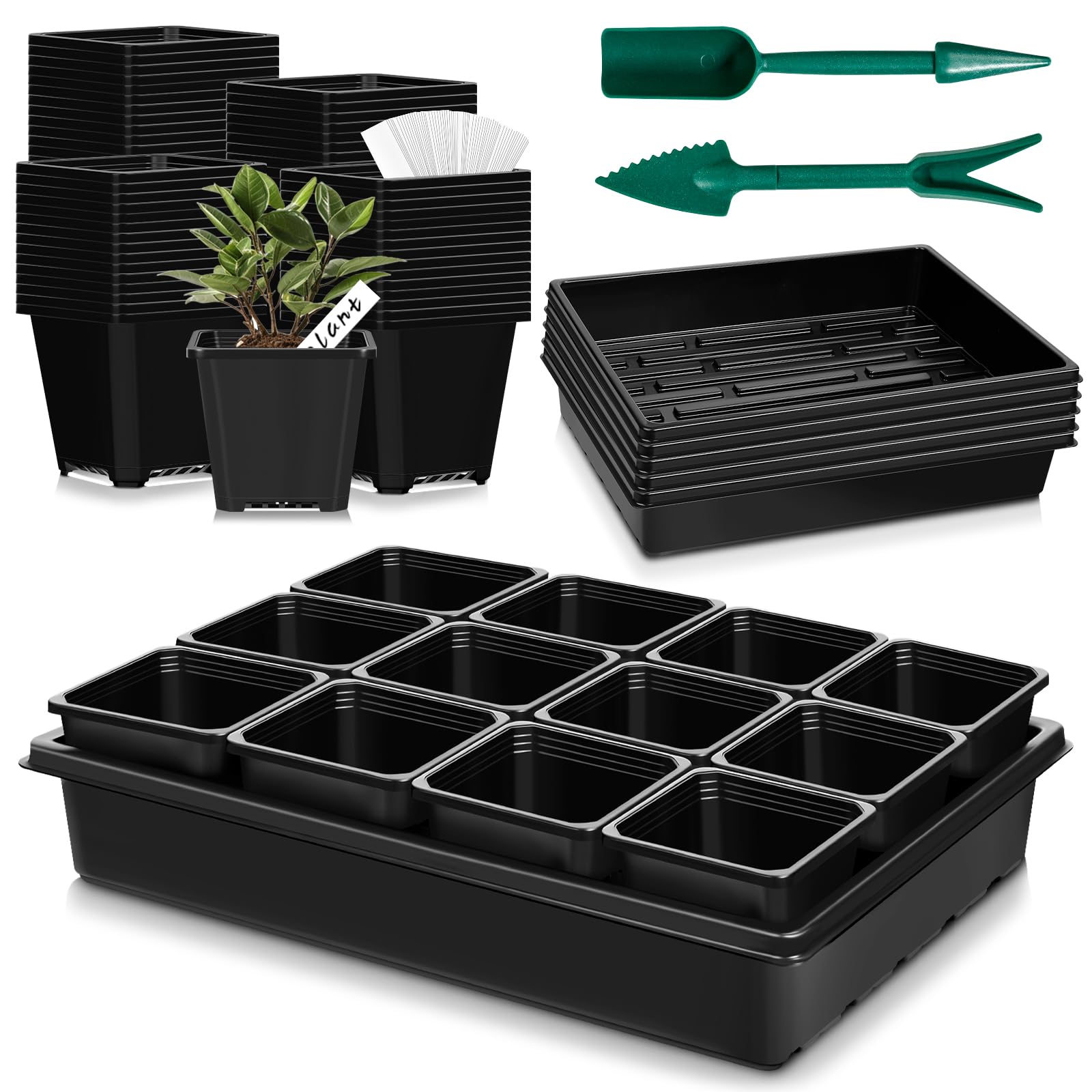
- Durable pots and trays with thick plastic
- Good drainage in each pot keeps roots healthy
- Includes plant tags and mini gardening tools
Cons
- Trays could be thicker
- Pots have a lot of holes—maybe too many
- Customer support isn’t the best
The trays and pots feel heavy-duty, so we expect them to last through several growing seasons. The trays don’t leak, and the pots let in enough air to avoid drowning your seedlings.
We liked the little extras—plant tags and small tools made organizing easier. Handling the trays was simple thanks to their solid build, and the extra ventilation helped keep soil from getting soggy.
On the downside, the trays could be even sturdier, and the drainage holes in the pots might dry things out too fast in some cases. Still, it’s a reusable set that works for everything from microgreens to herbs indoors.
Best premium choice

- Sturdy frame, easy to put together
- Grows multiple seed types without soil
- Compact design with rolling wheels
Cons
- Connectors feel fragile
- Some trays might arrive damaged
- Instructions can be confusing or missing
The five-tier shelving stands tall but barely takes up any floor space. We found it handy for both indoor and outdoor use.
The stainless steel frame and durable plastic trays kept everything steady, even when loaded up. We had to go easy on the connectors—they’re a bit flimsy.
Sprouting everything from mung beans to radishes worked just fine, and there’s no hint of chemicals or soil issues. The water trays under each level keep moisture consistent without drowning the seeds.
Instructions weren’t great, but the setup is pretty intuitive once you get the water management down. The wheels on the bottom shelf make moving it around a breeze, which we didn’t expect but really liked.
Also great

- Compact size is perfect for tight spaces
- Drain holes help roots stay healthy
- Durable enough for a few growing cycles
Cons
- Thin plastic tears if you’re rough
- Edges sometimes need trimming
- Price is a bit high for the material
We found the 5″ by 5″ size just right for microgreens and small herb seeds. The 2″ depth offered enough room without hogging vertical space.
Drain holes kept water from pooling, so seedlings stayed healthier. The trays are lightweight, but you need to handle them gently or they’ll rip.
Cleaning was simple, though sometimes you have to trim off extra plastic. They fit nicely into standard 10×20 trays, which is handy if you have a bigger setup.
We used these both under grow lights indoors and outside in a shady spot. No big issues. For eco-conscious growers who want something practical, these are a solid choice.
When I’m picking out a seedling tray, I think about materials first. I want something durable, but I also care about the environment, so biodegradable or recycled trays are pretty appealing.
Size and cell count play a big role too. More cells mean I can start more plants, but the roots get less space.
Larger cells let roots stretch out, which can make for sturdier seedlings. It’s always a bit of a trade-off.
Drainage is huge. I look for trays with enough holes so water doesn’t just sit there and drown the roots.
Reusability? Definitely a plus. If I can wash and reuse a tray, that’s less waste and more savings down the line.
Handling and storage matter more than I expected. Lightweight trays that stack together make planting a lot less of a hassle.
Buying Guide
When I’m picking out a seedling tray, I think about materials first. I want something durable, but I also care about the environment, so biodegradable or recycled trays are pretty appealing.
Size and cell count play a big role too. More cells mean I can start more plants, but the roots get less space.
Larger cells let roots stretch out, which can make for sturdier seedlings. It’s always a bit of a trade-off.
Drainage is huge. I look for trays with enough holes so water doesn’t just sit there and drown the roots.
Reusability? Definitely a plus. If I can wash and reuse a tray, that’s less waste and more savings down the line.
Handling and storage matter more than I expected. Lightweight trays that stack together make planting a lot less of a hassle.
| Feature | What to Look For | Why It Matters |
|---|---|---|
| Material | Biodegradable, recycled plastic, or resin | Eco-conscious and durable |
| Cell Size/Number | Depends on seed type and space needed | Balances quantity with root growth |
| Drainage | Adequate holes or slits for water flow | Prevents root rot |
| Reusability | Easy to clean and sturdy | Cost-effective and less waste |
| Size/Portability | Lightweight and stackable | Simplifies handling and storage |
Are the biodegradable trays sturdy enough to last until transplanting?
Good question. The article covers sustainable and biodegradable options, and durability varies by product. -Plant Native Team