How to Propagate Rosemary: A Step-by-Step Guide for Healthy Growth
Last updated: October 5, 2026
Propagating rosemary is a straightforward way to multiply your plants from a healthy mother plant. The most reliable method to propagate rosemary is by taking cuttings from young, green stems and rooting them in soil or water. That way, you keep the same flavor and character as the original herb.
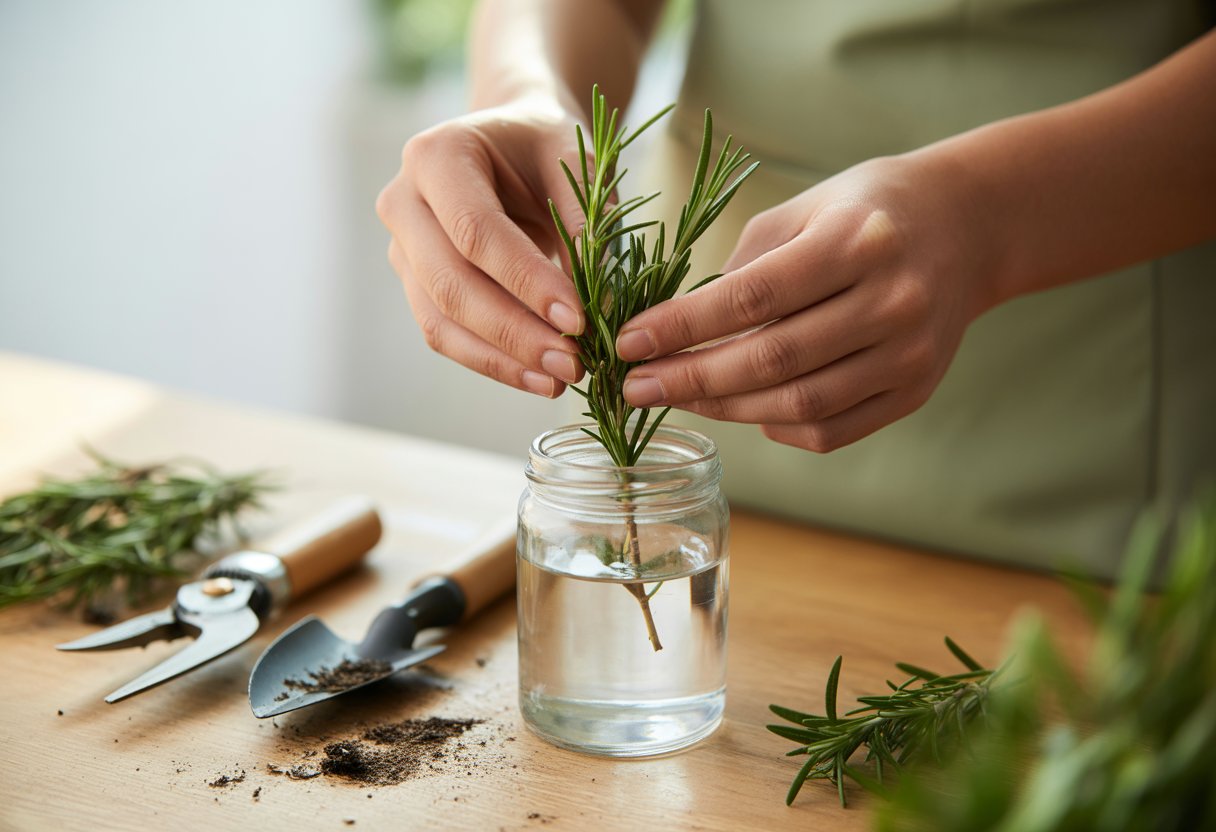
Rosemary is a hardy herb and it responds well to propagation. Gardeners love it for expanding their collection or just keeping fresh sprigs handy.
If you pick the right stems and give them good conditions, you’ll probably succeed. Let’s break down the steps to get new rosemary plants going.
Preparing for Rosemary Propagation
Start by picking a healthy plant, gathering your tools, and choosing the right time. Those details really make a difference in how well your cuttings root.
Choosing a Healthy Mother Plant
Look for an established rosemary plant with no signs of disease or pests. Strong, deep green leaves and firm stems are what you want.
Pick stems about 4 to 6 inches long—avoid the woody or old stems, they just don’t root as well. Younger, greener growth is the sweet spot.
A good stem snaps easily but isn’t brittle. If you take cuttings during active growth, you’ll have better luck.
Selecting Tools and Materials
Grab clean, sharp pruners, scissors, or a knife—blunt blades can crush the stem and ruin your chances. You’ll need small pots or containers with well-draining soil or a mix like perlite or sand.
Rooting hormone is optional, but I think it helps roots form a bit faster. Don’t forget water-resistant labels and, seriously, sterilize your tools before cutting. It’s a pain, but it keeps diseases away.
Best Time of Year to Propagate
Late spring or early summer is the best time for rosemary propagation. Warm temps and more daylight really kickstart root growth.
If you propagate in late spring or early summer, your cuttings will have time to settle in before winter. Cold months just don’t work as well—rooting slows way down.
When the plant’s pushing out new stems, that’s your cue to take cuttings. It just works better.
Methods of Propagating Rosemary
You’ve got a few options for propagating rosemary. Most people use cuttings, but you can start from seed or try layering with a low branch if you’re feeling patient.
Propagating Rosemary from Cuttings
Cuttings are the fastest way to clone your rosemary. Snip healthy green stems, 4-6 inches long, with a few leaf nodes.
Strip the leaves from the bottom half. Dip the cut end in rooting hormone if you have it, then stick it into a moist, well-draining mix—perlite and peat moss work great.
Keep the mix moist and put the cuttings somewhere with indirect light. Roots usually show up in 2-4 weeks. Once you see roots, move them to soil.
You can try woody stems, but honestly, green ones root much faster.
Growing Rosemary from Seeds
Growing rosemary from seed is slow, but you get genetic variety. Sow seeds about ¼ inch deep in a seed-starting mix.
Keep the soil moist but not soaking wet. Germination takes 2-3 weeks if it’s warm—think 70-75°F.
Cover the seeds lightly and use bottom heat if you can. Rosemary seeds can be stubborn and sprout unevenly.
Once seedlings have a few sets of leaves, move them to their own pots. You might notice some differences from plant to plant—kind of fun, actually.
Layering Technique for Rosemary
Layering works by rooting a low branch while it’s still attached to the parent. Pick a healthy stem and bend it down to the soil.
Nick the underside at a leaf node, then bury that part 1-2 inches deep. Pin it down with a rock or wire.
Keep the soil around the buried bit moist. After a few weeks, roots should pop out at the node.
Once you see enough roots, snip the new plant from the parent and pot it up. Layering is good if you’re dealing with woody or stubborn stems.
Steps to Ensure Successful Rooting and Growth
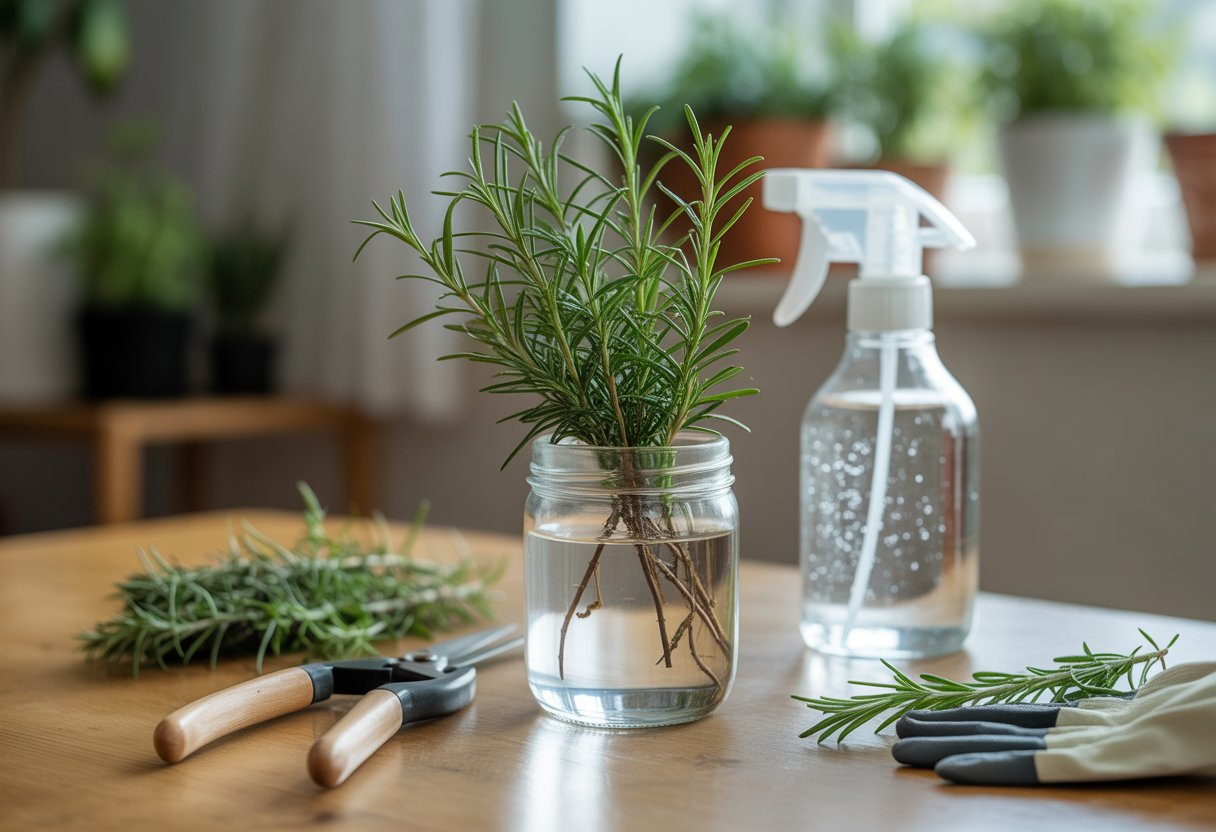
Getting strong roots and healthy new plants boils down to prep, planting, and care. Environment, soil, water, and light all play a part.
Preparing Cuttings for Rooting
Pick healthy, non-flowering stems about 4-6 inches long. Look for several sets of green leaves.
Strip the lower leaves from the bottom 2 inches. Roots will sprout from these bare nodes.
Cut from semi-hardwood growth, not old woody branches. Use sharp, clean scissors and cut just below a leaf node.
You can dip the base in rooting hormone. It’s optional, but it does seem to help.
Planting in Soil and Using Rooting Mediums
Mix sand, perlite, and compost in equal parts for a well-draining propagation mix. It keeps things airy and prevents rot.
Fill small containers or terracotta pots with the mix. Poke holes for your cuttings and plant them about 2 inches deep.
Make sure your pots have drainage holes. Heavy, clay soil just holds too much water and roots won’t like it.
Providing Optimal Light and Water
Put the pots somewhere with indirect light—shaded windowsills or under grow lights for 12-16 hours work well. Direct sun is too harsh and dries things out.
Mist the cuttings or water lightly to keep the soil just damp. Don’t overdo it; soggy soil leads to fungus.
You can cover the pots with a plastic bag or use a mini greenhouse to bump up humidity. Just open it now and then for air flow to avoid mold.
Transplanting and Aftercare
When roots form—usually in 3-6 weeks—test by tugging gently. If there’s resistance, you’re good.
Transplant to bigger pots with sandy soil. Give each plant 4-6 inches of space.
Terracotta pots are great for airflow and keeping soil on the dry side. After moving, slowly introduce the plants to more sun over a week or two.
Water when the soil surface dries out. In summer, rosemary loves full sun and well-drained soil outside.
For winter, bring plants indoors or protect them from frost. A sunny window works if you can’t keep them outside.
Care and Troubleshooting for New Rosemary Plants
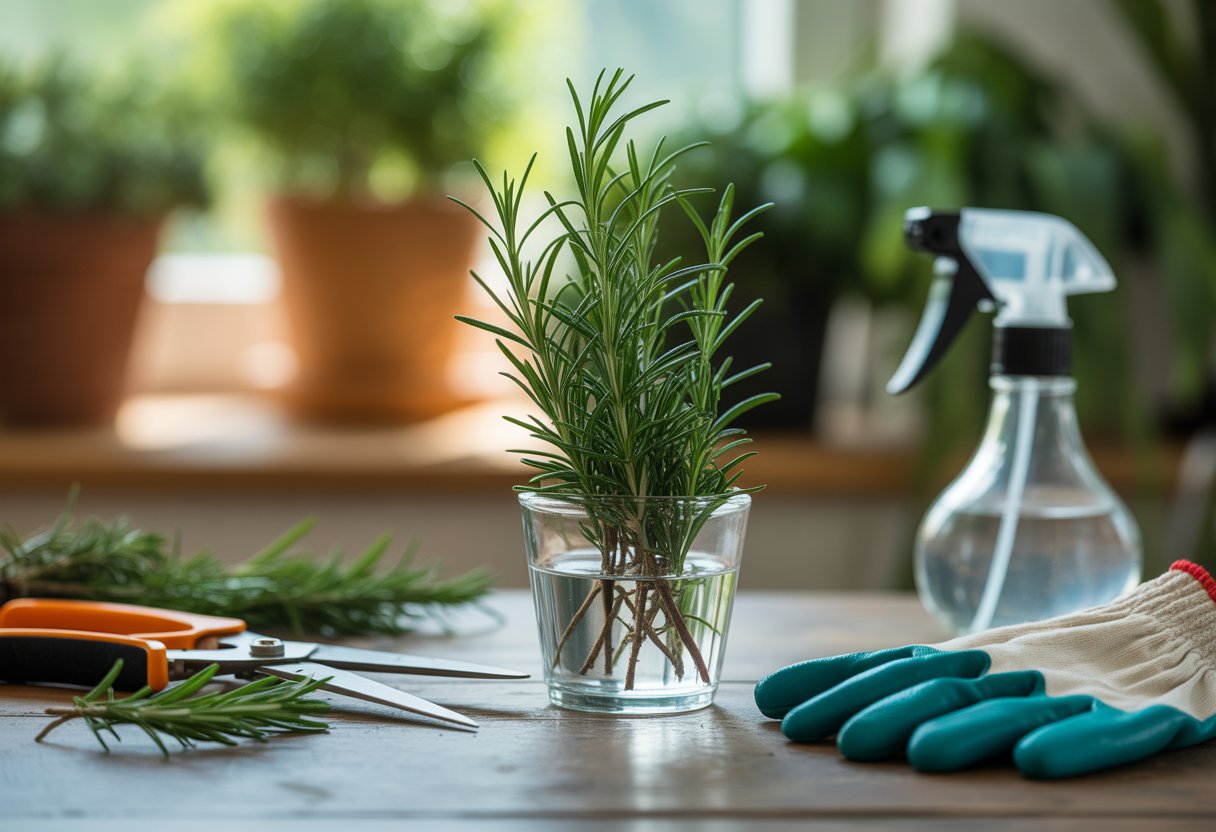
New rosemary plants need a bit of attention to stay healthy. Watch moisture, keep pests away, prune for bushiness, and know when to transplant or share cuttings.
Monitoring Health and Preventing Rot
Rosemary hates soggy feet. Use well-draining soil and don’t overwater.
Let the soil dry between waterings. Pots with drainage holes and some coarse sand or perlite really help.
If leaves turn yellow or drop, check for overwatering or iron deficiency. Rosemary needs at least 6 hours of direct sunlight, so don’t skimp on light.
In cold zones, bring new plants indoors or use a greenhouse for winter. Less stress means happier plants.
Addressing Pests and Diseases
Rosemary doesn’t get many pests, but sometimes you’ll see spider mites, aphids, or whiteflies. Inspect the leaves often.
If you spot bugs, spray with insecticidal soap or neem oil. Make sure to hit the undersides of the leaves.
Humidity and poor airflow can cause powdery mildew or other fungus. Give your plants space and avoid watering from above.
If you see infected leaves, snip them off and toss them—don’t compost them.
Pruning and Harvesting Rosemary
Pruning keeps rosemary bushy and healthy. Once it’s 6 to 8 inches tall, pinch back the tips often.
Don’t cut into old, woody stems—they might not regrow. Snip stems near the top to harvest leaves.
Harvesting in the mid-morning gives you the best flavor and aroma for cooking. The oils are strongest then, and honestly, there’s nothing like fresh rosemary in the kitchen.
Transferring Outdoors or Sharing with Friends
Once rosemary plants settle in, you can move them outside if you live somewhere with a Mediterranean-like climate. Pick a sunny spot, and make sure the soil drains well.
If you’re in a colder area, it’s smart to get your plants used to the outdoors slowly. Potting them up for winter protection isn’t a bad idea either.
Rosemary actually makes a great gift for friends, not to mention a handy kitchen herb. If you’ve got a mature plant, you can share cuttings to encourage more sustainable gardening.
Just snip off healthy, semi-hardwood stems. Root them in conditions similar to the original plant for the best shot at success.