Best Ground Cover Plants for Maine: Top Hardy and Low-Maintenance Choices
Last updated: August 28, 2026
Choosing the best ground cover plants for Maine means thinking about the state’s cold winters, rocky soil, and unpredictable sunlight. The right plants can help control erosion, keep weeds in check, and add some much-needed charm to outdoor spaces.
Creeping phlox, bearberry, and creeping juniper really seem to thrive in Maine’s tough climate and soil.
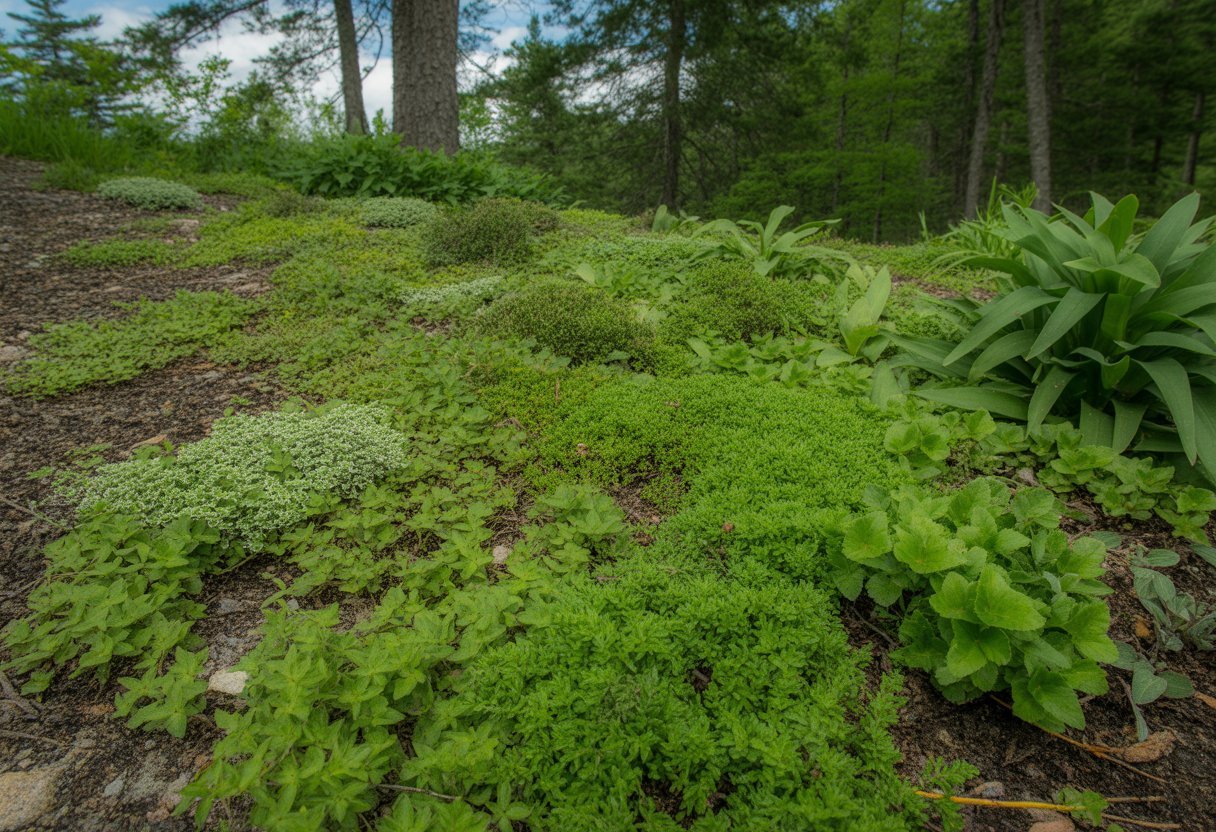
These ground covers are hardy and pretty low-maintenance. They work in all sorts of light and keep things covered year-round, no matter what Maine throws at them.
If you want to improve your garden or landscape, these practical options are worth a look.
Let’s dig into how these plants perform and which ones fit Maine’s unique growing conditions.
Selecting the Best Ground Cover Plants for Maine
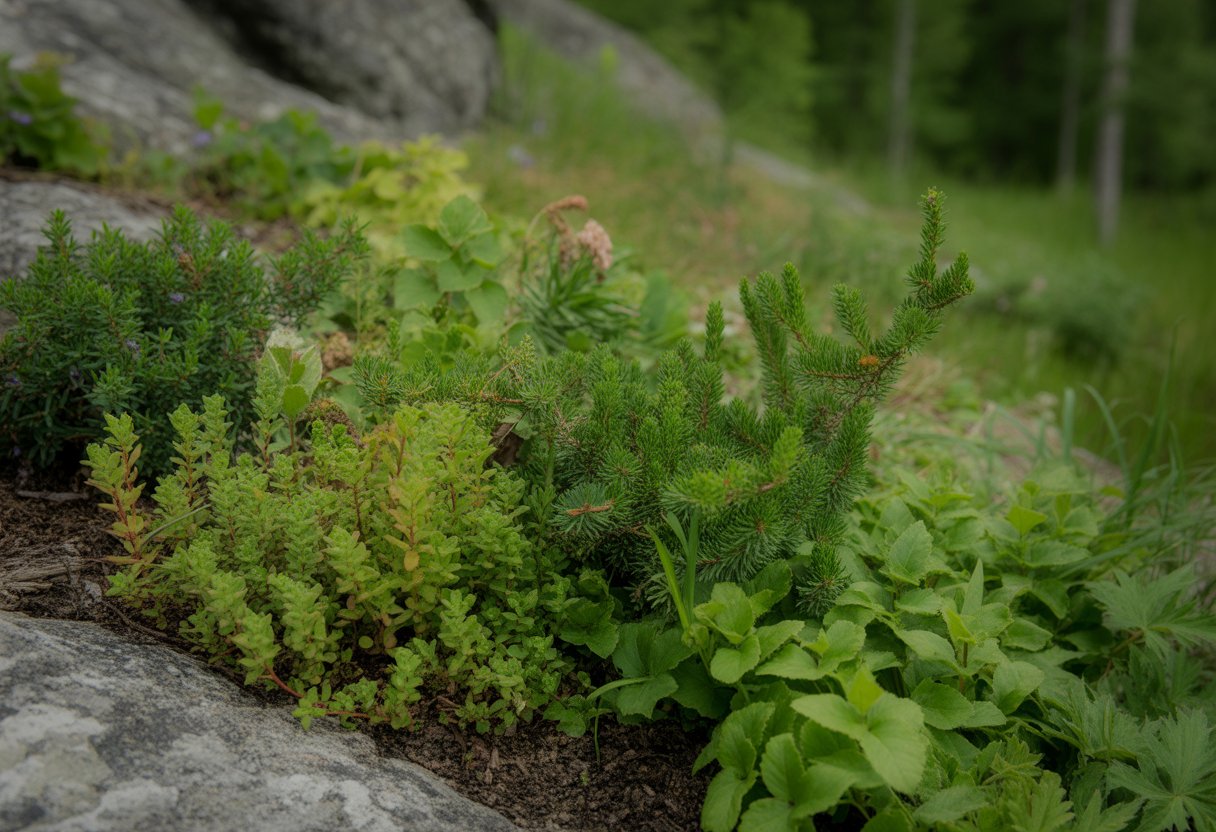
Picking the right ground cover starts with understanding Maine’s climate and soil. Ground covers do more than look nice—they help prevent erosion and block weeds.
Knowing when to use native or non-native species can make a big difference for growth and the environment.
Climate and Soil Considerations
Maine’s climate comes with cold, snowy winters and moderately warm, humid summers. Ground covers need to handle USDA hardiness zones 3-6.
Cold-hardy choices like Creeping Thyme and Bearberry handle these swings just fine.
Soil varies a lot, from sandy loam to heavier clay, and often leans acidic with pH between 5.0 and 6.5. Pennsylvania Sedge loves acidic soils and does well here.
Good drainage matters—some species just can’t take soggy roots.
Sunlight can be all over the place, thanks to the forests and hilly terrain. It’s smart to pick ground covers that match your site’s light, whether it’s blazing sun or deep shade.
Benefits of Ground Covers
Ground covers help hold soil in place, especially on Maine’s many slopes. They block sunlight from reaching weeds, so you spend less time pulling them.
They also help soil hold onto moisture, which is a big plus during dry summers. In towns and suburbs, ground covers keep mud and dust down, making outdoor spaces a bit tidier.
Some native ground covers, like Partridgeberry, attract pollinators and birds. They fit right into Maine’s ecosystems and give wildlife a hand.
Choosing Between Native and Non-Native Species
Native ground covers already know how to handle Maine’s weather, soil, and pests. They need less water and fertilizer, so they’re easy to care for.
Lowbush Blueberry and Wild Ginger are good examples that also support local wildlife.
Non-native options like Ajuga or Periwinkle often cover ground quickly and look unique, but sometimes they need more attention. A few can even get invasive and push out natives.
If you’re aiming for conservation, stick to natives. For purely ornamental beds, a few well-behaved non-natives might be fine.
It really comes down to your goals and how much maintenance you want.
Top Ground Cover Plants Suited to Maine
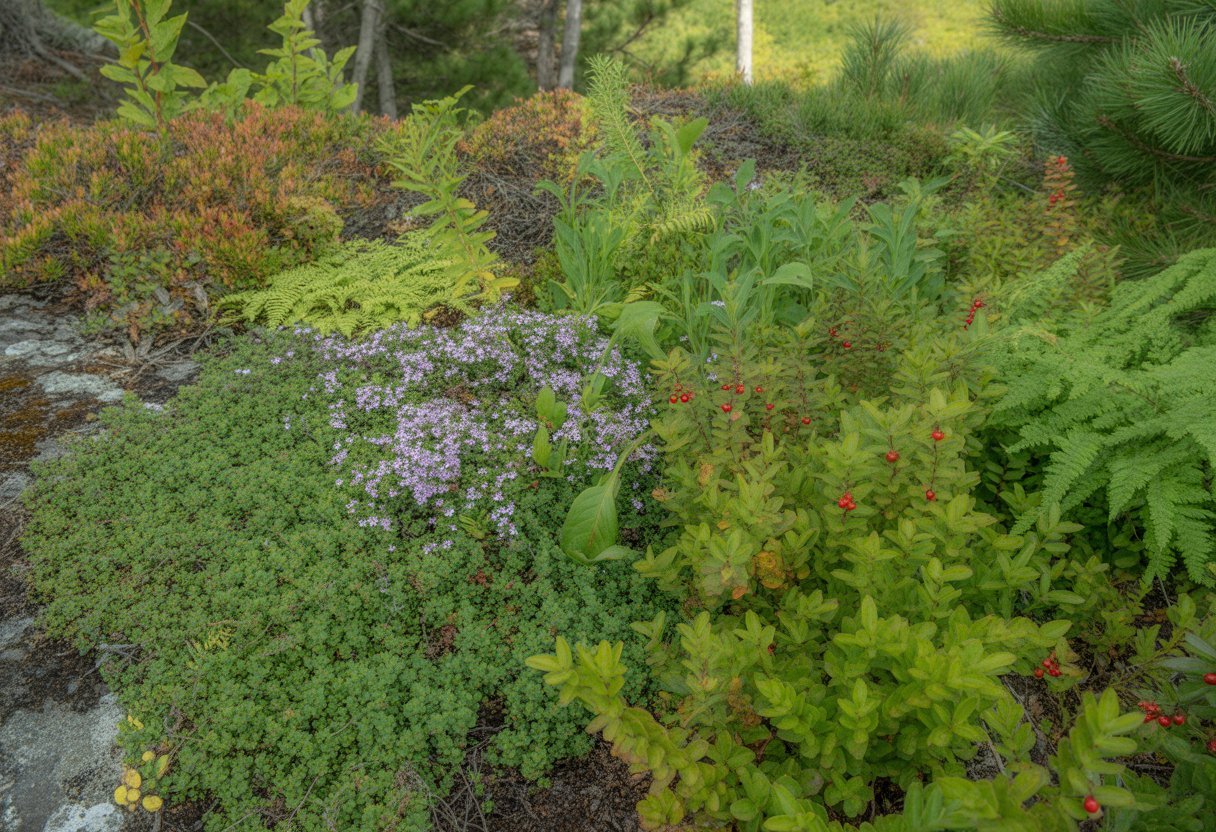
Maine’s climate calls for ground covers that can handle cold, wet, and dry spells, plus different levels of sun. Picking hardy, locally adapted species keeps things covered all year and cuts down on upkeep.
Groundcovers for Shade
Shade-loving plants like Carex species do well under Maine’s thick tree canopies. Pennsylvania sedge spreads nicely and doesn’t mind dry shade.
It brings a soft, fine texture and a lush look to darker spots.
Pachysandra terminalis and Vinca minor are also solid picks for shade. Pachysandra shrugs off deer and wet, acidic soils.
Vinca minor puts out spring flowers and forms dense mats to keep weeds out. All three handle heavy shade, so they’re great for wooded areas.
Best Evergreen Choices
Evergreens give gardens some life in winter. Juniperus horizontalis, or creeping juniper, has blue-green needles and shrugs off cold.
It’s happy in poor soil and helps stop erosion on slopes.
Wintergreen (Gaultheria procumbens) keeps its shiny leaves and makes bright red berries in winter. It likes acidic, well-drained soil and a bit of shade.
Evergreen groundcovers fill in bare spots and keep things looking good all year.
Low-Maintenance Options
If you want plants that don’t need much fussing over, try Sedum acre (stonecrop). It’s drought-tolerant and does well in Maine’s rocky, shallow soils.
Full sun and poor soil? No problem.
Ajuga reptans grows into thick mats with barely any help and spreads fast by runners. It handles everything from sun to part shade.
You won’t need to fertilize much, and pests usually leave these alone. Perfect for gardeners who’d rather relax than weed.
Seasonal Color Variations
Some ground covers bring color changes as the seasons roll by. Epimedium (barrenwort) puts out delicate spring flowers and turns red in fall.
It’s shade-tolerant and deer usually skip it.
Heuchera comes in leaf colors from green to burgundy and adds small late-spring blooms. Lamium maculatum offers silver leaves and pink or white flowers, thriving in shade and adding texture.
These choices keep gardens from feeling dull by mixing up the palette through the year.
Establishing and Maintaining Ground Covers in Maine
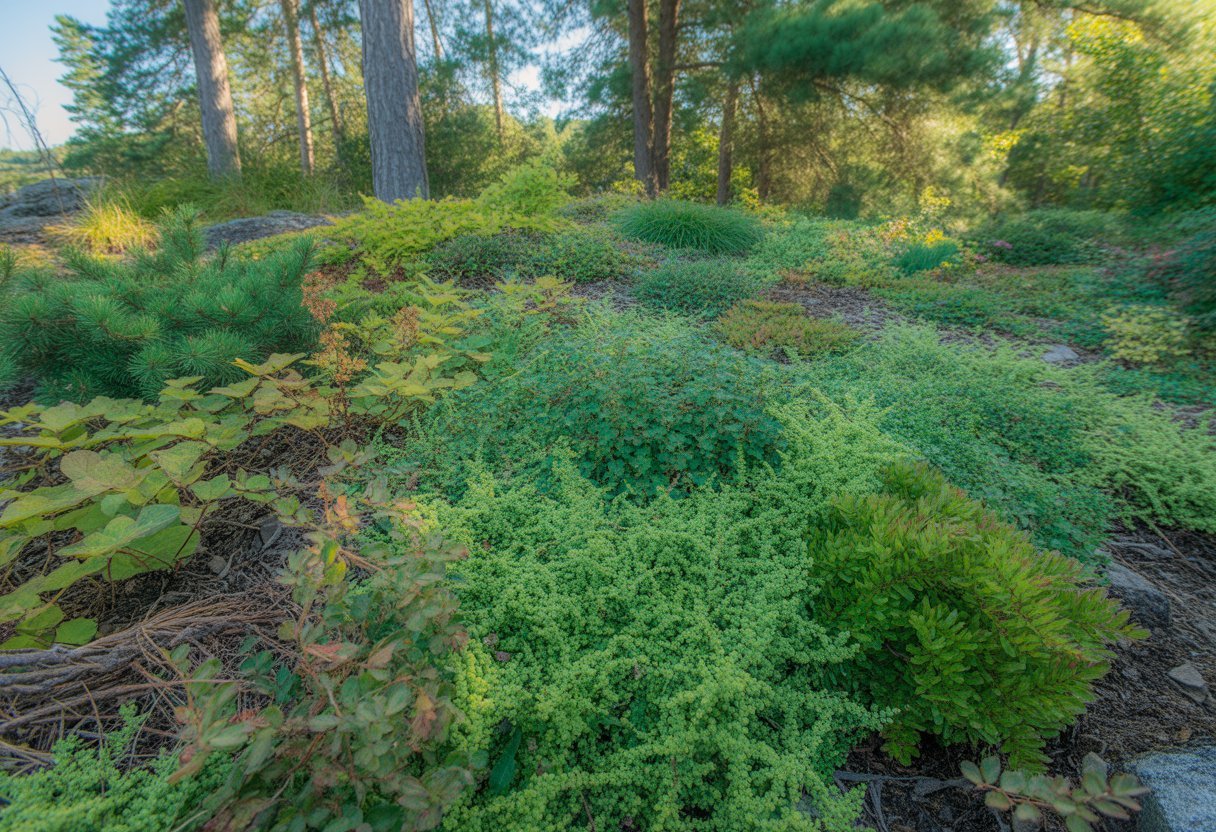
Getting ground covers going in Maine takes some prep, steady watering, and a bit of pest and disease watchfulness. If you pay attention to these basics, your plants should pull through Maine’s ups and downs.
Planting Techniques
Plant ground covers in early spring or fall—those milder temps help roots settle in before things get too hot or cold.
Make sure soil drains well and mix in compost or other organic matter. That boosts moisture retention and adds nutrients.
Give plants enough space—usually 6 to 18 inches apart—so they have room to spread but don’t crowd each other.
Set the plants at the same depth they were in their pots. Planting too deep can rot roots, but too shallow makes them wobbly.
A two-inch layer of mulch helps hold moisture and keeps weeds down while plants get established.
Watering and Fertilization
New ground covers need regular watering to keep soil moist, but not soggy. Water deeply once or twice a week, depending on the rain.
After about 6-8 weeks, you can cut back to weekly or every other week. Drip irrigation or soaker hoses are better than overhead sprinklers—they help prevent leaf diseases.
Go easy on fertilizer. A balanced, slow-release type in early spring is enough to get things growing.
Don’t overdo it, since too much fertilizer makes plants leafy but weak-rooted.
Test your soil every few years to know what nutrients you actually need.
Pest and Disease Management
Keep an eye out for pests like slugs, aphids, and spider mites. You can usually pick them off or use organic sprays if needed.
Fungal diseases like powdery mildew and root rot sometimes pop up. Good air flow and not soaking the leaves help prevent these problems.
If you spot dead or sick plants, take them out quickly to stop disease from spreading. Only use fungicides as a last resort and follow the directions.
Picking disease-resistant varieties in the first place saves a lot of hassle.
Landscaping Ideas and Applications for Maine Ground Covers
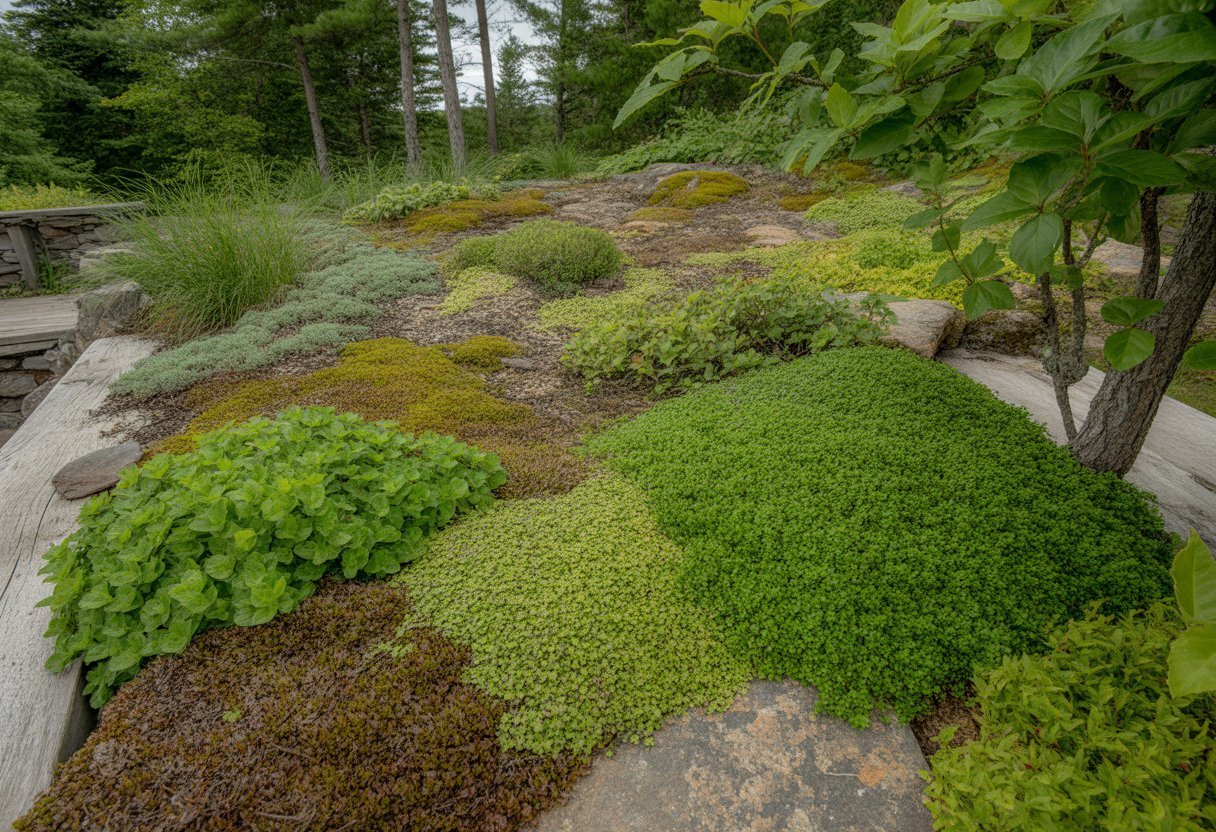
Ground covers in Maine do more than fill space—they stabilize soil and add layers to gardens. How you use them really depends on your site and what look you’re after.
Erosion Control Solutions
Ground covers work wonders for soil erosion on slopes and banks, which Maine has plenty of. Ajuga reptans (bugleweed) and Vinca minor (periwinkle) quickly form thick mats that lock soil in place.
Deep-rooted options like Fragaria chiloensis (beach strawberry) bind soil and are perfect for spots where runoff is a problem. They spread fast and cover bare areas, keeping water from washing soil away.
Try using ground covers around rain gardens or along drainage ditches, too. They help water soak in and need less care than grass or bare mulch.
Integrating Ground Covers With Perennials
Blending ground covers with perennials just makes a garden feel more alive, doesn’t it? Low-growing picks like Thymus serpyllum (creeping thyme) settle right in under taller plants, filling those awkward gaps and keeping weeds at bay.
If you plant shade-loving ground covers like Pachysandra terminalis under perennials in those dimmer corners, you’re really making the most of your space. Plus, it helps the soil hang onto moisture, which is always a win.
It’s worth thinking about which species play nicely together, so their roots aren’t locked in a silent battle underground. Mixing up textures and bloom times keeps things interesting all year, and honestly, it just gives the garden a bit more personality.