Common Problems with Black-Eyed Susan and Solutions for Healthy Growth and Care
Last updated: September 29, 2026
Black-eyed Susans, or Rudbeckia, light up gardens with their bright yellow petals and easygoing nature. Still, gardeners bump into issues like powdery mildew, aphids, and lackluster blooms.
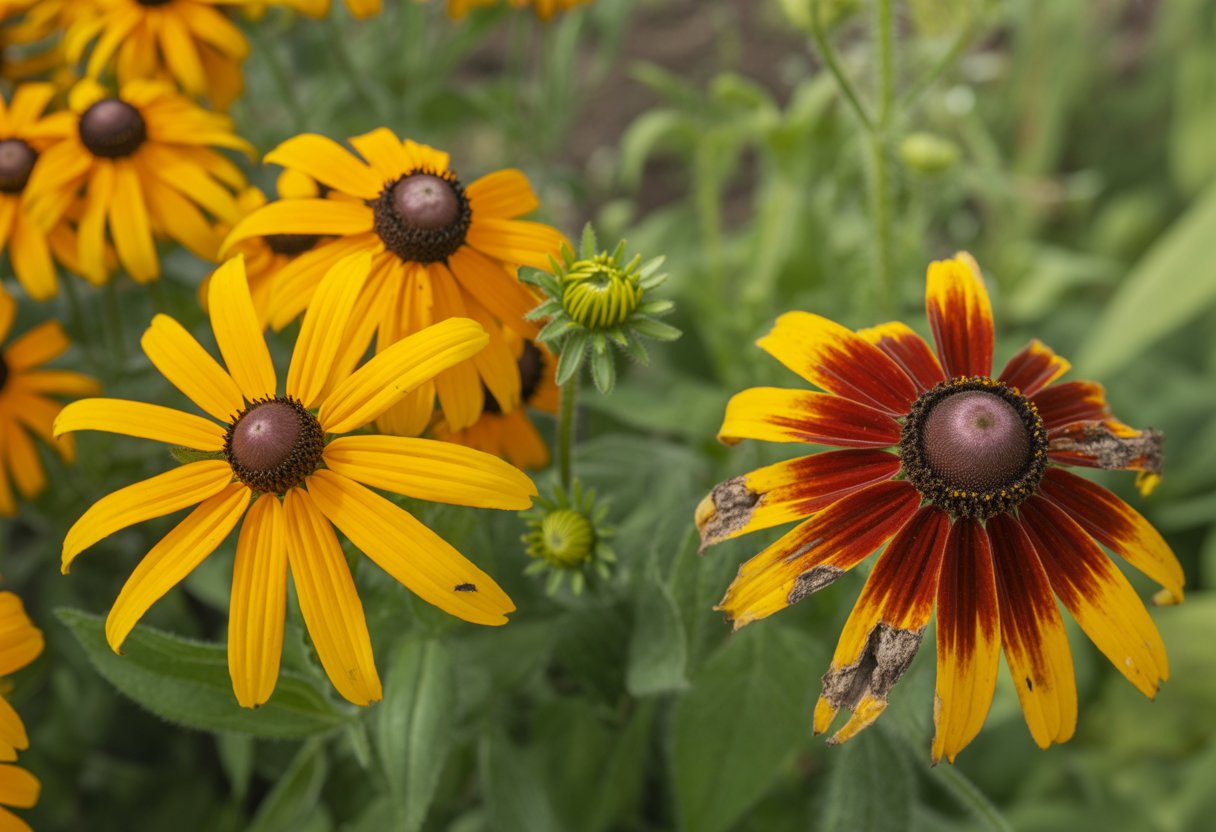
Aphids drain the plants’ energy, and powdery mildew stunts growth. If you don’t water or feed them right, you might see wilting or weak stems.
Knowing what you’re up against makes it easier to keep black-eyed Susans thriving all season.
Common Growing Challenges for Black-Eyed Susan
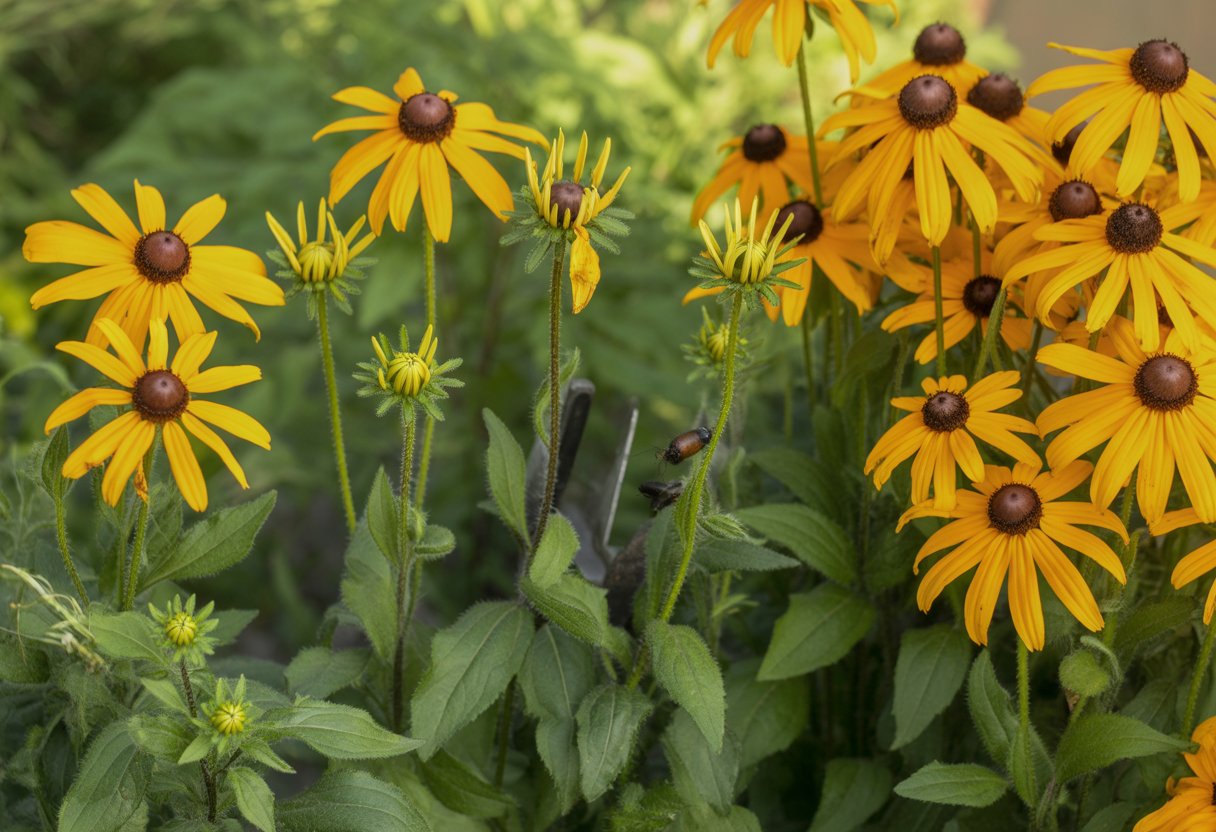
Black-eyed Susans (Rudbeckia hirta) struggle mainly with environmental stress, poor soil, and pests or diseases. Wilting, fungal infections, and root trouble often come from how you water or the soil you plant in.
Fixing these issues helps healthy plants stick around in all sorts of North American gardens.
Wilting and Yellowing Leaves
When leaves wilt or turn yellow, it’s usually a sign of stress from uneven watering. Too much water drowns the roots, while too little leaves them parched.
Both problems mess with how the plant absorbs nutrients, so you get yellow foliage and floppy stems. Extreme heat or wind just makes things worse.
Let the top inch of soil dry before watering again. Mulch helps keep moisture steady and shields roots from temperature swings.
Annual black-eyed Susans wilt faster than perennials, but perennials can suffer over several seasons if ignored. Raised beds with loose, well-drained soil let roots breathe and keep them from sitting in soggy ground.
Powdery Mildew and Fungal Diseases
Powdery mildew loves humid, stuffy spots and shows up as a white dust on leaves. It blocks sunlight and saps the plant’s strength.
Give your plants space and sunlight so air can move around. If you spot mildew, cut off affected leaves or use a mild fungicide early on.
Other fungal diseases pop up if the soil stays too wet. Watch your watering and check plants often to catch problems before they spread.
Root Rot and Poor Drainage
Root rot happens when black-eyed Susans sit in soggy soil and roots can’t get enough air. Fungi move in, rot the roots, and the plant wilts or dies.
Use raised beds or build up the soil in low spots if you’ve got heavy clay. Mix in compost to loosen things up and help water drain.
Check the soil by digging a small hole after watering—if it’s still wet hours later, drainage is an issue. If root rot sets in, pull out sick plants and improve the spot before replanting.
Managing Pests Affecting Black-Eyed Susan
Black-eyed Susans attract pests like aphids and leaf-munching bugs. Spotting problems early and acting fast keeps plants strong.
Aphids and Other Sap-Sucking Insects
Aphids cluster on new shoots and flower buds, sucking sap and leaving leaves twisted or yellow. They also drop sticky honeydew. Spider mites, which sometimes get mistaken for aphids, spin tiny webs and leave speckled leaves behind.
Check plants regularly and invite beneficial insects like ladybugs to the party. Spray neem oil or insecticidal soap to knock back infestations. A hard blast of water helps too, but you’ll need to repeat it.
Skip broad-spectrum pesticides—they’ll wipe out the good bugs along with the bad.
Slugs, Snails, and Leaf Damage
Slugs and snails chew big holes in leaves, usually overnight. They love damp, shady spots and can do a lot of harm in no time.
Look for them early in the morning or at dusk. Copper tape, diatomaceous earth, and beer traps all work pretty well. Handpick them if you’re up for it.
Cut back on watering near the base and clear away old leaves or mulch to limit hiding places. If you need bait, pick iron phosphate—it’s safer for pets and wildlife.
Ensuring Healthy Growth and Resilience
Black-eyed Susans stay healthy if you get the basics right: good soil, regular water, and some routine care. That’s how you get strong seedlings and those famous golden blooms.
Soil Quality and Nutrient Deficiencies
These flowers like well-drained soil with a neutral or slightly acidic pH. It’s worth doing a soil test before planting.
If the test says you’re low on nitrogen, phosphorus, or potassium, mix in compost or a balanced fertilizer. Nitrogen helps leaves, phosphorus boosts roots and blooms, and potassium toughens up the plant against disease.
Don’t get carried away with fertilizer—too much can actually slow down flowering or harm young plants.
Seedlings and cuttings need rich, balanced soil. Older plants put up with less, but they’ll still appreciate the occasional boost.
Watering and Mulching Best Practices
Keep the soil consistently moist, especially when seedlings are getting started or during blooms. Water deeply but not too often—about an inch a week is usually good.
Don’t drown the roots. Too much water brings on rot and fungus.
Mulch locks in moisture, keeps soil temps steady, and cuts down on weeds. Use bark or straw, and keep it a couple inches from the plant base to avoid rot.
A good mulch and watering routine also help seeds sprout and new plants take off.
Pruning, Deadheading, and Seasonal Maintenance
Deadhead faded flowers to keep new blooms coming and stop the plants from reseeding everywhere. If you want them to self-seed, let a few flowers go to seed toward the end of summer.
Cut off damaged or diseased stems as soon as you spot them. Prune the whole plant back in late fall or early spring to encourage fresh shoots.
Tidy up debris and give plants a little fertilizer in early spring for a strong start.
Preventing Invasive Spread and Supporting Wildlife
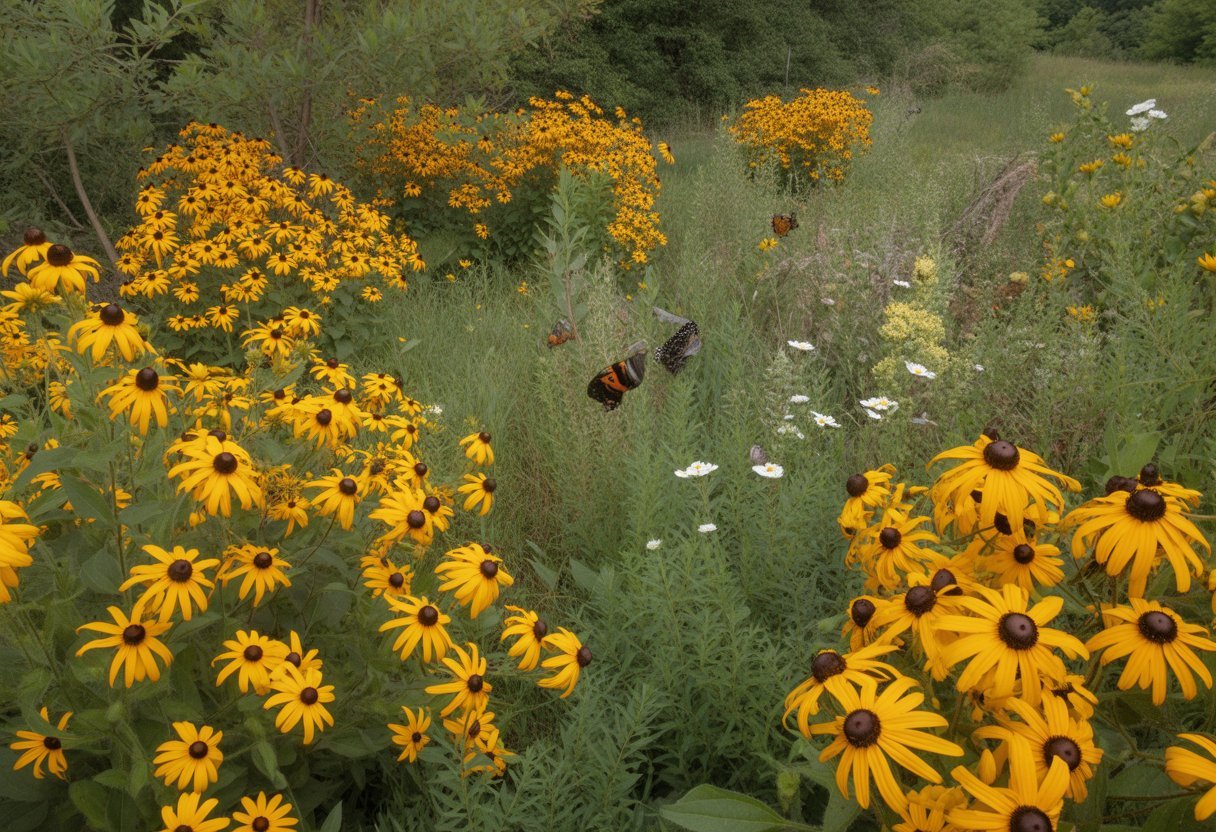
Black-eyed Susans can take over if you let them, but they also attract pollinators and helpful bugs. With a little effort, you can keep them in check and still support garden wildlife.
Controlling Invasive Behavior and Reseeding
Some varieties, like Goldsturm and Prairie Sun, drop seeds everywhere and can crowd out other plants. If you’re not careful, they’ll spread fast and hog all the space.
Deadhead before seeds form to stop the takeover. Mow or cut back after flowering to slow down runners.
If you’re growing black-eyed Susan vine, try containers or barriers to keep it in bounds.
Keep an eye out for unwanted seedlings and pull them early. Mulch helps smother stray seeds and keeps them from popping up where you don’t want them.
Encouraging Butterflies and Beneficial Insects
Black-eyed Susans attract butterflies and helpful insects like bees. These little guys play a huge role in pollination.
If you plant Goldsturm and Prairie Sun cultivars in sunny spots, you’ll see more flowers and more insect visitors. Honestly, it’s pretty satisfying to watch.
Want to see even more butterflies? Keep a mix of native plants and butterfly favorites nearby. That way, there’s always something blooming or a place for caterpillars to hang out.
Skip the pesticides—they’re rough on all those helpful insects. Maybe that’s obvious, but it’s worth repeating.
Set out a few flat stones so butterflies can bask in the sun. A shallow dish of water helps too, especially on hot days.
If you nudge your garden in this direction, you’ll notice more pollinators and a livelier backyard. Isn’t that kind of the dream?