Best Composting Methods for Florida Efficient Techniques for Year-Round Gardening Success
Last updated: September 18, 2026
Composting in Florida’s warm, humid climate calls for methods that can handle the heat and moisture. Traditional piles break down fast, but they might attract pests or get soggy if you’re not careful.
The best composting methods in Florida focus on balancing air flow and moisture so things decompose quickly without a ton of hassle from heat or humidity.
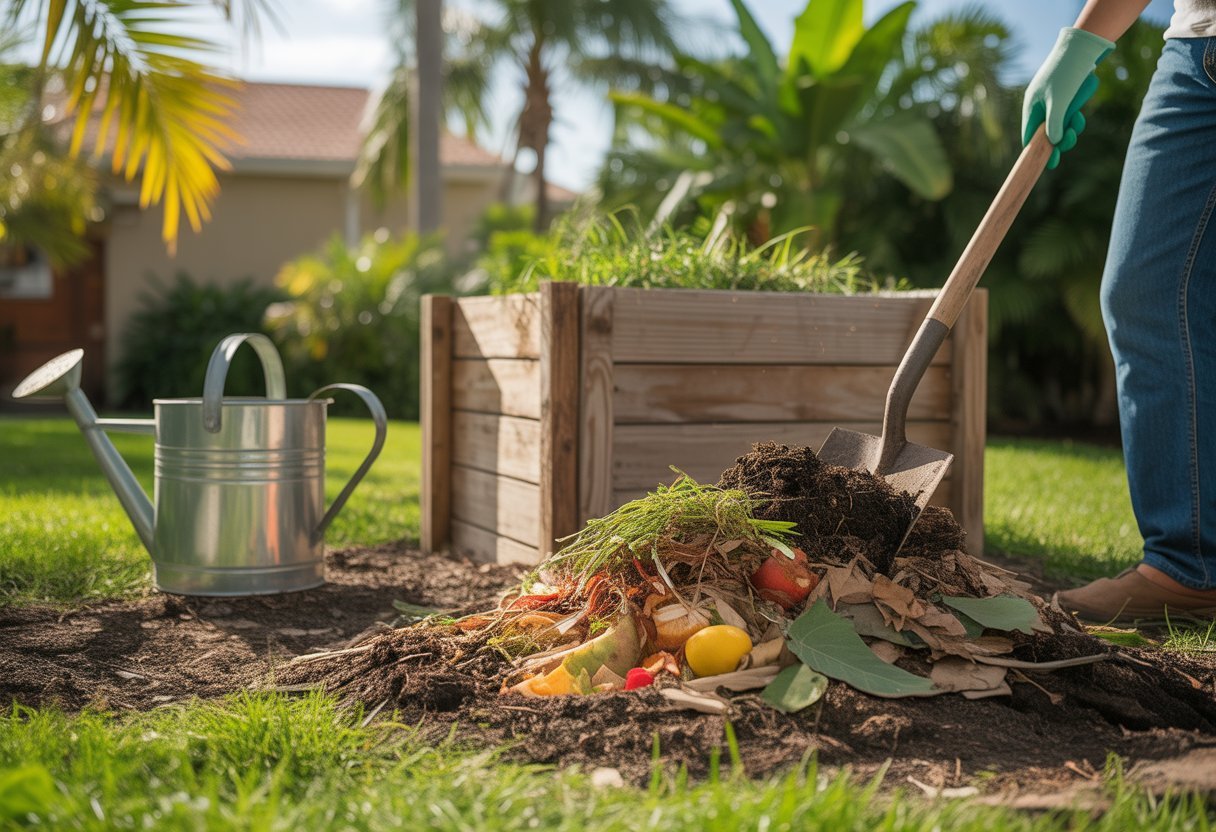
A lot of folks swear by vermicomposting and raised bins since you can control the conditions better. That helps keep smells down and pests away.
Hot composting works, too, but you’ll need to keep an eye on it—turning the pile and checking the temperature so it doesn’t dry out.
Florida gardeners who get the hang of these techniques usually see their soil improve, even with the state’s tricky weather. Picking the right method keeps composting efficient and helps your plants thrive all year.
Understanding Composting in Florida
If you want your compost to break down well in Florida, you’ve got to pay attention to the local climate and the biology at work. Warmth and humidity really speed things up, but microorganisms are the real MVPs behind the scenes.
Climate Impacts on the Composting Process
Florida’s heat and humidity crank up microbial activity, but that’s not always a good thing. Compost piles often hit over 140°F, which is great for breaking stuff down but can dry things out if you aren’t careful.
You’ll need to watch moisture levels—sometimes even daily—especially after a heavy rain. Too much water can turn your pile soggy and smelly.
Rain tends to soak compost, making it easy for things to go anaerobic. Good airflow and regular turning help keep the pile smelling fresh and breaking down at a steady pace.
Florida’s seasons bounce between dry winters and wet summers, so you’ll want to tweak your pile size and moisture to keep things humming along.
Key Ingredients: Organic Matter and Microorganisms
The main ingredients in compost are carbon-rich “browns” (think dry leaves, wood chips) and nitrogen-rich “greens” (like grass clippings and kitchen scraps). Aiming for a carbon-to-nitrogen ratio around 30:1 keeps microbes happy and your pile healthy.
Bacteria, fungi, and actinomycetes love Florida’s warmth. They break down the organic stuff into simpler nutrients.
Adding yard waste and food scraps keeps the pile fed, but steer clear of diseased plants or invasive weeds—those can mess up your garden later.
Decomposition Stages
Decomposition happens in three stages: mesophilic, thermophilic, and curing.
-
Mesophilic stage: Microbes get to work at moderate temps (50-104°F), breaking down the easy stuff first.
-
Thermophilic stage: The pile heats up past 104°F, and heat-loving microbes take over. This phase knocks out most pathogens and weed seeds.
-
Curing stage: Things cool off, fungi and other critters finish the job, and you end up with stable compost.
You’ll want to keep an eye on temperature, moisture, and airflow through each stage. It’s a bit of a dance, but it’s worth it if you want quality compost.
Effective Composting Methods for Florida Gardens
Warm temps and tons of humidity shape how composting works in Florida. The setup you pick, and the stuff you toss in, make a big difference in how fast things break down and how much you have to deal with critters.
Compost Pile Systems
A compost pile is the old-school way—just stack up your yard waste in a corner. If you go this route, you need to keep air moving or you’ll end up with a stinky mess.
Layer your greens and browns to keep things balanced. Turning the pile every week or two keeps oxygen flowing and helps everything break down faster.
If you can, tuck your pile in a shady spot with some airflow. Tossing some mulch on top helps keep moisture in and bugs out.
Compost Bin Options
Compost bins work well for smaller spaces or if you want to keep things tidier. In Florida, bins with lots of holes for air are a must—otherwise, rain can turn your compost into a swamp.
Plastic and metal bins last a long time, but they can get hot fast. Wooden bins let air in better and don’t heat up as much. Tumblers are handy if you don’t want to wrestle with a pitchfork every week.
Set your bin on well-drained soil or lift it up a bit to keep water from pooling. After a big rain, check if things are too wet—if so, add some dry stuff.
Mulch Integration
Compost-based mulch does wonders for Florida’s sandy soil. It helps hold on to moisture and slowly adds nutrients.
Spread a 2-3 inch layer around your plants, but don’t let it touch the stems. After a heavy rain, you might need to top it up again.
Mulching with compost keeps weeds down and makes the soil temperature less crazy. Your plants’ roots will thank you, and you’ll water less in dry spells.
Hot Versus Cold Composting
Hot composting gets things done fast—temps between 130°F and 160°F break down waste quickly. But you’ll need to turn and water it regularly, especially in Florida’s sun.
Hot piles kill off weed seeds and most pathogens, but they can dry out in a hurry. Keep an eye on moisture and add water if it starts looking dusty.
Cold composting is slower and less work. You don’t have to turn it much, so it fits if you’re busy or just not into fussing with your pile.
It won’t kill every weed seed or pest, but you’ll still end up with good compost over time. It also mixes in nicely as mulch.
Step-by-Step Guide to Successful Composting
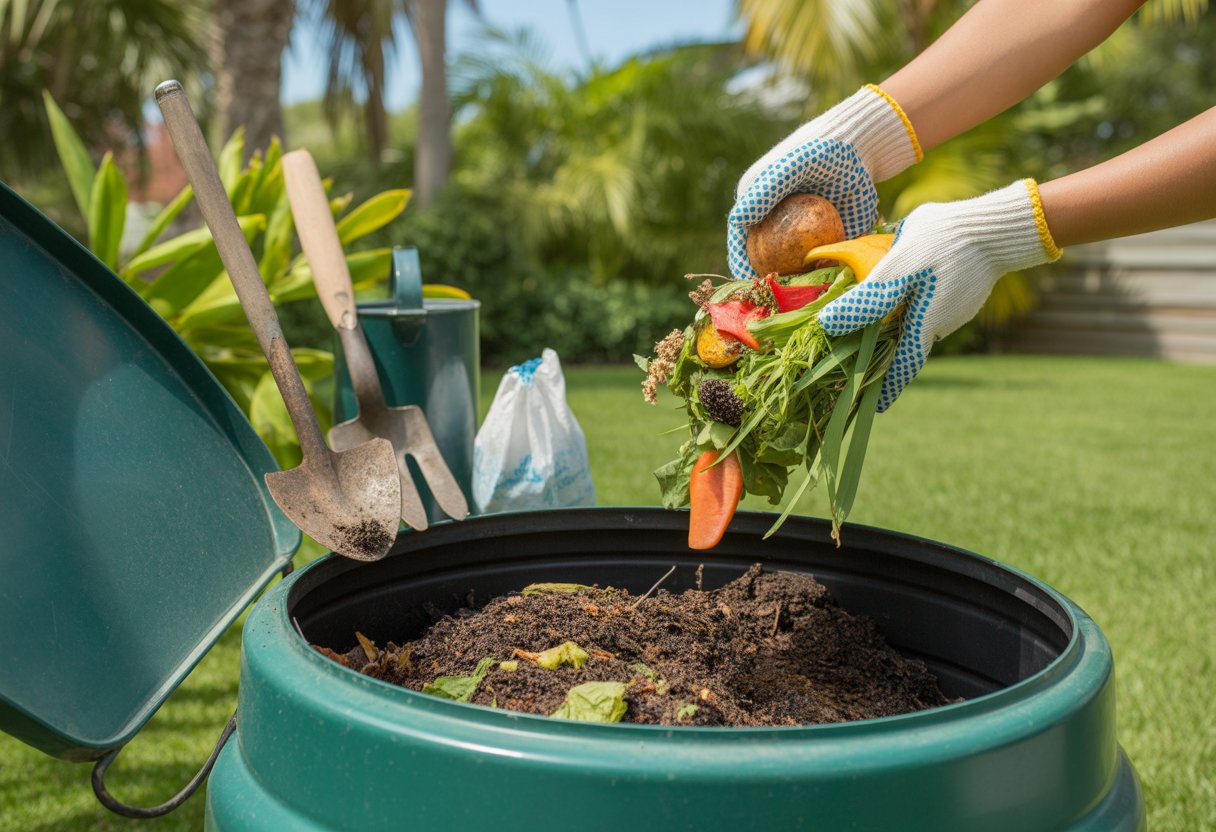
Getting compost right in Florida mostly comes down to where you put it, how you layer stuff, and how you handle water and air. Nail those, and you’ll have rich compost before you know it.
Selecting the Right Location
Find a shaded, well-drained spot for your pile or bin. Florida sun can dry out compost in no time, so shade really helps.
Try to keep it close to your garden or kitchen so it’s easy to add scraps. Don’t put it where it floods or gets blasted by wind.
Good air around the pile keeps things from getting musty. Level ground makes it easier to manage, too.
Layering Techniques
Start with coarse browns at the bottom for air flow. Alternate thin layers of greens (like kitchen scraps) and browns (like leaves or cardboard), aiming for two parts browns to one part greens.
Chopping up materials before you add them helps things break down faster. Skip weeds with seeds, meat, or dairy—they just cause trouble.
Maintaining Moisture and Aeration
Your compost should feel like a wrung-out sponge—not too wet, not too dry. In Florida, you might need to water it during a dry spell or cover it up when it pours.
Turn or mix the pile every week or two to keep oxygen moving through. A pitchfork or compost aerator works best for loosening things up.
If your pile starts to smell sour or like ammonia, it probably needs more air or more brown materials. Don’t ignore weird smells—they’re usually a warning sign.
Troubleshooting and Tips for Florida Composters
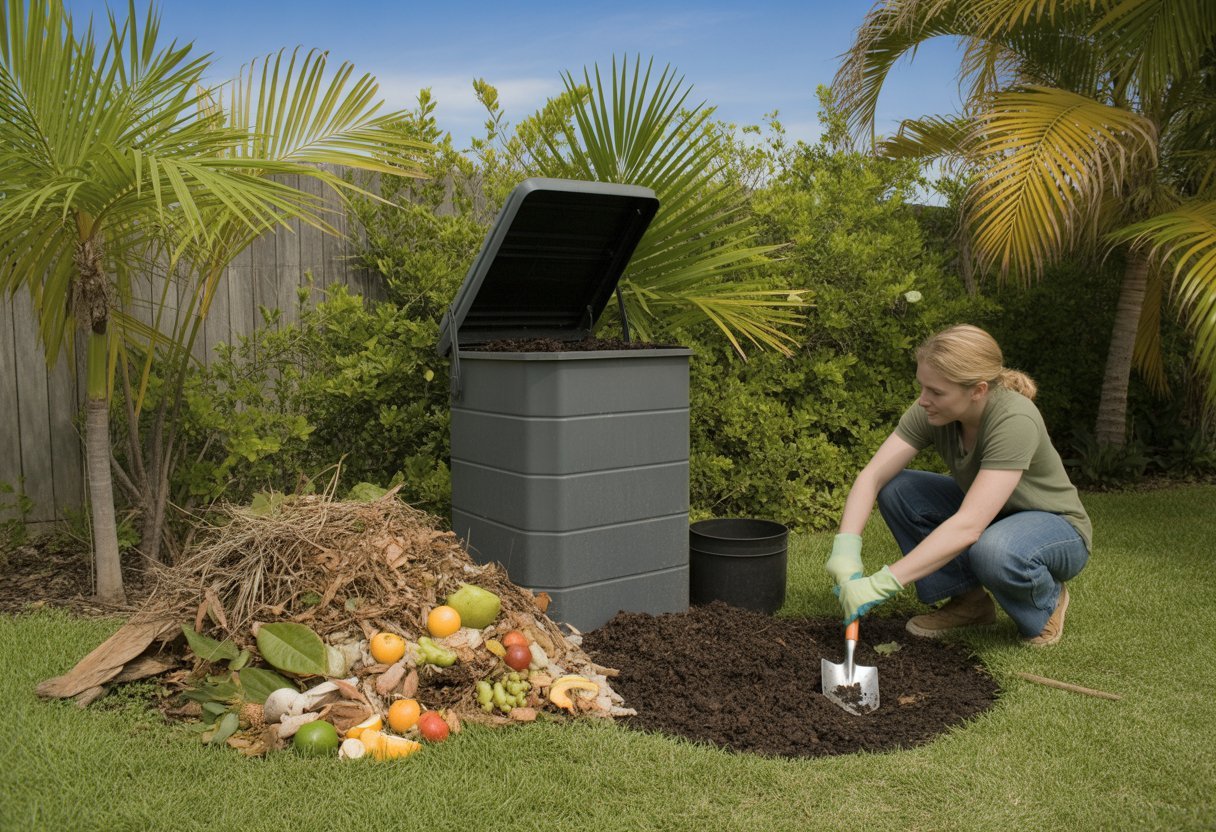
Florida’s heat and rain can make composting tricky, but a few tweaks help keep things on track. Pay attention to moisture, temperature, and what you’re tossing in.
Managing Pests and Odors
Warm, damp piles attract flies, rodents, and even raccoons. Mixing in dry browns like leaves or cardboard with your kitchen scraps helps keep things balanced.
Always cover food scraps with at least four inches of dry material. That cuts down on smells and keeps critters away.
If you’re worried about raccoons or rats, secure your bin or add wire mesh. Meat, dairy, and greasy foods just aren’t worth the trouble—they attract pests and make the pile stink.
Most odors come from too much water or not enough air. Turning the pile weekly usually fixes both and keeps things moving along.
Seasonal Adjustments
Florida’s rainy season can really soak compost piles, which slows things down and sometimes makes them smell. Try tossing a tarp over your pile or switching to a covered bin when the rain just won’t quit.
When it’s dry and hot, you’ll probably need to water the pile more often. The goal? Keep it moist, but not soggy—kind of like a damp sponge.
Temperature swings mess with microbial activity. If things cool off, toss in more green material or turn the pile more often to keep it warm and moving along.
When the weather heats up, make sure there’s enough airflow. That’ll help prevent overheating and keep composting on track.