
Soil Testing Tips for Beginners: Essential Steps for Accurate Results
Last updated: September 15, 2026
Soil testing is a must for anyone starting a garden or wanting healthier plants. It tells you about nutrient levels, pH, and the overall condition of your soil, so you know what to add or avoid.
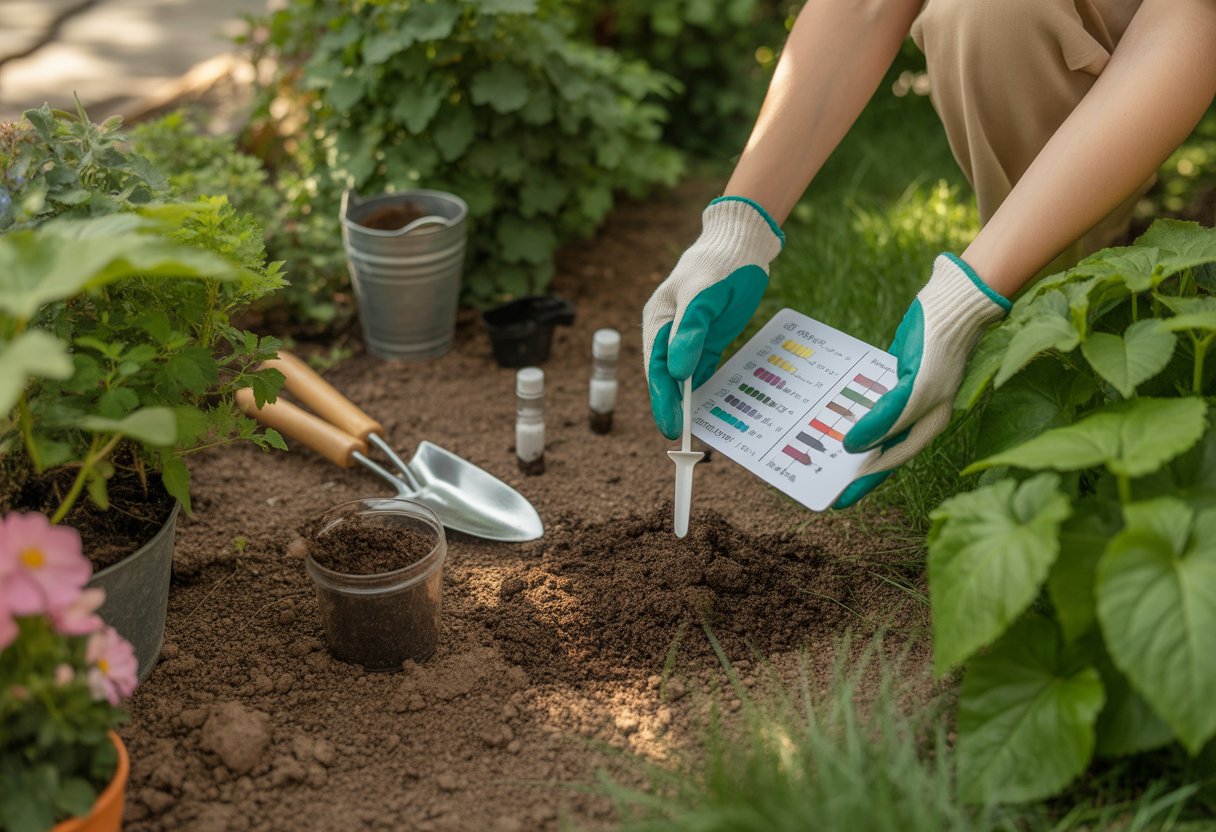
Here’s the big one for beginners: take samples from several spots, not just one. That way, you get a true sense of your soil and won’t get thrown off by weird patches.
If you know how to collect and read soil tests, you’ll save yourself time and money. You’ll also make smarter choices for your garden, which usually means happier plants and better soil.
Understanding the Basics of Soil Testing
Soil testing gives you a snapshot of soil health and fertility. You’ll find out about key soil properties and essential nutrients that really matter for plant growth.
Why Soil Testing Matters
A soil test shows you how fertile your soil is by measuring nutrients and pH. This info points you toward the right fertilizer or amendments, so you don’t overdo it or miss something important.
It can also uncover problems like contamination or weird nutrient imbalances that might mess with your plants. Accurate testing means you’re not just guessing.
Key Soil Properties to Evaluate
Soil texture, structure, pH, and organic matter all play big roles. Texture affects how water moves and how roots grow.
Most plants like a pH between 6.0 and 7.5. Organic matter makes soil richer and helps microbes do their thing.
Testing these gives you a baseline. You can then pick the right fertilizers or amendments.
Essential Nutrients for Healthy Soil
The main nutrients are nitrogen (N), phosphorus (P), and potassium (K). Plants need these for growth, roots, and staying healthy.
Secondary nutrients like calcium, magnesium, and sulfur matter too, just in smaller amounts. Then there are micronutrients—iron, manganese, zinc, copper—that help with plant metabolism.
A soil test tells you what’s missing or too high. With that info, you can fine-tune your soil and get better results.
How to Collect Effective Soil Samples
Getting good soil samples takes a little planning. Where you dig, how you handle your tools, and using a soil probe the right way all matter if you want accurate results.
Choosing Accurate Sampling Locations
Picking the right spots is key. Skip areas like compost piles, spots with animal droppings, or right next to fences—those can really throw off your test.
Instead, sample from parts of your garden or field that look and feel similar. In big areas, split it into smaller zones (no more than 10 acres each), and grab 10-15 subsamples from each zone. Mix those together for a composite sample.
Preparing to Collect Soil Sample
Start with clean tools: a soil probe or spade, a plastic bucket, clean bags, and something to label with. Dirty tools can mess up your results.
Try to sample when the soil isn’t soggy or bone dry. Clear away debris like grass or roots before you dig in. Label everything right away so you don’t forget where each sample came from.
Proper Use of a Soil Probe
A soil probe helps you get samples at the right depth. Push it straight down—usually 6-8 inches for gardens, up to 12 inches for fields.
Don’t twist the probe too much; you want the soil to stay intact. Drop each core into your bucket, and clean the probe between samples to avoid mixing things up.
If you don’t have a probe, use a clean spade. Cut small cubes at the same depth for each sample.
Interpreting Soil Test Results and Next Steps
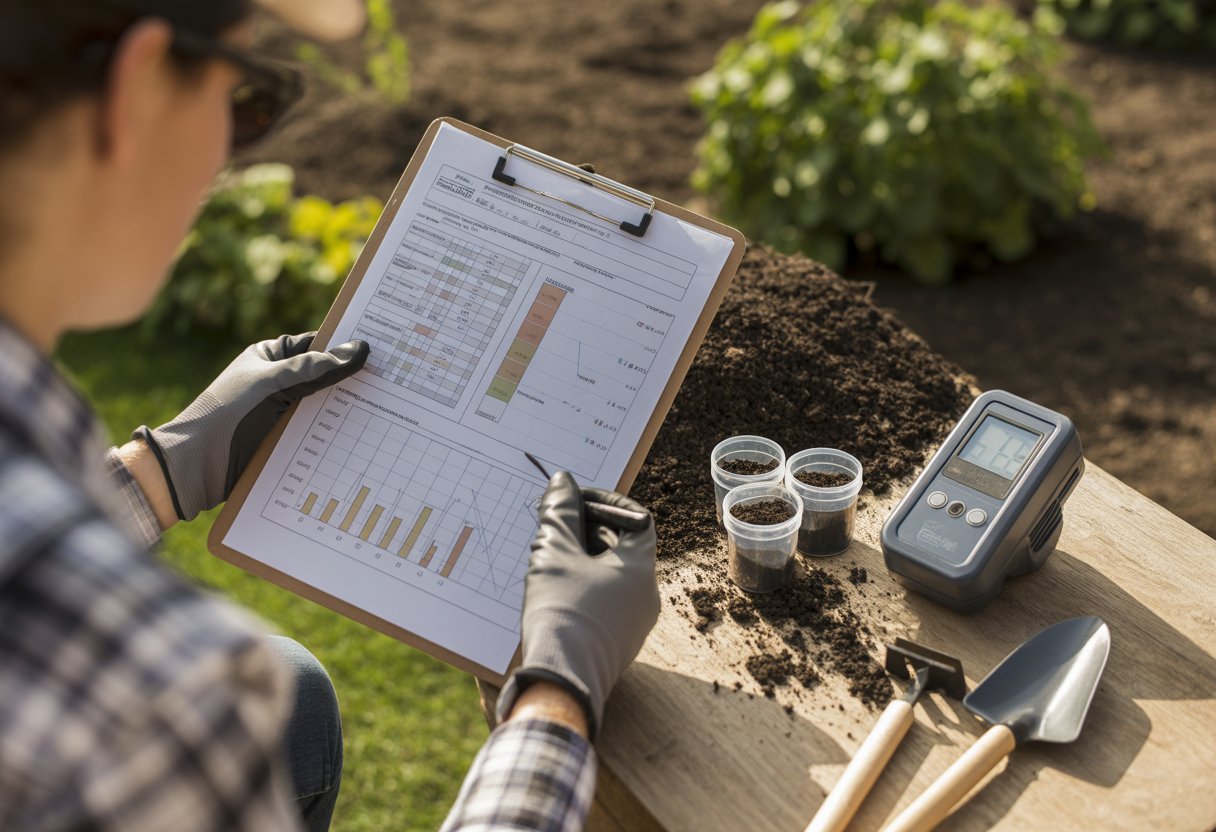
Reading soil test results isn’t as scary as it looks. Focus on pH, nutrient levels, and soil composition—that’s what really matters for your next steps.
Understanding Soil pH and Its Importance
Soil pH tells you if your soil’s acidic or alkaline, on a scale from 0 to 14. Most plants want 6.0 to 7.5.
If your pH is too low, add lime to raise it. Too high? Sulfur can bring it down.
Ignoring pH can make nutrients unavailable, even if they’re in the soil. That’s a headache you can avoid.
Assessing Nitrogen, Phosphorus, and Potassium Levels
Nitrogen helps leaves grow, phosphorus boosts roots and flowers, and potassium keeps plants strong. Your soil test will show if you’re low, medium, or high on each.
If you’re low on nitrogen, use something like ammonium nitrate. Low phosphorus? Try bone meal or superphosphate. Potassium can be bumped up with potash.
Match your fertilizer to what the test says. Overdoing it or missing something can both hurt your plants.
Evaluating Soil Texture and Organic Matter
Soil texture is just how much sand, silt, or clay you have. Sandy soils drain fast but don’t hold nutrients. Clay hangs onto water but can get compacted.
Organic matter—basically decomposed stuff—improves structure and helps soil hold nutrients. More is usually better.
If your test shows low organic matter, add compost or similar amendments. It’s all about making your soil balanced and workable.
Improving Soil Quality for Beginners
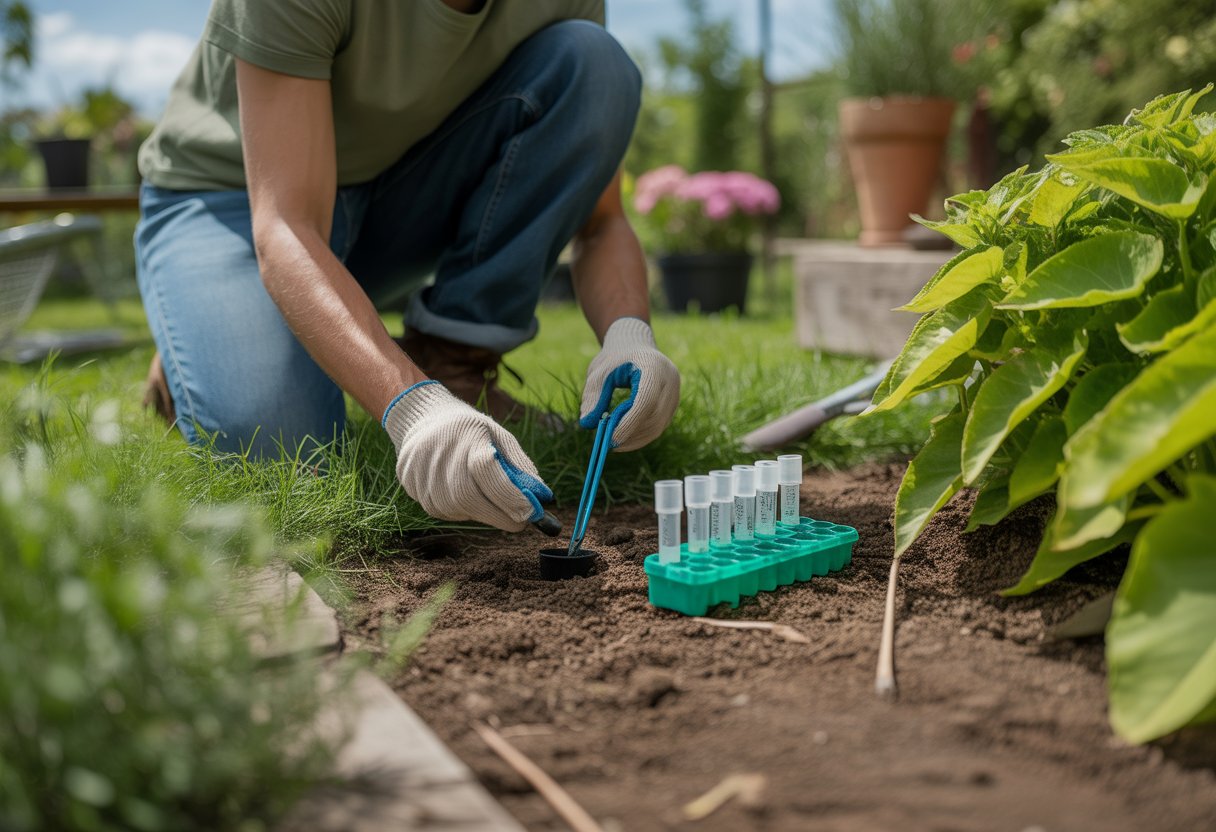
Getting better soil means adding the right stuff and keeping an eye on nutrients. Don’t just dump things in—aim for balance and check how it’s going now and then.
Incorporating Compost and Organic Amendments
Compost is a game changer for boosting organic matter and making soil easier to work. It helps sandy soils hold water and supports good microbes.
Spread 1–2 inches of compost over your garden and mix it into the top 6 inches. Aged manure or leaf mold works too, if you’ve got it.
Don’t use fresh manure—it can burn plants or bring in unwanted bugs.
Targeted Fertilizer Application Strategies
Let your soil test guide your fertilizer choices. Focus on what your soil actually needs.
Pick balanced or single-nutrient fertilizers based on what’s missing. Sandy soils often need more frequent feeding since nutrients wash out faster.
Spread fertilizer evenly and water lightly to help it soak in. Too much can stress your plants or mess up the balance, so stick to the recommended rates.
Monitoring Changes in Nutrient Status
Regular soil tests every year or two help you track nutrient changes after adding amendments or fertilizers. Keeping an eye on things like this can prevent nutrients from building up too much or running out.
You can also look at simple signs like plant growth and color to catch nutrient problems early. If your tests show too many nutrients, just cut back on fertilizer to avoid causing environmental issues.
Recording test results over time gives you a chance to tweak your gardening habits. This kind of monitoring keeps your soil healthy and your garden productive, even if it takes a bit of trial and error.
 Looking for a nursery that carries native plants?
Browse our native plant nursery directory
We just bought our first house and the previous owners didn’t do much with the landscaping. Starting from scratch.
What about watering? I always seem to overdo it or not do enough.
Hi Tim! Containers can definitely work — just make sure you have good drainage and a large enough pot. -Plant Native Team
Does anyone know if this works well in zone 5? I’m in Florida and our winters are pretty harsh.
Good question! Spacing depends on the variety but a general rule is to give them room to breathe. Check the tag or seed packet for specifics. -Plant Native Team
My kids are getting interested in gardening which is awesome. We’re starting small.
Thanks Stephen! Let us know how it goes. -Plant Native Team