Harvesting Rainwater for Landscapes: Efficient Water Management and Sustainable Gardening Techniques
Last updated: October 10, 2026
Harvesting rainwater for landscapes is an easy win for conserving water and cutting utility costs. You collect runoff from roofs or other surfaces, then stash it for later—think watering plants, gardens, or lawns.
This method supports sustainable landscaping without leaning entirely on municipal water supplies.
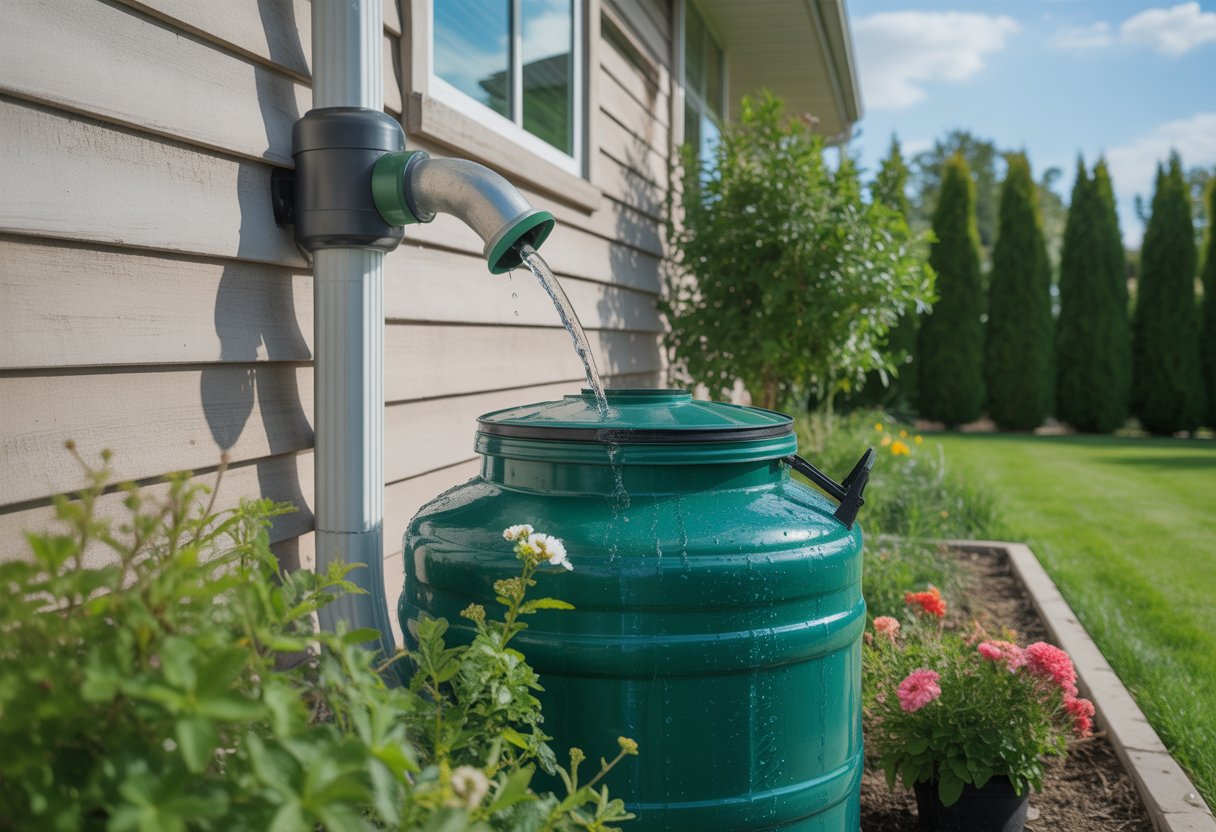
By capturing and reusing rainwater, you can seriously decrease your dependence on treated water. Plus, plants get a boost from natural, chemical-free hydration.
A proper setup helps you collect and store efficiently. It’s a practical option for any homeowner or gardener interested in eco-friendly practices.
Rainwater harvesting also manages stormwater runoff, so you’ll see less erosion and pollution. It’s a straightforward approach that benefits both the environment and the look of your landscape.
Fundamentals of Rainwater Harvesting for Landscapes
Rainwater harvesting supports landscape irrigation by collecting and storing rainwater. This helps conserve municipal water and cuts down on runoff.
Plants get water that’s closer to what they’d find in nature.
Why Harvest Rainwater for Landscape Irrigation
Using rainwater for landscapes lowers your reliance on treated water, which can get expensive and isn’t always plentiful. Rainwater skips the chemicals like chlorine and fluoride, so it’s gentler on soil and better for plant growth.
It also takes pressure off city drainage systems by catching runoff before it can cause problems. You’ll have a reliable water source during dry spells, especially if you’re in a drought-prone area.
Water Conservation Benefits
Rainwater harvesting directly supports water conservation by capturing precipitation that would otherwise just run off. It eases demand on groundwater and surface water.
Conserving water like this helps minimize the environmental impacts of excessive water extraction. Stored rainwater keeps your garden going during the driest months.
Overview of the Rainwater Harvesting Process
You start by collecting rainwater from roof surfaces with gutters or other catchment areas. Water flows through filters to remove debris and contaminants.
Next, you store rainwater in tanks or cisterns to keep it clean and prevent evaporation. Pumps or gravity-fed systems move water to your landscape irrigation points.
You can automate the whole thing or keep it manual—it’s really up to your preferences and the size of your setup.
Systems and Components for Rainwater Collection
Good rainwater harvesting comes down to having the right components. You need a solid catchment surface, a way to get water from there to storage, and some kind of filter to keep the water clean.
Key elements include the roof or catchment surface, downspouts, and storage options that keep water quality high.
Catchment Surfaces and Downspouts
The catchment surface is usually your roof—metal, tile, or slate work best since they shed water quickly and don’t add much contamination. Asphalt shingles can leach chemicals, so you’ll want to think that through.
Downspouts move water from the roof into your storage system. Keep downspouts clean and clear, and use screens or filters to stop leaves and debris from getting in.
Properly sized downspouts cut down on overflow during heavy rain. Regularly check and clean your roof and downspouts to keep things flowing and reduce contamination risk.
Storage Options: Rain Barrels, Barrels, and Cisterns
Rain barrels are small—usually 50 to 100 gallons—and work well for gardens or small yards. They’re cheap, easy to set up, but need frequent emptying if it’s dry.
Barrels can mean different things: sometimes repurposed drums, sometimes custom units, and they can hold more water than the typical little rain barrel.
Cisterns are the big guns, holding hundreds to thousands of gallons. You can put them above or below ground, and they’re great for bigger gardens or irrigation systems.
Pumps and control systems help move water from cisterns. Choose your storage based on how much water you need, the space you have, and what you can spend.
Storage Tanks and Storage Containers
Storage tanks are built specifically for rainwater collection. They come in all sizes, from a few hundred to tens of thousands of gallons, and are made from materials like polyethylene, fiberglass, or concrete.
You need to seal or cover storage containers to keep out mosquitoes and dirt. Underground tanks stay cooler and are better protected, but above-ground tanks are easier to get to for maintenance.
Put tanks where you can reach them easily for both water access and upkeep. Always include an overflow outlet to send extra water away from your home’s foundation.
Pre-Filtration and Water Quality Considerations
Pre-filtration keeps leaves, dirt, and other junk out of your storage. Mesh screens, leaf guards, and first-flush diverters (which toss out the first bit of dirty runoff) all work.
Keep filters and catchment surfaces clean. Stagnant water can breed algae and mosquitoes, so you might need to circulate or treat water if it sits for a while.
Test water quality before using it on your landscape. Good filtration also protects your pumps and irrigation gear from clogging up.
Integrating Rainwater Into Landscape Design
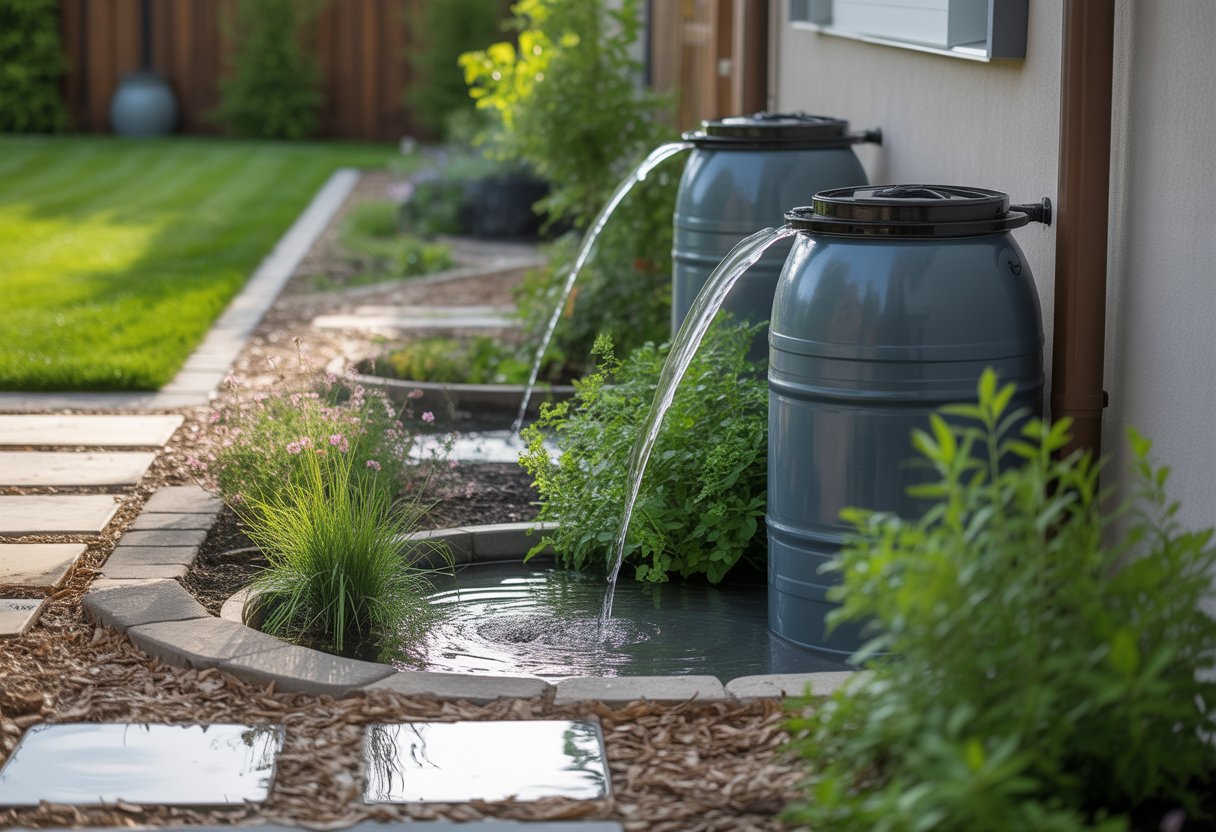
Managing water well can make your landscape both functional and good-looking. Features that capture, store, and reuse rainwater help plants thrive, cut runoff, and keep soil where it belongs.
Rain Gardens and Earthworks
Rain gardens are shallow dips that collect and soak up stormwater. They cut runoff, filter out pollutants, and recharge groundwater by letting rain seep into the soil.
Earthworks like swales, berms, and terraces manage how water moves across your yard. These features slow down runoff, help water soak in, and stop soil from washing away.
Put rain gardens and earthworks where water naturally gathers or flows. Getting the size right and picking the best soil type and plants is key for long-term success.
Selecting Native Plants
Native plants are built for your local rainfall and soil. They need less extra water and their deep roots help the soil soak up rain.
Mixing plants with different root depths boosts water uptake and keeps soil stable. Native grasses, shrubs, and trees together lower irrigation needs, prevent erosion, and support wildlife.
Planting natives in rain gardens or along earthworks makes your rainwater system more efficient. Their drought resistance means less watering during dry spells.
Water Reuse and Greywater Integration
Using captured rainwater means you’ll use less tap water for your landscape. Storage tanks, cisterns, and pumps help spread rainwater where it’s needed.
You can also use greywater from sinks, showers, or laundry—just make sure it’s filtered and only use it on non-edible plants. Combining rainwater with greywater gives you a tough, resilient irrigation system.
This approach keeps your landscape healthy during dry periods and helps shrink your water bill.
Soil Erosion Prevention and Water Pollution Control
Managing rainwater helps prevent soil erosion by slowing down how fast and how much water moves. Vegetated swales and mulching help keep soil in place and slow runoff.
Rain gardens filter stormwater, trapping sediments, fertilizers, and chemicals before they reach streams or lakes.
Good earthworks and rainwater design stop nutrients from running off and polluting waterways. This keeps your soil healthy and protects nearby water.
Installation, Maintenance, and Safety
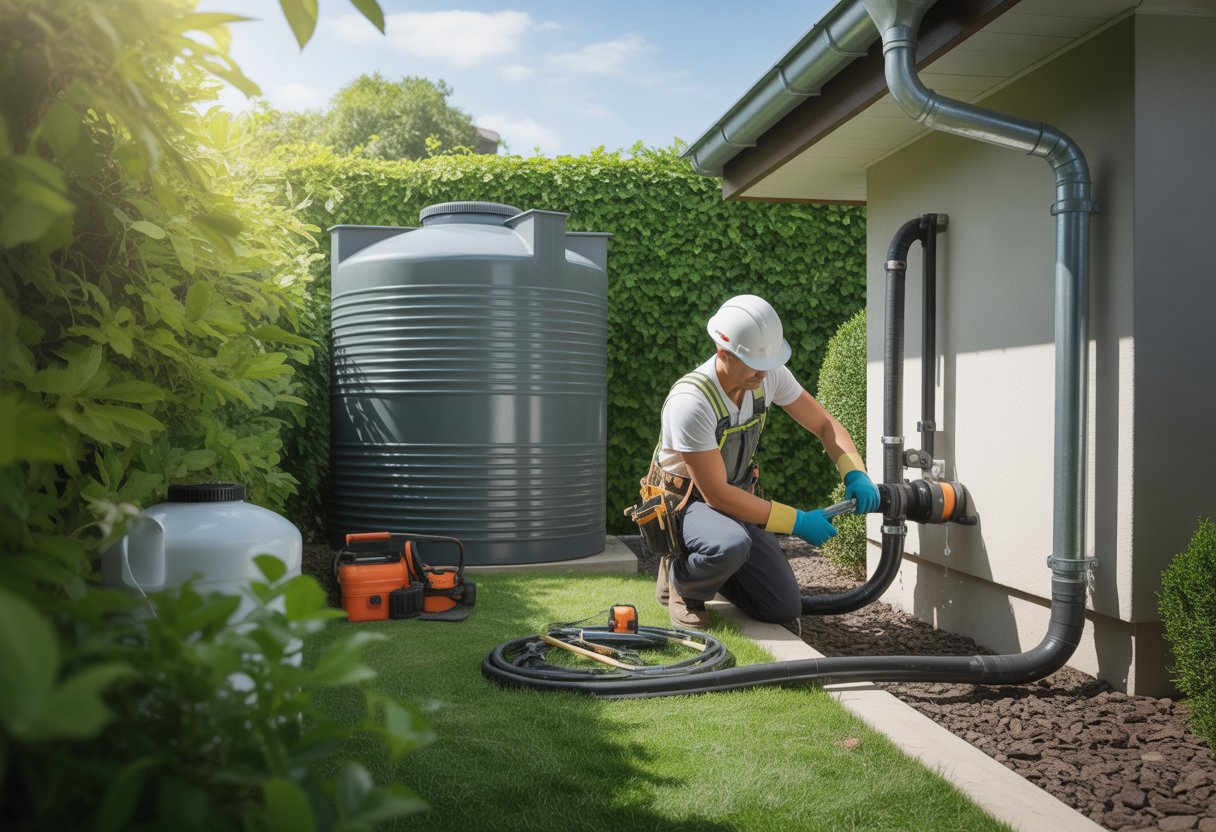
Setting up your system right, keeping it maintained, and following local rules are all crucial. These steps make sure you get a reliable water supply and avoid contamination or damage.
Installing Rainwater Collection Systems
Start by picking a good catchment area—usually a roof with safe, non-toxic materials. Fit gutters securely so water flows into storage tanks, and use screens to keep out debris.
Tanks need a stable, level base so they don’t tip. Size your tank based on local rainfall and your landscape’s water needs.
If you want a backup, connect the system to municipal water for dry stretches. It’s smart to hire a pro for plumbing and to make sure you’re following local codes.
Use durable, UV-resistant materials to get the most life out of your setup.
Routine Maintenance Best Practices
Clean gutters and screens regularly to avoid blockages and contamination. Check tanks for cracks or algae, which can mess with water quality.
Inspect filters and first-flush diverters monthly—clean or swap them out as needed. After big storms, look over your system for damage or sediment buildup.
Keep a record of maintenance so you can spot any recurring problems. Good upkeep keeps your system running longer and your landscape watered safely.
Ensuring System Safety and Compliance
Install mosquito-proof screens to keep out pests and maintain hygiene. Overflow outlets should send extra water away from your foundation, which helps cut down on erosion.
Check your local rules—permits and specific construction standards are usually a must. If you use potable-grade materials, you’ll avoid chemicals leaching into the collected water.
Don’t let your system connect with municipal water lines, or you’ll risk contamination. Put up safety signs and keep tank access locked to prevent accidents or unauthorized use.