Organic Mulch vs Synthetic Mulch: Key Differences and Best Uses Explained
Last updated: September 27, 2026
Choosing between organic and synthetic mulch? It really comes down to what you want for your garden.
Organic mulch breaks down over time and adds nutrients to the soil. Synthetic mulch, on the other hand, sticks around much longer and keeps weeds in check without decomposing.
The key difference is that organic mulch improves soil health, whereas synthetic mulch provides lasting coverage.
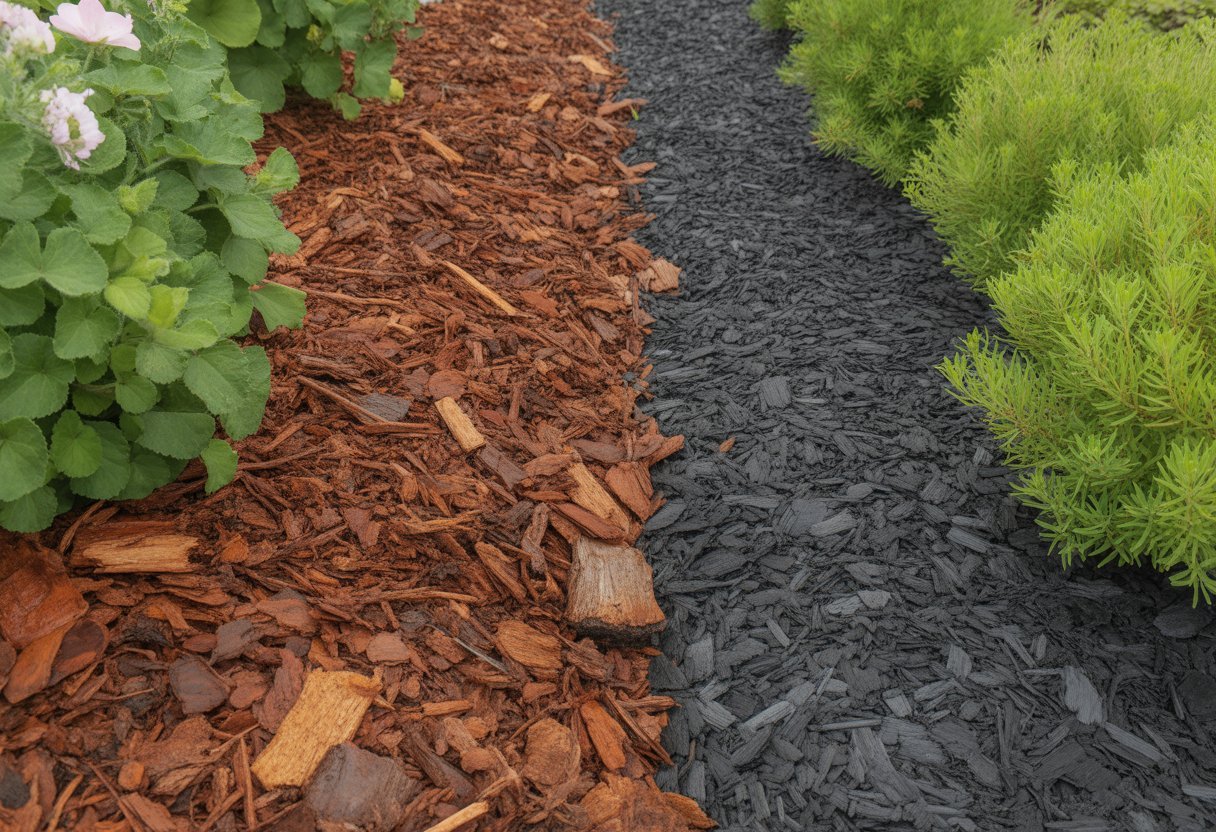
If you’re all about sustainability or want to boost your soil, you’ll probably lean toward organic stuff—think wood chips or straw.
But if you just want something easy that lasts, plastic or rubber mulches might be more your speed.
Key Differences Between Organic Mulch and Synthetic Mulch
Organic and synthetic mulches don’t just look different—they’re made from totally different stuff and behave in unique ways.
These differences shape how you use them in your yard or garden.
Definition and Types
Organic mulch comes from natural, biodegradable materials. You’ll see wood chips, straw, hay, compost, grass clippings, leaf mulch, and sawdust used a lot.
These materials break down over time and feed the soil.
Synthetic mulch, sometimes called inorganic mulch, is made from things that don’t decompose. Think black plastic, degradable plastic, landscape fabric, paper mulch, and gravel.
They act mostly as barriers to block weeds and hold in moisture.
Organic mulches boost soil health by improving structure and feeding microbes. Synthetic ones focus on weed suppression and lasting coverage, but don’t help your soil.
Physical Appearance and Materials
Organic mulches usually have that classic, earthy look. Wood chips and leaf mulch add some texture and color that fits right into most gardens.
Straw and hay look lighter and often end up in veggie beds.
Synthetic mulches come in all sorts of shapes and colors. Black plastic is popular for veggie rows and gives a tidy, uniform look.
Gravel and landscape fabric look clean and stable, but they don’t really blend in like organic options.
Organic mulches are loose and easy to spread, but wind or rain can move them around. In contrast, inorganic mulches stay put better, especially if you pin them down or use edging.
Durability and Longevity
Organic mulches break down over time—some, like wood chips, last a couple of years, while straw or hay might vanish in a season.
You’ll need to top them up regularly.
Synthetic mulches stick around for years. Black plastic and landscape fabric don’t break down quickly, though they might fade or crack in the sun after a while.
Gravel and rocks basically last forever with almost zero maintenance.
When organic mulches decompose, they add organic matter to the soil. Synthetic mulches don’t feed the soil, but they create a tough weed barrier that lasts.
Benefits and Drawbacks of Organic and Synthetic Mulches
Your mulch choice affects weed control, soil condition, and even how your garden handles heat and moisture.
Weed Suppression and Control
Organic mulches like wood chips or straw block sunlight and help keep weeds down. They’ll eventually break down, so you need to refresh them now and then.
Watch out—sometimes, if they’re not processed well, they might even bring in weed seeds.
Synthetic mulch—plastic sheets or landscape fabric—puts up a solid barrier against weeds. If debris piles up on top, though, weeds can still sprout there.
You have to install it carefully to avoid gaps where weeds sneak through.
Both types help you use fewer herbicides. Synthetic mulches keep weeds out with less fuss, while organic ones need more attention.
Soil Health and Fertility
Organic mulch really shines here. As it breaks down, it adds organic matter, improves soil structure, and boosts microbes.
This means better water movement, less erosion, and improved nutrient cycling.
Synthetic mulch doesn’t feed the soil or help it breathe. Sometimes it even blocks water and air if you lay it wrong.
It does cut down on soil-borne diseases by stopping dirt from splashing up, but you won’t get any nutrient boost.
If you care about long-term soil health, organic mulch is the way to go. Synthetic mulch just acts as a physical shield.
Impact on Soil Temperature and Moisture
Organic mulch keeps soil temps steady—cooler in summer, warmer in winter. Its fluffy texture lets water soak in and stick around, so you don’t have to water as much.
Synthetic mulch, especially black plastic, heats up the soil fast. That can help warm-season crops, but it might stress out cool-loving plants.
It holds in moisture, but if you don’t lay it right, water can pool or run off, messing with irrigation.
Both types hold moisture, but organic mulch seems to handle wild weather better. Synthetic mulch needs more careful setup to avoid overheating or soggy spots.
Selecting the Right Mulch for Your Garden
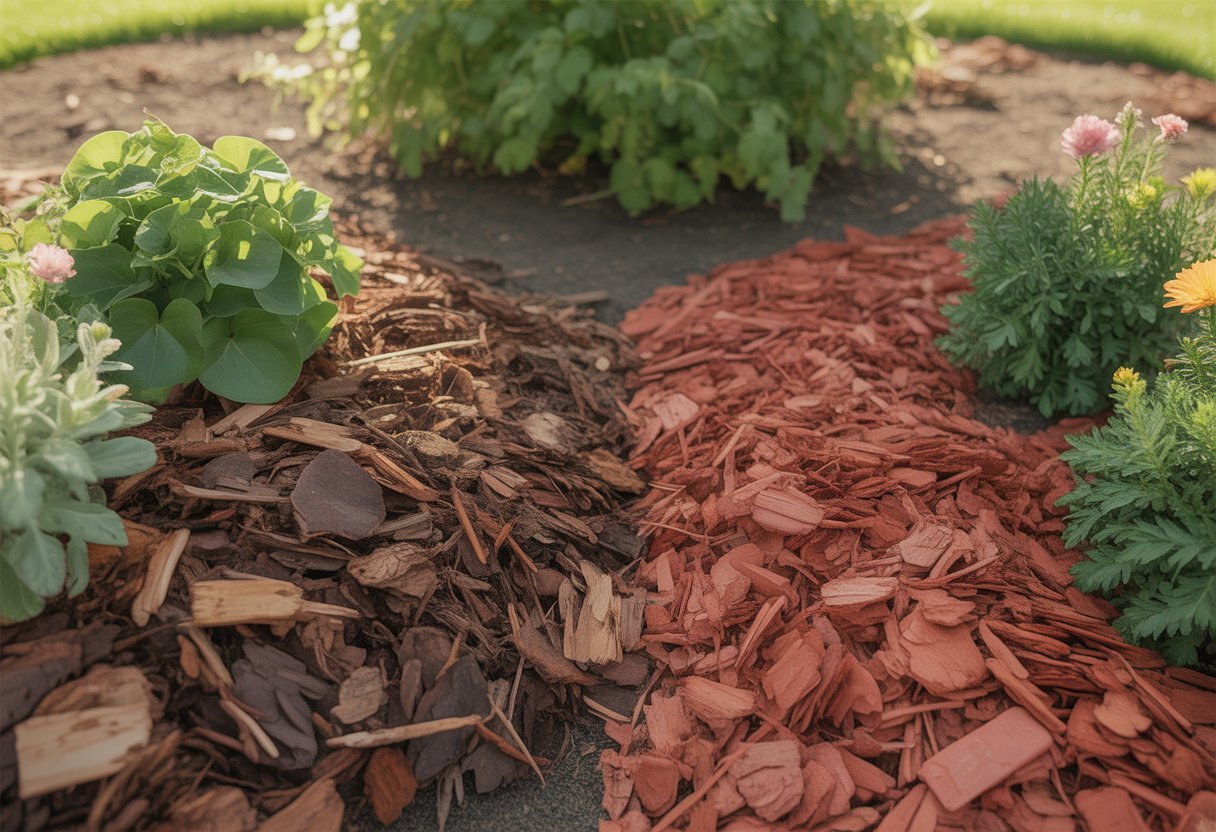
Picking the right mulch isn’t one-size-fits-all. Think about your crops, soil, and how much work you want to put in.
Different mulches change soil temp, moisture, and pest issues in their own ways.
Best Mulch for Specific Crops
For tomatoes, peppers, and eggplants, black plastic mulch heats the soil and keeps it moist, giving those plants a jump start.
Straw mulch works well for cucumbers, melons, and squash by keeping the soil cool and preventing dirt from splashing on the fruit.
Cool-season crops like a blanket of straw or cover crops, which insulate roots and add nutrients when they break down.
Strawberries love straw mulch too—it keeps berries clean and helps prevent rot.
Red mulch, usually synthetic, can make fruits easier to spot and might even keep some pests away. It’s not super common, but for specialty crops where you’re checking fruit a lot, it’s worth a look.
Application and Maintenance Tips
Spread mulch about 2-4 inches deep. This helps keep in moisture but still lets air move through.
If you’re using synthetic mulches like black plastic, make sure to secure the edges so the wind doesn’t blow them away. Swap them out or remove them every year to avoid issues like soil getting too hot or the material breaking down.
With organic mulches—think straw or cover crops—you’ll need to top them up now and then as they break down. Try not to pile mulch right up against plant stems, since that can cause rot or attract pests.
If you irrigate under black plastic mulch, drip or soaker hoses work best. For organic mulch, give it a little turn or fluff once in a while to keep it airy and prevent it from getting packed down.