Tall Oregon Grape (Berberis aquifolium)
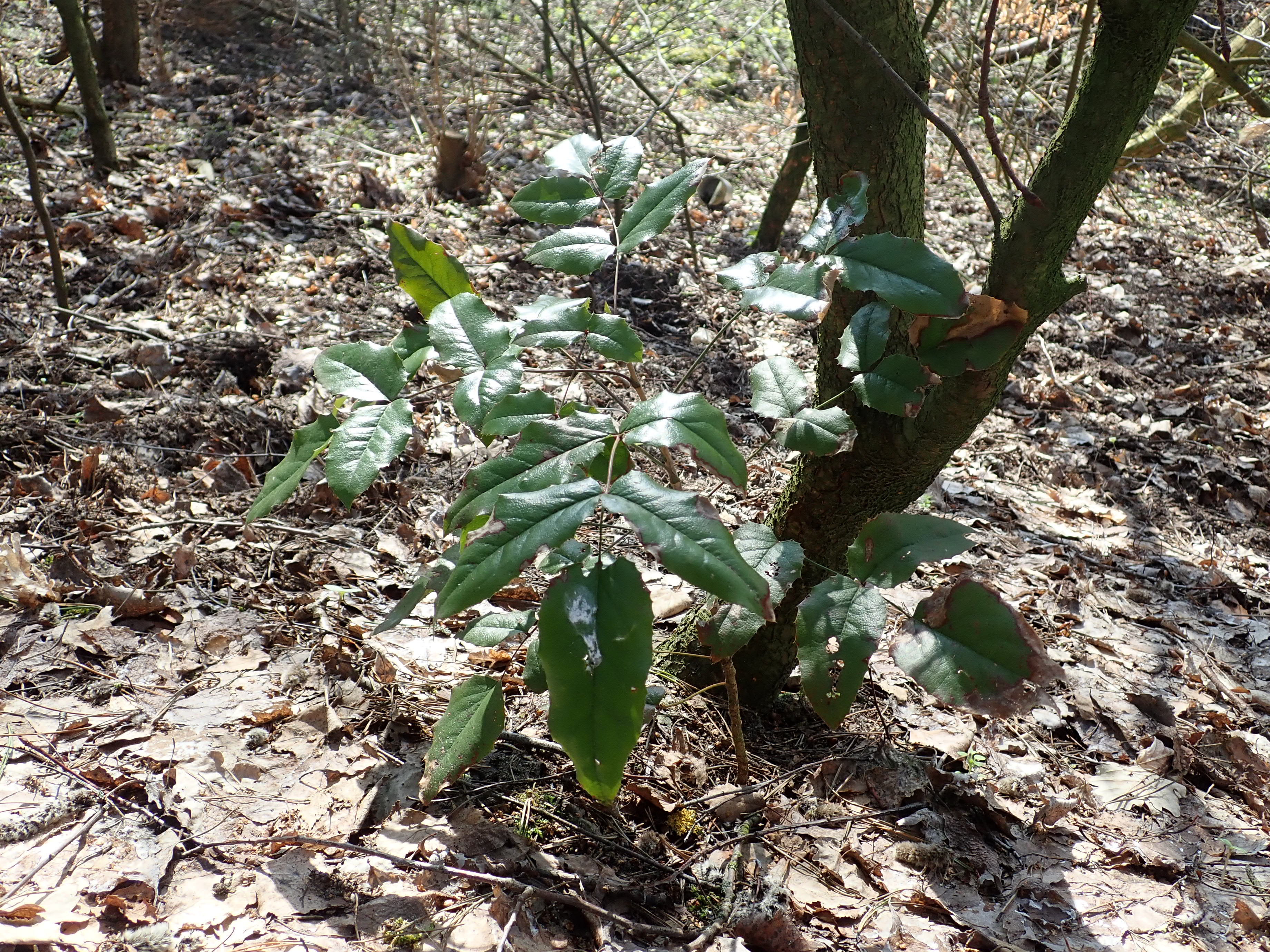
Berberis aquifolium, commonly known as Tall Oregon Grape, is a magnificent evergreen shrub that stands as Oregon’s official state flower and one of the Pacific Northwest’s most recognizable native plants. This hardy, drought-tolerant shrub combines stunning yellow flower clusters, distinctive spiny foliage, and clusters of edible blue berries, making it both a beautiful landscape choice and an ecologically valuable native species. With its ability to thrive in challenging conditions from coastal forests to mountain slopes, Oregon Grape has earned its place as a cornerstone species in Pacific Northwest ecosystems.
Quick Facts
| Scientific Name | Berberis aquifolium (Pursh) |
| Plant Type | Evergreen Shrub |
| Height | 8–10 ft |
| Sun Exposure | Part Shade to Full Sun |
| Water Needs | Low to Moderate (Drought Tolerant) |
| Soil Type | Well-draining, Adaptable |
| Soil pH | 5.5-7.5 (Acidic to Neutral) |
| Bloom Time | March to June |
| Flower Color | Bright Yellow |
| USDA Hardiness Zones | 5-9 |
Identification
Tall Oregon Grape is unmistakable once you learn its key identifying features. This robust evergreen shrub typically grows 3-10 feet tall and spreads 3-6 feet wide, though it can occasionally reach up to 12 feet in ideal conditions. The plant develops a somewhat irregular, upright growth habit with multiple stems emerging from the base, creating a dense, architectural presence in the landscape.
Leaves
The most distinctive feature of Oregon Grape is its compound, pinnately arranged leaves that strongly resemble holly foliage. Each leaf measures 6-12 inches long and consists of 5-9 individual leaflets (typically 7). The leaflets are oval-shaped with pronounced spiny margins featuring 9-21 sharp teeth per leaflet. The upper surface of the leaves is glossy dark green, while the underside is paler with prominent venation. In winter, the foliage often takes on beautiful bronze, purple, or reddish tints, adding four-season interest to the garden.
These leathery, evergreen leaves serve multiple purposes: their waxy coating helps retain moisture during dry summers, while the spiny edges deter browsing animals. The leaves emerge bright green in spring and gradually darken to their characteristic deep green as they mature.
Bark and Stems
Young stems are smooth and green, gradually developing a gray-brown bark with age. The inner bark reveals a distinctive bright yellow color when scraped, which has historically been used as a natural dye. Mature stems develop a somewhat corky texture and can become quite thick at the base of established plants. The stems contain the alkaloid berberine, which gives them their characteristic yellow coloration.
Flowers
From March through June, Oregon Grape produces spectacular displays of bright golden-yellow flowers arranged in dense, upright clusters (racemes) that emerge from the tips of branches. Each cluster measures 2-6 inches long and contains dozens of individual flowers. The individual flowers are small but numerous, each featuring six bright yellow petals surrounded by six matching sepals, with six stamens that split into two spreading branches at their tips.
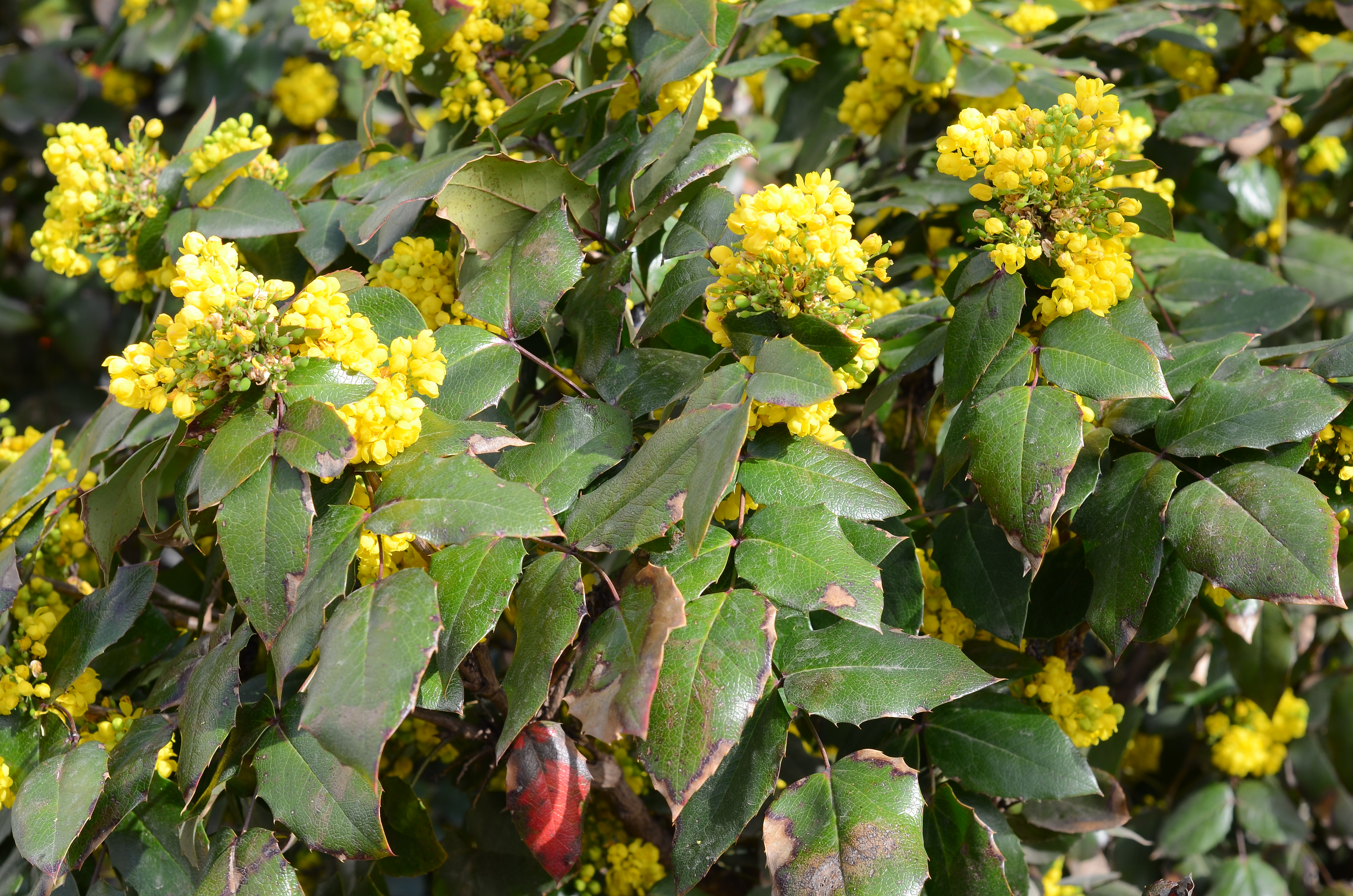
These flower clusters are not only beautiful but also highly attractive to early spring pollinators, including native bees, butterflies, and other beneficial insects. The blooming period often extends for 6-8 weeks, providing crucial early-season nectar when few other plants are flowering.
Fruit and Seeds
Following successful pollination, Oregon Grape produces clusters of small, round berries that ripen from green to deep blue-black by late summer or early fall. These berries are covered with a dusty bloom (similar to blueberries) and typically measure about ⅜ inch in diameter. Each berry contains several large seeds and has a tart, somewhat astringent flavor.
The berries are technically edible and were traditionally used by Pacific Northwest indigenous peoples, though they require preparation to be palatable due to their tartness and large seeds. Modern foragers sometimes use them to make jellies or wines, often mixing them with sweeter fruits to balance the flavor.
Native Range
Tall Oregon Grape enjoys one of the most extensive native ranges among Pacific Northwest shrubs, naturally occurring from southeastern Alaska south to Northern California and east into Idaho and western Montana. This broad distribution reflects the species’ remarkable adaptability to diverse climatic conditions and elevations, from sea level coastal areas to mountain slopes exceeding 7,000 feet in elevation.
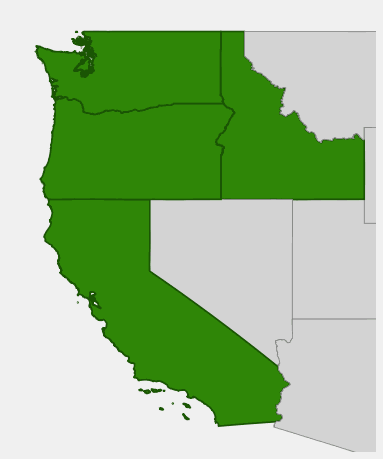
Throughout this extensive range, Oregon Grape demonstrates remarkable ecological plasticity, thriving in diverse habitats from moist coastal forests dominated by Sitka Spruce and Western Hemlock to drier inland sites with Ponderosa Pine and Douglas Fir. It commonly grows as an understory species in coniferous forests but can also be found in open woodlands, forest edges, clearings, and disturbed sites where it often serves as an important early colonizer.
The species shows particular abundance in the Cascade Mountains and Coast Range, where it forms extensive colonies in the understory of old-growth and second-growth forests. In these environments, it often grows alongside other Pacific Northwest natives like Salal (Gaultheria shallon), Red Huckleberry (Vaccinium parvifolium), and various fern species, creating the characteristic understory community of Pacific Northwest forests.
📋 Regional plant lists featuring Tall Oregon Grape: Western Oregon & Western Washington
Growing & Care Guide
One of Oregon Grape’s greatest assets as a landscape plant is its remarkable adaptability and low maintenance requirements once established. This hardy native can thrive in a wide range of conditions, making it an excellent choice for both novice and experienced gardeners seeking a reliable, attractive, and ecologically valuable addition to their landscapes.
Light Requirements
Oregon Grape demonstrates impressive flexibility regarding light conditions, though its performance varies with sun exposure. In its native habitat, it typically grows as an understory plant receiving filtered or dappled sunlight. In cultivation, it performs well in:
- Part Shade (4-6 hours of direct sun): Optimal conditions for most landscapes, producing lush foliage and reliable flowering
- Full Shade (2-4 hours of direct sun): Tolerates deep shade well, though flowering may be reduced
- Full Sun (6+ hours of direct sun): Acceptable in cooler climates or with adequate moisture, but may require more water and can develop pale foliage
In hotter inland areas, afternoon shade is particularly beneficial to prevent leaf scorch and reduce water stress during summer months.
Soil Preferences
Oregon Grape is remarkably tolerant of various soil conditions, reflecting its wide native range across diverse geological formations. Key soil requirements include:
- Drainage: Well-draining soil is essential; the plant cannot tolerate waterlogged conditions
- pH Range: Adaptable to acidic to neutral soils (pH 5.5-7.5), with slight preference for acidic conditions
- Soil Type: Thrives in sandy loam, clay loam, or rocky soils; surprisingly tolerant of poor soils
- Organic Matter: Benefits from organic matter but not required; can grow in relatively infertile soils
The species shows particular tolerance for challenging soil conditions including clay soils (if well-draining), rocky soils, and slopes where erosion might be a concern. This makes it valuable for challenging landscape situations where other plants might struggle.
Water Requirements
Once established (typically after 1-2 years), Oregon Grape exhibits excellent drought tolerance, making it ideal for water-wise landscaping and areas with summer dry conditions typical of the Pacific Northwest. Watering guidelines include:
- Establishment Period: Regular watering during the first 1-2 years to develop deep root system
- Mature Plants: Minimal supplemental irrigation needed in most Pacific Northwest locations
- Summer Care: Deep, infrequent watering during extended dry periods (monthly or bi-monthly)
- Overwatering Risks: Avoid frequent shallow watering, which can lead to root rot
In its native range, the plant receives most of its annual moisture from fall and winter rains, entering a natural drought-dormant period during summer months.
Planting Tips
Successful Oregon Grape establishment begins with proper planting techniques:
- Timing: Plant in fall or early spring for best establishment
- Site Preparation: Dig a hole 2-3 times wider than the root ball but no deeper
- Planting Depth: Plant at the same depth as it was growing in the container
- Spacing: Allow 4-6 feet between plants for individual specimens, 3-4 feet for hedging
- Mulching: Apply 2-3 inches of organic mulch around the base, keeping mulch away from the stem
Pruning and Maintenance
Oregon Grape requires minimal pruning and maintenance, which adds to its appeal as a low-maintenance landscape plant:
- Pruning Needs: Generally requires little pruning; naturally maintains an attractive form
- Timing: If pruning is needed, do so immediately after flowering in late spring
- Techniques: Remove dead, damaged, or crossing branches; can be lightly shaped
- Rejuvenation: Old, overgrown plants can be cut back hard in late winter to rejuvenate
- Suckering: May produce suckers from the base; remove if desired to maintain single-stem form
Propagation
Oregon Grape can be propagated through several methods:
- Seed: Collect ripe berries in fall, remove pulp, stratify seeds over winter, plant in spring
- Cuttings: Semi-hardwood cuttings taken in late summer with rooting hormone
- Division: Divide established clumps in early spring, ensuring each division has roots
- Suckers: Transplant naturally occurring suckers from the base of established plants
Wildlife & Ecological Value
Oregon Grape serves as a keystone species in Pacific Northwest ecosystems, providing critical resources for a diverse array of wildlife throughout the year. Its ecological importance extends far beyond its aesthetic value, making it an essential component of habitat restoration projects and wildlife-friendly gardens.
Pollinators
The early spring flowering period of Oregon Grape makes it particularly valuable for pollinators emerging from winter dormancy. The abundant yellow flowers provide crucial nectar and pollen when few other plants are blooming:
- Native Bees: Mason bees, leafcutter bees, and various solitary species rely heavily on early Oregon Grape nectar
- Bumble Bees: Emerging queen bumble bees depend on spring-flowering plants like Oregon Grape for energy
- Butterflies: Early butterflies including mourning cloaks and spring azures visit the flowers
- Beneficial Insects: Hover flies, predatory beetles, and other beneficial insects feed on nectar and pollen
The extended 6-8 week flowering period provides sustained resources during the critical spring period when pollinator populations are building for the year.
Birds
Oregon Grape berries are consumed by numerous bird species, though the tart flavor means they’re typically eaten after sweeter fruits have been exhausted:
- Game Birds: Ruffed grouse, blue grouse, and quail eat both berries and occasionally foliage
- Songbirds: American robins, varied thrushes, and waxwings consume the berries
- Year-round Residents: Towhees, sparrows, and juncos eat seeds and occasionally berries
- Nesting Habitat: Dense, spiny foliage provides excellent nesting sites for small birds
The persistent berries provide food resources well into winter, serving as emergency food during harsh weather when other resources are scarce.
Mammals
While the spiny leaves deter most browsing mammals, several species utilize Oregon Grape:
- Small Mammals: Chipmunks, squirrels, and mice eat the berries and occasionally cache them
- Black Bears: Consume berries when available, though they prefer sweeter fruits
- Deer: Generally avoid the plant due to spiny foliage, making it deer-resistant
- Rabbits: Rarely browse due to spiny nature, another advantage in landscapes
Ecosystem Role
Beyond direct wildlife value, Oregon Grape plays several important ecological roles:
- Erosion Control: Deep root system helps stabilize slopes and prevent soil erosion
- Soil Building: Leaf litter contributes organic matter and creates habitat for beneficial soil organisms
- Understory Structure: Provides essential mid-layer vegetation in forest communities
- Succession: Pioneer species that helps establish conditions for forest regeneration
- Fire Resistance: Relatively fire-resistant and often among first plants to resprout after fire
Cultural and Historical Significance
Oregon Grape holds deep cultural significance in the Pacific Northwest, serving as Oregon’s official state flower since 1899 and playing important roles in indigenous cultures for countless generations.
Indigenous Uses
Pacific Northwest indigenous peoples have utilized Oregon Grape for both medicinal and practical purposes:
- Medicine: Inner bark used to treat digestive issues, skin conditions, and infections
- Dye: Bright yellow inner bark provided yellow dye for baskets and clothing
- Food: Berries eaten fresh or dried, often mixed with sweeter fruits
- Tools: Hard wood used for small implements and tools
Modern Herbal Use
Oregon Grape continues to be valued in modern herbalism:
- Active Compounds: Contains berberine, known for antimicrobial properties
- Traditional Uses: Used similarly to goldenseal for various conditions
- Sustainable Harvesting: Wild harvesting should be done responsibly and with proper permits
- Cultivation: Growing your own ensures sustainable access to this valuable plant
Landscape Design Applications
Oregon Grape’s unique combination of year-round foliage, spring flowers, fall berries, and low maintenance requirements makes it valuable in numerous landscape applications:
Foundation Plantings
The architectural form and evergreen foliage make Oregon Grape excellent for foundation plantings, particularly on the north or east sides of buildings where it receives partial shade.
Wildlife Gardens
Essential component of Pacific Northwest wildlife gardens, providing food and habitat for numerous species while requiring minimal care.
Native Plant Gardens
Cornerstone species for authentic Pacific Northwest plant communities, combining beautifully with ferns, huckleberries, and other regional natives.
Erosion Control
Excellent choice for slopes and areas prone to erosion due to its deep root system and ability to form colonies over time.
Low-Water Landscapes
Outstanding performer in xeriscapes and water-wise gardens once established, reducing irrigation needs significantly.
Common Challenges and Solutions
While Oregon Grape is generally trouble-free, understanding potential challenges helps ensure success:
Overwatering
The most common problem with cultivated Oregon Grape is overwatering, which can lead to root rot. Ensure good drainage and avoid frequent shallow watering.
Leaf Scorch
In hot, sunny locations, leaves may develop brown edges. Provide afternoon shade in hot climates or ensure adequate moisture.
Slow Initial Growth
Oregon Grape may appear to grow slowly the first year as it establishes its root system. This is normal; growth accelerates in subsequent years.
Pest Issues
Generally pest-free, but occasional issues with scale insects or aphids can occur. These are typically minor and often controlled by beneficial insects.
Seasonal Interest
Oregon Grape provides four-season interest in the landscape:
- Spring: Spectacular yellow flower displays lasting 6-8 weeks
- Summer: Lush green foliage provides consistent backdrop for other plants
- Fall: Blue-black berries and developing bronze leaf tints
- Winter: Evergreen foliage with bronze, purple, or red tints provides structure and color
Companion Plants
Oregon Grape combines beautifully with other Pacific Northwest natives:
- Shrubs: Salal, Red Huckleberry, Indian Plum, Red-flowering Currant
- Perennials: Sword Fern, Pacific Bleeding Heart, Wild Ginger, Coral Bells
- Trees: Douglas Fir, Western Hemlock, Vine Maple, Pacific Madrone
- Ground Covers: Kinnikinnick, Wild Strawberry, Inside-out Flower
These combinations create authentic Pacific Northwest plant communities that support local wildlife while providing year-round beauty.
Frequently Asked Questions
Is Oregon Grape deer resistant?
Yes! The spiny, holly-like leaves make Oregon Grape naturally deer resistant. The sharp edges and tough texture deter browsing by deer and rabbits, making it an excellent choice for areas where these animals are problematic.
Can you eat Oregon Grape berries?
Yes, the blue berries are edible but quite tart and contain large seeds. Indigenous peoples traditionally used them for food and medicine. Modern foragers sometimes make jellies or wines, often mixing them with sweeter fruits to balance the tartness.
How fast does Oregon Grape grow?
Oregon Grape has a moderate growth rate, typically growing 6-12 inches per year once established. It may appear to grow slowly the first year as it establishes its root system, but growth accelerates in subsequent years, especially with adequate moisture.
Why is Oregon Grape the state flower if it’s not technically a flower?
Oregon Grape was designated as Oregon’s state flower in 1899 for its spectacular yellow flower clusters that bloom each spring. While the individual flowers are small, the dense, upright clusters create stunning displays that have made this native shrub a beloved symbol of the state.
Can Oregon Grape grow in containers?
Yes, Oregon Grape can grow successfully in large containers, making it suitable for patios, decks, and small spaces. Choose a container at least 18-24 inches wide and deep, use well-draining potting mix, and ensure consistent but not excessive watering. Container plants may need more frequent watering than those in the ground.

Looking for a nursery that carries Tall Oregon Grape?
Browse our native plant nursery directory: Oregon · Washington