Evergreen Huckleberry (Vaccinium ovatum)
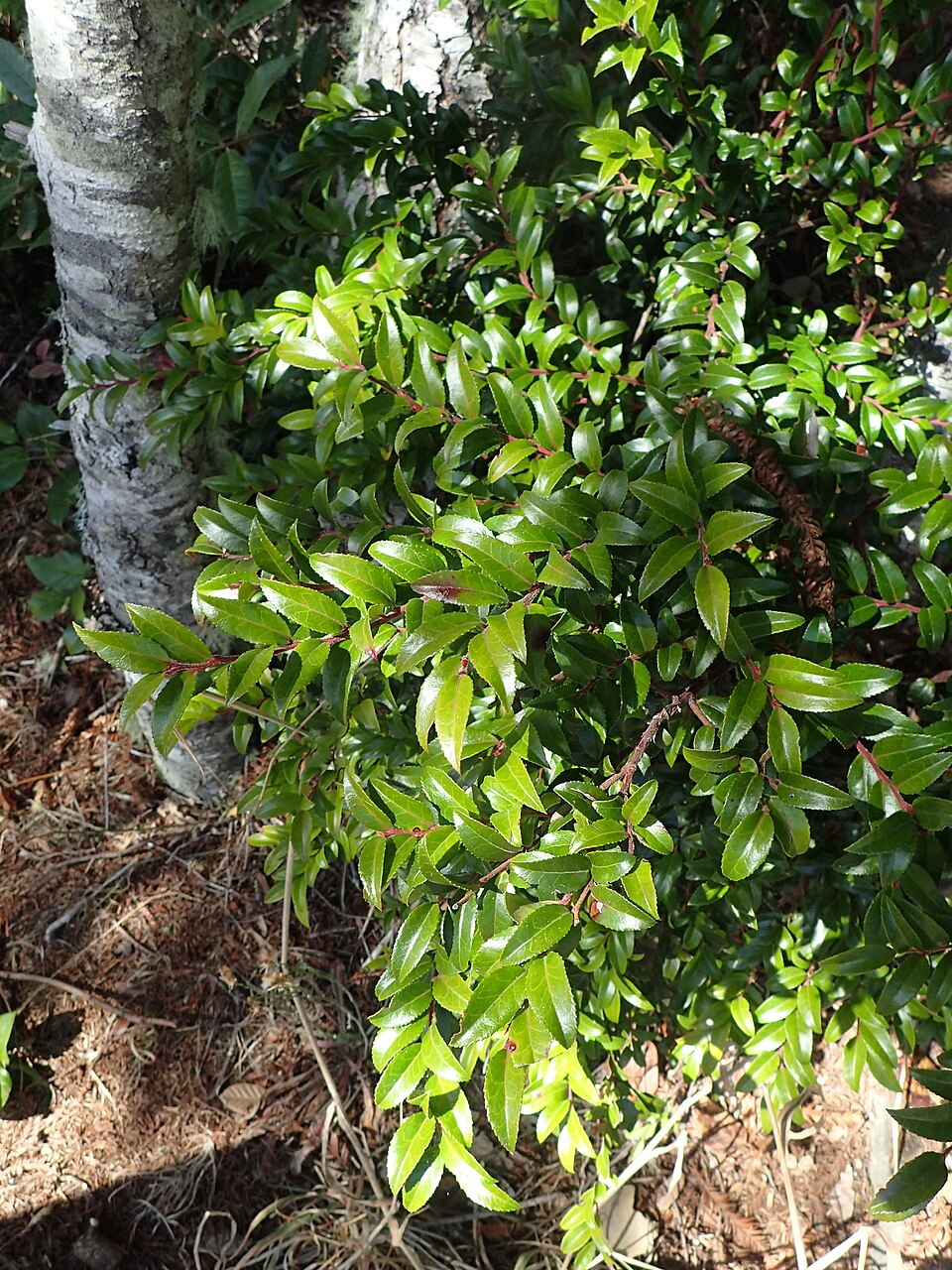
Vaccinium ovatum, commonly known as Evergreen Huckleberry, is a spectacular native shrub that brings year-round beauty and ecological value to Pacific Northwest gardens. Unlike its deciduous relatives, this member of the heath family (Ericaceae) retains its glossy, waxy leaves throughout the year, providing consistent structure and seasonal interest from spring’s delicate pink-white flowers to summer’s dark purple berries and the striking red-bronze foliage that emerges in bright sunlight.
Growing naturally in the understory of coastal coniferous forests from British Columbia to northern California, Evergreen Huckleberry is perfectly adapted to the Pacific Northwest’s maritime climate. It thrives in the dappled shade beneath towering Douglas firs and western hemlocks, but also performs beautifully in full sun where it develops more compact growth and intensely colored foliage. This versatile shrub has earned recognition both as an outstanding ornamental plant and as a critical wildlife species supporting native pollinators, birds, and forest ecosystems.
Quick Facts
| Scientific Name | Vaccinium ovatum |
| Family | Ericaceae (Heath) |
| Plant Type | Evergreen Shrub |
| Mature Height | 4 ft |
| Spread | 3–8 ft |
| Growth Rate | Slow to Moderate |
| Sun Exposure | Full Sun to Full Shade |
| Water Needs | Moderate to High |
| Soil Type | Well-drained, moist, acidic |
| Soil pH | 4.5–6.5 (acidic) |
| Bloom Time | April – June |
| Flower Color | White to pale pink |
| Fruit | Dark purple-black berries |
| Fall Color | Evergreen (bronze-red new growth) |
| Deer Resistant | Moderately (deer may browse) |
| USDA Hardiness Zones | 7–10 |
Identification
Evergreen Huckleberry typically grows as a dense, rounded to upright shrub reaching 3 to 10 feet tall, though it most commonly stays in the 4 to 6 foot range in cultivation. The woody stems display attractive bright red to reddish-brown bark on younger growth, aging to gray-brown with a slightly furrowed texture on older branches. This colorful bark provides winter interest and is one of the shrub’s distinguishing features.
Leaves
The leaves are perhaps the most distinctive feature of Evergreen Huckleberry. They are alternate, leathery, and evergreen, measuring 1 to 2 inches long and about ½ to ¾ inch wide. The leaf shape is oval to elliptic with finely serrated margins. What makes them particularly striking is their glossy, waxy surface that reflects light beautifully. Leaf color varies dramatically based on light exposure: deep forest green in shade, becoming bronze, copper, or bright red in full sun and during new growth flushes.
Flowers
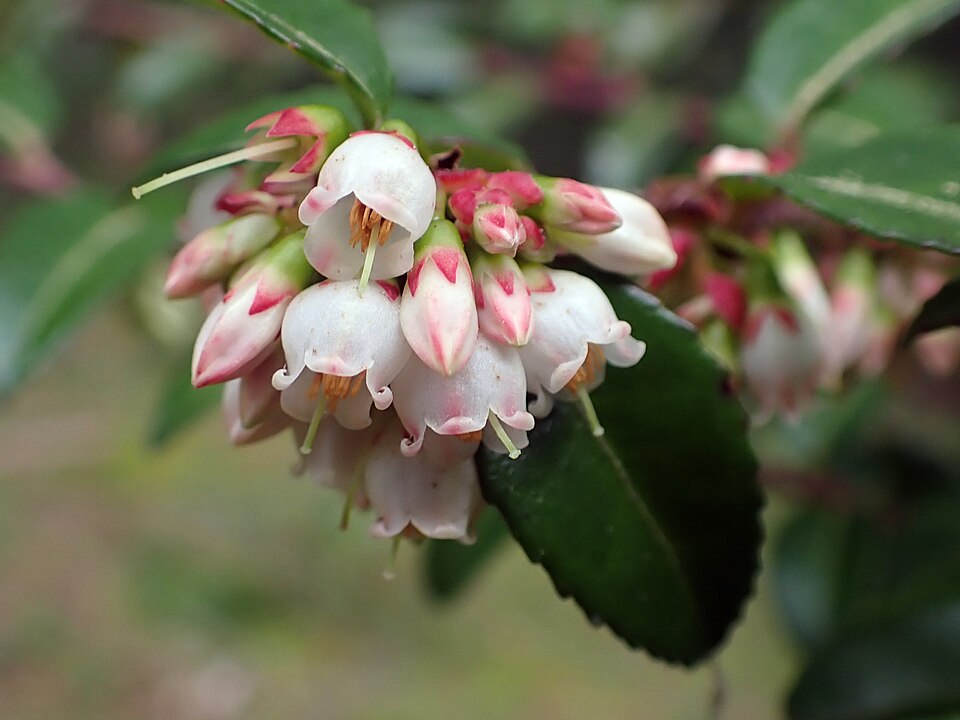
From April through June, Evergreen Huckleberry produces clusters of small, bell-shaped flowers that hang gracefully beneath the branches. Each flower is roughly ¼ inch long, white to pale pink in color, and perfectly formed like tiny urns. The flowers are bisexual and arranged in short racemes of 2 to 10 blooms. Their delicate appearance belies their importance as an early nectar source for native pollinators.
Fruit
The berries ripen from July through September, transforming from green to deep purple-black when fully mature. Each berry is roughly ⅜ inch in diameter with a distinctive crown at the tip (the remnant of the flower’s calyx). The berries are edible and prized by both wildlife and humans for their sweet-tart flavor and high antioxidant content. They remain on the plant for several weeks, providing extended wildlife value.
Native Range
Evergreen Huckleberry has one of the most extensive north-south ranges of any Pacific Coast shrub, stretching from southwestern British Columbia to the mountains of Southern California. It is found in a nearly continuous distribution along the Pacific Coast and Coast Ranges, primarily west of the Cascade and Sierra Nevada crests, though it does extend inland along major river valleys like the Columbia River Gorge.
The species reaches its northern limit in coastal British Columbia and extends south through Washington, Oregon, and California as far as San Diego County, where relict populations survive on isolated mountain peaks like El Cajon Mountain. This remarkable 1,500-mile range demonstrates the species’ adaptability to varying climatic conditions while maintaining its preference for the temperate maritime climate of the Pacific Coast.

📋 Regional plant lists featuring Evergreen Huckleberry: Western Oregon & Western Washington
Growing & Care Guide
Evergreen Huckleberry is surprisingly adaptable and easier to grow than many gardeners expect. While it has specific preferences, understanding its natural habitat requirements makes cultivation straightforward and rewarding.
Light Requirements
One of this shrub’s greatest assets is its tolerance for a wide range of light conditions. In deep shade, it maintains an open, graceful form with deep green foliage, perfect for woodland gardens and understory plantings. In partial shade, it develops a fuller, more compact habit while retaining good green color. In full sun, Evergreen Huckleberry becomes quite dense and compact, with foliage that shifts to beautiful bronze, copper, and red tones throughout the growing season.
Soil & Water
Like most members of the heath family, Evergreen Huckleberry requires acidic soil with a pH between 4.5 and 6.5. It performs best in well-drained but consistently moist soil rich in organic matter. In nature, it grows in forest soils with deep leaf litter, so adding compost, aged bark, or leaf mold significantly improves cultivation success. Good drainage is essential — while the plant needs consistent moisture, waterlogged soils will lead to root rot.
Planting & Establishment
Plant in fall or early spring for best results. Dig a hole twice as wide as the root ball but no deeper, as shallow planting encourages better root establishment. Amend heavy clay soils with compost and coarse organic matter to improve drainage. Mulch around the base with 2-3 inches of organic material like bark chips or aged compost, keeping mulch away from direct contact with the stem.
Maintenance & Pruning
Evergreen Huckleberry is naturally slow-growing and requires minimal pruning. Light pruning after berry harvest can help maintain shape and encourage bushier growth. Remove any dead, damaged, or crossing branches in late winter. Older plants benefit from occasional thinning of interior branches to improve air circulation and light penetration.
Landscape Uses
This versatile shrub excels in numerous landscape applications:
- Woodland gardens and natural landscaping
- Foundation plantings where year-round structure is needed
- Mixed borders combined with ferns, hostas, and other shade perennials
- Wildlife gardens specifically designed for native species support
- Screening and hedging when planted in groups
- Container growing for patios and small gardens
- Rain gardens and bioswales with adequate drainage
Wildlife & Ecological Value
Evergreen Huckleberry is considered a keystone species in Pacific Northwest forest ecosystems, supporting an remarkable diversity of wildlife throughout the year. Its ecological contributions far exceed what might be expected from a single shrub species.
For Pollinators
The early spring flowers provide crucial nectar and pollen when few other plants are blooming. Native bees, including mason bees, leafcutter bees, and various ground-nesting species, are primary pollinators. Honeybees also visit the flowers extensively, and the nectar produces a highly prized honey with a delicate, floral flavor. Hummingbirds occasionally visit the flowers, though they are not primary pollinators.
For Birds
The berries are eaten by an impressive array of bird species. Resident species like Steller’s jays, dark-eyed juncos, and various finches depend on the berries as a late-summer and fall food source. Migratory species, particularly thrushes (Swainson’s thrush, hermit thrush, varied thrush), feed heavily on the berries during their southward migration, making Evergreen Huckleberry patches critical stopover habitat. Other regular visitors include cedar waxwings, American robins, and various warblers.
For Mammals
Black bears consider Evergreen Huckleberry berries a preferred food and will travel considerable distances to reach productive patches. Smaller mammals including squirrels, chipmunks, and various mouse species also consume the berries and cache them for winter survival. Deer and elk browse the foliage, particularly during winter when other food sources are scarce, though the evergreen leaves are not their preferred food.
Forest Ecosystem Role
As an understory dominant, Evergreen Huckleberry plays crucial roles in forest health and succession. Its dense growth provides nesting sites and protective cover for ground-dwelling animals. The plant’s mycorrhizal relationships with soil fungi improve forest soil health and nutrient cycling. In areas where overstory trees have been removed, Evergreen Huckleberry can persist and help facilitate forest regeneration by providing shelter for tree seedlings.
Historical and Cultural Uses
Pacific Northwest Indigenous peoples have utilized Evergreen Huckleberry for thousands of years. The berries were (and still are) harvested for fresh eating, drying for winter storage, and incorporation into traditional foods. Various coastal tribes developed sophisticated management techniques including controlled burning to maintain productive huckleberry patches. The plants also had medicinal applications, with leaves used to treat various ailments.
In the early 20th century, commercial harvesting of Evergreen Huckleberry foliage became a significant industry, with thousands of tons shipped to Europe annually for use in floral arrangements. This industry led to overharvesting and population declines in some areas, prompting early conservation efforts including the establishment of nursery propagation programs.
Companion Plants
Evergreen Huckleberry pairs beautifully with other Pacific Northwest natives that share similar habitat preferences:
Shrub companions: Salal (Gaultheria shallon), Oregon grape (Mahonia aquifolium), Red huckleberry (Vaccinium parvifolium), and Rhododendron species create natural-looking groupings.
Perennial companions: Sword fern (Polystichum munitum), Vanilla leaf (Achlys triphylla), Wild ginger (Asarum caudatum), and Inside-out flower (Vancouveria hexandra) complement the shrub’s understory character.
Groundcover companions: Kinnikinnick (Arctostaphylos uva-ursi), Wintergreen (Gaultheria procumbens), and various native moss species create layered, naturalistic plantings.

Looking for a nursery that carries Evergreen Huckleberry?
Browse our native plant nursery directory: Oregon · Washington
Cultural & Historical Uses
Evergreen Huckleberry (Vaccinium ovatum) holds a significant place in the cultural heritage of Pacific Northwest Indigenous peoples, who developed sophisticated knowledge systems around the region’s native flora over thousands of years. This deep understanding encompassed not only practical applications but also the spiritual and ecological relationships that define healthy landscapes.
Indigenous nations including the Coast Salish, Chinook, and other tribal groups incorporated Evergreen Huckleberry into their traditional ecological practices, recognizing its value for various purposes while maintaining sustainable harvesting practices that ensured the species’ continued abundance. Traditional knowledge holders understood the plant’s role in supporting wildlife, maintaining soil health, and contributing to the overall resilience of native plant communities.
Historical records from early European explorers and settlers document the widespread use of Evergreen Huckleberry by Indigenous peoples, though much traditional knowledge was lost or suppressed during the colonial period. Today, there is growing recognition of the value of traditional ecological knowledge, and efforts to restore both native plant communities and Indigenous cultural practices often work hand in hand.
In contemporary times, Evergreen Huckleberry continues to play important cultural roles in Pacific Northwest communities. The species is increasingly valued for ecological restoration, native landscaping, and environmental education. Its use in restoration projects helps reconnect communities with their natural heritage while providing tangible benefits for local ecosystems and wildlife populations.
Frequently Asked Questions
How fast does Evergreen Huckleberry grow?
Evergreen Huckleberry exhibits a moderate to fast growth rate under favorable conditions, typically establishing well within the first few growing seasons. Growth rate varies significantly based on site conditions, with optimal growth occurring in locations that closely mimic the plant’s natural habitat preferences. In suitable conditions with adequate moisture and appropriate light levels, you can expect steady annual growth.
Is Evergreen Huckleberry deer resistant?
Like most Pacific Northwest natives, Evergreen Huckleberry may be browsed by deer and elk, particularly in areas with high wildlife pressure or limited alternative food sources. However, as a native species that co-evolved with these herbivores, it typically recovers well from browsing damage. In areas with consistently heavy deer pressure, young plants may benefit from temporary protection during establishment.
What wildlife does Evergreen Huckleberry support?
Evergreen Huckleberry provides valuable habitat and food resources for a wide variety of Pacific Northwest wildlife, including native birds, beneficial insects, small mammals, and pollinators. The plant’s role in supporting biodiversity makes it an excellent choice for wildlife gardens, restoration projects, and any landscape designed to provide ecosystem services.
When is the best time to plant Evergreen Huckleberry?
In the Pacific Northwest, fall planting (September through November) is typically most successful for native plants, as it allows root system establishment during the mild, wet winter months. Spring planting (March through May) can also be successful, though plants may require supplemental watering during their first summer dry season.
Where can I buy Evergreen Huckleberry?
Evergreen Huckleberry is available from native plant nurseries throughout Oregon and Washington. When possible, seek out locally-sourced stock grown from regional seed sources, as these plants will be better adapted to your specific area’s climate, soil conditions, and wildlife communities. Many restoration supply nurseries also carry the species for larger-scale projects.