Little Bluestem (Schizachyrium scoparium)
Schizachyrium scoparium, commonly known as Little Bluestem, is one of North America’s most important and widespread prairie grasses, serving as the backbone species of the Great Plains and tallgrass prairie ecosystems. This graceful bunch grass earned its common name from the distinctive blue-green color of its foliage during the growing season, which transforms into brilliant shades of copper, orange, and burgundy in autumn. As a warm-season grass, Little Bluestem thrives in the heat of summer when cool-season grasses go dormant, making it an essential component of sustainable native grassland restoration.
Historically covering millions of acres across the American prairie, Little Bluestem formed the foundation of one of the world’s most productive ecosystems. Its deep, fibrous root system — which can extend 6 to 8 feet into the soil — helped create the rich, dark prairie soils that now support much of America’s agriculture. The grass co-evolved with grazing bison, prairie fires, and drought, developing remarkable resilience that makes it invaluable for modern conservation, erosion control, and sustainable landscaping projects.
Today, as gardeners and land managers seek climate-adapted alternatives to traditional turf and ornamental grasses, Little Bluestem stands out for its exceptional drought tolerance, low maintenance requirements, and four-season beauty. Its airy seed heads catch light beautifully in autumn and winter, providing both visual interest and critical food resources for birds and small mammals. Whether used in prairie restoration, rain gardens, or ornamental grass plantings, Little Bluestem brings the authentic character and ecological function of America’s native grasslands to the modern landscape.
Identification
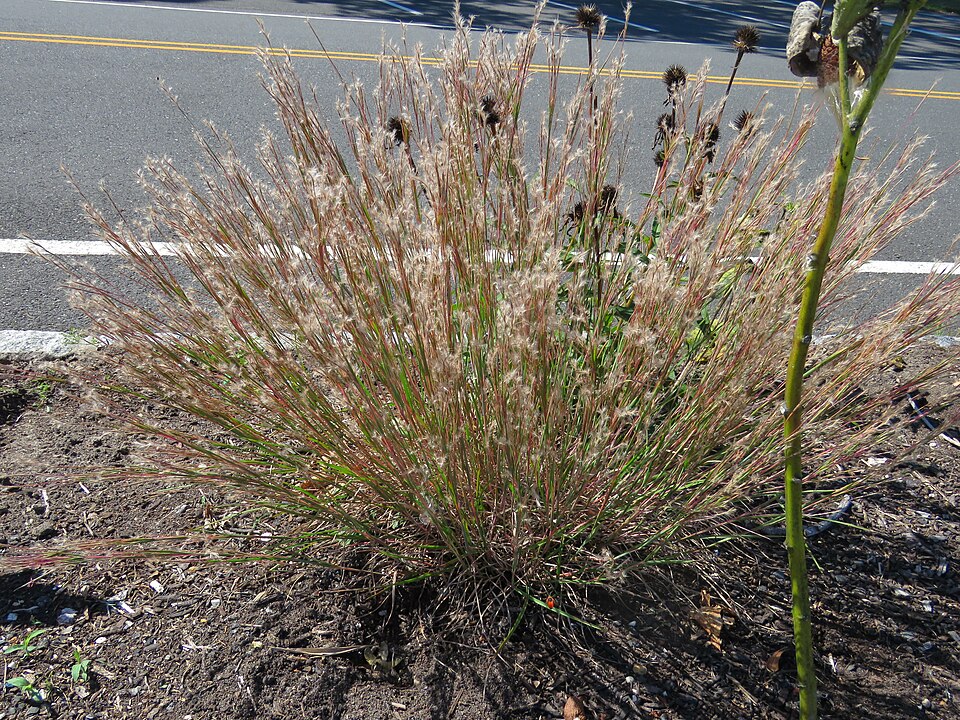
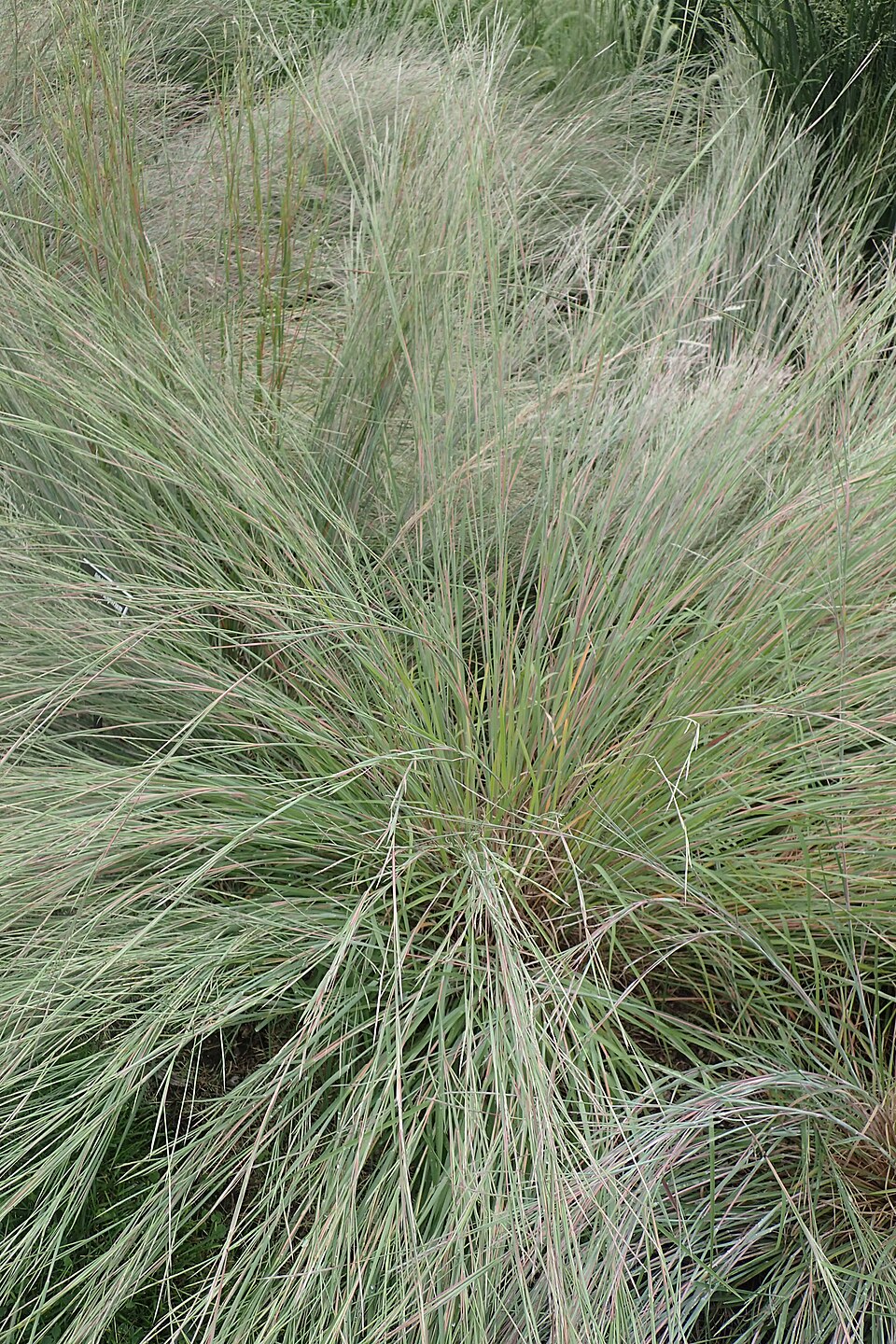
Little Bluestem is a perennial bunch grass that forms dense, upright clumps 2 to 4 feet tall and 1 to 2 feet wide. Unlike rhizomatous grasses that spread by underground runners, Little Bluestem grows in distinct, tight bunches that gradually increase in diameter over time. The plant’s growth habit creates an attractive, fountain-like form that adds vertical structure to prairie plantings and ornamental gardens alike.
Leaves
The narrow, linear leaves emerge blue-green to blue-gray in spring, reaching 8 to 12 inches long and just ⅛ to ¼ inch wide. The distinctive blue coloration — more pronounced in some populations and growing conditions — comes from a waxy coating that helps the plant conserve moisture. As summer progresses, the foliage may take on more green tones, especially in shadier or moister conditions. The leaves have a distinctive fold down the center and smooth edges, with occasional fine hairs near the base.
Stems & Seed Heads
The flowering stems (culms) emerge in mid to late summer, extending 6 to 12 inches above the foliage to reach the plant’s full mature height. These stems are typically reddish-brown to purplish, often with a slight zigzag pattern. The seed heads are the plant’s most distinctive feature: delicate, loose panicles with individual spikelets that catch and reflect light beautifully. Each spikelet has a conspicuous bent awn (bristle-like appendage) that gives the seed head a soft, fuzzy appearance from a distance.
Fall & Winter Appearance
Little Bluestem’s true glory comes in autumn, when the entire plant transforms into a spectacular display of warm colors. The foliage shifts through shades of orange, copper, bronze, burgundy, and deep red-purple, often with multiple colors present on a single plant. The seed heads turn from silvery-white to golden-brown, creating a shimmering effect in autumn sunlight. Throughout winter, the dried foliage and persistent seed heads provide excellent vertical structure and movement in the landscape, making it one of the finest ornamental grasses for four-season interest.
Quick Facts
| Scientific Name | Schizachyrium scoparium |
| Family | Poaceae (Grass) |
| Plant Type | Perennial Bunch Grass |
| Mature Height | 2–4 ft |
| Sun Exposure | Full Sun to Part Shade |
| Water Needs | Low to Moderate |
| Bloom Time | August – October |
| Flower Color | Silvery-white to golden-brown |
| USDA Hardiness Zones | 3–9 |
Native Range
Little Bluestem has one of the most extensive native ranges of any North American grass, stretching from southern Canada to northern Mexico and from the Atlantic coast to the Rocky Mountains. This remarkable distribution reflects the species’ exceptional adaptability to diverse climatic and soil conditions. The grass was the dominant species across much of the original tallgrass prairie, mixed-grass prairie, and shortgrass prairie ecosystems that once covered nearly 170 million acres of the Great Plains and Midwest.
From the oak savannas of Minnesota and Wisconsin to the pine barrens of New Jersey, from the blackland prairies of Texas to the sandhills of Nebraska, Little Bluestem has adapted to an incredible variety of habitats. It thrives in areas receiving as little as 12 inches of annual precipitation and as much as 40 inches, growing in everything from sandy soils to heavy clays. This adaptability allowed it to become what many ecologists consider the single most important grass species in North America’s prairie heritage.
The species reaches its greatest abundance and ecological significance in the mixed-grass prairie region, where it often comprises 60-80% of the total plant biomass. Here, it forms the classic “matrix” species that defines the character and function of the entire ecosystem. While agriculture has dramatically reduced its original range, remnant populations persist in preserves, roadsides, and marginal lands throughout its historic distribution, serving as seed sources for ongoing restoration efforts.
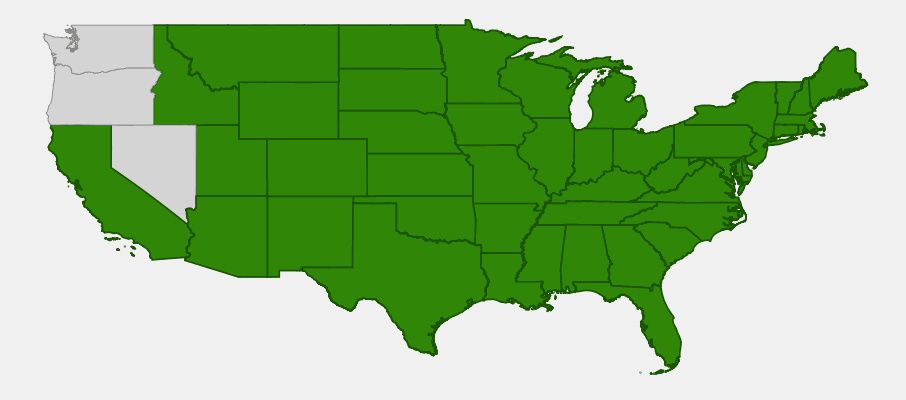
📋 Regional plant lists featuring Little Bluestem: North Dakota, South Dakota & Western Minnesota
Growing & Care Guide
Little Bluestem is among the most adaptable and low-maintenance native grasses, making it an excellent choice for sustainable landscaping, prairie restoration, and naturalistic garden designs. Its deep root system and drought tolerance make it particularly valuable in areas where water conservation is important or where traditional turf grasses struggle.
Light
While Little Bluestem performs best in full sun, it tolerates partial shade better than many prairie grasses, making it useful in transitional areas between open prairie and woodland edge plantings. In full sun, plants develop the most intense blue coloration and the most spectacular fall color. In partial shade, the foliage tends to be more green and plants may grow slightly taller and more open, but still maintain good form and vigor.
Soil & Water
One of Little Bluestem’s greatest strengths is its soil adaptability. It thrives in everything from sandy, well-drained soils to heavy clays, though it performs best in moderately fertile, well-drained conditions. The grass is notably tolerant of poor soils, including those with low fertility, high pH, or challenging drainage. Once established, it requires minimal irrigation even in dry climates, though it will grow more vigorously with occasional deep watering during extended drought periods.
Planting Tips
Little Bluestem can be established from seed or transplants, with spring planting generally most successful. When seeding, plant in late spring after soil has warmed to at least 60°F. Seed requires light to germinate, so barely cover or simply rake into the soil surface. For transplants, space plants 18-24 inches apart for quick coverage or 2-3 feet apart for a more naturalistic look. The grass is slow to establish in the first year as it develops its extensive root system, but becomes increasingly vigorous in subsequent years.
Pruning & Maintenance
Little Bluestem requires minimal maintenance once established. Cut back to 4-6 inches in late winter or early spring before new growth begins. This annual cutting removes old growth and encourages vigorous new shoots. In naturalistic settings, cutting every other year or even less frequently is acceptable and may benefit wildlife. The grass benefits from occasional prescribed burning in large prairie restorations, which stimulates new growth and prevents woody plant encroachment.
Landscape Uses
Little Bluestem’s versatility makes it valuable in numerous landscape applications:
- Prairie restoration and reconstruction — often the backbone species
- Ornamental grass gardens — excellent four-season interest
- Rain gardens and bioswales — deep roots improve water infiltration
- Erosion control — particularly on slopes and disturbed sites
- Wildlife habitat plantings — critical food and nesting resource
- Naturalistic landscaping — adds authentic prairie character
- Low-maintenance groundcover — alternative to turf in appropriate settings
- Buffer strips and edge plantings — transitions between developed and natural areas
Wildlife & Ecological Value
Little Bluestem stands among the most ecologically valuable native plants in North America, supporting an extraordinary diversity of wildlife throughout the year. Its role as a foundation species in prairie ecosystems cannot be overstated — the grass provides critical habitat structure while supporting complex food webs from soil microorganisms to large mammals.
For Birds
Over 40 species of birds depend directly on Little Bluestem for food, with the small seeds providing essential nutrition for numerous sparrows, finches, and other granivorous species. Grasshopper Sparrows, Bobolinks, Sedge Wrens, and Dickcissels nest within Little Bluestem stands, using the dense bunches for concealment and the vertical structure for song perches. The grass also supports enormous populations of insects, which feed insectivorous birds and their young. During migration and winter, the standing seed heads and persistent structure provide critical resources when other food sources are scarce.
For Mammals
Small mammals including mice, voles, and ground squirrels feed extensively on Little Bluestem seeds, while the dense bunches provide essential cover from predators. Historically, the grass was a preferred forage for American Bison, which shaped its evolution through intensive but periodic grazing. Today, deer and elk browse the young shoots, and the grass remains important forage for livestock in range management systems. The deep, fibrous root system creates habitat for numerous soil-dwelling mammals and contributes to soil ecosystem health.
For Pollinators
While Little Bluestem is wind-pollinated and doesn’t produce showy flowers, it supports pollinators in other crucial ways. The grass harbors diverse insect communities, including many native bees that nest in the soil beneath prairie grasses. Numerous beneficial insects, including predatory beetles and parasitic wasps, use Little Bluestem stands as overwintering habitat. The grass also serves as a host plant for several butterfly and moth species, including skippers that feed on grass foliage as caterpillars.
Ecosystem Role
As a dominant matrix species in prairie ecosystems, Little Bluestem literally builds soil through its extensive root system and annual cycle of root growth and decomposition. The deep roots — which can extend 6-8 feet into the soil — pump nutrients from lower soil layers to the surface and create channels that improve water infiltration and soil aeration. The grass plays a crucial role in fire ecology, carrying fires that prevent woody plant encroachment and maintain prairie integrity. Its ability to sequester carbon in deep prairie soils makes it increasingly important for climate change mitigation efforts.
Cultural & Historical Uses
Little Bluestem holds profound cultural and historical significance as one of the defining species of the American prairie. For thousands of years before European settlement, indigenous peoples across the Great Plains lived intimately connected to landscapes where Little Bluestem was often the dominant plant. Tribes including the Lakota, Cheyenne, Pawnee, and Osage developed sophisticated understanding of prairie fire management, using controlled burning to maintain the grasslands that supported both the grass and the massive bison herds that depended on it.
Native Americans used Little Bluestem in various practical applications. The tough, flexible stems were woven into baskets and mats, while the seeds provided emergency food during harsh winters. Some tribes used the grass medicinally, making teas from the roots to treat various ailments. Most importantly, the grass supported the bison that formed the foundation of Plains Indian cultures — providing food, shelter, tools, and spiritual connection to the land.
European settlers encountered Little Bluestem as part of the “sea of grass” that covered much of the continent’s interior. Early accounts describe prairie so vast and uniform that travelers could become lost in grassland that stretched beyond the horizon. The rich, dark soils created by Little Bluestem and other prairie grasses proved to be some of the world’s most productive agricultural land, leading to the great prairie conversion of the late 1800s and early 1900s. Today, less than 4% of the original tallgrass prairie remains, making Little Bluestem a symbol of both America’s natural heritage and its agricultural transformation.
In modern times, Little Bluestem has become central to prairie restoration and conservation efforts. The species is widely used in erosion control, habitat restoration, and sustainable landscaping projects. Its drought tolerance and low maintenance requirements make it increasingly valuable as communities seek climate-adapted alternatives to water-intensive turf grasses. Research into the grass’s carbon sequestration potential has also made it important in climate change mitigation strategies, as prairie grasslands can store more carbon in their deep root systems than even forests.
Frequently Asked Questions
Why is it called “Little” Bluestem when it can grow 4 feet tall?
The name distinguishes it from Big Bluestem (Andropogon gerardii), which can reach 6-8 feet tall. Little Bluestem also forms compact bunches rather than the tall, spreading colonies of its larger relative. The “little” refers to both the plant’s overall stature and its growth habit.
When does Little Bluestem show its blue color most strongly?
The distinctive blue-green coloration is most pronounced in spring and early summer, especially in full sun and drier conditions. The blue color comes from a waxy coating that helps conserve moisture. In shadier or wetter conditions, the grass tends to appear more green.
How long does it take Little Bluestem to establish from seed?
Little Bluestem is relatively slow to establish, with first-year plants often appearing small and sparse. The grass devotes its first year primarily to root development. Significant above-ground growth typically occurs in the second year, with full establishment taking 2-3 years. Be patient — the wait is worth it!
Can Little Bluestem spread and become invasive?
No. Little Bluestem is a bunch grass that spreads very slowly by short rhizomes and seed. It forms clumps that gradually increase in diameter but doesn’t spread aggressively like some other grasses. It’s well-behaved in garden settings and won’t take over other plantings.
Is Little Bluestem deer resistant?
While deer will browse Little Bluestem, especially young growth in spring, it’s generally not a preferred food and can recover well from moderate browsing. Established plants become quite tolerant of deer pressure, though very heavy deer populations may impact growth and vigor.

Looking for a nursery that carries Little Bluestem?
Browse our native plant nursery directory: North Dakota · South Dakota · Minnesota