Virginia Waterleaf (Hydrophyllum virginianum)
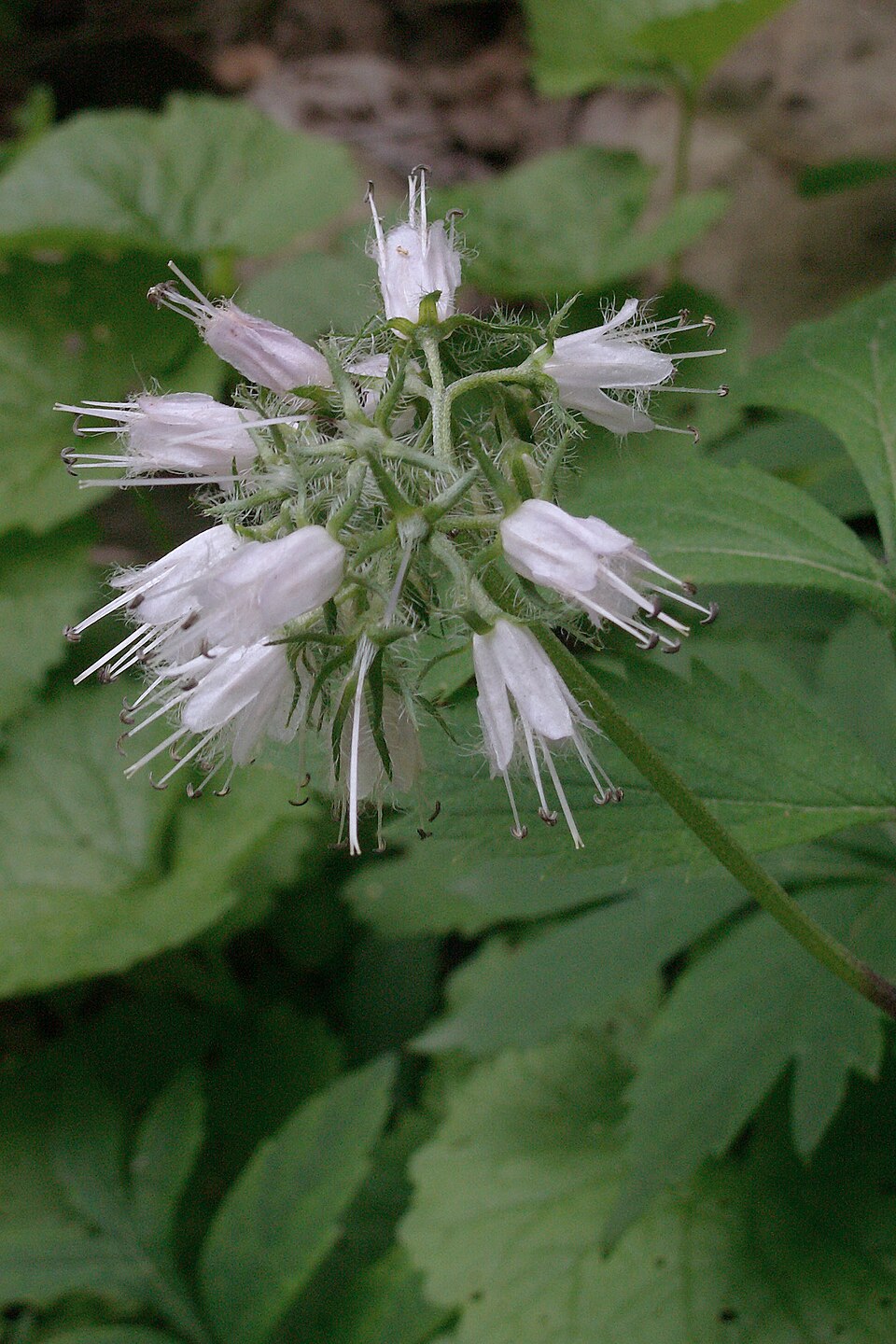
Hydrophyllum virginianum, commonly known as Virginia Waterleaf, Eastern Waterleaf, or Shawnee Salad, is a charming native woodland perennial that brings quiet beauty to shaded forest floors across much of eastern North America. This member of the Boraginaceae (borage) family is named for the distinctive watermark-like blotches that sometimes appear on its leaves, giving them the appearance of water stains. Despite its delicate appearance, Virginia Waterleaf is a hardy and adaptable plant that plays an important ecological role in forest understory communities.
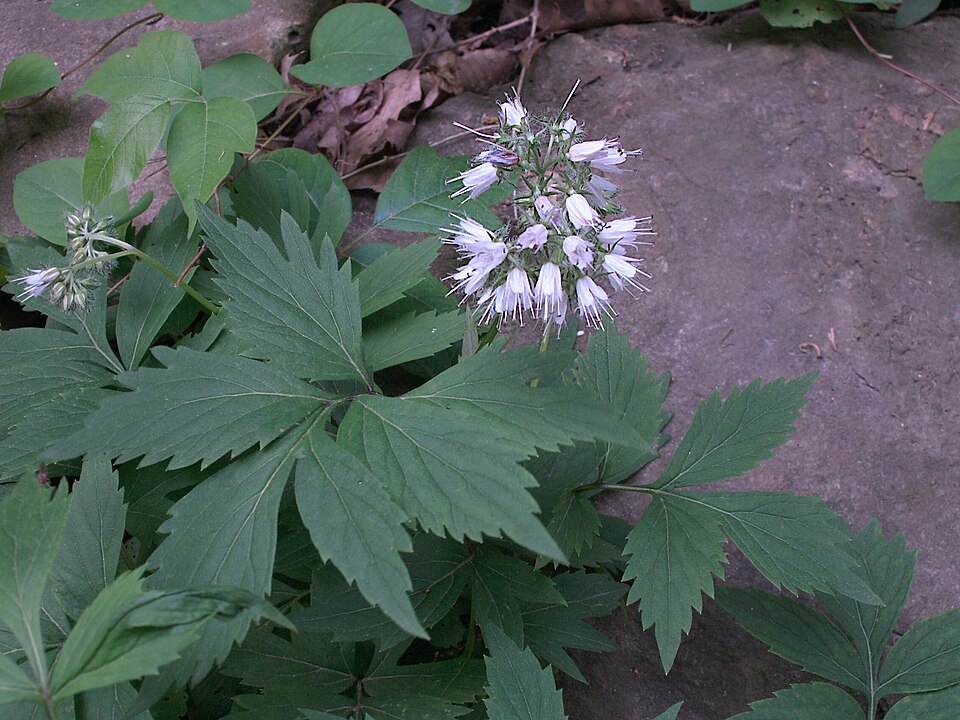
Growing in low colonies that rarely exceed 12 inches in height, Virginia Waterleaf forms an attractive groundcover through its spreading underground rhizomes. The plant’s most distinctive feature is its deeply divided, palmate leaves that create an intricate pattern of lobes and segments, somewhat resembling a maple leaf that has been finely cut by nature’s artistry. These leaves emerge directly from underground stems, creating dense patches that can carpet considerable areas of woodland floor in favorable conditions.
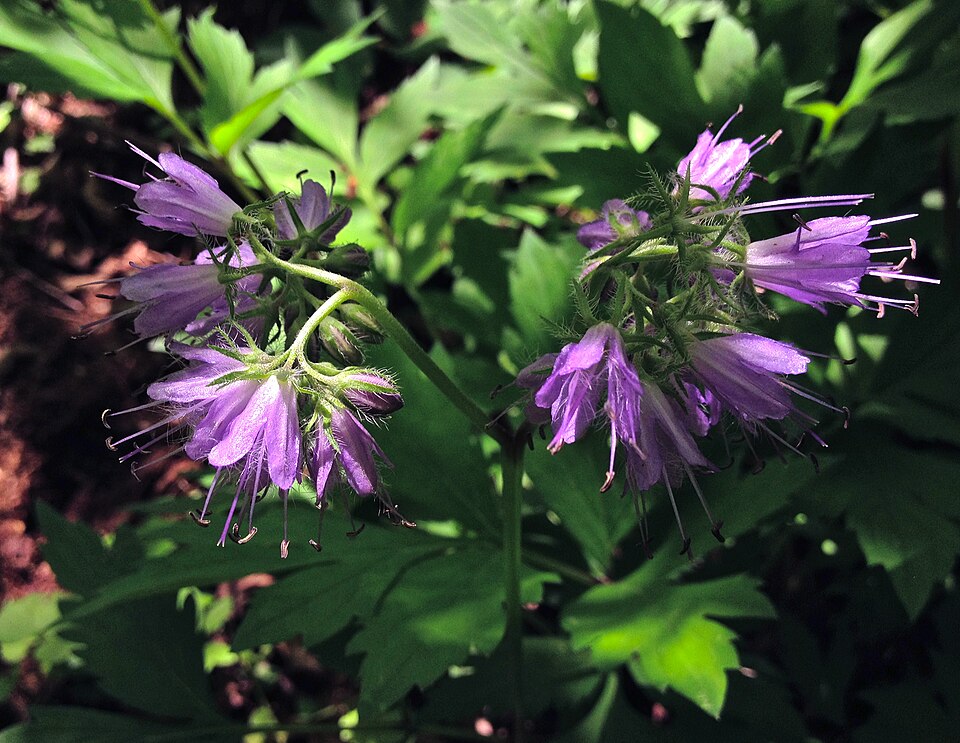
From May through August, Virginia Waterleaf produces clusters of small, bell-shaped flowers that range from pure white to deep violet, often with a subtle lavender hue. These delicate blooms appear in tight, rounded cymes (flower clusters) that rise slightly above the foliage, creating a understated but lovely display. The flowers are particularly valuable to early-season pollinators, blooming at a time when many woodland wildflowers have yet to emerge. Beyond its ornamental value, Virginia Waterleaf has a rich history of use by indigenous peoples and early settlers as both food and medicine, earning it the alternative name “Shawnee Salad” for its edible young shoots and leaves.
Identification
Virginia Waterleaf is easily recognized by its distinctive deeply divided leaves and low-growing, colony-forming habit. The plant’s preference for shaded woodland environments and characteristic leaf shape make it unmistakable among native forest wildflowers.
Growth Form
This herbaceous perennial typically grows 8 to 15 inches tall and spreads by underground rhizomes to form loose colonies. The plant lacks a true above-ground stem—instead, the leaves and flower stalks arise directly from the underground rhizome system. This growth pattern allows Virginia Waterleaf to form extensive groundcover patches in suitable habitat, often covering several square feet or more in established colonies.
Leaves
The leaves are the plant’s most distinctive feature, measuring 4 to 8 inches long and nearly as wide. They are palmately divided into 5 to 7 deep lobes, with each lobe further subdivided into smaller segments, creating an intricate, lacy appearance. The leaves are typically dark green on the upper surface and paler beneath, with coarse hairs along the veins and margins that give them a slightly rough texture. The characteristic “watermark” blotches—pale or whitish irregular patches—may appear on some leaves, though this feature is not always present and varies among populations.
Flowers
The flowers appear from May through August in compact, rounded clusters (cymes) that are initially tightly coiled and gradually unfurl as the blooms open. Each individual flower is small, about ¼ to ½ inch long, and bell-shaped with five petals that may be white, pale lavender, or deep violet-blue. The flowers have prominent stamens that extend beyond the petals, giving the flower clusters a fuzzy appearance. The flowers are fragrant and rich in nectar, making them attractive to various pollinators.
Fruits & Seeds
After pollination, the flowers develop into small, round capsules that split open when mature to release the seeds. The seeds are small, dark, and roughly spherical, dispersed primarily by gravity and possibly by small animals. The plant relies more on vegetative reproduction through its rhizome system than on seed production for colony expansion.
Quick Facts
| Scientific Name | Hydrophyllum virginianum |
| Family | Boraginaceae (Borage) |
| Plant Type | Herbaceous Perennial |
| Mature Height | 1 ft |
| Sun Exposure | Full Shade to Part Shade |
| Water Needs | Moderate |
| Bloom Time | May – August |
| Flower Color | White to violet |
| USDA Hardiness Zones | 3–8 |
Native Range
Virginia Waterleaf has a broad native range across eastern North America, extending from southeastern Canada south to northern Georgia and Alabama, and west to the Great Plains. This wide distribution reflects the species’ adaptability to various forest types and climatic conditions, though it shows a strong preference for deciduous and mixed deciduous-coniferous forests with rich, moist soils.
The species is particularly abundant throughout the Appalachian Mountains and their foothills, where it thrives in the rich, well-drained soils of cove forests and lower mountain slopes. Virginia Waterleaf is also common throughout the Great Lakes region and extends westward into the tallgrass prairie-forest border regions of the upper Midwest. In these areas, it typically grows in woodland openings, forest edges, and the understory of mature forests, often in association with other native woodland wildflowers like Wild Ginger, Mayapple, and Trilliums.
Throughout its range, Virginia Waterleaf demonstrates remarkable consistency in its habitat preferences, nearly always occurring in partially to fully shaded locations with rich, organic soils. The species is less common in areas that have experienced significant forest fragmentation or disturbance, as it depends on stable woodland conditions and the specific soil microorganisms and mycorrhizal relationships that develop in mature forest ecosystems. Climate change may be allowing the species to expand its range slightly northward in some regions, while habitat loss continues to reduce populations in heavily developed areas.
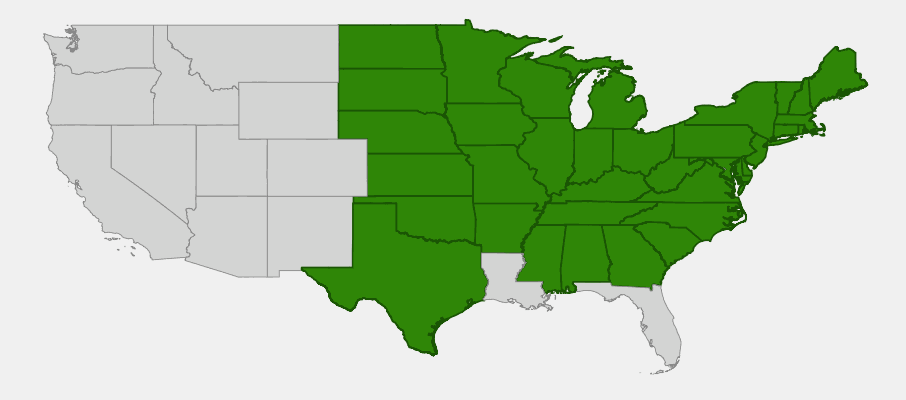
📋 Regional plant lists featuring Virginia Waterleaf: North Dakota, South Dakota & Western Minnesota
Growing & Care Guide
Virginia Waterleaf is an excellent choice for shade gardens and naturalized woodland areas, where it can form attractive groundcover colonies with minimal maintenance. The key to success is replicating its preferred woodland conditions of shade, rich soil, and consistent moisture.
Light
Virginia Waterleaf thrives in partial to full shade, making it ideal for locations where many other plants struggle. It prefers the dappled sunlight of woodland understory conditions, though it can tolerate deeper shade. Direct sunlight, particularly during hot afternoon hours, can scorch the delicate foliage and stress the plant. Morning sun with afternoon shade is acceptable, but avoid locations with more than 4-5 hours of direct sunlight daily.
Soil & Water
The plant prefers rich, well-drained, organic soil that mimics the forest floor environment where it naturally grows. A soil pH between 6.0-7.0 is ideal, though the plant tolerates slightly more acidic conditions. Virginia Waterleaf requires consistent moisture but not waterlogged conditions—the soil should feel like a wrung-out sponge. Mulching with leaf litter or organic compost helps maintain proper soil moisture and mimics natural forest conditions. During dry periods, supplemental watering may be necessary to prevent leaf scorch.
Planting Tips
Virginia Waterleaf is typically propagated by division of established clumps or from seed. Division is best done in early spring or fall, carefully separating rhizome sections with roots attached. Seeds require 60-90 days of cold stratification and should be sown in fall or stratified and planted in spring. Plant divisions or seedlings 12-18 inches apart in prepared soil enriched with compost or leaf mold. Container plants transplant easily if kept well-watered during establishment.
Pruning & Maintenance
Virginia Waterleaf requires minimal maintenance once established. Remove spent flowers if seed production is not desired, though the plant is not aggressively self-seeding. The foliage may die back during extended dry periods but will return with adequate moisture. Cut back dead foliage in late fall or early spring. No fertilization is typically needed—in fact, rich soils may encourage excessive leaf growth at the expense of flowers.
Landscape Uses
Virginia Waterleaf works beautifully in various shade garden applications:
- Woodland gardens — forms natural-looking groundcover under trees and large shrubs
- Shade borders — excellent front-of-border plant for partially shaded areas
- Native plant gardens — authentic component of eastern forest plant communities
- Rock gardens — thrives in shaded rock garden settings with good drainage
- Rain gardens — tolerates periodic flooding in shaded locations
- Erosion control — spreading rhizomes help stabilize soil on shaded slopes
- Naturalized areas — gradually forms large colonies in suitable habitat
Wildlife & Ecological Value
While Virginia Waterleaf may appear to be a modest woodland plant, it plays several important ecological roles and provides valuable resources for native wildlife, particularly during the early growing season when few other woodland plants are blooming.
For Birds
Virginia Waterleaf indirectly benefits bird populations by supporting the insects and other invertebrates that form the base of woodland food webs. The dense colonies provide ground-level habitat structure that shelters small invertebrates, which are then consumed by ground-foraging birds like Wood Thrushes, Ovenbirds, and various warbler species. The plant’s seeds, while small, may be consumed by some granivorous birds and small mammals.
For Mammals
Small woodland mammals benefit from Virginia Waterleaf’s role in the forest ecosystem. The rhizome system provides some food for small rodents, while the dense ground cover offers protection from predators. White-tailed Deer occasionally browse the foliage, particularly the tender young shoots, though the plant’s somewhat hairy leaves make it less palatable than many other woodland herbs.
For Pollinators
Virginia Waterleaf is particularly valuable for early-season native pollinators, blooming at a time when many woodland flowers have yet to emerge. The flowers attract various native bees, including mining bees (Andrena species), sweat bees (Lasioglossum species), and small carpenter bees. Flies, moths, and other beneficial insects also visit the flowers for nectar. The extended blooming period from May through August provides a reliable nectar source throughout much of the growing season in woodland environments where floral resources can be limited.
Ecosystem Role
As a native understory species, Virginia Waterleaf contributes to the structural diversity and ecological complexity of forest ecosystems. Its rhizome system helps prevent soil erosion and contributes organic matter to the forest floor through annual leaf drop. The plant participates in nutrient cycling within forest communities and provides microhabitat for soil invertebrates and decomposer organisms. Virginia Waterleaf also serves as an indicator species for high-quality woodland habitat—its presence often signals a healthy, mature forest ecosystem with appropriate moisture levels and soil conditions.
Cultural & Historical Uses
Virginia Waterleaf holds a significant place in the ethnobotanical traditions of eastern North America, particularly among the indigenous peoples who inhabited the plant’s native range. The species was well-known to numerous tribes and earned the alternative common name “Shawnee Salad” in recognition of its importance as a traditional food source.
Many Native American tribes, including the Shawnee, Cherokee, and various Iroquoian peoples, utilized Virginia Waterleaf as both food and medicine. The young leaves and shoots were harvested in early spring when they were most tender and nutritious, often prepared as cooked greens or added to stews and soups. The flavor is described as mild and pleasant, similar to spinach or other cultivated greens. Some tribes also consumed the young flower buds and roots, though the leaves remained the most commonly used part of the plant.
Medicinally, Virginia Waterleaf was employed to treat a variety of ailments. Native peoples used poultices of the fresh leaves to treat wounds, burns, and skin irritations, taking advantage of the plant’s cooling and healing properties. Tea made from the roots or leaves was used internally to treat kidney and bladder problems, reflecting the plant’s common name “waterleaf” and its traditional association with water-related ailments. Some tribes used the plant to treat respiratory conditions and as a general tonic for overall health.
European settlers learned of these uses from indigenous peoples and incorporated Virginia Waterleaf into their own folk medicine practices. The plant appeared in various 19th-century herbals and medical texts, though it never gained the widespread recognition of more famous medicinal plants. Early botanists and naturalists, including those associated with the Lewis and Clark expedition, documented the plant’s traditional uses and its importance in Native American cultures.
Today, Virginia Waterleaf is primarily valued for its ecological benefits and its role in native plant gardening and woodland restoration projects. While its traditional food uses are well-documented, modern foragers should exercise caution and proper identification skills, as the plant family includes some toxic relatives. The species has found new significance in contemporary efforts to restore native woodland plant communities and create sustainable shade gardens that support local wildlife populations. Its quiet beauty and low-maintenance requirements have made it increasingly popular among native plant enthusiasts and ecological gardeners who appreciate its authentic representation of eastern North American forest understory communities.
Frequently Asked Questions
What are the watermark blotches on Virginia Waterleaf leaves?
The watermark-like blotches are pale or whitish irregular patches that sometimes appear on the leaves, giving them the appearance of water stains. These markings are natural and harmless, caused by air spaces between leaf tissues. Not all plants show this characteristic, and it varies among populations and growing conditions. The watermarks are more prominent in some plants than others.
Is Virginia Waterleaf edible, and is it safe to eat?
Historically, Virginia Waterleaf was used as food by Native American tribes, particularly the young leaves and shoots in spring. However, proper plant identification is crucial, as the borage family includes some plants with varying levels of toxicity. Modern foragers should have expert-level plant identification skills and understand that wild plant consumption carries inherent risks. When in doubt, appreciate the plant’s beauty and ecological value rather than experimenting with consumption.
How quickly does Virginia Waterleaf spread in the garden?
Virginia Waterleaf spreads slowly to moderately through underground rhizomes, typically expanding its colonies by a few inches per year under ideal conditions. It’s not considered aggressive or invasive, making it suitable for most shade garden situations. The spreading habit can actually be beneficial for creating naturalistic groundcover, and unwanted spread can be controlled by dividing clumps every few years.
Why do my Virginia Waterleaf plants look stressed in summer?
Virginia Waterleaf may go dormant or look stressed during hot, dry summer conditions, especially if planted in too much sun or without adequate moisture. This is a natural response to drought stress. Ensure the plants are in shade, provide consistent moisture, and mulch around them to maintain soil moisture. The plants will typically recover with cooler temperatures and adequate water.
Can Virginia Waterleaf be grown in containers?
Yes, Virginia Waterleaf can be grown successfully in containers, though it performs best when eventually planted in the ground where it can form natural colonies. Use a large, wide container with rich, well-draining potting mix, and place it in a shaded location. Container plants will need more frequent watering and may not spread as naturally as ground-planted specimens, but they can still provide attractive foliage and flowers.

Looking for a nursery that carries Virginia Waterleaf?
Browse our native plant nursery directory: North Dakota · South Dakota · Minnesota