Red Chokeberry (Aronia arbutifolia)
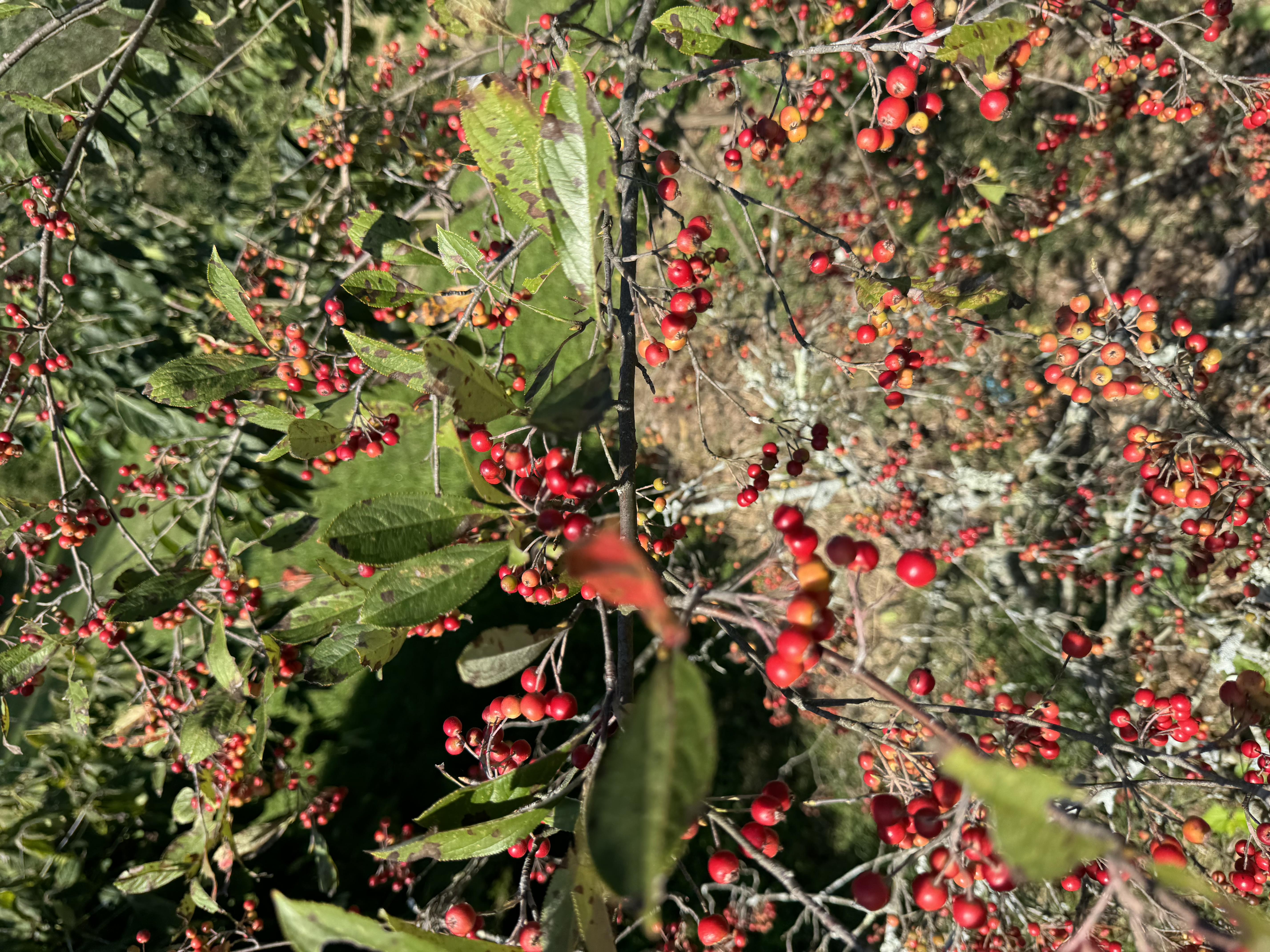
Aronia arbutifolia, commonly known as Red Chokeberry, is one of the most ornamentally spectacular and ecologically valuable native shrubs of the eastern United States. A member of the Rosaceae (Rose) family, Red Chokeberry earns its place in any native garden through four seasons of interest: delicate white spring flowers, glossy summer foliage, intensely brilliant scarlet fall color, and — most dramatically — massive clusters of bright red berries that persist on the stems well into winter, providing a critical food source for birds when other fruits have long been consumed.
Growing naturally in wetland margins, shrub swamps, low woods, and bog edges throughout the eastern United States, Red Chokeberry is a medium to large upright-spreading shrub typically reaching 6 to 10 feet tall with an equal or greater spread. It is notably adaptable — while it thrives in consistently moist soils that reflect its natural habitat, it performs reasonably well in average garden soils once established, and even shows moderate drought tolerance with time. This adaptability, combined with four seasons of ornamental value and exceptional wildlife benefits, makes it a standout choice for naturalistic gardens, rain gardens, woodland edges, and moist border plantings.
The name “chokeberry” refers to the extremely astringent taste of the raw berries — they are not pleasant to eat fresh, though they are safe and nutritious, and are increasingly popular for making jams, wines, syrups, and health supplements due to their exceptionally high anthocyanin and antioxidant content. Birds, however, experience no such hesitation and consume the berries enthusiastically through fall and winter, making Red Chokeberry one of the most bird-friendly native shrubs available. Its combination of white spring flowers, spectacular fall color in shades of orange-red to deep scarlet, and persistent red berries makes it arguably the most multi-season shrub in the native plant palette.
Identification
Red Chokeberry is a multi-stemmed upright shrub with a somewhat leggy base and lush foliage in the upper half of the plant. It typically grows 6 to 10 feet tall (occasionally taller in ideal conditions) and spreads by root suckers to form colonies over time. Young stems are gray-green and somewhat hairy; older bark is gray-brown. The plant is closely related to Black Chokeberry (Aronia melanocarpa), which produces dark purple-black berries and is generally shorter and more compact.
Leaves
The leaves are simple, alternate, and elliptic to obovate — 1½ to 3½ inches (4–9 cm) long — with finely serrated margins. A distinctive identification feature is a row of small, dark-tipped glands along the upper midrib of the leaf — visible when a leaf is held up to the light. The upper surface is dark, glossy green; the underside is paler and more hairy. In autumn, the foliage turns brilliant shades of orange-red to deep scarlet-crimson — among the finest fall color of any native shrub. The combination of vivid fall foliage and red berries creates an exceptionally striking autumn display.
Flowers
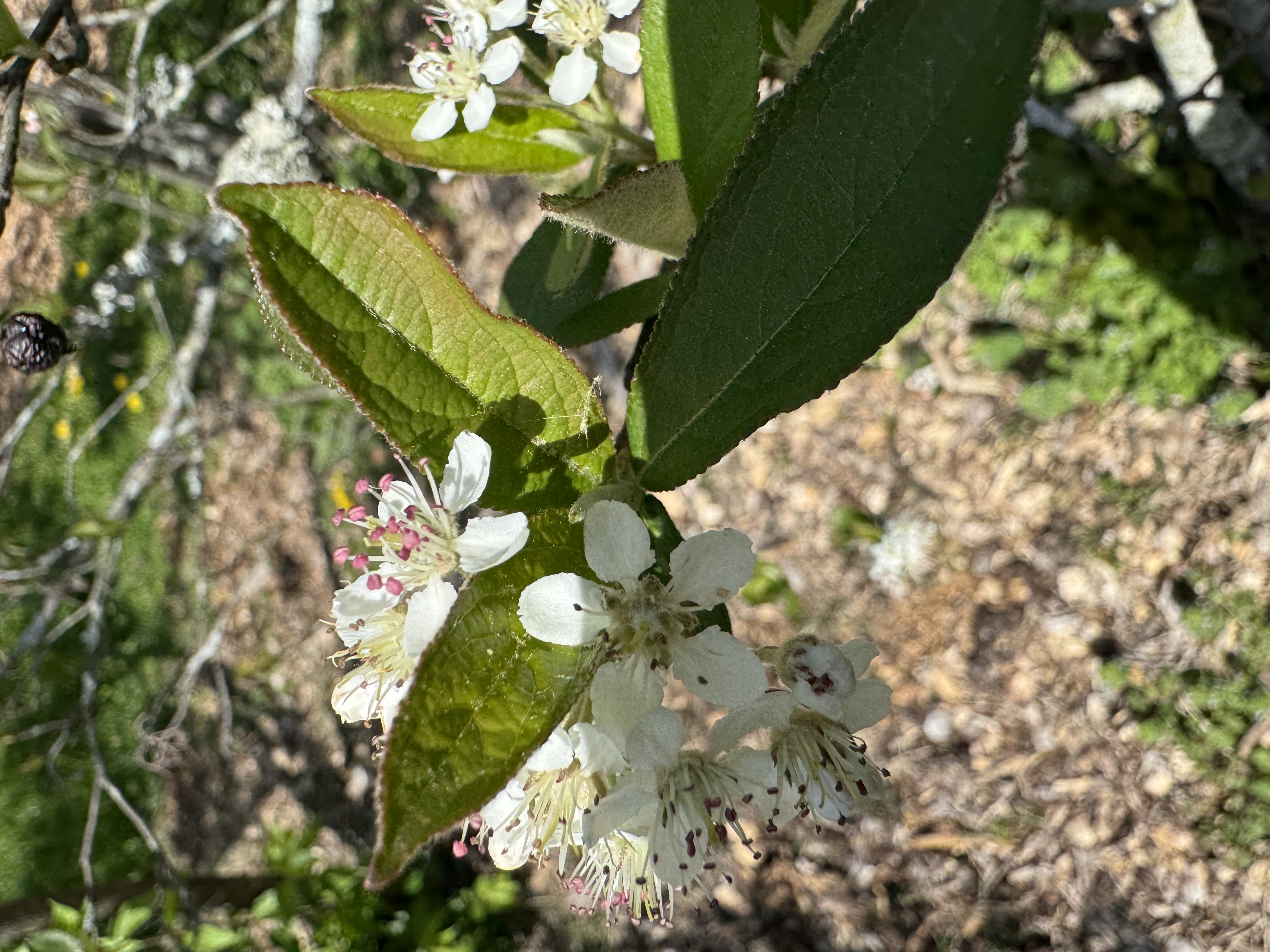
The flowers are small (½ inch / 12 mm across), white to pale pink, with five petals and prominent red anthers that give fresh flowers a slightly pink-tipped appearance. They are arranged in flat-topped corymb clusters of 10–25 flowers at the tips of branches. Flowering occurs in April through May, typically just as the leaves are fully emerging. While individual flowers are modest in size, the abundant clusters create a lovely spring display, and the flowers attract early native bees, beetles, and flies as important pollinators.
Fruit
The fruit is a small pome (a type of fleshy fruit in the rose family, related to apples and pears), ¼ to ½ inch (6–12 mm) in diameter, ripening from green to brilliant bright red by August–September. The berries persist on the plant well into winter — often through January or February — making them a critical late-season food resource for birds and other wildlife. Unlike many bird berries that are quickly consumed upon ripening, chokeberries are often passed over until other food sources are depleted, providing a reliable “emergency” food supply through harsh winters. The berries have a sharp, intensely astringent taste when eaten raw.
Quick Facts
| Scientific Name | Aronia arbutifolia |
| Family | Rosaceae (Rose) |
| Plant Type | Deciduous Shrub |
| Mature Height | 6–10 ft |
| Sun Exposure | Part Shade to Full Shade |
| Water Needs | Moderate to High |
| Bloom Time | April – May |
| Flower Color | White (with red anthers) |
| Fall Color | Outstanding — orange-red to deep scarlet |
| USDA Hardiness Zones | 4–9 |
Native Range
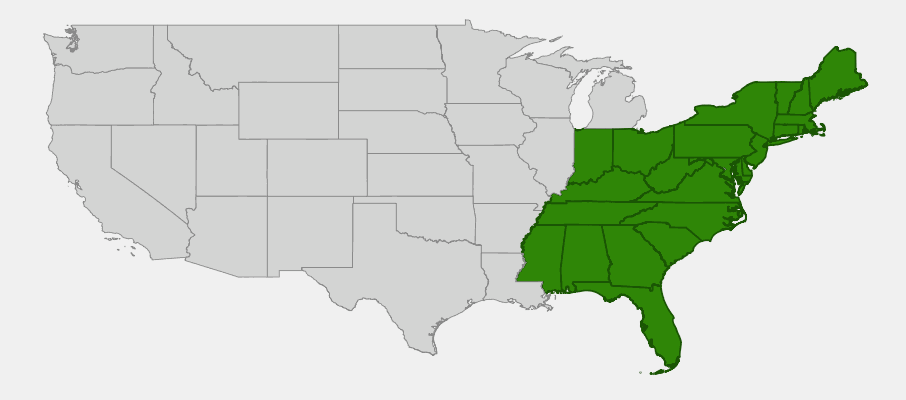
Red Chokeberry is native to the eastern United States, with a range extending from southern Maine and Nova Scotia south through the Atlantic coastal states to Florida, and westward through the Appalachian region into Ohio, Indiana, and Kentucky. It is most abundant in the coastal plain and piedmont regions of the southeastern United States, where moist soils and mild winters create ideal growing conditions. In the mid-Atlantic and New England regions — including New York, Pennsylvania, and New Jersey — it is a characteristic native of freshwater wetland margins and shrub swamps.
Throughout its range, Red Chokeberry is closely associated with moist to wet habitats: the margins of ponds, lakes, streams, and freshwater wetlands; wet lowland forests; shrub swamps; bog edges; and seasonally flooded bottomlands. It is often found growing alongside Highbush Blueberry (Vaccinium corymbosum), Swamp Azalea (Rhododendron viscosum), Swamp Rose (Rosa palustris), and various willows and alders. Like these associates, it tolerates periodic inundation but thrives in conditions where excess moisture drains away after wet periods.
Red Chokeberry differs from its close relative Black Chokeberry (Aronia melanocarpa) in range as well as fruit color: Black Chokeberry has a somewhat more northern and inland distribution and generally tolerates drier conditions, while Red Chokeberry is primarily coastal and southeastern in emphasis. The two species hybridize where their ranges overlap, producing Purple Chokeberry (Aronia × prunifolia), which is intermediate in characteristics and also garden-worthy.
📋 Regional plant lists featuring Red Chokeberry: New York, Pennsylvania & New Jersey
Growing & Care Guide
Red Chokeberry is a rewarding, adaptable native shrub that is easier to grow than many gardeners expect. While it performs best in moist conditions that mimic its natural habitat, it adapts well to average garden soils and is more tolerant of shade than many fruiting shrubs. Once established, it requires minimal care while providing maximum seasonal interest.
Light
Red Chokeberry is one of the few fruiting native shrubs that performs well in part shade to full shade — the range noted in the regional plant list reflects its natural understory habitat beneath open woodland canopy. It blooms and fruits best with at least 4 hours of direct sun, but it will grow, flower, and produce berries in significant shade. Foliage color in fall is best in sites with some afternoon sun. Full shade produces healthy foliage and some fruit but generally reduces berry production and fall color intensity.
Soil & Water
Red Chokeberry prefers moist to wet, well-drained to poorly-drained soil. It thrives in consistently moist conditions and tolerates periodic flooding. However, established plants show more drought tolerance than commonly assumed — once deeply rooted, they can persist through summer dry spells in average garden soils. Soil texture can range from sandy to heavy clay; the plant adapts to a wide variety of soil types as long as moisture is adequate. Soil pH from 4.5 to 7.0 (acidic to near-neutral) suits it well; it is particularly at home in the acidic soils of the eastern seaboard.
Planting Tips
Plant Red Chokeberry in spring or fall. It grows well in the wet margins of rain gardens, alongside ponds and streams, and in moist woodland gardens. It also makes a fine specimen or small grouping in average garden borders with regular watering during establishment. Space plants 4–5 feet apart for a screen or hedge, or 6–8 feet apart as specimens. Red Chokeberry suckers freely and will spread to form a colony — a desirable feature for naturalizing but one to plan for in formal borders. The cultivar ‘Brilliantissima’ is widely selected for especially vivid fall color and berry production.
Pruning & Maintenance
Red Chokeberry benefits from occasional rejuvenation pruning to maintain dense, attractive form. The shrub tends to become leggy at the base with age, displaying foliage primarily in the upper portions. Cut 1/3 of the oldest stems to the ground each winter to encourage fresh basal growth — a simple renewal pruning strategy that keeps the plant full and productive. Alternatively, cut the entire plant to the ground every 4–5 years for complete rejuvenation; it resprouts vigorously. No serious pest or disease problems affect Red Chokeberry in properly sited plantings.
Landscape Uses
Red Chokeberry is remarkably versatile in the landscape:
- Rain gardens and bioswales — ideal for wet zones that receive stormwater
- Woodland garden shrub layer — one of the best native shrubs for part-shade and moist woodland edges
- Bird gardens — the persistent red berries attract dozens of species through fall and winter
- Four-season interest — spring flowers, glossy summer foliage, brilliant fall color, persistent winter berries
- Pond and stream bank planting — tolerates periodic flooding
- Native hedgerow or screen when massed
- Naturalizing in moist lowland areas
Wildlife & Ecological Value
Red Chokeberry is a powerhouse for wildlife, providing food and habitat across all four seasons and supporting an impressive array of native wildlife from pollinators to songbirds to mammals.
For Birds
The persistent red berries are one of the most reliable late-season bird food sources in the eastern United States. Because the raw berries are intensely astringent, birds tend to pass over them in fall when more palatable fruits are available — then consume them eagerly in mid-to-late winter when other food sources are exhausted. American Robins, Cedar Waxwings, Eastern Bluebirds, Hermit Thrushes, Yellow-rumped Warblers, and many other species rely heavily on the berries in late winter. The dense structure of the shrub provides nesting habitat for Song Sparrows, Yellow Warblers, and other shrubland birds.
For Mammals
White-tailed Deer browse Red Chokeberry foliage, though the plant is generally considered moderately deer-resistant due to the astringency of the leaves and stems. Eastern chipmunks, red squirrels, and white-footed mice consume the berries in fall and winter. Wild turkey and ruffed grouse also consume berries and foliage. The dense suckering growth provides excellent cover for small mammals including rabbits and shrews.
For Pollinators
The spring flowers attract a diversity of early-season pollinators, including native bees (especially Andrena mining bees and small sweat bees), beetles, and flies. Red Chokeberry is a host plant for the Gray Hairstreak butterfly, whose caterpillars feed on the foliage. The plant’s early bloom time (April–May) makes it an important early-season resource for pollinators before many other shrubs are in flower.
Ecosystem Role
As a native shrub of moist woodland margins and wetland edges, Red Chokeberry contributes to the multi-layered structure of these ecotone habitats — transition zones between forest and wetland that are among the most biologically rich environments in the eastern United States. Its root system helps stabilize stream banks and wetland margins, reducing erosion during flood events. The suckering habit creates dense thickets that provide thermal cover and nesting structure for wildlife. The berry-laden branches that persist through winter provide one of the most visible and important food resources in the late-winter landscape.
Cultural & Historical Uses
Red Chokeberry was used by various Indigenous peoples of eastern North America. The Iroquois and other northeastern tribes consumed the berries, typically cooked or dried rather than raw, as the fresh berries’ strong astringency makes them unpleasant to eat out of hand. The berries were dried and mixed with meat and fat to make pemmican — the high-energy, shelf-stable food that sustained people through long winters and extended travel. The dried berries were also ground into meal and used in soups and porridges.
The name “chokeberry” refers directly to the astringent effect of eating the raw fruit — the tannins cause a sharp, puckering sensation in the mouth and throat. Despite this, the berries are entirely safe to consume and are nutritionally exceptional. They are among the highest known sources of anthocyanins (the purple-red pigments with strong antioxidant properties) of any fruit, surpassing blueberries and pomegranates in antioxidant content by some measures. This extraordinary nutritional profile has attracted significant interest from food scientists and the health food industry.
Today, Red Chokeberry berries are increasingly popular in Europe (where the plant is widely cultivated, particularly in Poland and Russia) for making juice, jam, wine, tea, and dietary supplements. Aronia berry juice is sold as a health product in natural food stores, marketed for its antioxidant content and potential cardiovascular benefits. In North America, chokeberry products are less common but growing in popularity. For home gardeners, the berries can be used to make excellent jams, jellies, wine, and juice — all benefit from sweetening to balance the natural astringency.
Frequently Asked Questions
What is the difference between Red Chokeberry and Black Chokeberry?
The primary difference is the fruit color — Red Chokeberry (Aronia arbutifolia) produces brilliant red berries, while Black Chokeberry (Aronia melanocarpa) produces dark purple-black berries. Black Chokeberry is generally shorter (3–5 ft), more drought-tolerant, and has a somewhat more northern and inland range. Red Chokeberry is taller (6–10 ft), prefers moister conditions, and has a more coastal and southeastern distribution. Both have excellent wildlife and ornamental value.
Can you eat Red Chokeberry berries?
Yes — they are safe to eat but very astringent fresh, which explains the “choke” in chokeberry. Cooking them with sugar transforms them into excellent jams, jellies, syrups, and juice. The berries are exceptionally high in antioxidants, anthocyanins, and polyphenols — making them among the most nutritious of all native fruits. Many people find chokeberry products — especially juice and jam — quite pleasant once the raw astringency is balanced with sweetness.
Does Red Chokeberry spread aggressively?
Red Chokeberry spreads by root suckers and can form expanding colonies over time. The spread is gradual and manageable — simply prune out unwanted suckers in spring, or mow around the colony margin to contain spread. In naturalistic gardens or moist lowland areas where colonizing is welcome, the suckering habit creates a useful dense thicket of wildlife cover. The cultivar ‘Brilliantissima’ tends to sucker somewhat less aggressively than the straight species.
Why doesn’t my Red Chokeberry have many berries?
Poor berry production is usually caused by one of three factors: too much shade (reduces flowering and fruit set), drought stress during fruit development (late spring through summer), or heavy deer browsing of flower buds before they open. Red Chokeberry fruits best with at least 4 hours of direct sun. Adequate moisture in spring and summer supports good berry development. Two or more plants planted near each other improve cross-pollination and berry production.
Is Red Chokeberry deer-resistant?
Red Chokeberry is considered moderately deer-resistant — the strong astringent compounds in the foliage and stems deter deer browsing to some extent. However, deer will browse it in areas with heavy deer pressure, particularly in early spring when new growth is tender. Young transplants should be protected with fencing until established. Once plants are larger and well-established, they typically recover quickly from any deer damage.

Looking for a nursery that carries Red Chokeberry?
Browse our native plant nursery directory: New York · Pennsylvania