Swamp White Oak (Quercus bicolor)
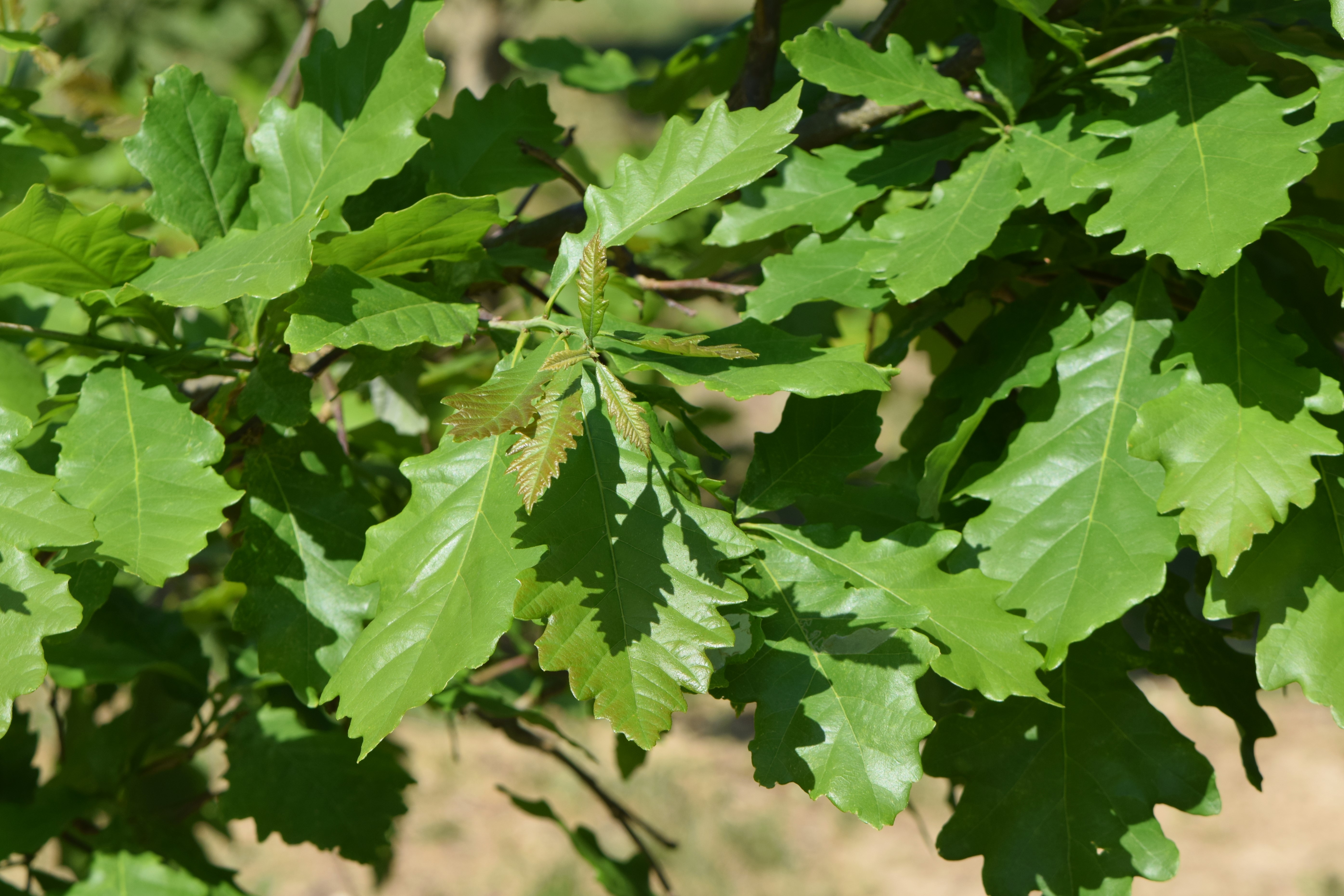
Quercus bicolor, commonly known as Swamp White Oak, is one of the most ecologically valuable and ornamentally distinctive native oaks of the northeastern and midwestern United States. A member of the Fagaceae (Beech) family and the white oak group, Swamp White Oak earns its species name bicolor — meaning “two-colored” — from the striking contrast between its dark, glossy green upper leaf surface and the pale, almost white, felty underside. This visual feature, visible when leaves rustle in the breeze, is one of the most beautiful effects any large native tree can provide in the landscape.
Unlike most oaks, which prefer upland, well-drained soils, Swamp White Oak is strongly associated with wet, bottomland habitats — river floodplains, swamp margins, low wet forests, and seasonally flooded sites where other oaks cannot thrive. Its exceptional tolerance of waterlogged soils and periodic flooding makes it invaluable for wet site planting, riparian restoration, rain gardens, and low areas that are too wet for most trees. At the same time, established Swamp White Oaks develop surprising drought tolerance, making them more adaptable than their wetland origin would suggest.
Swamp White Oak grows to a large, majestic tree — typically 50 to 60 feet tall with an equal or greater spread — with a broadly rounded crown that provides excellent shade and a long-lived, stately presence in the landscape. Like all native oaks, it is an ecological keystone species of extraordinary importance: oaks support more caterpillar species (over 500 in the eastern United States) than any other group of trees, making them irreplaceable anchors for bird populations and entire forest food webs. Swamp White Oak’s particular combination of wet-site tolerance, majestic form, and ecological value makes it one of the most important large native trees for planting in lowland and wet-site landscapes throughout its range.
Identification
Swamp White Oak is a large to very large deciduous tree typically reaching 50 to 60 feet (15–18 m) at maturity in cultivation, with old-growth specimens occasionally exceeding 80 feet (24 m) in favorable conditions. The crown is broadly rounded and open, with drooping lower branches that give mature trees a distinctive layered appearance. The tree is most easily identified by its unique two-toned leaves and its distinctive bark — which peels away in curling strips on the upper branches while remaining dark and deeply furrowed on the lower trunk.
Bark
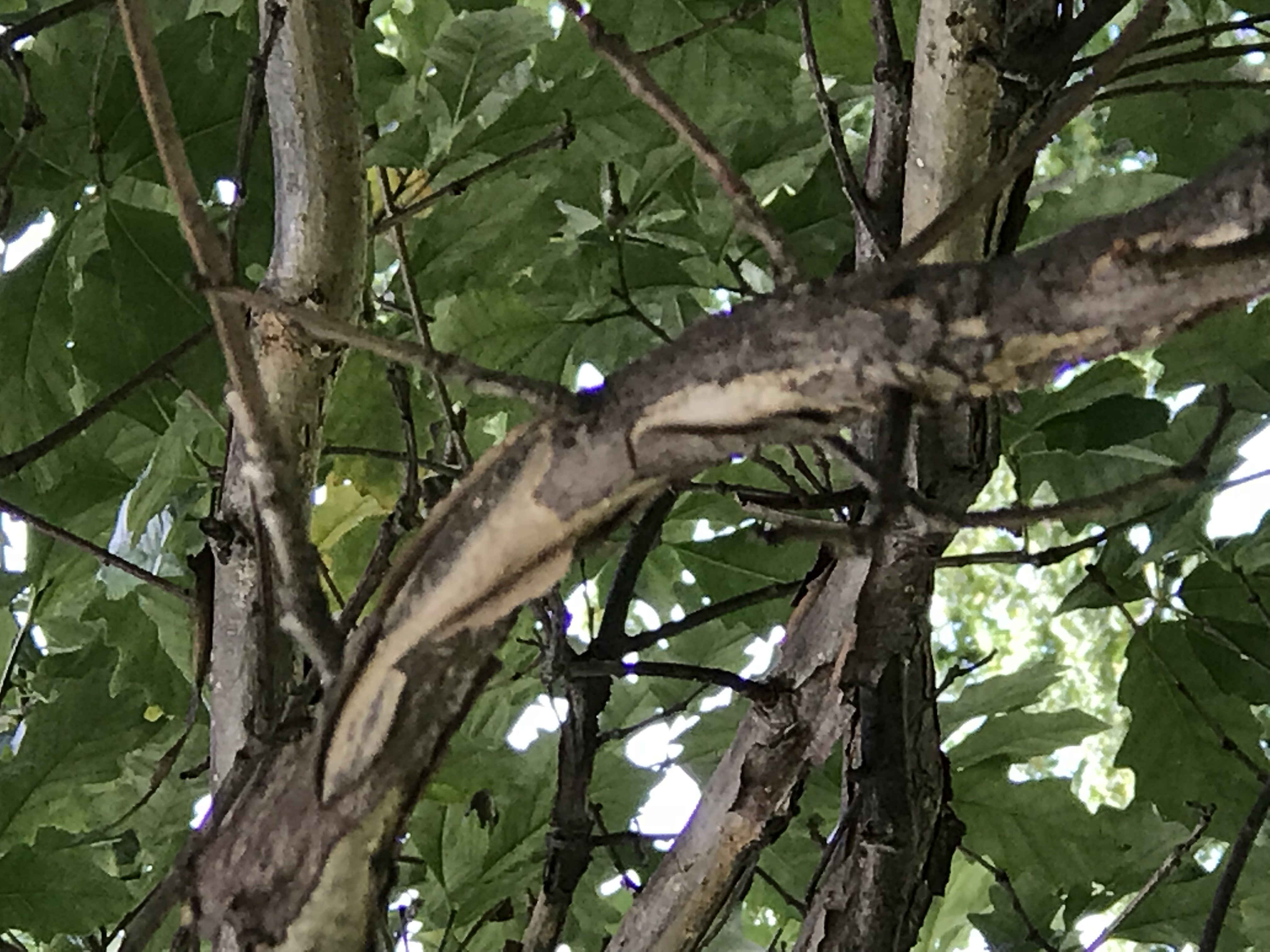
The bark is one of Swamp White Oak‘s most distinctive features. On the lower trunk and large limbs, the bark is dark grayish-brown, thick, and deeply furrowed in a pattern somewhat similar to White Oak (Quercus alba). However, on the upper branches and young limbs, the bark is distinctly different — it peels away in characteristic curling, papery strips or plates, exposing lighter inner bark beneath. This two-toned bark pattern — dark and furrowed below, lighter and peeling above — is unique among eastern oaks and immediately distinguishes Swamp White Oak from its close relatives. The peeling bark gives the upper canopy a somewhat shaggy, characteristic appearance that is especially visible in winter.
Leaves
The leaves are the tree’s most visually striking feature. They are obovate (widest near the tip) to elliptic, 5 to 7 inches (12–18 cm) long, with 6 to 14 shallow, rounded, irregularly-sized lobes (not the deeply cut, pointed lobes of red oak group species). The margins are wavy to shallowly lobed rather than deeply divided. The upper surface is dark, shiny, lustrous green; the underside is pale white to grayish-white and densely covered with soft, felty hairs — creating a vivid two-toned effect that is particularly dramatic when the leaves turn in a breeze. This contrasting coloration is the most reliable visual identification feature. Fall color is variable — typically yellow to yellow-brown, occasionally with orange tones.
Acorns
The acorns are medium to large, ½ to 1½ inches (12–35 mm) long, oval to oblong, with a flat base and a relatively deep, fringed cup that covers ⅓ to ½ of the acorn. A distinctive feature of Swamp White Oak acorns is that they are often produced in pairs on long stalks (peduncles) 1 to 4 inches long — a feature more pronounced than in most other white oaks. The acorns are sweet and low in tannins compared to red oak group species, making them edible and a preferred food for many wildlife species. They ripen in a single growing season (unlike red oaks, which require two years).
Quick Facts
| Scientific Name | Quercus bicolor |
| Family | Fagaceae (Beech) |
| Plant Type | Deciduous Tree (white oak group) |
| Mature Height | 50–60 ft |
| Sun Exposure | Part Shade to Full Shade (adaptable) |
| Water Needs | High (tolerates flooding and wet soils) |
| Bloom Time | April – May (wind-pollinated catkins) |
| Flower Color | Greenish-yellow (inconspicuous catkins) |
| Fall Color | Yellow to yellow-brown; occasionally orange |
| USDA Hardiness Zones | 3–8 |
Native Range
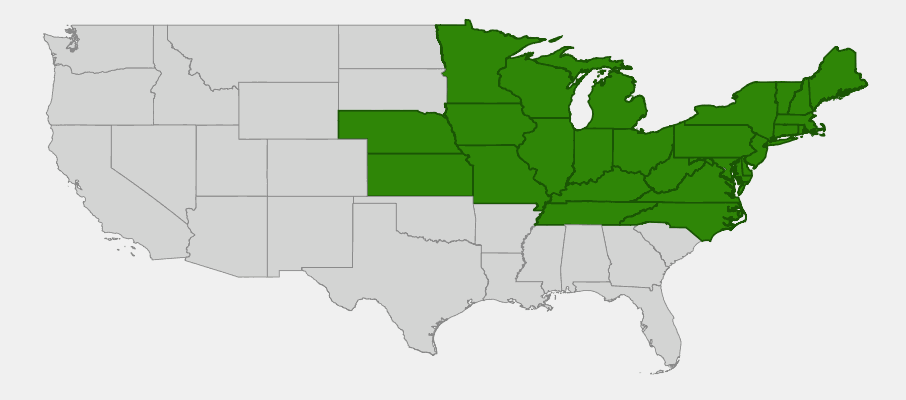
Swamp White Oak is native to the northeastern and midwestern United States, with its core range extending from southern Maine and southern Ontario south through the Atlantic coastal states to Virginia and North Carolina, and westward through the Great Lakes region, Ohio Valley, and upper Midwest to Nebraska and Kansas. The species reaches its greatest size and abundance in the rich river bottomlands of the Ohio River Valley and Great Lakes region, where the deep, moist alluvial soils provide ideal growing conditions for this magnificent tree.
Throughout its range, Swamp White Oak is a characteristic species of floodplain forests, bottomland hardwood communities, and wet lowland sites. It typically grows along river banks, in seasonally flooded lowland forests, at the margins of ponds and swamps, and on poorly-drained flat terrain where soils remain moist or periodically saturated. In the northeastern states — New York, Pennsylvania, and New Jersey — it occurs in floodplain forests, swampy lowlands, and wet forested bottomlands along major river systems, often growing alongside Silver Maple (Acer saccharinum), American Elm (Ulmus americana), Green Ash (Fraxinus pennsylvanica), and Sycamore (Platanus occidentalis).
Swamp White Oak grows primarily at lower elevations — typically below 1,500 feet — in the lowlands, river valleys, and poorly-drained plains of its range. It is notably absent from the higher elevations of the Appalachian Mountains, where better-drained upland habitats favor other oak species. Its limitation to lowland, wet habitats makes it an ecologically specialized species, filling a critical niche in floodplain forest communities that fewer oaks can occupy. The species is considered moderately common within its natural range but is declining in some areas due to floodplain development, channelization of rivers, and urban development of lowland sites.
📋 Regional plant lists featuring Swamp White Oak: New York, Pennsylvania & New Jersey
Growing & Care Guide
Swamp White Oak is a superb large tree for wet and moist sites, rain garden overflow areas, low spots, and riparian plantings. It is more adaptable than its “swamp” name suggests — while it thrives in wet conditions, established trees develop good drought tolerance and can succeed in average garden soils with adequate moisture during establishment. It is a long-lived, low-maintenance tree that rewards patient gardeners with a majestic, wildlife-rich presence.
Light
Swamp White Oak performs best in full sun to part shade. In full sun, it develops its most robust form, deepest root system, and greatest acorn production — all important for maximum wildlife value. It tolerates partial shade, especially when young, but develops a more open, less vigorous crown in heavy shade. The sun exposure listed as “Part Shade to Full Shade” in regional plant lists reflects its shade tolerance during establishment in natural woodland settings; for landscape planting, full sun is preferred for best performance. Avoid planting in deep shade — established trees need adequate light for long-term health and acorn production.
Soil & Water
Swamp White Oak’s primary adaptation is its exceptional tolerance of wet, poorly-drained, and periodically flooded soils — a characteristic shared by few other large trees. It grows naturally in soils that are saturated for weeks at a time in spring, yet drier in summer. For landscape planting, choose the lowest, wettest areas of your property — the low spots that collect stormwater, the margins of rain gardens, and areas near ponds and streams. It grows in heavy clay, loam, and sandy soils. Established trees also perform well in average garden soils with good moisture during establishment (first 3–5 years). Soil pH from 4.5 to 7.5 is acceptable; slightly acidic to neutral soils are ideal.
Planting Tips
Plant Swamp White Oak in spring or fall. Container-grown or balled-and-burlapped nursery stock establishes well. Choose a site with adequate space — this is a large tree that will eventually reach 50–60 feet or more in both height and spread. Plan for a 30–40 foot planting distance from structures, utilities, and other large trees. Mulch the root zone with 2–4 inches of organic material in a circle 6–8 feet in diameter to suppress weeds, retain moisture, and protect the root crown during establishment. Water regularly during the first 2–3 growing seasons; once established, supplemental irrigation is generally unnecessary except during extreme drought.
Pruning & Maintenance
Swamp White Oak requires minimal pruning once established. Remove dead, damaged, or crossing branches in late winter while the tree is dormant. Young trees may benefit from light structural pruning to develop a well-spaced branching framework. Avoid heavy pruning — oaks are slow to heal large wounds and are vulnerable to oak wilt disease in some regions (particularly the Midwest and mid-Atlantic). If pruning is necessary, do so in winter (November–March) to avoid the high-risk period for oak wilt transmission. Swamp White Oak has few serious pest or disease problems in properly sited plantings.
Landscape Uses
Swamp White Oak excels in a variety of landscape applications:
- Wet site shade tree — the premier large tree for low, wet areas where other oaks cannot thrive
- Rain garden overflow area — tolerates the wet-dry cycles of stormwater management plantings
- Riparian buffer planting — ideal for stream banks, pond margins, and floodplain restoration
- Large-scale wildlife habitat tree — keystone species for bird and invertebrate communities
- Lawn and park tree — adaptable to moist lawn conditions where most oaks struggle
- Naturalistic bottomland woodland — a signature species of lowland native plant communities
- Urban stormwater sites — increasingly used in engineered stormwater management landscapes
Wildlife & Ecological Value
As a native oak, Swamp White Oak is one of the most ecologically important trees that can be planted in the eastern United States. No other genus of trees supports more wildlife species — oaks are the keystone trees of eastern North American ecosystems, and Swamp White Oak brings this extraordinary ecological value to wet and low-lying sites that no other oak can colonize.
For Birds
The annual acorn crop of Swamp White Oak is a critical food resource for more than 100 species of birds, including Wood Ducks, Mallards, Wild Turkey, Blue Jays, Red-headed Woodpeckers, White-breasted Nuthatches, and many others. Wood Ducks, in particular, eagerly consume the sweet, low-tannin acorns that fall into wetland areas. The tree’s structure — large, spreading crown with plenty of dead wood, cavities, and bark crevices — provides nesting and roosting habitat for cavity-nesting birds including woodpeckers, owls, and chickadees. Over 100 species of native birds use oaks for nesting, foraging, or shelter.
For Mammals
White-tailed Deer, Gray Squirrels, Fox Squirrels, Eastern Chipmunks, White-footed Mice, and Black Bears all consume Swamp White Oak acorns. The acorns’ relatively low tannin content (compared to red oak species) makes them particularly palatable and eagerly sought. Deer also browse the young foliage and twigs, particularly in winter when other food is scarce. Over decades, large Swamp White Oaks develop hollows and cavities that provide den sites for opossums, raccoons, and squirrels.
For Pollinators
While oak catkins are wind-pollinated and do not depend on insects for pollination, they produce significant pollen that is collected by native bees in early spring when few other pollen sources are available. More significantly, Swamp White Oak is a host plant for more than 500 species of moth and butterfly caterpillars in the eastern United States — more than any other tree genus. These caterpillars are the critical food source that most songbird parents rely on to feed their nestlings during the breeding season. Research by entomologist Doug Tallamy has shown that chickadees, for example, need over 9,000 caterpillars to raise a single clutch of young — caterpillars that depend on oaks and a handful of other native keystone trees.
Ecosystem Role
Swamp White Oak is a keystone species of bottomland hardwood ecosystems — communities that are among the most biologically rich and also most threatened in the eastern United States, having been largely drained and converted to agriculture and development over the past two centuries. As a long-lived tree (200–300+ years in the wild), Swamp White Oak provides habitat continuity across multiple human generations. Its leaf litter creates the rich, acidic duff layer that supports diverse communities of soil invertebrates, fungi, and forest floor plants. The annual acorn crop drives boom-bust cycles in small mammal populations that cascade through the entire food web.
Cultural & Historical Uses
Like all members of the white oak group, Swamp White Oak has a long history of human use. The acorns of white oak group species are significantly lower in bitter tannins than those of red oak group species, making them more palatable and easier to process for food. Indigenous peoples throughout the tree’s range harvested and ate the acorns — raw, roasted, or more commonly ground into a flour that was used to make bread, porridge, and other foods after leaching out the remaining tannins with water. The acorn meal was a dietary staple for many eastern woodland cultures, providing carbohydrates, fats, and minerals during fall and winter.
The wood of Swamp White Oak is strong, heavy, hard, and durable — qualities that made it valuable for construction, cooperage (barrel-making), agricultural implements, and furniture. Like White Oak, it was prized for tight-grained, watertight barrel staves used in the wine and whiskey industries. The bark contains tannins that were used for tanning leather. Early European settlers used the wood extensively for construction of buildings, fences, and farm equipment. The trees’ tolerance of wet, bottomland sites made them accessible in floodplain forest landscapes that were often the first areas cleared for agriculture.
Today, Swamp White Oak is increasingly recognized as one of the most valuable large trees for urban and suburban landscapes in the northeastern and midwestern United States. Its combination of wet-site tolerance, large stature, exceptional wildlife value, and relatively clean habit (it doesn’t produce the heavy acorn crops that can create litter problems) makes it an increasingly popular choice for parks, green infrastructure, and ecological restoration projects. Municipalities and restoration ecologists are planting Swamp White Oak in riparian buffer zones, wetland mitigation sites, and low-impact stormwater management areas where its ecological services — water uptake, carbon sequestration, wildlife support, and soil stabilization — provide measurable environmental benefits.
Frequently Asked Questions
Can Swamp White Oak grow in a regular yard?
Yes — despite its wetland associations, Swamp White Oak adapts well to average garden and lawn conditions as long as it receives adequate moisture during its first 3–5 years. It is more drought-tolerant once established than commonly assumed. It performs best in the lowest, wettest areas of a yard but will succeed in average moist soils throughout its range. Plan for its eventual large size (50–60 ft) and avoid planting near utility lines, foundations, or other structures.
How long does it take for Swamp White Oak to produce acorns?
Swamp White Oak typically begins producing acorns at 20–25 years of age, with full production reached at 50+ years. Young nursery-grown trees may produce their first few acorns in as little as 10–15 years in favorable conditions. Unlike red oaks, which take two growing seasons to mature acorns, Swamp White Oak acorns mature in a single growing season — so they fall in the same year they were pollinated.
What is the difference between Swamp White Oak and White Oak?
White Oak (Quercus alba) prefers well-drained upland soils, while Swamp White Oak (Quercus bicolor) thrives in wet, poorly-drained sites. White Oak typically has more deeply-lobed leaves with rounded sinuses; Swamp White Oak has shallowly-lobed leaves that are notably wider near the tip. Swamp White Oak’s most distinctive feature is its two-toned leaves (glossy dark green above, white below) and the peeling bark on its upper branches — neither of which is a feature of White Oak.
Is Swamp White Oak a fast-growing tree?
Swamp White Oak grows at a moderate rate — typically 1 to 2 feet per year in youth, slowing as the tree matures. It is considered faster-growing than many oaks, particularly in moist, fertile soils where it naturally occurs. In ideal bottomland conditions, young trees can occasionally grow 2–3 feet per year. Overall, it establishes more quickly than White Oak or Bur Oak, making it a good choice when a large native oak is desired within a reasonable timeframe.
How do I identify Swamp White Oak?
Look for three distinctive features: (1) leaves that are noticeably two-toned — dark, lustrous green above and pale white to grayish beneath, widest near the tip with shallow rounded lobes; (2) bark that is deeply furrowed and dark on the lower trunk but peeling and shaggy on the upper branches; and (3) acorns produced on long stalks (often in pairs), ½ to 1½ inches long with a deep, fringed cup covering ⅓ to ½ of the acorn. The wet, lowland habitat is also a strong clue — few other oaks are commonly found growing in seasonally flooded bottomlands.

Looking for a nursery that carries Swamp White Oak?
Browse our native plant nursery directory: New York · Pennsylvania