Wax Myrtle (Myrica cerifera)
Myrica cerifera (syn. Morella cerifera), commonly known as Wax Myrtle, Southern Bayberry, or Candleberry, is one of the most ecologically important, broadly adaptable, and aesthetically attractive native evergreen shrubs of the southeastern United States. A close relative of Northern Bayberry (Myrica pensylvanica), Wax Myrtle is larger, more vigorous, and evergreen — making it one of the most versatile native shrubs available for southern landscapes. Its aromatic, yellow-green evergreen foliage, its clusters of small, waxy, blue-gray berries, and its extraordinary adaptability to wet, dry, salty, and poor-soil conditions make it an indispensable plant for a vast range of landscape applications across the mid-Atlantic and Southeast.
Wax Myrtle grows quickly and vigorously — often reaching 10 to 15 feet in just a few years, and eventually growing to 25 feet as a large multi-stemmed shrub or small tree. Its naturally dense, rounded form makes it an ideal screening plant, and it can be maintained at any desired height through pruning. Female plants produce small, blue-gray, waxy berries in late summer that persist through winter, providing critical food for over 40 bird species at a time of year when other food sources are scarce. The small blue-grey fruits on females last through winter, as noted in the batch data — one of the plant’s most valuable wildlife features.
From the coastal barrier islands of New Jersey to the tidal swamps of Louisiana and Texas, Wax Myrtle is a structural cornerstone of Atlantic and Gulf Coast ecosystems. It thrives in brackish areas, wet swales, sandy uplands, and disturbed roadsides alike, filling ecological roles as a nitrogen fixer, a food plant, a nesting site, and a soil stabilizer. For gardeners in the mid-Atlantic and Southeast, it is one of the most reliable, low-maintenance, and ecologically rewarding native shrubs available.
Identification
Wax Myrtle is a vigorous, multi-stemmed, evergreen shrub to small tree, typically 10 to 25 feet (3–7.6 m) tall with an equal or greater spread. In open sites it develops a dense, rounded to irregular crown; in shade it becomes more open and leggy. The overall impression is of a large, full-bodied, aromatic evergreen shrub with a pleasant fragrance — the leaves, when crushed, release a distinctive, spicy-sweet bayberry scent.
Leaves
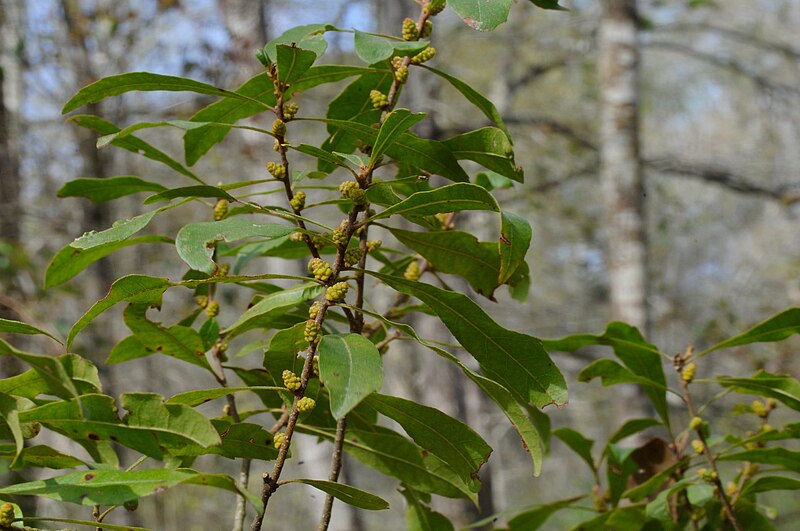
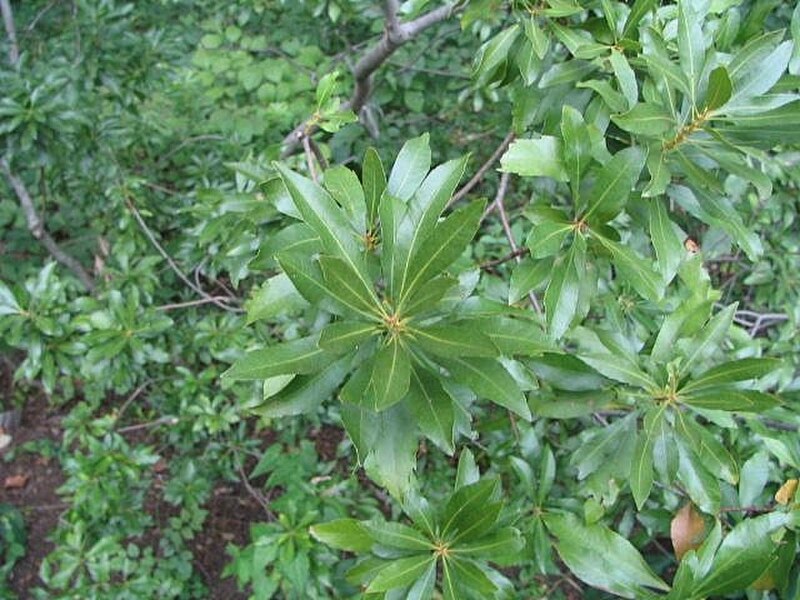
The leaves are simple, alternate, oblanceolate to narrowly obovate, 1 to 3 inches (3–8 cm) long, with a few shallow teeth near the tip and entire margins below. The upper surface is bright yellow-green to medium green, shiny, and dotted with resin glands visible when held to light. The underside is paler with orange or yellow resin dots. The leaves are strongly aromatic when crushed — one of the most reliable identification features. Unlike Northern Bayberry, Wax Myrtle leaves persist year-round, providing year-round visual interest and wildlife cover.
Flowers
Wax Myrtle is dioecious — male and female flowers are on separate plants. Flowers are small, wind-pollinated catkins appearing in early to mid-spring (March–April). Male catkins are elongated; female catkins are shorter and rounded. Neither is ornamentally significant, but they provide early-season pollen for native bees and other insects. Both male and female plants are needed for berry production.
Fruit
The fruit is the plant’s most distinctive and ornamental feature: small, hard, round drupes about 3/16 inch (4–5 mm) in diameter, densely clustered along the stems below the current year’s leaves. The surface is covered with a pale blue-gray to whitish wax that gives the berries their characteristic appearance. Berries ripen in late summer to early fall and persist on female plants through winter — often remaining until March or April — providing a sustained food source for birds throughout the cold months. A heavily fruiting female Wax Myrtle covered in blue-gray berries against its green foliage is a striking and beautiful sight.
Quick Facts
| Scientific Name | Myrica cerifera (syn. Morella cerifera) |
| Family | Myricaceae (Bayberry) |
| Plant Type | Evergreen Shrub to Small Tree |
| Mature Height | 25 ft |
| Sun Exposure | Full Sun to Part Shade |
| Water Needs | Moderate to High |
| Bloom Time | March – April |
| Fruit Color | Waxy blue-gray (persistent through winter) |
| Foliage | Evergreen, aromatic, yellow-green |
| Salt Tolerance | Excellent |
| Nitrogen Fixing | Yes (Frankia bacteria root symbiosis) |
| USDA Hardiness Zones | 6–10 |
Native Range
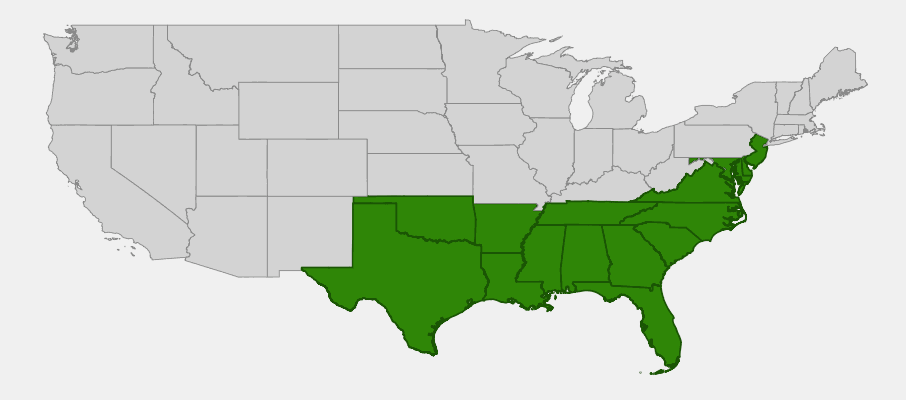
Wax Myrtle is native to the Atlantic and Gulf coastal plains of the eastern United States, ranging from southern New Jersey south through Delaware, Maryland, Virginia, the Carolinas, Georgia, and Florida, and west along the Gulf Coast through Alabama, Mississippi, Louisiana, and Texas. It extends inland in the Southeast along river drainages and in suitable low-elevation habitats, reaching into Tennessee, Arkansas, and Oklahoma. The species is most abundant and ecologically dominant in the coastal plain region from Virginia southward.
Within its range, Wax Myrtle occupies an extraordinary diversity of habitats: edges of salt marshes and brackish tidal areas, upland pocosin wetlands, moist sandy flatwoods, longleaf pine savannah understory, coastal scrub, bay-forest edges, and disturbed roadsides and old fields. Its moisture tolerance spans an exceptional range — from periodically flooded tidal swamps to dry sandy upland soils — reflecting its ability to exploit virtually any low-elevation coastal plain habitat with adequate light. At the northern edge of its range (New Jersey and Delaware), Wax Myrtle is found primarily in coastal and near-coastal habitats, often growing alongside Northern Bayberry.
Like its northern relative, Wax Myrtle fixes atmospheric nitrogen through a symbiotic relationship with Frankia bacteria, allowing it to colonize and enrich nutrient-poor coastal plain soils. This nitrogen-fixing ability makes it an ecological engineer — a plant that improves conditions for other species around it, driving successional change on disturbed and nutrient-poor coastal lands. In many areas of the Southeast, it is a pioneer species of abandoned agricultural fields, where its rapid growth, nitrogen enrichment, and bird-dispersed seeds set the stage for natural forest recovery.
📋 Regional plant lists featuring Wax Myrtle: New York, Pennsylvania & New Jersey
Growing & Care Guide
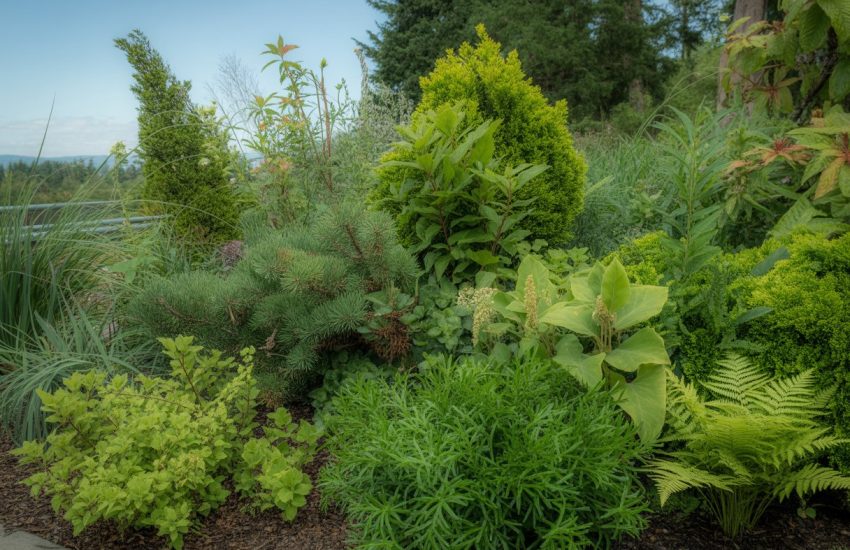
Wax Myrtle is one of the most rewarding native shrubs for mid-Atlantic and southeastern landscapes. It grows quickly, tolerates a remarkably wide range of conditions, provides year-round beauty with its evergreen aromatic foliage, and delivers exceptional wildlife value. It is also easy to maintain at any desired size through pruning, making it a versatile choice for everything from screening hedges to specimen shrubs to naturalistic mass plantings.
Light
Full sun to part shade — Wax Myrtle performs well across a broad range of light conditions. It grows most densely and produces the most berries in full sun, but tolerates part shade and remains attractive even in shadier conditions. In full shade it becomes open and lanky. For screening and privacy hedges, plant in full sun for maximum density. For naturalistic woodland edge plantings, part shade is fine. The plant’s year-round evergreen foliage maintains interest in all light conditions.
Soil & Water
Wax Myrtle is one of the most site-flexible native shrubs available. The batch data notes “Moderate to High” (W-A) moisture needs, reflecting its natural affinity for moist coastal soils — but this underestimates its drought tolerance once established. In practice, Wax Myrtle adapts to a very wide moisture range: seasonally flooded wetland edges, average garden soils, and even moderately dry sandy soils once established. It is salt-tolerant, handling both salt spray and salt-affected soils. Soil pH can range from acidic to slightly alkaline. Its nitrogen-fixing root bacteria provide an internal fertility supplement, making it suitable for poor, nutrient-depleted soils.
Planting Tips
Plant in spring or fall. Container-grown plants establish readily. Space 6 to 8 feet apart for mass plantings or informal hedges; 8 to 10 feet apart for individual specimens. Both male and female plants are needed for berries — plant at least 1 male per 3 to 4 females. Wax Myrtle is an exceptionally fast grower — in warm southeastern climates, 3 to 4 feet per year is typical. Plan for this growth rate when selecting a planting location. It responds well to pruning and can be maintained at any desired height.
Pruning & Maintenance
Wax Myrtle tolerates heavy pruning and shearing, making it suitable for formal hedges, screens, and topiary in warmer climates. For informal naturalistic plantings, it requires minimal pruning — just occasional removal of dead wood and, if desired, shaping for form. It may be cut hard to the ground and will regenerate vigorously. In colder parts of its range (Zone 6), occasional winter die-back of branch tips may occur — remove damaged wood in spring after growth resumes. Wax Myrtle is essentially pest- and disease-free in its native range.
Landscape Uses
- Privacy screening and windbreak — fast-growing, evergreen, dense
- Coastal and salt-spray gardens — outstanding salt tolerance
- Wildlife habitat — critical winter food for birds; spring pollen source
- Wet areas and rain gardens — handles seasonal flooding
- Mass planting and naturalization on sandy coastal plain soils
- Formal hedge — tolerates shearing; maintains clean lines
- Specimen shrub for year-round evergreen interest
- Revegetation on disturbed coastal plain soils — nitrogen fixer
Wildlife & Ecological Value
Wax Myrtle is a keystone species in coastal plain wildlife communities, providing food, shelter, and habitat structure that supports an extraordinary diversity of birds, insects, and small mammals throughout the year.
For Birds
The persistent blue-gray berries of Wax Myrtle — noted in the batch data as lasting “through winter” — are a critical food resource for a large number of bird species from late summer through early spring. Like its northern relative, Wax Myrtle berries are primarily consumed by Yellow-rumped Warblers — the only warbler species capable of digesting the waxy coating — and by Tree Swallows that winter along the southeastern coast. Additional consumers include Eastern Bluebirds, American Robins, Hermit Thrushes, Cedar Waxwings, Gray Catbirds, Brown Thrashers, Red-bellied Woodpeckers, and numerous sparrows. The dense evergreen foliage provides year-round roosting and nesting cover, and the thicket structure hosts ground-nesting birds including Eastern Towhees and White-throated Sparrows.
For Pollinators
Wax Myrtle’s spring catkin flowers provide early-season pollen for native bees, including specialist Andrena bees associated with Myrica species. The aromatic foliage is used by some native bee species in nest construction. While not a major nectar plant, it contributes to early spring insect food webs and supports a range of beneficial insects through its leaf litter and bark invertebrate communities.
For Mammals
White-tailed Deer generally avoid Wax Myrtle due to its aromatic, resinous foliage — a significant landscape advantage. Small mammals including rabbits and rodents use the dense thicket cover. Raccoons and opossums occasionally consume the berries. The evergreen cover provides year-round refuge for small mammals seeking shelter from weather and predators.
Ecosystem Role
Wax Myrtle’s nitrogen-fixing symbiosis with Frankia bacteria makes it one of the most ecologically productive pioneer shrubs in the southeastern coastal plain. By enriching nutrient-poor sandy soils, it facilitates the establishment of other species and drives natural succession. Its rapid growth, bird-dispersed seeds, and broad environmental tolerance allow it to colonize disturbed habitats quickly, providing immediate ecological structure and beginning the process of ecosystem recovery. In longleaf pine savannah restoration, Wax Myrtle is a component of the natural understory that historically supported the unique biodiversity of these fire-maintained ecosystems.
Cultural & Historical Uses
Wax Myrtle shares the remarkable bayberry candle history of its northern relative. The waxy coating of the berries — extracted by boiling in water and skimming the floating greenish wax — was used by Indigenous peoples and European colonists throughout the southeastern coastal region to make aromatic candles. The wax of Myrica cerifera is greenish and particularly fragrant, producing candles prized for their clean burning and pleasant scent. In the colonial era, bayberry candles were luxury items — expensive to produce due to the labor of berry collecting and wax extraction — but treasured for their quality and fragrance.
Various Indigenous peoples of the southeastern coastal plain used Wax Myrtle extensively. The Choctaw, Cherokee, and other nations used the leaves and bark medicinally — as a febrifuge (fever reducer), astringent, and treatment for intestinal ailments. Bark tea was used for fevers and as an emetic. The aromatic leaves were used in ceremonial contexts and as insect repellents. The wax was used for waterproofing and in the preparation of ear medications. Several eastern nations used Wax Myrtle berries as a seasoning for soups and stews, though the waxy coating makes them unpalatable when raw.
In modern herbalism, Wax Myrtle bark (often sold as “bayberry bark”) has been used as an herbal remedy for centuries, appearing in both Native American and European-American folk medicine traditions. It contains a range of bioactive compounds including the triterpene myricadiol, which has been studied for potential medicinal properties. Like all members of this family, the bark contains tannins and other compounds with astringent properties. Today, Wax Myrtle is increasingly recognized by landscape architects and native plant enthusiasts as one of the most versatile and valuable native shrubs for the southeastern and mid-Atlantic coastal landscape.
Frequently Asked Questions
What is the difference between Wax Myrtle and Northern Bayberry?
Both are closely related Myrica species with similar blue-gray waxy berries and aromatic foliage, but they differ in key ways: Wax Myrtle (M. cerifera) is larger (to 25 ft), fully evergreen, and hardy only to Zone 6–7. Northern Bayberry (M. pensylvanica) is smaller (to 8 ft), semi-evergreen to deciduous, and hardy to Zone 2–3. For gardens in New York, Pennsylvania, and New Jersey, both can be grown, though Northern Bayberry is more reliable in cold winters. Wax Myrtle is better suited to warmer, coastal locations in the mid-Atlantic.
Is Wax Myrtle deer resistant?
Yes — Wax Myrtle’s strongly aromatic foliage is generally avoided by White-tailed Deer. It is not absolute deer-proof, but it is one of the more reliably deer-resistant native shrubs in the mid-Atlantic and Southeast — a significant advantage in heavily deer-pressured suburban landscapes.
How fast does Wax Myrtle grow?
Wax Myrtle is a fast-growing shrub — one of the fastest-growing native woody plants in the Southeast. In warm, moist conditions it can add 3 to 4 feet per year. Even in cooler parts of its range (Zones 6–7), it typically adds 2 to 3 feet per year once established. This fast growth makes it excellent for quick screening and habitat establishment, though it requires regular pruning if a specific size is desired.
Can Wax Myrtle grow in wet soil?
Yes — Wax Myrtle naturally grows in wet coastal habitats including marsh edges, pocosin wetlands, and periodically flooded flatwoods. It handles seasonal flooding well and can tolerate wetter conditions than most shrubs. However, it also tolerates dry sandy soils once established, making it one of the most moisture-flexible native shrubs available. The batch data notes “Moderate to High” (W-A) moisture needs, but in practice it adapts across a very wide moisture range.
Will Wax Myrtle grow in New York or Pennsylvania?
Wax Myrtle is cold-hardy to Zone 6, which covers much of southern Pennsylvania and the warmer parts of New York (Long Island, the lower Hudson Valley, and NYC metro area). In these regions it performs well in sheltered sites. In Zone 5 areas of upstate New York, it may suffer tip die-back in cold winters and is better replaced by the hardier Northern Bayberry. Coastal New Jersey, Delaware, and Maryland are all within the preferred range for Wax Myrtle.

Looking for a nursery that carries Wax Myrtle?
Browse our native plant nursery directory: New York · Pennsylvania