Wahoo (Euonymus atropurpureus)
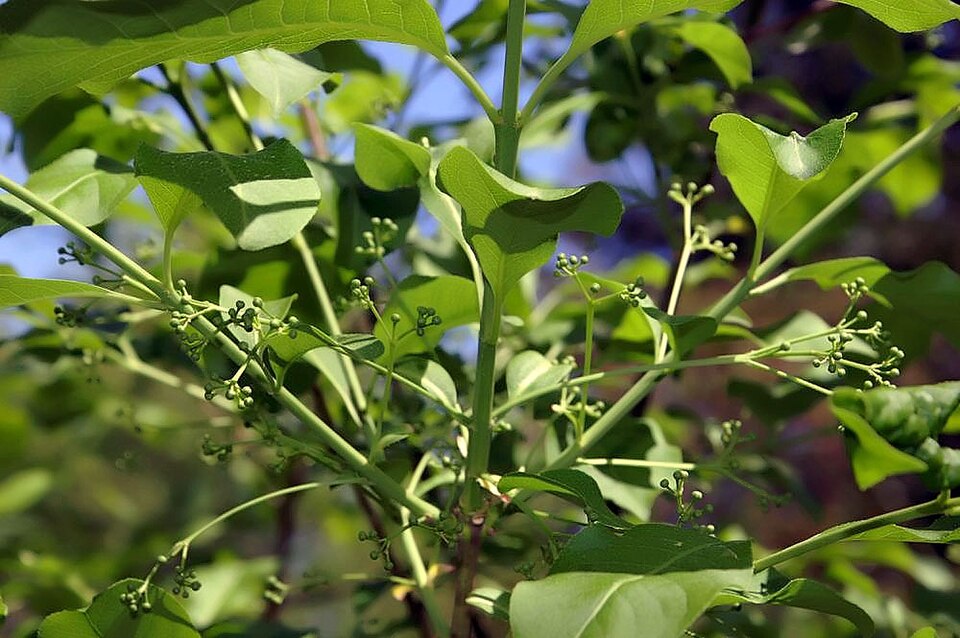
Euonymus atropurpureus, commonly known as Wahoo, Eastern Wahoo, or Burning Bush (though distinct from the widely sold invasive burning bush), is a native deciduous shrub or small tree reaching 15 to 25 feet in height, native to eastern and central North America. A member of the Celastraceae (staff-vine) family, Wahoo is one of the most spectacularly ornamental native shrubs in the eastern flora, offering interest in all four seasons: small but unusually beautiful dark purple flowers in spring; clean, opposite green foliage in summer; a stunning combination of scarlet berries, brilliant crimson-red foliage, and corky-winged stems in autumn; and a striking winter silhouette with persistent reddish-orange seed arils against bare stems.
Unlike the widely planted and highly invasive non-native Euonymus alatus (winged burning bush or Asian burning bush), our native Wahoo E. atropurpureus is a well-behaved native shrub that plays a legitimate ecological role in Indiana and Ohio landscapes. Its fruits — four-lobed, deep red capsules that split open to reveal seeds covered in brilliant scarlet-orange fleshy arils — are eagerly consumed by a wide range of songbirds including American Robins, Eastern Bluebirds, Cedar Waxwings, and thrushes. The species’ adaptability to a wide range of light conditions (full sun to full shade) makes it one of the most versatile native shrubs available for challenging planting sites.
The common name “Wahoo” is derived from the Dakota Sioux language and refers to the plant’s use — particularly the root bark — as a traditional medicine. The bark has strong emetic and purgative properties, and despite its toxicity, was used in carefully controlled doses by Indigenous healers and later adopted by early American physicians. Today Wahoo is valued primarily as an ornamental native shrub with high wildlife value — a true four-season plant that combines ease of culture with spectacular fall display and significant ecological benefit.
Identification
Wahoo grows as a multi-stemmed shrub or occasionally a small tree, reaching 15 to 25 feet (4.5–7.5 m) in height with a loose, spreading form. Stems are dark green to reddish when young, with distinctive corky ridges that develop on older stems and branches — a characteristic that becomes more pronounced with age and gives the plant architectural interest even in winter.
Bark & Stems
Young stems and twigs are smooth, green to red-green. Older branches develop characteristic 4 corky ridges or “wings” running along the length of the stem — similar to the non-native burning bush but less dramatically pronounced. The corky wings give the stems a distinctive, angular cross-section that is easily felt by hand and is a useful identification feature in winter. The bark on larger stems and trunk is gray-brown, thin, and smooth to slightly furrowed.
Leaves
The leaves are opposite, simple, and elliptic to ovate, 2–5 inches (5–12 cm) long and 1–2.5 inches (2.5–6 cm) wide. The leaf surface is smooth and somewhat glossy above, paler beneath, with a pointed tip and finely toothed margin. In summer, the foliage is clean medium to dark green. The autumn color transformation is extraordinary — leaves turn a brilliant crimson-scarlet before dropping, often rivaling the imported non-native burning bush in intensity. The native Wahoo is in fact more variable in fall color (some individuals are more orange or purplish), while others are brilliant red that equals any introduced species.
Flowers & Fruit
The flowers are small but genuinely unusual and beautiful upon close inspection — produced in mid-spring (May–June) in small clusters of 3–9 hanging from slender stalks at the leaf axils. Each flower is about ¼ to ⅓ inch across with 4 dark maroon to deep purple petals surrounding a green disc and stamens. The dark purple color is highly unusual among native shrub flowers and gives the plant its Latin epithet atropurpureus (dark purple). The flowers attract small native bees and flies.
The fruits are the plant’s most spectacular feature. Each four-lobed pink to red capsule, about ½ inch across, splits open in September and October to reveal 1–2 seeds per lobe, each wrapped in a fleshy, brilliant scarlet-orange aril (seed coat). The combination of the red capsule and scarlet-orange aril against the crimson fall foliage creates one of the most striking ornamental displays of any native shrub in the eastern flora. The showy fruits persist for several weeks and are consumed by birds that disperse the seeds.
Quick Facts
| Scientific Name | Euonymus atropurpureus |
| Family | Celastraceae (Staff-Vine / Bittersweet) |
| Plant Type | Native deciduous shrub / small tree |
| Mature Height | 20 ft |
| Sun Exposure | Full Sun to Full Shade |
| Water Needs | Moderate |
| Bloom Time | May – June |
| Flower Color | Dark maroon-purple (unusual among native shrubs) |
| Fall Color | Brilliant scarlet to crimson-red |
| Fruit | Red capsules with brilliant scarlet-orange seed arils; loved by birds |
| USDA Hardiness Zones | 4–9 |
Native Range
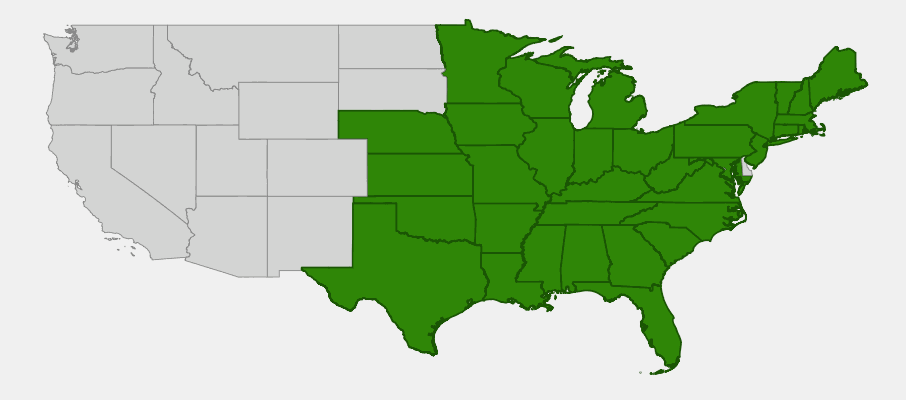
Wahoo is native to a broad swath of eastern and central North America, ranging from southern Ontario and Quebec in the north, south through the eastern and central United States to Florida and Texas, and west to the Great Plains. The species is most common in the Central Hardwood Region, including the states of the Ohio River valley — Indiana, Ohio, Kentucky, and Illinois — where it is a characteristic component of moist, rich deciduous forests and forest margins. It reaches its greatest abundance in the Ozark Highlands, Appalachian foothills, and the Central Interior Highlands.
In Indiana and Ohio, Wahoo is found in a variety of forest habitats: moist, rich bottomland forests, upland mesic forests, shaded stream corridors, and forest edges. It grows as an understory shrub or small tree, often in the company of spicebush (Lindera benzoin), pawpaw (Asimina triloba), and other characteristic native shrubs of the eastern deciduous forest. The species is particularly adaptable in its light requirements, growing well in everything from full shade beneath a closed forest canopy to full sun at forest edges — a characteristic that makes it exceptionally useful in the landscape.
Like many native shrubs, Wahoo has become less common in some portions of its range due to habitat loss — both forest clearing and the invasion of non-native shrubs like multiflora rose, European buckthorn, and Amur honeysuckle, which compete with and often displace native understory species. Planting native Wahoo in Indiana and Ohio landscapes helps provide habitat connectivity and supports the bird species that depend on its fruits.
📋 Regional plant lists featuring Wahoo: Indiana & Ohio
Growing & Care Guide
Wahoo is one of the most adaptable native shrubs for the Indiana/Ohio landscape, capable of thriving in conditions ranging from full sun to full shade. It is easy to grow, relatively problem-free, and rewards patient gardeners with a spectacular four-season display.
Light
One of Wahoo’s greatest attributes is its exceptional adaptability to light. It grows and performs well in full sun (6+ hours), part shade (3–6 hours), and even full shade (fewer than 3 hours of direct sun). In full sun, the plant grows most densely, produces the most flowers and fruit, and displays the most intense fall color. In shade, it grows more loosely and openly, with somewhat reduced fruit set but retaining its ornamental charm. This flexibility makes it valuable for planting beneath large trees, on north-facing slopes, or in other challenging low-light sites.
Soil & Water
Wahoo prefers moist, well-drained, moderately fertile soils — the rich bottomland and forest soils of its native habitat. It adapts well to average garden soils, from slightly sandy to moderately heavy clay, as long as drainage is adequate. It does not tolerate prolonged waterlogged conditions or severe drought. Mulching the root zone with 2–3 inches of wood chips or leaf litter helps maintain soil moisture and temperature and mimics the forest floor conditions the plant prefers.
Planting Tips
Plant Wahoo in fall for best establishment, or in spring after the last frost. Container-grown specimens transplant well. Space plants at least 8–10 feet apart for multi-shrub plantings, as they can reach 15–20 feet in favorable conditions. The plant is somewhat slow-growing but very long-lived. It requires no special soil amendment for healthy growth in average garden soils.
Pruning & Maintenance
Wahoo requires minimal pruning. Remove dead wood in late winter. The plant has a naturally attractive, somewhat open branching structure and rarely needs corrective pruning. If a more compact form is desired, tip-prune in late winter or very early spring before flowering. Avoid heavy pruning, as it can take 1–2 seasons for the plant to recover full ornamental impact. The plant is relatively pest- and disease-resistant in its native range.
Landscape Uses
- Woodland garden as a mid-story understory shrub beneath tall trees
- Shade garden where few shrubs thrive — one of the best native options for deep shade
- Wildlife garden for fruit-eating birds in fall and winter
- Mixed native shrub border providing fall and winter interest
- Stream corridor and woodland edge planting
- Native alternative to non-native burning bush (Euonymus alatus)
Wildlife & Ecological Value
Wahoo is a significant wildlife plant, with particularly high value for fruit-eating birds in fall and early winter. The combination of brilliant red fruit with orange-red arils creates one of the most visually striking and wildlife-attractive autumn displays of any native shrub.
For Birds
The brightly colored fruits and arils are consumed by a wide variety of songbirds including American Robin, Eastern Bluebird, Cedar Waxwing, Northern Flicker, Yellow-rumped Warbler, Eastern Towhee, and various thrushes. The fruit’s high fat content makes it an excellent fuel source for fall migrants. The bright scarlet color against red foliage may also serve as a long-distance signal to fruit-eating birds from considerable distance. The persistent fruits into early winter provide food well after many other shrub fruits have been consumed.
For Mammals
White-tailed Deer browse Wahoo foliage, particularly in winter and early spring. However, all parts of the plant contain toxic compounds (including alkaloids and a cardiac glycoside-like compound) that may limit browsing pressure. Various small mammals may consume the fallen fruit. The dense branching structure provides cover for rabbits, small rodents, and overwintering insects.
For Pollinators
The dark purple flowers, while small, attract small native bees and flies. The unusual dark coloration may specifically attract certain bee species that navigate by color wavelengths outside the typical yellow-white range. Native bee species in the Halictidae and Apidae families visit the flowers for pollen and nectar.
Ecosystem Role
As a native understory shrub that provides fruit for birds at a critical pre-migration and early winter period, Wahoo contributes significantly to the food web of eastern deciduous forests. Bird-dispersed seeds help maintain genetic diversity and expand populations into new sites. The dense, spreading form of mature shrubs provides structural complexity in the forest understory and serves as nesting and escape cover for a variety of wildlife species.
Cultural & Historical Uses
The name “Wahoo” comes from the Dakota Sioux language, where it referred to this plant’s properties — specifically its powerful medicinal (and dangerous) effects when used internally. The plant was used as a strong purgative and emetic medicine by many Indigenous nations throughout its range, including the Cherokee, Iroquois, Ojibwe, and various Plains peoples. The root bark was the primary medicinal part — dried, powdered, and used in carefully measured doses to treat liver conditions, constipation, and as a general “cleanser” for the blood and digestive system. However, the plant’s toxicity meant that even traditional use required expert knowledge; incorrect dosing could cause severe vomiting, diarrhea, heart irregularities, and potentially fatal poisoning.
Early American physicians adopted Wahoo root bark into the formal materia medica of 19th-century medicine, listing it under “Euonymus” in the U.S. Pharmacopoeia. It was used as a “cholagogue” (stimulating bile flow), a purgative, and a cardiac tonic in low doses. Medical botanist Charles Millspaugh described Wahoo in his influential 1892 work “American Medicinal Plants” as having “remarkable alterative and cathartic properties” and documented its extensive use in allopathic medicine of the era. Its use in formal medicine declined by the early 20th century as safer pharmaceutical alternatives became available.
Today, Wahoo’s primary value is ornamental and ecological rather than medicinal. It is increasingly appreciated as a native alternative to the widely planted (and invasive) non-native burning bush (Euonymus alatus), which has escaped cultivation across much of the northeastern United States and is displacing native understory shrubs. Native Wahoo provides similar (or superior) fall color and ornamental interest while playing a genuine ecological role — supporting native birds and insects rather than threatening native plant communities. Gardeners who remove invasive non-native burning bush are encouraged to replace it with native Wahoo or other native alternatives.
Frequently Asked Questions
Is Native Wahoo the same as Burning Bush?
They are in the same genus (Euonymus) but are different species. The widely sold “burning bush” is Euonymus alatus, a non-native Asian species that is invasive in eastern North America. Native Wahoo (E. atropurpureus) is a North American native that provides similar or better fall color and supports wildlife, without the invasive spreading of E. alatus. Always verify which species you are purchasing from nurseries.
Is Wahoo toxic?
Yes — all parts of the plant contain toxic compounds, including cardiac-active alkaloids and glycosides. The berries, bark, and leaves should not be consumed by humans or pets. Birds can eat the fruit safely due to different metabolic processing of the toxic compounds. Exercise caution around the plant with children and pets.
How do I get the best fall color from Wahoo?
Fall color is most intense in plants growing in full sun or bright part shade. Plants in deep shade tend toward more orange or duller red tones. The timing and intensity of fall color also varies between individual plants — there is some genetic variation in the species, so if possible, select a container-grown plant from a nursery in fall when you can evaluate the color directly.
Will Wahoo grow in deep shade?
Yes — it is one of the best native shrubs for deep shade conditions. It will grow, remain healthy, and produce flowers and fruit even with quite limited direct sunlight, though the display is typically less spectacular than in sunnier positions. This adaptability makes it particularly valuable for north-facing or heavily shaded sites.
Is Wahoo deer-resistant?
Not particularly. White-tailed Deer browse Wahoo, especially in winter when other food is scarce. The plant’s toxic compounds may offer some protection but are not sufficient to prevent browsing in areas with high deer pressure. Protect young plants with fencing or deer repellent until established.