Prairie Thermopsis (Thermopsis rhombifolia)
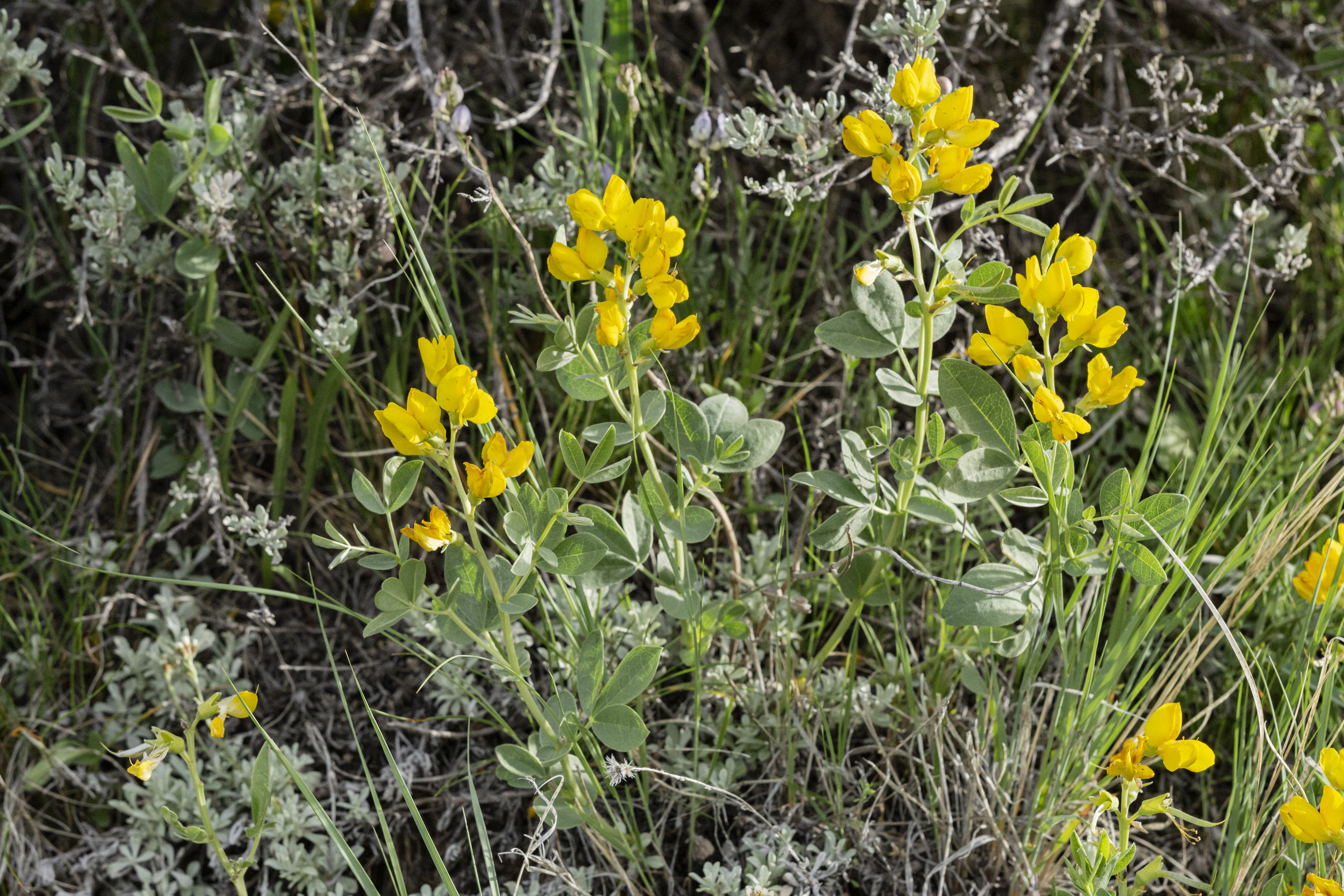
Thermopsis rhombifolia, commonly known as Prairie Thermopsis, Prairie Goldenbanner, or Buffalo Bean, is one of the most cheerful and ecologically important early-spring wildflowers of the northern Rocky Mountains and Great Plains. A member of the legume family (Fabaceae), Prairie Thermopsis bursts into bloom in April and May, producing masses of brilliant golden-yellow, pea-like flowers on upright stems just as the winter-browned prairie is awakening — making it one of the first substantial nectar sources available to early-season bees, butterflies, and other pollinators. Its vibrant yellow blooms against the backdrop of the greening grassland are an iconic sign of Rocky Mountain spring.
Growing 1 to 2 feet tall from deep, spreading rhizomes, Prairie Thermopsis forms attractive colonies over time, spreading slowly but persistently to create drifts of golden flowers. The attractive three-part (trifoliate) leaves, similar in appearance to lupine, add textural interest to the garden even after the brief but spectacular spring bloom. The inflated seed pods that follow are distinctive and ornamental. Like all legumes, Prairie Thermopsis fixes atmospheric nitrogen through root nodule bacteria, actively enriching the soil and benefiting neighboring plants — making it doubly valuable in restoration plantings and prairie gardens.
Prairie Thermopsis is native to the dry prairies and foothills of Montana, Wyoming, Colorado, and the adjacent Great Plains, where it grows on open, sun-baked slopes and grasslands with well-drained soils. It is perfectly adapted to the cold winters, hot dry summers, and periodic drought of the Mountain West. Once established, it is extraordinarily long-lived, drought tolerant, and low-maintenance — an excellent choice for native prairie gardens, dry slopes, and naturalistic landscapes throughout its range.
Identification
Prairie Thermopsis is a perennial herbaceous plant forming upright stems 1 to 2 feet tall from a deep, creeping rhizome system. It is most easily identified in spring by its brilliant clusters of golden-yellow pea flowers, but the trifoliate leaves and inflated seed pods are also distinctive at other seasons. It resembles a lupine (Lupinus) in leaf and growth form but can be distinguished by its yellow flowers (lupines in this region are typically blue, purple, or white).
Leaves
The leaves are alternate and trifoliate — composed of three leaflets arranged like a clover or lupine, each leaflet 1 to 3 inches long, rhombic to elliptic in shape (somewhat diamond-shaped, which gives the species its name rhombifolia). Leaflets are smooth above, sometimes slightly hairy below, and bright to grayish-green. Two large, leaf-like stipules at the base of each leaf stalk are a distinctive feature. The overall appearance is lush and full when in growth.
Flowers
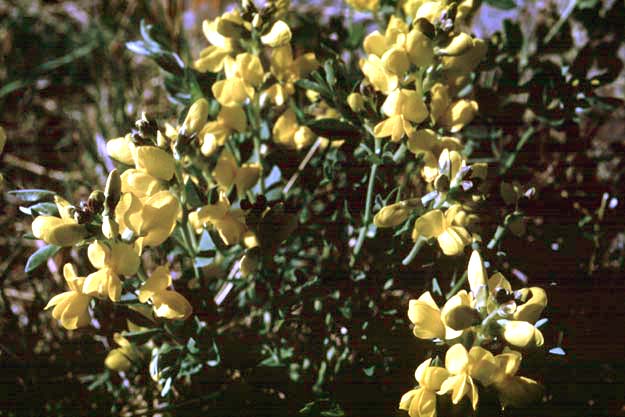
The flowers are the star of the show: bright golden yellow, pea-shaped, about 3/4 to 1 inch long, arranged in terminal racemes (upright clusters) of 5 to 30 flowers per stem. Each flower has the classic legume structure — a large upper banner petal, two wing petals, and a lower keel. The flowering period is relatively brief — typically 3 to 4 weeks from late April through May or early June depending on elevation — but the display during peak bloom is spectacular. Flowers are followed by distinctive inflated, hairy seed pods 1.5 to 3 inches long that look like small, curved green beans and dry to a papery tan.
Roots
Prairie Thermopsis spreads through a system of deep, creeping rhizomes that allow it to form large colonies over time. This robust root system is key to its drought tolerance and long-term persistence — even after severe drought or fire, the plant readily regenerates from rhizome buds. The roots also support nitrogen-fixing bacteria in nodules, enriching the soil.
Quick Facts
| Scientific Name | Thermopsis rhombifolia |
| Family | Fabaceae (Legume / Pea) |
| Plant Type | Perennial Wildflower / Forb |
| Mature Height | 1–2 ft |
| Sun Exposure | Full Sun |
| Water Needs | Low (Drought Tolerant) |
| Bloom Time | April – June |
| Flower Color | Bright golden yellow |
| USDA Hardiness Zones | 3–7 |
Native Range
Prairie Thermopsis is native to the northern Great Plains and Rocky Mountain foothills from Montana and Wyoming south through Colorado and into Kansas and Nebraska, and eastward across the Dakotas and Minnesota. It is a characteristic plant of the dry, mixed-grass prairie and ponderosa pine parkland zone that spans the transition between Great Plains grasslands and Rocky Mountain foothills. In Montana and Wyoming, it is particularly common on dry, south-facing slopes, open prairie benches, and the grassy verges of foothills forests.
The species grows at elevations from about 3,500 to 7,000 feet, occupying well-drained, often rocky or sandy soils on open exposures. It reaches its greatest abundance in the foothill grasslands of Montana’s Front Range and Wyoming’s Bighorn Basin, where it creates spectacular drifts of yellow in May and early June. It is associated with other dry prairie forbs including scarlet gaura (Oenothera suffrutescens), prairie smoke (Geum triflorum), pasqueflower (Pulsatilla patens), and various bunchgrasses including Bluebunch Wheatgrass and blue grama.
Prairie Thermopsis is generally not found in wetlands, shaded forests, or high-elevation subalpine communities. Its ecological niche is the open, sunny, well-drained grassland and sage-prairie. The plant’s nitrogen-fixing ability makes it particularly valuable in degraded soils and restoration sites where soil fertility is low — a characteristic that makes it a useful component of native seed mixes for disturbed area revegetation throughout its range.
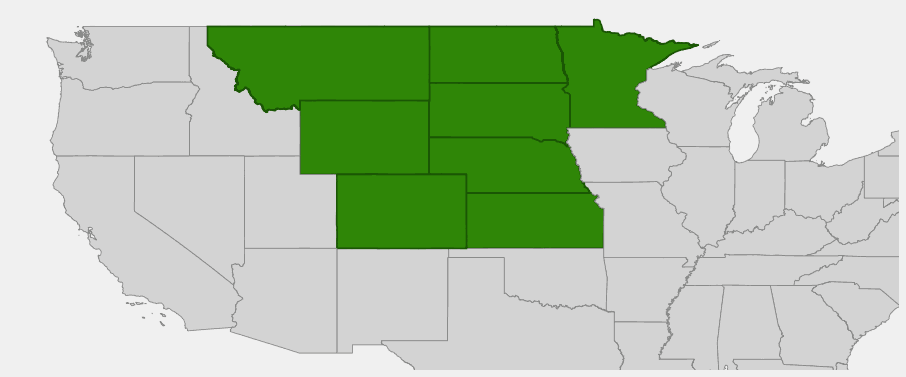
📋 Regional plant lists featuring Prairie Thermopsis: Montana & Wyoming
Growing & Care Guide
Prairie Thermopsis is an exceptional choice for native gardens, dry prairie plantings, and pollinator gardens throughout Montana, Wyoming, and the northern Rockies. It rewards patience — slow to establish from seed but extremely long-lived and increasingly ornamental once a colony develops.
Light
Prairie Thermopsis requires full sun. In its natural habitat on open prairie slopes and sunny foothills, it receives full sunlight throughout the day. Partial shade results in weak, floppy growth and reduced flowering. Choose the sunniest, hottest spot in your garden for best results.
Soil & Water
This plant thrives in dry to moderately dry, well-drained soils — sandy, rocky, gravelly, or loamy soils are all suitable. Avoid rich, heavily fertilized soils (as a nitrogen-fixer, it does not need nitrogen supplementation) and avoid wet, poorly drained, or clay-heavy conditions that promote root rot. Once established, Prairie Thermopsis is highly drought tolerant and rarely needs irrigation beyond what nature provides in most Mountain West climates. It is extremely cold hardy, easily surviving the -30°F temperatures of Montana and Wyoming winters.
Planting Tips
Prairie Thermopsis can be grown from seed, but germination requires cold stratification — scarify the hard seed coat by nicking with a knife or sandpaper, then cold-stratify in the refrigerator for 4 to 8 weeks before spring sowing. Alternatively, sow seed in fall and allow natural winter cold to break dormancy. Container plants transplant readily but resent root disturbance once established. Space plants 18 to 24 inches apart to allow for eventual colony development. Prairie Thermopsis is slow to develop — expect 2 to 3 years from planting before significant bloom — but once established, a mature colony requires minimal care and returns reliably every spring for decades.
Pruning & Maintenance
Prairie Thermopsis requires virtually no maintenance once established. After bloom, leave the inflated seed pods on the plant — they are ornamental and eventually split to release seed. Cut back dead stems to the ground in late fall or early spring. Avoid disturbing the root system once the plant is established — the rhizomes are easily damaged and recovery is slow. The plant will spread slowly from rhizomes over the years; divide clumps only if they become too crowded, taking care to preserve as much root system as possible.
Landscape Uses
- Native prairie and meadow gardens — spectacular spring color
- Pollinator gardens — critical early-season nectar source for bees and butterflies
- Dry slopes and rocky banks — thrives in challenging, well-drained sites
- Soil improvement — nitrogen-fixing roots enrich adjacent soil
- Grassland restoration — valuable component of native seed mixes
- Low-water xeriscape — thrives without irrigation once established
- Naturalistic borders with Bluebunch Wheatgrass, prairie smoke, and other natives
Wildlife & Ecological Value
Prairie Thermopsis is a powerhouse pollinator plant and soil-enriching legume that provides multiple layers of ecological value in native prairie and foothills communities.
For Birds
The seed pods of Prairie Thermopsis are consumed by various grassland songbirds including sparrows and finches. The dense foliage provides nesting cover for ground-nesting sparrows including vesper sparrows, Savannah sparrows, and McCown’s longspurs that nest in the dry prairie grasslands where Thermopsis is common. The early-season insect activity attracted by the flowers also benefits insectivorous birds during the breeding season.
For Mammals
Prairie Thermopsis contains toxic alkaloids (quinolizidine alkaloids, similar to those in lupine) that make it unpalatable to most grazing mammals. This chemical defense gives it an advantage in heavily grazed landscapes where other forbs are browsed out. Interestingly, bison historically grazed around Thermopsis patches rather than consuming them — earning the common name “Buffalo Bean” from the observation that bison seemed to know and avoid the plant. Small mammals like prairie dogs and ground squirrels may consume the seeds.
For Pollinators
Prairie Thermopsis is one of the most important early-season pollinator plants in the northern Rocky Mountain prairies. Its large, nectar-rich flowers bloom when few other native wildflowers are available, providing critical resources for queen bumble bees (Bombus spp.) emerging from winter dormancy. Native bees, including specialist legume bees, are the primary pollinators. Butterflies including orangetips, Spring Azure, and various whites also visit the flowers. The plant is considered a keystone early-spring pollinator resource in native prairie communities from Montana to Nebraska.
Ecosystem Role
As a nitrogen-fixing legume, Prairie Thermopsis plays a unique ecological role in nutrient cycling. The bacteria in its root nodules convert atmospheric nitrogen into forms usable by plants, enriching the soil and benefiting neighboring non-leguminous plants. In degraded grasslands with low soil fertility, Thermopsis can be an important component of ecological restoration — gradually rebuilding soil nutrients alongside native grasses. Its deep, persistent rhizome system also stabilizes soil on slopes and contributes to the organic matter that builds soil structure over time.
Cultural & Historical Uses
Prairie Thermopsis has a complex relationship with Indigenous peoples of the Great Plains and Rocky Mountain region. While the plant’s toxic alkaloids (thermopsine and related compounds) make it generally avoided as a food plant, several nations used it medicinally in carefully controlled doses. The Blackfeet used root preparations as a purgative and in ceremonial contexts. The Crow used it in traditional medicine for various complaints. The Lakota and other Plains nations recognized its toxicity — particularly to livestock — and knew it as a plant to avoid when selecting grazing land.
The common name “Buffalo Bean” reflects the historical observation that bison herds seemed to graze around, rather than through, dense stands of Prairie Thermopsis — suggesting the animals recognized the plant’s unpalatability or toxicity. This behavioral response has been documented by naturalists and Indigenous observers for centuries. The inflated, bean-like seed pods also contributed to the “bean” portion of the common name.
Modern botanical and ethnobotanical research has confirmed that Prairie Thermopsis contains multiple quinolizidine alkaloids including thermopsine, anagyrine, and cytisine — compounds with significant biological activity. These alkaloids have attracted interest in pharmaceutical research, though the plant itself remains too toxic for safe culinary or herbal use without expert preparation. Today, Prairie Thermopsis is recognized primarily for its outstanding ecological and ornamental value. Its drought tolerance, early bloom, nitrogen-fixing ability, and spectacular spring display make it a priority species for prairie restoration and native garden planting throughout the Mountain West.
Frequently Asked Questions
Is Prairie Thermopsis poisonous?
Yes — Prairie Thermopsis contains toxic quinolizidine alkaloids that can cause illness in livestock (particularly sheep and cattle) and humans if consumed in significant quantities. The plant should not be eaten. However, it is safe to touch and handle, and its toxicity is an ecological asset in gardens where deer or rabbit browsing is a problem — most animals avoid it.
How is Prairie Thermopsis different from lupine?
Prairie Thermopsis and lupines (Lupinus spp.) look similar — both have trifoliate or palmate leaves and pea-like flower spikes. The easiest distinction is flower color: Prairie Thermopsis always has bright golden-yellow flowers, while lupines native to Montana and Wyoming are typically blue, purple, or occasionally white. The leaf shape also differs slightly: Thermopsis has three leaflets with large stipules, while most lupines have more leaflets (5–9) in a palmate arrangement.
Does Prairie Thermopsis spread aggressively?
Prairie Thermopsis spreads slowly through rhizomes and seed, but it is not aggressively invasive. In a garden setting, it gradually expands into a colony over years — a desirable quality for naturalistic plantings. It can be controlled by digging rhizomes if expansion needs to be limited. It does not become weedy in the way that some introduced plants do.
When does Prairie Thermopsis bloom?
Bloom time varies by elevation and latitude, but generally April to June. At lower elevations in southern Montana and Wyoming foothills, it may begin blooming in late April. At higher elevations, bloom may peak in late May to early June. The flowering period lasts about 3 to 4 weeks at any given location.
Can I divide Prairie Thermopsis to propagate it?
Division is possible but should be done carefully — the plant resents root disturbance and recovery is slow. The best time to divide is early spring as growth emerges or early fall. Take care to preserve as much of the root and rhizome system as possible, and water well after transplanting. Propagation from seed (with scarification and stratification) is generally more reliable.