
Native Plant List – Montana and Wyoming
Last updated: September 4, 2026


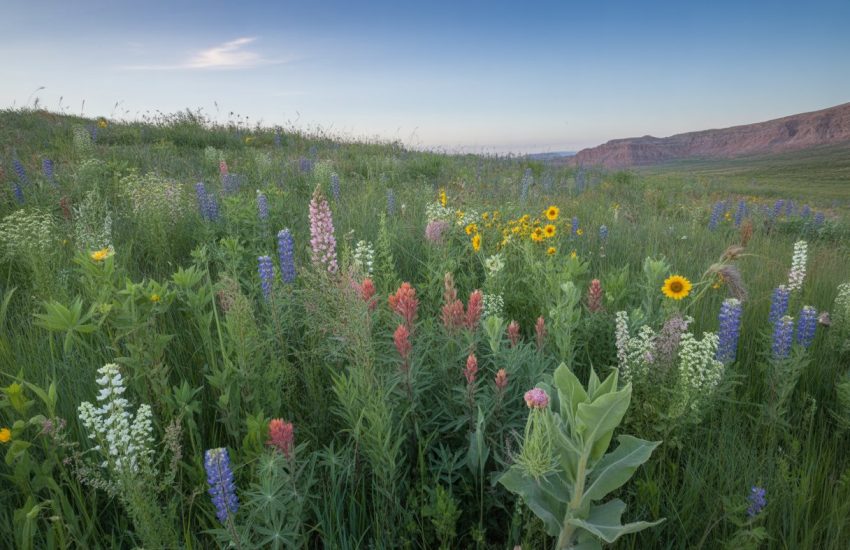
This is a "starter" list of native plants for Montana and Wyoming. It is intended for residential or commercial landscapers who want to create attractive and varied native landscapes.
Montana and Wyoming Trees
| Common Name | Scientific Name | Sun | Moisture | Height | Comments |
|---|---|---|---|---|---|
| White alder | Alnus rhombifolia | F-P | W-A | 40-80 ft | Riparian obligate; fast streamside shade tree, needs reliable moisture |
| Paper Birch | Betula papyrifera | F | W-A | 25–35 ft | Height: 20-year estimate, not maximum. Moderate-fast growth; allow 20–30 ft spread. |
| Common Hackberry | Celtis occidentalis | P-F | A | 15–20 ft | Height is a 20-year regional estimate, not maximum size; moderate growth. Allow 10–20 ft mature spread. |
| River Hawthorn | Crataegus rivularis | F-P | A-W | 10-25 ft | Thicket-forming streamside hawthorn; dark fruit, intermontane West |
| Fleshy Hawthorn | Crataegus succulenta | F-P | A-W | 13-26 ft | Most wide-ranging US hawthorn; thorny thicket shrub, red fleshy fruit |
| Green Ash | Fraxinus pennsylvanica | P-F | A-D | 20–30 ft | Height is a 20-year regional estimate, not maximum size; moderate growth. Allow 30–40 ft mature spread. |
| Honeylocust | Gleditsia triacanthos | F | A | 15–20 ft | Height is a 20-year regional estimate, not maximum size; moderate growth. Allow 30–40 ft mature spread. |
| Black Cottonwood | P. balsamif. trichocarpa | F | W-A | 40–50 ft | Height is a 20-year regional estimate, not maximum size; fast growth. Allow 35–40 ft mature spread. |
| Plains Cottonwood | P. deltoides - monilifera | F | W-A | 40–50 ft | Height is a 20-year regional estimate, not maximum size; fast growth. Allow 35–40 ft mature spread. |
| Engelmann Spruce | Picea engelmannii | F-P | A | 80-130 ft | High-elevation conifer; cold-hardy; needs moist, well-drained soil |
| Colorado Spruce | Picea pungens | P-F | A | 16–20 ft | Height is a 20-year regional estimate, not maximum size; moderate growth. Allow 15–25 ft mature spread. |
| Whitebark Pine | Pinus albicaulis | F | D | 20–60 ft (3–10 ft krummholz at treeline) | Subalpine tree; very slow; federally threatened; not for gardens |
| Limber Pine | Pinus flexilis | F | A | 12–20 ft | Height: 20-year estimate, not maximum. Slow/moderate growth; mature spread 15–30 ft. |
| Ponderosa Pine | Pinus ponderosa | F | W-A | 16–20 ft | Height is a 20-year regional estimate, not maximum size; moderate growth. Allow 25–30 ft mature spread. |
| Narrowleaf Cottonwood | Populus angustifolia | F | W-A | 30–40 ft | Height is a 20-year regional estimate, not maximum size; fast growth. Allow 25–35 ft mature spread. |
| Quaking Aspen | Populus tremuloides | F | W-A | 15–20 ft | Height is a 20-year regional estimate, not maximum size; fast growth. Allow 15–20 ft mature spread. |
| Douglas Fir | Pseudotsuga menziesii | P-F | A | 12–18 ft | Height: 20-year estimate, not maximum. Slow–moderate growth; mature spread 20–30 ft. |
| Bur Oak | Quercus macrocarpa | F | A | 18–25 ft | Height: 20-year estimate, not maximum. Slow-moderate growth; allow 20–35 ft spread. |
| Scouler's willow | Salix scouleriana | F-P | A-D | 15-30 ft | Early silvery catkins; unusually drought-tolerant for a willow |
| Sitka Mountain-ash (Native in Montana; not Wyoming) | Sorbus sitchensis | P-F | A | 3–13 ft | Allow room for a spreading shrub/small tree; native to Montana, not Wyoming. |
| Pacific Yew | Taxus brevifolia | P-S | A-W | 15-50 ft | Shade understory tree; all parts but red aril flesh are highly toxic |
Montana and Wyoming Shrubs
| Common Name | Scientific Name | Sun | Moisture | Height | Comments |
|---|---|---|---|---|---|
| Serviceberry | Amelanchier alnifolia | P-F | A | 6–8 ft | Height is a 20-year regional estimate, not maximum size; moderate growth. Allow 10–15 ft mature spread. |
| Greenleaf manzanita | Arctostaphylos patula | F-P | D | 2-6 ft | Cold-hardy mountain shrub, bright green leaves, resprouts after fire |
| Black sagebrush | Artemisia nova | F | D | 4–16 in | Low cushion shrub for rocky/shallow soils; key winter wildlife browse |
| Big Sagebrush | Artemisia tridentata | F | D | 3–6 ft | Height is a 20-year regional estimate, not maximum size; slow to moderate growth. Allow 4–8 ft mature spread. |
| Shadscale | Atriplex confertifolia | F | A-D | 1-3 ft | Spiny gray shrub; extreme drought/salt tolerance, winter browse |
| Fourwing Saltbush | Atriplex X aptera | F | D | 12–36 in | Height is a 20-year regional estimate, not maximum size; slow to moderate growth. Allow 2–5 ft mature spread. |
| Resin Birch | Betula glandulosa | F-P | W-A | 1-4 ft | Bog/alpine shrub; glandular twigs; distinct from Bog Birch |
| Bog Birch | Betula pumila | F-P | W | 2-10 ft | Wetland obligate shrub; calcareous fens & bogs; not for dry sites |
| Curlleaf Mt. Mahogany | Cercocarpus ledifolius | P-F | D | 4–8 ft | Height is a 20-year regional estimate, not maximum size; slow growth. Allow 2–6 ft mature spread. |
| Redosier Dogwood | Corn. sericea - servicea | P-F | W | 6–8 ft | Height: 20-year estimate, not maximum. Moderate/fast growth; mature spread 10–15 ft. |
| Shrubby Cinquefoil | Dasiphora floribunda | P-F | A | 12–36 in | Height is a 20-year regional estimate, not maximum size; moderate growth. Allow 1–3 ft mature spread. |
| Silverberry | Elaeagnus commutata | P-F | A | 4–8 ft | Height is a 20-year regional estimate, not maximum size; moderate growth. Allow 3–6 ft mature spread. |
| Spiny hopsage | Grayia spinosa | F | D | 1–3 ft | Spiny, drought-deciduous; pink female fruit bracts; key spring browse |
| Common Juniper | Juniperus communis | F | A | 3–5 ft | Height is a 20-year regional estimate, not maximum size; slow to moderate growth. Allow 4–8 ft mature spread. |
| Rocky Mountain Juniper | Juniperus scopulorum | F | D | 10–12 ft | Height: 20-year estimate, not maximum. Slow–moderate growth; mature spread 12–20 ft. |
| Winterfat | Krascheninn. lanata | F | D | 12–36 in | Height is a 20-year regional estimate, not maximum size; moderate growth. Allow 1–3 ft mature spread. |
| Lewis' Mockorange | Philadelphus lewisii | P-F | A | 3–6 ft | Height is a 20-year regional estimate, not maximum size; slow to moderate growth. Allow 3–6 ft mature spread. |
| Mallow Ninebark | Physocarpus malvaceus | P-F | A | 24–36 in | Height is a 20-year regional estimate, not maximum size; moderate growth. Allow 3–4 ft mature spread. |
| Mountain Ninebark | Physocarpus monogynus | P | A-D | 2–4 ft | Rocky-slope shrub with shreddy bark; part sun to part shade |
| Western Sandcherry | Prun. pumila v. besseyi | F | A | 3–5 ft | Height is a 20-year regional estimate, not maximum size; moderate growth. Allow 3–5 ft mature spread. |
| American Plum | Prunus americana | P-F | A | 8–10 ft | Height is a 20-year regional estimate, not maximum size; moderate growth. Allow 8–10 ft mature spread. |
| Chokecherry | Prunus virginiana | P-F | A | 10–12 ft | Height is a 20-year regional estimate, not maximum size; moderate growth. Allow 10–20 ft mature spread. |
| Skunkbush Sumac | Rhus trilobata | P-F | D | 3–6 ft | Height is a 20-year regional estimate, not maximum size; slow to moderate growth. Allow 4–8 ft mature spread. |
| Staghorn Sumac | Rhus typhina | P-F | D | 8–10 ft | Height is a 20-year regional estimate, not maximum size; moderate growth. Allow 8–15 ft mature spread. |
| Golden Current | Ribes aurenum | P-F | A | 3–5 ft | Height is a 20-year regional estimate, not maximum size; moderate growth. Allow 3–6 ft mature spread. |
| Wax currant | Ribes cereum | F-P | A-D | 2–6 ft | Spineless, very drought-tolerant; pink flowers, orange-red berries |
| Woods' Rose | Rosa woodsii | P-F | A | 4–5 ft | Height is a 20-year regional estimate, not maximum size; moderate growth. Allow 4–6 ft mature spread. |
| Silver Buffaloberry | Shepherdia argentea | F | D | 6–12 ft | Height is a 20-year regional estimate, not maximum size; moderate growth. Allow 8–14 ft mature spread. |
| Canada Buffaloberry | Shepherdia canadensis | P-F | A | 3–5 ft | Height is a 20-year regional estimate, not maximum size; slow growth. Allow 6–8 ft mature spread. |
| Common Snowberry | Symphoricarpos albus | P-F | A | 12–36 in | Height is a 20-year regional estimate, not maximum size; moderate growth. Allow 1–3 ft mature spread. |
| Gray horsebrush | Tetradymia canescens | F | D | 1–3 ft | Woolly gray shrub, yellow summer flowers; foliage toxic to sheep |
| Velvetleaf Blueberry | Vaccinium myrtilloides | F-P | A-D | 6–24 in | Low colonial shrub; edible berries; needs acidic, well-drained soil |
Montana and Wyoming Ground Cover and Vines
| Common Name | Scientific Name | Sun | Moisture | Height | Comments |
|---|---|---|---|---|---|
| Field Pussytoes | Antennaria neglecta | F-P | D-A | 2–12 in | Drought-tolerant mat-forming groundcover; host plant for American lady |
| Rosy Pussytoes | Antennaria rosea | F | A-D | 2-4 in (stems to 12 in) | Mat-forming silver groundcover; rose-pink blooms; host plant |
| Bearberry | Arctostaphylos uva-ursi | F-S | A | 3–6 in | Slow-spreading groundcover; allow 2–3 ft width. |
| Western Wild Ginger | Asarum caudatum | S | A-W | 4-6 in | Evergreen shade groundcover; glossy leaves, hidden maroon flowers |
| Western Blue Virgin's Bower | Clematis occidentalis | P-F | A | 1-10 ft | Wiry climbing vine; rocky, well-drained sites only |
| Wild Cucumber | Echinocystis lobata | F-P | A-W | 15-25 ft (annual vine) | Fast annual vine; spiny inedible fruit; reseeds readily |
| Climbing False Buckwheat | Fallopia scandens | F-P | A-W | 10-20 ft (vine) | Fast twining native vine; fall/winter bird seed; give it room |
| Sweet-scented Bedstraw | Galium triflorum | P-S | A | 6-24 in trailing groundcover | Fragrant shade groundcover for rich, consistently moist soil |
| Hops | Humulus lupulus | F-P | A-W | 15-25 ft (vine) | Twining perennial vine; toxic to dogs; female plants produce hop cones |
| Horizontal Juniper | Juniperus horizontalis | F | A | 6–18 in | Low, spreading groundcover; allow 5–8 ft width. |
| Twinflower | Linnaea borealis | P-S | A-W | 2-4 in | Evergreen groundcover for cool, acidic, shaded sites; slow to spread |
| Limber Honeysuckle | Lonicera dioica | F-P | A-D | 3-10 ft vine | Non-invasive native vine; berries for birds only; hummingbirds |
| Oregon Grape | Mahonia repens | P-F | A | 6–12 in | Slow-growing groundcover that can spread 4–6 ft. |
| Yellow wood sorrel | Oxalis stricta | F-S | W-A | 4-12 in | Weedy native groundcover; oxalate leaves, not for eating |
| Virginia Creeper | Parthenocissus quinquefolia | P-F | A | 30–50 ft climbing | Climbing vine; provide support and space. Berries are not for eating. |
| Thicket Creeper | Parthenocissus vitacea | F-P | A-D | 20-35 ft climbing vine | Fast vine; toxic berries; often confused with Virginia Creeper |
| Riverbank Grape | Vitis riparia | F-P | W-A | 20-50 ft (climbing vine) | Vigorous riverbank vine; cold-hardy parent of hybrid wine grapes |
Montana and Wyoming Wildflowers
| Common Name | Scientific Name | Sun | Moisture | Height | Comments |
|---|---|---|---|---|---|
| Prairie Sand Verbena | Abronia fragrans | F | D | 8–40 in | Fragrant evening white blooms; deep taproot, sandy soil |
| Common Yarrow | Achillea millefolium | P-F | D | 12–24 in | White flowers from spring into summer; long-lived perennial. |
| Columbian Monkshood | Aconitum columbianum | F-P | W-A | 2–6 ft | Highly toxic (aconitine), all parts; wet meadows/stream banks only |
| Lavender Hyssop / Anise Hyssop | Agastache foeniculum | F-P | D-A | 2-4 ft | Fragrant, long-blooming prairie native; superb bee and butterfly plant |
| Nodding Wild Onion | Allium cernuum | F-P | A-D | 8–20 in | Dry soil; nodding white-pink summer flowers; deer resistant |
| Pearlyeverlasting | Anaphalis margaritacea | P-F | D | 12–24 in | White summer flowers; usually a short-lived perennial. |
| Narcissus Anemone | Anemone narcissiflora | F | A-W | 6-16 in | Rare alpine wildflower; AK tundra, CO/WY high peaks; toxic foliage |
| Small-flowered Anemone | Anemone parviflora | F-P | A | 2–8 in | Alpine rock-garden anemone; toxic sap, not for lowland beds |
| Little Pussytoes | Antennaria microphylla | F | A | 12 in | White flowers in late spring and summer; low perennial. |
| Mountain Death Camas | Anticlea elegans | F-P | A-D | 1-2.5 ft | HIGHLY TOXIC bulb/foliage; do not confuse with edible Camassia |
| Wild Sarsaparilla | Aralia nudicaulis | P-S | A | 1-2 ft | Rhizomatous woodland ground cover; white umbels, dark berries |
| Showy Milkweed | Asclepias speciosa | F-P | A-D | 2-4 ft | Monarch host plant; toxic sap; spreads by rhizome |
| Freckled Milkvetch | Astragalus lentiginosus | F | D | 4-20 in | Silvery, spreading legume; pods freckled with red, namesake feature |
| Sego lily | Calochortus nuttallii | F | D | 6–18 in | Utah's state flower; bulb goes dormant through dry summers |
| Desert Paintbrush | Castilleja angustifolia | F | A-D | 6-16 in | Root hemiparasite; needs host shrub/grass; don't dig from wild |
| Scarlet Paintbrush | Castilleja miniata | F-P | A-D | 8-32 in | Root hemiparasite; needs grass/sedge host; don't dig from wild |
| Downy Paintbrush | Castilleja sessiliflora | F | D | 4–16 in | Pale pink/cream bracts; hemiparasitic, needs a host grass/shrub nearby |
| Water Hemlock | Cicuta maculata | F-P | W | 3-6 ft | Extremely toxic; wetlands/ditches only, not for gardens |
| Miner's Lettuce | Claytonia perfoliata | P-S | A-W | 4-12 in | Shade groundcover; edible mild green; self-sows, dies back in summer |
| grand collomia | Collomia grandiflora | F-P | D | 8 in - 3 ft | Annual wildflower; apricot flowers; reseeds in lean dry soil |
| tapertip hawksbeard | Crepis acuminata | F | D | 1-2.5 ft | Taprooted sagebrush-steppe perennial; yellow; key wildlife forage |
| White Prarieclover | Dalea candida | F | A | 12–36 in | White summer blooms attract butterflies; long-lived perennial. |
| Purple Prarieclover | Dalea purpurea | P-F | A | 12–24 in | Purple summer blooms attract butterflies; long-lived perennial. |
| Hoary Tansyaster | Dieteria canescens | F | D | 0.5-2 ft | Bushy gray-hairy wildflower; purple fall rays, very drought tolerant |
| Echinacea | Echinacea angustifolia | F | A | 24–36 in | Pink summer flowers attract butterflies; long-lived perennial. |
| Slender Buckwheat | Eriogonum microthecum | F | A-D | 4in-2ft | Wiry low subshrub; many regional varieties; late-summer bloom |
| Cushion Buckwheat | Eriogonum ovalifolium | F | A-D | 2-6 in | Silvery mat-forming cushion with round pompom flowerheads |
| Sulphur Buckwheat | Eriogonum umbellatum | F | D | 12 in | Yellow flowers; needs drainage. Foliage may redden in fall. |
| Lewis Monkeyflower | Erythranthe lewisii | F-P | W | 1–2.5 ft | Magenta streamside flowers; needs constant moisture, bee-pollinated |
| Blanket Flower | Gaillardia aristata | F | D | 36 in | Yellow daisies with darker centers; use well-drained soil. |
| Northern Gentian | Gentianella amarella | F-P | W-A | 4–16 in | Fringed purple autumn flowers; wet mountain meadows & fens |
| Sticky Geranium | Gerani. viscosissimum | P-F | A | 24–36 in | Pink-purple flowers and sticky stems; foliage reddens in fall. |
| Richardson's Geranium | Geranium richardsonii | P | A | 1–3 ft | White purple-veined flowers; aspen groves & moist mountain meadows |
| Boreale Sweetvetch | Hedysarum boreale | F | A | 12–24 in | Pink summer flowers; long-lived perennial. |
| Maximilian Sunflower | Helianthus maximiliani | F | A | 4–6 ft | Yellow late-season flowers; spreads by rhizomes, so allow space. |
| Showy Goldeneye | Heliomeris multiflora | F | A | 36 in | Yellow late-season daisies; can reseed strongly. |
| Cow parsnip | Heracleum maximum | F-P | A-W | 4-8 ft | Striking wildflower; sap is phototoxic, causes skin burns in sun |
| hairy golden aster | Heterotheca villosa | F | D | 6 in–2 ft | Long-blooming yellow native; very drought tolerant |
| Western Blue Flag | Iris missouriensis | F-P | W-A | 10-28 in | Blue-violet wet-meadow iris; toxic, deer-resistant, alkaline-tolerant |
| Tall Blue Lettuce | Lactuca biennis | F-P | A-W | 3–8 ft | Biennial; milky sap can irritate skin |
| Bitterroot | Lewisia rediviva | F | D | 1–4 in | MT state flower; leafless pink blooms on bare rock, dry summer rest |
| Dotted Gayfeather | Liatris punctata | F | D | 12–24 in | Pink-purple late-season flower spikes attract butterflies. |
| Lewis Flax | Linum lewisii | P-F | D | 12–24 in | Blue late-spring and summer flowers; readily self-seeds. |
| Stiffstem Flax | Linum rigidum | F | D | 6–20 in | Sparse dryland annual, red-eyed yellow flowers, self-seeds |
| Lupine | Lupinus | F-S | A | 12–24 in | Genus-level entry: select a locally native species; flower color and garden requirements vary. |
| Lacy Tansyaster | Machaeranthera pinnatifida | F | D | 6-18 in | Spiny lacy leaves; long-blooming yellow daisies; poor rocky soil |
| Starry False Lily | Maianthemum stellatum | P-S | A-D | 8-18 in | Rhizomatous woodland groundcover; starry flowers; berries inedible |
| American Wild Mint | Mentha arvensis | F-P | W-A | 6in-2ft | Native wetland mint; spreads by rhizome; flowers at leaf joints |
| Blazing Star | Mentzelia laevicaulis | F | D | 1-4 ft | Huge yellow flowers open at dusk; needs sharp drainage |
| Mountain Bluebells | Mertensia ciliata | P-F | W | 1–4 ft | Streamside wildflower; pink buds open sky blue |
| Muskflower | Mimulus moschatus | P-S | W | 4-12 in | Mat-forming wet-shade wildflower; yellow blooms late spring-fall |
| White Four O'Clock | Mirabilis albida | F-P | D | 1-2.5 ft | Prairie taproot perennial, evening pink blooms; very drought tolerant |
| Wildbergamot Beebalm | Monardo fistulosa | P-F | A | 2–4 ft | Aromatic foliage and lavender flowers; air movement reduces mildew. |
| Indian Pipe | Monotropa uniflora | S | A-W | 3-10 in | Non-photosynthetic; parasitizes fungi; never dig or transplant |
| Alpine Forget-me-not | Myosotis asiatica | F-P | A-W | 4-10 in | AK state flower; rock garden alpine, not invasive forget-me-not |
| Scarlet Beeblossom | Oenothera suffrutescens | F | D | 1–3 ft | Full sun, dry soil; moths pollinate; spreads by rhizomes |
| Plains Pricklypear | Opuntia polyacantha | F | D | 4–12 in | Low, spreading cactus with barbed spines; keep clear of paths. |
| Elephant's Head | Pedicularis groenlandica | F-P | W | 6–24 in | Wet meadow specialist; needs saturated soil, often near sedges |
| Beardtongue | Penstemon | F-S | D | 1–4 ft | Genus-level entry: choose a locally native species; bloom color and size vary. |
| Silverleaf Phacelia | Phacelia hastata | F | D | 12–24 in | White flowers from late spring into summer; long-lived perennial. |
| Varileaf Phacelia | Phacelia heterophylla | F-P | A-D | 1-3 ft | Biennial wildflower, coiled flowers; irritant hairs, wear gloves |
| Spiny Phlox | Phlox hoodii | F | D | Under 5 in | Low mat of spiny leaves; spring flowers, often white. |
| longleaf phlox | Phlox longifolia | F | A-D | 4-16 in | Sagebrush-steppe wildflower; white-pink flowers; very drought tolerant |
| Sticky Cinquefoil | Potentilla glandulosa | F-P | D | 1-2.5 ft | Rocky, dry sites; sticky glandular foliage; deer resistant |
| Graceful Cinquefoil | Potentilla gracilis | F-P | D | 1-2 ft | Deep-rooted meadow wildflower; silvery leaf undersides; deer resistant |
| Woolly Cinquefoil | Potentilla hippiana | F | A | 12–24 in | Yellow early-summer flowers; usually short-lived. |
| Few-flowered Shooting Star | Primula pauciflora | F-P | W-A | 4-16 in | Spring-wet meadows/seeps only; magenta flowers; summer dormant |
| Prarie Coneflower | Ratibida columnifera | F | D | 12–36 in | Yellow summer flowers attract butterflies; often short-lived. |
| Oregon checkerbloom | Sidalcea oregana | F-P | A-W | 2-4.5 ft | Wet meadows; tall pink spikes; needs moist to wet soil |
| Tall Goldenrod | Solidago altissima | F-P | A-D | 3–7 ft | Spreads by rhizome; vital late-season pollinator nectar source |
| Scarlet Globemallow | Sphaeralcea coccinea | F | D | 12 in | Orange summer flowers; suited to dry landscapes. |
| Smooth Blue Aster | Symphyotrichum laeve | P-F | A | 24–36 in | Blue summer flowers attract butterflies; perennial. |
| Douglas Aster | Symphyotrichum subspicatum | F-P | A-W | 1-4 ft | Wetland native; tolerates seasonal flooding, good for rain gardens |
| Prarie Thermopsis | Thermopsis rhombifolia | F | D | 12–24 in | Yellow late-spring and summer flowers; long-lived perennial. |
| Meadow Death Camas | Toxicoscordion venenosum | F-P | A-D | 8–28 in | HIGHLY TOXIC if eaten; toxic native wildflower, not for food gardens |
| Bracted Spiderwort | Tradescantia bracteata | F-P | A-D | 10–18 in | Blue 3-petal flowers close by midday; blooms June-July |
| coastal/springbank clover | Trifolium wormskioldii | F-P | A-W | 4–12 in | Native groundcover clover; magenta/white blooms; nitrogen-fixer |
| Western Trillium | Trillium ovatum | P-S | A-W | 8-16 in | Never dig from wild; picking the flower can kill the plant |
| American Stinging Nettle | Urtica dioica ssp. gracilis | P-S | A-W | 3–7 ft | Stings on contact, wear gloves; native butterfly host plant |
| California Corn Lily | Veratrum californicum | F-P | W-A | 3–7 ft | Extremely poisonous wet-meadow perennial; keep from livestock/pets |
| American Vetch | Vicia americana | F | D | 12 in | Blue flowers from late spring into summer; long-lived perennial. |
| Goosefoot Violet | Viola purpurea | F-P | D-A | 2-6 in | Low rock-garden perennial, yellow flowers, very drought tolerant |
| Soapweed Yucca | Yucca glauca | F | D | 12–24 in | White late-spring and summer flowers; needs well-drained, sandy soil. |
Montana and Wyoming Grasses—Ground Cover and Lawns
| Common Name | Scientific Name | Sun | Drought Toler. | Height | Comments | Trample Resist. | Mowing Toler. |
|---|---|---|---|---|---|---|---|
| Thingrass | Agrostis pallens | F-P | G | 4 in-2 ft | Fine-textured native lawn substitute; mowable; spreads by rhizome | ||
| Buffalograss | Bouchloe dactyloides | F | G | 2–8 in (unmown) | Short stature; infrequent mowing | Excel. | Good |
| Sideoats Grama | Bouteloua curtipendula | F | M | 24–36 in (unmown) | Short stature; infrequent mowing | Fair | Poor |
| Blue Grama | Bouteloua gracilis | F | E | 6–20 in (unmown) | Low grass with eyebrow-like seedheads; late spring green-up. | Excel. | Good |
| Lake sedge | Carex lacustris | F-P | P | 2–4 ft | Spreading wetland sedge for shoreline stabilization, standing water | ||
| Field Sedge | Carex praegracilis | F-P | G | 8-20 in | Spreads by rhizome; tolerates clay, compaction, and alkaline soils | ||
| annual hairgrass | Deschampsia danthonioides | F-P | P | 1-2 ft | Annual vernal pool/seasonal wetland grass; wet-then-dry cycle required | ||
| Common Spikerush | Eleocharis palustris | F-P | P | 8–32 in | Rhizomatous wetland sedge; stabilizes pond/stream margins | ||
| Streamb. Wheatgrass | Elymus lanceolatus | F-P | G | 1–4⅙ ft (unmown) | Similar to Thickspike, good seedling vigor | Fair | Fair |
| Thickspike Wheatgrass | Elymus lanceolatus | F-P | G | 1–4⅙ ft (unmown) | Finer than W. Wheatgrass, good vigor | Fair | Fair |
| Red Fescue | Festuca rubra | F-P | G | 1–2 ft | Fine-leaved rhizomatous grass; shade tolerant; good erosion control | ||
| Baltic Rush | Juncus balticus | F | P | 1–3 ft | Rhizomatous wetland rush; green stems; key fiber plant for basketry | ||
| Beardless Wildrye | Leymus triticoides | F-P | G | 1.5-4 ft | Rhizomatous, sod-forming; tolerates saline soil, holds streambanks | ||
| Green Needlegrass | Nassella viridula | F | M | 1–4 ft (unmown) | Best in a mix w/ other cool-season grasses | Fair | Fair |
| Western Wheatgrass | Pascopyrum smithii | F | M | 12–40 in (unmown) | Forms open sod, bluish in color | Good | Good |
| Panicled Bulrush | Scirpus microcarpus | F-P | P | 3–5 ft | Fast-spreading wetland sedge for ponds, rain gardens, streambanks |
Montana and Wyoming Grasses - Landscape Accent
| Common Name | Scientific Name | Sun | Moisture | Height | Comments | Fall Color |
|---|---|---|---|---|---|---|
| Indian Ricegrass | Achn. hymenoides | F | D | 12–24 in | Bunchgrass; seeds used by birds & mammals | Yellow |
| western needlegrass | Achnatherum occidentale | F-P | D | 1–2½ ft | Fine-textured dry-slope bunchgrass; needs sharp drainage | |
| Thurber's Needlegrass | Achnatherum thurberianum | F | D | 1-2 ft | Sagebrush-steppe bunchgrass; awned seed can injure grazing animals | |
| Big Bluestem | Andropogon gerardii | F | A-D | 5–7 ft | Bunchgrass; tall stature; good border plant | Red-blue |
| Sand Bluestem | Andropogon hallii | F | D-A | 3-7 ft | Rhizomatous dune grass; blue summer stems, bronze fall color | |
| Sideoats Grama | Bouteloua curtipendula | F | D | 12–24 in | Bunchgrass; unique seed head | Yellow |
| Blue Grama | Bouteloua gracilis | F | D | 6–12 in | Bunchgrass; excellent drought tolerance | Yellow |
| California Brome Grass | Bromus carinatus | F-P | A-D | 1.5-5 ft | Fast-establishing native bunchgrass; good for erosion control | |
| Mountain Brome | Bromus marginatus | F-P | A-D | 2-4 ft | Fast short-lived bunchgrass for erosion control and meadow mixes | |
| Prairie Sandreed | Calamovilfa longifolia | F | D | 5–7 ft | Rhizomatous; prefers sandy soil | Yellow |
| Bigleaf Sedge | Carex amplifolia | P-S | W | 20-39 in | Broad-leaved wetland sedge for shaded, consistently wet streambanks | |
| Fox sedge | Carex vulpinoidea | F-P | A-W | 1–3 ft | Sunny wet meadow sedge; bristly brown spikes; rain gardens, pond edges | |
| California Oatgrass | Danthonia californica | F-P | A-D | 1-3 ft | Cool-season bunchgrass for meadows and prairie restoration | |
| blue wildrye | Elymus glaucus | F-P | A-D | 2-4 ft | Fast-establishing bunchgrass; good erosion control; short-lived | |
| Big Squirreltail | Elymus multisetus | F | A-D | 6-20 in | Shaggy-awned bunchgrass; fast post-fire restoration grass | |
| Rough Fescue | Festuca campestris | F-P | A-D | 1–2 ft (stalks to 3.5 ft) | Slow-establishing bunchgrass; recovers slowly from heavy grazing. | |
| Prairie Junegrass | Koeleria macrantha | F | D | 6–18 in | Bunchgrass; small stature; blue-green leaves | Yellow |
| Basin Wildrye | Leymus cinereus | F | D | 5–8 ft | Bunchgrass; tall stature-good background plant | Tan |
| Mountain Muhly | Muhlenbergia montana | F | A-D | 1-3 ft | Key ponderosa pine forage grass; deep roots; needs sharp drainage | |
| Switchgrass | Panicum virgatum | F | W-A-D | 3–5 ft | Bunchgrass; seeds used by birds & mammals | Gold |
| Bluebunch Wheatgrass | Pseudoro. spicata | F | D | 12–24 in | Bunchgrass; MT state grass; attractive plant | Yellow |
| Blowout Grass | Redfieldia flexuosa | F | D | 1.5-3 ft | Rhizomatous dune-stabilizer; needs loose sand, full sun | |
| Tumblegrass | Schedonnardus paniculatus | F | A-D | 6-20 in | Tough Plains/SW grass for restoration on disturbed soils | |
| Little Bluestem | Schizachyr. scoparium | F | A-D | 24–36 in | Bunchgrass; shorter bunches with red fall color | Reddish |
| Chairmaker's Bulrush | Schoenoplectus americanus | F-P | W | 1-4 ft | Leafless triangular-stemmed sedge; fresh/brackish marshes, pond edges | |
| Indiangrass | Sorghastrum nutans | F | A | 4–6 ft | Bunchgrass; tall stature; good border plant | Bronze |
| Sun Exposure | Soil Moisture | Drought Tolerance |
|---|---|---|
| F = Full Sun | W = Wet | E = Excellent |
| P = Part Sun | A = Average | G = Good |
| S = Shade | D = Dry | M = Moderate |
| P = Poor |

Well written.