
Nodding Beggarticks (Bidens cernua)
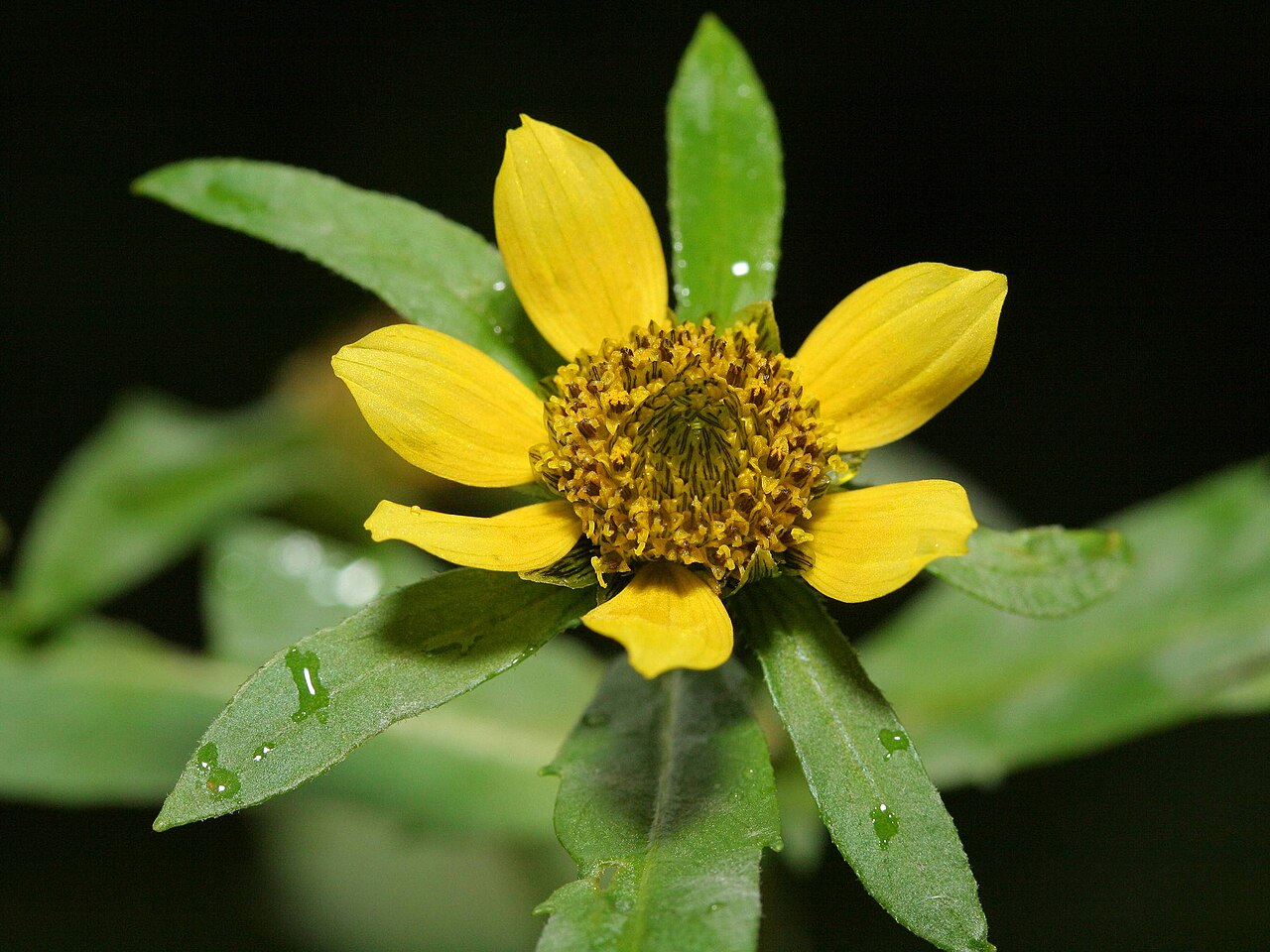
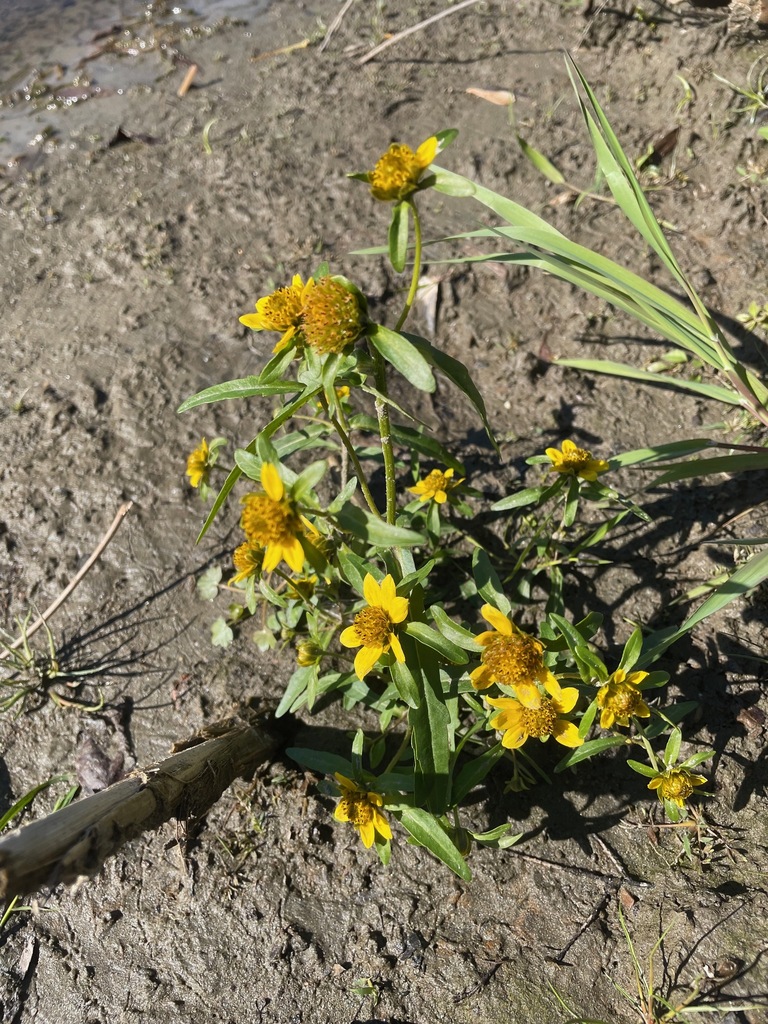
Bidens cernua, known as Nodding Beggarticks, nodding bur-marigold or nodding beggartick, is an annual wildflower of wet ground found across most of North America and also in Europe and Asia. It grows on the muddy shores of ponds and lakes, in marshes, wet meadows, ditches and along slow streams, often appearing in large numbers on mudflats exposed as water levels drop in late summer.
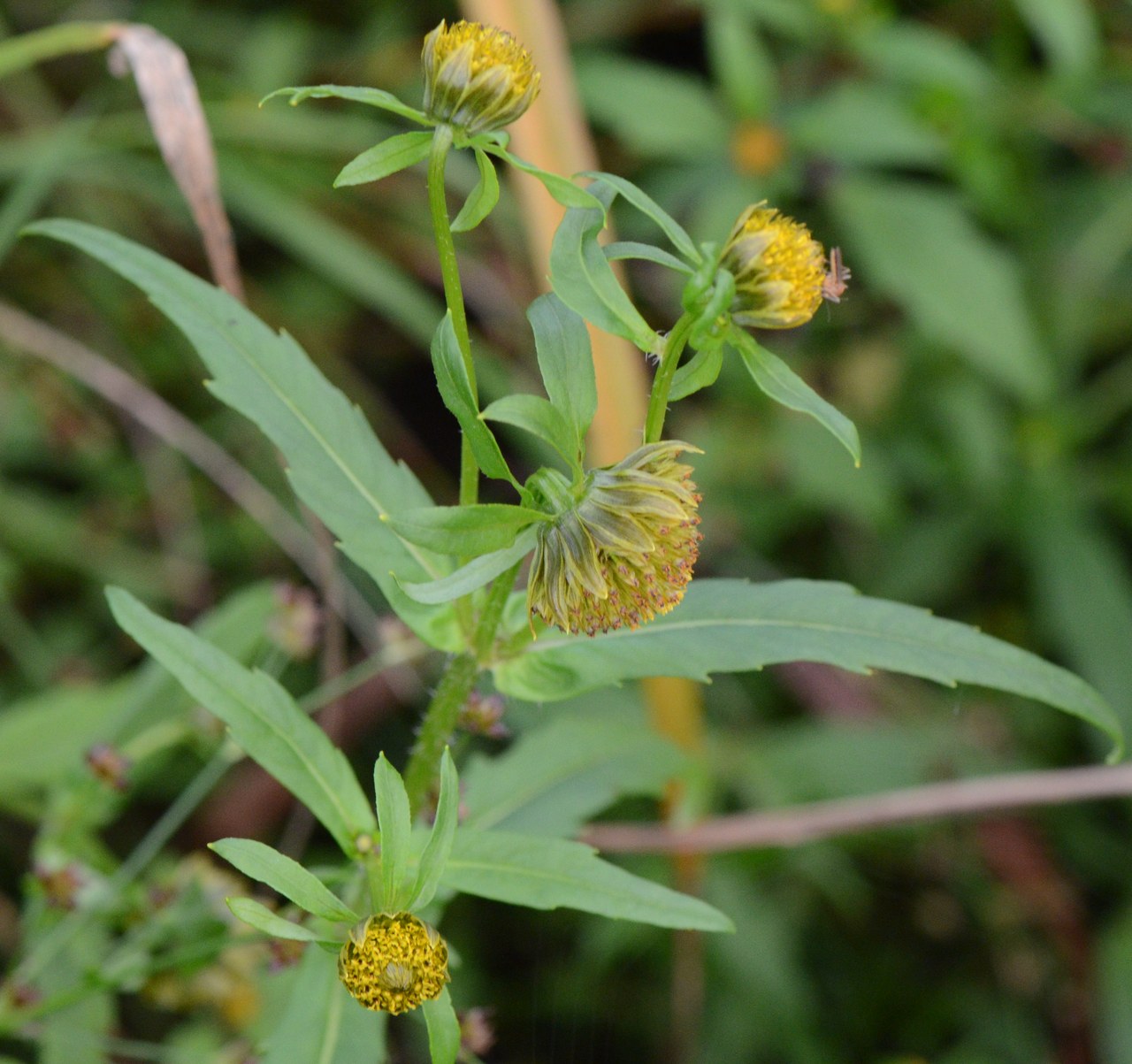
From August into October it produces cheerful, golden-yellow flower heads, each up to about 1 1/2 inches across, with short, broad rays around a large, domed center. As the heads age they droop or nod on their stalks, giving the plant its common and scientific names (cernua means “nodding”). The seeds that follow carry stiff, barbed awns that cling to fur, feathers and clothing, the “beggar’s ticks” every fall hiker knows.
Nodding beggarticks is easy to grow and valuable for late-season pollinators and seed-eating birds and waterfowl, but it is an informal plant best suited to rain gardens, pond edges and wetland restorations rather than tidy borders. This guide covers how to identify it, where it grows and how to use it in a wet native planting.
Identification
Look for an upright, branching annual of wet ground with narrow, toothed leaves in pairs, yellow daisy-like flower heads that nod as they age, and a ring of long, leafy bracts beneath each head.
Stems & Growth Habit
Plants are annuals, growing each year from seed. They range from a few inches tall on exposed mud to about 3 feet in rich, wet soil, with smooth to slightly rough, often purplish stems that branch freely. Stems lying on wet mud can root at the lower nodes. Plants growing in shallow water may have spongy, thickened lower stems.
Leaves
Leaves are opposite, simple and undivided, narrowly lance-shaped, mostly 2 to 7 inches long, with coarsely toothed edges. They have no stalks, and the bases of each pair are often joined around the stem. The undivided leaves help separate it from beggarticks with compound, divided leaves.
Flowers
Flower heads are about 3/4 to 1 1/2 inches across. Most plants have six to eight short, broad, golden-yellow rays, but some lack rays entirely. The center is a broad dome of many small yellow to orange-brown disk florets. Under each head is a ring of five to eight long, leafy, spreading outer bracts that are often longer than the rays. Heads stand upright when they first open and nod as they mature. Bloom runs from about August to October.
Fruit & Seeds
The seeds (achenes) are flat, wedge-shaped and about 1/4 inch long, with thickened, pale, cartilaginous edges. Each one usually ends in four stiff awns covered in tiny, backward-pointing barbs. They cling to fur, feathers, socks and dog coats, which helps the plant spread from one wetland to another. The dried heads, full of seeds, persist on the plant into winter.
Look-alikes
Spanish needles (Bidens alba) of the Southeast has white rays and divided leaves. Devil’s beggarticks (Bidens frondosa) and three-lobe beggarticks (Bidens tripartita) have divided or lobed leaves on stalks, and their heads do not nod. Showy bur-marigold (Bidens laevis) has larger heads with long, showy rays. Swamp marigold and sneezeweeds have alternate leaves.
Quick Facts
| Scientific Name | Bidens cernua |
| Family | Asteraceae (aster family) |
| Plant Type | Annual wildflower (wetland) |
| Mature Height | 1–3 ft |
| Mature Spread | 1–2 ft |
| Growth Rate | Fast |
| Sun Exposure | Full sun to part shade |
| Water Needs | High (wet soil to shallow water) |
| Soil Type | Wet mud, muck, silt, sand or clay |
| Soil pH | About 5.5–8.0 |
| Bloom Time | August–October |
| Flower Color | Golden yellow |
| Fall Color | Stems and leaves often turn purplish |
| Fruit | Flat achenes with barbed awns |
| Deer Resistant | Moderate |
| USDA Hardiness Zones | 3–9 (annual) |
Native Range
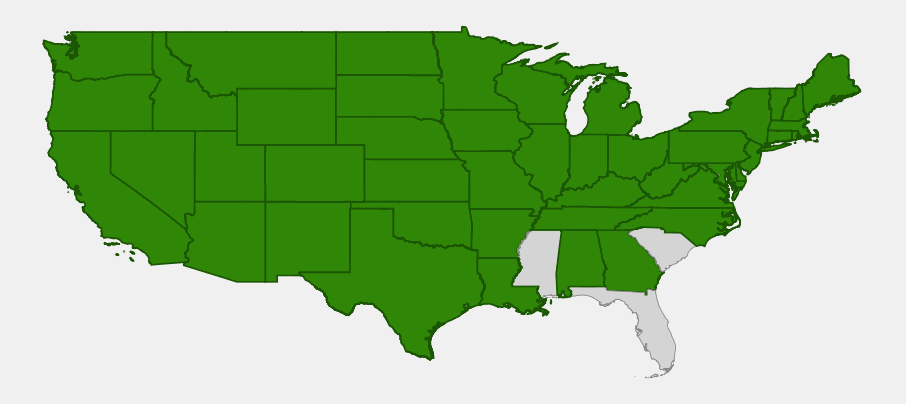
Nodding beggarticks is one of the most widespread wetland wildflowers in North America. It is circumboreal, native across Canada from the Maritime provinces to British Columbia and north to the Yukon and Northwest Territories, through most of the contiguous United States, and in Europe and northern Asia. USDA PLANTS lists it as native in 45 of the lower 48 states, missing only from Florida, Mississippi and South Carolina. In Alaska, USDA treats it as introduced.
It is most common in the northern half of the country, from New England and the Great Lakes across the northern Plains to the Pacific Northwest, and in western mountain valleys. In the South it becomes more scattered: NatureServe ranks it as critically imperiled in Alabama, and it is uncommon in Georgia and North Carolina. In the Southwest it is found mainly in marshes and along streams and reservoirs at higher elevations.
Its habitat is muddy or wet ground in full sun: lake and pond shores, drawdown zones of reservoirs, marshes, wet meadows, fens, ditches, stream and river banks, beaver meadows and wet disturbed ground. It thrives where water levels fluctuate, germinating on newly exposed mud and blooming before the first hard frost.
📋 Regional plant lists featuring Nodding Beggarticks: New York, Pennsylvania & Northern New Jersey · Idaho, Eastern Oregon & Eastern Washington · Ohio & Indiana · Montana & Wyoming · Michigan, Wisconsin & Eastern Minnesota · Kentucky & Tennessee · Nebraska, Kansas & Eastern Colorado · Utah & Western Colorado · Connecticut, Massachusetts & Rhode Island · New Hampshire, Maine & Vermont · Maryland, Virginia & West Virginia · Delaware, Southern New Jersey & Long Island · Arizona & New Mexico · Illinois, Iowa & Missouri · Alabama, Georgia & Mississippi · North & South Carolina · Arkansas, Louisiana, Eastern Oklahoma & Eastern Texas · North Dakota, South Dakota & Western Minnesota · Western Oregon & Western Washington · California & Nevada
Growing & Care Guide
Nodding beggarticks is very easy to grow in any constantly moist or wet, sunny spot. As an annual, it lives for one season, but it reseeds freely, so a small sowing usually turns into a lasting colony at the edge of a pond, in a rain garden or in a wet meadow. Its barbed seeds are the main drawback: plant it where people and pets do not brush past it in fall, or cut the seed heads before they ripen.
Light
Full sun gives the most flowers and sturdiest plants. It tolerates light shade along wooded pond edges, but flowers less.
Soil & Water
It needs consistently wet to saturated soil and grows well in mud, muck, sand or clay, as well as in shallow water a few inches deep. It is ideal for the edges of ponds, the low zone of rain gardens, bioswales and wet ditches. It does not tolerate dry soil. Fertilizer is not needed.
Planting Tips
Scatter seed on bare, wet mud in fall or early spring, or sow it on the surface of a damp potting mix in late winter and move seedlings outdoors after frost. Press seeds lightly into the surface rather than burying them. Mix it with perennial wetland plants such as sedges, rushes, blue flag and swamp milkweed, which will hold the space while the beggarticks fill gaps each year.
Pruning & Maintenance
No pruning is needed. To limit spreading and avoid clinging seeds near paths, cut down the plants after flowering but before the seed heads turn brown. Otherwise, leave the stems standing over winter for birds, and remove them in spring. Thin seedlings if they crowd smaller perennials.
Propagation
Grow it from seed. Collect the dry, brown seed heads in fall. Seeds germinate best after a period of cold, moist conditions; sowing outdoors in fall on wet ground is easiest. For spring sowing, store the seeds in damp sand in the refrigerator for about one to two months first. Seedlings appear in late spring and bloom the same year.
Landscape Uses
- Pond and lake edges: golden late-season color on wet, muddy shorelines
- Rain gardens and bioswales: fills the wettest zone with an easy, self-sowing annual
- Wetland restoration: quickly colonizes exposed mud and drawdown zones
- Pollinator gardens: late-summer and fall nectar for bees, flies and butterflies
- Wildlife plantings: seeds for waterfowl and songbirds through fall and winter
Wildlife & Ecological Value
Nodding beggarticks blooms when many wetland plants are fading, making it a valuable late-season resource for insects, and its abundant seeds feed birds in fall and winter.
For Pollinators
The flower heads are visited by many insects, including honey bees, bumblebees, small native bees, syrphid flies and late-season butterflies.
For Birds
Ducks, rails and other waterbirds eat the seeds, as do sparrows, finches and other songbirds that forage along muddy shores and in marshes in fall and winter. The barbed seeds often travel stuck to feathers, which helps spread the plant to new wetlands.
For Mammals
Mammals make little direct use of it, but the seeds hitch rides on the fur of deer, raccoons, dogs and other animals.
Ecosystem Role
As a fast-growing annual, nodding beggarticks is one of the first plants to cover mudflats exposed by falling water levels. It helps stabilize the soil, supports insects and seed-eaters, and its seed bank in the mud lets it reappear quickly whenever conditions are right. Wetland managers who draw down water levels to grow seed-producing “moist-soil” plants for migrating waterfowl often get dense stands of beggarticks.
Cultural & Historical Uses
The genus name Bidens means “two teeth” in Latin, after the two-awned seeds of many species. Nodding beggarticks usually has four awns. The name “beggarticks” (or “beggar’s ticks”) compares the clinging seeds to ticks and to beggars who cling to passersby. Another common name is nodding bur-marigold.
Botanists have described many varieties of Bidens cernua based on differences in leaf shape, ray size and growth form, including rayless plants and dwarf plants on exposed mud. Most modern treatments, including USDA PLANTS, treat them as part of one variable species.
Like several other Bidens species, nodding beggarticks has been used in folk medicine in Europe and North America. These are historical uses; the plant is not recommended for home remedies.
Frequently Asked Questions
Is nodding beggarticks native?
Yes. It is native across most of the United States and Canada, and also in Europe and Asia. In Alaska, USDA treats it as introduced.
Why do the seeds stick to my clothes?
Each seed has stiff awns covered in tiny, backward-pointing barbs that hook into fabric, fur and feathers. This lets animals and people carry the seeds to new places.
Is nodding beggarticks an annual?
Yes. It grows from seed each year, blooms in late summer and fall, and dies after setting seed. It reseeds readily in wet soil, so it returns year after year.
Where should I plant nodding beggarticks?
In full sun in wet soil: pond and lake edges, rain gardens, bioswales, wet meadows and ditches. Keep it away from paths if you want to avoid clinging seeds.
What is the difference between nodding beggarticks and other beggarticks?
Nodding beggarticks has undivided, stalkless leaves and heads that nod as they mature. Devil’s beggarticks and three-lobe beggarticks have divided or lobed leaves on stalks and upright heads.

Looking for a nursery that carries Nodding Beggarticks?
Browse our native plant nursery directory: Alabama, Arizona & Arkansas · California · Colorado, Connecticut, Delaware & Georgia · Idaho, Illinois, Indiana, Iowa & Kansas · Kentucky, Louisiana, Maine, Maryland, Massachusetts, Michigan, Minnesota, Missouri & Montana · Nebraska, Nevada, New Hampshire, New Jersey, New Mexico, New York, North Carolina, North Dakota, Ohio & Oklahoma · Oregon · Pennsylvania, Rhode Island, South Dakota, Tennessee, Texas, Utah, Vermont & Virginia · Washington · West Virginia, Wisconsin & Wyoming