Native Plant List for Georgia, Alabama and Mississippi
Last updated: September 3, 2026


Native Plants for Alabama, Georgia & Mississippi
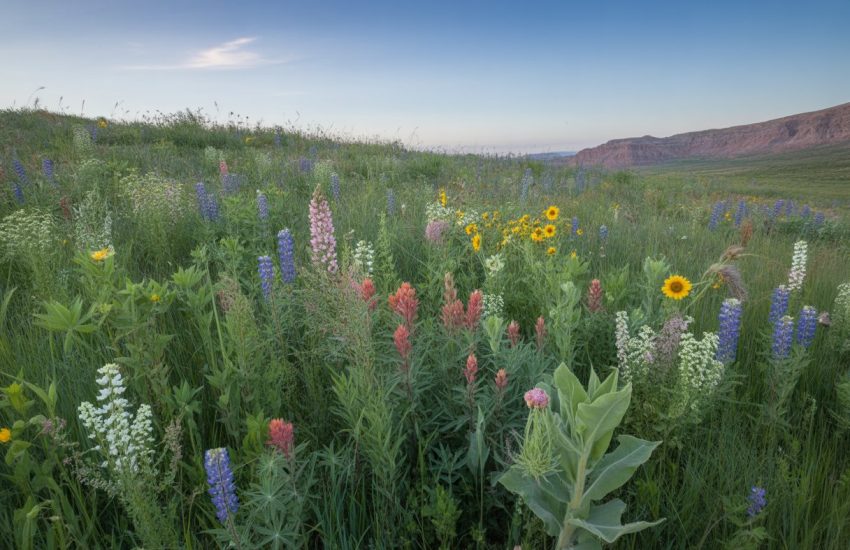
The Deep South is home to extraordinary plant diversity. From the longleaf pine savannas of southern Alabama to Georgia’s Piedmont forests and Mississippi’s coastal plain, this region supports native species that deliver year-round color, wildlife habitat, and serious toughness in the face of heat and humidity.
If you’ve ever struggled to keep non-native plants alive through a Southern summer — or watched your water bill climb from June to September — native plants are the answer. These species evolved here. They handle the clay soils, the drought-and-deluge cycle, and the long growing season without breaking a sweat.
How to Use This List
Plants are organized by type in the tables below: trees, shrubs, perennials, grasses, and ferns. Each entry includes sun, moisture, and soil preferences. Most species on this list thrive in USDA Zones 7a–9a, covering the bulk of AL, GA, and MS.
Pro tip: For maximum wildlife value, aim to include plants that bloom across different seasons. Spring-blooming native azaleas, summer coneflowers, and fall-blooming asters will keep pollinators fed from March through November.
See Also:
- Best Flowering Trees for Alabama
- Best Flowering Trees for Georgia
- Best Flowering Trees for Mississippi
- Best Shade Trees for Alabama
- Best Shade Trees for Georgia
- Find a Native Plant Nursery Near You
Native Trees
Georgia, Alabama & Mississippi - Trees
| Common Name | Scientific Name | Sun | Moisture | Height | Comments |
|---|---|---|---|---|---|
| Black maple | Acer nigrum | F-P | A | 60-80 ft | Like Sugar Maple but tolerates alkaline, clay soils |
| Striped Maple | Acer pensylvanicum | P-S | A-W | 16-33 ft | Shade-loving understory tree; striped bark, sex-changing flowers |
| Red Maple | Acer rubrum | F | W-D | 50–75 ft | Buds & young twigs are red; great foll color |
| Florida Maple | Acer Saccharum | F-P | A | 50–75 ft | Excellent fall color; produces maple syrup |
| Indigo Bush | Amorpha fruticosa | F-P | A-W | 6–18 ft | Fragrant compound foliage; 1/2" blue flwrs with orange |
| Paw Paw | Asimina triloba | P-S | A | 40 ft | Unique fruit resembles & tastes like banana |
| River Birch | Betula nigra | F | A-W | 40–70 ft | Modest yellow fall color; seed attracts birds |
| Ironwood | Carpinus caroliniana | P-S | W-A | 20–30 ft | Good street tree; yellow, orange & scarlet fall color |
| Water Hickory | Carya aquatica | F-P | W-A | 60-100 ft | Bottomland tree of flooded clay flats and sloughs; bitter inedible nut |
| Pecan | Carya illinoinensis | F | A-W | 70-100 ft | Large bottomland tree; needs 2nd tree to pollinate well |
| Mockernut Hickory | Carya tomentosa | F-P | A-D | 50-80 ft | Slow-growing; thick-shelled nuts; very dry-tolerant on uplands |
| American Chestnut | Castanea dentata | F-P | A | 60–100 ft | Chestnut blight-susceptible; mostly stump sprouts now |
| Southern Catalpa | Catalpa bignonioides | F-P | A-W | 30-40 ft | Showy white flowers, cigar-like pods; native only to Gulf Coast |
| Eastern Redbud | Cercis canadensis | F-S | A-D | 20–30 ft | Clusters of pink flowers line branches in Apr |
| Pagoda Dogwood | Cornus alternifolia | P-S | W-D | 15–25 ft | Clusters of white flowers turn to black berries |
| Stiff Dogwood (Swamp Dogwood) | Cornus foemina | P-S | W-A | 30 ft | White flowers late spring; blue fleshy fruit in summer |
| American Smoke Tree | Cotinus obovatus | F-P | D | 20-30 ft | Rare on limestone glades; slow-growing; brilliant fall color |
| Parsley Hawthorne | Crataegus marshallii | P-F | W-A | 30 ft | White flwr clusters bloom in early spring; scarlet fruits |
| Mayhaw | Crataegus opaca | F | W-A | 35 ft | White flwr clusters (Feb); red fruit (Apr); thorny thicket |
| Green hawthorn | Crataegus viridis | F-P | A-W | 20-35 ft | Small tree, white spring flowers, red fruit holds into winter |
| Titi | Cyrilla racemiflora | F-P | W-A | 30 ft | White fragrant racemes (May-Jun); brown seeds persist |
| Franklin Tree | Franklinia alatamaha | F-P | A | 10-20 ft | Extinct in wild since ~1803; late-summer flowers, fall color |
| Loblolly Bay | Gordonia lasianthus | F-P | W | 40-60 ft | Evergreen wetland tree; needs constant moisture, acidic soil |
| Two-winged Silverbell | Halesia diptera | F-P | A | 15–30 ft | Small white flowers hang from branches in early spring |
| Cassine Holly | Ilex cassine | F-P | W-A | 30 ft | Abundant reddish-orange fruit produced in fall |
| Deciduous Holly | Ilex decidua | F | A-W | 25 ft | Bright red display of red fruits (on fem.) eaten by birds |
| American Holly | Ilex opaca | F-P | A-D | 20–40 ft | To ensure fruit one male is needed per 2-3 females |
| Yaupon Holly | Ilex vomitoria | F-P | W-D | 30 ft | Fem. plants bear red fruit in fall that persists in winter |
| Butternut | Juglans cinerea | F | A | 40-60 ft | Edible nuts; declining from butternut canker disease |
| Sweetgum | Liquidambar styraciflua | F | W-A | 60–85 ft | Brilliant scarlet-red to red-purple fall color |
| Tulip Tree | Liriodendron tulipifera | F | A | 70–90 ft | Large tulip-like flowers are yellow, green, & orange |
| Fraser Magnolia | Magnolia fraseri | P-S | A | 30–50 ft | Huge fragrant flowers; rose-pink fruit; needs moist cove soil |
| Southern Magnolia | Magnolia grandiflora | F-S | A | 100 ft | Large white flwrs (spring) become scarlet seeds (sum.) |
| Bigleaf Magnolia | Magnolia macrophylla | P-F | A-W | 30-40 ft | Largest native leaf & flower; needs shelter from wind, rich moist soil |
| Sweet Bay Magnolia | Magnolia virginiana | P-F | W-A | 60 ft | White fragrant flwrs (spring) become red seeds (sum.) |
| Southern Crabapple | Malus angustifolia | F-P | D-A | 30 ft | Pink blooms (spring) become sm. apples that birds eat |
| Sweet Crabapple | Malus coronaria | F-P | A | 15-30 ft | Fragrant pink spring blooms; sour fruit feeds birds; forms thickets |
| Wax Myrtle | Myrica cerifera | F-P | W-A | 25 ft | Small blue-grey fruits on females last through winter |
| Water Tupelo | Nyssa aquatica | F-P | W | 80–100 ft | Swamp tree with buttressed base; source of tupelo honey |
| Black Gum | Nyssa sylvatica | F | A-D | 30–60 ft | Scarlet red autumn color |
| Swamp Bay | Persea palustris | F-P | W-A | 40 ft | Wildlife eats fruit; leaves used from seasoning cuisine |
| Sand Pine | Pinus clausa | F | A-D | 15-65 ft | Florida scrub endemic; fire-adapted, serotinous cones |
| Slash Pine | Pinus elliottii | F | A-W | 60-80 ft | Fast-growing wet-flatwoods pine; tolerates seasonal standing water |
| Spruce Pine | Pinus glabra | F-P | D-A | 70 ft | Short, twisted yellow-grn needles in pairs, oak-like bark |
| Longleaf Pine | Pinus palustris | F | D-A | 100 ft or more | Long needles; slow, above ground growth when estab. |
| Table Mountain Pine | Pinus pungens | F | D | 20-40 ft | Rocky ridgetops only; spiny serotinous cones; fire-adapted |
| Pitch Pine | Pinus rigida | F | D-A | 40–60 ft | Fire-adapted conifer for sandy, rocky, or barren infertile sites |
| Pond Pine | Pinus serotina | F | W-A | 40-70 ft | Wet, acidic soil; fire-adapted; crooked form; coastal plain NJ-AL |
| Chickasaw Plum | Prunus angustifolia | F-P | A-D | 6–25 ft | Thorny thicket-forming plum; early white bloom, red-orange fruit |
| Cherry Laurel | Prunus caroliniana | F-P | D | 30 ft | Small white flwrs (spring) become black fruits (fall) |
| Mexican Plum | Prunus mexicana | F-P | A-D | 15-25 ft | Fragrant early white bloom; exfoliating bark; plums feed wildlife |
| Black Cherry | Prunus serotina | F-P | D | 50–80 ft | Messy tree; sm.l edible berries in sumer attracts birds |
| White Oak | Quercus alba | F-P | D | 60–90 ft | Brown, red, wine fall color; acorns attract birds/squirrels |
| Chapman Oak | Quercus chapmanii | F-P | A-D | 6-25 ft, usually under 15 ft in scrub | Florida scrub oak; deep sand; key scrub-jay & tortoise habitat |
| Cherrybark Oak | Quercus falcata | F-S | W-A | 70–90 ft | Flaky. reddish bark; good street tree |
| Sand Live Oak | Quercus geminata | F | A-D | 20–40 ft | Scrubby evergreen oak for dry sand; scrub-jay habitat plant |
| Darlington Oak | Quercus hemisphaerica | F | D-A | 60-80 ft | Fast, semi-evergreen; sandy soil; avoid spring pruning (oak wilt) |
| Shingle Oak | Quercus imbricaria | F | A-W | 50-65 ft | Willow-like unlobed leaves; tolerates clay/wet soil; avoid spring cuts |
| Bluejack Oak | Quercus incana | F | D | 30-50 ft | Slow-growing sandhill tree for deep, dry sand only |
| Turkey Oak | Quercus laevis | F | D | 20-30 ft | Deep dry sand only; sandhill/scrub specialist, poor in garden soil |
| Overcup Oak | Quercus lyrata | F | A-W | 40-60 ft | Bottomland tree; flood-tolerant; acorn cup encloses most of nut |
| Blackjack Oak | Quercus marilandica | F | A-D | 20–50 ft | Tolerates poor, dry, rocky soil; very slow-growing |
| Swamp Chestnut Oak | Quercus michauxii | F-P | W-A | 80–95 ft | Reliable red fall color contrast with light gray bark |
| Chinkapin Oak | Quercus muehlenbergii | F-P | A-D | 40-60 ft | Limestone-loving shade tree; sweet low-tannin acorns feed wildlife |
| Water Oak | Quercus nigra | F-P | A-W | 50–80 ft | Fast-growing oak; weak wood, short-lived; heavy acorn producer |
| Nuttall Oak | Quercus nuttallii | F-P | W-A | 70–85 ft | Acorn production heaviest every 4-7 yrs; good shade |
| Oglethorpe Oak | Quercus oglethorpensis | F-P | A-W | 60-80 ft | IUCN Endangered; wet clay only; nursery-propagated stock only |
| Willow Oak | Quercus phellos | F-S | W-A | 75–90 ft | Beautiful shade tree; good street tree; high branching |
| Shumard Oak | Quercus shumardii | F-P | A | 60-100 ft | Fast-growing large shade tree, tolerant of alkaline soil |
| Swamp Post Oak | Quercus similis | F | W-A | 50-80 ft | Bottomland oak for wet, calcareous soils; slow-growing, long-lived |
| Live Oak | Quercus virginiana | F-S | D-A | 70–95 ft | Short thick trunk with picturesque horizontal branching |
| Winged Sumac | Rhus coppalina | F | D-W | 30 ft | Pyramidal yellow-green flwr spike with red berries in fall |
| Black Locust | Robinia pseudoacacia | F-P | A-D | 30–50 ft | Fast nitrogen-fixer; suckers freely; toxic parts; Appalachian/Ozark |
| Cabbage Palm | Sabal palmetto | F-P | A-D | 40–60 ft | Slow-growing coastal palm; salt, wind and drought tolerant |
| Coastal Plain Willow | Salix caroliniana | F-P | W | 15–30 ft | Fast wet-site tree for streambanks and pond edges; not for dry soil |
| Gum Bumelia | Sideroxylon lanuginosum | F-P | A-D | 20-40 ft | Tough, soil-adaptable shade tree; fragrant late-summer bloom; spiny |
| Mountain Camellia | Stewartia ovata | P-S | A-W | 10–20 ft | Rare Appalachian understory tree; large white summer flowers, shade |
| Pond Cypress | Taxodium ascendens | F-P | W-A | 45 ft | Useful for soil stabilization at water edges |
| Bald Cypress | Taxodium distichum | F-P | W-D | 65–90 ft | Reddish, peeling bark and rusty fall color |
| Florida Torreya | Torreya taxifolia | P-S | A-W | 15–40 ft (historically; wild plants now usually smaller due to blight) | Fed. endangered; conservation-nursery stock only, never wild-collected |
| Winged Elm | Ulmus alata | F-P | D | 80 ft | Corky wings often appear on its branches |
| Cedar Elm | Ulmus crassifolia | F-P | W-A | 80 ft | Excellent street tree; late summer flowers, fall fruit |
| Slippery Elm | Ulmus rubra | F-P | A | 40-60 ft | Fast shade tree; mucilaginous inner bark; some Dutch elm disease risk |
Native Shrubs
Georgia, Alabama & Mississippi - Shrubs
| Common Name | Scientific Name | Sun | Moisture | Height | Comments |
|---|---|---|---|---|---|
| Bottlebrush Buckeye | Aesculus parviflora | F-P | A | 6–10 ft | 6-24" spikes of flwrs; yell. fall color; attracts hummers |
| Roundleaf Serviceberry | Amelanchier sanguinea | F-P | A-D | 4-10 ft | Thicket-forming shrub for dry, sandy or rocky soil; sweet edible fruit |
| Climbing Aster | Ampelaster carolinianus | F-P | A-W | 4-12 ft | Scrambling shrub; fall lavender blooms; wants moisture, support |
| Sea Oxeye Daisy | Borrichia frutescens | F | W-A | 1–3 ft | Salt-marsh subshrub; tolerant of tidal flooding and salt spray |
| American Beautyberry | Callicarpa americana | F-P | D-A | 4–6 ft | Sm. white-pink flwrs become berries that attract birds |
| Sweetshrub | Calycanthus floridus | F-S | A | 6–10 ft | Interesting red or maroon strawberry scented flowers |
| Buttonbush | Cephalanthus occidentalis | F-P | W | 6–12 ft | Fragrant flower clusters attract hummingbirds |
| Fringetree | Chionanthus virginicus | F-P | D-A | 20 ft | White blooms (spring); fruit for wildlife; yellow fall color |
| Summersweet | Clethra alnifolia | F-P | W-A | 2–4 ft | Ivory white fragrant blooms in summer |
| Buckwheat Tree | Cliftonia monophylla | F-P | W-D | 20 ft | Terminal white flwr clusters (winter); persist until spring |
| Flowering Dogwood | Cornus florida | F-S | D-A | 25–30 ft | White flowers in spring become bird-attracting berries |
| Swamp Loosestrife | Decodon verticillatus | F-P | W | 3-8 ft | Wetland shrub for pond margins; tolerates standing water |
| Trailing Arbutus | Epigaea repens | P-S | A | 4-6 in | Fragrant evergreen groundcover; acidic soil; never dig from wild |
| Coralbean | Erythrina herbacea | F-P | D-A | 3-10 ft | Scarlet spring flowers before leaves; toxic seeds; thorny stems |
| Swamp Privet | Forestiera acuminata | F-P | W-A | 10-20 ft | Wetland shrub; tolerates standing water; blooms before leaves |
| Dwarf Fothergilla | Fothergilla gardenii | F-P | A-W | 2-3 ft | Fragrant spring blooms; brilliant fall color; needs moist acidic soil |
| Witch Alder | Fothergilla major | F-P | A | 6–10 ft | Showy, fragrant flowers in spring |
| Dwarf Huckleberry | Gaylussacia dumosa | F-P | D-W | 4 ft | Small pink flowers become edible fruit; red fall color |
| Swamp Jessamine | Gelsemium rankinii | P-S | W-A | 10-20 ft climbing vine | Toxic wetland vine; unscented flowers, needs wet acidic soil |
| Witch Hazel | Hamamelis virginiana | F-S | A-D | 8–20 ft | Golden yellow flowers in fall; spectactular fall color |
| Oakleaf Hydrangea | Hydrangea quercifolia | P-S | A | 6 ft | Oak-like leaves turn purple in fall; large white flowers |
| Longstalk Holly | Ilex collina | P-F | W-A | 6-13 ft | Rare deciduous bog holly, long red fruit stalks; needs wet acidic soil |
| Bigleaf Gallberry Holly | Ilex coriacea | F-P | W-D | 15 ft | Large black fruit used by wildlife; good border plant |
| Winterberry Holly | Ilex verticillata | F-P | W-A | 6–10 ft | White flowers bloom in spring; berries persist in winter |
| Star Anise | Illicium floridanum | S-P | D-A | 8 ft | Maroon starry flowers (spring); heavily scented leaves |
| Virginia Sweetspire | Itea virginica | F-P | W-D | 3–6 ft | White blooms early-sum; red/orange/maroon fall color |
| Mountain Laurel | Kalmia latifolia | F-P | D-W | 5 ft | Terminal white flower clusters (Apr-May); wine fall color |
| Coastal Doghobble | Leucothoe axillaris | P-S | A-W | 3–4 ft | Small fragrant white flwr clusters late winter-mid spring |
| Gopher Apple | Licania michauxii | F-P | D | 6-12 in | Spreading groundcover; favorite food of gopher tortoise |
| Lyonia | Lyonia lucida | P-S | A-W | 3–6 ft | Small, nodding bell-shaped white flowers in spring |
| Staggerbush | Lyonia mariana | F-P | A-D | 2-6 ft | Needs dry, sandy, acidic soil; avoid clay and lime |
| Turk's Cap | Malvaviscus arboreus var. drummondii | P-S | A | 2–6 ft | Shade-tolerant; red hummingbird flowers; dies back in freeze |
| American Sweet Olive | Osmanthus americanus | F-P | D-A | 20 ft | Small, white lightly fragrant flowers in early spring |
| Mountain Fetterbush | Pieris floribunda | P-S | A | 3-6 ft | Toxic evergreen; smooth leaves, upright flowers unlike Jap. Pieris |
| Needle Palm | Rhapidophyllum hystrix | P-S | A | 3–6 ft | Cold-hardy native shrub palm; sharp needles at base; shade |
| Yellow Native Azalea | Rhododendron austrinum | P-S | D-A | 12 ft | Rich yellow or orange blooms for 3 weeks (Apr-May) |
| Honeysuckle Azalea | Rhododendron canescens | P-S | D-A | 12 ft | Large, fragrant,flwr clusters form white-pink (Mar-Apr) |
| Oconee Azalea | Rhododendron flammeum | F-P | A-D | 4-8 ft | Toxic flame-orange azalea; dry woods, deer-resistant |
| Summer Azalea | Rhododendron serrulatum | P-S | A-W | 15 ft | Extremely fragrant white flowers (Jun-Aug) |
| Staghorn Sumac | Rhus typhina | F-P | D-A | 20 ft | Red fall color; green flwr clusters become red fruit |
| Northern Dewberry | Rubus flagellaris | F-P | D-A | 6-12 in (trails 3-8 ft) | Trailing bramble, roots at tips; prickly stems; spreads readily |
| Black Raspberry | Rubus occidentalis | F-P | A | 3-6 ft | Fast-spreading edge bramble; cut spent canes after fruiting |
| Dwarf Palmetto | Sabal minor | F-S | D-W | 6 ft | Tropical leaves; round black fruit persists into winter |
| Saw Palmetto | Serenoa repens | F-P | A-D | 3-8 ft | Slow-growing evergreen understory palm; sharp saw-toothed petioles |
| Three-Toothed Cinquefoil | Sibbaldiopsis tridentata | F-P | A-D | 2-6 in | Evergreen mat for rocky, lean soil; rare/high-elev only south of VA |
| Snowbell | Styrax americanus | F-P | W-A | 10 ft | Numerous small white flowers (Apr-May) |
| Poison Sumac | Toxicodendron vernix | F-P | W | 6-30 ft | Severely allergenic wetland shrub; identification only, do not plant |
| Tree Huckleberry | Vaccinium arboreum | F-P | D-A | 20 ft | Bell-shaped white flwrs; berries for wildlife, red fall color |
| Elliott's Blueberry | Vaccinium elliottii | F-P | A-W | 12 ft | White flwrs (Mar-May); edible black fruit; red fall color |
| Rabbiteye Blueberry | Vaccinium virgatum | F-P | A-D | 6-15 ft | Needs acidic soil; plant 2+ for fruit; edible berries, bird favorite |
| Arrow-wood Viburnum | Viburnum dentatum | F-P | D-A | 5–9 ft | Flowers May-Jun; small blue-black berries in fall |
| Walter's Viburnum | Viburnum obovatum | F-P | A-W | 6-15 ft | Dense evergreen shrub, white spring flowers, bird-friendly fruit |
| Adam's Needle | Yucca filamentosa | F-P | A-D | 2-3 ft (flower stalk to 8 ft) | Evergreen rosette; curly leaf filaments; tall white flower spike |
Native Perennials & Wildflowers
Georgia, Alabama & Mississippi - Flowering Perennials
| Common Name | Scientific Name | Sun | Moisture | Height | Comments |
|---|---|---|---|---|---|
| Doll's eyes | Actaea alba | P-S | A | 12–30 in | Sm. white flwrs (Apr-May); poisonous berries (Aug-Sep) |
| Red Baneberry | Actaea rubra | P-S | A | 24 in | 1/2" puffy white flowers become red poisonous berries |
| White Snakeroot | Ageratina altissima | P-S | A-W | 1-4 ft | Toxic woodland perennial; part shade, moist soil; spreads by rhizome |
| Nodding Wild Onion | Allium cernuum | F-P | A-D | 8–20 in | Dry soil; nodding white-pink summer flowers; deer resistant |
| Narrowleaf Bluestar | Amsonia ciliata | F-P | D-A | 1.5-2 ft | Thread-like foliage; blue flowers; gold fall color; deer-proof |
| Wood Anemone | Anemone quinquefolia | P-S | A | 4–8 in | Spring-ephemeral groundcover; toxic sap, disappears by early summer |
| Columbine | Aquilegia canadensis | S-F | A-D | 24–36 in | Interesting red/yellow flowers attract hummingbirds |
| Wild Sarsaparilla | Aralia nudicaulis | P-S | A | 1-2 ft | Rhizomatous woodland ground cover; white umbels, dark berries |
| Jack-in-the-Pulpit | Arisaema triphyllum | P-S | A | 12 in or more | Spathe appears Mar-May; red berries late sum-fall |
| Goat's Beard | Aruncus dioicus | P-S | A | 4–6 ft | 6-10" plumes of small cream-colored flowers |
| Wild Ginger | Asarum canadense | S | A | 4–6 in | Evergreen groundcover, glossy heart-shaped leaves |
| Butterfly Weed | Asclepia tuberosa | F-P | A | 24–36 in | Clusters of brilliant orange flowers attract butterflies |
| American Sea Rocket | Cakile edentula | F | D | 6-18 in | Annual beach dune pioneer; salt-tolerant; not native on Pacific coast |
| Wild Hyacinth | Camassia scilloides | P-F | A-D | 18 in | Spike of light blue flowers; bulb |
| Creeping Sedge | Carex laxiculmis | P-S | A-D | 0.3–1.5 ft | Evergreen dry-shade sedge; slow clumping groundcover, deer resistant |
| Seersucker Sedge | Carex plantaginea | P-S | A | 8–12 in | Puckered-leaf shade sedge; rich moist soil, slow clump, deer resistant |
| Blue Cohosh | Caulophyllum thalictroides | P-S | A | 12–24 in | Small yellow-green flowers, clusters of blue berries |
| Rose Turtlehead | Chelone obliqua | F-P | A-W | 2-3 ft | Late-summer hooded pink flowers; bumblebee favorite for moist soil |
| Green n' Gold | Chrysogonum virginianum | F-P | A | 8 in | Large yellow flowers contrast green foliage spring-fall |
| Water Hemlock | Cicuta maculata | F-P | W | 3-6 ft | Extremely toxic; wetlands/ditches only, not for gardens |
| Cohosh | Cimifuga racemosa | P-S | A | 3–8 ft | Long slender clusters of white flowers in sum & fall |
| Spring Beauty | Claytonia virginica | P | A | 5–10 in | 5-petaled white flowers with pink veins bloom Feb-May |
| Bead Lily | Clintonia umbellulata | P-S | A | 24–36 in | Oval-shaped basal leaves; white flowers; ground cover |
| Atlantic Pigeonwings | Clitoria mariana | F-P | D | 1–2 ft | Twining vine; dry sandy/rocky soil; showy upright lavender flowers |
| Large-flowered Coreopsis | Coreopsis grandiflora | F-P | A-D | 1-2 ft | Short-lived perennial, self-seeds readily; lean sandy soil |
| Whorled Tickseed | Coreopsis major | F-P | D-A | 2–4 ft | Whorled leaves, bright yellow summer blooms, pollinator favorite |
| Pink Tickseed | Coreopsis rosea | F-P | W-A | 8–20 in | Rare pondshore native; wet sandy soil only; never wild-collect |
| Threadleaf Coreopsis | Coreopsis verticillata | F-P | A-D | 1-3 ft | Fine thread-like foliage; long summer bloom; spreads by rhizomes |
| American Dittany | Cunila origanoides | F-P | A-D | 8-18 in | Fragrant, late-blooming; needs lean rocky soil, not rich beds |
| Pink Lady Slipper | Cypripedium acaule | P-S | A | 8–12 in | Distinctive red-streaked pink pouch; challenge to grow |
| Yellow Lady Slipper | Cypripedium parviflorum | P | A | 18–24 in | Distinctive yellow pouch |
| Carolina Larkspur | Delphinium carolinianum | F-P | A-D | 1-3 ft | Toxic to livestock & pets; blue flowers; dry, sharp drainage |
| Squirrel Corn | Dicentra canadensis | P-S | A | 6–10 in | Spring ephemeral woodland wildflower; toxic, deer resistant |
| Shooting Star | Dodecathion meadia | F-P | D-A | 10–16 in | Delicate white to pink petals, red & yellow centers |
| Glade Coneflower | Echinacea simulata | F | D-A | 2–4 ft | Glade specialist; full sun, rocky soil; never collect wild. |
| White Trout Lily | Erythronium albidum | P-S | A | 4–10 in | Spring ephemeral; slow to establish, never dig from the wild |
| Mist Flower | Eupatorium coelestinum | F-P | A | 12–36 in | Dense clusters of blue flowers late summer until frost |
| Sweet Joe-Pye Weed | Eutrochium purpureum (syn. Eupatorium purpureum) | F-P | A | 5–7 ft | Large pink flowers attract butterflies in droves Aug-Sep |
| Queen of the Prairie | Filipendula rubra | F-P | A | 4–5 ft | Showy large pink plumes Jun-Jul |
| Wild Strawberry | Fragaria virginiana | F-P | A | 6 in | Spring flowers become tasty fruit in early summer |
| Galax | Galax urceolata | P-S | A | 6–12 in (flowers to 2.5 ft) | Evergreen Appalachian groundcover; white flower wands; shade |
| Sweet-scented Bedstraw | Galium triflorum | P-S | A | 6-24 in trailing groundcover | Fragrant shade groundcover for rich, consistently moist soil |
| Indian Physic | Gillenia stipulata | P-S | D-A | 2-3 ft | Airy white flowers; dry shade perennial; root historically emetic |
| Dakota Mock Vervain | Glandularia bipinnatifida | F-P | D-A | 6–12 in | Great Plains native; long-blooming; pink-purple mat |
| Beach Sunflower | Helianthus debilis | F | A-D | 6 in–2 ft | Trailing coastal groundcover; salt and drought tolerant |
| Woodland Sunflower | Helianthus divaricatus | F-P | A-D | 2½–6 ft | Rhizomatous colonizer for dry shade; yellow blooms July–Sept |
| Western Sunflower | Helianthus occidentalis | F-P | A-D | 2–4 ft | Naked flower stalk above basal rosette; dry sun, not aggressive |
| Cow parsnip | Heracleum maximum | F-P | A-W | 4-8 ft | Striking wildflower; sap is phototoxic, causes skin burns in sun |
| Hairy Alumroot | Heuchera villosa | P-S | A-D | 8-12 in (to 3 ft bloom) | Rock-dwelling native parent of 'Bronze Wave' & other cultivars |
| Swamp Hibiscus | Hibiscus coccineus | F | A-W | 6–8 ft | 6" wide red flwrs are striking against large bold leaves |
| Spider Lily | Hymenocallis caroliniana | P-F | A | 8–12 in | Beautiful unusual white flowers with six protrusions |
| Zigzag Iris | Iris brevicaulis | F-P | A-W | 8-20 in | Shade-tolerant wild iris; violet-blue blooms; rhizomes toxic |
| Crested Iris | Iris cristata | F-P | D-A | 5–10 in | Pale lavender-blue crested flowers Apr-May |
| Red Flag | Iris fulva | F-P | A | 24–36 in | Large copper flwrs in late spring; attracts hummingbirds |
| Giant Blue Iris | Iris giganticaerulea | F-P | W | 3-5 ft | Large-flowered wetland iris for bogs, pond edges; rhizomes toxic |
| Dixie Iris | Iris hexagona | F-P | W-A | 2-3 ft | Marsh/swamp iris; violet-blue blooms spring; needs wet to moist soil |
| Dwarf Violet Iris | Iris verna | P | D-A | 4-6 in | Tiny fragrant woodland iris; needs sandy, dry, well-drained soil |
| Seashore Mallow | Kosteletzkya pentacarpos | F-P | W | 3–6 ft | Salt-tolerant marsh native; pink blooms July–Oct |
| Trailing Ratany | Krameria lanceolata | F | D | 2-6 in | Trailing root-hemiparasite; magenta flowers for specialist oil bees |
| Tall Blue Lettuce | Lactuca biennis | F-P | A-W | 3–8 ft | Biennial; milky sap can irritate skin |
| Wood Nettle | Laportea canadensis | P-S | A-W | 1-5 ft | Stinging hairs; moist shade; red admiral butterfly host |
| Blazing Star | Liatris spicata | F | A | 2–5 ft | Bright pink-purple stalks of interesting flowers |
| Yellow Bell Lily | Lilium canadense | F | W-A | 6 ft | 3" yellow-orange flowers with dark spots; beautiful! |
| Turks Cap Lily | Lilium superbum | F-P | A | 4–6 ft | Gorgeous orange & yellow flowers; AM sun, PM shade |
| Cardinal Flower | Lobelia cardinalis | F-P | A | 2–4½ ft | Terminal clusters of bright red 1.5" flowers in fall |
| Great Blue Lobelia | Lobelia siphilitica | F-P | A | 12–24 in | Elongated clusters pale to dark blue flowers; late sum |
| Coral Honeysuckle | Lonicera sempervirens | F-P | A | 15–25 ft | Coral-red-yellow trumpet-shaped flwrs; berries for birds |
| Lanceleaf Loosestrife | Lysimachia lanceolata | P-F | A-W | 1-2 ft | Nodding yellow blooms on prairie perennial; needs consistent moisture |
| Wild Lily of the Valley | Maianthemum canadense | P-S | A | 1–3 in | White flowers in spring; red berries in late summer |
| Virginia Bluebells | Mertensia virginica | P-S | A | 12–24 in | Pink flower buds open to sky blue flowers Mar-Apr |
| Littleleaf Sensitive-briar | Mimosa microphylla | F | D-A | trailing, 3-6 ft spread | Trailing legume; touch-sensitive leaves; pink pom-pom flowers |
| Winged Monkeyflower | Mimulus alatus | P-S | W-A | 1-3 ft | Wet-soil wildflower; violet blooms July-Sept; shade to part shade |
| White Four O'Clock | Mirabilis albida | F-P | D | 1-2.5 ft | Prairie taproot perennial, evening pink blooms; very drought tolerant |
| Spotted Beebalm | Monarda punctata | F | D | 1-3 ft | Thyme-scented; purple-spotted flowers draw wasps and bees |
| Indian Pipe | Monotropa uniflora | S | A-W | 3-10 in | Non-photosynthetic; parasitizes fungi; never dig or transplant |
| Forget-me-not | Myosotis scorpiodes | P | A | 4–24 in | Long flowering period of May-September |
| Eastern Prickly-pear | Opuntia humifusa | F | D | 4–12 in (spreads 2–6 ft) | Native cactus, yellow flowers, sharp glochids, sandy/rocky soil |
| Yellow wood sorrel | Oxalis stricta | F-S | W-A | 4-12 in | Weedy native groundcover; oxalate leaves, not for eating |
| Allegheny Spurge | Pachysandra procumbens | P-S | A | 9–12 in | Mottled purple leaves; flowers are white with pink tinge |
| American Ginseng | Panax quinquefolius | P-S | A | 8-24 in | Shade woodland herb; wild roots scarce/protected, buy nursery stock |
| Wild Quinine | Parthenium integrifolium | F-P | A-D | 2-4 ft | Long-blooming white prairie forb; handle foliage with gloves |
| Woodland Phlox | Phlox divaricata | F-S | A | 12–16 in | Covered with 1.5" soft pink/lavender flowers in spring |
| Spotted Phlox | Phlox maculata | F-P | A-W | 2-3 ft | Fragrant pink wet-meadow perennial; blooms June-Aug |
| Trailing Phlox | Phlox nivalis | F-P | D | 4-8 in | Mat-forming sandhill groundcover; needs sharp drainage |
| Texas Frogfruit | Phyla nodiflora | F-P | W-D | 2-6 in, spreading 3+ ft | Mat-forming lawn alternative; butterfly host; tolerates mowing |
| Pokeweed | Phytolacca americana | F-P | A | 4-10 ft | Poisonous perennial; exceptional fall bird food; self-sows |
| Jacob's Ladder | Polemonium reptans | S | A | 12–18 in | Terminal clusters of light blue, bell-shaped flowers, spr |
| Common Cinquefoil | Potentilla simplex | F-P | A-D | 4-10 in | Mat-forming groundcover; tolerates mowing, poor soil; deer resistant |
| Rabbit Tobacco | Pseudognaphalium obtusifolium | F-P | A-D | 1-3 ft | Annual/biennial; dry poor soils; cream everlasting flowers fall |
| Gray-headed Coneflower | Ratibida pinnata | F-P | A-D | 3-5 ft | Long-blooming prairie perennial with drooping yellow rays, anise scent |
| Orange Coneflower | Rudbeckia fulgida | F-P | A-W | 18-36 in | Long-blooming rhizomatous native; good pollinator & finch food plant |
| Black-eyed Susan | Rudbeckia hirta | F-P | A | 24–36 in | 2-4" flower heads with 10-20 bright yellow petals |
| Sweet Black-eyed Susan | Rudbeckia subtomentosa | F-P | A-W | 3-6 ft | Fragrant foliage, long bloom; prefers consistently moist soil |
| Wild Petunia | Ruellia humilis | F-P | D-A | 6-18 in | Low bushy prairie/glade native; drought-tolerant, butterfly host plant |
| Lyreleaf Sage | Salvia lyrata | F-P | A-D | 0.5-2 ft | Flat lobed rosette; lavender spikes; tolerates mowing, self-seeds |
| Purple Pitcher Plant | Sarracenia purpurea | F-P | W | 4-12 in (rosette) | Carnivorous bog obligate; needs sphagnum/peat & rainwater |
| Oconee Bells | Shortia galacifolia | P-S | A | 3–6 in | Bell-shaped flower (early spr); evergreen ground cover |
| Royal Catchfly | Silene regia | F | A | 2-5 ft | Scarlet prairie flower; hummingbird magnet; rare, use nursery stock |
| Fire Pink | Silene virginica | F-P | D-A | 10–16 in | Deep red star-like flowers draw hummingbirds Apr-May |
| Prairie Dock | Silphium terebinthinaceum | F | A | 4-10 ft | Giant basal leaves; bare flower stalk; deep taproot, drought-tough |
| Tall Goldenrod | Solidago altissima | F-P | A-D | 3–7 ft | Spreads by rhizome; vital late-season pollinator nectar source |
| Zigzag Goldenrod | Solidago flexicaulis | P-S | A | 1–3 ft | Shade-loving goldenrod with zigzag stem; blooms late summer-fall |
| Indian Pink | Spigelia marilandica | P-S | A | 12–24 in | Showy red tubular flowers with yellow on the inside |
| Celadine Poppy | Stylophorum diphyllum | S | A | 16–24 in | 2" wide lemon-yellow flowers |
| Georgia Aster | Symphyotrichum georgianum | F-P | A | 1-3 ft | Rare; nursery stock only, never wild-collect |
| Aromatic Aster | Symphyotrichum oblongifolium | F | D-A | 1-2.5 ft | Dry/rocky sites; cultivar 'October Skies' widely sold |
| Tall Meadow-rue | Thalictrum pubescens | F-S | A-W | 3-6 ft | Airy white summer bloom; moist to wet soil; sun to shade |
| Foamflower | Tiarella cordifolia | P-S | A-W | 6-12 in | Spreading woodland groundcover; frothy white spring bloom, shade only |
| Virginia Spiderwort | Tradescantia virginiana | F-P | A-W | 1-2 ft | Grass-like clumps; purple flowers close by afternoon |
| White Trillium | Trillium grandiflorum | S-P | A | 8–16 in | Showy white flower turns pink, has 3 petals; 3 leaves |
| Wingstem | Verbesina alternifolia | F-P | A-W | 3-8 ft | Spreads by rhizome in moist soil; late-summer yellow blooms |
| Blue Violet | Viola papilionacea | P-S | A | 6–12 in | Excellent ground cover with purple flowers in the spring |
| Walter's Violet | Viola walteri | P-S | A-W | 2–4 in | Trailing groundcover for shaded, lime-rich woodland soil |
| Barren Strawberry | Waldsteinia fragarioides | P-S | A | 3-6 in | Evergreen woodland groundcover; yellow flowers; fruit not edible |
| American Wisteria | Wisteria frutescens | F-P | A | 30 ft | Large shrub vine with fragrant blue or pink flwr clusters |
Native Grasses & Sedges
Georgia, Alabama & Mississippi -Perennial Ferns
| Common Name | Scientific Name | Sun | Moisture | Height | Comments |
|---|---|---|---|---|---|
| Northern Maidenhair | Adiantum pedatum | P-S | A | 18–36 in | Airy fan-shaped green fronds, delicate black stems |
| Ebony Spleenwort | Asplenium platyneuron | P-S | A | 6–12 in | Small evergreen fern; dark green foliage; shiny stem |
| Wavy Scaly Cloak Fern | Astrolepis sinuata | P | D | 4-12 in | Scaly gray-green rock fern; curls in drought, revives after rain |
| Lady Fern | Athyrium felix-femina | S | A-W | 18–24 in | Delicate lacy arching fronds, red stems when mature |
| Rattlesnake Fern | Botrychium virginianum | P-S | A | 30 in | Deciduous ferm retains primitive features; one frond |
| Woolly Lip Fern | Cheilanthes tomentosa | F-P | D | 6-15 in | Rock-crevice fern; curls in drought, regreens with rain; no rich soil |
| Hay-scented Fern | Dennstaedtia punctilobula | P-S | A | 12–24 in | Fronds small like hay when crushed |
| Marginal Fern | Dryopteris marginalis | P-S | A-W | 18–24 in | Evergreen fern; gray-green, deeply cut leathery fronds |
| Scouring Rush | Equisetum hyemale | F-P | W-A | 2-5 ft | Evergreen, jointed stems; spreads by rhizome; toxic to livestock |
| Ostrich Fern | Matteuccia struthiopteris | P | A | 3–4 ft | Large, lustrous green arching fronds resemble a palm |
| Sensitive Fern | Onoclea sensibilis | F-P | W | 12–24 in | Deeply pinnate.leaves; poisonous to livestock |
| Cinnamon Fern | Osmunda cinnamomea | P-S | A-W | 2–4 ft | Clusters of arching fronds; fertile fronds are brown |
| Royal Fern | Osmunda regalis | P | A-W | 2–6 ft | Bi-pinnate blade; pinnea resemble locust tree leaves |
| Purple Cliffbrake | Pellaea atropurpurea | F-P | D | 4-12 in | Evergreen rock fern; needs limestone crevices, not garden soil |
| Broad Beech Fern | Phegopteris hexagonoptera | P-S | A-W | 8-20 in | Deciduous colonial fern, winged rachis; spreads by rhizome in shade |
| Resurrection Fern | Pleopeltis michauxiana | P-S | D | 2-10 in fronds | Epiphytic fern on bark; shrivels when dry, greens up after rain |
| Christmas Fern | Polystichum acrostichoides | P-S | A | 12–36 in | Stiff deep green fronds are once-pinnate |
| Southern Shield Fern | Thelypteris kunthii | P-S | A-W | 2-4 ft | Spreading evergreen-to-semi-evergreen fern for shade groundcover |
| New York Fern | Thelypteris noveboracensis | P-S | A-D | 12–18 in | Light green foliage; fronds are tapered at both ends |
| Marsh Fern | Thelypteris palustris | F-P | W | 1-2.5 ft | Spreads by rhizome; wetland fern, tolerates more sun than most ferns |
| Netted Chain Fern | Woodwardia areolata | P-S | W-A | 18–24 in | Broadly triangular, deeply cut sterile fronds; striking |
Resources
| Sun Exposure | Soil Moisture | Drought Tolerance |
|---|---|---|
| F = Full Sun | W = Wet | E = Excellent |
| P = Part Sun | A = Average | G = Good |
| S = Shade | D = Dry | M = Moderate |
| P = Poor |
Get Started
Fall is actually the best planting season in the Deep South — cooler temperatures and winter rains help roots establish before the heat returns. Start with a mix of native trees and shrubs for structure, then fill in with perennials and grasses for color and texture. Your local native plant nursery is the best source for regionally adapted stock — find one near you.

Looking for a nursery that carries native Alabama, Georgia & Mississippi plants?
Browse our native plant nursery directory: Alabama · Georgia · Mississippi