Native Plant List – Utah and Western Colorado
Last updated: September 4, 2026


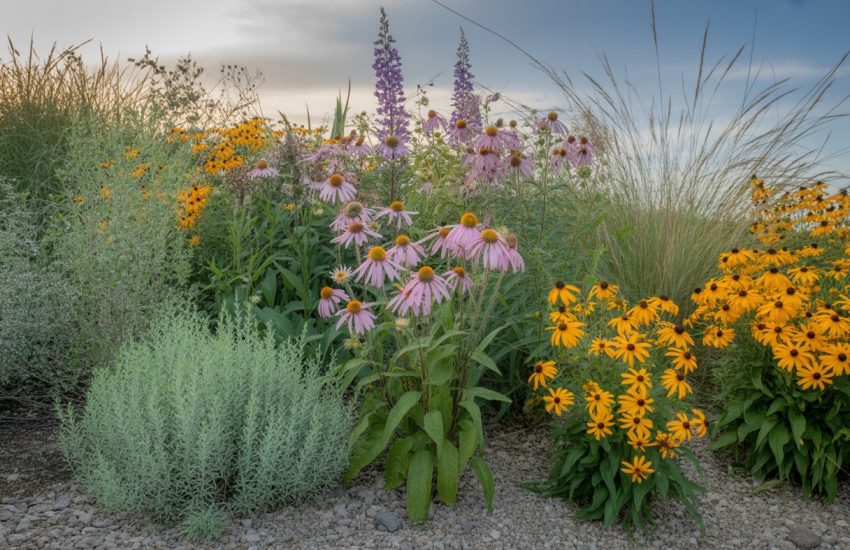
This is a "starter" list of native plants for Utah and Western Colorado. It is intended for residential or commercial landscapers who want to create attractive and varied native landscapes.
See Also:
Utah and Western Colorado - Trees
| Common Name | Scientific Name | Sun | Drought Tolerance | Height | Comments |
|---|---|---|---|---|---|
| White Fir | Abies concolor | P | M | 70 ft | Beautiful in mass or alone |
| Subalpine Fir | Abies lasiocarpa | S | P | 80 ft | Cover for birds; food for squirrels; for small spaces |
| Catclaw Acacia | Acacia greggii | F | E | 20 ft | Nectar for bees, butterflies; forms thorny thicket |
| Big Tooth Maple | Acer grandidentatum | F | G | 30 ft | Food, cover for birds, mammals, deer; fall color |
| Thinleaf Alder | Alnus incana subsp. tenuifolia | F/P | P | 30 ft | Seed, cover for birds; spring "cones;" winter bark |
| Water Birch | Betula occidentalis | F | G | 5–20 ft | Seed, cover for birds; nice winter form, branch color |
| Western Redbud | Cercis occidentalis | F-P | E | 10–20 ft | Spectacular bare-branch spring bloom; needs sharp drainage |
| Desert Willow | Chilopsis linearis | F | G | 25 ft | Nectar for hummingbirds; profuse pink flowers |
| River Hawthorne | Crataegus douglasii | F | P | 5–25 ft | Nesting cover, fruit for birds; nice blossoms and fruit |
| River Hawthorn | Crataegus rivularis | F-P | M | 10-25 ft | Thicket-forming streamside hawthorn; dark fruit, intermontane West |
| Fleshy Hawthorn | Crataegus succulenta | F-P | G | 13-26 ft | Most wide-ranging US hawthorn; thorny thicket shrub, red fleshy fruit |
| Singleleaf Ash | Fraxinus anomalus | F | G | 20 ft | Seeds for birds, mammals; start from seed, cutting |
| California Ash | Fraxinus dipetala | F-P | E | 10-20 ft | Fragrant 2-petaled spring flowers; very drought tolerant |
| Velvet Ash | Fraxinus velutina | F | G | 40 ft | Provides seed for birds; velvety leaves |
| Utah Juniper | Jun. osteosperma | F | E | 30 ft | Food, cover for birds, mammals; nice bark, form |
| Engelmann Spruce | Picea engelmannii | F-P | M | 80-130 ft | High-elevation conifer; cold-hardy; needs moist, well-drained soil |
| Blue Spruce | Picea pungens | P | P | 70 ft | Cover for birds, mammals; blue-green foliage |
| Whitebark Pine | Pinus albicaulis | F | E | 20–60 ft (3–10 ft krummholz at treeline) | Subalpine tree; very slow; federally threatened; not for gardens |
| Rocky Mountain Bristlecone Pine | Pinus aristata | F | E | 15-50 ft | Extremely slow-growing high-elevation conifer; rocky, lean, dry sites |
| Singleleaf Pinyon | Pinus edulis | F | E | 20 ft | Pine nuts for birds, mammals; slow-growth; graceful |
| Great Basin Bristlecone Pine | Pinus longaeva | F | E | 15-30 ft | Longest-lived tree on Earth; extremely slow growing, high alpine rock |
| Pinyon Pine | Pinus monophylla | F | E | 20 ft | Pine nuts for birds, mammals; pictureque evergreen |
| Narrowleaf Cottonwood | Populus angustifolia | F | M | 40 ft | Soft wood for nest cavities; medium-size shade tree |
| Rio Grande Cottonwood | Populus deltoides subsp. wislizeni | F | P | 50-90 ft | Massive riparian bosque shade tree; needs reliable water |
| Fremont Cottonwood | Populus fremontii | F | G | 55 ft | Soft wood for nest cavities; fem. produces cotton |
| Fremont Popular | Populus frenentii | F | M | 60 ft | Soft wood for nest cavities; fem. produces cotton |
| Honey Mesquite | Prosopis glandulosa | F | E | 30 ft | Bee nectar; bird food; green foliage; 3-6" seedpods |
| Screwbean Mesquite | Prosopis pubescens | F | G | 15–30 ft | Desert wash tree; coiled screw-shaped pods; needs deep water access |
| Douglas Fir | Pseudotsuga menziesii | P | M | 80 ft | Year-round bird cover, pretty screen, windbreak |
| Gambel Oak | Quercus gambelii | F | G | 30 ft | Acorns; winter cover; not hardy N of Ogden |
| Gray Oak | Quercus grisea | F-P | G | 6–30 ft | Slow-growing mountain oak; shrubby on dry sites, treelike in canyons |
| New Mexico Locust | Robinia neomexicana | F | G | 25 ft | Bee nectar; seeds for quail, squirrels; lav. flowers |
| Goodding's Willow | Salix gooddingii | F | P | 30–50 ft | Desert riparian tree, needs perennial water; not for dry xeriscape |
| Red willow | Salix laevigata | F-P | P | to 45 ft | Fast-growing riparian tree; needs consistent moisture |
| Arroyo willow | Salix lasiolepis | F-P | M | 10-20 ft | Riparian/arroyo thicket shrub; fast, very early spring bloom for bees |
| Scouler's willow | Salix scouleriana | F-P | G | 15-30 ft | Early silvery catkins; unusually drought-tolerant for a willow |
| Dwarf Mountain Ash | Sorbus scopulina | P | P | 13 ft | Fruit for birds, white flowers in spring; berries in fall |
| Joshua Tree | Yucca brevifolia | F | E | 15-40 ft | Mojave Desert icon; pollinated only by the yucca moth |
Utah and Western Colorado - Shrubs
| Common Name | Scientific Name | Sun | Drought Tolerance | Height | Comments |
|---|---|---|---|---|---|
| Cheesebush | Ambrosia salsola | F | E | 2-6 ft | Fast-growing, thread-like leaves, erosion control, pioneer species |
| Utah Serviceberry | Amelanchier utahensis | F | G | 6–15 ft | Spring flowers, purple berries, muted fall colors |
| Greenleaf manzanita | Arctostaphylos patula | F-P | E | 2-6 ft | Cold-hardy mountain shrub, bright green leaves, resprouts after fire |
| Silver Sagebrush | Artemesia cana | F | E | 2–5 ft | Silvery, aromatic foliage; seeds,cover for animals |
| Fringed Sage | Artemesia frigida | F | E | 12–24 in | Delicate silvery gray foliage; seeds for birds |
| Big Sagebrush | Artemesia tridentata | F | E | 2–5 ft | Silvery, aromatic foliage; seeds,cover for animals |
| Black sagebrush | Artemisia nova | F | E | 4–16 in | Low cushion shrub for rocky/shallow soils; key winter wildlife browse |
| Sand Sage | Artemisin filifolia | F | E | 4 ft | Lovely, feathery foliage; seeds for birds |
| Four-wing Saltbush | Atriplex canescens | F | E | 4–6 ft | Rose-hued fruits on female plants; great bird seed |
| Shadscale | Atriplex confertifolia | F | E | 1-3 ft | Spiny gray shrub; extreme drought/salt tolerance, winter browse |
| Seepwillow | Baccharis salicifolia | F-P | G | 6-15 ft | Fast-growing riparian pioneer; stabilizes wash banks |
| Resin Birch | Betula glandulosa | F-P | P-M | 1-4 ft | Bog/alpine shrub; glandular twigs; distinct from Bog Birch |
| California Brickellbush | Brickellia californica | F-P | E | 2-5 ft | Late-blooming shrub for dry, rocky soil; not bursage |
| Snowbrush Ceanothus | Ceanothus velutinus | F | M | 12–36 in | Glossy leaves and spring flowers; nectar plant |
| Winterfat | Ceratoides lanata | F | E | 12–36 in | Profuse fruits in fall; winter food for birds |
| Littleleaf Mountain Mahogany | Cercocarpus intricatus | F | E | 3-10 ft | Very slow desert shrub; feathery seed plumes; rocky, dry soil |
| Curl-leaf Mtn Mohogany | Cercocarpus ledifolius | F | E | 8–12 ft | Ornamental spiralled seeds; winter deer food |
| Birchleaf Mtn Mohogany | Cercocarpus montanus | F | E | 4–9 ft | Ornamental seed heads and fall color |
| Fernbrush | Chamaebatiaria millefol. | F | E | 6–8 ft | Long-lasting mid-summer flowers; fernlike leaves |
| Rubber Rabbitbrush | Chrysothamnus nauseo. | F | E | 2–6 ft | Yellow fall cover; seeds and cover for birds |
| Blackbrush | Coleogyne ramosissima | F | E | 1–6 ft | Very slow-growing desert shrub; rocky, well-drained soil only |
| Red-osier Dogwood | Cornus sericea | P | P | 10–15 ft | Spring flowers; fall white berries; winter red twigs |
| Indigo Bush | Dalea fremontii | F | E | 36 in | Profuse fragrant purple flowers; nectar plant |
| Mormon Tea | Ephedra nevadensis | F | E | 2–4 ft | Interesting shrub accent; seeds attract quail |
| Apache Plume | Fallugia paradoxa | F | G | 3–6 ft | White flowers in spring; seed heads fall and winter |
| Cliff Fendlerbush | Fendlera rupicola | F | E | 3–6 ft | Rock-garden shrub for dry slopes; profuse white spring blooms |
| Spiny hopsage | Grayia spinosa | F | E | 1–3 ft | Spiny, drought-deciduous; pink female fruit bracts; key spring browse |
| White Ratany | Krameria grayi | F | E | 1-3 ft | Spiny gray desert shrub; hemiparasitic on creosote bush |
| Creosotebush | Larrea tridentata | F | E | 4–10 ft | Screen or wind break; nectar plant; cover for birds |
| Utah Honeysuckle | Lonicera utahensis | S | G | 2–5 ft | Yellow flowers late spring; fruit for birds |
| Littleleaf Mockorange | Philadelphus microphyllus | F | E | 3–6 ft | Fragrant white flowers late spring; tough on rocky slopes |
| Mountain Ninebark | Physocarpus monogynus | P | G | 2–4 ft | Rocky-slope shrub with shreddy bark; part sun to part shade |
| Purple Sage | Poliomintha incana | S | E | 36 in | Blue/purple flowers all summer; nectar plant |
| Chokecherry | Prunus virginiana | P | G | 15–20 ft | Spring flowers; dark purple fruit; red-orange color |
| Paper Flower | Psilostrophe cooperi | F | E | 1-2 ft | Low-water Mojave/Sonoran subshrub; near-continuous yellow bloom |
| Cliffrose | Purshia mexiciana | F | E | 6 ft | Fragrant yellow summer flowers; fall seed plumes |
| Bitterbrush | Purshia tridentata | F | E | 2–6 ft | Spring yellow flowers; winter browse for deer |
| Shrub Live Oak | Quercus turbinella | F | E | 4–8 ft | Attractive evergreen shrub; food and cover for birds |
| Wavyleaf Oak | Quercus undulata | F | G | 4–8 ft | Attractive evergreen shrub; quail, chipmunk food |
| Squawbush Sumac | Rhus trilobata | F | E | 2–6 ft | Red fall color; red fall fruit; food and cover for birds |
| Golden Currant | Ribes aureum | P | M | 4–6 ft | Yellow spring berries; red fall color; fruit for birds |
| Wax currant | Ribes cereum | F-P | E | 2–6 ft | Spineless, very drought-tolerant; pink flowers, orange-red berries |
| Woods Rose | Rosa woodsii | F | G | 2–6 ft | Spring pink flowers; fall red hips; winter animal food |
| Sandbar Willow | Salix exigua | F | P | 5–15 ft | Great branch color in fall; dense cover for wildlife |
| Blue Elderberry | Sambucus caerulea | F | P | 6–12 ft | White spring flowers; showy dark blue fruit |
| Greaswood | Sarcobatus vermiculatus | F | E | 2–6 ft | Light green foliage; year-round cover small animals |
| Roundleaf Buffaloberry | Shepherdia rotundifolia | F | E | 3–4 ft | Reflective, silvery leaves; quail, chipmunk food. |
| Snowberry | Symphoricarpas species | P | G | 36 in | White berries in fall and winter; fruit for birds |
| Gray horsebrush | Tetradymia canescens | F | G | 1–3 ft | Woolly gray shrub, yellow summer flowers; foliage toxic to sheep |
| Canyon Wild Grape | Vitis arizonica | F | G | vine | Colorful fruit for birds; bark for nests |
| Soap Tree Yucca | Yucca elata | F | E | 6 ft | Creamy white blossoms; nectar for moths |
| Yucca | Yucca harrimaniae | F | E | 24–36 in | Creamy flowers on tall stalks; nectar for moths |
Utah and Western Colorado - Flowering Perennials
| Common Name | Scientific Name | Sun | Moisture | Height | Comments | Color | Bloom |
|---|---|---|---|---|---|---|---|
| Prairie Sand Verbena | Abronia fragrans | F | D | 8–40 in | Fragrant evening white blooms; deep taproot, sandy soil | ||
| Columbian Monkshood | Aconitum columbianum | F-P | W-A | 2–6 ft | Highly toxic (aconitine), all parts; wet meadows/stream banks only | ||
| Trailing Four O'Clock | Allionia incarnata | F | D | 3-6 in (spreads 1-3 ft) | Prostrate desert mat, magenta flowers open mornings; drought tough | ||
| Nodding Wild Onion | Allium cernuum | F-P | A-D | 8–20 in | Dry soil; nodding white-pink summer flowers; deer resistant | ||
| Narcissus Anemone | Anemone narcissiflora | F | A-W | 6-16 in | Rare alpine wildflower; AK tundra, CO/WY high peaks; toxic foliage | ||
| Small-flowered Anemone | Anemone parviflora | F-P | A | 2–8 in | Alpine rock-garden anemone; toxic sap, not for lowland beds | ||
| Rosy Pussytoes | Antennaria rosea | F | A-D | 2-4 in (stems to 12 in) | Mat-forming silver groundcover; rose-pink blooms; host plant | ||
| Mountain Death Camas | Anticlea elegans | F-P | A-D | 1-2.5 ft | HIGHLY TOXIC bulb/foliage; do not confuse with edible Camassia | ||
| Golden Columbine | Aquilegia chrysantha | P-S | A-W | 1.5-4 ft | Long-spurred yellow flowers; needs seep or streamside moisture | ||
| flatbud prickly poppy | Argemone munita | F | D | 2–4 ft | Spiny wildflower, showy white blooms; sap toxic, use gloves | ||
| Showy Milkweed | Asclepias speciosa | F-P | A-D | 2-4 ft | Monarch host plant; toxic sap; spreads by rhizome | ||
| Butterfly Weed | Asclepias tuberosa | F-P | A-D | 36 in | Attracts butterflies | Orange | Su |
| Freckled Milkvetch | Astragalus lentiginosus | F | D | 4-20 in | Silvery, spreading legume; pods freckled with red, namesake feature | ||
| Desert Marigold | Baileya multiradiata | F | D | 8–24 in | Drought-adapted, short-lived; native southern UT, not CO; well-drained soil | Yellow | Sp-F (rain dependent) |
| Woolly Desert Marigold | Baileya pleniradiata | F | A-D | 6–18 in | Toxic to sheep/goats; woolly gray foliage; yellow flowers most of year | ||
| Desert Mariposa Lily | Calochortus kennedyi | F | D | 4-20 in | Vivid orange-red desert bulb; dry summer rest, never dig wild bulbs | ||
| Sego lily | Calochortus nuttallii | F | D | 6–18 in | Utah's state flower; bulb goes dormant through dry summers | ||
| Desert Paintbrush | Castilleja angustifolia | F | A-D | 6-16 in | Root hemiparasite; needs host shrub/grass; don't dig from wild | ||
| wavy-leaved paintbrush | Castilleja applegatei | F-P | A-D | 6-16 in | Root hemiparasite; plant near sagebrush or bunchgrass host | ||
| Wholeleaf Indian Paintbrush | Castilleja integra | F | D-A | 0.5-1.5 ft | Hemiparasitic; plant near native bunchgrass host to establish | ||
| Indian Paintbrush | Castilleja linariifolia | F | A | 8–36 in | Root hemiparasite; difficult to establish; grow with compatible native companions. Attracts hummingbirds. | Red | Su |
| Scarlet Paintbrush | Castilleja miniata | F-P | A-D | 8-32 in | Root hemiparasite; needs grass/sedge host; don't dig from wild | ||
| Steve's pincushion | Chaenactis stevioides | F | A-D | 2-16 in | Early-spring desert annual; pincushion-shaped white-cream heads | ||
| Water Hemlock | Cicuta maculata | F-P | W | 3-6 ft | Extremely toxic; wetlands/ditches only, not for gardens | ||
| Miner's Lettuce | Claytonia perfoliata | P-S | A-W | 4-12 in | Shade groundcover; edible mild green; self-sows, dies back in summer | ||
| Rocky Mountain Beeplant | Cleomella serrulata (syn. Cleome serrulata) | F | A-D | 3–6 ft | Native annual, not perennial; attracts pollinators | Pink/Purple | Su-F |
| grand collomia | Collomia grandiflora | F-P | D | 8 in - 3 ft | Annual wildflower; apricot flowers; reseeds in lean dry soil | ||
| tapertip hawksbeard | Crepis acuminata | F | D | 1-2.5 ft | Taprooted sagebrush-steppe perennial; yellow; key wildlife forage | ||
| Sacred Datura | Datura wrightii | F-P | D | 1-5 ft | Huge night-blooming white flowers; all parts toxic; desert xeriscape | ||
| Blue Dicks | Dichelostemma capitatum | F-P | D | 6 in–2 ft | Fire-follower spring bulb; dry summer dormancy required | ||
| Hoary Tansyaster | Dieteria canescens | F | D | 0.5-2 ft | Bushy gray-hairy wildflower; purple fall rays, very drought tolerant | ||
| Aspen Daisy | Erigeron speciosus | F-P | A | 12–24 in | Showy, aster-like flowers | Purple | Su |
| desert trumpet | Eriogonum inflatum | F | D | 1–3 ft | Distinctive inflated stems; extremely drought-tolerant desert native | ||
| Slender Buckwheat | Eriogonum microthecum | F | A-D | 4in-2ft | Wiry low subshrub; many regional varieties; late-summer bloom | ||
| Cushion Buckwheat | Eriogonum ovalifolium | F | A-D | 2-6 in | Silvery mat-forming cushion with round pompom flowerheads | ||
| Sulpher Buckwheat | Eriogonum umbellatum | F | D | 6–12 in | Attracts bees, seeds in F/W, matted ground cover | Wht/Yellow | Su |
| Lewis Monkeyflower | Erythranthe lewisii | F-P | W | 1–2.5 ft | Magenta streamside flowers; needs constant moisture, bee-pollinated | ||
| Red Dome Blanketflower | Gaillardia pinnatifida | F | D | 8-22 in | Long-blooming SW native; thin rocky/gypsum soils; low water | ||
| Sweet-scented Bedstraw | Galium triflorum | P-S | A | 6-24 in trailing groundcover | Fragrant shade groundcover for rich, consistently moist soil | ||
| Northern Gentian | Gentianella amarella | F-P | W-A | 4–16 in | Fringed purple autumn flowers; wet mountain meadows & fens | ||
| Desert Sunflower | Geraea canescens | F | D | 8–24 in | Mojave/Sonoran annual; gold daisy blooms; drives superblooms | ||
| Richardson's Geranium | Geranium richardsonii | P | A | 1–3 ft | White purple-veined flowers; aspen groves & moist mountain meadows | ||
| Sticky Geranium | Geranium viscosissimum | F | A-D | 12–36 in | Long blooming season | Pink | Su-F |
| Globe Gilia | Gilia capitata | F-P | D-A | 4 in–3 ft | Round blue flower heads; sandy/rocky soil; self-sows from seed | ||
| Goodding's Verbena | Glandularia gooddingii | F | D | 6-12 in | Spreading desert wildflower, long bloom, very low water | ||
| Sunflower | Helianthus annuus | F | A-D | 2–10 ft | USU: Utah native; Kew range narrower. Choose documented local wild-type seed. | Yellow | LSu |
| Dune Sunflower | Helianthus anomalus | F | Well-drained sand; deep moisture | 10–24 in | Dune annual: native AZ/UT, not CO. Deep sand holds moisture; not a generic dry-soil plant. Source | Yellow | LSu |
| Cow parsnip | Heracleum maximum | F-P | A-W | 4-8 ft | Striking wildflower; sap is phototoxic, causes skin burns in sun | ||
| hairy golden aster | Heterotheca villosa | F | D | 6 in–2 ft | Long-blooming yellow native; very drought tolerant | ||
| Skyrocket Gilia | Ipomopsis aggregata (syn. Gilia aggregata) | F-P | A-D | 12–30 in | Hummingbirds; biennial/short-lived, often flowers once; allow reseeding | Red, pink or white | Su |
| Western Blue Flag | Iris missouriensis | F-P | W-A | 10-28 in | Blue-violet wet-meadow iris; toxic, deer-resistant, alkaline-tolerant | ||
| Tall Blue Lettuce | Lactuca biennis | F-P | A-W | 3–8 ft | Biennial; milky sap can irritate skin | ||
| Bitterroot | Lewisia rediviva | F | D | 1–4 in | MT state flower; leafless pink blooms on bare rock, dry summer rest | ||
| Twinflower | Linnaea borealis | P-S | A-W | 2-4 in | Evergreen groundcover for cool, acidic, shaded sites; slow to spread | ||
| Blue Flax | Linum lewisii | F | D | 24 in | Prolific bloomer; spreads rapidly-use in large area | Blue | Su |
| Silvery Lupine | Lupinus argenteus | F-P | A | 12–24 in | Attracts butterflies | Blue | Su |
| Coulter's Lupine | Lupinus sparsiflorus | F | D | 4–16 in | Desert annual; mass-blooms in wet winters, toxic if eaten | ||
| Lacy Tansyaster | Machaeranthera pinnatifida | F | D | 6-18 in | Spiny lacy leaves; long-blooming yellow daisies; poor rocky soil | ||
| Prairie Aster | Machaeranthera tanacetifolia | F-P | A-D | 12–36 in | Annual; purple flowers over a long season when moisture permits. Allow some seed to mature for renewal. | Purple | Su-F |
| Starry False Lily | Maianthemum stellatum | P-S | A-D | 8-18 in | Rhizomatous woodland groundcover; starry flowers; berries inedible | ||
| American Wild Mint | Mentha arvensis | F-P | W-A | 6in-2ft | Native wetland mint; spreads by rhizome; flowers at leaf joints | ||
| Blazing Star | Mentzelia laevicaulis | F | D | 1-4 ft | Huge yellow flowers open at dusk; needs sharp drainage | ||
| Mountain Bluebells | Mertensia ciliata | P-F | W | 1–4 ft | Streamside wildflower; pink buds open sky blue | ||
| Muskflower | Mimulus moschatus | P-S | W | 4-12 in | Mat-forming wet-shade wildflower; yellow blooms late spring-fall | ||
| Four O'Clock | Mirabilis multiflora | F | D | 24 in | Stunning ornamental; attracts hummingbirds | Purple | All Su |
| Bee Balm (Monarda species) | Monarda species | F-P | A; varies by species | Varies by species | Choose an identified local native; moisture, drought tolerance and height vary by species. Source. | Purple | All Su |
| Alpine Forget-me-not | Myosotis asiatica | F-P | A-W | 4-10 in | AK state flower; rock garden alpine, not invasive forget-me-not | ||
| Evening Primrose | Oenothera caespitosa | F-P | D | 8 in | Very drought-tolerant/tough/fragrant/attracts moths | Wht/Pink | ESu |
| dune evening primrose | Oenothera deltoides | F | A-D | 1-3 ft | Sandy desert biennial; large white flowers age pink; moth-pollinated | ||
| Scarlet Beeblossom | Oenothera suffrutescens | F | D | 1–3 ft | Full sun, dry soil; moths pollinate; spreads by rhizomes | ||
| Elephant's Head | Pedicularis groenlandica | F-P | W | 6–24 in | Wet meadow specialist; needs saturated soil, often near sedges | ||
| Wasatch Penstemon | Penstemon cyananthus | F | D | 18–36 in | Showy ornamental | Blue | Su |
| Firecracker Penstemon | Penstemon eatonii | F-P | D | 24 in | Attracts hummingbirds | Red | Sp-ESu |
| Palmer Penstemon | Penstemon palmeri | F | D-A | 3–4 ft | Very fragrant, tubular summer flowers | Cream/Pink | ESu |
| Rocky Mt. Penstemon | Penstemon strictus | F | A | 24 in | Hardy; easy to grow | Blue/Purple | ESu |
| Distant phacelia | Phacelia distans | F-P | D | 6-32 in | SW desert annual; valuable for pollinators; mild skin irritant | ||
| Varileaf Phacelia | Phacelia heterophylla | F-P | A-D | 1-3 ft | Biennial wildflower, coiled flowers; irritant hairs, wear gloves | ||
| Desert Mountain Phlox | Phlox austromontana | F | D | 2-6 in | Needle-leaved cushion plant; white-pink flowers; needs sharp drainage | ||
| longleaf phlox | Phlox longifolia | F | A-D | 4-16 in | Sagebrush-steppe wildflower; white-pink flowers; very drought tolerant | ||
| Texas Frogfruit | Phyla nodiflora | F-P | W-D | 2-6 in, spreading 3+ ft | Mat-forming lawn alternative; butterfly host; tolerates mowing | ||
| Graceful Cinquefoil | Potentilla gracilis | F-P | D | 1-2 ft | Deep-rooted meadow wildflower; silvery leaf undersides; deer resistant | ||
| Few-flowered Shooting Star | Primula pauciflora | F-P | W-A | 4-16 in | Spring-wet meadows/seeps only; magenta flowers; summer dormant | ||
| New Mexico Plumeseed | Rafinesquia neomexicana | F | D | 6-20 in | Winter-spring desert annual; white chicory-like flowers, weak stems | ||
| Desert Chia | Salvia columbariae | F | D | 4-20 in | Annual; spiny maroon bract heads; seeds a traditional food | ||
| Great Basin sage | Salvia dorrii | F | D | 1-3 ft | Blue-violet spring blooms; needs sharp drainage | ||
| Oregon checkerbloom | Sidalcea oregana | F-P | A-W | 2-4.5 ft | Wet meadows; tall pink spikes; needs moist to wet soil | ||
| Tall Goldenrod | Solidago altissima | F-P | A-D | 3–7 ft | Spreads by rhizome; vital late-season pollinator nectar source | ||
| Copper Globemallow | Sphaeralcea angustifolia | F | D | 2-5 ft | Long-blooming; coppery to pink flowers; needs sharp drainage | ||
| Scarlet Globemallow | Sphaeralcea coccinea | F | D | 6–12 in | Flowers resemble small hollyhocks | Orange | Sp-F |
| Globemallow | Sphaeralcea grossulariifolia | F | D-A | 24–36 in | Short-lived; bloom varies with moisture. Native Utah; Colorado nativity not supported. | Red/Orange | Sp-F |
| Small-leaf Globemallow | Sphaeralcea parvifolia | F | D | 1-3 ft | Orange flowers all summer; dry soil; hairs irritate skin/eyes | ||
| Meadow Death Camas | Toxicoscordion venenosum | F-P | A-D | 8–28 in | HIGHLY TOXIC if eaten; toxic native wildflower, not for food gardens | ||
| coastal/springbank clover | Trifolium wormskioldii | F-P | A-W | 4–12 in | Native groundcover clover; magenta/white blooms; nitrogen-fixer | ||
| American Stinging Nettle | Urtica dioica ssp. gracilis | P-S | A-W | 3–7 ft | Stings on contact, wear gloves; native butterfly host plant | ||
| California Corn Lily | Veratrum californicum | F-P | W-A | 3–7 ft | Extremely poisonous wet-meadow perennial; keep from livestock/pets | ||
| Goosefoot Violet | Viola purpurea | F-P | D-A | 2-6 in | Low rock-garden perennial, yellow flowers, very drought tolerant | ||
| Arrowleaf Balsamroot | Wyethia sagittata (syn. Balsamorhiza sagittata) | F | D | 12–30 in | Spring flowers; deep taproot, slow establishment; browsed by wildlife | Yellow | Sp |
| Narrowleaf Yucca | Yucca angustissima | F | D | 1.5-3 ft (stalk to 7 ft) | Spiny rosette; dry capsule, not fleshy like banana yucca | ||
| Desert Zinnia | Zinnia acerosa | F | D | 4–10 in | Silvery mound; white daisies after rain; full sun, very dry |
Utah and Western Colorado - Grasses
| Common Name | Scientific Name | Sun | Drought Tolerance | Height | Comments | Cool/Warm Season |
|---|---|---|---|---|---|---|
| western needlegrass | Achnatherum occidentale | F-P | E | 1–2½ ft | Fine-textured dry-slope bunchgrass; needs sharp drainage | |
| Thurber's Needlegrass | Achnatherum thurberianum | F | E | 1-2 ft | Sagebrush-steppe bunchgrass; awned seed can injure grazing animals | |
| Thingrass | Agrostis pallens | F-P | G | 4 in-2 ft | Fine-textured native lawn substitute; mowable; spreads by rhizome | |
| Sand Bluestem | Andropogon hallii | F | E | 3-7 ft | Rhizomatous dune grass; blue summer stems, bronze fall color | |
| Side-oats Grama | Bouteloua curtipendula | F-P | E | 12–24 in | One-sided spikelets; dry meadows/prairies. Allow space for self-seeding. Source | Drooping spikelets line one side of the flowering stalk. Useful in dry meadows and open prairie plantings; allow room for self-seeding. Growing guide. |
| Black Grama | Bouteloua eriopoda | F | E | 4–12 in (culms to 20 in) | Slow-spreading desert bunchgrass; needs sharp drainage, full sun | |
| Blue Grama | Bouteloua gracilis | F | E | 12–18 in | Comb-like seedheads; drought-tolerant. Sunny, drained sites; lightly used native lawns. Source. | Distinctive comb-like seedheads; drought-tolerant, low-growing grass for sunny, well-drained sites and lightly used native lawns. Growing guide. |
| California Brome Grass | Bromus carinatus | F-P | G | 1.5-5 ft | Fast-establishing native bunchgrass; good for erosion control | |
| Mountain Brome | Bromus marginatus | F-P | G | 2-4 ft | Fast short-lived bunchgrass for erosion control and meadow mixes | |
| Field Sedge | Carex praegracilis | F-P | G | 8-20 in | Spreads by rhizome; tolerates clay, compaction, and alkaline soils | |
| Fox sedge | Carex vulpinoidea | F-P | P | 1–3 ft | Sunny wet meadow sedge; bristly brown spikes; rain gardens, pond edges | |
| California Oatgrass | Danthonia californica | F-P | G | 1-3 ft | Cool-season bunchgrass for meadows and prairie restoration | |
| Fluffgrass | Dasyochloa pulchella | F | E | 4–8 in | Tiny desert bunchgrass; fuzzy white seed plumes; zero-water plant | |
| annual hairgrass | Deschampsia danthonioides | F-P | P | 1-2 ft | Annual vernal pool/seasonal wetland grass; wet-then-dry cycle required | |
| Saltgrass | Distichlis spicata | F | E | 6–20 in | Spreading sod for saline, even seasonally wet soil; drought tolerance ≠ dry-soil requirement. Source | Spreads by rhizomes into tough sod; useful on saline soils, including seasonally wet sites. Drought tolerance does not mean it requires dry soil. Growing guide. |
| Common Spikerush | Eleocharis palustris | F-P | P | 8–32 in | Rhizomatous wetland sedge; stabilizes pond/stream margins | |
| Great Basin Wildrye | Elymus cinereus | F | E | 2–5 ft | Large bunchgrass for swales/deep soils; grows taller with moisture. Allow space. Source | Large bunchgrass for swales and deep soils; taller with available moisture. Leave room for its substantial flowering stems. Growing guide. |
| blue wildrye | Elymus glaucus | F-P | G | 2-4 ft | Fast-establishing bunchgrass; good erosion control; short-lived | |
| Big Squirreltail | Elymus multisetus | F | E | 6-20 in | Shaggy-awned bunchgrass; fast post-fire restoration grass | |
| Western Wheatgrass | Elymus smithii | F | E | 12–24 in | Spreads by rhizomes; stabilizes soil in open, sunny sites. Source. | Rhizomatous grass that can spread into colonies; useful for soil stabilization in open, sunny sites. Growing guide. |
| Bluebunch Wheatgrass | Elymus spicatus | F | G | 12–24 in | Drought-adapted bunchgrass; sunny, well-drained native plantings. Source | Drought-adapted bunchgrass for sunny, well-drained sites; useful as a structural grass in open native plantings. Growing guide. |
| Slender Wheatgrass | Elymus trachycaulus | F-P | M | 20–40 in (shorter at high elevations) | Short-lived; establishes from seed. Moderate moisture, not driest desert sites. Source | Relatively short-lived bunchgrass; establishes readily from seed and is useful in revegetation mixes. Better suited to moderate moisture than the driest desert sites. Growing guide. |
| Sheep Fescue Not a verified native recommendation: modern Festuca ovina is introduced from Europe; this historical name may refer to another fescue. Confirm identity before planting. Botanical source. | Festuca ovina | F-P | M | 12–24 in | Legacy identity uncertain; European F. ovina is not native. Choose an identified local fescue. Source. | Fine-leaved bunchgrass, but this historical label is not a confirmed native identity. Use a botanically identified local native fescue instead of assuming European sheep fescue is native. Growing guide. |
| Red Fescue | Festuca rubra | F-P | G | 1–2 ft | Fine-leaved rhizomatous grass; shade tolerant; good erosion control | |
| Needle and Thread | Hesperostipa comata (syn. Stipa comata) | F | E | 24–36 in | Dry, drained soil; twisting awns. Sharp ripe seeds can catch in animal coats. Source | Long twisting seed awns give the grass its name. Suits dry, well-drained soils; sharp mature seeds can catch in animal coats. Growing guide. |
| Galleta | Hilaria jamesii (syn. Pleuraphis jamesii) | F | E | 3–24 in | Low, tough warm-season grass for dry western landscapes; spreading growth helps stabilize soil. Growing guide. | W |
| Baltic Rush | Juncus balticus | F | P | 1–3 ft | Rhizomatous wetland rush; green stems; key fiber plant for basketry | |
| Prairie Junegrass | Koeleria macrantha | F-P | G | 12–24 in | Compact cool-season bunchgrass; dry, drained sunny borders or meadows. Source | Compact cool-season bunchgrass with upright flower spikes; useful in dry, well-drained sunny borders and meadows. Growing guide. |
| Beardless Wildrye | Leymus triticoides | F-P | G | 1.5-4 ft | Rhizomatous, sod-forming; tolerates saline soil, holds streambanks | |
| Mountain Muhly | Muhlenbergia montana | F | G | 1-3 ft | Key ponderosa pine forage grass; deep roots; needs sharp drainage | |
| Deergrass | Muhlenbergia rigens | F | E | 3-5 ft | Classic basketry grass; fountain form, tough and low-water | |
| Spike Muhly | Muhlenbergia wrightii | F | G | 6 in-2 ft | Slow-establishing bunchgrass; tolerates alkaline/caliche soil | |
| Hall's Panicgrass | Panicum hallii | F | E | 1-2 ft | Small bunchgrass; blades curl like ribbons when dry; long bloom | |
| Desert Needlegrass | Pappostipa speciosa (syn. Stipa speciosa) | F | G | 12–24 in | Dry, freely draining rocky/sandy soil; not a moisture-loving meadow grass. Source | Desert bunchgrass for dry, freely draining rocky or sandy sites; distinctive awned seeds. Avoid treating it as a moisture-loving meadow grass. Growing guide. |
| Big Galleta | Pleuraphis rigida | F | E | 1-3 ft | Tough Mojave/Sonoran bunchgrass; woolly nodes, erosion control | |
| Sandberg Bluegrass | Poa secunda | F | E | 12–24 in | Small cool-season bunchgrass; early growth, dormancy as soil dries. Dry grass mixes. Source | Small cool-season bunchgrass that grows early and becomes dormant as soils dry; useful in dry native grass mixtures. Growing guide. |
| Blowout Grass | Redfieldia flexuosa | F | E | 1.5-3 ft | Rhizomatous dune-stabilizer; needs loose sand, full sun | |
| Tumblegrass | Schedonnardus paniculatus | F | E | 6-20 in | Tough Plains/SW grass for restoration on disturbed soils | |
| Chairmaker's Bulrush | Schoenoplectus americanus | F-P | P | 1-4 ft | Leafless triangular-stemmed sedge; fresh/brackish marshes, pond edges | |
| Alakali Sacaton | Sporobolus airoides | F | E | 2–6 ft | Tolerates alkaline/saline soil and drought once established. Flower stems reach 6 ft. Source. | Airy reddish flower panicles above a large clump; tolerates alkaline or saline soils and drought once established. Flowering stems can reach 6 ft. Growing guide. |
| Sand Dropseed | Sporobolus cryptandrus | F | E | 12–24 in | Warm-season bunchgrass; stabilizes sandy soil and supplies wildlife seed. Source | Warm-season bunchgrass useful for sandy-soil stabilization; fine seedheads provide texture and seed for wildlife. Growing guide. |
| Indian Ricegrass | Stipa hymenoides | F | E | 12–24 in | Dry, sandy sites; airy seedheads provide wildlife food. Source. | Airy seedheads and fine foliage; excellent for dry, sandy sites. Seeds are valuable wildlife food. Growing guide. |
| Slim Tridens | Tridens muticus | F | E | 1-2.5 ft | Wiry rocky-soil bunchgrass; reddish narrow panicle, awnless |
| Sun Exposure | Soil Moisture | Drought Tolerance |
|---|---|---|
| F = Full Sun | W = Wet | E = Excellent |
| P = Part Sun | A = Average | G = Good |
| S = Shade | D = Dry | M = Moderate |
| P = Poor |

Looking for a nursery that carries native Utah plants?
Browse our native plant nursery directory: Utah